Jon Simon is the Joan Reinhart Professor and Professor of Applied Physics at Stanford University . He leads the Simon Lab , which explores the convergence of condensed matter physics , quantum optics , and quantum information science , focusing on creating synthetic materials from light and investigating topological and strongly correlated quantum systems. His research spans constructing photonic materials in quantum circuits, studying small quantum systems with strong correlations, and applying Hamiltonian engineering to realize exotic states of matter. The lab has achieved milestones like the first Mott insulator of photons and topologically insulating circuits . Collaborative projects with the Schuster Lab leverage superconducting quantum circuits for synthetic matter studies. Jon's students include Adam Shaw (PhD, now at Stony Brook) Lavanya Taneja (PhD, now at Atom Computing) Ruichao Ma (Postdoc, now faculty at Purdue) among others. The lab's recent publications focus on cavity arrays, hybrid quantum systems, and topological photonics. Research is supported by grants and affiliations with Stanford's Department of Applied Physics and interdisciplinary institutes.
Dr Andrew Rhead is a Senior Lecturer in the Department of Mechanical Engineering at the University of Bath, specializing in aerospace composites and damage tolerance analysis. His research focuses on impact damage detection, failure mechanism modeling, and Non-Destructive Evaluation (NDE) techniques for composite structures. MSci in Mathematical Sciences (Dynamical Systems) - University of Bristol (2006) PhD in Composite Damage Tolerance - University of Bath (2009) His work develops computationally efficient analytical models for compression after impact (CAI) strength prediction in composite laminates, surpassing traditional finite element methods. Key projects include hydrogen storage systems for aircraft, cryogenic composite testing, and steered fiber manufacturing optimization. Active in 10 projects including ASPIRE and HyFIVE Collaborates with Airbus, GKN Aerospace, and EPSRC Research trends show emphasis on sustainable aviation materials, structural battery integration, and advanced testing methodologies. Current affiliations include the Institute for Mathematical Innovation (IMI) and Centre for Integrated Materials, Processes & Structures (IMPS).
Jungsang Kim is the Schiciano Family Distinguished Professor of Electrical and Computer Engineering and Professor of Physics at Duke University. He serves as Associate Director of the Duke Quantum Center and leads the Multifunctional Integrated Systems Technology group. Quantum Computing with Trapped Ions Quantum Information Science Photonic Device Development Quantum Communication Networks His research focuses on scalable quantum information processors using trapped atomic ions and advanced photonic technologies. Key innovations include microfabricated ion traps, optical MEMS, and cryogenic systems for quantum integration. Recent publications highlight trapped ion quantum simulation, high-fidelity gate design, and photonic error mitigation. His group develops practical quantum hardware and co-founded IonQ, the first publicly traded pure-play quantum computing company. Fellow, American Physics Society (2021) Stansell Family Distinguished Research Award (2016) Fellow, National Academy of Inventors Fellow, Optica (formerly OSA) Kim's work bridges quantum physics and engineering, with over 80 patents and leadership in Duke's quantum computing initiatives. He recently stepped down as IonQ's CTO while maintaining active research and strategic roles at Duke.
Geng Yuan is an Assistant Professor at the University of Georgia's School of Computing, specializing in AI systems, energy-efficient deep learning, and hardware-software co-design. His work bridges machine learning algorithms with emerging hardware technologies like superconducting circuits and ReRAM. He holds a Ph.D. in Computer Engineering from Northeastern University (2023) and a Master's in Electrical & Computer Engineering from Syracuse University (2016). Doctor of Philosophy (Ph.D.) in Computer Engineering, Northeastern University (2023) Master of Science (M.S.) in Electrical & Computer Engineering, Syracuse University (2016) Bachelor of Science (B.S.) in Electrical Engineering, Beijing University of Technology (2014) His research focuses on optimizing deep learning systems for edge computing and mobile platforms through techniques like model compression, sparse training, and hardware-aware neural architecture search. Recent projects include adapting large language models via hybrid-grained pruning and developing ultra-low-power AQFP circuits for binary networks. Geng Yuan's publications span top venues like NeurIPS, CVPR, ICML, ICLR, ISCA, and DAC, with notable awards including a Best Paper Award at ICLR Workshop 2021, Spotlight Papers at ICLR 2023 and NeurIPS 2021, and a Design Contest 1st Place at ISLPED 2020. Best Paper Award (ICLR Workshop'21) Spotlight Paper Award (ICLR'23, NeurIPS'21) Design Contest 1st Place (ISLPED'20) Best Paper Nomination (DATE'21, ISQED'18) He actively recruits Ph.D., Master's students, and interns to his research group, focusing on advancing AI systems through interdisciplinary approaches combining machine learning, computer architecture, and electronic design automation.
Burak Ozdoganlar is a Ver Planck Endowed Chair Professor of Mechanical Engineering at Carnegie Mellon University (CMU) and Associate Director of the Engineering Research Accelerator. He holds courtesy faculty positions in Biomedical Engineering and Materials Science and Engineering. Ozdoganlar earned his Ph.D. in Mechanical Engineering from the University of Michigan (1999), M.S. degrees from Ohio State University (1993, 1995), and a B.S. in Aeronautical Engineering from Istanbul Technical University (1991). Ph.D., Mechanical Engineering, University of Michigan (1999) MS, Mechanical Engineering, Ohio State University (1995) MS, Aeronautical and Astronautical Engineering, Ohio State University (1993) BS, Aeronautical Engineering, Istanbul Technical University (1991) Ozdoganlar’s research focuses on multi-scale manufacturing processes (macro/micro/nano), precision engineering , structural dynamics , and modal testing , with applications in biomedical device fabrication , microneedle arrays , soft electronics , and 3D ice printing for vascular networks. His work bridges computational modeling with experimental validation. Recent scientific awards include the 2023 AIMBE College of Fellows induction, ASME Fellow (2019), and NSF CAREER Award (2006). He served as interim CTO of the Advanced Robotics for Manufacturing (ARM) Institute and chaired the ASME-MED Manufacturing Equipment Technical Committee. Ozdoganlar leads projects in scalable manufacturing for implantable medical devices , bioelectric medicine , and wearable robotics . His lab develops 3D ice-printed vascular templates for tissue engineering and liquid metal circuits for soft electronics, funded by institutions like the Manufacturing Futures Institute and ARPA-H.
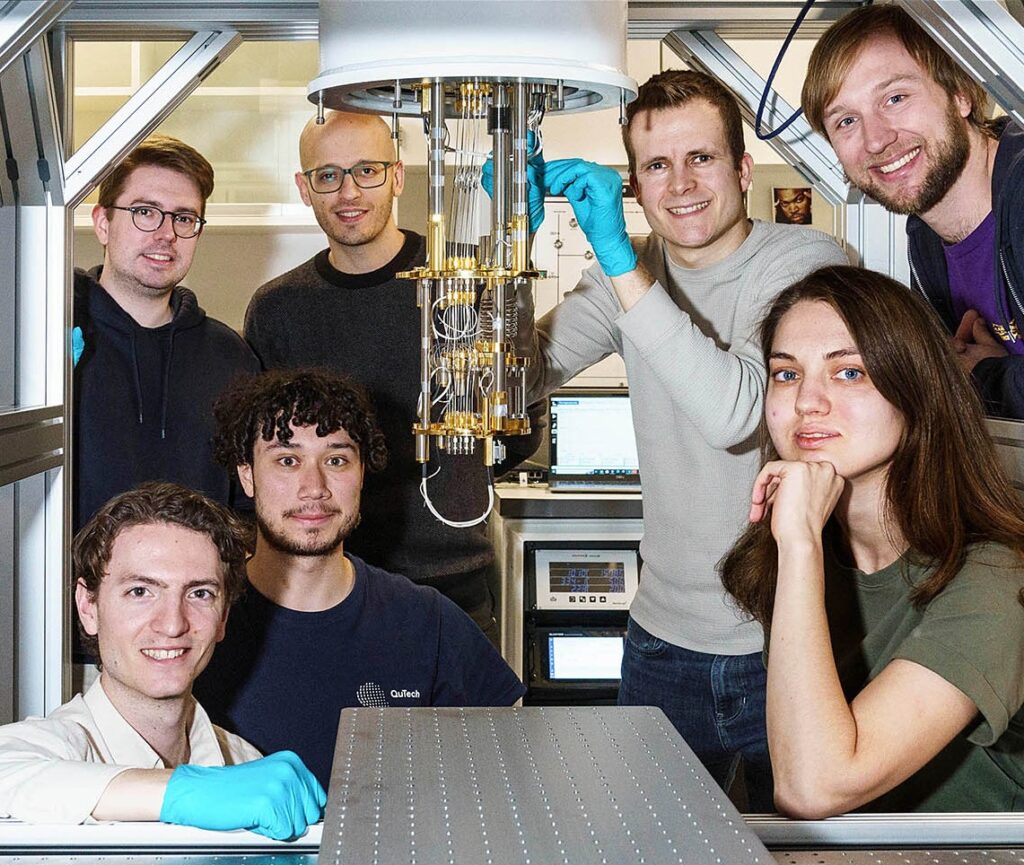
Carlos Errando Herranz serves as an Assistant Professor in the Quantum and Computer Engineering Division at Delft University of Technology's Faculty of Electrical Engineering, Mathematics and Computer Science (EEMCS) and as a Principal Investigator at QuTech. His research focuses on developing scalable quantum photonic integrated circuits using semiconductor fabrication processes compatible with existing infrastructure for quantum internet applications. He received Bachelor's and Master's degrees from Universitat Politècnica de València (2013) and a PhD in Micro and Nanosystems from KTH Royal Institute of Technology (2018), followed by postdoctoral positions at KTH and MIT as a Marie Curie fellow. His lab investigates quantum photonics, integrated photonics, and color centers with emphasis on diamond tin-vacancy systems and silicon-based quantum emitters. Recent publications demonstrate strong expertise in tuning quantum emitters via strain engineering, heterogeneous integration of spin-photon interfaces, and MEMS-enabled reconfigurable photonics. Key advancements include cavity-enhanced quantum memories, superconducting detector integration, and spectral control of solid-state emitters for quantum networks. Dr. Herranz advises seven graduate students including PhD candidates Vicky Dominguez Tubio, Arjan Mejas, Matteo Pirro, Christian Primavera, Jan Riegelmeyer, and Elena Volkova, along with Master student Bram Zijlstra. His team comprises postdocs Lin Jin and Pat Laferriere, and interns Elsa Herranz Valiente and Ernest Staffetti Cruañas. The Errando Herranz Lab operates within QuTech's Quantum Internet Division at Delft University, maintaining specialized facilities for nanofabrication and optical characterization of quantum photonic devices. Current research directions include developing CMOS-compatible quantum memories operating at telecom wavelengths and scalable architectures for quantum repeaters.
Swiss Federal Institute of Technology in LausanneSwitzerland
Edoardo Charbon is a Full Professor at École Polytechnique Fédérale de Lausanne (EPFL) in the School of Engineering, where he leads the Advanced Quantum Architecture Lab (AQUA). He also serves on the School Council STI and is Co-Director of STI-SSIQ Administration. Previously, he was a full professor and chair at Delft University of Technology from 2008 to 2016. Charbon received his Elektrotechnik Diploma from ETH Zurich, M.S. from UC San Diego, and Ph.D. from UC Berkeley, all in electrical engineering. His career spans industry experience at Cadence Design Systems and Canesta Inc. before joining EPFL in 2002. His research focuses on ultra high-speed and 3D optical sensors, with applications in LiDAR, FLIM (Fluorescence Lifetime Imaging Microscopy), PET (Positron Emission Tomography), FCS (Fluorescence Correlation Spectroscopy), and NIROT (Near-Infrared Optical Tomography). He has pioneered deep-submicron CMOS SPAD technology, which is now mass-produced and used in smartphones, telemeters, and medical diagnostics. His recent work bridges cryo-CMOS circuits for quantum computing with advanced optical sensing techniques. Analysis of his recent publications reveals a strong trend toward integrating quantum technologies with practical imaging applications. His work spans from fundamental device development (SPAD sensors, cryo-CMOS circuits) to applied systems (LiDAR engines, medical imaging devices), with increasing integration of machine learning techniques for real-time processing. 2023 IISS Pioneering Achievement Award Fellow of the IEEE Distinguished visiting scholar, W. M. Keck Institute for Space at Caltech Fellow, Kavli Institute of Nanoscience Delft Distinguished lecturer, IEEE Photonics Society Professor Charbon has authored or co-authored over 500 papers and two books, and holds 27 patents. His research has been supported by collaborations with organizations including Bosch, X-Fab, Texas Instruments, Maxim, Sony, Agilent, and the Carlyle Group. He has driven significant innovation in CMOS SPAD technology, which is now commercially deployed in various applications. He leads the Advanced Quantum Architecture Lab (AQUA) at EPFL, which focuses on the development of advanced sensor systems combining quantum technologies with conventional electronics. The lab has been instrumental in creating SPAD-based imaging systems that push the boundaries of time-resolved optical detection.
Prof. dr. Steven Hoekstra is an Associate Professor of Atomic and Molecular Physics at the University of Groningen's Faculty of Science and Engineering, within the Van Swinderen Institute. His research focuses on precision measurements using cold molecules to explore fundamental physics, including Stark deceleration, laser cooling, and searches for physics beyond the Standard Model. He leads the NL-eEDM program at Nikhef, investigating the electron's electric dipole moment. Hoekstra is also involved in educational innovation, having received the Teacher of the Year award (2020) and a Senior Teacher Qualification (2023). He has supervised over 11 PhD theses and currently mentors 5 students. His work combines experimental techniques with theoretical insights, addressing questions like symmetry violations and quantum dynamics. Key projects include manipulating BaF molecules with electrostatic fields and exploring levitated nanoparticles as sensors. Hoekstra has secured major grants, including NWO VICI (2022) and VIDI (2013), and collaborates internationally on projects like the European Strategy for particle physics. Recent articles highlight advancements in molecular beam control, spin-precession methods for EDM searches, and opportunities in radioactive molecules. He actively participates in the Physics Olympiad Netherlands as chair, contributing to science outreach and education.
Jean-Claude Besse is a Lecturer in the Department of Physics at ETH Zürich, specializing in superconducting circuits and quantum optics. His research focuses on quantum computing, microwave photonics, and artificial atoms. Research Interests: Besse works on the fabrication of superconducting circuits, modular quantum computing processors, and microwave quantum optics using artificial atoms. His work includes single-photon detection, parity measurements, entanglement stabilization, and quantum networking. He has developed technologies like high-fidelity multiplexed readout and tunable ZZ gates. Key Contributions: Besse led breakthroughs in non-destructive single-photon detection, deterministic remote entanglement, and loophole-free Bell inequality violations. His research enables error-corrected quantum communication protocols and scalable microwave quantum systems. Publications Trends: Recent articles emphasize modular quantum architectures, entanglement stabilization, and microwave photon engineering. Topics include cluster state generation, defect mode mitigation, and reinforcement learning for quantum feedback systems. Labs & Teams: Affiliated with the Laboratorium für Festkörperphysik at ETH Zürich, Besse contributes to advancing superconducting quantum technologies and microwave quantum optics.
Jonathan M. Baker is an Assistant Professor in the Department of Electrical and Computer Engineering at The University of Texas at Austin, holding the Advanced Micro Devices Chair in Computer Engineering. His research centers on quantum computer architecture with emphasis on practical quantum error correction implementation across the quantum computing stack. His educational background includes a Ph.D. in Computer Science from the University of Chicago (advised by Fred Chong) and dual B.S. degrees in Mathematics and Chemistry and Computer Science from the University of Notre Dame. Baker's research spans quantum compilation, logic synthesis, multi-radix architectures, and error mitigation for both near-term and fault-tolerant quantum systems. His work addresses critical challenges in quantum hardware-software co-design, with particular focus on optimizing quantum circuits for real-world hardware constraints and noise characteristics. Current projects emphasize qudit-based computing, neutral atom architectures, and efficient error correction implementations. His publication record shows strong focus on quantum architecture innovations, with recent work exploring qudit advantages, modular chiplet designs, and dynamic noise adaptation. Key trends include hardware-aware compilation techniques, communication optimization across quantum systems, and practical approaches to fault tolerance. Best Paper Award Runner Up, MICRO 2020 IEEE Micro Top Pick, 2020 (Virtualized Logical Qubits) IEEE Micro Top Pick, 2020 (Extending Frontier with Qutrits) IEEE Micro Top Pick, 2021 (Emerging Technologies) Best Poster Award, MICRO 2018 Baker actively mentors graduate students in quantum computing architecture research and serves on conference review committees including MICRO and ASPLOS. His teaching includes specialized quantum systems courses at UT Austin and online EdX modules covering quantum computation fundamentals and architecture. He collaborates with the Duke Quantum Center and maintains strong industry connections through the AMD Chair position, focusing on bridging academic research with practical quantum computing implementations.
Suman Datta is a Professor at the Georgia Institute of Technology , holding the Joseph M. Pettit Chair in Advanced Computing and Georgia Research Alliance Eminent Scholar titles. He has a joint appointment with the School of Materials Science and Engineering. Education : B.Tech in Electrical Engineering from IIT Kanpur; Ph.D. in Electrical and Computer Engineering from the University of Cincinnati. Prior Appointments : Stinson Endowed Chair Professor of Nanotechnology at University of Notre Dame (2015–2022); Professor at Penn State (2007–2015); Intel Corporation (1999–2007) in Advanced Transistor Group. Research Interests : His work focuses on high-performance heterogeneous computing using advanced CMOS and beyond-CMOS semiconductors. Key areas include ferroelectric field-effect transistors (FeFETs) , cryogenic computing , in-memory computing , and brain-inspired computing . He explores materials like ferroelectric gate stacks , insulator-to-metal phase transition oxides , and high-mobility oxides for next-generation compute architectures. Recent Article Trends : His group’s publications emphasize BEOL-compatible oxide transistors , negative capacitance , radiation-resilient devices , and machine learning-aided modeling . Subfields include low-voltage memory , 3D Ising machines , dynamic logic at cryogenic temperatures , and monolithic integration of power delivery systems. Scientific Awards : IEEE Fellow (2013) for contributions to transistor technologies NAI Fellow (2016) for societal impact via patents Intel Achievement Award (2003) for high-k/metal gate CMOS Intel Logic Technology Quality Award (2002) for Tri-gate transistors SEMI Award (2012) for high-k dielectrics Penn State Outstanding/ Premier Research Awards (2012, 2015) Advising & Grants : He has mentored students like Wriddhi Chakraborty , Khandker Akif Aabrar , and Sourav Dutta . His research is funded by SRC , DARPA , and NSF , including leadership of the ASCENT and EXCEL centers. Labs & Collaborations : Datta directs the STAR Lab at Georgia Tech, which specializes in atomistic modeling , nanofabrication , and compact model development . The lab collaborates with industry giants like Intel , Micron , and IBM through the ASCENT center.
Dr. Hongye Zhang serves as a Lecturer in Superconducting and Cryogenic Electric Machines at the School of Engineering, University of Edinburgh, while maintaining a Visiting Research Fellow position at the University of Manchester. He actively contributes to the European Society for Applied Superconductivity (ESAS) as a Board Member and chairs the international HTS 2026 workshop. His educational foundation includes: BSc and MSc in Electrical Engineering from Xi’an Jiaotong University (2015, 2018) Diplôme d’ingénieur (MEng) from École Centrale de Lyon (2018) PhD in Applied Superconductivity from the University of Edinburgh (2021) Dr. Zhang’s research centers on decarbonizing transport through superconducting/cryogenic electric machines for hydrogen-powered aircraft, integrating artificial intelligence with superconductor technology and cryogenic techniques. His work targets net zero emissions by developing high-power-density propulsion systems that leverage hydrogen energy and advanced numerical modeling of superconductors. Analysis of his 2022-2025 publications reveals dominant themes in superconducting machine design for wind energy and electric aviation, with significant contributions to loss mitigation, flux pump technology, and trapped field magnet applications. His research bridges fundamental superconductor characterization with practical system integration for renewable energy. Recognized with the 2021 IEEE Council on Superconductivity Graduate Study Fellowship, his professional engagements include: Early Career Editorial Board Member for Elsevier’s Superconductivity journal Technical Editor for IEEE Transactions on Applied Superconductivity Program Committee Member for SMT 2023 He leads critical research within the £54-million H2GEAR project developing hydrogen-electric aircraft propulsion, while teaching Power Engineering 2 and Electrical Machines courses. His advisory roles span doctoral supervision and industry collaboration through Energy Systems research institute. Based at the University of Edinburgh’s Faraday Building, Dr. Zhang directs a research group focused on hydrogen energy applications and superconducting machine testing, with strong ties to the H2GEAR consortium and ESAS working groups.
Lan Wei is an Associate Professor in the Department of Electrical and Computer Engineering at the University of Waterloo, Canada. She leads the Waterloo Emerging Integrated Systems Group, focusing on device-circuit co-optimization, cryogenic CMOS for quantum computing, and emerging technologies like GaN, RRAM, and low-dimensional materials. Her work bridges nanoelectronics and system-level applications, with notable contributions to the MIT Virtual Source GaN HEMT (MVSG) compact model, an industry-standard tool. Education: B.S. in Microelectronics and Economics, Peking University (2005) M.S. and Ph.D. in Electrical Engineering, Stanford University (2007, 2010) Research Interests: Nanoelectronic devices Cryogenic CMOS for quantum computing GaN-based circuits and systems RRAM-based neuromorphic computing Device-circuit interactive design Publications reflect her expertise in GaN modeling, quantum computing hardware, and RRAM applications. Recent work emphasizes scalable quantum control circuits and error-resilient neural networks using emerging technologies. Awards include the 2019 Ontario Early Researcher Award and the 2020 UWaterloo President's Excellence Award in Research. She has served on technical committees for IEDM, DATE, and ICCAD, and contributed to the ITRS roadmap. Teaching includes courses like ECE 240 (Electronic Circuits) and ECE 730 (Solid State Devices). Her group actively seeks graduate students with interest in integrated systems and nanoelectronics.
University of Illinois Urbana-ChampaignUnited States
Phillip J. Ansell is an Associate Professor in the Department of Aerospace Engineering at the University of Illinois at Urbana-Champaign (UIUC), affiliated with the Grainger College of Engineering. He directs the Center for Sustainable Aviation and the Center for High-Efficiency Electrical Technologies for Aircraft. His academic positions include Assistant Professor (2015–2021) and current role as Associate Professor since 2021. He teaches courses such as AE 416 (Applied Aerodynamics), AE 419 (Aircraft Flight Mechanics), and AE 515 (Wing Theory). Education: BS, The Pennsylvania State University, Aerospace Engineering, 2008 MS, UIUC, Aerospace Engineering, 2010 PhD, UIUC, Aerospace Engineering, 2013 Research Interests: Focuses on applied aerodynamics, sustainable aviation, distributed propulsion, flow control, and aircraft electrification. His work integrates experimental fluid mechanics and computational models to advance aviation sustainability. Key projects include hydrogen propulsion systems, cryogenics in aviation, and unsteady aerodynamics for rotorcraft. Research Contributions: Authored/co-authored books like Aircraft Cryogenics (Springer, 2024). His articles address sustainable aviation frameworks, hydrogen-electric propulsion, and high-lift aerodynamics. Recent trends emphasize decarbonization pathways and system-of-systems analysis. Awards & Honors: Dean's Award for Excellence in Research (2025) NASA Innovative Advanced Concepts Fellow (2025) AIAA Associate Fellow (2024) Forbes 30 Under 30 (2016) Advising & Grants: Advises graduate students on propulsion and aerodynamics. Secured grants from AFOSR, ARO, and NASA. Active in AIAA committees, including Electrified Aircraft Technology Technical Committee (Chair, 2020–2023). Labs & Teams: Leads the Aerodynamics and Unsteady Flows Research Group, using UIUC’s wind tunnel facilities. Collaborates on projects like the Five Circles of Sustainable Aviation framework and cryogenic propulsion systems.
Joshua Gess is an Associate Professor in the Mechanical, Industrial, and Manufacturing Engineering department at Oregon State University's College of Engineering. He joined Oregon State in 2015 and serves as a co-principal investigator at the Enhanced Heat Transfer Laboratory, where he leads research in thermal management solutions for high-performance microelectronics. His educational background includes: PhD, Mechanical Engineering, Auburn University, 2015 MS, Mechanical Engineering, Auburn University, 2012 B.E., Mechanical Engineering, Vanderbilt University, 2005 Before academia, he worked as a mechanical engineer at SSOE Group (including consulting for Johns Manville) and Northrop Grumman where he focused on military communication equipment. Professor Gess specializes in advancing thermal management solutions for high-performance microelectronic equipment. His research spans multiple scales, examining single and two-phase heat transfer on the macro-scale with passive and active liquid immersion techniques, as well as on the micro and nano scale for complex embedded thermal management solutions. He combines fundamental heat transfer knowledge with novel experimental methods such as two-phase PIV and high-speed image capture to develop reliable and energy-efficient cooling solutions for demanding electronics systems. His publication record demonstrates a clear trajectory toward increasingly sophisticated thermal management solutions, with recent work focusing on additive manufacturing applications for cooling systems, semiconductor thermal management, and nuclear reactor cooling systems. His research has significant implications for data center energy efficiency, where even small improvements in cooling efficiency could save enormous amounts of energy that could be returned to the grid. Gess is deeply committed to mentoring graduate students, emphasizing the practical applications of engineering principles. He attributes his interest in engineering to childhood influences like the movie RoboCop and the TV series MacGyver, and finds the reality of engineering work just as gratifying as he'd imagined. He particularly values the moments when his graduate students "get it" and watching them grow with each new accomplishment. As a person with a disability himself, Gess is passionate about establishing more robust support systems for people with disabilities at Oregon State. He is working with the School of Public Health to start an adaptive sports program, with the goal of building infrastructure that allows anyone to feel welcome and pursue advanced degrees at the university.