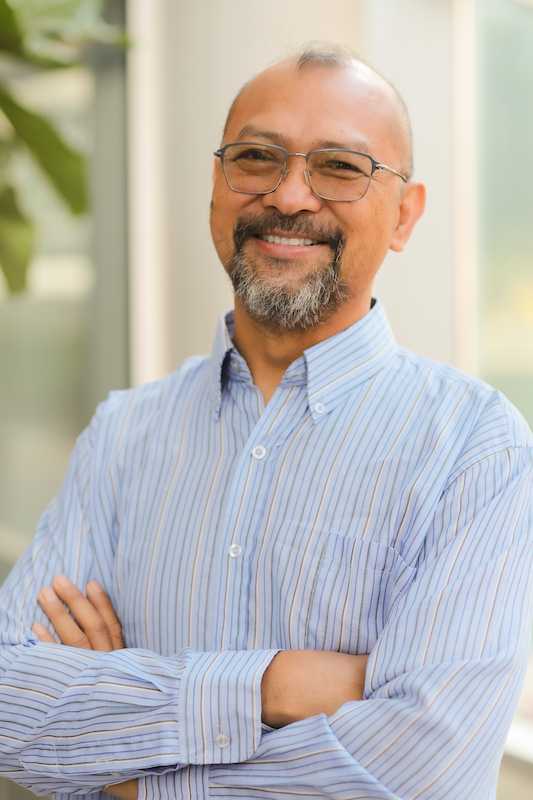
David AgardView profile
Professor
David Agard is a Professor in the Department of Biochemistry and Biophysics at the University of California San Francisco (UCSF), where he leads a research group focused on uncovering the structural basis of biological function at the molecular and cellular levels. His lab specializes in advanced cryo-electron microscopy (cryo-EM) and fluorescence light microscopy, developing novel imaging technologies to study dynamic cellular processes. His research interests span structural biology , molecular chaperone function (particularly Hsp90 and its role in disease), microtubule nucleation , centrosome and cilium structure , and the structure of phage-encoded tubulins . He is deeply involved in methodological innovations in cryo-EM data processing , including deconvolution, heterogeneous reconstruction, and tomography, enabling atomic-level insights into complex biological systems. Recent publications highlight his lab’s work on the structural mechanisms of Hsp90-client regulation, microtubule organization, phage nucleus formation, and high-resolution imaging techniques using functionalized graphene-oxide grids. His work increasingly integrates AI-driven structural modeling and in situ approaches to understand macromolecular complexes in their native cellular context. Dr. Agard has made seminal contributions to understanding the ATPase cycle of Hsp90, the architecture of the gamma-tubulin complex, and the structural dynamics of viral and cellular tubulins. His research bridges biochemistry, biophysics, and cell biology, with implications for cancer, neurodegeneration, and antimicrobial strategies.