Claudia Lupi is a Researcher at the Department of Earth and Environmental Sciences of the University of Pavia. Her work spans paleontology, paleoclimatology, and geoscience education initiatives. She has contributed to studies on nannofossil responses to climate transitions and innovative methods for fossil analysis. Current university affiliation: University of Pavia Department: Earth and Environmental Sciences Research Interests include: Paleontological analysis of marine microorganisms Paleoclimatic reconstruction using sedimentological records Development of educational laboratories for Earth Sciences Geochemical characterization of calcareous exoskeletons Publications highlight her expertise in: Cyclostratigraphy and climate variability studies Biomineralization processes in coccolithophores Historical development of geological sciences Teaching Activities cover: Global Paleoclimatology Geoscience Didactics Sustainable Development Education Biodiversity Conservation
Dr. Patrick Hayman is a Senior Lecturer in the School of Earth & Atmospheric Sciences at Queensland University of Technology (QUT), where he serves as the coordinator of the Earth Science major. His research integrates field-based physical volcanology with geochemical and geochronological techniques to understand the formation of mineral deposits, particularly in Precambrian terranes across Australia, Canada, and West Africa. He teaches core courses including Earth Materials, Earth's Mineral Resources, and a specialized short-course for industry geologists and postgraduate students in Merimbula, NSW. Education: PhD, Monash University M.Sc., University of British Columbia B.Sc. ENG., Queen's University at Kingston Research Interests: Dr. Hayman’s research focuses on the intersection of volcanology and economic geology. His work aims to develop genetic models for mineral exploration by studying volcanic and igneous processes in ancient terranes. He investigates the physical emplacement of mafic rocks, the architecture of greenstone belts, and the tectono-magmatic settings of VMS and orogenic gold systems. His research spans Archean to Paleoproterozoic geological environments, emphasizing the role of volcanism in ore genesis and crustal evolution. Publication Trends: His recent publications (2015–2023) reveal a consistent focus on Precambrian geology, particularly in the Yilgarn Craton and West African Craton. His work combines detailed field stratigraphy with advanced geochemical and isotopic analyses to reconstruct volcanic arcs, mafic intrusions, and mineralized systems. Key themes include magmatic differentiation, basin architecture, sulfur isotope geochemistry, and tectonic correlations across ancient cratons. Scientific Awards: AB Edwards Medal (2016) for best paper in economic geology in the Australian Journal of Earth Sciences Nominated for the Stillwell Award (2016) for best paper in the same journal Supervision and Grants: Dr. Hayman actively supervises multiple MPhil and PhD students on topics ranging from lithium exploration to terrane evolution in West Africa. His research is supported by the Australian Research Council (ARC), industry partners (e.g., CMOC, Rio Tinto, Northern Star Resources, Gold Fields), and geological surveys (e.g., Geological Survey of Western Australia). He is a Chief Investigator on an ARC Discovery Project and the Yilgarn 2020 project funded by MRIWA. Professional Involvement: He is a member of the Society of Economic Geologists (SEG), Geological Society of Australia (GSA), and the International Association of Volcanologists of the Earth's Interior (IAVCEI), reflecting his active engagement in both economic geology and volcanology communities.
Dr. Mitchell McMillan is a Postdoctoral Fellow at Georgia Institute of Technology, specializing in geodynamic processes that shape Earth's mountain belts and planetary surfaces. His research integrates thermodynamic modeling with field observations across three distinct domains: Subduction zone fluid dynamics and lower crustal density transformations Wind erosion mechanisms in hyperarid terrestrial and Martian environments Hydrodynamic modeling of fluvial erosion processes His computational work on streambank erosion modeling has produced globally applicable tools available via GitHub, while his recent Earth and Planetary Science Letters publication proposes novel mechanisms for lithospheric foundering. Current projects investigate weak-crust dripping dynamics in the Central Andes and their surface expressions. Key research themes: Crustal metamorphism-driven buoyancy changes Rayleigh-Taylor instability in continental lithosphere Wind erosion quantification in extreme environments Multi-scalar geomorphological modeling
Catherine Johnson is a Professor in the Department of Earth, Ocean & Atmospheric Sciences at the University of British Columbia (UBC), Faculty of Science. Her research focuses on comparative planetary geophysics, including the magnetic fields of Mercury, Mars, Earth, and the Moon, as well as Venus's lithospheric structure and interior evolution. She also investigates seismic activity on the Moon and Mars, combining satellite data and numerical modeling to understand planetary dynamics. Doctoral supervision includes studies on Mercury's tectonic history, Mars' crustal magnetization, and lunar seismic signals. Master's supervision covers asteroid surface roughness (e.g., Bennu), glacial modulation of Antarctic volcanism, and Venusian volcanic processes. Her work integrates observational data from missions like MESSENGER, OSIRIS-REx, and InSight with geophysical modeling. Research themes include planetary magnetism, orbital dynamics, and the interplay between surface processes and interior structure. Key contributions include analyzing Mercury's contraction, Mars' ancient dynamo, and asteroid rubble-pile mechanics. Recent studies highlight Mercury's global evolution, Mars' crustal magnetic anomalies, and Bennu's surface properties. Future work continues to explore planetary magnetic fields and seismic signatures of planetary formation and evolution.
Nicolas Thebaud is an Associate Professor at The University of Western Australia's School of Earth and Oceans, where he serves as the Hamond and Nisbet fellow and coordinates the Master of Ore Deposit Geology program. His academic appointment involves 50% research, 40% teaching, and 10% administration, with teaching responsibilities spanning undergraduate and postgraduate structural geology courses including GEOS4417, MING5501, EART3343, GEOS5505, and GEOS4410. Dr. Thebaud completed his Ph.D. through a joint program between the University of Paris 6 and the University of Sydney in 2006, followed by 18 months as a structural geologist with Mercator Gold Australia before joining the Centre for Exploration Targeting in October 2007. His educational background combines hard-rock field geology, structural geology, and petrography with advanced analytical techniques including synchrotron microfluorescence X. His research focuses on three interconnected themes: (1) Investigation of lithospheric to continental architecture through integration of structural geology, lithochemistry, and isotope analyses; (2) 4D reconstruction of mineralized terrains at regional to camp scales; and (3) Geochemistry and mineralogy of ore-forming processes with emphasis on metal transport mechanisms. His work pioneered the recognition of nano-scale colloidal transport in high-grade gold deposit formation. Analysis of his recent publications reveals a strong focus on Precambrian geology, particularly Craton studies of the Yilgarn and West African Cratons, with growing attention to Phanerozoic terrains in the South American Cordillera. His research increasingly integrates multi-disciplinary data, advanced analytical techniques (SIMS, TIMA, TEM), and 4D modeling approaches to understand ore deposit formation processes across geological timeframes. Dr. Thebaud maintains extensive industry engagement as a research provider for major mining companies including Newmont Corporation, Barrick Gold, Northern Star, and BHP. His current projects include geological evolution studies of the Oberon gold deposit (2020-2023) and the Yilgarn 2020 initiative (2019-2022), with total research funding spanning 13 completed projects. He serves as Associate Editor for Ore Geology Reviews, reviews for prestigious journals including Nature and Geology, and holds leadership roles in professional organizations as deputy chair of the 6th International Archean Symposium. As director of the AGATE project, he contributes to capacity building in West Africa through earth science education initiatives.
Dr. Livio Tornabene is a Research Scientist at SETI Institute and Western University, and an Adjunct Professor at Western University. He specializes in planetary missions, particularly focusing on Mars surface processes, impact cratering, and aqueous alteration using high-resolution imaging and remote sensing techniques. He is a science team member for the HiRISE instrument on the Mars Reconnaissance Orbiter (MRO) and Co-Investigator on the CaSSIS instrument on the ExoMars Trace Gas Orbiter, as well as the Pancam on the Rosalind Franklin rover. Education: Ph.D. (2007) in Earth and Planetary Sciences from the University of Tennessee, M.S. (2001) in Geological Sciences from the University of South Florida, and B.S. (1996) in Geology from the University of Florida. Research interests include analyzing planetary surfaces through multispectral imaging, digital terrain models, and compositional studies. He investigates Martian craters for subsurface lithology exposure, layered ejecta deposits, and the role of impact events in planetary evolution. His work also involves developing data products for CaSSIS and improving atmospheric correction techniques for surface signal analysis. Scientific awards include NASA Group Achievement Awards (2011, 2006, 2005, 2004), the Charles Lindbergh Fellowship (2010), and the Prose Award (2015). His recent publications focus on Martian surface features, ExoMars landing site analysis, and impact-induced hydrothermal systems. He has led mission training for over 20 personnel and contributed to rover mission planning (e.g., Schrödinger Basin lunar sample return). His work integrates field studies (e.g., Haughton Impact Structure) with orbital data to understand planetary processes.
Daniel Sturmer is an Associate Professor in the Department of Geosciences at the University of Cincinnati, where he has served on the faculty since 2017 (promoted to Associate Professor in 2023). His research integrates geological, geophysical, and petrophysical methodologies to investigate basin formation, evolution, and resource potential, with particular emphasis on sedimentation-tectonics interactions in western North American settings. Education: Ph.D. in Geology, University of Nevada, Reno (2012) M.S. in Geology, University of Nevada, Reno (2007) B.S. in Geology, California State University, Fullerton (2004) B.A. in Business Administration, California State University, Fullerton (2003) Sturmer's research program centers on basin dynamics and tectonic evolution, with significant contributions to understanding the Ancestral Rocky Mountains orogeny and landslide geomorphology. He employs field-based structural analysis, geophysical surveys, and numerical modeling to unravel complex basin histories and assess geohazards. Recent work emphasizes mega-landslide dynamics in the Basin and Range Province and their role in landscape denudation. His publication trajectory (2023-2025) reveals three dominant themes: (1) tectonic modeling of Paleozoic orogenic systems using geomechanical approaches, (2) advanced geophysical characterization of landslide deposits and seismic hazards, and (3) innovative geoscience education initiatives including urban field methods and popular culture integration. The NSF-funded DE-STRESS REU site exemplifies his commitment to undergraduate research training in sedimentation and tectonics. Sturmer has successfully mentored six graduate students to completion and currently chairs three doctoral committees. His externally funded research portfolio exceeds $300,000, including an NSF CAREER award (pending), multiple USGS grants, and an ACS PRF award. Key projects include landslide mapping in Nevada, seismic hazard assessment in Cincinnati, and hyporheic zone dynamics in urban watersheds. He leads the Cooper Creek Collaborative Experimental Watershed research initiative and collaborates extensively with USGS and FEMA on geohazard projects. His work integrates field teams across Nevada, Ohio, and California, with strong emphasis on undergraduate participation in active research programs.
Professor Paulo Vasconcelos serves as the Centre Director of the Centre for Geoanalytical Mass Spectrometry at the University of Queensland , where he also holds a professorship in the School of the Environment under the Faculty of Science . His academic credentials include a PhD from the University of California (Berkeley) , alongside a Bachelor of Science from the University of Kansas and a Master of Science (Coursework) from The University of Texas . Research Focus: Integrates Low-Temperature Geochemistry , Economic Geology , and 40Ar/39Ar Geochronology to study weathering processes, landscape evolution, and ore deposit genesis. Key Projects: Explore supergene enrichment in iron/manganese provinces, U-Th/He dating of oxide minerals, Cenozoic magmatism in Brazil/Australia, and Martian analogues via Queensland magnesite studies. Scientific Contributions: Over 270 publications including Chemical Geology and Gondwana Research articles, with emphasis on geochronological tool development and paleoclimatic reconstructions . Supervises PhD/MPhil candidates in ore genesis, weathering dynamics, and planetary geology.
Dr. Chiara Bazzucchi is a Postdoctoral Researcher in Geochemistry at the Institute of Geological Sciences, Department of Earth Sciences, Freie Universität Berlin, actively contributing to the DEVENDRA project focused on deciphering vegetation and erosion effects on basalt and carbonate weathering through novel denudation rate approaches. Her academic foundation includes: PhD in Earth Sciences (2021-2024) from University of Roma Tre, thesis: "Morphotectonic evolution of the Albanides through geomorphological and cosmogenic analysis" (lab work at GFZ Potsdam) MSc in Geodynamics and Volcanology (2019-2021) from University of Roma Tre BSc in Geology (2016-2019) from University of Roma Tre Her research centers on quantifying landscape evolution through interdisciplinary analysis of tectonics, erosion, climate, and lithology interactions, with specialized expertise in cosmogenic nuclide applications (meteoric 10Be/9Be and in situ 10Be) to measure weathering and erosion rates in carbonate-dominated environments. This work bridges morphotectonics, surface process dynamics, and paleoenvironmental reconstruction. Recent publications demonstrate a methodological trajectory combining analog modeling with field-based cosmogenic studies to unravel tectonic-landscape coevolution, particularly in the Albanides orogen, revealing how deep crustal processes manifest in surface morphology through innovative denudation rate measurements. As an active member of the EGU Early Career Scientist team for Geomorphology since 2024, she contributes to academic community building while managing DEVENDRA project responsibilities under its ERC Advanced Grant framework. Her professional scope extends to educational outreach and geoscience communication through school programs. She operates within the DEVENDRA research ecosystem, which integrates geochemical, geomorphological, and tectonic analyses to develop next-generation weathering rate assessment techniques for carbonate and basalt systems.
Kaisa Nikkilä is a University Lecturer at the Faculty of Science and Engineering, Åbo Akademi University, Finland. Her research focuses on geological processes in crystalline rocks, post-orogenic magmatism, and sustainable mineral resources. She actively contributes to academic conferences and collaborates on geochemical and petrological studies. Research Interests: Petrology, geochronology, sustainable development, charnockite genesis, fault dynamics Email: kaisa.nikkila@abo.fi Her recent work includes studies on Paleoproterozoic granites, migmatite formation, and tectonic evolution of the Svecofennian orogen. She has co-authored several 2025 publications in the Bulletin of the Geological Society of Finland , focusing on leucogranite geochemistry and magmatic history.
Prof. Andrzej Muszyński is a Professor at Adam Mickiewicz University in Poznań, specializing in meteoritics, planetary geology, and geochemistry. He leads research on the Morasko Meteorite and volcanic processes, with affiliations to the Geohazards Research Unit. His work integrates field geology, laboratory analysis, and instrument design for planetary exploration. Research interests span meteorite mineralogy (including discovery of new minerals), impact crater dynamics, terrestrial and Martian volcanism, and geological evolution of regions like the Sudetes. His studies employ advanced geochemical, mineralogical, and remote-sensing techniques. Recent publications (2019–2024) focus on sulfide segregation in crust-mantle systems, Martian volcanic features, meteorite impact structures, and novel planetary spectrometers. Trends indicate strong emphasis on extraterrestrial geology, geochemical processes at depth, and interdisciplinary instrumentation. He collaborates extensively within international teams (e.g., IODP expeditions) and contributes to developing analytical tools like the MIRORES spectrometer for Martian missions.
Lily Claiborne is an Assistant Professor of the Practice in the Department of Earth & Environmental Sciences at Vanderbilt University’s College of Arts & Sciences. She also serves as a Senior Faculty Fellow in the Office of Faculty Affairs and Professional Education, Chair of the A&S Faculty Council, and Immersion Coordinator for the College. Her academic career is rooted at Vanderbilt, where she earned both her Ph.D. (2011) and M.S. (2006), following a B.S. from the University of the South (2002). Her research spans two major domains: igneous petrology and geochemistry , and geoscience education . In petrology, she investigates silicic magmatic systems, focusing on zircon as a recorder of magmatic processes such as differentiation, recharge, and storage timescales in systems like Mount St. Helens and the Spirit Mountain batholith. She employs fieldwork, petrography, geochronology, geochemistry, and textural analysis. In education, she researches best practices in teaching, ungrading, equity in STEM, student evaluations, and mentoring undergraduate research. Her recent publications reflect a growing emphasis on educational innovation, including ungrading and learning assistant programs, while maintaining a strong record in petrologic studies using zircon geochemistry and magmatic system modeling. She actively mentors undergraduate and graduate students on diverse projects ranging from volcanic dynamics to gender bias in teaching evaluations. Scientific Awards: No specific awards are mentioned in the provided text. She advises students on projects involving zircon geochemistry, magma storage, and geoscience pedagogy. She has led initiatives to improve teaching practices and promote inclusion in STEM. She teaches courses such as Igneous and Metamorphic Petrology, Dynamic Earth, and Geological Filmmaking, and has contributed to the Vanderbilt Center for Teaching with guides on teaching outside the classroom and time management for instructors. She leads the Immersion program in the College of Arts & Sciences and is involved in faculty governance.
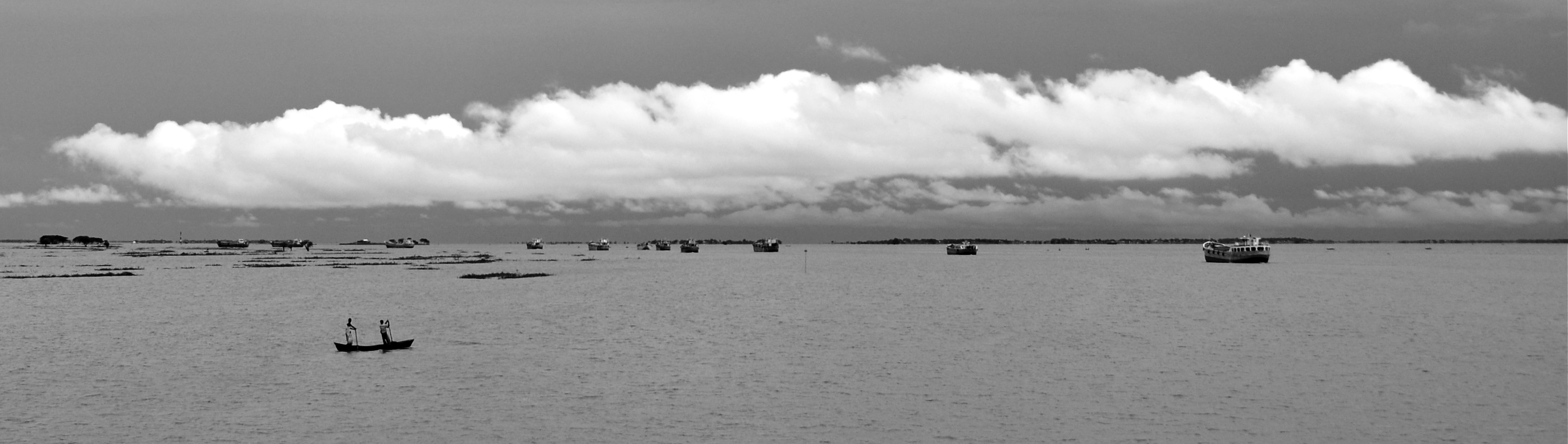
Steven Goodbred is a Professor in the Department of Earth and Environmental Sciences at Vanderbilt University, where he leads research in sedimentology, deltaic systems, and environmental change. His work spans South Asia, particularly the Ganges-Brahmaputra-Meghna delta in Bangladesh, and coastal Peru, focusing on human-environment interactions over the Holocene. He teaches courses in oceanography, sedimentology, and source-to-sink systems, and co-teaches a transdisciplinary course on water and social justice in Bangladesh. His research interests include: Sediment transport and delta evolution Climate and monsoon variability impacts on landscapes Tectonic controls on sediment dispersal Radioisotope geochronology and sediment provenance Environmental change and archaeology in coastal Peru Arsenic contamination in groundwater systems The recent publications reflect a strong focus on delta sustainability, sediment dynamics, and human impacts on coastal systems. His work integrates field observations, geochronology, and modeling to understand long-term landscape evolution and inform sustainable management of vulnerable delta regions. Key themes include the response of deltas to sea-level rise, sediment bypass, and anthropogenic modifications to tidal networks. Scientific awards and honors are not explicitly mentioned in the provided text. Steven Goodbred has advised numerous graduate students, many of whom now hold positions in academia, government agencies (e.g., USGS, US Army Corps of Engineers), and industry (e.g., Shell, Schlumberger). He has secured significant grant funding from NSF, ONR, and international consortia for projects on delta sustainability, environmental stress, and geohazard research. His lab supports advanced sediment analysis including gamma spectrometry, core logging, and handheld XRF. He leads the Surface Environments Lab and the Sediments Lab at Vanderbilt, where research combines geological, geochemical, and geophysical methods to reconstruct past environmental changes and assess future risks in deltaic and coastal systems.
Dr. Fred Beekman is an Assistant Professor in the Tectonics group at the Department of Earth Sciences, Utrecht University. He holds a MSc in Geophysics from Utrecht University and a PhD from VU University Amsterdam. His research focuses on tectonics, geothermal energy exploration, and thermo-mechanical modeling of sedimentary basins. He has been active in establishing research facilities in tectonic deformation modeling laboratories at VU Amsterdam and Utrecht University. Education: MSc Geophysics, Utrecht University PhD in Geophysics, VU University Amsterdam Research Interests: Beekman's expertise spans the characterization of sedimentary basins, geothermal energy resource quantification, and integration of numerical and analogue modeling techniques. His current work emphasizes the exploration and quantification of geo-energy potential in sedimentary basins, with applications in geothermal energy and hydrocarbon systems. He is also involved in international projects addressing climate and energy-related challenges through tectonic processes. Publications: His recent work includes studies on geothermal reservoir mechanics, seismic monitoring of granular analogues, and lithospheric dynamics in Europe and Asia. Key topics include faulted aquifer systems, mantle plume interactions, and Arctic lithosphere structure. These studies reflect his interdisciplinary approach to energy resources and tectonic evolution. Grants & Advising: Supervised 14 PhD students and ~100 MSc/BSc projects Principal Investigator (PI) and researcher in multiple international projects He is an Associate Editor of the Netherlands Journal of Geosciences and a member of professional organizations like AGU and EAGE. Labs/Teams: He leads research in the Earth Simulation Lab at Utrecht University, focused on numerical and analogue tectonic modeling.
Dr. Tom Merry is a Research Fellow in the Department of Earth Sciences at the University of Cambridge, affiliated with the Bullard Laboratories. His research focuses on understanding upper mantle dynamics, the Iceland plume, and seismic anisotropy using advanced seismological techniques. He leads projects involving ocean-bottom seismometers (e.g., the SEA-SEIS network) to investigate mantle structure, deformation, and temperature variations in regions like the North Atlantic and Eastern Mediterranean. Key research themes include: Mantle transition zone structure and temperature Shear-wave splitting for upper mantle deformation analysis Seismic anisotropy in tectonically active regions (e.g., Cyprus, Anatolia) Multi-disciplinary seismological imaging of subduction zones and faults Recent work highlights include: Quantifying mantle flow patterns beneath Africa using quasi-Love wave scattering Analyzing seismicity at the Hikurangi Margin in New Zealand Unraveling lithospheric strain fabrics in the Eastern Mediterranean through shear-wave splitting Collaborates with leading researchers such as Prof. Sanne Cottaar and Prof. Sergei Lebedev. Currently based at the Wolfson Building, Madingley Rise, Cambridge.