Robert A. Pascal, Jr. is a Professor and Bernard Villars Baus Chair in Chemistry at Tulane University's School of Science & Engineering. He previously held positions at Princeton University and has been continuously supported by National Science Foundation grants for his research in organic and physical organic chemistry. Current Affiliation: Tulane University (School of Science & Engineering, Department of Chemistry) Past Affiliation: Princeton University Research Interests Dr. Pascal's research focuses on synthesizing and characterizing sterically congested organic molecules, particularly exploring enzyme mechanisms, aromatic systems, and molecular association. His work bridges fundamental organic chemistry with practical applications in materials science and biochemistry. Key projects include studies on crowded triphenylenes , polyphenylene macrocycles related to cubic graphite, and in-cyclophanes with inward-directed functional groups. These studies often involve computational modeling and experimental validation via X-ray crystallography. Photography & Outreach He maintains extensive photography portfolios of wildlife in Louisiana, New Jersey, and the Great Smoky Mountains, including a dedicated section on "Princeton Vermin" (birds, reptiles, and mammals). His web page includes technical details about his photographic methods and equipment.
Kazimierz Choroś is a Professor at the Department of Applied Informatics , Faculty of Information and Communication Technology , Wrocław University of Science and Technology. He held leadership roles as Deputy Director of the Institute of Informatics (2008-2014) and Deputy Dean of the Faculty of Computer Science and Management (2016-2020). Research interests: digital image/video processing, content-based video indexing, computer animations, multimedia systems, web systems analysis, and information systems design. Organizer and Chair of the International Conference on Multimedia & Network Information Systems (MISSI 2022) Chair of Special Session WebSys 2020 at ICCCI 2020 Other activities: Since 1993, member and former President (1993-2002) of the SAGE Association (Polish Graduates of French Grandes Ecoles). Since 1982, member of the Polish Numismatic Society, author of dozens of numismatic publications, and Editor-in-Chief of Wrocławskie Zapiski Numizmatyczne (2003-present). Contact: Email: kazimierz.choros@pwr.edu.pl Phone: +48-71.320.3799 Office: Building D2, Room 201/1 Address: Wrocław University of Science and Technology, Wyb. Wyspiańskiego 27, 50-370 Wrocław, Poland
Devyn Dodge is a researcher at the Institute for Simulation and Training (IST) under the Simulation, Training and Technology Center (STTC) at the University of Central Florida (UCF). They hold advanced degrees in Systems Engineering, Modeling and Simulation, and Information Technology from UCF, reflecting a multidisciplinary expertise. Research Interests: Devyn specializes in 3D modeling, robotics, simulation training, and prototype manufacturing. Their work emphasizes defense applications, unmanned aerial systems (UAS/UAVs), data mining, and mechanical engineering, with a focus on integrating these technologies into crisis management and training solutions. Scientific Contributions: Devyn’s publication on the Rover Module for Crisis Management highlights their technical leadership in mobile robotics, battery testing, and crowd simulation. This work aligns with their broader expertise in defense simulation and crisis response systems. Awards & Recognition: Awarded Patent: Weapon Simulation Systems (US11644278B2) Labs & Collaborations: Devyn actively collaborates within UCF’s IST/STTC and contributes to graduate research initiatives, emphasizing user-friendly technology systems and interdisciplinary innovation.
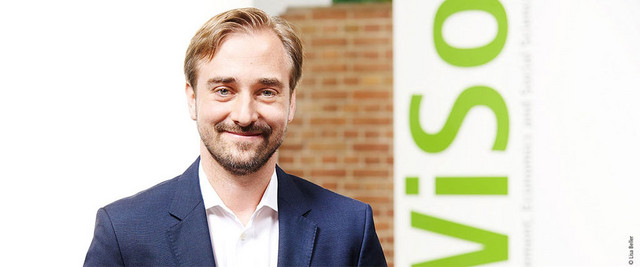
Daniel Wiesen is an Associate Professor in Behavioral Service Management at the University of Cologne 's Faculty of Management, Economics and Social Sciences , focusing on the Department of Business Administration and Health Care Management . His research spans Health Economics , Behavioral and Experimental Economics , and Incentive Design in healthcare contexts. Ph.D. in Economics (2011) from University of Cologne M.A. in Economics (2006) from University of Bonn and National University of Singapore His work examines Physician Behavior , Risk Attitudes , and Behavioral Interventions through experimental methodologies. Google Scholar publications show a thematic progression from Medical Payment Systems to Altruism Dynamics and Clinical Decision-Making . Recent articles focus on 2025 Healthcare Workforce Selection , 2024 Donor Registry Optimization , and 2023 Altruism Frameworks . His experimental research frequently addresses Incentive Structures and Behavioral Healthcare Policy . Active in the Cologne Laboratory for Economic Research (CLER) and associated with the Cluster of Excellence ECONtribute , he contributes to interdisciplinary healthcare economics and social behavior studies .
Gabriel Neurohr serves as Assistant Professor in the Department of Biology at ETH Zurich, Switzerland, where he leads research on the physiological consequences of cell size dysregulation. His work bridges fundamental cell biology with implications for aging and cancer, investigating how deviations from species-specific cell size norms disrupt cellular homeostasis. Academic training includes a BSc in Biochemistry from ETH Zurich (2003-2006), PhD at Barcelona's Center for Genomic Regulation (2008-2012), and postdoctoral fellowship at MIT's Koch Institute (2013-2020). His research program addresses four core questions: (1) functional size limits of cells, (2) size-senescence relationships, (3) macromolecule-volume coordination, and (4) density-dependent functional impacts, employing genetic, live-imaging, and computational approaches in yeast and mammalian systems. Recent publications reveal a methodological evolution toward quantitative analysis, with machine-learning-enhanced imaging (2023) complementing mechanistic studies linking genome instability to size-induced senescence (2023). His 2024 work establishes cell enlargement as a primary driver of senescence through cytoplasmic dilution and organelle dysfunction, demonstrating conserved principles across eukaryotes. Major recognitions include: SNF Eccellenza Fellowship (2020-2025) EMBO Long Term Fellowship (2013-2014) ETH Medal for Master's excellence (2008) Neurohr's lab develops innovative tools like holotomography-based vacuole quantification while maintaining focus on fundamental size-regulation mechanisms. He teaches advanced courses on biomolecular condensates and cellular matter properties, mentoring through ETH's structured graduate programs. Current work explores therapeutic targeting of size-dependent senescence pathways in age-related diseases.
Gaël Le Mens is a Professor in the Department of Economics and Business at Pompeu Fabra University in Barcelona, Spain. He also holds affiliations as an Affiliated Professor at the Barcelona School of Economics and UPF-BSM. In 2023, he was awarded the prestigious ICREA Acadèmia award (2023-2027) for his outstanding research contributions. His research focuses on how people, organizations, and machines learn, particularly examining how learning agents develop and maintain inaccurate beliefs through biased information sampling. His work spans organizational behavior, cognitive psychology, decision science, and computational social science. A significant portion investigates reinforcement learning, sampling biases, and how conceptual categories influence judgment and decision making. Professor Le Mens has published extensively in top journals including Psychological Review (3 papers), PNAS (4 papers), Psychological Science (2 papers), and many others across psychology, organizational science, and political science. His work has been featured in major media outlets including The New York Times, The Times (London), WSJ.com, and FT.com. His recent research shows how adding a 'dislike' button on Twitter could reduce extreme opinion expression and how female politicians receive stronger rewards for writing about gender issues. He develops and tests formal models using text analysis with large language models, online experiments, and laboratory studies. ICREA Acadèmia Awardee (2023-2027) Extensive publications in top-tier journals Research featured in major global media outlets Professor Le Mens has taught graduate courses at INSEAD, London Business School, ESADE, and the Barcelona Graduate School of Economics. He has delivered guest lectures at Stanford GSB and MIT Sloan. His research has received funding from the European Research Council, Fundación BBVA, and the Spanish Ministry of Science and Innovation.
Christine ROUSSAT is a Professor at Université Clermont Auvergne , specializing in logistics and supply chain management. She is affiliated with the Centre de Recherche sur le Transport et la Logistique (CRET-LOG) . Research Interests include: Crowd Logistics Humanitarian Logistics Logistics and Sustainable Development Supply Chain Visibility Environmental Scanning Recent Publications analyze collaborative logistics models, CO2 transparency regulations, and strategic supply chain integration. Her work appears in journals like International Journal of Operations and Production Management and Journal of Business Logistics . Collaborations frequently involve researchers such as Nathalie Fabbe-Costes and Valentina Carbone . She contributes to French academic institutions through research projects and conference presentations.
Panagiotis Xenos is an Assistant Professor of Actuarial Science at the Department of Statistics and Actuarial Science, School of Economics, Business & International Studies, University of Piraeus. His academic career spans teaching, research, and participation in significant national and international research programs focused on insurance, health economics, and organizational efficiency. PhD from University of Piraeus Postgraduate studies at Brandeis University (USA) Postgraduate studies at Boston University (USA) Specialized workshop at York University (UK) Dr. Xenos specializes in Actuarial Science with a particular focus on Insurance Economics, Health Economics, and Productivity Analysis. His research examines the efficiency and productivity of public and private insurance and health institutions, methods of compensation for medical professions, morbidity risk management, social security system sustainability, and insurance portfolio solvency. His work bridges theoretical actuarial science with practical applications in healthcare and social security systems, particularly in the context of economic crises and austerity measures. His publication record demonstrates consistent scholarly output from 2013 through 2023, with a concentration on Greek healthcare and insurance systems but with broader implications for international contexts. The research shows a clear progression from technical actuarial methods toward more comprehensive analyses of healthcare systems, social security sustainability, and economic policy implications. His work frequently employs advanced quantitative methods including Data Envelopment Analysis, Stochastic Frontier Analysis, and Malmquist productivity indices to assess organizational efficiency in healthcare and insurance sectors. Dr. Xenos actively participates in international academic discourse, having presented his research at conferences across Europe, Asia, and Australia, including the World Health Organization conference in Barcelona (2015) on health system financing. He serves as a reviewer for scientific journals and is a member of relevant scientific societies. In addition to his research activities, Dr. Xenos maintains an active teaching role across multiple academic programs. At the undergraduate level, he teaches Introduction to Insurance, Business Insurance, and Personal Insurance. At the postgraduate level, he teaches Health Insurance in the Master's Degree Program in Actuarial Science and Risk Management, Contemporary Issues in Commercial and Insurance Law in the Interdepartmental Master's Program in Law & Economics, and Economic and Financial Management of Health Services in the Postgraduate Program in Healthcare Unit Management at the Hellenic Open University. His teaching reflects his research expertise, connecting theoretical frameworks with practical applications in insurance and healthcare management.
Prof. Dr. Dirk Sliwka is Professor of Personnel Economics and Chair of Corporate Development at the University of Cologne, Faculty of Economics and Social Sciences. His research lies at the intersection of personnel economics, organisational design and strategic management, with a particular focus on how incentives, delegation and organisational structures affect individual behaviour and firm performance. Research Interests Personnel economics: design of pay-for-performance, tournaments and incentive contracts Organisational control: delegation of authority, responsibility allocation and governance structures Theory of the firm: boundaries, vertical integration and strategic decision making Behavioural labour economics: reciprocity, fairness, envy and compassion in employment relations Across more than two decades of scholarship, his empirical and theoretical work spans laboratory experiments, theoretical principal-agent models and large-scale organisational studies. Recent publications examine career concerns in labour markets, the role of responsibility in organisations and strategic delegation in oligopolistic contests, reflecting a consistent interest in how psychological and economic forces shape organisational outcomes. Scientific Awards HR Award 2010 – awarded for outstanding contributions to human resource management research Nominated ten times in HR magazine’s list of “The 40 Leading HR Minds” Grants & Doctoral Training Prof. Sliwka is an active member of the Cologne Graduate School in Management, Economics and Social Sciences (CGS), which provides doctoral training within the Faculty of Economics and Social Sciences. His chair is also closely linked to the ECONtribute Cluster of Excellence “Markets & Public Policy”, a joint initiative of the Universities of Cologne and Bonn funded under the German Excellence Strategy. Laboratory & Collaboration Research at the chair is conducted in close collaboration with the Cologne Laboratory for Economic Research (CLER) and benefits from interdisciplinary ties to behavioural economics and psychology institutes across the university.
Maria Vitalievna Talakh serves as an Assistant Professor in the Department of Computer Science at Yuriy Fedkovych Chernivtsi National University. Holding a Candidate of Biological Sciences degree, she bridges the gap between biological sciences and computer science with her unique interdisciplinary expertise. Education: Bohdan Khmelnytskyi National University of Cherkasy (2018): Systems Analysis, Qualification: Systems Analyst (Diploma with honors) Yuriy Fedkovych Chernivtsi National University (2004): Ecology and Environmental Protection, Qualification: Master of Ecology (Diploma with honors) Candidate of Biological Sciences (2009): Specialty 03.00.16 – ecology, dissertation on 'The role of the forest beech as an edificator species in the forest ecosystem' Research Interests: Dr. Talakh's research spans machine learning algorithms (particularly ensemble models), big data analytics, computer vision, and their applications in life sciences and ecological modeling. Her work demonstrates how computational methods can solve complex problems in environmental monitoring, medical diagnostics, and software engineering. She has developed intelligent monitoring systems for climate, air temperature, plant health, and software test automation, showing the versatility of her methodological approaches. Publication Trends: Her recent scholarly output reveals a strong focus on practical applications of machine learning across diverse domains. The majority of her publications from 2020-2024 explore convolutional neural networks, ensemble methods, and big data processing techniques applied to environmental monitoring, medical diagnostics, and software quality assurance. She frequently collaborates with researchers across disciplines, particularly with colleagues at her institution on projects involving satellite data analysis and ecological monitoring systems. Professional Activities: Member of the Bukovina Information Technology Cluster named after Joseph Schumpeter (Chernivtsi IT Cluster, Cluster Bit Association) since 2019 Scientific consultant for Limited Liability Company 'KM TRADE: Security Systems' (2019) Teaching: Dr. Talakh teaches courses related to data mining, intelligent data analysis, ensemble architectures, geoinformation systems, and big data technologies. She has authored numerous textbooks and teaching materials in these areas, demonstrating her commitment to both research and education in computational methods.
Yuriy Yaroslavovych Tomka is an Associate Professor in the Department of Computer Science at Yuriy Fedkovych Chernivtsi National University. He holds a Candidate of Physical and Mathematical Sciences degree and has been serving as an Associate Professor since April 15, 2021. His academic work spans software engineering, neural networks, and biomedical image processing, with numerous publications in these fields. Dr. Tomka's educational background includes: Bachelor's degree in Laser and Optoelectronic Engineering from Yuriy Fedkovych Chernivtsi National University (2005), with honors Candidate of Physical and Mathematical Sciences degree (2009) in specialty 01.04.05 – Optics, Laser Physics Dr. Tomka's research interests focus on software architectures, enterprise application development on the .NET platform, pattern recognition, digital image processing, and neural networks. His work bridges theoretical computer science with practical applications in biomedical diagnostics, financial technology, and e-commerce systems. He has made significant contributions to the development of information systems, machine learning applications, and educational methodologies in computer science. Analysis of Dr. Tomka's recent publications reveals a strong focus on practical applications of software engineering principles, particularly in the .NET ecosystem. His work spans from fundamental software architecture to specialized applications in biomedical imaging and financial forecasting. There's a clear trend toward interdisciplinary research, combining computer science with fields like medicine and finance, demonstrating the versatility and applicability of his technical expertise. Dr. Tomka has received recognition for his mentorship, guiding student research that won second-degree diplomas in national competitions. His professional development includes numerous certifications in modern software technologies from institutions like Sigma Software University. As an active member of the Bukovina Information Technology Cluster named after Joseph Schumpeter since 2019, Dr. Tomka contributes to regional IT development initiatives. He also provides scientific consulting to the Limited Liability Company "Buknanotech" and has managed research projects including "Development of new methods and biomedical systems for polarization-holographic fractalmetry of crystallites of tissues and fluids of human organs" (2019-2021).
Simon Rienks, M.Sc., is a Researcher at the Institute for Logistics, Transport and Production within the Hamburg Business School at the University of Hamburg. His academic focus spans discrete choice modeling, machine learning applications, and crowd management systems. Research Interests Discrete Choice Modeling Machine Learning Crowd Management Contact Email: simon.rienks@uni-hamburg.de Office: Room 2027, Moorweidenstraße 18, 20148 Hamburg
Prawesh Shankar is an Associate Professor in the Department of Management Sciences at the Indian Institute of Technology Kanpur. He holds a PhD from the University of South Florida, College of Business, and completed his M.Sc. (Integrated 5-year program) in Mathematics and Scientific Computing at IIT Kanpur. PhD: University of South Florida, College of Business (2009-2013) M.Sc.: IIT Kanpur, Mathematics and Scientific Computing (2004-2009) Dr. Shankar's research focuses on Social Media, Agent Based Simulation, and Fairness in Big Data. His work bridges the gap between computational methods and business applications, particularly in the domain of recommender systems and social network analysis. He has developed innovative approaches to news recommendation systems with emphasis on manipulation resistance and count amplification issues. His publication record shows a consistent focus on recommender systems, with numerous conference presentations at prestigious venues including RecSys (the premier conference in Recommender Systems), ICIS, WITS, and INFORMS. His research has evolved from foundational work on manipulation resistance in news recommenders to more recent applications in social media analytics and network analysis. College of Business Outstanding Doctoral Student Research Award 2012 University of South Florida, Graduate Fellowship 2009 – 2010 Dr. Shankar has delivered several invited talks on Social Media Analytics and Topological Data Analysis at IIT Kanpur events. His ongoing research projects include Simulation based Crowd Management for Disaster Prevention in collaboration with Indanil S. Dalal and Anurag Tripathi, and Text mining Approach to Measure Customer Satisfaction with Amit Trivedi. He maintains active collaborations with researchers including Balaji Padmanabhan and has contributed to the academic community through presentations at major conferences in business intelligence and information systems.
Johannes Wachs is an Associate Professor (Docens) at the Institute of Data Analytics and Information Science, Corvinus University of Budapest, and a Research Fellow at the Institute of Economics, Centre for Economic and Regional Studies. He maintains an affiliation with the Complexity Science Hub Vienna, focusing on interdisciplinary research at the intersection of data science, network theory, and socioeconomic systems. His educational background includes a PhD in Network Science (summa cum laude, Central European University, 2019), an MS in Applied Mathematics with distinction (Central European University, 2012), and dual BS degrees in Mathematics and Economics (cum laude, Tulane University, 2009). Wachs specializes in analyzing social, technical, and economic networks, with recent emphasis on the societal impact of software systems—particularly open-source ecosystems and AI technologies. His work employs computational social science methods to investigate developer behavior, innovation diffusion, and network-driven inequality. Key research threads include software ecosystem dynamics, corruption detection in public procurement, and urban network segregation effects on socioeconomic disparities. His publication portfolio reveals a strong focus on open-source software geography, AI's societal implications, and network-based corruption analysis, with increasing attention to generative AI's impact on knowledge-sharing platforms and software development workflows since 2023. Scientific recognition includes: IMF Anti-Corruption Challenge (2020) He actively supervises doctoral candidates including Hannah Schuster (WU Wien/CSH) and Brigi Németh (Corvinus University), alongside mentoring numerous bachelor's theses on topics ranging from corruption analytics to Stack Overflow dynamics. Major funded projects include the Hungarian Research Funding Agency's Building Blocks of the Digital Economy (2024-2027) and the FFG-supported CRISP initiative (2021-2024) on crisis response through semantic data pooling. Wachs contributes to the Complexity Science Hub Vienna and leads Corvinus University's upcoming MSc in Social Data Science (launching 2025), positioning him at the forefront of computational social science education in Central Europe.
Anna Obizhaeva is a Full Professor of Finance with tenure at the New Economic School (NES) in Moscow. She serves as Director of the Master of Finance program, Mini-MiF Online Program, and Express Business Programs. Prior to joining NES in 2014, she was an Assistant Professor of Finance at the University of Maryland's Robert H. Smith School of Business from 2007 to 2014. Dr. Obizhaeva earned her PhD in Finance from MIT Sloan School of Management in 2007 and completed her undergraduate studies in Computational Mathematics and Cybernetics at Lomonosov Moscow State University in 2001. Her research focuses on financial stability and market microstructure, with particular expertise in liquidity, market crashes, volatility, price manipulation, and optimal execution of trading strategies. Dr. Obizhaeva has developed groundbreaking theories on market microstructure invariance that have been presented at prestigious venues including the Nobel Symposium in Stockholm. Her work bridges theoretical finance with practical applications in market design and trading strategy development. Dr. Obizhaeva has published extensively in top finance journals including Econometrica, Review of Economic Studies, Journal of Finance, and Review of Finance. Her research demonstrates consistent focus on understanding the fundamental mechanics of financial markets through innovative theoretical frameworks and empirical analysis. Roger F. Murray Q-Group Prize (first place) for research on market microstructure invariance Best Paper in Investments award (2019) Dr. Obizhaeva serves on the editorial board of the Russian Journal of Money and Finance and has previously served on the editorial board of Journal of Portfolio Management (2014-2019). She is a member of the Foundation for Advancement of Research in Financial Economics since 2019 and co-organizes joint research seminars between the Bank of Russia, NES, and HSE. Her teaching portfolio includes Investments, Market Microstructure, Asset Management, and Contemporary Issues in Financial Markets.