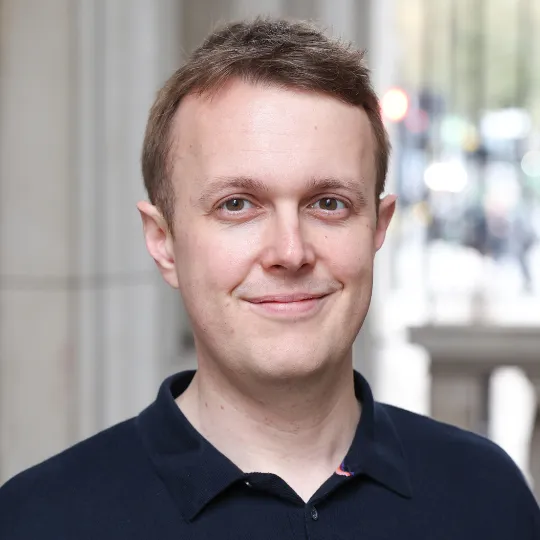
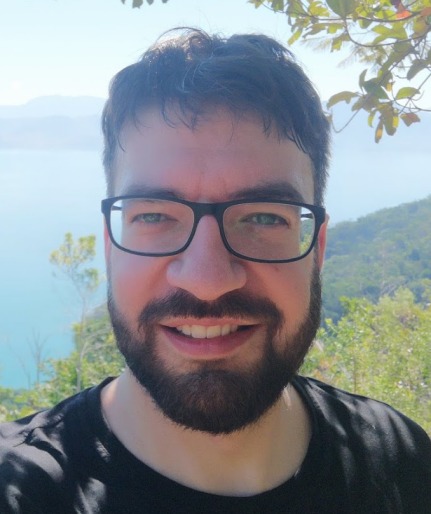
Prof. Florian Alexander Schmidt holds a professorship at the Faculty of Design, contributing to interdisciplinary research at the intersection of technology, ethics, and digital labour markets. His work critically examines the societal implications of emerging technologies such as AI, autonomous systems, and platform economies. Research interests include the ethical dimensions of crowdsourcing, the transformation of labour dynamics in the platform economy, and the design of human-AI collaboration systems. He has explored topics like AI training data production, autonomous vehicle ethics, and the socio-political challenges of gig work and crowd work. His publications analyze the complex interplay between technological innovation and human rights, emphasizing the need for ethical frameworks in digital labour markets. Notable themes in his work include platform capitalism critique, regulatory challenges in AI, and the democratization of design through crowdsourcing.
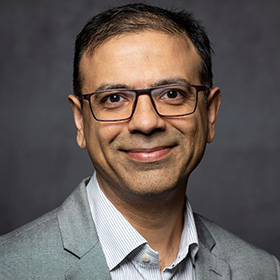
Dr. Vinod Ahuja is an Assistant Professor in the Department of Computing & Software Engineering at U.A. Whitaker College of Engineering, Florida Gulf Coast University. He holds a Ph.D. in Information Technology and an MS in Management Information Systems from the University of Nebraska-Omaha, along with an MBA and Computer Science Diploma from Quaid-i-Azam University Islamabad, and additional certifications in banking from Institute of Bankers Pakistan. Research Interests: His work emphasizes open collaboration , particularly in open source software and citizen science , focusing on organizational engagement in open source development and volunteer performance in citizen science projects. His research spans interdisciplinary domains such as cybersecurity, automotive software, agricultural technology, and digital innovation. Publication Trends: His recent work (2025-2018) covers AI integration in open source, corporate boundaries in collaborative development, financial gains from open source, and methodologies for crowdsourced classification, with a focus on metrics for software impact and community engagement models. Professional Involvement: He actively contributes to the Linux Foundation Project CHAOSS as a maintainer and participates in peer review at major conferences including ICIS, AMCIS, and CSCW.
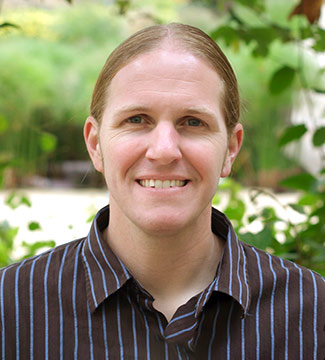
Timothy Lucas is a Professor of Mathematics at Pepperdine University's Seaver College, within the Natural Science Division. He holds a PhD in Mathematics from Duke University (2006), an MA from Duke (2001), and an AB from Occidental College (2000, With Honors). His research focuses on mathematical ecology, mathematical biology, and educational technology, particularly developing apps like Slopes and Waves to visualize differential equations. He collaborates with undergraduates on projects modeling biological systems such as chaparral vegetation dynamics under wildfires, California newt population declines due to drought and invasive crayfish, and emergency evacuation simulations. Dr. Lucas' educational contributions include advancing calculus pedagogy and integrating iPads into classroom environments to enhance collaborative learning. His work bridges computational methods with real-world ecological challenges, emphasizing interdisciplinary approaches. He teaches courses ranging from calculus to partial differential equations and probability theory. His research has been published in journals like Ecological Modelling , Journal of Theoretical Biology , and SIAM Journal on Numerical Analysis . The apps he developed ( Slopes , Waves ) are widely used for visualizing mathematical concepts. Recent work explores multifactor threats to biodiversity and innovative educational technologies.
José Demetrio Piñeiro Vera is an Associate Professor at the Universidad de La Laguna, affiliated with the Department of Computer Science and Systems Engineering. His research interests span systems engineering, robotics, neural networks, medical diagnosis, bifurcation analysis, and automation. He leads the GRULL robotics research group and has contributed extensively to interdisciplinary fields combining AI, engineering, and healthcare. He holds a PhD from the Universidad de La Laguna (1997), focusing on knowledge-based systems for diagnosing brain pathologies from EEG signals. His academic career includes over three decades of teaching and research, with a focus on real-world applications of neural networks, control systems, and robotics. His research emphasizes neural network dynamics, including bifurcation analysis in recurrent networks, automated medical diagnosis systems, and robotics navigation. Notable contributions include ontology-based indoor navigation systems, probabilistic collision detection algorithms, and tools like the Evenet2000 neural network toolkit. His work bridges theoretical computer science with practical applications in healthcare and autonomous systems. Collaborations span topics from hospital management simulations to multimedia technologies for developmental dyslexia treatment. His expertise integrates simulation, knowledge-based systems, and hardware experiments in education and research laboratories.
Elena Molina Lopez is a researcher at the Department of Computer Science within the Barcelona School of Informatics at Universitat Politècnica de Catalunya · BarcelonaTech (UPC), actively contributing to the ViRVIG research group focused on visualization, virtual reality, and graphical interaction. Her work develops immersive analytics systems for molecular visualization and 3D interaction techniques. Her academic background includes: PhD in Computer Science (thesis: 'Advanced Interaction in Immersive Analytics Systems for Molecular Visualizations') Her research spans virtual reality, molecular visualization, 3D interaction, data visualization, human-computer interaction, and computer graphics. She investigates user perception in visualization techniques, with recent work addressing molecular atom selection accuracy, heatmap color palette effects, and statistical visualization design guidelines. Her publications demonstrate technical innovation through user studies and system development. Analysis of her 2020-2024 publications reveals consistent contributions to top venues like Computers & Graphics and EuroGraphics, with emphasis on VR interaction techniques for molecular structures and perceptual studies in data visualization. Key trends include improving selection accuracy in immersive environments and establishing evidence-based design principles. She collaborates extensively on research projects including 'Entornos 3D de alta fidelidad para Realidad Virtual y Computación Visual', working with prominent researchers such as Pere Pau Vazquez (8 collaborations), Nuria Pelechano, and Alejandro Rios across health, architecture, and urban applications. As a core member of the ViRVIG research group, she participates in a dynamic team advancing visualization technologies through interdisciplinary approaches and industry partnerships.
Tiantian Liu is an Assistant Professor in the Department of Computer Science at Aalborg University's Technical Faculty of IT and Design. Their research focuses on indoor location-based services, trajectory analysis, and spatial data management. Key areas include indoor navigation algorithms, temporal-variation-aware path queries, and uncertainty-aware contact tracing systems. Education details are not explicitly provided in the text. The researcher has collaborated on the Data Management Foundations for Indoor LBS project (2019-2021), contributing to foundational work in indoor spatial databases. Research interests span computer science , data management , and spatial computing . Notable contributions include keyword-aware routing systems (IKAROS), robust trajectory similarity computation (CLEAR), and time-constrained indoor pathfinding frameworks. Their work integrates machine learning, database systems, and algorithmic design to address challenges in indoor environments. In 2021, Liu co-authored the SSTD 2021 Best Paper Candidate . Their research emphasizes practical applications such as crowd-aware path planning and uncertainty modeling in indoor positioning data. Current work explores continuous similarity search for vessel trajectories (2025) and novel methods for handling temporal variations in indoor environments. The researcher's lab focuses on intelligent building systems and context-aware spatial analytics.
Milad Haji Amiri is a researcher at Delft University of Technology's Faculty of Industrial Design Engineering, specifically within the Design, Organisation and Strategy department and affiliated with the DesIgning Value in Ecosystems research group. With a PhD and active publication record from 2014-2024, he contributes to the academic community through research at the intersection of design theory, organizational practices, and creative processes. His research interests span Design Theory , Organizational Transitions , Creative Practices , Design Education , Universal Design , Idea Generation Techniques , and Co-Design . His work demonstrates a consistent focus on how creative practices can facilitate organizational change and how design principles can be applied across various contexts from educational settings to public spaces. Dr. Haji Amiri's recent publications (2022-2024) show a clear trajectory toward understanding how creative practices can drive organizational transformation, particularly during crises. His work combines theoretical frameworks with practical applications, examining design processes in educational contexts, architectural considerations, and organizational change initiatives. His approach integrates both Western design theory and insights from his earlier work in Turkish design contexts. Scientific Recognition: First Prize in National Toy Design Competition (2010) organized by the Chamber of Architects of Turkey His research methodology spans qualitative and theoretical approaches, with publications appearing in design journals and conference proceedings. While specific grant information isn't available in the provided materials, his sustained publication record suggests ongoing research support. Dr. Haji Amiri's work contributes to the Faculty of Industrial Design Engineering's mission of advancing design knowledge and practice through rigorous academic inquiry.
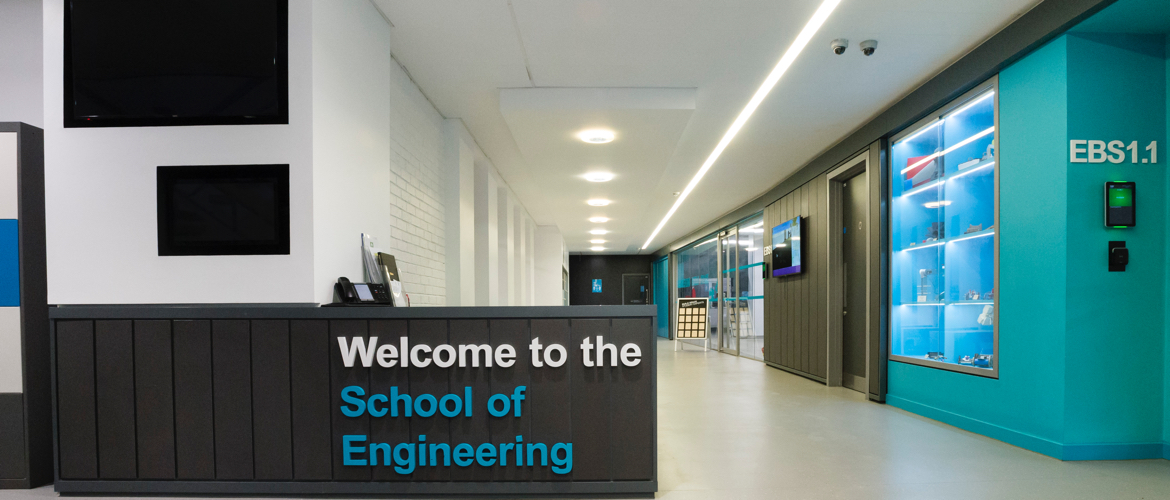
Yongmann Chung is an Associate Professor at the School of Engineering, University of Warwick. His research focuses on Computational Fluid Dynamics (CFD), turbulence modeling, and flow control with applications in aerospace engineering and electrochemistry. He specializes in Large Eddy Simulation (LES) and Direct Numerical Simulation (DNS) of complex flows, including micro-fluid dynamics in electrochemical systems and drag reduction strategies. His work spans unsteady turbulent flows, heat transfer, and aerodynamic phenomena in systems like flying cars and quadcopters. Teaching interests include fluid mechanics (ES2A7), computational fluid dynamics (ES440), and scientific computing (MA5P9). Recent publications explore battery health prediction using graph neural networks, vortex ring state analysis, and computational models for droplet dispersion in public spaces. Chung’s research also addresses industrial challenges such as cavitation erosion monitoring and turbulent flow control via Lorentz force actuation. Office hours are Fridays 10 am–12 pm during term time. He advises projects and grants in fluid dynamics and thermal engineering, with a focus on both fundamental turbulence research and applied energy systems. His work extends to bio-inspired design, exemplified by studies on dolphin kick swimmers, and environmental health modeling for airborne disease transmission.
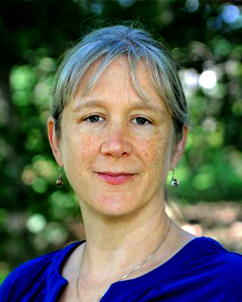
Rachael Bradley-Montgomery is an Adjunct Professor at the College of Information Studies , University of Maryland, College Park, and serves as a Digital Accessibility Architect at the Library of Congress. She holds a MS from the University of Illinois at Urbana-Champaign and a PhD from the University of Maryland, College Park. Her research focuses on Using online communities and crowd-sourcing to address accessibility challenges The intersection of usability and accessibility in digital and physical environments Rachael actively contributes to accessibility standards through her roles as co-chair of the W3C Accessibility Guidelines Working Group and co-facilitator of the Cognitive and Learning Disabilities Accessibility Task Force . She also leads Accessible Community , a non-profit supporting small organizations in achieving accessibility. She has over 20 years of experience in usability, human-computer interaction, and digital accessibility consulting.
Dr. Gavin Williams is a Lecturer in Music at King's College London, part of the Faculty of Arts & Humanities. He joined King's in 2022 after teaching and research roles at the University of Cambridge, UC Berkeley, and Cardiff University. His research focuses on the politics of sound, wartime listening, and energy humanities. He is a Fellow of the Higher Education Academy (HEA). Education Background: Previous academic appointments at Cambridge, UC Berkeley, and Cardiff University. Research Interests: Williams explores sound’s role in history and culture, including its intersections with energy systems (e.g., Critical Perspectives on Petrosonics ), wartime acoustics, and global media technologies. Key themes include: Shellac disc histories and global soundscapes (e.g., Format Friction ). Energy humanities and petrosonics. Music’s relationship with technology and environment. Publications & Projects: Recent works analyze sound in conflict (e.g., Hearing the Crimean War ), energy systems, and interdisciplinary collaboration. He co-edits a book on petrosonics and leads projects like the Leverhulme Trust-funded Geographies of the Gramophone . Awards: 2020 Royal Musical Association/Cambridge University Press Prize for Hearing the Crimean War . Teaching & Mentorship: Teaches courses on music from 1800 to present, including sound studies and environmental humanities. Advises students on dissertations at all levels. Labs/Networks: Member of interdisciplinary energy humanities networks in Wales and affiliated with Fiona Smyth’s ERC-funded project on silent environments.
Isabella Seeber is an Associate Professor at the Department of Management, Technology and Strategy at Grenoble Ecole de Management. She holds a doctorate from the University of Innsbruck (2013) and conducted research at the University of South Florida (2015/2016) under FWF Schrödinger funding. Her work focuses on AI-enabled conversational agents, team collaboration, digital nudging, and innovation processes in crowdsourcing. Education: PhD in Management, University of Innsbruck, Austria (2013) Research Interests: Her studies explore how AI interacts with human teams, including psychological safety in virtual teams, decision-making in HRM, and the ethical implications of conversational agents. She emphasizes digital tools to enhance collaboration and innovation, leveraging frameworks like Collaboration Engineering and cognitive load theory. Funding & Projects: FWF-funded project UMIC (2017–2020) FWF Schrödinger Fellowship (J 3735) Key Themes in Publications: Recent work examines virtual influencers’ impact on consumer behavior (2025), AI applications in HR decision-making (2024), and psychological safety in global teams (2024–2023). Her articles also address human-AI team dynamics, nudges in innovation contests, and child-AI interactions.
Chiara Bassetti is an Associate Professor at the Department of Sociology and Social Research, University of Trento, and Deputy Coordinator of the PhD Program in Sociology and Social Research. She holds a PhD in Sociology from the University of Trento (2010) and has held roles including Tenured Researcher at CNR and Post-doctoral Fellow at multiple institutions. Her research focuses on studies of social interaction, ethnomethodology, workplace studies, and science and technology studies, with a particular emphasis on embodiment, socio-technical systems, and participatory design. Educational background includes a master's in Communication Sciences from the University of Bologna (2004) and visiting scholar experiences at UC Riverside and King's College London. She has led projects like the SPaRe Lab and the Reworlding Marie Sklodowska-Curie Action, addressing socio-environmental challenges through participatory design. Her work integrates qualitative methods, video analysis, and interdisciplinary approaches to study phenomena like airport security, artistic practices, and collaborative economies. Key achievements include the Marie Sklodowska-Curie Seal of Excellence (2017), Special Mention at PRIMA 2015 Awards, and grants for research on socio-technical systems and participatory welfare initiatives (Commonfare). She has published widely in journals like Etnografia e Ricerca Qualitativa and co-edits the journal. Teaching spans advanced qualitative methods, ethnography, and design for smart communities. Bassetti’s research also explores gender studies, digital transformation, and social innovation, with notable work on precarious labor and collaborative economies. She leads interdisciplinary teams and has advised multiple PhD committees, demonstrating a commitment to fostering both academic and practical knowledge.
Prof. Axel Klar is a Professor in the Department of Technomathematics at the Rheinland-Palatinate University of Applied Sciences (RPTU) Kaiserslautern-Landau. His research focuses on mathematical modeling of complex systems, with a strong emphasis on kinetic theory, fluid dynamics, and applied analysis. Key areas of expertise include traffic flow dynamics, fiber dynamics in industrial processes, pedestrian movement patterns, and biological systems such as cell motion and tumor growth. He develops and analyzes numerical methods for partial differential equations and stochastic systems, often addressing challenges in technical textile production, non-equilibrium thermodynamics, and multi-physics simulations. His work bridges microscopic particle-based models with macroscopic continuum descriptions, emphasizing asymptotic methods and domain decomposition techniques. Notable contributions include stochastic fiber lay-down models for nonwoven manufacturing, mesh-free particle methods for granular and rarefied gas flows, and kinetic-based traffic models with applications to autonomous vehicles and crowd control. Current research explores data-driven approaches for coupled systems in socio-economic and biomedical contexts. Prof. Klar’s interdisciplinary projects involve collaborations with industry partners (e.g., in textile engineering) and academic institutions globally. His team develops open-source numerical toolkits for applications ranging from radiation therapy optimization to climate-resilient infrastructure design. Recent efforts focus on AI-driven parameter estimation for high-dimensional PDE systems and uncertainty quantification in multi-scale modeling.
István Sárándi is a postdoctoral researcher in the Real Virtual Humans group led by Prof. Gerard Pons-Moll at the University of Tübingen, Germany. He holds a PhD in Computer Vision from RWTH Aachen University (2023) and a master’s degree in Computer Science from RWTH Aachen (2015), with earlier studies at the Budapest University of Technology and Economics (2011). His research focuses on robust and efficient 3D human pose estimation, including work on truncation-robust methods (MeTRAbs), synthetic data generation (STAGE), and cross-dataset learning. He has won 3D pose estimation competitions at ECCV 2018 and 2020 and received Outstanding Reviewer Awards at CVPR 2021 and 2022. His PhD was funded by the Bosch Research Foundation. Education: PhD: RWTH Aachen University (2023) MSc: RWTH Aachen (2015) BEng: Budapest University of Technology and Economics (2011) Key Achievements: 1st place in ECCV 2018 and 2020 3D pose challenges Outstanding Reviewer Awards (CVPR 2021/2022) Developed MeTRAbs, STAGE, and other influential methods Publications emphasize advancing 3D human understanding through robust learning techniques, synthetic data, and multi-task frameworks. Supervised theses include work on temporal modeling of multi-person interactions and pose-conditioned human image synthesis. Active in teaching, including deep learning and computer vision courses at RWTH Aachen.
Sanorita Dey is an Assistant Professor in the Department of Computer Science and Electrical Engineering (CSEE) at the University of Maryland, Baltimore County (UMBC). She leads the Social Intelligence Lab and investigates human-computer interaction, social computing, and persuasive technology, with applications spanning STEM education, developmental-disability support, and equitable technology adoption. Education: Ph.D. in Computer Science, University of Illinois at Urbana-Champaign (2020) M.S. in Computer Science and Engineering, University of South Carolina (2013, Outstanding Thesis Award) B.E. in Computer Science and Technology, IIEST (formerly B.E. College) (2007) Research Interests: Dr. Dey’s work lies at the intersection of human-computer interaction , social computing , and crowd computing . She explores how technologically mediated persuasive systems influence spatial learning, STEM motivation, and community narratives. Ongoing projects examine AI agents’ contextual reliability, YouTube’s role in supporting parents of children with developmental delays, and barriers Black and Latinx students face in computing pathways. Publications & Trends: From 2017–2025, her 15 most-cited articles map a trajectory from early work on crowdfunding narratives and spatial-navigation tools to recent AI-bias and developmental-disability studies. Collectively, these works advance explainable AI , inclusive education technology , and computational social science , consistently appearing in top-tier venues such as CHI, CSCW, AAAI/AIES, and GROUP. Awards & Honors: Maria Pia Gratton International Fellowship (2019) Top-5 Paper Award, SUI (2019) UIUC Graduate College Dissertation Completion Fellowship (2018) CHI 2018 Best Paper Honorable Mention Adobe Digital Marketing Research Award (2016) Outstanding MS Thesis Award (2014) SPARC Graduate Fellowship (2013) Best Poster Runner-Up, HotMobile (2013) Advising & Funding: Dr. Dey currently mentors 3 Ph.D. students , 6 master’s students , 2 undergraduates , and 2 K-12 researchers in the Social Intelligence Lab. She recently received the COEIT Interdisciplinary Award (2024) to develop a summer workshop promoting computing role models among under-represented students. Labs & Teams: She directs the Social Intelligence Lab at UMBC, fostering interdisciplinary collaborations across HCI, AI ethics, education, and global-development domains.