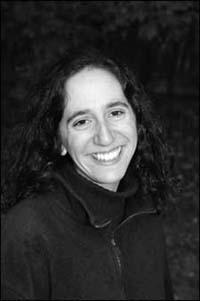
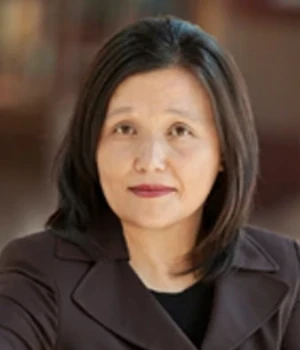
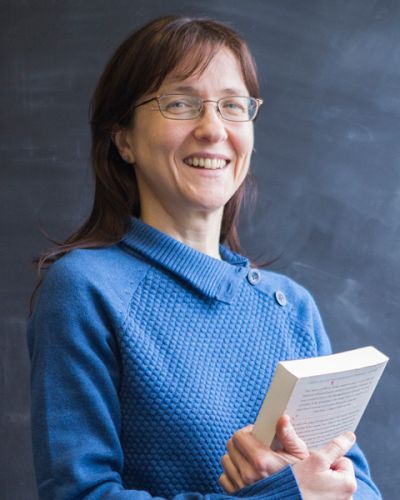
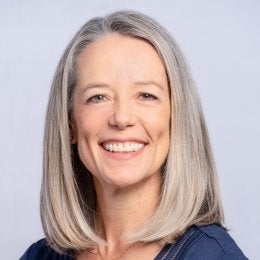
Shira Eve Epstein is Associate Professor and Deputy Dean at the City College of New York's School of Education. Her research centers on civic engagement, racial equity in education, and teacher preparation in contentious political environments. Recent publications demonstrate a strong focus on civic literacy development through innovative pedagogical approaches. Her work examines how teachers navigate complex sociopolitical contexts, particularly regarding race discussions and democratic education during polarized times. Articles frequently analyze scaffolded instructional strategies for critical reading of civic texts and student-centered social action projects. Key research themes include: Teacher reflections on race and identity in classroom discourse Curriculum adaptations for global citizenship education Mentorship models for new educators in politically charged climates Youth empowerment through community-based projects
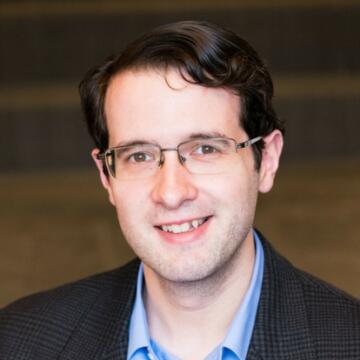
Colin Brown serves as Associate Teaching Professor of Political Science and Undergraduate Program Director in the College of Social Sciences and Humanities at Northeastern University. His research examines descriptive representation of immigrant communities in Western Europe, with particular focus on how electoral systems and party rules create trade-offs between gender and ethnic diversity in candidate selection. Education: PhD in Political Science from Harvard University (2015) BA in Political Science from University of Rochester (2007) Dr. Brown's research program spans two interconnected domains: political representation of immigrant communities and innovative pedagogy in political science education. His representation work analyzes election laws in Germany, Netherlands, and France to identify institutional mechanisms affecting diversity in political candidacies. Simultaneously, he develops evidence-based teaching methods for writing instruction, empathy development, and information literacy through classroom experiments and curriculum design. Analysis of his 15 most recent publications (2011-2025) reveals a dual scholarly trajectory: 40% focus on immigration politics and representation (primarily Western Europe case studies), while 60% advance political science education through rubric design, simulation pedagogy, and empathy cultivation. The 2025 publications particularly emphasize assessment innovation and emotional dimensions of political learning. Scientific Awards: Harvard College Fellow As Undergraduate Program Director, Brown oversees curriculum development and student advising while co-editing Political Science Educator . He maintains active research collaborations through the Minda de Gunzburg Center for European Studies (Harvard affiliate) and contributes to APSA's teaching initiatives. Though specific grants aren't detailed, his scholarship demonstrates sustained funding through academic appointments and conference leadership. Brown collaborates with Northeastern colleagues including Max Abrahms (terrorism research) and Amílcar Antonio Barreto (comparative politics), while maintaining Harvard Center for European Studies affiliation. His GovWrites curriculum development and JFK Memorial Policy Fellows coordination demonstrate cross-institutional team leadership in political science education.
Manoj Mate is a Professor of Law at the University at Buffalo School of Law, State University of New York, and an Affiliated Faculty Member at the Center for Information Integrity. His research focuses on Public Law, Constitutional Law, Election Law, and Comparative Constitutional Law. He holds a B.A. from UC Berkeley, a J.D. from Harvard Law School, and a Ph.D. in Political Science from UC Berkeley. Professional highlights include roles as Chair of the AALS sections on Comparative Law and Law & South Asian Studies, appointment to the Illinois Racial Profiling Prevention Board, and Senior Policy Advisor to San Antonio Mayor Julian Castro. He previously served as Inaugural Director of the Racial Justice Initiative at DePaul University and Canada Research Chair in International Trade Law at the University of Windsor. Visiting appointments include Berkeley, UC Irvine, and Harvard Law School's East Asian Legal Studies program. Publications span leading law reviews (e.g., Connecticut Law Review, Tulane Law Review) and books with Oxford/Cambridge University Press. His commentary appears in Time Magazine, The Hill, and Salon. He has held prestigious fellowships including Mellon Sawyer and Public Voices Fellow (2022). Research interests include judicial governance, electoral integrity, constitutional erosion, and globalization's impact on rights frameworks. His work bridges comparative constitutional analysis with practical policy interventions.
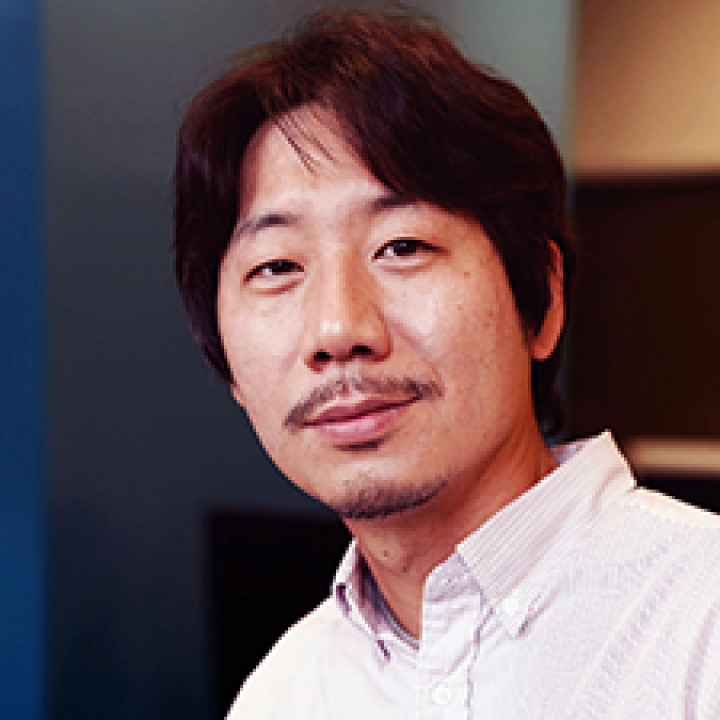
Dr. Seong Jae Min is a Professor in the Department of Communication and Media Studies at Dyson College of Arts and Sciences, Pace University. He is based in the NYC campus and actively contributes to academic and public discourse on journalism, political communication, and civic engagement. His work bridges scholarly research and real-world media practice, informed by his experience as a former journalist and current newspaper columnist. Education: PhD in Communication, Ohio State University, 2009 MA in International Affairs, Georgetown University, 2002 BA in Literature, German, Korea University, 1999 Dr. Min's research centers on the intersection of journalism and democracy, with a focus on technological change, racial and gender dynamics in newsrooms, and democratic deliberation. His scholarship explores how new media technologies reshape public discourse, the challenges of algorithmic filtering, and the role of citizen journalism in revitalizing democratic participation. He also investigates cross-cultural aspects of deliberation and media representation, particularly concerning Asian American experiences. His recent publications span journals such as Journalism , Journalism Studies , and American Politics Research , and include influential books like Navigating White News and Rethinking the New Technology of Journalism . Collectively, his work reveals a sustained inquiry into how journalism can adapt to digital transformation while upholding democratic values, addressing inequality, and fostering inclusive public dialogue. Scientific Awards: National Communication Association (NCA) Asian/Pacific American Communication Division, 2024: Outstanding Book Award Fulbright U.S. Scholar Award, 2023–24 Eastern Communication Association, 2017: Best Paper ECA Political Communication Division, 2014: Best Paper Project Pericles, 2010: Periclean Faculty Leader ICA Journalism Studies Division, 2008: Best Paper Dr. Min has received significant recognition for his scholarly contributions, including a Fulbright U.S. Scholar grant to Korea (2023–24), which supports his international research. While specific grant amounts are not listed, his Fulbright award indicates competitive federal sponsorship. He has mentored students through independent studies and internships, though no named advisees are listed. He is an active member of major professional organizations including the National Communication Association, International Communication Association, and Association for Educators in Journalism and Mass Communication. His courses include Introduction to Journalism, Media Criticism, and Citizen Journalism & Deliberation, reflecting his interdisciplinary approach. There is no mention of labs or formal research teams, but his collaborative publications suggest engagement with scholarly networks.
Dr. Dan Jurafsky is a Professor at the Department of Linguistics within Stanford University's School of Humanities and Sciences. His work spans computational linguistics, natural language processing, and AI ethics, with a particular focus on language model behavior, speech recognition, and ethical implications of anthropomorphism in AI systems. His recent research explores HumT for measuring human-like tone in LLMs, AnthroScore for anthropomorphism detection, and methods for improving low-resource language support through data augmentation and multilingual representation learning. He has also developed open-source tools like string2string for string algorithms. Jurafsky's publications address critical issues in NLP, including grounding gaps in conversational models, causal interpretability in linguistic tasks, and representational biases in multilingual models. His work emphasizes interdisciplinary applications, from educational NLP tools to Sumerian transliteration datasets, while advocating for rigorous statistical power analysis and ethical model evaluation.
Chia Youyee Vang serves as Professor of History and Affiliated Professor of Urban Studies at the University of Wisconsin-Milwaukee, where she also holds the administrative position of Faculty Vice Chancellor for Community Empowerment and Institutional Inclusivity. Her academic career centers on Hmong diaspora studies, refugee migration, and transnational community formation, with significant contributions to Asian American and Southeast Asian American scholarship through interdisciplinary research and community engagement initiatives. Her educational foundation includes a PhD in History from the University of Minnesota (2006), an MA in Public Affairs from the Humphrey Institute of Public Affairs (1996), and a BA from Gustavus Adolphus College (1994). This interdisciplinary background informs her approach to examining historical and contemporary refugee experiences. Professor Vang's research focuses on 20th century US-Asia relations, Cold War politics, and the reconstruction of community in diaspora, with particular emphasis on Hmong history and culture. She investigates how refugee communities navigate identity, cultural preservation, and political agency across national borders, challenging victimhood narratives through documentation of human resilience and resistance. Her scholarship bridges historical analysis with contemporary refugee studies, highlighting transnational connections and generational change within diasporic communities. Analysis of her recent publications (2018-2024) reveals sustained engagement with Hmong and Southeast Asian diaspora studies alongside expanding interdisciplinary collaborations. While maintaining her core focus on refugee experiences and transnational identity, her work has increasingly addressed diversity initiatives in higher education, disability studies in STEMM fields, and mindfulness programming, demonstrating responsiveness to evolving social justice concerns within academic and professional contexts. No specific scientific awards or major fellowships are documented in the available materials. However, her leadership as Director of the Hmong Diaspora Studies Program represents significant institutional contribution through community-academic partnerships and scholarship advancement. In her teaching capacity, Professor Vang mentors students through courses including Hmong American History, Culture and Contemporary Life; Exploring Cambodia, Laos and Vietnam (short-term study abroad); The Vietnam War; and Globalization of America-The Asian American Experience. Her advising focuses on Asian American history, refugee studies, and transnational community dynamics, preparing students for research and community engagement with diasporic populations. As Director of the Hmong Diaspora Studies Program, Professor Vang leads initiatives connecting academic research with community needs across multiple national contexts. The program facilitates transnational dialogue, supports community-based scholarship, and documents evolving Hmong experiences globally through oral history projects, public events, and collaborative research with Hmong communities in Southeast Asia, North America, and South America.
Sabina Perrino is a Professor in the Department of Anthropology at Binghamton University, where she also serves as Director of the Linguistics Program. Her work bridges linguistic anthropology, sociolinguistics, and narrative theory through fieldwork in Senegal and Northern Italy. PhD from University of Pennsylvania Research focuses on racialized language in pandemic and migration contexts, chronotopic analysis of storytelling, and narrative practices in digital environments. Her 2025 study examines Made-in-Italy branding through executive narratives, while 2022 pandemic research explores regionalized 'war' chronotopes. Recent publications in Discourse Studies (2024) analyze scalar intimacy in historical cafes, and 2023 work investigates pandemic health narratives. Collaborative projects with Anna De Fina and Rae Jereza extend chronotopic theory to digital far-right discourse in Italy and the Philippines. Key methodological contributions include narrative inquiry frameworks and critiques of exclusion/inclusion dichotomies in discourse analysis. No explicit student advising or grant information is available in the provided texts.
Marcia Nichols, Ph.D., serves as an Associate Professor at the University of Minnesota Rochester, affiliated with the Center for Learning Innovation (CLI). Her academic work bridges humanities and health sciences through interdisciplinary scholarship focused on medical education, gender studies, and critical pedagogy within contemporary university structures. Her educational background includes: B.A. in English from Missouri State University M.A. in English from Missouri State University Ph.D. in English from the University of South Carolina Dr. Nichols' research examines the intersections of literature, medical humanities, and gender studies with particular emphasis on women's health history, science communication, and neoliberal impacts on academic labor. Her scholarship critically analyzes how medical knowledge is constructed and communicated, especially regarding gendered bodily experiences, while developing innovative interdisciplinary teaching frameworks that challenge traditional disciplinary boundaries. Analysis of her 2019-2025 publications reveals three dominant thematic clusters: (1) medical humanities curriculum design integrating biochemistry and physiology with cultural studies; (2) qualitative investigations into women's reproductive health perceptions and historical medicalization; and (3) critical examinations of academic labor conditions, racial justice pedagogy, and science communication challenges in polarized environments. Her methodological approach consistently employs mixed-methods and qualitative frameworks to explore embodied knowledge and institutional power dynamics.
Gabriel Tait serves as Associate Professor in Ball State University's School of Journalism and Strategic Communication, where he leads photographic storytelling initiatives and heads the Visual Communication division for the Association for Education in Journalism and Mass Communication (AEJMC). His educational background includes a Ph.D. and M.A. in Intercultural Studies from Asbury Theological Seminary (with emphases in visual anthropology and communication), and a B.A. in Communication with photojournalism focus from Slippery Rock University. Dr. Tait specializes in culturally sensitive visual research through his "Sight Beyond My Sight" (SBMS) methodology, examining how photography constructs cultural identities. His work bridges photojournalism ethics, diversity representation, and participatory visual anthropology across global contexts from Liberia to U.S. urban centers. Analysis of his recent publications reveals consistent focus on racial representation in visual media, protest imagery analysis, and evolving photojournalistic practices in digital spaces. His scholarship demonstrates how visual framing shapes public understanding of social justice movements and cultural identity. Diversity Associate Fellow, Ball State University (2019-2020) Head, Visual Communication Division, AEJMC (2019-2020) Phi Kappa Phi Honor Society President (2019-present) ETS Praxis Journalism National Advisory Committee (2019-present) Great Ideas For Teaching Award, AEJMC (2019) Arkansas State University Outstanding Service Award (2016) Pulitzer Prize Nomination for war correspondence With nearly 30 years of professional photojournalism experience at major publications including the Detroit Free Press and St. Louis Post-Dispatch, Dr. Tait brings extensive field expertise to his academic work. His research methodology has been applied in Liberia and across U.S. communities to understand cultural identity through participant-created photography.
Nevine Abraham is an Associate Teaching Professor and Coordinator of Arabic Studies in the Department of Languages, Cultures & Applied Linguistics at Carnegie Mellon University's Dietrich College of Humanities and Social Sciences. She has been at CMU since 2012, initially as a French instructor before transitioning to her current role as a faculty member specializing in Arabic language and cultural studies. As Coordinator of the Arabic Studies program (2024-2027), she has developed comprehensive curricula including the first-semester online Arabic program that integrates Modern Standard Arabic with Egyptian and Levantine dialects. Abraham earned her PhD in Twentieth Century French Literature and Culture from The Ohio State University, an MA in French Literature from Kent State University, and her BA from Ain Shams University in Egypt. She is also a certified OPI Tester for Arabic. Her scholarly work is positioned at the intersection of literary-cultural studies, indigeneity, and issues of social justice and minoritization in the Arabic-speaking world. Abraham examines minorities in the intellectual, social, and political history of the Middle East and North Africa, with particular focus on Coptic studies and how institutions of power have marginalized groups. Her research illuminates how diasporic communities craft counter-narratives that subvert hegemonic systems while expanding understanding of minority groups in relation to the majority and the state. She has developed innovative approaches to teaching that integrate research into classroom practice, emphasizing cross-cultural literacy and critical examination of dominant narratives about the Arab world. Analysis of Abraham's publications reveals consistent thematic threads across her scholarly output: examination of Coptic identity within Egyptian national frameworks, exploration of diasporic memory and resistance, and culinary studies as sites of national reimagination. Her work consistently challenges reductionist cultural paradigms and examines how marginalized communities navigate complex power structures through literature, film, and food cultures. The interdisciplinary nature of her scholarship bridges literary analysis, cultural studies, and political theory to provide nuanced understandings of minority experiences in the Arab world. The Simon Initiative Seeds Grant (2023) The Maurice and Laura Falk Foundation Grant (2023) Harnessing Innovation through Virtual Exchange for Enhanced Results (HIVE/HIVER) (2018-2024) College of Arts and Sciences Online Course Initiative (2007) Ohio5 Technology Foreign Language (2001-2002) Abraham actively integrates her research into teaching practice, developing innovative courses that challenge students' preconceived notions about the Arab world. She has established interdisciplinary collaborations across CMU, notably co-teaching the Dietrich College Grand Challenge First-Year Seminar on Palestinian and Israeli Food Cultures with Michal Friedman from the Department of History. Her service extends to coordinating the Arabic Studies program, serving on the Artists and Scholars at Risk (ASAR) Program Committee, and co-moderating the Deeper Conversations series on topics like 'The Possibility of Peace' regarding the Israel-Hamas conflict. She also mentors graduate students teaching Arabic and serves as a mentor in the AAC Faculty-Student program. Abraham has cultivated extensive campus engagement through cultural programming, organizing events that bridge Arab and Jewish cultures including cooking workshops, film festivals, and conversations on food and national identity. Her 'Discover the Unexpected: Arabic-Hebrew CommUNITY' series and related programming demonstrate her commitment to building intercultural understanding through shared cultural experiences, particularly focusing on culinary traditions as sites of connection and dialogue.
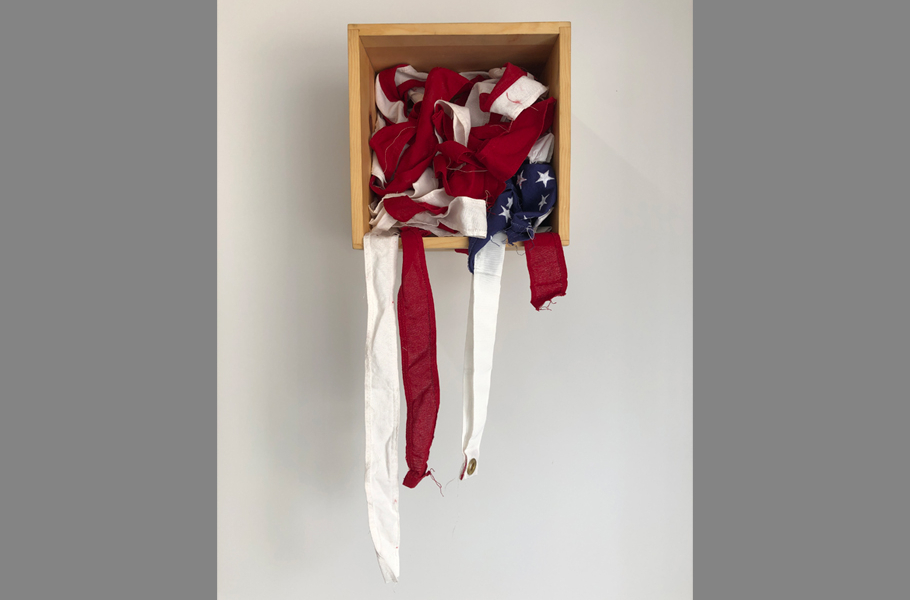
Michele Jaquis is a Professor and Director of Interdisciplinary Studies at Otis College of Art and Design , where she has taught since 2000. She holds an MFA in Sculpture from Rhode Island School of Design and a College Teaching Certificate from Brown University . Her work spans sculpture, video, and social practice to examine identity, political relationships, and communication.
Ali Kazimi is a Professor at York University’s Cinema & Media Arts department within the School of the Arts, Media, Performance & Design. His work spans filmmaking, writing, and visual art, focusing on race, social justice, migration, and historical memory. He has held roles including Department Chair (2015–2016) and was promoted to full Professor in 2022. Notable accolades include the Governor General’s Award for Visual and Media Arts (2019), Royal Society of Canada Fellowship (2023), and a John R. Evans Leaders Fund grant to establish the Stereoscopic 3D Lab @York. His research integrates 3D film innovation with socio-political themes, evident in works like Hazardous (2016) and Beyond Extinction: Sinixt Resurgence (2023). Educated at St. Stephen’s College (Delhi) and York University, Kazimi’s scholarly book Undesirables (2012) critically examines the Komagata Maru incident. He mentors graduate students, with advisees producing award-winning films such as Zaheed Mawani’s Three Walls (2011). His installations, like Fair Play (2014), are in major collections like the Art Gallery of Ontario. Research emphasizes interdisciplinary collaborations, blending historical analysis with contemporary media. Key films include Continuous Journey (2004), a landmark documentary on immigration exclusion, and Shooting Indians (1997), exploring Indigenous representation. Grants and fellowships support his exploration of stereoscopic cinema’s narrative potential. Kazimi’s advocacy extends to decolonizing archival practices, as seen in critiques of contested historical narratives like the Komagata Maru mural controversy (2019).
Babak Bahador is the Director of the Institute for Public Diplomacy and Global Communication at George Washington University, effective August 2024. He holds the title of Research Professor at the School of Media and Public Affairs (SMPA), where he teaches courses on Media and Peacebuilding and directs the Media and Peacebuilding Project. Additionally, he oversees the peace journalism initiative Peace News and serves as a Research Fellow at the University of Canterbury, New Zealand. Bahador earned his PhD in International Relations from the London School of Economics and Political Science (LSE). His research focuses on media's role in politics and international relations, with a particular emphasis on peacebuilding, conflict resolution, and hate speech dynamics. Current projects include automated hate speech detection systems and counter-speech efficacy studies. He has extensive experience analyzing media coverage of global conflicts, including the Iraq War, the Russia-Georgian War, and the Israel-Hezbollah conflict. Bahador's academic contributions span media effects, propaganda analysis, and the interplay between public discourse and democratic governance. He has published widely on topics such as presidential rhetoric during crises, the CNN effect on policy decisions, and the ethical dimensions of conflict reporting. His work bridges theoretical frameworks with practical applications in media policy and peace journalism. Beyond academia, Bahador leads initiatives that translate research into actionable strategies for promoting peaceful conflict resolution through media channels. His projects emphasize empirical rigor while addressing contemporary challenges like misinformation and algorithmic bias in social media ecosystems.
Michael White is a Professor in the Department of Linguistics at The Ohio State University, specializing in computational linguistics, natural language generation, and spoken language dialogue systems. He holds a Ph.D. in Computer Science from the University of Pennsylvania and has collaborated with interdisciplinary teams in both academia and industry, including roles at CoGenTex, Inc., and visiting positions at Facebook/Meta and Australian universities. His research emphasizes controllable and ethical AI, with a focus on neural language models and their applications in healthcare and conversational systems. Education: Ph.D. in Computer Science, University of Pennsylvania. Professional Background: Former Research Fellow at the University of Edinburgh School of Informatics, and founder of CoGenTex, Inc. Collaborations include researchers in Computer Science and Linguistics at Ohio State, such as Eric Fosler-Lussier and William Schuler. Research Interests: Neural language generation controllability, ethical AI alignment, discourse processing, and conversational systems. Recent projects include developing virtual patient simulators for medical education and exploring knowledge distillation to mitigate AI-generated harm. Articles Trends: Focused on advancing neural NLG techniques, improving dialogue system safety, and leveraging large language models for domain-specific tasks (e.g., healthcare, KBQA). Recent work addresses transparency, data efficiency, and ethical implications in AI. Scientific Awards: Lumley Interdisciplinary Research Award (2023), PRE Accelerator Award. Grants: Supported by interdisciplinary initiatives such as the virtual patient project collaboration with Eric Fosler-Lussier and Laura Wagner. Advising and Grants: Mentors students in computational linguistics and leads projects funded by Ohio State’s interdisciplinary programs. Current work involves neuro-symbolic approaches for patient preparation assistants and data-efficient conversational AI. Labs/Teams: Collaborates with the Ohio State Computational Linguistics Group and industry partners. Active in organizing workshops on discourse-driven NLG and ethical AI challenges.
Megan Madigan Peercy is a Professor in the Department of Teaching and Learning, Policy and Leadership at the University of Maryland's College of Education, serving also as Special Assistant to the Provost for Strategic Initiatives. She holds a Ph.D. from the University of Utah (2004). Her research focuses on teacher development for multilingual learners, practice-based pedagogies, and equity-oriented teaching strategies. Central to her work is the Core Practices for Teaching Multilingual Students framework, detailed in her 2023 book and accompanying YouTube channel. She co-directs the Multilingual Research Center and serves on the editorial boards of Journal of Teacher Education and TESOL Quarterly . Peercy has received notable awards such as the AERA Second Language Research SIG Midcareer Award (2019) and the University of Maryland Graduate Mentor of the Year (2011). Her grants include the Spencer Foundation's Supporting Novice Teachers of ELLs (2019-2023) and Maryland Professional Development Schools 2025 (2019-2023). Her courses emphasize contemporary issues in multilingual education, including Teaching English Language Learners and Pedagogy of Teacher Education . Her recent publications explore humanizing pedagogies, teacher collaboration, and equitable classroom practices for linguistically diverse learners.