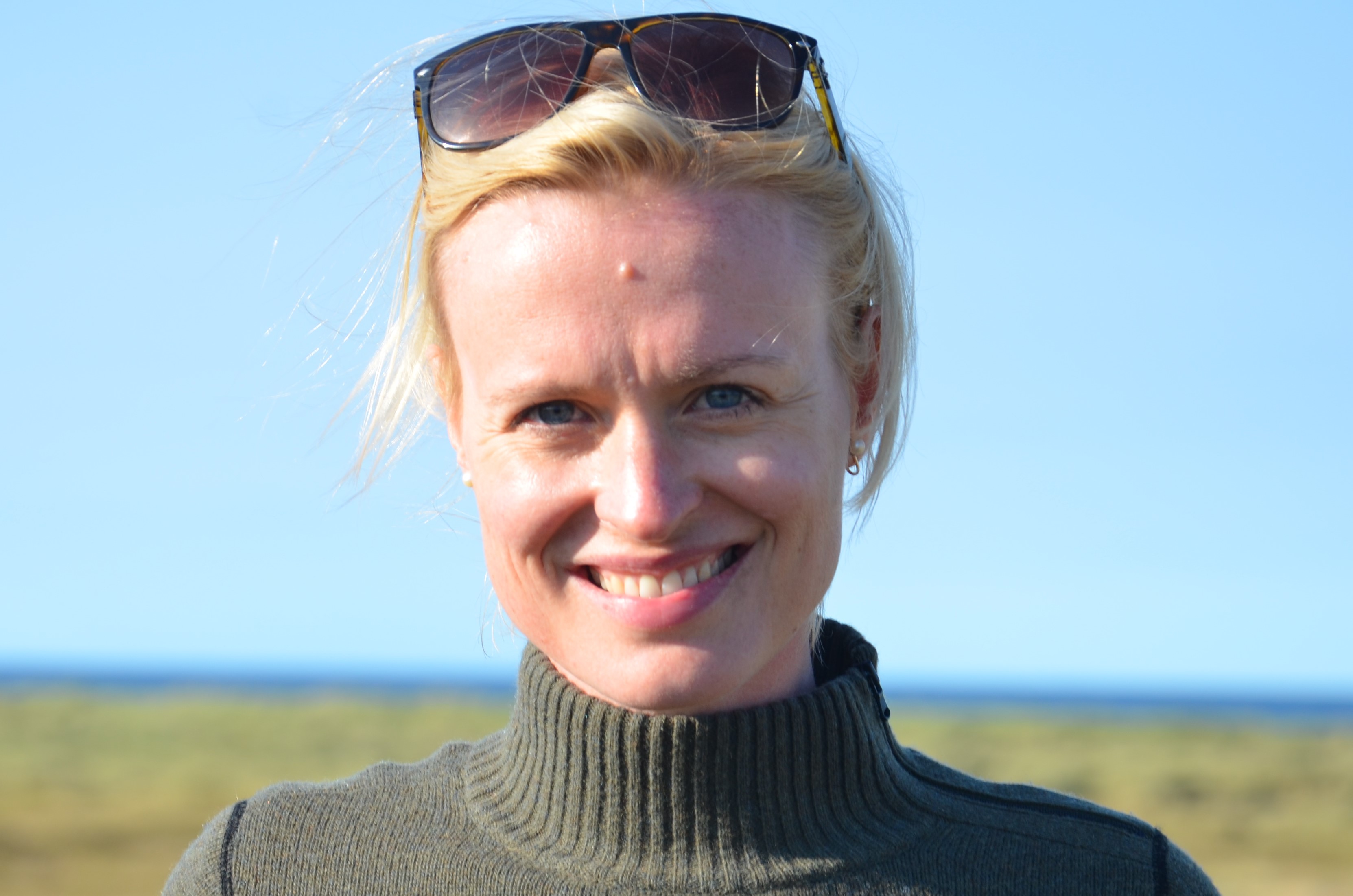
Sinead O'Keeffe is a Research Fellow at the University of Limerick in the Faculty of Science and Engineering , specifically within the Department of Electronic and Computer Engineering . Her research bridges the technical domain of optical fiber sensor development with critical applications in radiation therapy and sports medicine. Primary Research Themes Medical radiation dosimetry using optical fiber sensors Brachytherapy dose monitoring systems Sports injury prevention in Gaelic football and running Mental health literacy in rural farming communities Key Technical Contributions Development of scintillation-based dosimeters Characterization of perfluorinated polymer fibers 3D printed sensor systems for clinical and rehabilitation applications Interdisciplinary Applications Prostate cancer radiotherapy dose measurement Mental health intervention programs for athletes Work-family conflict analysis in Irish farming Email: sinead.okeeffe@ul.ie
Dr. Johan Pauwels is a Lecturer in Audio Signal Processing at Queen Mary University of London's School of Electronic Engineering and Computer Science, where he is affiliated with the Centre for Digital Music and the Centre for Multimodal AI. His educational background includes: Master of Science in Electrical/Electronics Engineering from KU Leuven (2006) Master of Science in Artificial Intelligence from KU Leuven (2007) PhD from Ghent University (2016) on automatic harmony recognition from audio Johan's research focuses on making machines understand audio to the level of a trained professional. His work combines machine learning, signal processing, data science, and music theory to develop tools for musicians, listeners, and music learners. He has been working on narrowing the gap between academic research and user-centric applications, web-based music services, and the personalization of spatial and immersive audio. His specific interests include machine learning for audio, audio signal processing, music information retrieval, and binaural audio. His recent publications show a strong focus on music representation learning, with particular attention to limited data scenarios, multimodal approaches, and spatial audio processing. His work bridges theoretical music concepts with practical machine learning applications, especially in chord recognition, beat detection, and instrument recognition. He has made significant contributions to HRTF (Head-Related Transfer Function) research and development of tools for spatial audio processing. Dr. Pauwels is actively involved in research funding, with current grants including the AIM CDT Internship with Sofilab (2025), AIM CDT Studentship - Stem (2024), and AIM CDT Internship with stem.tech (2024). He currently supervises multiple PhD students, primarily through the UKRI Doctoral School in AI and Music, with research topics spanning intelligent audio editing, neural drum synthesis, source separation, graph neural networks for music recommendation, and more. In addition to PhD supervision, he typically guides 8-10 undergraduate and 8-10 master's students through their final year projects. His teaching responsibilities include ECS7013P Deep Learning for Audio and Music (MSc/PhD level) and ECS411U Signals and Information (first-year undergraduate).
Orsola Rosa Salva is an Assistant Professor (RTDa) at the Interdepartmental Center for Mind/Brain Sciences (CIMEC) at the University of Trento since November 2020. Her research focuses on comparative cognitive neuroscience using domestic chickens as a model system to investigate innate social predispositions, cerebral asymmetry, and cognitive development. She has maintained continuous academic appointments at the University of Trento since 2010, initially as a post-doctoral researcher under Prof. Giorgio Vallortigara. Her primary research interests include: Animal cognition and comparative psychology Neuropsychology and cognitive neuroscience Cerebral asymmetry and lateralization Statistical learning mechanisms Autism spectrum disorder research through comparative models Ethology and neuroethology of social behavior Analysis of her recent publications (2022-2024) reveals a consistent focus on innate social cognition in visually naive domestic chicks. Her work demonstrates chicks' spontaneous preferences for animate motion patterns, non-predictable reciprocal movements, and agent interactions. These studies bridge comparative psychology, developmental neuroscience, and social cognition, establishing chicks as valuable models for understanding the evolutionary foundations of social perception. Her methodological approach integrates behavioral observation with neural correlates analysis. Scientific recognition includes: Best Poster Prize at the 2018 Avian Cognitive Neuroscience Forum Dr. Salva has extensive teaching experience across multiple Italian universities including Padova, Trieste, and Trento. Her instructional contributions span courses in Animal Cognition, Comparative Psychology, Neuroscience, and Psychobiology. While specific grant information isn't detailed in the provided text, her research trajectory demonstrates sustained funding through post-doctoral positions and research contracts since 2006. She actively participates in international conferences on cognitive development, neuroethology, and comparative psychology. Her work is conducted primarily through the Interdepartmental Center for Mind/Brain Sciences (CIMEC) at the University of Trento, where she collaborates with Prof. Giorgio Vallortigara's research group. This center provides the interdisciplinary environment necessary for her comparative cognitive neuroscience research, combining psychological, neurological, and ethological approaches to study fundamental cognitive processes across species.
Grant Van Horn is an Assistant Professor at the University of Massachusetts Amherst, affiliated with the College of Information and Computer Sciences. He specializes in computer vision and machine learning, focusing on applications in biodiversity and conservation. His work underpins popular tools like iNaturalist, Seek, and Merlin Bird ID. Prior to UMass, he held roles at AWS and the Cornell Lab of Ornithology. Education: PhD in Computer Science, California Institute of Technology (2019) MS in Computer Science, University of California San Diego (2014) BS in Computer Science, University of California San Diego (2012) Research Interests: Grant’s research bridges computer vision and machine learning to create systems that integrate human expertise and large datasets for environmental conservation. Key areas include wildlife species identification, acoustic monitoring, and ecological modeling. His work emphasizes leveraging technology for public engagement and scientific impact. Articles & Trends: Recent publications focus on audio geolocation, species range estimation, and satellite imagery analysis, reflecting his commitment to advancing tools for biodiversity conservation. His work often combines citizen science data with machine learning innovations. Awards: Computing Research Association Outstanding Undergraduate Researcher Honorable Mention (2012) Ben P.C. Chou Doctoral Prize (2019) Fast Company’s 2021 Recognition Advising & Labs: Grant advises students in computer science and conservation technology through the Computer Vision Research Laboratory. He has collaborated on projects like the iWildCam dataset and systems for salmonid counting in sonar data.
Tudor Catalin Popescu is a PhD researcher affiliated with the Faculty of Psychology at an unspecified university, specializing in Cognitive Psychology and Music Cognition . His work bridges musicology, linguistics, and cultural evolution. Research Interests: Music Cognition Cultural Evolution Dynamic Processes in Music-Language Interaction Psychometric Methods in Musicological Studies Recent Publications focus on cultural transmission dynamics, predictive frameworks in music and speech, and psychometric analysis of creative processes. Themes include Melodic Organisation , Iterated Learning , and Cognitive Modeling . Activities include talks at academic events like Dynamic predictive frameworks for song and speech and participation in Pathways through music evolution . He collaborates with researchers such as Felix Haiduk and Rohrmeier.
Esther de Leeuw is a Reader in Experimental Linguistics and Phonetics at Queen Mary University of London (QMUL), part of the School of Languages, Linguistics and Film. She holds a PhD from Queen Margaret University (Edinburgh) and completed postdoctoral research at the University of Munich and York University. Her research focuses on multilingualism, bilingualism, first language attrition, and phonetic/phonological processes. She directs QMUL's Phonetics Laboratory and co-founded Multilingual Capital, a resource for London communities. De Leeuw teaches modules on multilingualism, sociophonetics, and acoustic analysis of speech, and supervises PhD students exploring topics like bilingual pitch range and L2 perception-production links. She has held visiting fellowships in Germany and Canada, and is an Associate Editor for Second Language Research . Education: PhD in Linguistics, Queen Margaret University (2009) Magistra Artium (MA), University of Trier (Germany) Studies at University of Utrecht (Netherlands) and Northwest Community College (Canada) Research Interests: Social, cognitive, and linguistic factors in multilingual speech; phonetic/phonological attrition; bilingual executive control; sociophonetic variation. Recent work includes studies on Japanese-English bilingual pitch range, Sylheti-English prosody, and L2 perception-production disconnects. Grants & Collaborations: Led projects on phonetic attrition funded through Humboldt Fellowship and UK-based grants. Collaborates internationally with institutions including the University of Munich and the BBC Pronunciation Unit. Current research explores gender perception shifts in late bilinguals and L2 cross-modal priming effects. Labs/Initiatives: Director of QMUL Phonetics Lab, co-founder of Multilingual Capital (advocating multilingualism benefits in education).
Krzysztof Czarnecki is a Professor at the University of Waterloo's Department of Electrical and Computer Engineering, with a cross-appointment to the School of Computer Science. He serves as leader of the Waterloo Intelligent Systems Engineering Lab and holds the title of University Research Chair. His research focuses on generative software development, model-driven engineering, and autonomous systems, particularly in automotive cybersecurity and perception safety. Education: Doctorate in Computer Science, Technical University of Ilmenau (1999) Master of Science in Computer Science, Technical University of Ilmenau (1995) Bachelor of Science in Computer Science, California State University (1994) Research Interests: Dr. Czarnecki's work spans generative programming, software product lines, and safety-critical AI for autonomous vehicles. Recent projects address robust perception systems, uncertainty quantification in neural networks, and strategic driving behavior modeling. He co-authored Generative Programming (Addison-Wesley, 2000), a foundational text in the field. Publications Trends: Recent work emphasizes multimodal AI integration (e.g., LEO-MINI), 3D object detection improvements (OV-SCAN), and safety assurance frameworks for autonomous systems. His research bridges theoretical software engineering with applied robotics challenges. Awards: Premier’s Research Excellence Award (2004) British Computing Society’s Upper Canada Award (2008) University Research Chair, University of Waterloo (2023) Teaching & Leadership: Teaches courses like ECE 495 (Autonomous Vehicles) and ECE 651 (Software Engineering Foundations). Oversees WatCAR initiatives and collaborates on industry projects through the NSERC Bank of Nova Scotia Industrial Research Chair (previous). Labs & Teams: Directs the Waterloo Intelligent Systems Engineering Lab, focusing on AI-driven solutions for autonomous systems and safety-critical software. Active in cross-disciplinary collaborations with automotive and robotics partners.
Frank Papenmeier is a Professor in the Department of Psychology at the University of Tübingen, within the Faculty of Science. His research focuses on event cognition, human-robot interaction, visual working memory, and visual attention. He coordinates the 'Coordination Cognitive Psychology and Research Methods' research group. His work explores how people perceive and interact with dynamic environments, including studies on event segmentation, cognitive offloading, and aesthetic judgments. He has contributed to over 100 peer-reviewed articles, with recent work addressing topics like the impact of framing on art perception and the role of AI in education. Papenmeier's research integrates experimental methods with interdisciplinary approaches, including collaborations on teleoperation systems and AI-based tutoring. He has presented at major conferences such as the European Society for Cognitive Psychology and the Psychonomic Society. His lab emphasizes methodological rigor, evidenced by contributions to replication databases and open science initiatives. Education: Not explicitly stated in the text, but his titles include Dr. rer. nat. (Doctor of Natural Sciences) and Diplom-Psychologe (Psychology Diploma). Research Interests: His primary areas include event cognition, human-robot interaction (e.g., helping behavior toward robots), visual working memory (e.g., spatial configuration processing), and cognitive offloading (e.g., impact on memory and performance). He also investigates aesthetic judgments and narrative comprehension through eye-tracking and experimental paradigms. Articles Trends: Recent work addresses applied topics like cookie consent interfaces, AI in education (e.g., R programming tutors), and perceptual effects in 3D cinema. His studies often bridge cognitive theory with real-world applications, such as usability design and social robotics. Labs/Teams: Leads the research group 'Coordination Cognitive Psychology and Research Methods' at the University of Tübingen. Collaborates with interdisciplinary teams on projects involving robotics, AI, and human-computer interaction.
Marjan Firouznia is a Principal Research Engineer at Linköping University , affiliated with the Division of Diagnostics and Specialist Medicine (DISP) under the Faculty of Medicine and Health Sciences . With a PhD in Electrical Engineering from Amirkabir University of Technology and postdoctoral experience at institutions like Case Western Reserve University, she specializes in advancing machine learning models for precise segmentation of cardiac structures including the left atrium , epicardial fat , and fibrosis using CT and MRI scans. Her work aims to improve diagnostic accuracy and treatment planning in cardiovascular care. Marjan's research focuses on medical imaging , deep learning , and computational anatomy , with recent publications on FractalRG , FK-means , and Poincare-guided UNet for cardiac structure segmentation. Her academic contributions span 15 recent publications , emphasizing fractal geometry , chaos theory , and optimization algorithms in biomedical applications. She actively develops open-source datasets and tools, such as the FK-means codebase , to support reproducibility in medical AI research.
Greg Zaharchuk is a Professor of Radiology specializing in Neuroimaging and Neurointervention at Stanford University's School of Medicine. His academic roles include leadership in clinical and translational imaging research. He holds an MD from Harvard Medical School, a PhD in Applied Physics from Harvard/MIT, and dual undergraduate degrees in Materials Science & Engineering and German Studies from Stanford. Education: MD, Harvard Medical School (2000) PhD, Harvard/MIT (1999) BS & BA, Stanford (1990) Research Focus: Dr. Zaharchuk's work centers on advancing neuroimaging techniques for cerebrovascular diseases, stroke, and neurodegenerative disorders. He pioneers AI-driven innovations in MRI/PET fusion, low-dose imaging, and deep learning models to enhance diagnostic accuracy and clinical decision-making. Key areas include stroke outcome prediction, amyloid PET reconstruction, and cross-modality imaging integration. Research Trends: His recent articles emphasize AI applications in neuroimaging, such as improving low-field MRI quality and PET reconstruction using MRI priors. He also explores stroke lesion segmentation, CBF quantification, and the ethical implications of AI in neuroradiology. Affiliations & Labs: He leads the Center for Advanced Functional Neuroimaging at Stanford, advancing cutting-edge imaging technologies. His research bridges clinical practice and innovation, addressing challenges in ischemic stroke, Alzheimer's imaging, and radiation dose reduction. Grants & Collaborations: His work is supported by NIH grants and industry partnerships, focusing on multimodal imaging systems and AI-driven diagnostics. Collaborations include international neuroradiology societies and interdisciplinary teams in neurology and computer science.
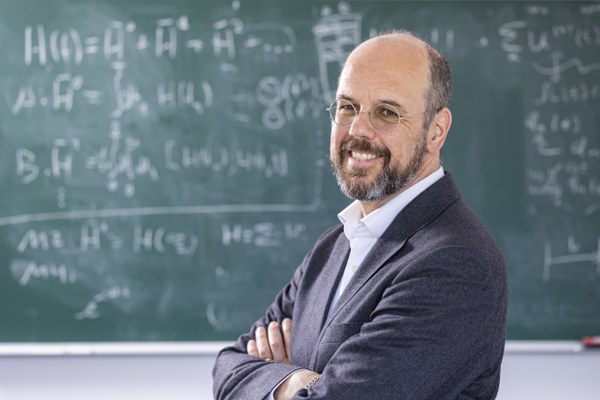
Tommaso Calarco serves as Director of the Institute for Quantum Control (PGI-8) at Jülich Research Centre, leading cutting-edge research in quantum optimal control methodologies for next-generation quantum technologies. His work focuses on developing transformative computational frameworks applicable to natural sciences, logistics, and high-performance computing through advanced quantum device engineering. His research spans quantum optimal control for computation and many-body systems, emphasizing physical model development, model reduction techniques, and machine learning integration for scalable quantum hardware. Key focus areas include spin-qubit optimization, diamond quantum register engineering, and error suppression in gate operations, with significant contributions to ultracold atom systems and semiconductor-based quantum platforms. Analysis of his 2024-2025 publications reveals concentrated efforts on hardware-specific challenges across multiple quantum modalities: spin shuttling fidelity in semiconductor systems, gate optimization for nitrogen-vacancy centers, and photon-spin interface engineering. This work demonstrates a unifying thread of optimal control solutions tailored to platform-specific decoherence mechanisms and scalability constraints. As Director of PGI-8 within the Peter Grünberg Institut, Calarco oversees a dedicated research team advancing quantum control theory and applications, contributing substantially to European quantum technology roadmaps including the Quantum Flagship initiative and strategic European Commission reports.
Tanya Marwah is a Research Fellow at the Simons Foundation , collaborating with Polymathic AI . She earned her PhD from Carnegie Mellon University's Machine Learning Department, co-advised by Prof. Andrej Risteski and Prof. Zachary Lipton, and holds a master's degree from CMU's Robotics Institute. Her research bridges Machine Learning and Scientific Computing , focusing on generative modeling , inverse problems , and building scientific agents . Her work explores theoretical and empirical foundations for applying ML to differential equations, with key contributions in neural operators , memory mechanisms , and edge embeddings in GNNs . Recent publications highlight trends in PDE solvers via LLMs , cross-modal adaptation , and implicit regularization in SGD . She has received the prestigious Siebel Scholar award and actively contributes to top ML venues (NeurIPS, ICML, ICLR, TMLR). Her collaborations span institutions including Carnegie Mellon University, Polymathic AI, and CMU's Robotics Institute.
Associate Professor Josiah Poon is affiliated with the School of Computer Science at the University of Sydney. His research focuses on applying data mining and IT techniques to Traditional Chinese Medicine (TCM), particularly analyzing herbal combinations for effective treatments. He collaborates with institutions in China to improve TCM evidence and has contributed to clinical data analysis, medical informatics, and multimodal AI systems. Teaching includes courses such as INFO1003 (Foundations of IT) and INFO9003 (IT for Health Professionals). Current research students are Rina CABRAL (Multimodality Representation), Yan LI (Long Document Comprehension), and Xiaobin LU (Financial Decisions). Research highlights include developing algorithms to quantify TCM efficacy, analyzing complementarity in herbal combinations, and applying machine learning to healthcare data. Notable projects include a randomized controlled trial on pneumococcal vaccination (2021) and a Google-funded multimodal health detection system (2020). Key areas of expertise span TCM informatics, medical data analytics, and AI-driven healthcare solutions. His work bridges Eastern/Western medicine through computational methods, emphasizing evidence-based practices in TCM.
Alfred Hero is the John H. Holland Distinguished University Professor of Electrical Engineering and Computer Science and the R. Jamison and Betty Williams Professor of Engineering at the University of Michigan. He is currently on leave from the University of Michigan as a Program Director in the CISE Directorate at the National Science Foundation. His primary appointment is in the Department of Electrical Engineering and Computer Science (EECS) with secondary appointments in the Department of Biomedical Engineering and the Department of Statistics. He is affiliated with multiple research centers including the UM Center for Computational Medicine and Bioinformatics (CCMB), the UM Graduate Program in Applied and Interdisciplinary Mathematics (AIM), the UM Applied Physics Program, and the Michigan Institute for Data Science (MIDAS). Hero's research focuses on data science, developing theory and algorithms for multimodality data collection, fusion, analysis and visualization using statistical machine learning and distributed optimization. His work has applications in wearable technologies for personalized health and predictive medicine, spatio-temporal networks in biology, climate, and social discourse, anomaly detection, and data analysis for international security. His research group has produced numerous PhD students who have gone on to prominent academic and industry positions. His recent publications show a strong focus on high-dimensional statistical methods, machine learning theory, network analysis, and applications in biomedical domains. The research trends indicate increasing emphasis on multimodal data fusion, robust learning algorithms, and applications to complex systems in biology and security domains. His work bridges theoretical foundations with practical implementations across diverse application areas. Fellow of the Institute of Electrical and Electronics Engineers (IEEE) Fellow of the Society for Industrial and Applied Mathematics (SIAM) Fourier Award in Signal Processing from the IEEE Hero has advised numerous PhD, MS, and undergraduate students who have gone on to successful careers in academia and industry. His research has been supported by various grants, though specific grant details are not provided in the source material. His lab collaborates extensively across disciplines with researchers in statistics, biomedical engineering, and computational medicine. The Hero Research Group maintains active collaborations with institutions worldwide and participates in major conferences in machine learning, signal processing, and data science.
Dr. Uri Maoz is an Associate Professor at Chapman University, affiliated with the Crean College of Health and Behavioral Sciences, Schmid College of Science and Technology, and Fowler School of Engineering. His research bridges computational neuroscience, decision-making, and moral philosophy, focusing on volition and the neural underpinnings of conscious action. He holds visiting roles at UCLA (Department of Anesthesiology) and Caltech (Biology and Bioengineering). Educations: Bachelor of Science in Computer Science and General Humanistic Studies, The Hebrew University of Jerusalem Ph.D. in Neural Computation, The Hebrew University of Jerusalem Research Interests: Dr. Maoz investigates how consciousness influences voluntary actions through empirical methods (EEG, intracranial recordings) and theoretical models. He explores ethical and legal implications of neuroscience, particularly regarding free will and decision-making. His work integrates machine learning for real-time neural data analysis. Key Projects: Leading the COVID-Dynamic longitudinal study on pandemic-related behavioral and emotional changes. Developing computational models of volition and neural correlates of intention. Collaborating across disciplines to address neuroethical questions. Visiting Roles: Visiting Assistant Professor at UCLA’s Department of Anesthesiology Visiting Associate in Biology and Bioengineering at Caltech Labs/Teams: Active in Chapman’s Institute for Interdisciplinary Brain and Behavioral Sciences and collaborates with the Anderson School of Management at UCLA.