Vicki Knight is an Assistant Professor in Special Education at the University of British Columbia , with over 20 years of experience in autism spectrum disorder (ASD) education. She serves as Director of the Centre for Interdisciplinary Research and Collaboration in Autism (CIRCA) and works closely with students across undergraduate, graduate, and doctoral levels. Research Focus: Promoting STEM learning for students with ASD and developmental disabilities Key Methods: Single-case research, applied behavior analysis, technology-based interventions With over 40 peer-reviewed publications, Dr. Knight’s work evaluates inclusion strategies in STEM and disseminates evidence-based practices. She contributes to editorial boards of journals including the Journal of Special Education and Focus on Autism and Other Developmental Disabilities . Selected Scientific Contributions: 2019 Research Award, Council for Exceptional Children Division of Autism and Developmental Disabilities Board Certified Behavior Analyst (BCBA) credential Her publications highlight video prompting, coding education, and general curriculum access. She trains educators internationally and explores collateral benefits of inclusive education environments.
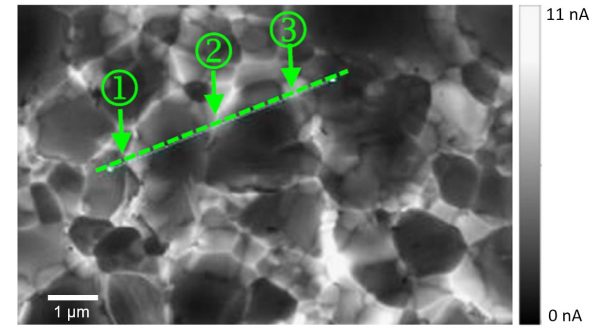
Heayoung Yoon serves as an Associate Professor in the Electrical & Computer Engineering department and Adjunct Associate Professor in Materials Science & Engineering at the University of Utah's College of Engineering. Her research focuses on advanced fabrication and nanoscale characterization of optoelectronic materials and devices, with particular expertise in engineering micro/nanostructures of semiconductor materials to enhance functionality and stability in optoelectronic devices including translucent solar cells and radiation-hard systems. Dr. Yoon earned her BS in Physics with a Computer Science minor from Chungnam National University in South Korea, an MS in Physics from Pohang University of Science and Technology, and a PhD in Electrical Engineering from The Pennsylvania State University. Her academic journey includes positions at Samsung, Penn State University, and NIST where she conducted research on molecular junction devices, pillar array solar cells, and near-field optoelectronic imaging techniques. Her research interests span multiple cutting-edge areas in energy technology and materials science. Dr. Yoon leads investigations into radial junction solar cells that decouple light absorption from carrier collection, thin-film solar cells with enhanced efficiency through microstructural optimization, translucent solar cells for diverse applications like skylights and self-powered facades, multi-probe microscopy techniques for nanoscale characterization, and molecular junction devices for advanced optoelectronics. Her work bridges fundamental research with practical applications to address global sustainability challenges. Analysis of Dr. Yoon's 15 most recent publications reveals a strong focus on solar cell technology and nanoscale characterization. Her research consistently explores patterned back contacts, micro/nanostructured solar cells, and perovskite materials, with particular attention to grain boundaries, surface potential variations, and carrier dynamics at the nanoscale. The publications demonstrate interdisciplinary approaches combining electron microscopy, optical spectroscopy, and device engineering to advance photovoltaic technologies. Outstanding Teaching Award (2024, ECE Department) Chair's Award (2022, ECE Department) CAREER Award (2021, National Science Foundation) Dr. Yoon actively mentors students through thesis research and undergraduate research projects, and leads the Yoon Research Group which develops in-situ, local measurement techniques using electron beams and focused light sources. Her lab focuses on elucidating structure-property relationships in micro/nanomaterials and devices, with applications in energy, optoelectronics, and chemical and biomedical fields. The group leverages cross-disciplinary collaborations to advance energy technologies, particularly in creating exploratory optoelectronic systems that address emerging global challenges in sustainability.
Richard Huskey is an Assistant Professor in the Department of Communication and the Cognitive Science Program at the University of California Davis. He leads the Cognitive Communication Science Lab , contributes to the Computational Communication Research Lab, and is affiliated with the Center for Mind and Brain and the Designated Emphasis in Computational Social Science. He also serves as Vice Chair of the International Communication Association’s Communication Science and Biology interest group. Ph.D., Communication (Cognitive Science Emphasis), University of California Santa Barbara, 2016 M.A., Communication, University of California Santa Barbara, 2014 B.S., Business Administration, California Polytechnic State University San Luis Obispo, 2006 Dr. Huskey’s research examines how motivation influences attitudes and behaviors, with a focus on media neuroscience and computational approaches. His work employs fMRI , mobile EEG hyperscanning , and drift diffusion modeling to explore phenomena like flow experiences , media selection dynamics , and neural predictors of message effectiveness . He advocates for integrating Marr’s tri-level framework across communication subfields and promotes open science initiatives. Recent publications address computational modeling of mood management, flow neurobiology, equity in doctoral admissions, and complexity science frameworks. His methodological innovations include using augmented reality and network neuroscience to study cooperation and attention dynamics. Dr. Huskey’s work bridges media psychology, cognitive neuroscience, and computational social science, emphasizing practical applications in health communication and digital media design.
Dr. Deborah Do-Rosario-Benros is a Senior Lecturer in Technical Studies and Representation at the University of East London (UEL), serving as a Cluster Leader in the Department of Architecture & Visual Arts within the School of Architecture, Computing and Engineering. She is a UK-registered architect (ARB/RIBA) with advanced research expertise in computational design methodologies. Educational Background: Doctorate from University College London (The Bartlett School) Master's in Architecture from the University of Lisbon Visiting student at Massachusetts Institute of Technology (MIT) Her research focuses on Design and Computation , Shape Grammars , and Mass Customisation in architecture. Recent work explores 3D printing , robotic manufacturing , and modular design for sustainable housing solutions. Research Publications Trends: Her 2024-2023 articles analyze computational frameworks like multilingual shape grammars, apply robotic construction to micro-housing, critically review 3D printing in large-scale construction, and investigate modular systems using bent metal pipes and space-filling solids. Collaborative co-design with AI and participation in international competitions like the Orange County Sustainability Decathlon are recurring themes. Professional Experience: Prior roles include teaching at the University of Lisbon, visiting faculty at Cornell University, and professional practice at architectural firms Foster and Partners and Arup. She has presented at major conferences including SIGraDi, ZEMCH, and SEEDS. Labs and Teams: As Cluster Leader at UEL, she coordinates research efforts in architecture and computational design, collaborating with institutions like MIT and Cornell.
Dr Luke Pearson is an Associate Professor at University College London's Bartlett School of Architecture and Co-Director of the Cinematic and Videogame Architecture MArch programme. He founded the Videogame Urbanism studio and co-founded the You+Pea design research practice with Sandra Youkhana. His work focuses on the intersection of architecture, game design, and media studies. Current roles: Associate Professor, Co-Director of Cinematic and Videogame Architecture MArch, Chair of undergraduate Board of Examiners Teaching experience: Expanded design studio scopes since 2009, coordinated Videogame Urbanism studio since 2016, and led international workshops Research explores how videogame technologies can transform architectural design through participatory and speculative approaches. His work bridges architectural history with contemporary virtual world-building practices, examining media representation and digital design methodologies. Recent publications and exhibitions demonstrate expertise in game engine culture, digital spatial protocols, and interactive environments. Luke's collaborative projects with You+Pea have been exhibited internationally at venues including the Royal Institute of British Architects and EGX games expo. RIBA Eyeline Competition Winner (2016, 2013) Multiple Royal Academy Summer Exhibition selections UCL Graduate Research Scholarship Leverhulme Trust Bursary
Wendy Rogers is the Shahid and Ann Carlson Khan Professor at the University of Illinois at Urbana-Champaign , holding appointments in the Department of Kinesiology and Community Health , Educational Psychology , and multiple research institutes including the Coordinated Science Lab , Beckman Institute , and Center for the Study of Global Gender Equity . As a leading expert in human factors and gerontechnology, her work focuses on designing technologies for older adults and individuals with disabilities. Her research explores assistive robotics , smart home systems , mHealth applications , and participatory design methodologies . Recent publications address topics like AI-powered virtual assistants for aging populations, adaptive systems for cognitive support, and inclusive design frameworks for mobility-impaired adults. She has contributed to journals such as Human Factors in Healthcare , Gerontologist , and Frontiers in Robotics and AI . Key article trends show emphasis on technology acceptance models , feedback visualization , digital activities of daily living , and human-robot interaction in home environments. Her work often involves cross-disciplinary collaboration with healthcare professionals and engineers.
Alejandra Magana serves as the W.C. Furnas Professor in Enterprise Excellence of Applied and Creative Computing and Professor of Engineering Education at Purdue Polytechnic, Purdue University. She directs the ROCkETEd Lab and holds significant editorial roles including Deputy Editor for the Journal of Engineering Education and Co-Editor of the Education Department for IEEE Computer Graphics & Applications. Her leadership extends to multiple editorial boards in engineering and science education journals. Ph.D. in Engineering Education, Purdue University (2009) Post-doc in Engineering Education, Purdue University (2010) M.S. in Educational Technology, Purdue University (2007) M.S. in Electronic Commerce, Instituto Tecnologico y de Estudios Superiores de Monterrey (2003) B.S. in Information Systems Engineering, Instituto Tecnologico y de Estudios Superiores de Monterrey (2000) Magana's research focuses on how students develop computer and data science self-regulated learning skills through computational cognitive apprenticeship and authentic modeling practices. She investigates how learning analytics and AI can support student learning in computing-intensive domains and engineering thinking in K-12 education. Her work bridges educational theory with practical applications in STEM fields, emphasizing the integration of computational thinking across disciplines. She employs design-based research methodologies to create and evaluate innovative learning environments that leverage simulation, visualization, and emerging technologies. Analysis of Magana's recent publications reveals a strong emphasis on collaborative learning in digital environments, with growing attention to AI applications in education. Her work spans multiple domains including virtual reality for STEM education, teamwork dynamics in software development, AI ethics education, and computational thinking assessment for teachers. A consistent theme is the development of representational competence through modeling and simulation practices, with increasing integration of learning analytics to understand student cognition and team processes. Fellow Member, American Society for Engineering Education (2024) Fulbright Specialists Appointment (2024) Purdue Polytechnic Charles B. Murphy Outstanding Undergraduate Teaching Award (2021) W.C. Furnas Professorship (2020) Purdue University Faculty Scholar (2016) ASEE-ERM Apprentice Faculty Grant (2012) Magana leads multiple significant research grants totaling over $15 million, primarily from NSF, focusing on computational education, AI in learning environments, and engineering education transformation. Her ROCkETEd Lab serves as the hub for these research activities, which often involve interdisciplinary collaborations across engineering, computer science, and education. She has mentored numerous graduate students who appear as co-authors on her publications, though specific advising relationships aren't explicitly documented. Her research program demonstrates strong continuity from foundational work on modeling and simulation to current projects integrating generative AI and immersive technologies. The ROCkETEd Lab (Research in Organizing Computational Knowledge for Engineering Thinking and Education) functions as Magana's primary research unit, focusing on computational cognitive apprenticeship approaches. The lab investigates how students develop representational fluency through modeling and simulation practices, with recent expansion into AI-enabled learning environments. Current projects examine hidden curricula in computer science education, high-performance computing virtual environments for AI education, and culturally relevant programming learning experiences. The lab maintains strong industry and international partnerships, particularly with institutions involved in advanced manufacturing and educational technology development.
David Maresca is an Associate Professor in the Imaging Physics department at the Faculty of Applied Sciences, Delft University of Technology. His research focuses on the intersection of ultrasound imaging physics and molecular engineering, with the goal of enabling ultrasound imaging of cells across space and time in living opaque organs. His research interests include: Biomolecular acoustic sensors Functional ultrasound neuroimaging Transcranial ultrasound Nonlinear ultrasound imaging Engineering of acoustic biosensors Ultrasound imaging of brain function Dr. Maresca's work centers on developing technologies that combine ultrasound physics with molecular engineering to create new imaging capabilities. His lab pioneers approaches to image cells within opaque organs using ultrasound, with applications in neuroscience and biomedical imaging. His research spans from fundamental ultrasound physics to the development of acoustic biosensors and imaging techniques that can detect cellular processes. His recent publications demonstrate a strong focus on advancing ultrasound imaging capabilities, particularly in nonlinear ultrasound techniques, contrast-enhanced ultrasound, and applications in neuroimaging. His work shows increasing interdisciplinary collaboration across physics, engineering, and neuroscience. Dr. Maresca has received recognition including the HFSP Cross-Disciplinary Fellowship. His academic background includes a Ph.D. in Biomedical Engineering from Erasmus MC, an M.Sc. in Acoustics, and a Master's degree in Physics from Université Paris Diderot. He completed postdoctoral work at Caltech and Institut Langevin, ESPCI. His research is supported by collaborations across institutions, with recent work involving researchers from multiple universities and research centers. Dr. Maresca's lab is actively contributing to advancing ultrasound imaging technology and its applications in biomedical research.
Dr. Alex Brown serves as Associate Professor (Late Medieval and Early Modern British History) in the Department of History at Durham University's Faculty of Arts and Humanities. He holds additional fellowships at the Durham Research Methods Centre and the Institute for Medical Humanities, with active research projects spanning medieval social structures, economic history, and epidemiological modeling. Research interests focus on three interconnected domains: (1) The economic and social history of rural England across medieval and early modern periods, particularly path dependency in land tenure systems; (2) The psychology of social mobility, challenging narratives of medieval ambition through analysis of downward mobility fears tied to gender and life-cycle events; (3) Institutional memory practices, examining how entities like Durham Priory manipulated historical records during boundary disputes and enclosure conflicts. His work integrates archival analysis with computational modeling techniques. Recent publications reveal an evolving trajectory from agrarian economic studies toward interdisciplinary investigations of social psychology and memory. The 15 most recent articles demonstrate increasing engagement with medical humanities and collaborative methodologies, culminating in the current Leverhulme Trust-funded Black Death modeling project that bridges history, archaeology, and physics. A dedicated supervisor, Brown has guided seven PhD students to completion since 2022, with research spanning coastal risk management (Hibberts 2025), vagrancy law (Hamilton 2025), monastic reform (Irvine 2023), and priory agricultural management (Wicklund 2022). He currently supervises three additional doctoral candidates examining archival practices, community crises, and food systems. Brown leads the 2024-2027 Leverhulme Trust project 'Modelling the Black Death and Social Connectivity in Medieval England,' directing a cross-disciplinary team of archaeologists, physicists, and postdoctoral researchers. This initiative utilizes pandemic response modeling frameworks to simulate disease spread through reconstructed medieval populations, examining how social networks influenced epidemic trajectories.
Andreas M. Hinz is a full Professor at Ludwig Maximilian University of Munich (LMU) with a secondary affiliation as redni profesor at the University of Maribor. His academic home is the Mathematical Institute at LMU, where he specializes in analysis, discrete mathematics, and mathematical modeling. His research focuses on partial differential equations, spectral theory of differential operators, and discrete mathematics—particularly the Tower of Hanoi theory and Sierpiński graphs. He employs classical analytic, functional analytic, and numerical methods, with significant cross-disciplinary applications in neuropsychology and cranio-maxillofacial surgery modeling. Recent publications (2016-2022) demonstrate strong emphasis on combinatorial graph theory, with 80% focusing on Hanoi/Sierpiński graphs, metric properties, and puzzle mathematics. Interdisciplinary themes connect discrete structures with neuropsychology applications and historical analysis of mathematical puzzles. Scientific Awards: Second Prize, Poster Competition, International Congress of Mathematicians (2006) for "From London to Hanoi and back—graphs for neuropsychology" He leads collaborations with neuropsychology researchers on tower puzzle modeling and previously secured international grants (DAAD/British Council) for spectral theory projects. Though no longer teaching at LMU, he maintains active research groups in discrete mathematics.
Dr. Beat Suter is a Senior Lecturer for Game Design at the Zurich University of the Arts (ZHdK) , where he has co-developed educational programs and founded the GameLab ZHdK. He holds a Dr. Phil. from the University of Zurich and has previously taught at the Merz Academy Stuttgart (2006–2014). His interdisciplinary work bridges game design, digital humanities, and electronic literature, with a focus on narrative mechanics, game preservation, and Swiss game culture. Education: Dr. Phil. (2000) – University of Zurich Lic. Phil. I (1987) – University of Zurich PALC Certificate – University of California San Diego Studies in German Literature, Linguistics, and Art History – University of Zurich and University of California His research explores intersections between game studies , digital archiving , and interactive narration , with recent publications analyzing Swiss youth culture in games, historical game packaging, and archiving digital interactive media. He co-authored the Narrative Mechanics (2021) and Games and Rules (2018) anthologies, emphasizing rule-based design and storytelling frameworks. From 2023, his 15 most recent articles (2023–2025) trace trends in game history , Swiss game design , and digital preservation , often published via the Confoederatio Ludens blog. These works highlight his focus on documenting marginalized game practices and cultural contexts. As founder of the art group AND-OR and co-director of the GameZ & RuleZ conference, Suter actively shapes interdisciplinary dialogues. He reviews for national research funds in Austria, Germany, and Switzerland and has curated exhibitions like RuleZ for the Magic Circle and Forgotten Game Mechanics , blending academic rigor with creative practice.
Dr. Anastasia Ushakova is a Lecturer in Biostatistics (Health Informatics) at the Lancaster University Medical School Centre for Health Informatics, Computing and Statistics . Her work bridges biostatistics, health informatics, and psychology through cross-disciplinary research involving big data and mixed methods. Research Focus: Mental health analytics (NHS collaborations), digital learning supplement analysis (literacy/psychology), and time-series data modeling. Grants: Funded by ESRC, EPSRC, Medical Research Foundation, NWCR, and NIHR. Recent Article Trends span emergency response modeling (OHCA), aggression dynamics, digital literacy tools, mental health disparities, and socio-emotional development. Her 2025 work on rural cardiac emergency response and 2024 studies on ADHD and EMA methodology highlight her interdisciplinary approach. PhD Student: Yawen Ma (CHICAS group, Lancaster University). Professional Activities: Organizing Committee member, NIHR Statistics Conference; active in Royal Statistical Society and CHICAS research group.
James Engert is an Associate Professor at McGill University 's Faculty of Medicine and Health Sciences , with dual appointments at the McGill University Health Centre ( Division of Cardiology ) and as a Scientist in the Cardiovascular Health Across the Lifespan Program at the Research Institute of the MUHC . His work bridges cardiovascular genetics, epidemiology, and translational medicine. Research Interests: Genetic etiology of cardiovascular diseases (myocardial infarction, dilated cardiomyopathy, aortic stenosis) Gene-environment interactions in disease susceptibility Mendelian randomization and genome-wide association studies (GWAS) Pharmacogenomics of cardiovascular therapies Development of genetic risk scores for prognosis Methodologies: Engert's team integrates clinical data from MUHC patients with large-scale public datasets, focusing on aortic stenosis across diverse ethnicities. They employ advanced statistical genetics, proteomics, and molecular modeling to uncover novel therapeutic targets. Publications: His recent work appears in JAMA Cardiology and Circulation , with a focus on lipoprotein(a) metabolism, TLR3-mediated calcification, and MFSD5 inhibition mechanisms in valvular disease. Collaborative projects emphasize cross-disciplinary approaches to cardiovascular pathogenesis.
Jens Petersen is an Associate Professor at the Department of Computer Science , University of Copenhagen, specializing in medical image analysis. He works within the Image Analysis, Computational Modelling, and Geometry research section. Education: B.Sc. (2005), M.Sc. (2010) in Computer Science from University of Copenhagen; Ph.D. (2014) in Medical Image Analysis from University of Copenhagen with visiting researcher experience at University College London. Research Interests: Focus on medical image analysis techniques for segmentation and statistical analysis of tubular/branching structures like airways and carotid arteries. Key methodologies involve graph cuts, optimal surface methods, and computational modeling. Current research includes AI-guided tumor delineation, longitudinal image synthesis, and physics-based deformable registration. Publications Trends: Recent work spans AI applications in oncology, computational methods for cardiovascular imaging, and algorithm development for radiation therapy. Collaborations include international institutions and cross-disciplinary teams in machine learning and medical imaging.
Prof. Dr. Gergana Vladova serves as a Visiting Professor at the Institute of Computer Science , Humboldt University of Berlin. Her work bridges Computer Science and Education , focusing on technology-mediated teaching, digital sovereignty, and Industry 4.0 applications in learning environments.