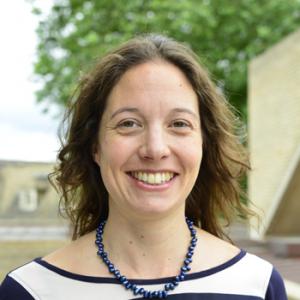
Rebecca Williams is a Professor of Public Law and Criminal Law at the University of Oxford, affiliated with Pembroke College. She serves as Admissions Co-ordinator and has held previous fellowships at Robinson College, Cambridge. Her academic journey includes a PhD from the University of Birmingham, and undergraduate/BCL studies at Worcester College, Oxford. Her research focuses on law-technology intersections, criminal/public law, and unjust enrichment. She co-founded the Oxford LawTech Education Programme (OLTEP) with Prof. Tom Melham and Dr. Václav Janeček, addressing legal technology education. Her work influences global courts, including the European Court of Justice and Australia's High Court. Key research areas include algorithmic accountability frameworks, administrative law adaptation for technology, and comparative public law approaches. She participates in initiatives like the Future of Technology and Society Discussion Group and Computers and Law Research Group. Teaching: Administrative Law, Criminal Law (Mods) Projects: LawTech education frameworks, regulatory technology applications Awards: Runner-up Peter Birks Prize (2011) Her scholarship bridges legal theory and practical challenges posed by technological advancements, emphasizing accountability and regulatory frameworks for emerging systems.
Dirk S. Hovorka is a Professor of Systems and Design in the Department of Business Information Systems at the University of Sydney Business School. His work bridges theoretical and practical aspects of information systems, with a particular focus on how technology shapes and is shaped by societal practices. He serves as Senior Editor of JAIS (Research Perspectives), Editorial Board Member of ISR, and Co-chair of the HICSS 'Informing Research: Engaging with Futures' mini-track. Dr. Hovorka's educational background includes a BA (Honours), an MS in Geology, an MS in Interdisciplinary Telecommunications, and a PhD in Information Systems from the University of Colorado. His academic journey has positioned him at the intersection of technical and philosophical approaches to information systems. Hovorka's research addresses how scientific and societal practices bring forth 'worlds' through theory, design, and conceptualizations of 'the future.' His work recognizes that the future is resistant to full prediction and control, with increasing societal change rendering past knowledge less indicative of future states. He focuses on speculative approaches to 'knowing' regarding technology, society, and biophysical environments. His research spans Future(s) studies, Speculation in Science, Philosophy of Science and Technology, Interpretive Research and Qualitative Methods, Sustainability, and System Dynamics. Analysis of Hovorka's recent publications reveals a strong trajectory toward speculative futures and the philosophical dimensions of technology. His work consistently examines how we engage with uncertain futures through design and conceptual frameworks. The articles demonstrate increasing interdisciplinary reach, connecting information systems with philosophy, sustainability studies, and organizational theory, while maintaining methodological rigor through interpretive and qualitative approaches. Hovorka has received significant recognition for his scholarly and teaching contributions: AIS Best Paper (2011) 'Secondary Design: A Case of Behavioral Design Research' Beta Gamma Sigma Professor of the Year (2018) Wayne Lonergan Award for Outstanding Teaching (2018) Dean's Award for Teaching (2022) Multiple USS Teaching Citations (2015, 2017, 2020, 2022) As an educator, Hovorka supervises multiple PhD students working on projects related to digital inequality, AI adoption in health services, and human-centered artificial intelligence. His teaching portfolio includes innovative courses such as 'Gadgets, Gods and Godzilla,' 'The Nature of Systems' (an MBA class on System Dynamics), 'Agile Project Methods,' and 'Philosophy of Business Research' for PhD students. His approach emphasizes critical thinking about technology's role in society and the philosophical foundations of business research.
Norma Lam-Saw serves as an Associate Lecturer in Arts within the School of Humanities & Communication Arts at Western Sydney University, where she bridges philosophical inquiry with creative practices in drama and technology. Her academic credentials include: Doctor of Philosophy from Western Sydney University Bachelor of Arts from Western Sydney University Dr. Lam-Saw's research traverses Continental Philosophy and its engagement with modern technology, particularly artificial intelligence. She examines the historical and linguistic dimensions of technological concepts (paleonymies) and contributes to dramatic arts through innovative character development frameworks. Her interdisciplinary approach reveals deep connections between humanities and computational creativity. Her 2024 publications demonstrate this dual focus: an editorial in the Journal of Continental Philosophy exploring AI imagery and a GitHub-based drama script project. These works collectively highlight her commitment to integrating philosophical rigor with artistic innovation. No scientific awards were documented in available sources. Regarding professional activities, no details about student supervision or research funding were provided, though her collaboration on "The Drama Machine" indicates active participation in cross-disciplinary creative teams.
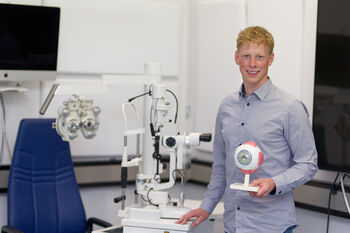
Malte Gienow-Broers is a researcher at the Department of Applied Natural Sciences, Lübeck University of Applied Sciences (TH Lübeck), pursuing a cooperative doctorate at the University of Lübeck. His work bridges applied science and interdisciplinary collaboration, involving partnerships with institutions like CoSA (TH Lübeck), IME (University of Lübeck), and IFA (University Medical Center Schleswig-Holstein). Education: Apprenticeship as biology laboratory technician (Euroimmun), B.Eng. in Biomedical Engineering (TH Lübeck), M.Sc. in Medical Engineering Sciences (University of Lübeck). Research focuses on mobile spectral retinal imaging and AI-driven diagnostic systems , particularly through the PASBADIA project. His work integrates hardware development, distributed AI, and implementation science to enhance rural healthcare accessibility. Collaborations span disciplines including optics, electronics, computer science, and clinical medicine , reflecting the applied, cross-disciplinary nature of biomedical engineering research at TH Lübeck.
Piotr Gmytrasiewicz is an Associate Professor at the Department of Computer Science, University of Illinois at Chicago (UIC). He leads the Multiagent Systems Group within the Artificial Intelligence Laboratory at UIC. His research focuses on rationality in artificial agents , particularly in environments with multiple interacting agents. Key areas include Interactive Decision-Making Bayesian Modeling for Agent Communication Recursive Belief Frameworks Time Pressure and Computational Trade-offs Evolution of Agent Communication Languages Dynamic Resource Allocation His recent work examines the rationality of insincere communication and methods to discount potentially insincere information. Past projects include modeling emotions in agent design and developing decision-theoretic approaches to game theory. He has secured funding from prestigious institutions such as the National Science Foundation (NSF) , Office of Naval Research (ONR) , and DARPA . Current and past projects emphasize Automated Linguistic Competence Evolution Emergent Communication Protocols Scalable Multiagent Learning Strategic Coordination under Uncertainty He earned his Ph.D. from the University of Michigan, Ann Arbor (1992) and has previously collaborated with the Department of Computer Science and Engineering (CSE) at the University of Texas at Arlington on DARPA-funded research.
Vincent E. Debets is a Researcher at the Applied Physics and Science Education department of Eindhoven University of Technology, specializing in Non-Equilibrium Soft Matter . His work bridges physics and computational methods to study complex material behaviors. Education : Master's thesis on Collective Cell Dynamics in Cancer Metastasis (2019), supervised by Dr. C. Storm and Dr. L. M. C. Janssen. Research Interests : Debets focuses on soft matter systems near non-equilibrium states, utilizing machine learning and deep learning to analyze glassy dynamics , active matter , and memory effects in materials. His recent studies examine structural properties of amorphous systems and correlation functions in dense active fluids. Article Trends : His publications emphasize computational approaches (machine learning, deep learning) to model non-equilibrium phenomena in soft matter, particularly glassy and active systems. Topics include structural aging, particle classification, and chiral fluid dynamics, with applications in materials science and biophysics. Collaborations : Works with international researchers like Dr. L. M. C. Janssen (Eindhoven), Prof. H. Löwen (Bochum), and Dr. T. Voigtmann (Aachen). Frequent media engagement on topics like 'glassy materials' and 'cancer cell modeling'. Labs/Teams : Affiliated with the Non-Equilibrium Soft Matter group at Eindhoven University of Technology, contributing to cross-disciplinary research in physics and biomedical applications.
Scott J. Shackelford is a Professor of Business Law and Ethics at the Indiana University Kelley School of Business, with affiliations as Executive Director of the Ostrom Workshop and Center for Applied Cybersecurity Research. He also serves as an Affiliated Scholar at Harvard Kennedy School’s Belfer Center and Stanford’s Center for Internet and Society. B.A. summa cum laude, Indiana University Masters in International Relations (First Honors), University of Cambridge PhD in Politics and International Studies, University of Cambridge JD with academic and pro bono distinction, Stanford University His research focuses on cybersecurity, data privacy, and international law, with efforts to establish cyber peace frameworks, IoT governance, and blockchain applications in security. He advocates for polycentric governance models and proactive cybersecurity policies across sectors like healthcare and professional sports. His publications span cybersecurity governance, benefit corporations, and election security, emphasizing interdisciplinary approaches. Awards include Harvard, Stanford, and Notre Dame fellowships, and recognition as a top MBA professor. Harvard University Research Fellowship Stanford University Hoover Institution National Fellowship Notre Dame Institute for Advanced Study Distinguished Fellowship 2014 Indiana University Outstanding Junior Faculty Award 2015 Elinor Ostrom Award 2022 Poets & Quants Best 40-Under-40 MBA Professors Award He leads the Ostrom Workshop and Center for Applied Cybersecurity Research, fostering collaboration between law, business, and technology disciplines to address emerging cyber challenges.
Patrik Voštinár is an Assistant Professor at the Department of Computer Science , Faculty of Natural Sciences , Matej Bel University . Holding a PhD in Applied Computer Science from the same university (2014-2017), he teaches courses in Programming , Discrete Mathematics , Web Technologies , and Android Programming . As department head and study advisor, he actively shapes academic programs and student experiences. Matej Bel University (2017-present) Department of Computer Science Faculty of Natural Sciences His research focuses on computer science education and educational technology , with particular emphasis on: VR/AR applications in teaching Game-based learning environments Microcontroller programming pedagogy Mobile application development education Physical computing tools for K-12 Adaptive learning interfaces His work with MakeCode , micro:bit , and EEG-controlled games demonstrates innovative approaches to programming education. He has received multiple eLearning competition awards for educational courseware development. Heart on the palm (Project of the year 2019) 2nd price in eLearning competition (2023) for Discrete Mathematics course Price of České společnosti pro systémovou integraci (2023) for Web Technologies 1st price in eLearning competition (2023) for Geometry Didactics Voštinár actively contributes to academic communities through: Membership in DIDINFO conference program (since 2017) Editorial Board member of Elementary Mathematics Education Journal Organizing workshops for primary/secondary students Popularizing informatics through extracurricular programs
Martin Presselt is a researcher at the Leibniz Institute of Photonic Technology (IPHT) , focusing on Photonics and Quantum Detection . He leads the working group on Organic Thin Films and Interfaces, exploring applications in energy transfer, sensing, and material stability. Research Themes : Interfacial engineering, electrochemical sensors, solar cell longevity, and supramolecular design. Notable Collaborations : Sarah Jasmin Finkelmeyer, Benjamin Dietzek-Ivanšić, Ksenija Glusac, Sylvestre Bonnet. His recent work includes defect-free anisotropic membranes via plasticizers (Journal of Colloid and Interface Science, 2025), optical property tuning through intermolecular interactions (Chemistry-A European Journal, 2025), and calcium-sensitive TTA upconversion systems (Journal of Physical Chemistry Letters, 2024). He investigates graphene nanoribbon electrochemistry (JACS, 2024) and amphiphilic additives for solar cells (ACS Applied Electronic Materials, 2024). He contributes to cross-disciplinary perspectives on weak interactions (PCCP, 2023) and develops bifacial dye membranes for photocatalysis (Advanced Materials, 2023). His studies combine experimental and computational approaches, addressing challenges in material longevity and functional design. Contact : martin.presselt@leibniz-ipht.de
Dr Arthi Manohar is a Senior Lecturer in Design at Brunel University London and serves as Programme Director for the BSc Product Design degree within Brunel Design School, College of Engineering, Design and Physical Sciences. Since joining Brunel in 2018 she has led multiple undergraduate and master-level modules, championed Equality, Diversity & Inclusion, and secured significant EPSRC research funding. Education PhD Digital Product Design, University of Dundee (2017) MA Architecture and Digital Media, University of Westminster (2009) BArch Architecture, National Institute of Technology, India (2007) FHEA (Fellow of the Higher Education Academy), 2021 Research Interests Arthi’s research lies at the intersection of social design and emerging technology . She investigates participatory, inclusive and co-design approaches to Human–Computer Interaction, privacy and trust in the Internet of Things, and the application of AI to accessibility and health technologies. Her work emphasises human values, cross-cultural perspectives and ethical considerations in technology design. Recent funded projects include Trust in Home: Rethinking Interface Design in IoT (EPSRC HDI Network Plus) and From Understanding Privacy and Trust to Re-visualising TAPESTRY (EPSRC Sandpit). She collaborates across disciplines with partners such as the University of Nottingham, University of Kent, Royal Holloway and industry partners like LoomiAssist Ltd. Publications & Scholarly Service Arthi has published extensively in top-tier venues such as DRS, DIS, British HCI, Multimedia Tools & Applications, IEEE Transactions on Services Computing and CHI Workshops. Since 2020 she has served as Equality, Diversity & Inclusion Champion for the Department of Design and has held programme-committee roles for British HCI 2021, DIS 2019 and IndiaHCI 2019. PhD Supervision & Teaching She currently supervises four doctoral researchers exploring antimicrobial resistance design, stigma in assistive technology, virtual production and user engagement. At undergraduate and masters levels she leads modules on Interaction & UX Design, Digital Design Prototyping, Professional Practice and Design Communication, and has mentored over a dozen master dissertations on inclusive design, AI/AR retail experiences and speculative futures.
Dr. Len Ole Schäfer is a Postdoctoral Researcher at the CATALPA research cluster, FernUniversität in Hagen, leading the project 'Organizational Resilience and Creativity: Exploring the Future of Educational Technology in Higher Education' (ORC) in collaboration with the Alexander von Humboldt Institute for Internet and Society (HIIG). His work investigates the interplay between organizational resilience, creativity frameworks, and educational technology implementation within higher education institutions, emphasizing trust-based leadership and strategic adaptation. Schäfer holds a PhD in Sociology (2018) from the University of Bamberg examining the UK's Research Excellence Framework impact on academic practice, and a Diploma in Sociology (2012) focused on ranking construction in science. His academic trajectory includes research positions at Zeppelin University (2018), University College London's Centre for Global Higher Education (2016), and the University of Bamberg (2012-2018). His research centers on higher education organizational dynamics, particularly how universities navigate digital transformation through resilience-building and creativity cultivation. Key interests include sociological theory applications, organizational sociology frameworks, and the role of digitalization strategies in enabling innovation. His work consistently analyzes resistance to digital change, strategic ambiguities in institutional policies, and trust mechanisms that foster EdTech adoption across diverse academic contexts. Recent publications reveal a cohesive trajectory examining organizational responses to digital disruption, with emphasis on faculty perspectives, leadership approaches, and structural adaptations. His studies—primarily qualitative and mixed-methods—highlight tensions between centralized strategies and decentralized implementation, resistance triggers, and the paradoxical role of ambiguity in enabling innovation during rapid technological change. As an active community contributor, Schäfer serves on the advisory board of FernUniversität's #NewLearning Blog and reviews for 'Higher Education - The International Journal of Higher Education Research'. His project leadership in ORC (2023–present) and OrA (until 2023) demonstrates sustained engagement with German higher education's adaptability challenges, while international collaborations with HIIG and conference presentations at EGOS and Swiss Sociological Association forums extend his scholarly impact.
William Bulko is an Associate Professor in the Department of Computer Science at the University of Texas at Austin. His work bridges Artificial Intelligence, Programming Languages, and Computer Science Education, with a focus on mobile development and pervasive computing. Ph.D. in Computer Sciences (UT Austin, specialization in Artificial Intelligence) B.S. in Mathematics (University of Texas at El Paso, Summa Cum Laude) Research spans interdisciplinary projects, such as integrating Computer Science with Journalism, and technical innovations in: Network Security (ARP Cache diagnostics) Hardware Authentication (electromagnetic profiling patents) Object-Oriented Systems (access control, operator overloading) Diagrammatic Reasoning (physics problem-solving, visual languages) His publications highlight expertise in AI, software engineering, and educational technology, with recent patents on computing desktop management and device security. Bulko serves on the Review Board of Applied Intelligence and as Faculty Advisor for the UT CS Roadshow. Scientific Recognition : 1988 MCC Award for Excellence in Computer Science nominee Teaching roles include CS 371L: Mobile Programming for iOS and CS 329E: Elements of Web/Mobile Computing . He has also led summer programs on Python and iOS development.
Robert Klemmensen is Professor and Assistant Head of Department at Lund University's Department of Political Science, where he coordinates research activities. He is a member of the LU Profile Area: Natural and Artificial Cognition, an interdisciplinary initiative exploring cognition from biological and computational perspectives. His work examines how genetic and psychological factors shape political behavior using advanced quantitative methods. Klemmensen's research focuses on: Voter opinion formation and behavioral alignment with stated preferences Genetic influences on political attitudes through twin studies Quantitative text analysis of political rhetoric Machine learning applications in political ideology detection Normative implications of empirical findings in democratic systems His publications demonstrate consistent focus on genetic-behavioral interactions in politics, with recent work incorporating computational methods like deep learning for facial analysis and natural language processing. Article clusters examine: (1) heritability of political traits, (2) methodological innovations in text analysis, and (3) cross-disciplinary connections between political science and genetics. He currently co-edits Political Psychology and Research and Politics , and serves on the Independent Research Fund Denmark. Klemmensen leads the research project 'Divided Parliaments? Polarization, Moralization, and the Risk of Gridlock' (2024-2027), funded by the Bank of Sweden Tercentenary Foundation, examining governance challenges in polarized environments. Within Lund University's Natural and Artificial Cognition profile area, he collaborates with computer scientists and cognitive researchers to develop interdisciplinary approaches to political behavior analysis.
Mathias Spliid Heltberg is an Assistant Professor at the Biocomplexity section of the Niels Bohr Institute, University of Copenhagen. His research focuses on nonlinear dynamics in biological systems, particularly oscillatory mechanisms in cellular processes and medical informatics applications. Current affiliation: Niels Bohr Institute, University of Copenhagen Research areas: Biocomplexity, Systems Biology, Chronobiology His recent publications span topics like p53 dynamics in DNA damage response, signal transmission in excitable media, and medical informatics applications. Collaborations include institutions in Denmark, USA, and China. The research integrates computational modeling with experimental validation in diverse biological contexts. Key contributions include theoretical frameworks for biological oscillations and practical applications in gestational diabetes intervention and surgical outcome prediction. His work on allelic buffering and potassium ion dynamics highlights cross-disciplinary approaches combining physics and biology.
Dr. Mubashir Ahmad is a researcher at the School of Physics, Engineering & Computer Science, University of Hertfordshire. His work focuses on applying computational methods to solve real-world challenges in healthcare, infrastructure, and environmental sustainability. Research Focus Dr. Ahmad's expertise spans: Core AI/ML Techniques : Deep learning, machine learning algorithms, computer vision systems Application Domains : Medical imaging diagnostics, pollution modeling, infrastructure inspection automation, and climate impact analysis Emerging Areas : Robotic systems integration and big data fusion for industrial applications Project Engagement Deep Learning-powered Apple Disease Detection System (ADDS) (2024-2025): Serving as Co-Investigator to develop AI tools for agricultural disease identification in collaboration with UK farmers. Publication Trends His recent publications demonstrate consistent focus on operationalizing deep learning across diverse sectors. Dominant themes include automated infrastructure inspection (sewer systems), medical image analysis (chest radiographs), and environmental forecasting (air quality/pollution). This reflects a cross-disciplinary approach bridging computer science with civil engineering, healthcare, and environmental science.