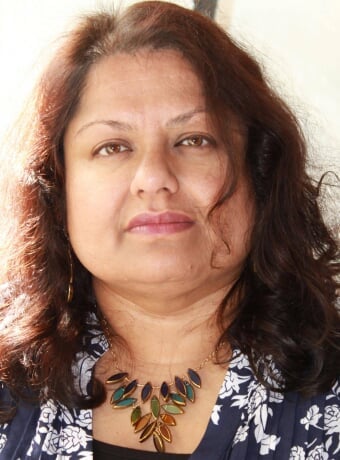
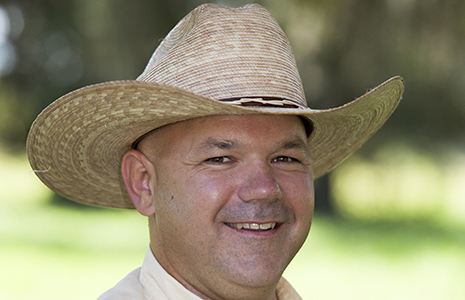
Terry A. Wheeler is a Professor at Texas A&M AgriLife Research in the Department of Plant Pathology and Microbiology , based in Lubbock. Her work focuses on managing soilborne pathogens affecting cotton, including nematodes and fungal diseases like Verticillium and Fusarium wilt. Research Interests : Identification and management of cotton plant pathogens Testing chemical/biological seed treatments for nematode control Systems-based projects analyzing tillage, irrigation, and crop rotation effects on pathogens Publication Trends : Recent articles emphasize cotton variety resistance to nematodes/fungal wilts, field trial methodologies, and integrated pest management strategies across Texas High Plains production systems. Scientific Contributions : Conducted multi-year variety screening trials for bacterial blight and wilt resistance Developed nematode management protocols for cotton producers Provided extension resources for regional pest/disease control Education : B.S. in Plant Science, Worcester Polytechnic Institute M.S. in Plant Pathology, Texas A&M University Ph.D. in Plant Pathology, North Carolina State University
Helmut Meiss serves as an Assistant Professor at the University of Lorraine's University Institute of Technology (IUT) Nancy-Brabois, where he directs the DUT Biology with Agronomy option study program. His research focuses on conservation biological control of crop pests and weeds through natural enemies within innovative cropping systems, bridging ecological science and agricultural practice. Dr. Meiss's work emphasizes biological pest control and weed management in sustainable agriculture, investigating how landscape features, crop rotations, and biodiversity enhance ecosystem services. His research integrates field studies with predictive modeling—particularly machine learning—to develop practical tools for farmers, as evidenced by his leadership in the ARENA project which establishes observation networks for natural pest regulation. Analysis of his 15 most recent publications reveals consistent themes in cereal aphid regulation, weed dynamics in cropping systems, and data-driven approaches to agri-environmental indicators. His work demonstrates a strong trajectory toward generic predictive models for pest control and the integration of biocontrol into farm-level decision-making, with increasing emphasis on ecosystem service quantification since 2017. Dr. Meiss co-supervises PhD candidate Eric STELL on predicting conservation biological pest control in cereal crop mixtures. His involvement in the ARENA project indicates collaborative grant-funded research, though specific funding sources aren't detailed in available materials. He actively contributes to farmer advisory systems through biodiversity indicators and crop management tools. As part of a multidisciplinary research group organized around three thematic axes, he participates in the ARENA network for pest biocontrol assessment and engages in public outreach including school workshops, biodiversity exhibitions, and science-society initiatives like the 'Grand Nancy Terre de pollinisateurs' project.
Andrew J Margenot is an Associate Professor in the Department of Crop Sciences at the University of Illinois Urbana-Champaign, with affiliations at the Institute for Sustainability, Energy, and Environment, Center for Digital Agriculture, and National Center for Supercomputing Applications (NCSA). His research focuses on soil biogeochemistry, particularly phosphorus and carbon cycling, soil health, and agroecosystem management. He explores topics such as soil enzyme activity, nutrient loss mitigation, and the impacts of agricultural practices on environmental systems. Margenot leads exploration into organic matter recycling, legacy phosphorus dynamics, and the application of advanced analytical techniques like radioisotopic labeling and spatial modeling. His work bridges field experimentation with computational methods to address global challenges in sustainable agriculture and environmental stewardship. Research Interests: Soil phosphorus and carbon biogeochemistry Soil health indicators and enzyme activity Agricultural nutrient management and loss mitigation Long-term agricultural experiment analysis (e.g., Morrow Plots) Impacts of land-use change on soil properties Integration of digital technologies in agricultural research Recent Articles Trends: Margenot’s recent work emphasizes methodological advancements in soil analysis (e.g., enzyme assays), phosphorus cycling dynamics in diverse ecosystems, and agricultural sustainability. Key themes include evaluating fertilizer forms, optimizing nutrient use efficiency, and quantifying environmental impacts of farming practices. Labs & Collaborations: He collaborates across institutions on projects involving soil biogeochemistry, computational modeling (via NCSA), and interdisciplinary sustainability initiatives. His research often involves field experiments, isotopic tracing, and multi-institutional datasets.
Kirsty Owen is a Senior Lecturer in Crop Nematology at the School of Agriculture and Environmental Science and a Senior Research Fellow at the Centre for Crop Health, University of Southern Queensland. Her expertise focuses on managing root-lesion nematodes in grain crops, with a research emphasis on biotic constraints in farming systems, interactions between soil-borne pathogens, and arbuscular mycorrhizal fungi. She holds a BScAg (1994), MScAg (1996), and PhD (1999), all from Sydney. Education: BScAg, University of Sydney, 1994 MScAg, University of Sydney, 1996 PhD, University of Sydney, 1999 Her research explores interactions between nematodes, soil-borne diseases, and beneficial fungi, aiming to enhance crop resilience. Teaching includes plant physiology, biology, food security, and emerging agricultural technologies. She has supervised over a dozen graduate students, including key projects on root-lesion nematode resistance in wheat and mung bean, and soil legacy effects of invasive species. Current projects address smoke taint mitigation in wine regions and genetic resistance in crops. Publications span nematode management strategies, crop rotation impacts, and advanced detection technologies. Notable contributions include optimizing NDVI for wheat tolerance assessment and systematic reviews of mycorrhizal-nematode interactions. Professional affiliations include the Australasian Plant Pathology Society and the Australasian Association of Nematologists.
Prof. Mariusz Jerzy Stolarski is a full-time faculty member at the University of Warmia and Mazury in Olsztyn, affiliated with the Department of Genetics, Plant Breeding and Biomaterial Engineering within the Faculty of Agriculture and Forestry. His research focuses on bioeconomy, renewable energy systems, and sustainable biomass production. Scientific discipline: Agriculture and horticulture ORCID: 0000-0003-0712-9678 Email: mariusz.stolarski@uwm.edu.pl Phone: +48 89 523 48 38 His research explores biomass valorization, biofuel processing, and environmental efficiency assessments across agricultural and forestry systems. Recent work examines supercritical CO2 extraction effects on biomass stability, intercropping systems in organic farming, and economic viability of multi-purpose energy crops like industrial hemp and Virginia fanpetals. Scientific indicators highlight significant contributions: 79/96 publications (WoS/Scopus), 878/1141 citations (WoS/Scopus), H-index 21/24, and Google Scholar H-index 29 with 3089 citations. He has promoted 4 doctors and currently supervises 2 doctoral students.
Silvia Rondon is a Professor and Director of the Integrated Pest Management Center at Oregon State University (OSU), affiliated with the College of Agriculture and Department of Crop & Soil Science. She moved to OSU's Corvallis campus in September 2022 after extensive work in eastern Oregon. Education: PhD in Crop Sciences (2002), MS in Entomology (1999), BA in Biology/Zoology (1993) from Universidad Nacional Agraria La Molina (Peru) and University of Illinois. Research Focus: Ecological-based Integrated Pest Management for irrigated crops (potatoes, onions, corn, wheat) emphasizing insect ecology, biological/chemical control, and pest population dynamics. Her publications span potato psyllid management, zebra chip disease, wireworm genomics, and landscape-driven pest movement. Key awards include the Erasmus Teaching Award, Pacific Branch ESA Excellence in Extension, and multiple NACAA/OSU honors. She leads extension programs through on-farm demonstrations and train-the-trainer workshops, while mentoring graduate students in IPM research.
Rupali Datta is a Professor of Biological Sciences at Michigan Technological University (MTU), affiliated with the Great Lakes Research Center (GLRC). Her research focuses on applying plant biochemistry, genetics, and microbiology to address environmental contamination through phytoremediation and plant-microbe interactions. She holds a PhD from the University of Hyderabad, India. Dr. Datta collaborates with experts in environmental geochemistry, soil science, and analytical chemistry to study contaminant bioavailability in aquatic and terrestrial systems. Her work emphasizes remediation of heavy metals (arsenic, lead), explosives (TNT/RDX), antibiotics, and petroleum hydrocarbons using green technologies. She leads projects funded by agencies like the Department of Defense, EPA, and HUD. Key research areas include: Phytoremediation of contaminated soils and water using vetiver grass and hyperaccumulator plants Bioavailability of contaminants in human and environmental systems Development of sustainable remediation technologies like biochar and water treatment residuals Health effects of metal exposure in cell and animal models Recent grants include a $2.5M DoD project on PFAS remediation (2023–2025) and a HUD initiative to reduce lead bioavailability in residential soils (2021–2024). Dr. Datta’s lab also partners with SIROM Scientific Solutions, LLC, advancing environmental R&D. Her work bridges fundamental science and applied solutions, addressing global challenges in pollution and sustainability.
Prof. Jonne Rodenburg is an Associate Professor of Weed Ecology at Wageningen University within the Centre for Crop Systems Analysis . Previously, he served as a Professor of Agronomy at the University of Greenwich (2018–2023) and worked at the Africa Rice Center (CGIAR) in multiple African countries. He holds an MSc (1999) and PhD (2005) from Wageningen University. His research focuses on parasitic weeds like Striga and Rhamphicarpa in African agricultural systems, with an emphasis on sustainable management strategies for smallholder farmers. Education: MSc, Wageningen University (1999) PhD, Wageningen University (2005) Research Interests: He explores the ecology and management of parasitic weeds (e.g., Striga, Rhamphicarpa) in crops like rice and cereals, aiming to enhance yield sustainability through soil microbiome interventions and agroecological practices. His work integrates field experimentation, cropping systems analysis, and interdisciplinary approaches. Key Projects: PROMISE Project : Engineers soil microbiomes to suppress Striga in African cereal crops (funded by Bill & Melinda Gates Foundation). Focus on soil microbial volatiles for parasitic weed control. Development of locally adapted Striga management strategies. Grants & Leadership: Leads the PROMISE project, collaborating with institutions like NIOO-KNAW and UC Davis. President of the International Parasitic Plants Society (IPPS, 2024–present). Labs & Teams: Active in the Centre for Crop Systems Analysis , focusing on crop-weed interactions and sustainable farming systems in tropical regions.
Marilia Chiavegato is an Assistant Professor at The Ohio State University, holding a split appointment in the Department of Animal Sciences and the Department of Horticulture and Crop Science. She specializes in agroecosystem sustainability, focusing on crop-livestock integration, grazing systems, and environmental impact assessment. Her work emphasizes climate change adaptation through multi-year analysis of large-scale datasets. Education: Ph.D. in Animal Sciences, Michigan State University (2014) M.S. in Applied Chemistry to Agriculture and the Environment, University of São Paulo (2010) B. Eng. in Agronomic Engineering, University of São Paulo (2008) Research Interests: Resilience of agroecosystems under climate change Greenhouse gas emissions monitoring Grazing management strategies Integrated crop-livestock systems Soil carbon sequestration Recent Work Trends: Dr. Chiavegato’s research bridges field-scale analysis with environmental pressures, focusing on mitigating emissions while enhancing productivity. Recent studies include grazing management’s impact on methane/nitrogen dynamics and biochar’s role in sustainable agriculture. Advising & Grants:** Advises students in Animal Sciences and Horticulture/Crop Science. Research funding sources include USDA grants and collaborative initiatives on sustainable farming. Labs/Teams:** Collaborates with Ohio State’s Agricultural Research and Development Center and Extension programs to translate research into practical farm solutions.
Dr. Emily Burchfield is an Assistant Professor in the Department of Environmental Sciences at Emory University, where she leads the FACES (Food, Agriculture, Climate, Environment, and Sustainability) Lab. Her research integrates social and environmental data to study agricultural sustainability, with projects focused on land use change, climate adaptation, and rural livelihoods. She holds a PhD in Environmental Engineering from Vanderbilt University and MA in Economics from the University of Louvain. Her work examines how agricultural systems adapt to climate change, the characteristics of productive and resilient farming, and drivers of cultivation and conservation behavior. Dr. Burchfield's research combines geospatial analysis with qualitative methods to understand agricultural transitions at multiple scales. Recent publications explore crop diversification, agricultural data practices, and rural livelihoods. Her group develops computational tools for agricultural analysis and collaborates with farming communities to support sustainable transitions.
Sabine Seidel is a full Professor at the Institute of Crop Production, Department of Agrarwissenschaften, University of Natural Resources and Life Sciences, Vienna (BOKU). Her research integrates plant modeling, sustainable agriculture, and digital farming to enhance climate-resilient and resource-efficient crop systems. Her research interests focus on the development and testing of innovative, diverse (organic) cultivation systems, particularly mixed cropping and intercropping. She investigates ecosystem services such as yield and greenhouse gas emissions through measurements and modeling. Her work emphasizes the interactions between genotype, environment, and management (G×E×M), especially concerning water, nitrogen, and root dynamics. She also explores root growth responses to nutrient deficiency and drought stress, and leads initiatives in digital farming, including AI tools for pollinator detection and digital twin development in agriculture. Analysis of her recent publications (2024–2025) reveals a strong trend in interdisciplinary research combining field experiments with advanced modeling. Her work spans agroecosystem modeling, intercropping systems (especially wheat and faba bean), soil-crop interactions, and the application of AI and machine learning in agriculture. She frequently contributes to multi-model studies and calibration protocols, emphasizing model accuracy and validation. Her research is highly collaborative, involving teams across Germany and Austria. Root:shoot ratio under conservation tillage Phenotypic plasticity in winter wheat Resource acquisition in intercropping Digital crop growth simulation using GANs Soil carbon sequestration and organic matter dynamics She has been actively involved in the PhenoRob Cluster of Excellence as a junior research group leader (2020–2025), focusing on optimizing plant mixtures through field experiments and modeling. Prior to this, she conducted postdoctoral research on subsoil management at the University of Bonn. Her work bridges ecology, plant science, soil science, and digital technologies. She earned her doctorate on plant modeling and irrigation from the Technical University of Dresden and studied agricultural sciences at the Technical University of Munich. She is based in Vienna and maintains an active presence in knowledge transfer, with media contributions in print and online outlets discussing sustainable farming practices.
Gabriele Gollner is a Researcher at the Department of Soil and Cultivation Systems (ANBAU) within the Institute of Organic Agriculture and Environmental Sciences (iOELA) at BOKU University in Vienna. Her work focuses on sustainable agricultural practices, particularly in organic farming systems, with an emphasis on soil health, crop management, and agroecological innovations. Research Areas: Cover crop systems and reduced tillage practices Biological nitrogen fixation in legumes Climate-resilient cropping strategies Allelopathic interactions in agroecosystems Organic fertilizer and soil physical trait optimization Recent Research Trends: Her work emphasizes practical applications of regenerative agriculture, including roller-crimper no-till methods, allelopathic weed management, and intercropping systems to enhance system resilience. Over 15 peer-reviewed articles since 2010 highlight her contributions to organic farming systems research. Labs/Teams: Leads the ANBAU Soil & Cultivation Systems group, collaborating on projects related to soil fertility, crop ideotype development, and agroecological transition strategies. Her office is located at Mendelhaus South Wing, 3rd Floor, Room 10.1.
Brent Sellers is a Professor and Center Director at the Range Cattle Research and Education Center (RCREC), part of the University of Florida's Institute of Food and Agricultural Sciences (UF/IFAS). His primary affiliation is with the Agronomy Department, focusing on pasture and rangeland weed management. His work integrates herbicide efficacy studies, invasive species control, and sustainable forage systems. Administration: 50% of role involves center leadership and research coordination Research: 25% dedicated to agronomic and weed science innovations Extension: 25% focuses on translating research into practical guidelines for farmers Research Interests: Sellers specializes in herbicide application strategies, weed-crop interactions, and integrated pest management (IPM). Key areas include smutgrass control, cogongrass management, and the use of drones for precision agriculture. His work addresses both economic and ecological challenges in Florida's grazing lands and citrus systems. Publications: Over 100 refereed journal articles and extension bulletins highlight his contributions to understanding herbicide tolerance in crops, invasive plant biology, and sustainable forage practices. Recent work emphasizes drone-based weed mapping and soil pH effects on plant competition. Awards: No specific prizes are listed, but his impactful research has shaped Florida's agricultural policies and practices. Labs/Teams: Leads the RCREC Weed Science Unit, collaborating with UF/IFAS Extension specialists to develop regionally applicable solutions for pasture and citrus weed challenges.
Dr. Krishna P. Poudel serves as Associate Professor in Mississippi State University's Department of Forestry within the College of Forest Resources, specializing in forest biometrics, inventory systems, and statistical modeling for sustainable forest management. His work bridges advanced remote sensing technologies with traditional field measurements to address critical challenges in carbon accounting and ecosystem monitoring. His educational foundation includes: Ph.D. in Forestry, Oregon State University M.S. in Statistics, Oregon State University M.S. in Forestry, Louisiana State University B.S. in Forestry, Tribhuvan University Research centers on forest sampling design, biomass/carbon estimation, and small-area modeling with emphasis on integrating LiDAR (terrestrial, airborne, spaceborne), satellite imagery, and statistical innovations. Current projects span temperate forests in the Lower Mississippi Alluvial Valley and tropical ecosystems in Southeast Asia, focusing on species-specific allometry, short-rotation woody crops, and uncertainty quantification in forest attribute prediction. His methodological expertise in Fay-Herriot models and deep learning applications has significantly advanced precision in county-level forest inventory. Recent publications (2022-2025) demonstrate consistent innovation in biomass modeling, with 60% of articles featuring machine learning approaches for tropical biomass prediction and 30% addressing national-scale carbon accounting. Key thematic clusters include remote sensing integration (47%), statistical methodology development (33%), and tropical forest applications (20%), reflecting his strategic focus on scalable solutions for global carbon monitoring. Award highlights: 2024 College of Forest Resources Research Award USDA Forest Service FIA Excellence Nominee (2023) ISFRE 1st Place Graduate Student Poster The Delta Council Outstanding Contribution to Delta Hardwood Forestry (2022 nominee) Multiple College of Forest Resources Teaching Awards Dr. Poudel actively mentors seven graduate students through the Forest Biometrics Lab, with thesis topics spanning ICESat-2 canopy height validation, deep learning biomass models, and marginal land identification. His lab maintains strong partnerships with USDA Forest Service programs including Forest Inventory and Analysis (FIA) and the Center for Bottomland Hardwoods Research, securing collaborative funding for projects on carbon dynamics in Conservation Reserve Program lands and shortleaf pine restoration. Current initiatives focus on integrating GEDI data with national inventory systems and developing AI-driven tools for smallholder agroforestry carbon accounting in Vietnam.
Juan Solomon serves as an Associate Professor in the Department of Agriculture, Veterinary and Rangeland Sciences at the University of Nevada, Reno. His research lab operates from Building FA, Room 226d (Mail Stop 202), with direct contact via (775) 784-6888 or juansolomon@unr.edu. Education: B.S. in Agriculture, University of Guyana (2000) Graduate Diploma in Education-Science, University of Guyana (2005) M.S. in Agriculture, Mississippi State University (2010) Ph.D. in Agriculture, Mississippi State University (2013) Research Focus: Dr. Solomon's work centers on grassland ecology and sustainable pastoral systems for ruminant livestock, with emphasis on grazing management, forage quality evaluation, and drought-tolerant crop development. His research program investigates water use efficiency in semiarid forage systems, nutrient cycling dynamics, and climate-resilient crop screening—particularly for native and improved forages in arid western environments. Field studies often integrate ecosystem service valuation with practical livestock production metrics. Publication Trends: Recent work (2023-2025) demonstrates concentrated expertise in alternative forage systems, with 15 high-impact studies examining teff double-cropping, industrial hemp varietals, and cover crop nutrient cycling in Nevada's semiarid landscapes. Key methodological approaches include deficit irrigation analysis, nitrogen optimization trials, and biomass decomposition modeling—all targeting resource-efficient agricultural solutions for water-limited regions.