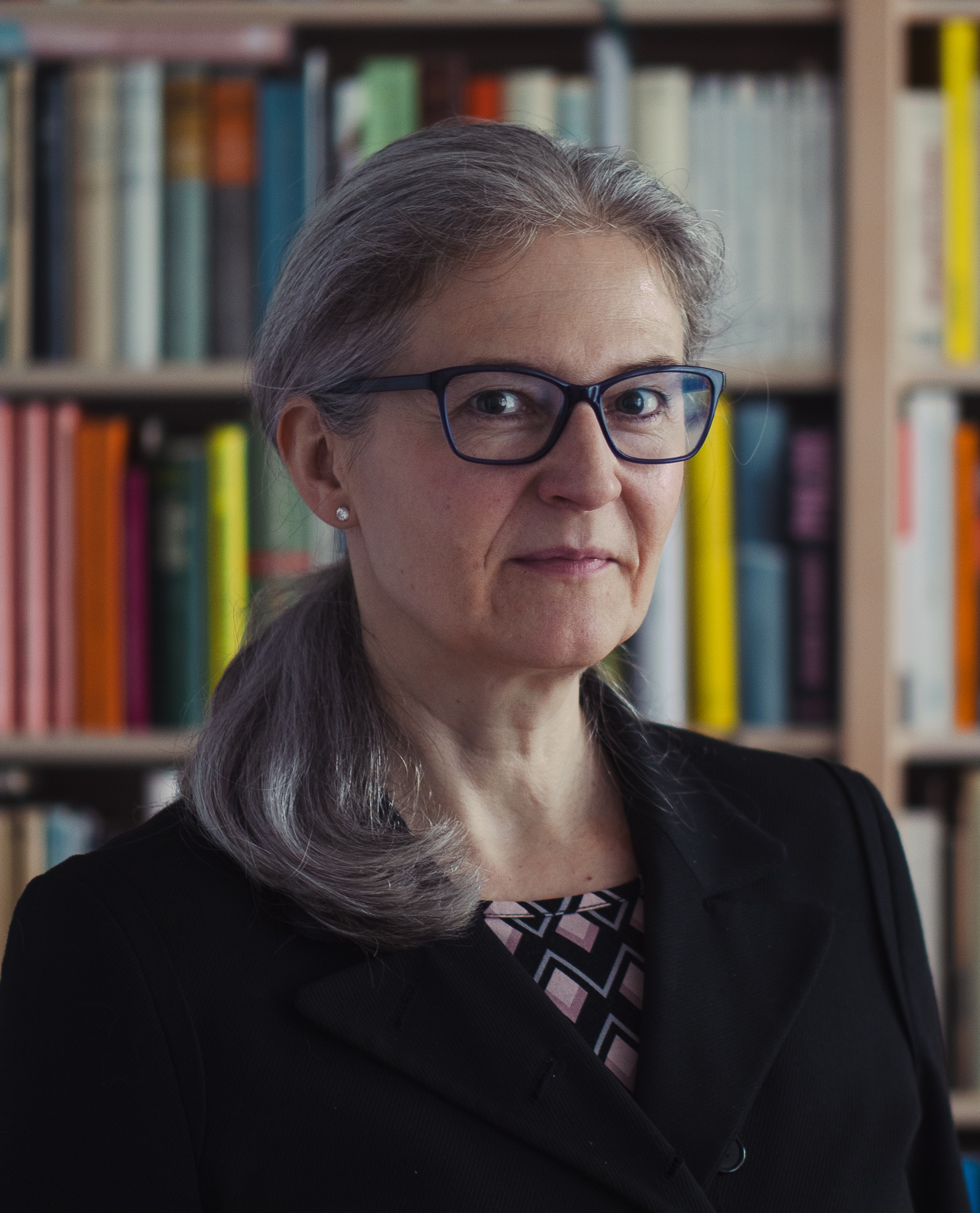
Cora Rok is a researcher in Romance Studies at the University of Heidelberg, currently working on her habilitation thesis exploring shame aesthetics in 19th-century French literature. She holds a summa cum laude PhD in Italian Philology from the trinational 'Italianistica' graduate program (Universities of Bonn, Florence, and Paris-Sorbonne). Her primary affiliations include the Romance Studies Department at Heidelberg and previous roles at the University of Trier's Center for Digital Humanities and the University of Bonn. Research focuses: Italian/French literature (19th-21st centuries), Pier Paolo Pasolini studies, Marxist criticism, digital humanities, and literary theory Key academic contributions: Authentizität nach Pasolini (2021), Entfremdung in der Arbeitswelt (2021), and over 30 peer-reviewed publications Her work bridges traditional literary analysis with computational methods, evident in collaborations like 'From Keyness to Distinctiveness' (2021). She actively participates in interdisciplinary projects such as Neuer Realismus in der Romania (2021) and Selbstreflexivität im italienischen Gegenwartskino (in preparation). Awards include the 2020 DIV Young Talent Award and postdoctoral funding through MeTra and University of Bonn's graduate programs. She maintains teaching responsibilities in French and Italian literature at Heidelberg while contributing to academic leadership roles in editorial projects and conferences.
Prof. Dr. Gabriele Weiß is a Professor of Educational Science specializing in General Pedagogy at the University of Siegen (Faculty II). Her work bridges educational theory, philosophy, and cultural studies, focusing on aesthetic education, museum pedagogy, and phenomenological analyses of pedagogical phenomena. Key research areas: Educational theory-practice transformation, subjectivity theories, ethics/aesthetics/politics intersections Teaching spans topics like social inequality theories, post-digital education, Foucauldian subjectivation, and Nietzsche's educational philosophy Collaborations include co-editing with Klaus Mollenhauer, Christian Thompson, and Jörg Zirfas Recent publications examine ludification/gamification, educational conscience, and participation in practice theory
Prof. Dr. Susanne Krasmann is a Professor of Sociology at the University of Hamburg's Faculty of Economics and Social Sciences. Her research bridges sociology, law, and architectural studies, focusing on security, vulnerability, and poststructuralist theory. Institutional Affiliation: University of Hamburg, Faculty of Economics and Social Sciences Research Interests: She investigates the sociology of security, uncertainty, and vulnerability, with a focus on architecture in the Anthropocene. Her work explores the interplay between law, knowledge, and political power through poststructuralist frameworks. Projects: Current projects include Caring for the Future (DFG 2022-2024) and AI and Human Meaning in Law (BMBF 2022-2026). She leads the Democratizing Security graduate program. Publications: Her recent articles address urban destruction in Ukraine, predictive policing, and the epistemology of algorithms. These works span critical security, cultural sociology, and the Anthropocene. Awards: Fellow of DFG (1999–2001) Straus Institute Fellowship, NYU (2010–2011) Visiting Fellowships at UC Berkeley (2017) and University of Melbourne (2018) Collaborations: She frequently collaborates with Christine Hentschel, León von der Burg, and Thomas Lemke. Her research assistants include Nina Reedy, Dr. Stephanie Schmidt, and León von der Burg.
Gallina Tasheva is a Professor at the Institute of Sociology, Faculty of Social Sciences, University of Münster (Westfälische Wilhelms-Universität Münster). She has held this position while actively contributing to theoretical sociology, social philosophy, and qualitative research methodology. Since August 2013, she has served as Chair and Advisory Board member of the Research Network 'Social Theory' of the European Sociological Association, and since July 2012, she has been a member of the Editorial Board of the International and Multidisciplinary Journal of Social Sciences. Dr. phil. (Sofia), Tasheva studied sociology, political science, economics and philosophy at the universities of Sofia, Moscow, Bielefeld and Bochum. Her academic journey includes research and teaching positions at universities in Sofia, Moscow, Warsaw, Bielefeld, Bochum, Boston, Kassel, Chicago and most recently with a chair for theoretical sociology at the Friedrich Schiller University Jena. She also completed advanced training in higher education didactics at the Center for University Teaching at the University of Münster. Professor Tasheva's research spans social philosophy and social theory, phenomenology, poststructuralism, existential analysis, and methodology of social sciences. She focuses on fundamental ignorance and its consequences for the concept of science, with work in progress including 'Existential Analysis and Sociology,' 'Critique in Times of Contingency,' and 'Fundamental Non-Knowledge: Interdisciplinary Studies.' Her teaching profile includes seminars on theoretical and methodological challenges for humanities, social and cultural sciences facing multiple crises in Europe. She has coordinated the international research network 'Existential Analytics' and organized interdisciplinary conferences on non-knowledge and European identity. Her recent scholarly work demonstrates a consistent focus on the intersections of phenomenology, existential analysis, and social theory, with particular attention to concepts of being-with (Mitsein), otherness, and fundamental ignorance. Her publications reveal a trajectory from early work on postmodernism and national traditions in sociology to more recent explorations of non-knowledge, public discourse, and the existential foundations of social theory. The thematic evolution shows increasing engagement with questions of contingency, critique, and the epistemological consequences of fundamental ignorance in social science. International Sociological Association Prize DAAD scholarship at the Faculty of Sociology, University of Bielefeld Fulbright Fellowship at Boston University DAAD Prize for Foreign Scientists Heinrich Hertz Fellowship from the Minister of Science and Research of North Rhine-Westphalia Research Grant at the Committee on Social Thought of the University of Chicago Fritz Thyssen Foundation Research Grant at Boston University Professor Tasheva has supervised numerous academic projects and seminars while mentoring students through master's theses and research projects. Her externally funded research includes interdisciplinary projects such as 'Cultural Transformations in Eastern Europe' at the interdisciplinary center for cultural research at the University of Kassel (2006-2009), a long-term study with participatory observation on 'Dealing with Death and Dying' at the Habichtswald Clinic for palliative medicine in Kassel (2007-2009), Volkswagen Foundation's international research project 'Europe amidst Incommensurabilities' (1998-1999), and the EU Tempus Project 'Otherness and Cultural Identity' (1992-1993). Her research demonstrates sustained engagement with both theoretical development and empirical investigation, particularly through qualitative methods and grounded theory. Professor Tasheva is deeply involved in the academic community through her leadership in the Social Theory Research Network of the European Sociological Association. She has organized significant interdisciplinary conferences including 'Theoretical and Methodological Challenges for Humanities, Social and Cultural Sciences, Facing the Multiple Crises in Europe' (Münster, June 6-8, 2024), 'Principled Ignorance' (Münster, October 29-30, 2021), and the ESA Social Theory Conference on 'The Quest of European Identity' (Münster, November 26-28, 2014). Her work bridges philosophy and sociology, creating a distinctive approach to understanding social phenomena through existential and phenomenological lenses.
Kathrin Busch is a Professor of Cultural Theory at the Berlin University of the Arts since 2010, previously holding positions as Junior Professor at the University of Lüneburg (2002–2009) and Professor at the Merz Academy Stuttgart (2009–2010). She holds a doctorate from Ruhr University Bochum (2001). Her research focuses on cultural theory, contemporary French philosophy, aesthetics, and artistic research epistemologies. Education: Studied philosophy, art history, and literary studies in Hamburg; Doctorate in Cultural Studies from Ruhr University Bochum (2001). Key roles: Member of the DFG Graduate School 'Knowledge of the Arts' management team since 2015; Co-led multiple DFG-funded projects exploring artistic research, cultural effectiveness of design, and corporeality studies. Research interests emphasize redefining knowledge production in arts through interdisciplinary frameworks, interrogating the intersections of art, design, and theory. Notable projects include investigating the 'knowledge of the arts' paradigm shift and the cultural impact of designed objects. Publications span monographs like P – Passivity (2012) and edited volumes such as At the Margins of Knowledge (2023). Recent essays address topics like 'weaknesses of receiving' and 'radical passivity aesthetics', reflecting her focus on epistemological boundaries and embodied experience.
Dr. Ruben Pfizenmaier is a Research Fellow at the DFG Research Training Group 'Aesthetic Practice' at the University of Hildesheim, Germany. His academic background includes degrees in Philosophy-Arts-Media from the University of Hildesheim, Philosophy and Literature from University College Cork, and Philosophy and Cultural Studies from Humboldt and Free Universities of Berlin. He earned his PhD in 2023 at Justus Liebig University Giessen with a thesis on ancient rhetoric and subjectivation practices. Previously, he held roles in publishing, including leadership positions at Büchergilde Gutenberg and Fruehwerk Verlag. His research focuses on phenomena of forgetting, intercultural philosophy, and digital memory. Key interests include the interplay of memory and forgetting in cultural and aesthetic contexts, decolonial theory, and the role of practice in shaping subjectivity. He has published widely in journals like *Theoretical Studies in Literature and Arts* and contributed to edited volumes exploring exercise theory and liminality. Pfizenmaier teaches courses on metacognition, mindfulness, and cultural theory at institutions such as the University of Witten/Herdecke. He has organized workshops on decolonial philosophy, mindful leadership, and intercultural dialogue. His lectures span topics like digital forgetting at the Deutscher Kongress der Philosophie and Foucault’s care of the self at the World Congress of Philosophy.
Prof. Dr. John Kinsella is a DAAD Visiting Professor in the Department of English Literatures and Cultures at the University of Tübingen, collaborating with the Interdisciplinary Centre for Global South Studies. His work bridges poetry, literary theory, and environmental advocacy. He holds affiliations with Churchill College Cambridge, Curtin University, and the University of Western Australia. Research focuses include environmental justice, Indigenous rights, and activist poetics. Notable collaborations include False Claims of Colonial Thieves with Yamaji poet Charmaine Papertalk-Green. His oeuvre spans 50 poetry collections and 8 critical monographs, including Legibility (2022) and Collected Poems (2022–2024). Teaching emphasizes creative writing and activist poetry, as evidenced by the Tübingen Poetry Anthology compiling student works from his 2021–2022 workshops. His interdisciplinary approach integrates global south studies with ecological and social justice themes.
Jason Ānanda Josephson Storm is the Francis Christopher Oakley Third Century Professor of Religion and Chair of the Science & Technology Studies Program at Williams College. He holds affiliations with Asian Studies, Comparative Literature, and Sociology programs. His academic journey includes a Ph.D. in Religious Studies from Stanford University (2006) and an M.T.S. in Theological Studies from Harvard University (2001). Research Interests: Storm’s work bridges religion and science across East Asia and Europe, focusing on Japanese religions (Edo-Meiji era), history of the human sciences, and metamodernist philosophy. He explores how categories like 'religion' and 'science' were constructed transnationally, often decentering Eurocentric narratives. Publications: His acclaimed books include 'The Invention of Religion in Japan' (2012), 'The Myth of Disenchantment' (2017), and 'Metamodernism: The Future of Theory' (2021). He is currently finalizing 'The Genealogy of Genealogy' (2026), which critically examines Nietzsche and Foucault’s historiographical methods. Awards: Society for the Scientific Study of Religion Distinguished Book of the Year Award (2013) American Academy of Religion Award for Excellence in the Study of Religion (2021) Leadership Roles: Storm served as Chair of the Department of Religion at Williams College (2013–2021), Chair of the Science & Technology Studies Program (2018–present), and co-founded the journal 'Metamodern Theory & Praxis' (2024). He has also held visiting positions at Princeton, École française d’Extrême-Orient, and German universities.