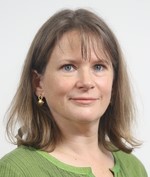
Jennifer Edmond is Associate Professor of Digital Humanities and co-director of the Trinity Center for Digital Humanities at Trinity College Dublin, where she also directs the MPhil in Digital Humanities and Culture. She holds a PhD in Germanic Languages and Literatures from Yale University and specializes in applying advanced methods and infrastructures for arts and humanities research. Her research focuses on Digital Humanities, Research Infrastructures, Open Science, Cultural Heritage, and Knowledge Technologies. She has developed significant expertise in European research policy, having coordinated the €6.5m CENDARI FP7 project and participated in numerous EU initiatives including PARTHENOS, Europeana Cloud, and the Computational Literary Studies Infrastructure (CLS Infra). Dr. Edmond maintains an active publication record exploring digital scholarly editing, privacy in literary texts, open science practices, and cultural heritage narratives. Her recent work demonstrates a strong focus on the intersection of technology and democracy, digital ethics, and innovative methodologies for humanities research. Awards and Honors: Named one of Ireland's five 'Champions of EU Research' (2012) She served as President of DARIAH-EU's Board of Directors (2018-2022) and represented the organization on the European Commission's Open Science Policy Platform. Dr. Edmond has contributed to strategic developments at national and institutional levels, while actively promoting public outreach through various media formats and art installations.
Yan Delaure is Associate Professor of Fluid Mechanics at Dublin City University's School of Mechanical and Manufacturing Engineering and Deputy Director of the DCU Water Institute. His research focuses on multiphase flows, environmental hydraulics, and computational fluid dynamics applications in wastewater treatment and marine systems. Research includes microbubble dynamics for aeration, fluid-structure interactions in deformable systems, and biomimetic antifouling solutions. Recent publications explore advanced simulation methods for turbulent flows and additive manufacturing process optimization.
Assoc. Prof. Nhien An Le Khac is an Associate Professor at the School of Computer Science, University College Dublin. He serves as Programme Director for the MSc in Forensic Computing & Cybercrime Investigation, which has trained over 1,500 law enforcement officers globally. His research focuses on cybersecurity, digital forensics, AI security, and secure healthcare IT systems. He holds a PhD from Institut National Polytechnique de Grenoble (France) and has supervised 9 PhD students. His work includes pioneering contributions to electromagnetic side-channel analysis (EM-SCA) for IoT forensics, blockchain forensics, and AI-based fraud detection. Education: BSc/MSc: Vietnam National University, Ho Chi Minh City PhD: Institut National Polytechnique de Grenoble, France Professional Certificate in University Teaching & Learning: UCD Research Interests: Cybersecurity, Digital Forensics, AI Security, Machine Learning, Cloud Computing, Big Data Analytics, Healthcare IT Security. Recent Article Trends: Focus on EM-SCA for IoT device forensics, illicit Bitcoin transaction tracking, and cross-device ML portability. His work bridges theoretical AI advancements with practical forensic applications, emphasizing privacy preservation and explainable AI. Awards & Recognition: World’s Top 2% Scientists (2024) UCD Teaching Excellence Awards (2022, 2018) Best Paper Awards at Elsevier, AI-2022, and DFRWS conferences Grants & Advising: Principal Investigator on grants like Cloud Atlas, CERBERUS, and Urban ARK. Advised 9 PhD students who now work in academia/research globally. Active in funding initiatives like ML-Labs (SFI-funded). Labs & Teams: Leads ASEADOS Lab and maintains datasets like EM-SCA and InSDN. Collaborates globally on forensic frameworks and cybersecurity tools.
Dr Luke Kelleher is an Associate Professor in Environmental Policy at University College Dublin (UCD), working within the UCD School of Architecture, Planning and Environmental Policy. He is a member of the UCD Environmental Policy Group, a research-intensive faculty group central to national and international debates and policy action in environmental policy. Kelleher also serves as a Principal Investigator in the UCD Earth Institute and is a member of both BiOrbic, the National Bioeconomy Research Centre funded by Science Foundation Ireland, and the UCD Centre for Irish Towns. Dr Kelleher holds a BA and PhD from Queen's University Belfast, an MSc from the University of Ulster, and a UCD Professional Certificate in Creativity and Innovation for Education. Prior to joining UCD, he was a lead researcher at the University of Hertfordshire in its high-impact transport evaluation group. Before his academic career, he gained nearly 10 years of experience in the public service, including roles in local government, the Land Registers of Northern Ireland, Northern Ireland Water Service, and the global consulting firm RPS Group. Dr Kelleher's research focuses on two main areas: transport policy and environmental performance, and bioeconomy policy. His work applies strong theoretical and methodological expertise in spatial analysis, policy analysis and evaluation, stated preference techniques, and demand-side policy instruments. His research has been published in prestigious journals such as Energy Policy, Atmospheric Environment, Environment and Planning B, and Transport Research Part A, and presented at leading conferences including the World Conference on Transport Research and Transportation Research Board Annual Meeting. Analysis of Dr Kelleher's recent publications reveals a strong focus on the bioeconomy and its policy coherence, transport poverty, and just transition frameworks. His work often employs spatial analysis methodologies to address environmental policy challenges, with a particular emphasis on creating practical tools for policymakers. There's a clear trajectory showing increasing focus on the bioeconomy in his more recent work, while maintaining strong connections to transport policy and environmental justice issues. Dr Kelleher has secured research funding from multiple prestigious sources including the Economic and Social Research Council (ESRC), Northern Ireland Department of Education (DENI), Arts and Humanities Research Council (AHRC), and Science Foundation Ireland (SFI). Current projects include "Enable-BIO Project" funded by the Environmental Protection Agency, "Aerodynamic Design and CFD Analysis of Drag Reducing Appendable Devices for Large Ground Vehicles" funded by Science Foundation Ireland, and "Just Transition for Agriculture in the Circular Bioeconomy" (JusTACE) also funded by the Environmental Protection Agency. Dr Kelleher actively supervises PhD students and contributes to multiple educational programs including the BSc (City Planning & Environmental Policy), MRUP, MSc (Environmental Policy), the Graduate Diploma Bioeconomy with Business, and the BSc in Transport City Planning and Environmental Policy at Chang'an University. His teaching philosophy emphasizes active participation, critical analysis, and the development of informed judgment. Dr Kelleher maintains strong connections with policy makers at multiple levels, having provided expert advice to the European Commission, UK Department of Transport, Department of Education (DENI), Department of Agriculture, Food and Marine (DAFM), Department of Environment, Climate and Communications (DECC), and various city councils. He has been particularly active in the Heritage Council led Collaborative Town Centre Health Check Programme since 2016.
Jimmy McGibney is a Lecturer in the Department of Computing and Mathematics at Waterford Institute of Technology (WIT), now part of South Eastern Technological University (SETU). He holds a Master of Engineering from Dublin City University (1995) and a Bachelor of Engineering (Electronic) from University College Dublin (1992). His research focuses on network security, AI-driven cybersecurity solutions, trustworthiness in service compositions, and resource-constrained environments. External roles include serving as a Researcher at the Telecommunications Software and Systems Group (2000), a Research Assistant at Dublin City University (1996–1997), and a Systems Engineer at Aldiscon (1994–1996). His work emphasizes applied research in intrusion detection systems, network forensics, and trust management frameworks. Key research interests include AI applications in cybersecurity, trust metrics for service compositions, and securing edge computing environments. He has organized workshops on digital forensics and incident response, and his recent work explores AI methodologies for resource-limited systems. McGibney’s publications span over 38 works, including peer-reviewed chapters and conference contributions. Notable areas include network forensic readiness frameworks, deep learning-based intrusion detection, and trust overlays for spam protection. He has contributed to projects funded by industry and academic collaborations, focusing on practical cybersecurity solutions.
Dr. Declan Fahie is a Lecturer in the School of Education at University College Dublin (UCD), where he also serves as Director of School Placement on the Professional Masters in Education. A former primary school teacher, his research focuses on workplace bullying dynamics, queer theory in education, teacher diversity and equality, and organizational cultures in educational settings. He holds a prestigious Irish Research Council Post-Doctoral Fellowship (2012) and a Royal Irish Academy Mobility Award (2014), which supported his work as a Visiting Scholar at CUNY’s Center for Lesbian and Gay Studies. Fahie has coordinated modules such as Schools and Society , Students Schools & Society , and CSPE Methodologies , reflecting his commitment to bridging theory and practice in teacher education. His research spans international collaborations, including studies on early childhood care in Ethiopia and bullying in Irish HEIs. Fahie’s work emphasizes systemic critiques of educational institutions, particularly regarding equity, LGBTQ+ inclusion, and the psychological impacts of toxic leadership and workplace bullying. He has advised trade unions and NGOs on conflict resolution and contributed to policy discussions through his role on the Teaching Council. Key Awards: IRC Post-Doctoral Fellowship, RIA Mobility Award, CUNY Visiting Scholar Research Themes: Workplace Bullying (HEI/Primary School Contexts), Queer Pedagogy, Teacher Wellbeing, Organizational Toxicity Professional Engagement: Teaching Council Membership, Anti-Bullying Advocacy, Curriculum Development Leadership Recent publications highlight his interdisciplinary approach, integrating philosophy (e.g., virtue ethics frameworks) with empirical research on bystander behaviors and institutional accountability. His edited volumes, such as Queer Teaching: Teaching Queer , underscore his commitment to advancing LGBTQ+ visibility in education.
Dr Ailise Bulfin is a Lecturer/Assistant Professor in the School of English, Drama and Film at University College Dublin. Her research and teaching focus on 19th-century and contemporary literature and culture, with a particular emphasis on popular fiction genres such as gothic, horror, crime, and science fiction. She is the Principal Investigator of the ERC-funded project ‘CSAReps’, which investigates fictional representations of child sexual abuse and their societal impact. University: University College Dublin School: School of English, Drama and Film Rank: Assistant Professor Email: ailise.bulfin1@ucd.ie Dr Bulfin's research spans a wide range of interdisciplinary fields, including medical humanities, environmental humanities, cognitive literary studies, and cultural studies. Her work critically examines how narratives about war, invasion, environmental disaster, and sexual violence shape public understanding and emotional responses. She has published extensively on topics such as invasion fiction, catastrophe narratives, and representations of child sexual abuse in literature and film. Her recent publications reveal a strong trend toward interdisciplinary inquiry, combining literary analysis with empirical and cognitive approaches. She frequently explores how gothic and speculative fiction serve as vehicles for addressing urgent social and psychological issues, particularly through metaphor and indirect representation. Her work on climate change and ecological catastrophe in Victorian fiction highlights early forms of ecological awareness, while her research on child sexual abuse in young adult gothic fiction investigates both harmful myths and resilient survivor models. European Research Council Starting Grant (CSAReps, 2021–2028) Wellcome Trust funding British Academy grants Irish Research Council fellowships Royal Irish Academy funding Dr Bulfin has delivered keynotes and invited talks at institutions such as the University of Reading, Max Planck Institute, and University of Aberdeen. She is an Honorary Research Fellow at Trinity College Dublin’s Discipline of Psychiatry and co-organizes the international Invasion Network. Her public engagement includes radio interviews on RTE and collaborative events with CSA survivors and health professionals. As a teacher, she has coordinated modules on speculative fiction, war fiction, and modernity, and advocates for student-centered, research-led pedagogy. She holds a Professional Special Purpose Certificate in Academic Practice from Trinity College Dublin.
Professor Roland Erne, based at the UCD School of Business , is a leading scholar in European integration and employment relations. As Principal Investigator of the ERC-funded project 'Labour Politics and the EU's New Economic Governance Regime (European Unions)', he examines how EU economic policies interact with labor movements and public services. His academic journey began with a PhD at the European University Institute , followed by prestigious roles like the Jean Monnet Chair (2016-19) and Marie Curie Fellow (2008). Currently, he mentors PhD students and postdocs while serving as Adjunct Professor at Cornell University's ILR School . Research Focus: Politicisation of EU integration, transnational labor protests, healthcare/water commodification, and east-west labor migration dynamics. Key Contributions: Authored European Unions: Labor's Quest for a Transnational Democracy (2008), influencing debates on EU labor governance. His 2025 work with Nowak identifies vertical political integration pressures as drivers of transnational protests. Scientific Awards: ERC Consolidator Grant (2017) Jean Monnet Chair (2016-19) Marie Curie Fellowship (2008) College of Business Teaching Award (2023)
John O'Raw is a Lecturer in the Department of Computing at Donegal Letterkenny. His academic focus spans network security, time synchronization, and critical infrastructure protection, with emphasis on power systems, GNSS spoofing detection, and industrial IoT security. His research explores Precision Time Protocol (PTP) optimization in distributed networks Threat mitigation for GNSS-based timing systems Secure data communications in energy infrastructure Human behavior modeling for emergency evacuation planning His publications analyze cybersecurity frameworks for electrical substations, industrial IoT vulnerabilities, and practical implementations of standards like IEC 61850 and OAuth 2.0, with recent work on microwave IP networks and LinuxPTP for time synchronization.
Hisain Elshaafi is a Lecturer in the Department of Computing at SETU Carlow. His research focuses on ICT security, privacy, trust, and service composition. He holds a PhD from Waterford Institute of Technology (WIT) and has contributed to EU-funded projects like sTRUST and CoMiFin. His work emphasizes composite service trustworthiness, security metrics, and critical infrastructure protection. Education: PhD: 'Establishment and Maintenance of Trustworthy Composite Services', WIT (2014) MSc: Master of Arts in Teaching and Learning, WIT (2020) BSc: Computer Science (Honours), Dublin Institute of Technology Research Interests: Elshaafi investigates secure service composition, attack surface analysis, smart grid cybersecurity, and trustworthiness metrics. His projects address challenges in distributed systems reliability, multi-tenant service trust, and cost-effective security frameworks. Recent work explores multi-agent smart grid architectures and collaborative trust assessment. Projects & Grants: Lead roles in Irish/EU projects: sTRUST, CoMiFin, Pripare, Aniketos Consultancy for SMEs and enterprises Focus on bridging academic research with industry needs Labs/Teams: Collaborates with WIT's TSSG and contributes to multi-institutional projects focused on trust management and service-oriented systems.
Ben Bartlett is a Researcher at the University of Limerick's School of Engineering, specializing in robotics and unmanned systems for environmental and infrastructure applications. His work bridges engineering innovation with practical solutions for challenging real-world environments. His research focuses on: Development of UAV systems for wildlife monitoring and offshore wind farm surveys Cooperative multi-robot path planning for bridge and infrastructure inspection Fault-tolerant control systems for inaccessible environments Maritime robotics using integrated aerial and surface vehicles Automated 3D reconstruction of unknown structures using LiDAR Analysis of his 2023-2025 publications reveals a consistent trend toward real-time, automated systems that balance wide-area coverage with high-resolution precision. His work demonstrates particular strength in adapting robotic systems to dynamic environments like offshore wind farms, aging infrastructure, and maritime settings, with emphasis on efficiency, safety, and cost-effectiveness through modular design and fault tolerance. Contact: Ben.Bartlett@ul.ie
Utz Roedig is a Full Professor of Computer Science at University College Cork (UCC), Ireland, and a Principal Investigator at the CONNECT Centre. Previously, he served as Professor at Lancaster University, UK, leading the Academic Centre of Excellence in Cyber Security Research (ACE-CSR), and held research positions at UCC and Darmstadt University of Technology, Germany. Education: Dipl.-Ing in Engineering from Darmstadt University of Technology Dr.-Ing (Doctor of Engineering) from Darmstadt University of Technology His research spans computer networks and network security , with over 150 publications in IoT security, industrial control systems, 5G networks, and voice assistant vulnerabilities. Recent work integrates machine learning for intrusion detection and fault prediction while addressing human factors in secure coding. Industry collaborations have yielded multiple patents. Analysis of 2023-2025 publications reveals dominant themes in industrial IoT security (e.g., resilient time-sensitive networking), 5G infrastructure protection, and voice assistant threats (wake word jamming/spoofing). His team develops countermeasures using protocol design and ML-driven anomaly detection, with growing emphasis on human-centric security challenges. Scientific Awards: No specific awards are documented, though research impact is evidenced by patents and sustained funding from major international bodies. Advising and Grants: Secured funding from EU, EPSRC, and industry partners. Serves as grant reviewer for EPSRC (UK), ESF (EU), and FWO (Belgium), and on TPCs for DCOSS, EWSN, and IPSN conferences. Student supervision details are unavailable, but research leadership implies active mentoring. Grants: EU, EPSRC, Industry Review Roles: EPSRC, ESF, FWO Labs and Teams: Leads research at UCC's CONNECT Centre (telecommunications security). Previously directed Lancaster University's ACE-CSR, a UK government-designated cybersecurity research hub.
Dr. Michael Cooke is an Assistant Professor/Lecturer in Applied Psychology at Maynooth University's Faculty of Social Sciences. His research focuses on how technology mediates human interaction across physical, social, cultural, and virtual domains, emphasizing holistic, human-centered design. He has secured over €3 million in EU funding, leading projects under FP-7 and H2020 frameworks addressing emergency management, law enforcement, counter-terrorism, and cybersecurity (e.g., TRESSPASS, ECHO, CREST). His critical CONOPS approach integrates empirical data and imaginative foresight to optimize technological solutions. Education: Graduate of University College Cork (UCC). Collaborations include the University of Limerick's Interaction Design Centre and Trinity College Dublin's Centre for Innovative Human Systems. Affiliations include the Edward M. Kennedy Institute, Psychology Department, ALL Institute, and Social Sciences Institute (MUSSI). Research emphasizes technology's impact on identity, agency, and societal engagement, spanning local to global contexts. Current projects focus on risk-based border security, cybersecurity, and law enforcement agent support technologies.
Dr. David Ayala Cabrera is an Ad Astra Fellow and Lecturer/Assistant Professor in the School of Civil Engineering at University College Dublin. He holds a PhD in Water and Environmental Engineering from the Universitat Politècnica de València (UPV, Spain), awarded Cum Laude with the Extraordinary Thesis Award 2017. His research focuses on cybersecurity, resilience engineering, and non-destructive testing (e.g., GPR) for critical infrastructure, particularly water distribution systems. He has contributed to projects like STOP-IT (H2020) and ResiWater, addressing cyber-physical threats and network vulnerability. His teaching includes modules like Civil Engineering Systems and Computer Applications in Civil Engineering. Education: B.Eng. (Sanitary Engineering, Universidad del Valle, Colombia), MSc (Hydraulic & Environmental Engineering, UPV), PhD (Water & Environmental Engineering, UPV). He also holds postgraduate certifications in university teaching and leadership. Research interests include smart city technologies, machine learning applications, and infrastructure resilience. His work spans over 49 publications, with recent focus on GPR-based leak detection, cybersecurity, and data-driven state estimation in water networks. Grants: Led projects like the EU-funded WatQual (2018–2019) and contributed to innovative tools for cyber-physical security. Awards: PhD Cum Laude, International Doctor honor, and multiple research fellowships (e.g., KIOS Research Center, Cyprus). Advising: Co-supervised PhD and Master’s theses at UPV on GPR applications and WDS analysis. His lab collaborations include ICCS (Greece), Irstea (France), and the University of Cyprus’s KIOS Center, advancing tools for infrastructure resilience and smart water management.
Dr. Luke Raeside serves as a Lecturer within the School of Informatics and Cybersecurity at Technological University Dublin, operating under the Faculty of Computing, Digital and Data. His institutional role focuses on academic instruction in digital security and information systems disciplines. Research interests are contextualized through school affiliation, emphasizing Cybersecurity frameworks, Informatics methodologies, and foundational Computer Science principles. These domains address critical challenges in data protection, network security, and computational systems analysis within contemporary digital infrastructures. No scientific awards or honors are documented in available institutional records. Professional activities include undergraduate and postgraduate teaching responsibilities, though specific student supervision, research grants, or laboratory leadership details remain undisclosed in public faculty listings. Current contact information indicates active institutional engagement via email and direct telephone channels.