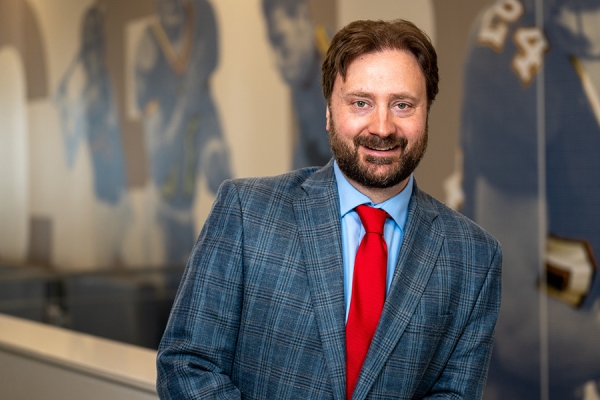
Magdy M. A. Salama is a Professor and University Research Chair at the University of Waterloo's Department of Electrical and Computer Engineering, Faculty of Engineering. He holds a P.Eng. license and is a Fellow of the IEEE. His research spans Energy Systems (Power Quality, Smart Grids, Renewable Energy) and Biomedical Engineering (Medical Imaging, Sleep Analysis). He has authored/co-authored over 460 publications and supervised numerous graduate students. Education: PhD (University of Waterloo), M.Sc. and B.Sc. (Cairo University). Awards include the IEEE Fellow distinction, University Research Chair, and multiple teaching/research awards from the University of Waterloo. Research trends in his articles focus on Smart Grid resiliency, renewable integration, cyber-physical security, and biomedical applications of AI. Notable projects include voltage sag mitigation, EV fleet electrification, and blockchain-based energy trading platforms. Scientific Awards: IEEE Fellow, University Research Chair, Teaching Excellence Award (2000) Grants/Consultation: Extensive industry and institutional collaborations on power systems and biomedical tech. Labs/Teams: Active in High Voltage Lab, Smart Grids Research Group, and Medical Image Processing Lab.
Dr. Anil Kumar is an Assistant Professor in the Department of Biochemistry, Microbiology & Immunology at the University of Saskatchewan's College of Medicine. He specializes in molecular virology, focusing on positive-stranded RNA viruses and their interactions with host immune systems. His research employs high-throughput genetic screens and reverse genetics systems to identify host factors critical for viral infection. Education includes a BSc in Agricultural Sciences (1999, Kerala Agricultural University), MSc in Plant Pathology (2001, Indian Agricultural Research Institute), and PhD in Molecular Virology (2010, University of Heidelberg). Postdoctoral training included stints at the University of Heidelberg (2010–2013) and the University of Alberta (2014–2020). Research interests center on Eastern Equine Encephalitis virus (EEEV) and Enterovirus D68 (EV-D68). For EEEV, his lab investigates immune evasion mechanisms and host-virus protein interactions to identify therapeutic targets. For EV-D68, they study CNS invasion mechanisms and novel host dependency factors linked to acute flaccid myelitis (AFM). Recent work includes studies on SARS-CoV-2, uncovering roles for host proteins like Argonaute 2 in viral restriction. His lab integrates molecular biology, virology, and systems biology approaches, with a focus on translational research for antiviral drug development. Collaborations include work on respiratory syncytial virus (RSV) entry mechanisms and dengue virus replication regulation.
Arthur Schafer is a Full Professor in the Department of Philosophy at the University of Manitoba's Faculty of Arts and Founding Director of the Centre for Professional and Applied Ethics. He serves as a National Research Associate of the Canadian Centre for Policy Alternatives and previously held roles as ethics consultant for the Winnipeg Regional Health Authority and Head of the Section of Bio-Medical Ethics in the Faculty of Medicine. His academic credentials include a BLitt in Philosophy from the University of Oxford (1967) and a BA Honours from the University of Manitoba. His distinguished career spans over five decades of ethical scholarship and public engagement. Professor Schafer specializes in professional and applied ethics with intensive focus on bioethics , research ethics , and biomedical conflicts of interest . His work critically examines medical assistance in dying , informed consent , clinical trial ethics , and human rights frameworks , establishing him as a leading voice in Canadian ethical discourse. His philosophical approach bridges theoretical rigor with practical policy applications across multiple professional domains. Analysis of his 13 most recent publications reveals enduring engagement with evolving ethical challenges, particularly the tension between institutional interests and professional integrity. His scholarship demonstrates consistent progression from foundational ethical theory toward contemporary policy applications, with recent work heavily concentrated on medical assistance in dying and pharmaceutical industry influence in healthcare systems. His scientific recognition includes: D. R. Campbell Outreach Award (1984) Olive Beatrice Stanton Award for Excellence in Teaching (1976) Canadian Commonwealth Scholarship (1964) Woodrow Wilson Fellowship (1964) Canada Council Fellow As an active supervisor for Master's and PhD students, Schafer extends his mentorship through ethics consulting for professional associations in Medicine, Engineering, Architecture, Nursing, and Pharmacy. His policy impact is evidenced by service on the Provincial-Territorial Expert Panel on Medical Assistance in Dying and two published reports for the Canadian Centre for Policy Alternatives. His extensive media contributions—including hundreds of CBC appearances and newspaper columns—demonstrate exceptional public scholarship. The Centre for Professional and Applied Ethics, which he founded, functions as a vital interdisciplinary hub connecting academic philosophy with real-world ethical challenges across healthcare, law, and public policy sectors, facilitating ongoing dialogue between scholars, practitioners, and community stakeholders.
Dr. Jacques Archambault is a Professor in the Department of Microbiology and Immunology at McGill University , and an associate member of the Division of Experimental Medicine since 2016. His research focuses on the molecular biology and pathogenesis of human papillomaviruses (HPVs) and polyomaviruses (HPyVs), with an emphasis on their replication mechanisms as episomes in host cells. The Archambault laboratory employs functional genomics, proteomics, and chemical biology approaches to identify cellular pathways exploited by these viruses and develop high-throughput assays for screening small molecule inhibitors of viral replication. Analysis of his recent publications reveals a strong focus on HPV and HPyV replication machinery, including studies on the E1 helicase, UAF1-USP1 interactions, and structural characterization of viral proteins involved in DNA replication. His work bridges virology, oncology, and drug discovery, particularly targeting oncogenic HPV types implicated in anogenital and oropharyngeal cancers, as well as HPyVs like BKPyV and JCPyV that cause pathologies in immunosuppressed patients. Current efforts in the lab aim to elucidate the molecular mechanisms by which HPVs and HPyVs replicate their genomes and to develop antiviral therapies targeting these processes. Techniques such as fluorescence anisotropy, NMR spectroscopy, and crystallography are frequently employed to study protein-DNA and protein-protein interactions critical to viral replication.
Laura A. Meek is an Assistant Professor in the Department of Anthropology at the University of British Columbia Okanagan , specializing in Medical Anthropology , Decolonial Science and Technology Studies , and East African research . She holds affiliations with interdisciplinary networks like the UBC-O Science and Technology Studies Collective and co-directs the Storying Otherwise: Creative Ethnographic Writing Hub . PhD, MA in Anthropology (University of California, Davis) MA in Women’s Studies (George Washington University) Honors BA in Comparative Human Development (University of Chicago) Her research examines counterfeit pharmaceuticals and bodily epistemologies in Tanzania, framed through feminist , decolonial , and anti-racist lenses . She investigates leprosy elimination campaigns and fugitive science practices across Africa and Hong Kong, with recent work focusing on creative ethnographic prose and critical disability studies . Her publications span high-impact journals like Social Science & Medicine and Medical Anthropology Quarterly , addressing themes of radical uncertainty and world-making practices . Laura’s 15 most recent articles (2021–2025) analyze: pharmaceutical counterfeits in East Africa, the temporal politics of leprosy , anti-colonial global health , and creative writing as research . Her work bridges Indian Ocean connections and STS frameworks to critique neocolonial health governance. 2025 Collaborative Research Mobility Award 2024 Wenner-Gren Workshop Grant 2023 MAE–MAT Early Career Paper Award 2021 Society for Humanistic Anthropology Creative Ethnographic Prose Prize 2018 Wenner-Gren Dissertation Grant 2013 NSF Doctoral Dissertation Grant She supervises M.A. and Ph.D. students in UBC-O’s Interdisciplinary Graduate Studies programs, particularly in global health , African politics , and STS . Her professional service includes co-chairing the 2026 Cascadia Medical Anthropology Seminar and serving on the American Anthropological Association Nominations Committee .
Samantha King is a Professor in the Department of Kinesiology and Health Studies at Queen's University. She holds a PhD from the University of Illinois at Urbana-Champaign. Her interdisciplinary research integrates feminist, queer, and critical race theories to examine the intersections of health, sport, and the body. She leads the King Research Group, based in KINE 206J & 301V offices. King's research interests span topics such as drug cultures, food politics, and the sociology of sport. Her influential work includes the book Pink Ribbons, Inc: Breast Cancer and the Politics of Philanthropy , adapted into an NFB documentary. She explores themes like pharmaceutical use in professional sports, the ecological dimensions of embodiment, and multispecies approaches to sport studies. Her recent publications analyze racial capitalism in NFL pain management, pandemic-era human-animal relations, and the sociological implications of whey protein consumption. She has co-edited volumes on food ethics and bodily embodiment, reflecting her commitment to interdisciplinary dialogue. Her work bridges cultural studies, sociology, and health studies, addressing contemporary issues in sport, medicine, and everyday life. King’s academic contributions include over 30 peer-reviewed articles and edited collections. She has received international attention for critiquing corporate philanthropy in health activism and challenging normative frameworks in sport studies. Her current projects explore multispecies methodologies and the political economies of meat production.
Gabriela V. Cohen Freue is an Associate Professor in the Department of Statistics at the University of British Columbia (UBC), Vancouver Campus, and holds a Canada Research Chair (CRC Tier 2). She leads an interdisciplinary research program focusing on developing robust statistical methodologies for analyzing high-dimensional data in genomics and proteomics, with applications in medical sciences. Her work addresses challenges such as outliers, collinearity, and measurement errors, with applications in biomarker discovery for diseases like multiple sclerosis, cardiovascular disorders, and asthma. Her academic journey includes collaborations across disciplines, including with the BC Cancer Agency, PROOF Centre of Excellence, and iCAPTURE. She has pioneered methods like the Penalized Elastic Net S-Estimator (PENSE) and contributed to proteomic data analysis tools such as the Protein Group Code Algorithm (PGCA). She also co-developed the MDQC quality control method for microarrays. Research interests include robust regression, biomarker development, and statistical methods for big data. Her team includes postdocs, PhD, and MSc students, with a focus on training in both statistical rigor and interdisciplinary collaboration. Notable grants include a CANSSI Collaborative Research Team Project (CRT) award for robust causal inference and prediction modeling. Teaching responsibilities span statistical consulting, high-dimensional biological data analysis, and generalized linear models. She emphasizes active learning and real-world problem-solving in her courses. Her lab’s work is supported by grants from the Data Science Institute (DSI) and collaborations with institutions like the PROOF Centre. Alumni of her group hold positions in academia (e.g., George Mason University) and industry (e.g., Merck, BC Cancer Research Centre).
David Hugill is an Associate Professor in the Department of Geography and Environmental Studies at Carleton University , where he has worked since 2018. His research focuses on urban geography, colonial urbanisms, and inner-city inequity . PhD from York University (2009-2015) Visiting scholar at University of Minnesota (2011-2012) Postdoctoral work at Simon Fraser University (2015-2017) Current research explores racial capitalism and settler colonial structures in North American cities, particularly through qualitative projects with graduate students. Recent publications analyze Minneapolis' postwar urban development and settler colonial violence in Prairie West cities. He collaborates with scholars like Heather Dorries and Julie Tomiak, focusing on critical urban theory , racial inequity , and Indigenous resurgence . Contact details include office B349 Loeb Building, Carleton University.
Trudo Lemmens is Professor and Scholl Chair in Health Law and Policy at the University of Toronto Faculty of Law. He holds cross-appointments at the Dalla Lana School of Public Health, the Temerty Faculty of Medicine, and the Joint Centre for Bioethics, reflecting his interdisciplinary expertise in health law, ethics, and policy. He has also held visiting positions at KU Leuven, Pontificia Universidad Javeriana, University of Otago, and Oxford, and was a member of the Institute for Advanced Study in Princeton. His research focuses on the legal, ethical, and governance challenges in healthcare and biomedical research. Key areas include medical assistance in dying, clinical trial transparency, pharmaceutical regulation, genetic data privacy, and conflict of interest. He has extensively analyzed how legal frameworks interact with ethical norms in contexts such as assisted human reproduction, end-of-life decisions, and public health emergencies. His work emphasizes human rights, equity, and the protection of vulnerable populations. His recent publications reveal a strong focus on the ethical and legal dimensions of medical assistance in dying, particularly regarding mental illness and advance requests. He has also published on vaccine mandates, pandemic triage ethics, and transparency in pharmaceutical data. His scholarship combines doctrinal legal analysis with empirical and policy insights, often addressing urgent public health debates. Fellowship, Royal Flemish Academy of Belgium for Science and the Arts (2006-2007) Membership, School of Social Science, Institute for Advanced Study, Princeton (2003-2004) Law Commission of Canada, Legal Dimensions Initiative Award (with Duff R. Waring) (2003) Graduate Student Paper Award, Association for Politics and the Life Sciences (1996) Doctoral Fellowship, Social Sciences and Humanities Research Council of Canada (1995-1997) Doctoral Fellowship, Fonds pour la formation de chercheurs et l'aide à la recherche du Québec (deferred) (1995-1998) Student Paper Award, Society for Health and Human Values (1995) Chief Justice R.A.E. Greenshields Memorial Scholarship for Graduate Studies in Law (1994) Trudo Lemmens has advised numerous national and international organizations, including the Pan American Health Organization (as a member of its Advisory Committee on Health Research), the World Health Organization, and the Council of Canadian Academies. He has served on expert panels examining access to health data and medical assistance in dying. His policy submissions to Canadian parliamentary committees have shaped national debates on end-of-life legislation. He has also contributed to inquiries into research ethics and institutional governance, including an independent inquiry into the University of Ottawa and its affiliated hospitals. He is actively engaged in public discourse, publishing op-eds in major media outlets and maintaining a presence on social media. His work bridges academia, policy, and public engagement, advocating for transparency, accountability, and ethical integrity in health systems and research.
Trevor Goodyear is an Assistant Professor at the University of British Columbia (UBC) Faculty of Applied Science, School of Nursing. His research explores substance use, mental health, and health equity among marginalized populations, particularly 2S/LGBTQ+ youth and people who inject drugs. Education: MSN, MPH, PhD Research Interests: Harm reduction, LGBTQ+ health, mental health, public health, health equity, social determinants of health His recent work examines harm reduction strategies, structural vulnerabilities, and health narratives in urban drug scenes. Publications analyze cannabis use, overdose prevention, conversion practices, and the intersection of gender identity with substance use. His research employs qualitative methods like photovoice and narrative analysis to center marginalized voices. Key trends in his articles include the role of stigma in healthcare, policy implications of substance use research, and the impact of the COVID-19 pandemic on mental health disparities. He advocates for evidence-informed policies and community-driven interventions to address systemic inequities.
Dr. Alison Holloway is a Professor at McMaster University's Faculty of Health Sciences, specializing in environmental toxicology and reproductive health. Her research focuses on the effects of environmental contaminants (e.g., oil sands pollutants, pesticides, endocrine disruptors) on maternal and child health, metabolic disorders, and developmental outcomes. She has conducted studies on naphthenic acids, synthetic food additives, and maternal exposure to pharmaceuticals like fluoxetine. Key research areas include: Environmental contaminants' impact on reproductive systems and placental function Metabolic disturbances caused by chemical exposures during critical developmental windows Neurobehavioral and gastrointestinal effects of prenatal drug exposure Assessment of urban air pollution on in vitro fertilization (IVF) success rates Her recent work highlights the role of the tryptophan-kynurenine pathway as a biomarker of environmental stress and the obesogenic effects of bisphenol analogs and food additives. Collaborations involve interdisciplinary teams addressing environmental health, with studies published in high-impact toxicology and public health journals. Dr. Holloway's research has informed policies on chemical safety and maternal health, emphasizing cross-species markers for organismal health and risk assessment of emerging contaminants like cannabis derivatives.
Ahmed Al-Rawi is an Associate Professor of News, Social Media, and Public Communication at Simon Fraser University's School of Communication. Since 2019, he has served as Director of the Disinformation Project, whose findings have been featured nationally and internationally. His academic work bridges journalism, digital media studies, and public communication with a focus on disinformation, social media dynamics, and media's role in democratic processes. Dr. Al-Rawi's research interests span disinformation studies, social media analysis, news framing, computational journalism, and the intersection of digital communication with societal issues including racism and public health crises. His work examines how digital platforms shape public discourse, influence political processes, and frame critical societal issues like the opioid crisis in Canada. He approaches these topics through interdisciplinary lenses that combine media studies, political science, and sociology. His scholarly contributions reveal consistent focus on digital communication's impact on society, with recent work examining far-right movements, conspiracy theories, and mediated racism in Canadian contexts. Earlier research explored similar dynamics in Middle Eastern contexts, particularly during the Arab Spring and in conflict zones like Iraq. Shortlisted for Gertrude Robinson Prize (2022) Radio report nominated for US national award (2004) Teaching awards at Erasmus University As an academic leader, Dr. Al-Rawi has advised numerous graduate students, served on editorial boards for prestigious journals including Journal of Popular Communication and Digital Journalism, and reviewed over 220 research papers. His practical expertise extends to consulting for governmental bodies including the Canadian Senate, House of Commons, Public Order Emergency Commission, and Elections BC.
Krista Lynes is a Professor of Communication Studies at Concordia University, holding the Canada Research Chair in Feminist Media Studies and directing the Feminist Media Studio. Their research focuses on intersectional frameworks addressing feminist media studies, queer theory, migration studies, critical race studies, environmental humanities, and infrastructure studies. Lynes employs research-creation methodologies to interrogate systems of power and mobility. Thesis supervision: Media Studies (MA), Communication (PhD), Humanities (PhD) Labs/Teams: Director of the Feminist Media Studio, a space for interdisciplinary art and activism Recent work examines vital energy in greenhouse infrastructures, queer migrant activisms, and decolonizing corporeal representations in art. Their scholarship bridges media theory with global social justice concerns, emphasizing transnational circuits and planetary aesthetics.
Taylor McLinden, PhD is an Adjunct Research Professor in the Department of Epidemiology and Biostatistics at Western University's Schulich School of Medicine and Dentistry. He serves as the Manager of the Health Data Research Network Canada (HDRN Canada) Pragmatic Trials Training Program and holds positions at ICES Western, HDRN Canada, and the London Health Sciences Centre. Previously, he worked as a Scientific Officer at the British Columbia Centre for Excellence in HIV/AIDS and completed postdoctoral training at the same institution. Dr. McLinden received his PhD in Epidemiology from McGill University (2013-2017), an MSc in Epidemiology from the University of Guelph (2011-2013), and an Honours BSc in Biomedical Sciences from Brock University (2007-2011). His research focuses on epidemiology, causal inference, and administrative health data analysis, with particular expertise in HIV/AIDS research, social determinants of health, food insecurity, and pragmatic trials methodology. Dr. McLinden has made significant contributions to understanding the intersection of HIV, overdose crises, housing stability, and social determinants of health among marginalized populations in British Columbia. His recent publications demonstrate a strong emphasis on population health research using linked administrative data, with particular attention to HIV outcomes, health disparities, and methodological innovations in epidemiologic research. His work often addresses critical public health challenges including the overdose crisis, social isolation among people living with HIV, and the impact of structural factors on health outcomes. Dr. McLinden has secured significant research funding, including a CIHR Operating Grant ($480,992 over 2 years) focused on the impact of the COVID-19 pandemic on drug overdoses among people with and without HIV, and a CIHR Project Grant ($994,500 over 5 years) addressing engagement of marginalized populations in primary health care in Vancouver's downtown east side. As Manager of the HDRN Canada Pragmatic Trials Training Program, Dr. McLinden plays a key role in building capacity for pragmatic clinical trials across Canada. His work bridges academic research with practical health system applications, contributing to evidence-informed healthcare decision-making through rigorous epidemiologic methods.
Craig Greenham is a Professor in the Department of Kinesiology at the University of Windsor’s Faculty of Human Kinetics. His research focuses on sports history, cultural impacts of sports, and psychological aspects of athletic participation. Notably, he has examined team trauma recovery in hockey, media representations of athletes, and the socioeconomic roles of professional sports leagues. Greenham has collaborated with organizations like the Leddy Library to advance academic discourse on Canadian sports history. His work explores intersections between sports and broader societal themes such as nationalism, media ethics, and historical memory. Recent projects include analyzing the Swift Current Broncos’ cultural relationship with hockey and critiquing the Canadian Football League’s reliance on nostalgic narratives to secure public funding. Greenham frequently engages with media on contemporary issues like sports betting addiction and MLB’s response to doping scandals. Greenham co-edits the Journal of Canadian Baseball and has presented research findings to entities like ESPN and Rogers Media. He actively involves students in his research, offering them professional insights through field visits and presentations to industry leaders.