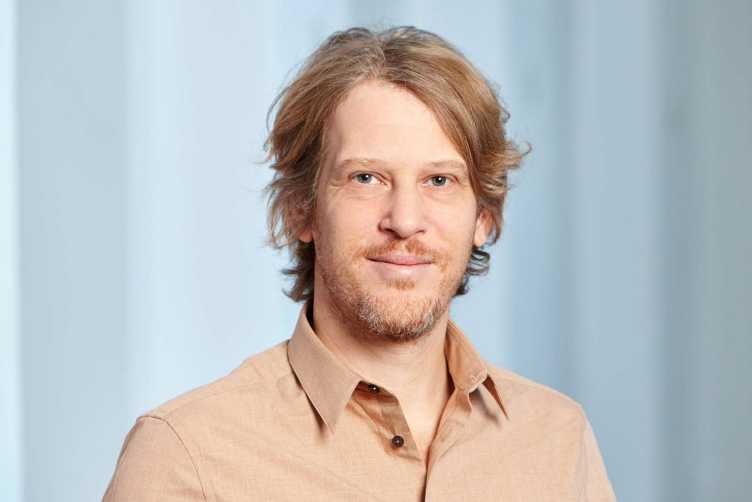
Anthony Masure is an Associate Professor at Geneva University of Art and Design (HEAD – Genève) , part of the University of Applied Sciences and Arts Western Switzerland (HES-SO) . His work bridges Artificial Intelligence , Blockchain , and Digital Humanities through critical design lenses. He explores tensions between creative automation and human agency , questioning how machine learning and smart technologies reshape authorship, value systems, and ecological practices in design. Key research areas: AI ethics , NFT implications , post-digital design , and technological accountability Projects like "Design et machine learning : l'automatisation au pouvoir?" (2021-2023) and "Post digital Graphic Design" (2019-2022) demonstrate his focus on critical technological engagements Advocates for open access and non-traditional research formats through initiatives like HEAD-Publishing His recent articles analyze generative AI in design, NFT governance , and circular design frameworks. Collaborations with researchers like Guillaume Helleu and Yves Citton emphasize socio-technical implications. Current projects include "L'organisation autonome automatisée (OAA)" (2024), exploring future enterprise models under climate constraints.
Prof. Dr. Tobias Hodel is an Assistant Professor of Digital Humanities at the University of Bern, affiliated with the Walter Benjamin College. His work focuses on applying machine learning and critical algorithm studies to historical and textual analysis. He holds a Ph.D. from the University of Zurich and has held roles such as Project Manager for the Königsfelden Edition Project and coordinator of the 'Ad fontes' e-learning program. Hodel’s research explores intersections between digital methods and traditional humanities, emphasizing ethical AI use in archives and historical workflows. He supervises numerous doctoral students and chairs the Swiss Academy of Humanities and Social Sciences (SAGW). His contributions span publications in journals like Historische Zeitschrift and conferences such as DHd and Digital Humanities. Education: Studied History and German Literature at the University of Zurich (2002–2010), with advanced roles in SNF-funded projects and book publications. His research interests include digital edition theory, text processing, and the epistemology of digital methods. Key research trends in his articles address historical document analysis, OCR advancements, and the ethical implications of AI in archives. He co-leads the ‘Basic Research and Digitization’ department at the Swiss Society for History and oversees programs like the MAS/CAS in Archives, Library, and Information Science. Hodel’s work bridges technical innovation with critical humanities scholarship.
Dr. Jamie Allen is a Senior Lecturer/Researcher at the FHNW University of Applied Sciences and Arts Northwestern Switzerland, based in the Institute Experimental Design and Media Cultures (IXDM) at the Basel Academy of Art and Design. His work bridges artistic practice, media theory, and environmental science, focusing on infrastructures, ecological justice, and planetary systems. He holds a PhD in media and infrastructure studies and has held roles including Canada Research Chair in Infrastructure, Media and Communications at NSCAD and Head of Research at CIID. Academic Affiliations: Senior Researcher at Critical Media Lab Basel, Adjunct Professor roles in institutions globally Education: Degrees in chemical/electrical engineering, music composition, media arts, and communication philosophy Research interests center metabolic creative practices, infrastructural modernism critiques, and planetary intimacy. Notable projects include the Anthropocene Curriculum platform and the Shift Register media-geological project. His articles explore themes like planetary scale analysis, ecological mythologies, and labor dynamics in digital capitalism. Awards include grants from Swiss National Science Foundation, SSHRC, and Denmark/Canada arts councils. Key collaborations include work with the Nam June Paik Art Centre, transmediale festival, and institutions like Tate Liverpool. Current projects include Geognostics: A Planetary Manual and Didn't You Get the Memo?, addressing institutional practices and ecological futures.
Matteo Biagiola is a Researcher in the Faculty of Informatics at Università della Svizzera italiana (USI), Lugano, Switzerland, and a PostDoctoral researcher at the University of St. Gallen (HSG). He specializes in software testing, particularly test generation for Web applications, deep reinforcement learning systems, and autonomous driving software. His work focuses on enhancing AI robustness through testing and improving software testing via AI techniques. Biagiola holds a Ph.D. from Università degli Studi di Genova (Italy) in collaboration with Fondazione Bruno Kessler, Trento. He has conducted postdoctoral research at USI on the Precrime ERC Advanced Grant project under Paolo Tonella. His research tools include μPRL (mutation testing for RL agents), STILE (web test parallelization), and GenBo (boundary state generation for autonomous systems). Education: Ph.D.: Università degli Studi di Genova / Fondazione Bruno Kessler (2016–2020) M.Sc.: Università Politecnica delle Marche (2014–2016) Affiliations: PostDoc & Scientific Collaborator: University of St. Gallen / USI (2025–present) PostDoc: USI (2020–2025) Visiting Ph.D. Student: University of British Columbia (2018) His research interests span AI-driven testing tools, autonomous system validation, and simulation-based testing. He has received the Distinguished Paper Award at ICST 2025 and serves on program committees for major conferences like FSE, ICSE, and ICST. He co-organizes workshops like DeepTest (co-located with ICSE) and the Cyber-Physical Systems tool competition (SBFT).
Roland Meyer is a DIZH Bridge Professor for Digital Cultures and the Arts at the University of Zurich and Zurich University of the Arts (ZHdK) since July 2024. His work critically examines contemporary networked image cultures, focusing on algorithmic image processing, forensic practices, synthetic media aesthetics, and virtual image archives in the context of platform capitalism. PhD in Media and Art History (Karlsruhe Academy of Art and Design, 2017) Former research positions at Ruhr University Bochum, Humboldt University Berlin, and BTU Cottbus-Senftenberg His research spans: History of operative images AI-driven image synthesis Surveillance technologies Virtual archival systems Roland's publications and lectures analyze how digital platforms reshape visual epistemology, with recent work on Platform realism Synthetic media economies Forensic image practices DALL-E and Sora AI systems He organizes interdisciplinary symposia like As We May See (UZH) and Images Under Suspicion (Essen), and contributes to debates on AI's political visual implications through interviews with major media outlets.
Laurent Suppan is a researcher at the University of Geneva, focusing on prehospital emergency care, medical education, and simulation-based training. His work spans airway management, stroke detection, pandemic response, and technology-enhanced healthcare protocols. Affiliation: University of Geneva Key research areas: Emergency Medicine, Medical Education, Public Health Interventions His research explores prehospital clinical decision-making, device evaluation (e.g., supraglottic airways), and digital health tools like mobile apps and serious games to improve emergency care. Recent studies examine student paramedic training, medication error reduction, and pandemic preparedness. Publications include analyses of ventilation techniques during cardiac arrest, hypercapnia management in acute heart failure, and prehospital arterial blood gas evaluation. Collaborative work with institutions in Switzerland highlights his commitment to advancing EMS protocols and education. While no scientific awards are listed here, Suppan's supervision of 4 works and extensive publication record in journals like Journal of Clinical Medicine and BMC Emergency Medicine demonstrate academic leadership. His methodological rigor is evident in randomized controlled trials, retrospective cohort studies, and framework development projects. Current projects involve real-time patient modeling for major incidents and enhancing first responder recruitment during crises.
Simone Riva is a Postdoctoral researcher affiliated with the Faculty of Informatics at the Università della Svizzera italiana . He is also associated with the Euler Institute and the Istituto ricerche solari Aldo e Cele Daccò (IRSOL) . His contact information includes simone.riva@usi.ch and offices located at East Campus, Sector D, Office D5.13 (Lugano) and Via Patocchi 57 (Locarno). His research focuses on astrophysics , particularly in the modeling of solar radiation transfer and polarization phenomena . Key areas include computational methods for solving radiative transfer equations, partial frequency redistribution effects, and high-performance computing techniques applied to stellar atmospheres. He has contributed to studies involving the Ca I 4227 Å line and the development of scalable numerical solvers for 3D transfer of polarized radiation. Recent work emphasizes the application of parallel preconditioned Krylov solvers and HPC techniques to address challenges in radiative transfer with angle-dependent partial redistribution. His research bridges computational physics with observational astrophysics, aiming to advance our understanding of solar magnetic fields and chromospheric dynamics. While no scientific awards are explicitly listed, his contributions to funded projects and collaborations with institutions like IRSOL underscore his active role in advancing solar and stellar physics research. He is affiliated with labs including the Euler Institute and IRSOL, which provide critical computational and observational infrastructure for his work.
Laura Angela Amigo is a postdoctoral researcher at the Institute of Media and Journalism (IMeG) within the Faculty of Communication, Culture, and Society at Università della Svizzera italiana (USI). She also serves as a senior lecturer in communication at the InfoCom Department, University of Lille, France. Her work bridges academic research and practical media innovation across Europe. PhD in Journalism and Communication, University of Neuchâtel, Switzerland Master's in Communication, University of UMLV, France (magna cum laude) Master's (maîtrise) in Law and Political Science, University of Nice, France (magna cum laude) Bachelor's in Political Science, University of Lyon 3, France (cum laude) Her research centers on the digital transformation of journalism, particularly how emerging technologies reshape news production and how media organizations engage audiences. She investigates the use of AI in journalism, ethical challenges in public communication, and participatory forms of local journalism. Her work combines qualitative and critical approaches to understand evolving media ecosystems. The 15 most recent articles reflect a strong trajectory in digital journalism, audience engagement, and ethical implications of AI in media. Keywords include Artificial Intelligence, Journalism, Communication, Ethics, Digital Media , and Public Communication . The subfields span AI ethics, immersive journalism, participatory practices, newsroom innovation, algorithmic transparency, and media democratization , showing a consistent focus on technology's societal impact on journalism. Scientific recognition includes competitive funding and formal qualification: Qualification for assistant professorship, French National Council of Universities (CNU) Funding from Swiss National Science Foundation (SNSF) Funding from French National Research Agency (ANR) EU Horizon 2020 project 'Diacomet' Research commissioned by Swiss Federal Media Commission (COFEM) Study funded by Initiative for Media Innovation (IMI) Laura Amigo actively advises and contributes to academic and policy-oriented research. She has led major funded projects and collaborated internationally. Though no formal students are listed, her leadership roles in research and teaching indicate mentorship capacity. She has delivered over 50 presentations and taught at universities in Switzerland, France, Belgium, and Italy, demonstrating broad academic engagement. She is affiliated with the Institute of Media and Journalism (IMeG) at USI, a hub for critical media studies and innovation. Her involvement in EU and national projects positions her within influential research networks focused on media ethics, digital transformation, and public communication.
Francesco Leofante is a Research Fellow at Imperial College London , affiliated with the Centre for Explainable AI . His work focuses on Explainable AI (XAI) , particularly counterfactual explanations with formal robustness guarantees against perturbations. Imperial College Research Fellowship DAAD AINet Fellowship (Safety and Security in AI) Imperial PFDC Supporting Research Staff and Students Award 2023 Research Interests center on Explainable AI , emphasizing counterfactual explanations , robustness , model multiplicity , and formal verification in critical systems like energy and aviation. His work bridges AI , formal methods , and human-AI collaboration . Publications include studies on robust counterfactual explanations , parametric ReLUs for verification, and multi-agent systems with formal guarantees. These appear in top venues like AAAI , KR , IJCAI , and AAMAS , often addressing AI safety and trustworthy systems . Scientific Awards include the Imperial PFDC Supporting Research Staff and Students Award 2023 , DAAD AINet Fellowship , and Imperial College Research Fellowship . He also contributes to workshops and program committees at conferences like AAAI, KR, and IJCAI. Future Work includes expanding robust XAI into critical infrastructure systems (energy, aviation) and developing tools like OMTPlan for AI planning and verification .
Fabian Hofmann is a Lecturer and doctoral researcher in Technology and Governance (TaG) at the Department of Humanities, Social and Political Sciences at ETH Zurich. His work bridges urban studies, digital governance, and peacebuilding through an interdisciplinary lens. His educational background includes a Master's degree in International Relations and Political Science from the Geneva Graduate Institute, where his thesis "Sousveilling the Smart City" was funded by the Genfer Asien-Gesellschaft and awarded the Prix Arditi 2024 for the best Master's thesis in International Relations. Hofmann's research examines the complex relationship between digital technologies and urban peacebuilding, focusing on three key areas: (1) socio-material practices driving the digital upgrading of urban security infrastructures, (2) risk externalization in digitalized international relations through ethical frameworks, and (3) resistance repertoires deployed by urban residents against negative impacts of smartification. His SNF-funded doctoral project "Securing Urban Peace" conducts a comparative analysis of smart city infrastructures in three post-conflict contexts: Northern Ireland, South Africa, and Sri Lanka, using multi-sited ethnography that combines discourse analysis, visual and participatory methods. His recent publications reveal a strong focus on the ethical dimensions of PeaceTech, urban surveillance, and digital sovereignty, with notable contributions in International Affairs and proceedings from the International Studies Association. His work consistently explores how technological solutions intersect with social power dynamics in urban security contexts. Hofmann has received significant recognition for his work, including: Prix Arditi 2024 for International Relations Special commendation from IHEID International Relations/Political Science Department (2023) Competitive field research grant from Association Genève Asie (2023) Before joining ETH Zurich, Hofmann worked as a Junior Researcher in the SNF Ambizione Project "An apomediated peace?" with the Centre on Conflict, Development and Peacebuilding, served civil service at swisspeace, and contributed to research at the Edgelands Institute. He currently serves as Communications Officer for the Journal of International Relations and Development and is a Junior Organiser of "DoingIPS Switzerland," fostering critical interdisciplinary exchange among scholars of international political sociology. His professional memberships include the Swiss Association for the Studies of Science, Technology and Society (STS-CH), European International Studies Association (EISA), and Schweizerische Vereinigung für Politische Wissenschaft (SVPW).
Sebastian Probst is a Professor at the Geneva School of Health (Haute école de santé - Genève) within the Health faculty and Nursing department, with additional affiliation at the University of Geneva Medical Faculty. His primary research focuses on wound care, particularly venous leg ulcers, chronic wound management, and patient education. His research interests include qualitative and mixed-methods approaches to understanding patient experiences with chronic wounds, empathy in healthcare delivery, and the development of interdisciplinary educational interventions to improve therapy adherence. He has led multiple significant research projects including the development of an interdisciplinary education intervention for leg ulcer patients (2016-2027), an AI-powered mobile application for wound care monitoring (2022-2024), and a multicenter randomized controlled trial on the impact of pluridisciplinary education programs on venous leg ulcer size reduction (2020-2024). Probst's recent publications (2024-2025) demonstrate a strong focus on patient-centered care, with particular emphasis on empathy in wound care, pain management for venous leg ulcer patients, and innovative approaches to chronic wound management. His work spans clinical research, technology integration, and theoretical development in nursing science. 2025: Published 15 significant papers including thematic analyses of patient pain experiences, studies on empathy's role in wound care, and systematic reviews on mobile applications for wound management 2024: Contributed to consensus documents on venous and arteriovenous leg ulcer management and co-created algorithms for wound care mobile applications targeting new graduate nurses His research portfolio includes substantial funding from organizations including EBNET-STIFTUNG, InnoSuisse, IMITO AG, and the HES-SO Rectorat, with project amounts ranging from 3,300 CHF to over 1.2 million CHF.
Giuseppe Santoro is a Full Professor at the International School for Advanced Studies (SISSA) , affiliated with the Condensed Matter Theory sector. His research focuses on understanding the dynamics of quantum systems out-of-equilibrium , including thermalization, integrability, and periodically driven systems, as well as nanoscale dissipation in both quantum and classical contexts. Dynamics of closed and open quantum systems Nano-friction and lubrication Quantum annealing and optimal control Topological quantum phenomena His recent publications (2023-2025) highlight expertise in quantum simulation , topological effects , optimal control , and dissipative dynamics , with applications to nanoscale systems and frustrated models. Key themes include quantum annealing , Floquet theory , and many-body localization , reflecting interdisciplinary work at the intersection of quantum physics, materials science, and computational methods.
Prof. Dr. Roy Wagner is Full Professor at the Department of Humanities, Social and Political Sciences at ETH Zürich, specializing in the History and Philosophy of Mathematical Sciences. He earned his PhDs in Mathematics (1997) and History of Ideas (2007) from Tel Aviv University. His career includes postdoctoral positions at Cambridge University, Paris VI, MSRI Berkeley, and professorships at multiple institutions before joining ETH Zurich. His research spans philosophy of mathematics, historical epistemology, and mathematical practice, with emphasis on structural semiotics, ethics of mathematical articulation, and cross-cultural transmission of mathematical knowledge. Recent publications examine historical manuscripts (Kaṇakkatikāram), philosophical critiques of mathematical dehumanization, and the intersection of mathematics with music and ethics. Wagner teaches interdisciplinary courses including 'Critiques of Scientific Objectivity' and 'Academic Freedom, Activism, and Sanctions'. His work links mathematical epistemology with broader societal contexts, exploring how mathematical consensus forms and how mathematical practices reflect cultural and ethical frameworks. His historical investigations cover diverse traditions including medieval Jewish mathematics in Islamicate societies, early modern European mathematics, and South Indian mathematical manuscripts. Philosophical work addresses foundational questions about abstraction, representation, and the ontological status of mathematical objects.
Yi-Cheng Zhang is a Professor in the Department of Physics at the University of Fribourg, Switzerland. He is affiliated with the Faculty of Science and Medicine, where he contributes to research and teaching in complex systems and network science. His work bridges physics with interdisciplinary applications in economics, finance, and social systems. His research interests focus on complex networks, statistical mechanics, and their applications. This includes studying network dynamics, percolation theory, economic complexity, and information diffusion. He explores topics such as ranking algorithms, social recommendation systems, and the structural analysis of trade and financial networks. His interdisciplinary approach addresses challenges in both theoretical and applied domains, such as optimizing recommendation systems and understanding market dynamics through network models. Yi-Cheng Zhang has contributed to numerous publications on network science, with recent works examining the limitations of PageRank in sports data, the nested structure of world trade networks, and the role of information in economic systems. His research often integrates computational methods and empirical analysis to uncover patterns in complex systems. While specific details on grants or advising are not provided in the available texts, his extensive publication record reflects a sustained commitment to advancing the understanding of interconnected systems across multiple disciplines.
Beth Singler is Assistant Professor of Digital Religion(s) at the University of Zurich, where she serves as Co-Director of the URPP Digital Religion(s) and Principal Investigator for the project "Post-AI Religion and Religious AI: Reciprocal Disruption and Futures." Previously, she was a Junior Research Fellow in Artificial Intelligence at Homerton College, University of Cambridge, and worked on the Templeton-funded project "Human Identity in an Age of Nearly Human Machines" at the Faraday Institute for Science and Religion. Co-Director, URPP Digital Religion(s), University of Zurich (2025-) Principal Investigator, "Post-AI Religion" Project (2025-) Co-Lead, Media Existential Encounters and Evolving Technology Lab (2023-) Assistant Professor in Digital Religion(s), University of Zurich (2022-) Director of Studies, Theology, Religion, and Philosophy of Religion, University of Cambridge (2020-2022) Her research examines the social, ethical, philosophical, and religious implications of advances in artificial intelligence and robotics. Singler employs cultural and digital anthropological methods to explore how religions respond to AI through rejection, adoption, and adaptation frameworks. Her work demonstrates the entanglements of religion and AI, analyzing our imaginaries of these technologies and ideas about their utopian or dystopian futures. She has produced several documentaries, including the award-winning "Pain in the Machine" (2017 AHRC Best Research Film of the Year). Her recent publications reveal a clear focus on AI's relationship with religious traditions, examining how established religions understand creation within AI contexts and how secular groups interpret AI as a tool for liberation. The articles show increasing attention to post-AI religious formations, existential conversations with AI systems, and the material dimensions of digital religious practices. Her work bridges theoretical analysis with empirical studies of online religious communities and their engagement with emerging technologies. AHRC Best Research Film of the Year Award (2017) Digital Religion Research Award (2021) Fellow of the International Society for Science and Religion Singler serves on multiple advisory boards including the AAR AI and Religion Unit, the Human Augmentation Research Network, and advisory boards for Templeton-funded projects on biohacking and spiritual yearning. She leads the MEEET Lab at UZH, which investigates media, existential encounters, and evolving technology. Her public engagement includes documentary production and participation in global networks like AI and Faith.