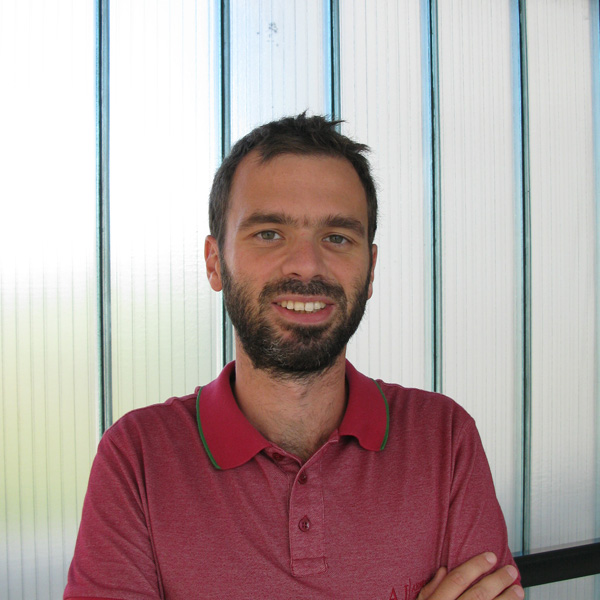
Paolo Pinotti is a Full Professor of Economics at the Department of Social and Political Sciences, Università Bocconi. He serves as Dean of the Faculty, directs the CLEAN Unit for Economic Analysis of Crime at Baffi-Carefin Research Center, and holds an Endowed Chair in Economic Analysis of Crime. Previously at the Bank of Italy's Research Department (2007-2011), his research focuses on policy-relevant social phenomena using econometric methods. PhD: Universitat Pompeu Fabra (2009) MSc: University of Chicago BSc: Università Bocconi Research Interests: His work spans immigration, discrimination, crime economics, mass media impacts, and labor market dynamics. Publications appear in top journals like American Economic Review and Econometrica. Scientific Contributions: Recent studies examine intermarriage dynamics, corruption in procurement, immigrant stereotypes in schools, oil theft in Mexico, immigration-crime relationships, and labor-crime interactions. Awards: Excellence in Research Award (2022) Teaching Award (2021) Research Impact Award (2019) AEJ: Applied Economics Best Paper (2016)
Lusophone University of Humanities and TechnologiesPortugal
Manuel Francisco Magalhães Cabugueira is a researcher at Universidade Lusófona, with a PhD in Economics and a Master’s in Environmental Policy. His work spans Environmental Economics, Competition Law, and Regulatory Policy, focusing on voluntary agreements, gold-plating analysis, and AI-driven regulation. He has contributed to policy evaluation, econometrics, and public utility regulation. His research includes studies on Gold-plating in EU directive transposition Artificial Intelligence for regulatory optimization Competition dynamics in water and waste markets Bargaining theory in negotiated environmental agreements He has supervised multiple Master’s theses and authored books, journal articles, and conference papers. His affiliations include Lisbon and Porto campuses of Universidade Lusófona, with contact via email at mca***@ulusofona.pt.
Lusophone University of Humanities and TechnologiesPortugal
André Inácio is a Lecturer at Lusófona University , with a focus on public law, criminology, and urban security. He holds a Bachelor's degree in Right, a Higher Education Diploma in 2nd Degree Studies in Public Law, and postgraduate qualifications in Economic and European Criminal Law and Criminology. Research Interests: Public Law, Criminology, Corruption Prevention, Urban Security, Predictive Modeling, Migration Studies Publications: Explores intersections between law, security, and predictive analytics in peer-reviewed journals and book chapters.
ISPA - University Institute of Psychological, Social, and Life SciencesPortugal
Telma Sousa Almeida serves as an Assistant Professor at Ispa – Instituto Universitário and is an Integrated Member of the Social Development Team at the William James Centre for Research. With over 15 years of experience in forensic and developmental psychology, she holds a PhD from the University of Cambridge along with specialized qualifications in Legal Medicine and Forensic Psychological Assessment. Her research centers on vulnerable populations within justice systems, particularly focusing on autistic children's eyewitness testimony and best practices for investigative interviewing . Her work bridges developmental psychology with practical forensic applications, examining how professionals interact with neurodivergent individuals across legal contexts. Dr. Almeida leads the BEJUST project funded by the La Caixa Foundation, which addresses barriers in Portugal's justice system for individuals with Autism Spectrum Disorder. She also co-leads the 'Investigation, Interviewing, Interrogation' Working Group within COST Action Implemendez (CA22128), implementing the Méndez Principles for ethical treatment of vulnerable individuals in legal proceedings. Her scientific contributions include publications in high-impact journals such as Journal of Autism and Developmental Disorders and Frontiers in Psychology, demonstrating consistent scholarly output focused on autism, memory retrieval, and forensic interviewing techniques over the past five years. La Caixa Foundation funding for BEJUST project COST Action Implemendez (CA22128) participation As Director of the Forensic Office at the Ispa Clinic, she provides scientific supervision and conducts Forensic Psychological Assessments. Her supervisory work includes doctoral projects on interviewing rape victims and young offenders, contributing to evidence-based training frameworks for justice professionals. Her research trajectory shows increasing focus on practical applications of psychological science within legal contexts, with particular emphasis on creating more inclusive justice systems for neurodivergent populations.
Francisco Jorge Gonçalves is a Researcher at the Research Centre of the Institute for Political Studies (CIEP) at the Catholic University of Portugal. His work primarily focuses on radicalization, Islamic studies, counter-radicalization, and security policy. His educational background includes a PhD and Master's degree in Radical Islamism from the Catholic University of Portugal, along with Bachelor degrees in History and Law. His research examines non-violent radicalization pathways within Islamist movements operating in Western societies. Gonçalves' research interests center around understanding radical Islamist movements, particularly examining organizations like Hizb ut Tahrir and Al-Muhajiroun. He analyzes their strategies, influence in Western societies, and investigates counter-radicalization strategies employed by governments, with particular attention to Morocco's religious diplomacy in France and the UK. His work contributes significantly to understanding how radical ideologies spread through non-violent means. His most recent publications reveal a trend toward analyzing transnational terrorist networks and their operational structures, while maintaining his focus on non-violent radicalization as a precursor to violent extremism. His work bridges academic research with practical security policy implementation. Investigação Científica em Ciências Militares (2022), área Estudos de Segurança Interna e dos Fenómenos Criminais 1.º Prémio Jornal do Exército (2015) 2.º Prémio Jornal do Exército (2008) 2.º Prémio Jornal do Exército (2011) Gonçalves has served as a reviewer for academic journals, presented at numerous conferences on security topics, and examined academic work related to video surveillance and public safety. His external position as Director of Services and Director of the Legal Office at the Agency for Technological Reform of the State demonstrates his engagement with practical security and legal issues beyond academia. He has contributed media commentary on jihadist self-recruitment trends in Europe, showing his commitment to public discourse on security matters. His work within the CIEP research center connects him with a broader network of scholars examining democracy, international politics, and sustainable development, though his specific contributions focus on security aspects of these broader themes.
Raquel Matos is an Associate Professor and researcher at the Research Center for Human Development (CEDH) and Director of the Faculty of Education and Psychology at the Catholic University of Portugal. She holds a PhD in Psychology from the University of Minho (2007) and has established herself as a leading researcher in gender, crime, and juvenile justice systems. Her research interests span across gender studies, criminology, juvenile delinquency, prison studies, migration control, and youth justice systems. Matos has developed significant research projects on women in prison, gender and migration control, and more recently on juvenile delinquency with a focus on young people's life paths and experiences within the justice system. Her work contributes to Sustainable Development Goals related to justice and education. Matos has coordinated several European projects, most notably the PROMISE Project funded by Horizon 2020, and is currently developing research on gender equality movements' impact on public policies in justice, health, and education sectors in Portugal. Her recent publications (2023-2025) demonstrate continued focus on youth justice, gender dynamics in carceral settings, political participation of young people, and mental health integration of refugee children. Visiting researcher at University of Bath (2004, 2005) Visiting researcher at University of Toronto (2012) Visiting researcher at University of Oxford (2013) Matos actively collaborates with academics from sociology, anthropology, and law, as well as international professionals. She has supervised 65 research works and maintains an active research agenda with projects extending through 2026, including the UCP2 MH Mental Health Promotion System and continued research on gender equality in justice systems.
Cristina Maria Pinto Roldão is a sociologist and Integrated Researcher at CIES-Iscte (Center for Research and Studies in Sociology) within the School of Sociology and Public Policy at ISCTE - Lisbon University Institute. She concurrently serves as a visiting adjunct professor at the Setúbal School of Education (ESE-IPS), where she co-coordinates the Roadmap for Anti-Racist Education since 2019. Her work bridges academic research and public advocacy on racism, Blackness, and educational equity in Portuguese society. Dr. Roldão's research centers on institutional racism in education, with focus on school exclusion mechanisms affecting African descendants and the reconstruction of Black history in Portugal. She develops critical pedagogical frameworks to dismantle Eurocentrism in curricula and intercultural education policies. Her scholarship connects migration studies, critical race theory, and post-colonial analysis, particularly examining ethno-racial data collection challenges and anti-racist praxis in institutional contexts. Her publication trends (2007-2019) reveal consistent engagement with educational inequality, evolving toward sharper focus on Black epistemologies and institutional racism. Early work analyzed policy interventions in disadvantaged districts, while her 2019 publications pioneered empirical studies on vocational tracking of African descendants and police violence in Lisbon's peripheries. All publications demonstrate methodological innovation in addressing Portugal's historical resistance to ethno-racial categorization. As a public intellectual, Dr. Roldão served as columnist for Público (2022-2024) and contributed to national policy initiatives including the National Plan to Combat Racism (2021/22) and 2021 Census ethnic-racial data collection. She co-edits the forthcoming Afroeuropeans: Identities, Racism, and Resistances (Routledge, 2025) and co-authored Tribuna Negra: Origens do Movimento Negro em Portugal (2023). She actively shapes institutional frameworks through leadership in the Center for Black European Studies and the Atlantic (Carnegie Mellon, 2023), the Black Europe Summer School (2025), and the 7th Afroeuropeans Conference (Lisbon, 2019). Her research group 'Migrations, Mobility and Ethnicity' at CIES-Iscte serves as hub for decolonial scholarship, while the Anti-Racist Education Roadmap she co-develops operationalizes critical race theory in teacher training.
Marcelo Moriconi Bezerra is an Assistant Researcher in the Department of Political Science and Public Policy at Iscte – University Institute of Lisbon and an Integrated Researcher at the Center for International Studies (CEI-Iscte). He holds a PhD in Contemporary Political Processes from the University of Salamanca and has a multidisciplinary academic background in journalism, sociology, and political science. He is actively involved in research on corruption, illegal markets, violence, and sports integrity, with a regional focus on Latin America and Europe. Bachelor’s in Social Communication (Journalism), National University of La Plata, Argentina (2003) Diploma of Advanced Studies in Sociopolitical Analysis, University of Granada (2007) PhD in Political Science, University of Salamanca (2009) Post-Doctorate in Sociology and Political Science, Autonomous University of Mexico (2009–2010) His research interests center on political sociology, corruption, citizen security, match-fixing, sports integrity, and Latin American politics . He critically examines how governance failures, ideological narratives, and social structures contribute to deviant behavior and institutional erosion. His work often bridges academic analysis with policy implications, particularly in sports regulation and electoral transparency. His recent publications explore the gamblification of sports, sportswashing, esports education, and the normalization of corruption . He has led and participated in several EU-funded research projects, including BITEFIX and SBS4MED, focusing on match-fixing prevention and sport as a tool for employability. His articles reflect a strong interdisciplinary approach, combining qualitative methods with critical discourse analysis. Member, Executive Committee, Latin American Political Science Association (ALACIP) Member, Scientific Committee, CEI-Iscte Coordinator of multiple international research projects on sports integrity and electoral monitoring Supervisor of numerous master’s and doctoral theses Marcelo Moriconi has published over 78 scientific works, including two books and articles in top journals. He has no known scientific awards listed in the provided texts. His research is applied and policy-oriented, often in collaboration with European institutions and NGOs. He leads research on youth engagement with sports betting and the social impacts of esports, contributing to public health and integrity frameworks.
António Pedro Dores is an Associate Researcher at CIES-Iscte (Center for Research and Studies in Sociology) within the School of Sociology and Public Policy at ISCTE - Lisbon University Institute, where he has served as a professor since 1985. His work bridges sociology, criminology, and neuroscience to examine social instability, human emotions, and penal systems. His academic credentials include: Aggregation in Sociology (2004) from ISCTE-University Institute of Lisbon PhD in Sociology (1996) from ISCTE-IUL Additional qualification in Sociology (1988) from ISCTE-University Institute of Lisbon Bachelor's degree in Sociology (1983) from ISCTE-IUL Dores pioneers the epistemology of sociology of instability, focusing on 'states of mind' as foundational social phenomena. He integrates biological and philosophical insights to analyze violence, morality, and punishment, aiming to establish a 'periodic table of states of mind.' His research emphasizes prison systems, human rights, and social movements within carceral environments. Analysis of his 2015-2020 publications reveals consistent engagement with critical criminology, human rights in penal contexts, and the sociology of emotions. Key themes include abolitionist perspectives on punishment, critiques of social theory, and the intersection of neuroscience with sociological frameworks. His books like 'Secrets of Portuguese Prisons' (2012) and conference-organized volumes ('Prisons in Europe,' 2003) demonstrate applied scholarship influencing prison reform debates. He actively participates in the Association Against Exclusion for Development (ACED), an inmate-led initiative promoting free expression, and coordinated the Specialization Seminar in Sociology of Violence (2013-2015). His collaborative projects address European prison observatories and social reintegration of ex-prisoners.
Lusophone University of Humanities and TechnologiesPortugal
Cristiana Dias de Almeida is an Assistant Professor and Director of the Bachelor's degree in Social Work at Lusofona University's Faculty of Economics, Social and Business Sciences. She holds a PhD in Social Work (2022) from the Portuguese Catholic University and University of Coimbra, with a thesis analyzing network governance in social care policies. Her academic career includes roles at Miguel Torga Higher Institute, Catholic University of Braga, and as a Guest Lecturer at the University of Coimbra. Education includes a PhD (2022), Master's in Sociology (2009), and Bachelor's in Sociology (2002). Her research focuses on social policies, network governance, homelessness intervention, domestic violence, and aging in prison populations. She is affiliated with Intrepid Lab - CETRAD, exploring transdisciplinary development studies. Her articles critically examine Portugal’s welfare state challenges, policy-practice gaps, and innovative social interventions. Key contributions include studies on poverty, homelessness, and governance effectiveness. Awards include a FCT-funded Doctoral Fellowship (2017-2022). Advising includes directing social work programs and supervising research on social care systems. Grants and fellowships highlight her sustained academic engagement. Her work bridges policy analysis with grassroots implementation, emphasizing equity and institutional collaboration. Labs/Teams: Active in Intrepid Lab - CETRAD, focusing on transdisciplinary research for societal development challenges.
Lusophone University of Humanities and TechnologiesPortugal
Maria Cunha Louro is a university lecturer at Universidade Lusófona, specializing in forensic and legal psychology. She holds a PhD in Forensic Sciences with a focus on Forensic Psychology and has completed doctoral coursework in Law, reflecting her interdisciplinary expertise. She is a licensed psychologist with advanced specialization in Psychology of Justice and Clinical and Health Psychology, recognized by the Order of Portuguese Psychologists. She represents Portugal in the Ibero-American Association of Legal Psychology and serves as Vice-President of Psijus – Association for Legal Psychology Intervention. PhD in Forensic Sciences (Forensic Psychology) Doctorate in Law (coursework completed) Master’s in Criminal Psychology and Deviant Behavior Bachelor’s in Psychology Specialty in Clinical and Health Psychology Advanced Specialty in Psychology of Justice Her research centers on domestic violence, gender-based violence, criminal justice responses, and the intersection of law and psychology. She explores psychological assessment in legal contexts, sentencing motivations, and the socio-cultural dimensions of relational violence. Her work bridges theory and empirical research, contributing to policy and intervention strategies in Portugal and Lusophone countries. Recent publications show a strong trend in analyzing domestic violence in Portugal through a juridical-psychological lens, with comparative studies on international contexts such as Cape Verde and global phenomena like soccer-related violence. Her work emphasizes interdisciplinary approaches, integrating legal frameworks with psychological assessment and public policy implications. She is actively involved in professional leadership and academic dissemination through book chapters and peer-reviewed journals. While no formal awards are listed, her roles in key associations highlight recognition in her field. Maria Cunha Louro advises on legal psychology interventions and contributes to advancing forensic practice through her research and institutional roles. She is affiliated with professional networks that support research and policy development in legal psychology. Though specific labs or research teams are not mentioned, her publications suggest collaborative work in interdisciplinary and Ibero-American academic circles.
Ana Mineiro is a Full Professor at the Faculty of Health Sciences and Nursing, Universidade Católica Portuguesa (UCP), where she also serves as Director. She is a principal investigator at the Center for Interdisciplinary Research in Health (CIIS) and leads the Translational Neuroscience Platform. Her academic work spans cognitive sciences, linguistics, and sign language research. PhD in Linguistics, University of Lisbon Master’s and Bachelor’s in Modern Languages and Literatures, University of Lisbon Post-doctorate in Neurolinguistics and Applied Linguistics to Sign Languages, UCP Habilitation in Language and Cognition Sciences, UCP Her research focuses on language evolution, sign language linguistics, deaf education, and cognitive development in hearing-impaired individuals. She has pioneered work in the emergence of new sign languages, particularly in São Tomé and Príncipe, and developed technological tools like the Portuguese Sign Language Reference Corpus and an AVATAR-based translation system. Her interdisciplinary approach integrates neuroscience, linguistics, and education. Her recent publications show a strong trend in understanding the cognitive and linguistic foundations of sign languages, the resilience of deaf children, and the evolution of language structure. She frequently publishes in high-impact journals such as PLoS ONE , Frontiers in Psychology , and the Journal of Language Evolution , often exploring the boundaries between gesture, pantomime, and formal sign systems. Awards and distinctions for scientific contributions Recognition for creating the Portuguese Sign Language Reference Corpus Honors for developing the first automatic AVATAR translation (Portuguese to LGP) Contributions to six UN Sustainable Development Goals Ana Mineiro has supervised over a dozen students and research projects, including doctoral theses and postgraduate work. She has led major funded research initiatives totaling 4.4 million euros through competitive grants. She actively participates in academic governance, serving as jury president for faculty recruitment and supervising research in palliative care, communication disorders, and cognitive development. She leads the Translational Neuroscience Platform at CIIS and is involved in multiple interdisciplinary research centers, including CIIS and CEFH. Her work bridges clinical, educational, and technological domains, fostering collaboration across health, humanities, and engineering disciplines.
ISPA - University Institute of Psychological, Social, and Life SciencesPortugal
Miguel Basto-Pereira, Ph.D., is an Assistant Professor at ISPA University Institute in Lisbon, Portugal, where he serves as the Founder and Co-Director of the Master's in Forensic Psychology program. He is a researcher at the William James Center for Research, focusing on developmental pathways of antisocial behavior and criminal persistence through international collaborations across five continents. His research interests include: Criminal Psychology and Developmental Criminology Risk and Protective Factors for Criminal Behavior Cross-Cultural Universality of Antisocial Behavior Parenting Interventions for Childhood Behavior Problems Longitudinal Analysis of Criminal Career Development Dr. Basto-Pereira's work demonstrates exceptional methodological rigor through longitudinal studies and cross-national comparisons. His research with the Cambridge Study in Delinquent Development has illuminated temporal sequences of multisystemic factors underlying antisocial behavior, while his International Study of Pro/Antisocial Behaviour spans 10 countries to examine cultural universality of risk factors. His recent meta-analyses on parenting interventions highlight cross-cultural adaptation challenges. Among his notable achievements, Dr. Basto-Pereira received the Outstanding Early Career Psychologist Award from the American Psychology Association – Division 52 in 2023. He currently leads the ChainPrevent project (Ref: 2022.03898.PTDC), which maps risk factors for antisocial behavior using longitudinal data. His research portfolio includes 71 publications with over 17,000 reads and 936 citations, demonstrating significant impact in forensic and developmental psychology. Dr. Basto-Pereira actively bridges research and practice through translational work on evidence-based interventions, with particular focus on adapting programs for diverse cultural contexts and developing tailored crime prevention strategies based on developmental risk sequences.
Lusophone University of Humanities and TechnologiesPortugal
Diogo Lamela is an Associate Professor in Developmental Psychopathology and Child Clinical Psychology at Lusófona University. He serves as Deputy Director of the Digital Human-Environment Interaction Lab and Deputy Director of the Clinical Psychology Program at the same institution. Education: Ph.D. in Clinical Psychology from the University of Minho. Training: Child Maltreatment Data Collection Short Course, Modified Strange Situation Procedures, Attachment Story Completion Task, The Alarm Distress Baby Scale, Couple Interaction Task, Intimate Relationship Interview, Teacher in Higher Education Training Certificate, Psychological Networks Amsterdam Winter School, Translating Child Sexual Abuse Research to Practice, Compassion Focused Therapy for Difficult Emotions. His research focuses on child maltreatment, intimate partner violence, coparenting dynamics, and high-conflict divorces. He has authored 46 articles in international journals and contributed to eight funded research projects, emphasizing cross-cultural studies and European child protection frameworks. Key article trends include perinatal mental health, child abuse surveillance, coparenting assessments, and trauma-informed clinical guidelines. His work employs systematic reviews, longitudinal analyses, and multinational cohort studies. Lamela actively collaborates with European institutions, serving on editorial boards, advisory panels, and as an expert for the European Commission’s Citizens, Equality, Rights, and Values Programme. He also supervises multidisciplinary teams supporting child protection procedures in Portuguese courts.
Lusophone University of Humanities and TechnologiesPortugal
Carlos Alberto Poiares is a Professor at Universidade Lusófona in Lisbon, Portugal, affiliated with the School of Psychology and the Department of Forensic Psychology. He holds a PhD in Psychology, an Aggregate Title in Educational Sciences – Social Education, and a Bachelor’s degree in Law, reflecting his interdisciplinary expertise in psychology and legal systems. His educational background includes: Bachelor’s degree in Law PhD in Psychology Aggregate Title in Educational Sciences – Social Education Dr. Poiares specializes in forensic psychology, with a strong focus on juvenile delinquency, psychopathy, aggression, testimony credibility, and the psychological factors influencing judicial sentencing. His research explores non-legal motivations in sentencing, domestic and elderly abuse, and the development of risk prevention programs for youth and vulnerable populations. He has extensively studied narcissism, self-esteem, and behavioral adjustment in forensic and school contexts. The analysis of his recent publications (2011–2022) reveals a consistent emphasis on psychometric validation of psychological instruments in Portuguese populations, forensic assessment tools, and interdisciplinary research bridging psychology, law, and criminology. His work spans clinical, social, and legal domains, with increasing attention to ethical and procedural aspects in public defense and expert testimony. He has supervised over 65 master’s and doctoral theses, primarily in forensic psychology, indicating a significant role in academic mentoring and research guidance. His students have explored topics such as juvenile delinquency, sentencing psychology, domestic violence, and intervention programs. Carlos Alberto Poiares is actively involved in research dissemination through book chapters and journal articles, with recent contributions to judicial psychology and deviant behavior. His work is associated with the university’s research portal (PURE) and he holds an ORCID identifier (0000-0002-0633-3530), affirming his scholarly presence.