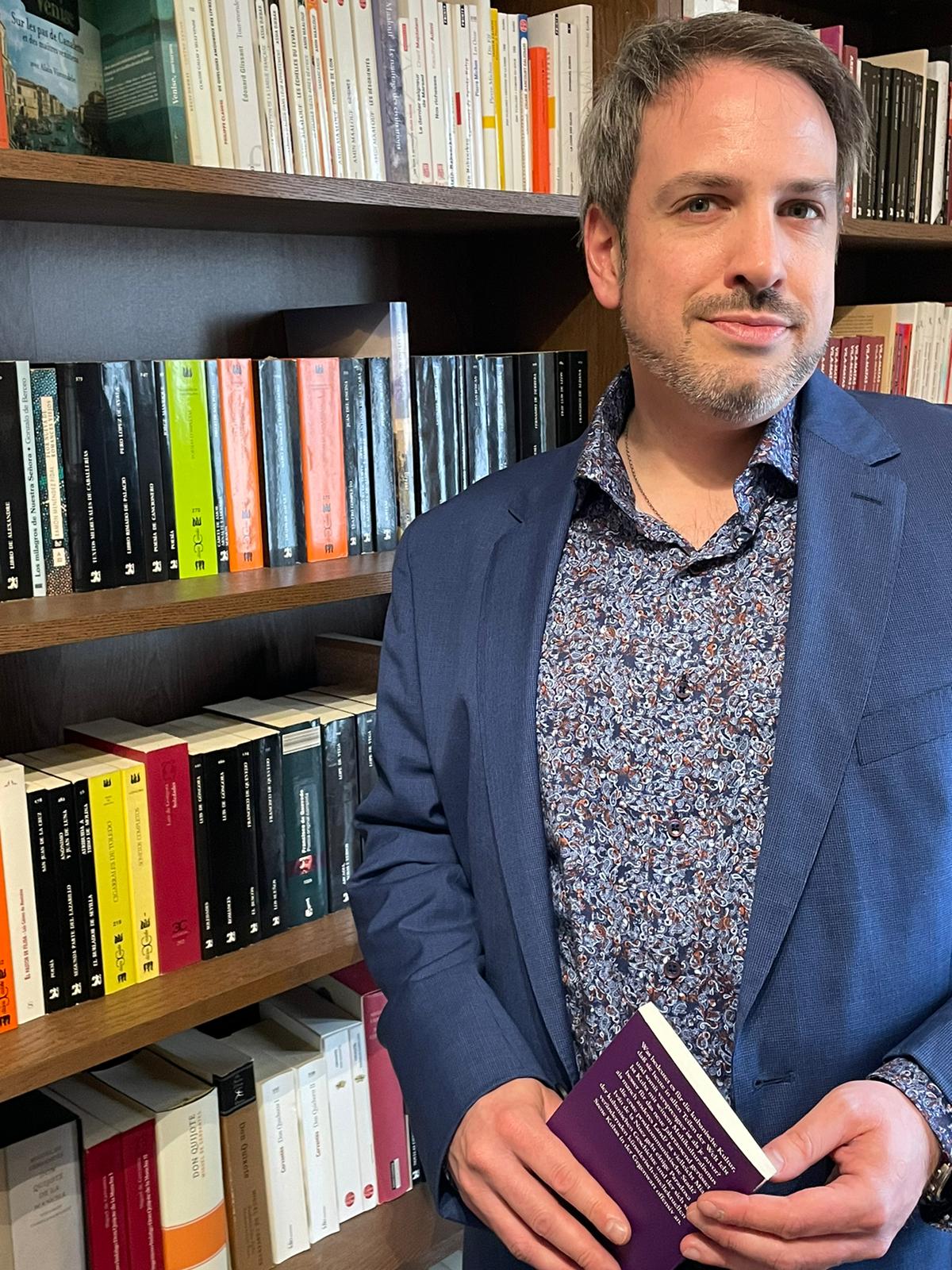
Ben Bollig is a Professor of Latin American Literature and Film at the University of Oxford, where he is also a Fellow and Tutor in Spanish at St Catherine's College and Associate Lecturer in Spanish at St John's College. He holds a First Class BA in Hispanic Studies from the University of Nottingham, followed by an MA and PhD from King's College London (2004). Research focuses on contemporary Latin American literature and film, particularly Argentine poetry Editor of the Journal of Latin American Cultural Studies Co-editor of Latin American Cultural Studies: A Reader (Routledge, 2017, pbk 2019) Key Research Themes : Comparative Literature, Film Studies, Translation Studies, Poetics of Resistance, and Postcolonial Studies. His work explores intersections between poetry and cinema, cultural identity, and political dimensions of artistic practice in Latin America. Publications include books on Argentine marginal poetry, cinematic adaptation of verse, and edited volumes of resistance literature. He coordinates the Poetics of Resistance project with Dr. Cornelia Graebner (Lancaster University) and contributes translations to journals like Calque and El extremo sur: Confines.
Dr. Christine Matzke is a Lecturer in English Literature at the University of Bayreuth's Faculty of Languages and Literatures. She joined in 2011 after teaching at Goethe-University Frankfurt and Humboldt-Universität Berlin. Her research focuses on African theatre (especially Eritrean), postcolonial crime fiction, and medical humanities. She has held editorial roles for African Theatre and Matatu , and is active in academic societies like AfTA and IFTR. Her academic journey includes a PhD from the University of Leeds (2003) and studies at Goethe-University and Queen Mary, University of London. She has authored/co-edited volumes on African theatre history, crime fiction, and diaspora studies. Recent works include entries in Kindlers Literatur Lexikon and co-editing African Theatre 19: Opera & Music Theatre (2020). Research interests span Eritrean performing arts, Shakespeare adaptations, and transnational cultural studies. She collaborates internationally on projects like analyzing a 1960s German-Nigerian TV production. Her publications reflect interdisciplinary engagement with theatre historiography, colonial legacies, and performance in conflict zones.
Prof. Dr. Gerd Bayer is a faculty member at the Department of English and American Studies, Friedrich-Alexander University of Erlangen-Nürnberg. He holds the academic rank of Professor and has been an Akademischer Direktor since 2016, with an außerplanmäßiger Professor title since 2017. His educational background includes an M.A. and 1. Staatsexamen in English and American Studies and Geography from FAU (1998), a Ph.D. (2003), and a Habilitation (2012). Current research focuses on Restoration prose fiction, Holocaust literature/film, postmodernism, and epistolary culture. Grants include the Thyssen-Foundation Grant (2018-2023) and DFG Grant (2009-2012). He has served on editorial boards for journals like The Journal of Popular Culture and Humanities (Switzerland) , and as Associate Editor for The Journal of Postcolonial Writing (2012-22). Peer review activities span 25+ journals and publishers, including Cambridge University Press and Routledge. His supervision includes Christof Beer (2021), Jaroslaw Jasenowski (2024), and others. He is currently on leave from April to September 2025 and will deliver a keynote on metal documentaries in Sevilla (June 2025).
Dr. Kerstin-Anja Münderlein is a researcher and academic coordinator at the Chair of English Literature at the University of Bamberg, where she has taught since 2013. She earned her PhD from Bamberg in 2018 and is currently completing her Habilitation (post-doctoral project). Her roles include Academic Advisor for English Literature and Coordinator of the MA English and American Studies program. She previously held positions at the University of Siegen and was a Visiting Research Fellow at Bath Spa University (2022). Education: PhD in English and American Studies, University of Bamberg (2018) MA in English and American Studies, University of Bamberg (2012) BA in English and American Studies and History, University of Bamberg (2010) Research Interests: Dr. Münderlein specializes in gender expressions and normativity in literature, with focus areas spanning Gothic literature (particularly 18th-century parody), British Golden Age crime fiction, World War I poetry, and interwar cultural studies. Her work examines sociopolitical criticism through genres like drama and crime fiction, often exploring subversion of gender norms. Recent research investigates nostalgia in crime fiction and Gothic-crime genre intersections. Publications: Her scholarly output includes the monograph Genre and Reception in the Gothic Parody (2022) and co-edited volumes like Rethinking Gothic Transgressions (2024) and Crime Fiction, Femininities and Masculinities (2024). Recent articles analyze gender dynamics in crime fiction, socio-political critiques in Gothic parody, and pedagogical approaches to Shakespeare. She co-edits the journal Crime Fiction Studies and contributes to interdisciplinary gender studies discourse. Awards: PUSh Graduate Award (2014) Insea and Robert Strobel Prize (2007) Max Weber Scholarship (2008-2010) FerNet Mentorship (2019-2021) Erasmus Staff Exchanges (2016, 2024) Academic Service: As spokesperson for non-professorial staff at the Institute of English and American Studies, she co-founded the university's Research Network. She organizes international conferences including the Captivating Criminality series and serves on the book prize jury for the International Crime Fiction Association. Teaching: She teaches courses spanning Elizabethan drama to contemporary crime fiction, including Shakespeare studies, Gothic literature, war poetry, and gender-focused seminars. She supervises theses and leads the Bamberg University English Drama Group, for which she writes screenplays and composes music.
Klaas Huizing serves as Professor of Systematic Theology and Contemporary Theological Issues at the Institute for Protestant Theology and Religious Education, Julius-Maximilians-University Würzburg. Appointed Ordinarius at the Chair of Protestant Theology I since 1998, he maintains an active academic presence with consultation hours and direct contact channels at Wittelsbacherplatz 1. His educational trajectory spans 1977-1986 with Philosophy and Theology studies across Münster, Kampen (NL), Hamburg, Heidelberg, and Munich. He achieved dual doctorates—Dr. phil. (1986) and Dr. theol. (1989)—followed by habilitation (Dr. habil.) in 1993. Huizing's research interrogates theological ethics through frameworks of shame/honor cultures, 21st-century relevance of Reformation thought, and Karl Barth's legacy. His work bridges systematic theology with public discourse, emphasizing anthropological dimensions and contemporary applicability. The 2022 monograph Lebenslehre exemplifies his project of constructing accessible theology for modern existential challenges. Publication trends reveal consistent ethical engagement across two decades, evolving from Barth studies (2018) through sin/reformation critiques (2017) to foundational ethical systems (2016). His methodology integrates narrative theology (2018 novel), aesthetic philosophy (2015 trilogy), and practical pastoral applications (2009 fear analysis), demonstrating interdisciplinary fluidity between biblical exegesis, philosophical anthropology, and cultural criticism. Accolades include: Förderpreis des Freistaates Bayern für junge Schriftsteller (1995) TZ-Stern literary award (1999) Villa-Concordia-Preis (2002) Villa-Concordia-Stipendium residency (2003) Huizing directs significant editorial work as chief editor of OPUS cultural magazine since 2006 and publisher since 2016, while maintaining P.E.N. Club membership since 1997. His academic trajectory—from Munich assistant (1988-1995) to Würzburg representative (1995)—culminated in his current professorship, sustained alongside marriage since 1981 and parenthood to two daughters. No laboratory or team affiliations are documented in source materials.
Rhenish Friedrich Wilhelm University of BonnGermany
Karin Peters is a Full Professor of Romance Literature and Cultural Studies with a Focus on Ibero-Romania at the University of Bonn since 2023. Her academic journey includes a habilitation at Johannes Gutenberg University Mainz (2021-2022), a doctorate from LMU Munich (2010), and a Magister Artium from the same institution (2006). Her research spans transnational literary history, affect theory, pastoral poetry, and intersections of gender and politics in Spanish and Argentinian literatures. Key projects include co-editing The Face as Scene. Virtuality and Embodiment of Affect and leading the network 'Comic Literacies. Cultural Techniques of the Comic' at KWI Essen. She has supervised doctoral work on Iberoamerican Baroque theater and published extensively on Roland Barthes, Georges Bataille, and contemporary Latin American narratives. Her recent publications analyze the European myth of the emotional subject, pastoral masks in Cervantes, and affective economies in 18th-century literature. She has received scholarships from DAAD, Studienstiftung des deutschen Volkes, and e-fellows.net, and actively contributes to academic organizations including the Romanistenverband and the Bonn Center for Dependency Studies.
Ingrid Hotz-Davies is Professor of English Literature and Gender Studies at the English Seminar, Philosophische Fakultät, Eberhard Karls University of Tübingen. She has held this position since 2001 and leads a dynamic research environment focused on gender, queer theory, early modern literature, and cultural narratives. She is actively involved in multiple academic programs and leadership roles, including co-directing the Tübingen Center for Gender and Diversity Studies and serving as the Gender Equality Representative for academic staff and students. Her academic journey includes a PhD from Dalhousie University (Canada), an MA/State Examination from the University of Munich, and a habilitation completed in Munich in 2000. Her research interests include Gender/Queer Studies, Women’s Literature from the Renaissance to the present, Early Modern Prose, and the dynamics of censorship and identity formation. She has organized numerous seminars on topics such as queer theory, camp aesthetics, postmodern realism, and the cultural construction of heterosexuality. Her work bridges literary analysis with philosophical, psychoanalytic, and sociopolitical inquiry. The recent publications analyzed reflect a consistent engagement with gender performativity, camp aesthetics, closet narratives, and the intersections of literature with psychoanalysis, religion, and political power. Her scholarship spans from Renaissance texts to contemporary science fiction, demonstrating a broad and interdisciplinary reach. Gender Equality Representative, University of Tübingen (since Nov. 2023) Academic Coordinator, Erasmus Mundus MA Program 'Crossway in Cultural Narratives' (since 2017) Co-Director, Tübingen Center for Gender and Diversity Studies (since 2013) Equal Opportunities Officer, University of Tübingen (2014–present; also 2002–2006) Academic Coordinator, Erasmus Mundus Doctoral Program 'Cultural Studies in Literary Interzones' (2010–2018) She supervises a diverse group of PhD candidates working on topics such as precariousness in Jean Rhys, polymigrant imagination, feminist speculative fiction, posthuman weird fiction, and the representation of subaltern female workers. Her mentorship extends into interdisciplinary research involving affect theory, postcolonial studies, and identity politics. While no direct mention of funding grants is made, her leadership in international Erasmus Mundus programs implies significant grant acquisition and project management experience. She is affiliated with the English Seminar's research environment and contributes to collaborative projects such as the 'Dark Side of Camp Aesthetics' and 'Naturalization of Gender'. Her work fosters transnational academic exchange and critical inquiry into marginalized voices and cultural border zones.
Prof. Dr. Ethel Matala de Mazza holds the Caroline von Humboldt Professorship at Humboldt University of Berlin , leading the Institute for German Literature (18th century to present) since 2010. She serves as spokesperson for the DFG-funded Research Training Group 2190 (2021–2026), focusing on the history of literature and knowledge in small forms. Her academic trajectory includes visiting professorships at Johns Hopkins University, University of California, Berkeley, and University of Indiana, Bloomington through the Max Kade Foundation. Education: PhD (1999) and Habilitation (2007) in Modern German Literature, University of Munich Key research areas: Literary-theoretical history of the political imaginary , law-literature intersections , theory of small forms , democracy and mass culture , press history , 19th-century popular theatre Her recent work explores Moby-Dick 's cultural metaphors, interwar obituary rhetoric , and epistemology of small literary forms . She investigates how popular narratives and media theatricality shape political and societal discourses, with a focus on 19th-century melodrama and obituary practices . Scientific roles include: Former fellow at Bielefeld's Center for Interdisciplinary Research (2018/19) Permanent member of DFG Research Group 'Image Evidence' (since 2012) Co-editor of Verkleinerung: Epistemologie und Literaturgeschichte kleiner Formen (2020) Contributor to Des Kaisers neue Kleider (2002), analyzing political symbolism She supervises doctoral projects on topics like political body theories and narratives of conflict , while contributing to debates on media's role in knowledge production and cultural legitimacy .
Prof. Dr. Stefani Brusberg-Kiermeier serves as a Professor at the Institute for English Language and Literature within the Faculty of Language and Information Sciences at the University of Hildesheim. She holds multiple leadership positions including membership on the board of the Center for Gender Research, representation of professors on the Doctoral Committee for Faculty 3 (Dr. phil.), and spokesperson role for English Language and Literature in the Interdisciplinary Graduate College 'Gender and Education.' Her research spans multiple literary periods and media forms with particular expertise in Shakespeare studies, Victorian literature, gender research, and film adaptation. Brusberg-Kiermeier's scholarly work demonstrates consistent interdisciplinary engagement, frequently bridging literary analysis with gender theory, film studies, and cultural criticism. Her publications reveal a pattern of examining how literary works from different historical periods engage with contemporary concerns through adaptation and reinterpretation. Analysis of her recent publications shows a clear trajectory toward examining contemporary media representations (particularly film and television) through the lens of historical literary traditions. Her work on James Bond evolution, Shakespeare adaptations in modern cinema, and Victorian literature's influence on contemporary culture demonstrates her ability to connect historical literary analysis with current cultural phenomena. The scholarship consistently incorporates gender perspectives across all subject areas. Brusberg-Kiermeier has served as editor-in-chief of the journal Hard Times (2014-2018) and has edited numerous special issues and book collections. Her editorial work demonstrates commitment to fostering scholarly dialogue across disciplinary boundaries, particularly regarding gender studies and literary adaptation. Her academic leadership extends to multiple institutional roles at the University of Hildesheim, where she contributes to both teaching and research administration while maintaining an active scholarly profile. The depth and breadth of her publications across multiple subfields demonstrate her position as a significant contributor to literary and cultural studies in Germany.
Peter Imort is a Professor and Head of the Music Department at the Ludwigsburg University of Education, where he has been teaching since 2003. He holds consultation hours on Wednesdays from 12-1 p.m. and serves in various administrative roles including as a member of the University Council and the Master's Program in Cultural Studies and Cultural Management. His work address is at Reuteallee 46, 71634 Ludwigsburg, in Building 7, Room 7.211. Imort studied school music, church music and musicology in Cologne and Hamburg, completing his doctorate in musicology on organizational processes of musical culture in the 16th century. Prior to his position at Ludwigsburg, he completed teacher training at grammar schools and taught at the University of Kassel in the field of music education/music didactics. His primary research interests focus on cultural studies-oriented music research, music and media education, and contemporary music in teaching. Imort has developed interdisciplinary approaches connecting music with media education, particularly examining how historical and contemporary music scenes can be reconstructed and taught. His work often explores the intersection of popular culture, film music, and educational practices, with significant attention to hip-hop culture, film soundtracks, and historical music reconstruction across different cultural contexts. Analysis of his recent publications reveals a consistent focus on applying music education in diverse contexts, from elementary school settings to teacher training programs. His work demonstrates a strong interest in how media and technology influence music education, with particular attention to film music, animation production, and digital media. The geographic scope of his research spans multiple cultural contexts including Venice (1610), Paris (1843), New York (1956), and contemporary German educational settings. Throughout his career, Imort has held significant leadership positions including Chairman and Deputy Chairman of the State Music Department at the University of Education BW (2004-2014), Coordinator of the Interdisciplinary Center for Media Education and Media Research (2005-2019), and 1st and 2nd speaker of the Conference on Music Education at Universities (KMpWH) (2009-2017). Since 2014, he has served as Deputy Chairman of the Association of Friends of the Ludwigsburg University of Education.
Daniel Stein is a full Professor of North American Literary and Cultural Studies at the University of Siegen and currently serves as Dean of the Faculty of Arts and Humanities . He co-edits the Anglia: Journal of English Philology , the oldest English philology journal globally, and leads the SIEGN book series on graphic narratives. As part of the DFG Research Unit Popular Seriality and the Collaborative Research Center 1472 , he explores digital transformations of serial popular culture. PhD from Georg-August-University Göttingen Master's in American Studies from Johannes Gutenberg-University Mainz Former lecturer at University of Michigan His research spans superhero comics , science fiction serials , and 19th-century city mystery novels , focusing on how serial forms shape cultural memory and identity. Recent work examines digital fan forums as epitexts and transnational adaptations like Spider-Man manga. He has published extensively on paratextual negotiations in popular media and race representation in graphic narratives. Key editorial roles include: Co-editor of The Cambridge Companion to the American Graphic Novel (2023) Editor of Comics and Videogames (2021) Founding member of the African Atlantic Research Group Active in meme studies and digital humanities , his work traces the evolution of popular culture from print to digital platforms, emphasizing participatory canon formation and identity politics in fan communities.
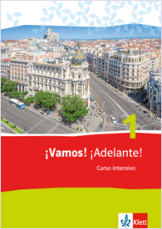
Dr. phil. Rosamna Pardellas Velay is a Senior Lecturer at the Institute of Romance Languages and Literatures , University of Duisburg-Essen . She specializes in Spanish Literature , with a focus on 20th Century Poetry and Historical Memory in Narrative . Her work bridges literary analysis , cultural studies , and language pedagogy , including contributions to teaching materials for Spanish as a foreign language. Education: BA and PhD in Hispanic Philology (University of A Coruña, 1997; University of Duisburg-Essen, 2008). Professional: Senior Lecturer since 2016; Editor for Iberoamericana (2001-2009). Her research interests include Postmodern Spanish Poetry Ecocriticism in Iberian Contexts Memory Studies in Galician and Spanish Prose Recent publications analyze works by Aníbal Núñez , Manuel Rivas , and Rafael Chirbes , emphasizing cultural identity historical memory didactic applications She collaborates with institutions like Klett Verlag and Erasmus+ for international academic exchanges.
Dr. Tobias Berneiser is a Researcher in Romance Literature and Cultural Studies at the University of Siegen, Faculty I. He has been a research assistant since 2019 and currently leads a DFG-funded habilitation project on Republican memory and female revolutionary icons in the context of the Neapolitan Republic of 1799. His work bridges literary analysis, media studies, and cultural memory, with a strong interdisciplinary focus. Research Interests: Cultural Memory and Revolution Gender and Historiography Urban Spaces in Literature Intermediality and Transmediality 19th-Century Italian and French Literature Contemporary European and Latin American Narratives His recent publications span monographs, edited volumes, and numerous articles in journals and anthologies, focusing on themes such as literary obsession, posthumous autofiction, and historical representation in television. The trend in his work shows a consistent engagement with how historical trauma, identity, and memory are mediated through literary and cinematic forms across Romance cultures. Scientific Awards: Reinhard-Kiesler-Preis (2019) for article on Lisbon's literary nautics Dr. Berneiser has secured competitive funding through the DFG and collaborates widely with scholars across Europe. He has organized academic sections, such as on historical icons in Romance television, and contributes to major reference works like the Metzler Lexicon. He has no listed advisees but plays a significant role in academic editing and translation. Labs and Research Groups: He is part of the research team at the Romance Department of the University of Siegen and contributes to interdisciplinary projects on urbanity, war, and memory in the 19th and 20th centuries.
Verena Wurth is a Doctoral Researcher and Lecturer of American Literature and Culture at the University of Cologne's English Seminar I. She serves as Managing Editor at gender forum and is a Collegiate of the a.r.t.e.s. Graduate School for the Humanities. Her research focuses on Ecocriticism, Television/Film Studies, Gender Studies, and African American Studies. Her PhD project, Crime-cene: Ecocrime in New Golden Age TV , examines environmental harm and justice in American crime TV series from 2000 to present, analyzing interdependencies between seriality and Anthropocene ecology. Verena has organized academic events such as the Energy and Popular Culture workshop (2023) and co-organized the Eco-temporalities and Geo-politics symposium (2022). She teaches courses on American literature and culture and actively engages in scholarly discussions through guest lectures and collaborative projects. Her office hours are Thursdays 12–1 PM at Room 1.113, with registration via Scheduler.
Dr. Nina Preyer is a Research Assistant at the Institute of Romance Languages and Literatures within the Faculty of Humanities at the University of Duisburg-Essen. Her office is located at Universitätsstraße 2, 45141 Essen (Room R12 R03 A19), and she can be contacted via phone (+49 201 183-7252) or email. She completed her PhD in 2012 with a dissertation on Severo Sarduy's literary poetics, awarded summa cum laude . Her research explores: Caribbean literatures with focus on post-1959 Cuban fiction Literature-medicine intersections in 18th-century French works Psychoanalytic literary approaches and self-thematization Literary theory (semiotics, post-structuralism, deconstruction) Art-literature relationships and art historical contexts Preyer's publications demonstrate consistent focus on medical humanities, Hispanic literary analysis, and French Enlightenment studies, with recent work examining disease narratives, artistic representations, and theoretical frameworks across Romance literatures. Awards: Elise Richter Prize 2013 (German Association of Romance Studies) Dissertation Prize for Cultural Studies 2013 (2nd prize, KWI) University Teaching Award 2017 She maintains active academic governance roles as Faculty Council member and institutional representative since 2012. Her international research includes funded stays at Princeton University, University of Havana, and Université de Perpignan.