Dr. Badir Miftah is a Lecturer in Finance at the University of Wales Trinity Saint David (UWTSD), part of the Institute of Management and Health. He holds a PhD in Finance and has extensive experience teaching at both UK and international institutions, including Swansea University, Sabha University, and Almergib University. His research focuses on Corporate Social Responsibility (CSR), Environmental, Social, Governance (ESG), Asset Pricing, and Forecasting, with a particular emphasis on sovereign credit default swaps (CDS) pricing models. Education: BSc MSc PhD (‘Sovereign credit default swaps pricing model’) Research Interests: Dr. Miftah explores the intersection of financial analytics, ESG frameworks, and sovereign risk modeling. His work includes developing pricing models for sovereign CDS and analyzing macroeconomic factors influencing financial markets. He has presented his research at conferences such as the Young Finance Scholars’ Conference (University of Sussex, 2019) and Swansea University’s Postgraduate Research Conference (2019). Teaching Expertise: He teaches modules in corporate reporting, financial statement analysis, finance for business managers, and digital data analysis. At Swansea University, he has covered Management Accounting, Financial Statement Analysis, and related fields.
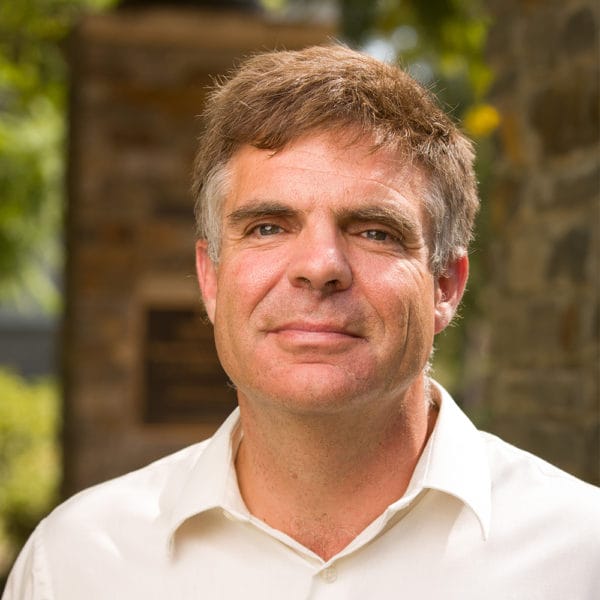
Dr. Patrick Shea is a Senior Lecturer in International Relations and Global Governance at the University of Glasgow's School of Social and Political Sciences. Previously, he held an associate professorship at the University of Houston's Department of Political Science. He earned a Ph.D. in Political Science from Rutgers University. His research focuses on international relations, the political economy of conflict, international finance and debt, state capacity, and statistical methods. He is affiliated with the university's International Political Economy & Development research group. His work has appeared in top journals like the British Journal of Political Science , International Studies Quarterly , and Journal of Conflict Resolution . Recent research explores topics such as China's lending practices, U.S. influence in international bond markets, and the political implications of sovereign debt. He currently supervises PhD student Zhihang Wu on the topic of social standards in free trade agreements. Dr. Shea emphasizes interdisciplinary research at the intersection of political economy, quantitative methods, and global governance. He does not list any scientific awards but is recognized for methodological contributions to the field. His teaching and advising focus on international political economy, conflict analysis, and research design.
Henry Schellhorn is a Professor of Mathematics at Claremont Graduate University’s Institute of Mathematical Sciences. He joined CGU in 2005 and previously taught at the University of Lausanne. His research focuses on stochastic analysis, mathematical finance, traffic theory, and epidemiology, with notable contributions to liquidity modeling, credit risk, and optimal control in epidemiological systems. Schellhorn holds patents in autonomous vehicle lane-changing algorithms and financial risk management techniques, and co-authored a book on machine learning for asset pricing. Education PhD in Operations Research, University of California, Los Angeles (UCLA) MS in Operations Research, Stanford University Diplôme in Electrical Engineering, École Polytechnique Fédérale de Lausanne (EPFL) Research Interests Schellhorn’s work bridges stochastic processes, financial engineering, and applied mathematics. Key areas include: Stochastic control and its applications to epidemiology and finance Credit risk modeling and networked financial systems Liquidity analysis in financial markets Optimization of traffic and operational systems Machine learning in asset management Professional Contributions He has edited journals like the Journal of Applied Mathematics and Decision Sciences and organized symposiums on financial derivatives and energy markets. His research has been funded by institutions such as the Swiss National Research Fund and Fitch Ratings. Patents & Innovation US Patent 11192553: Lane-changing algorithms for autonomous vehicles US Patent 7010510: Variance reduction techniques for risk management Advising & Grants Schellhorn advised Tianmin Kong on a co-authored book and led a research team at Oracle developing Monte Carlo simulation systems for Value at Risk. His work continues to explore stochastic modeling in dynamic systems.
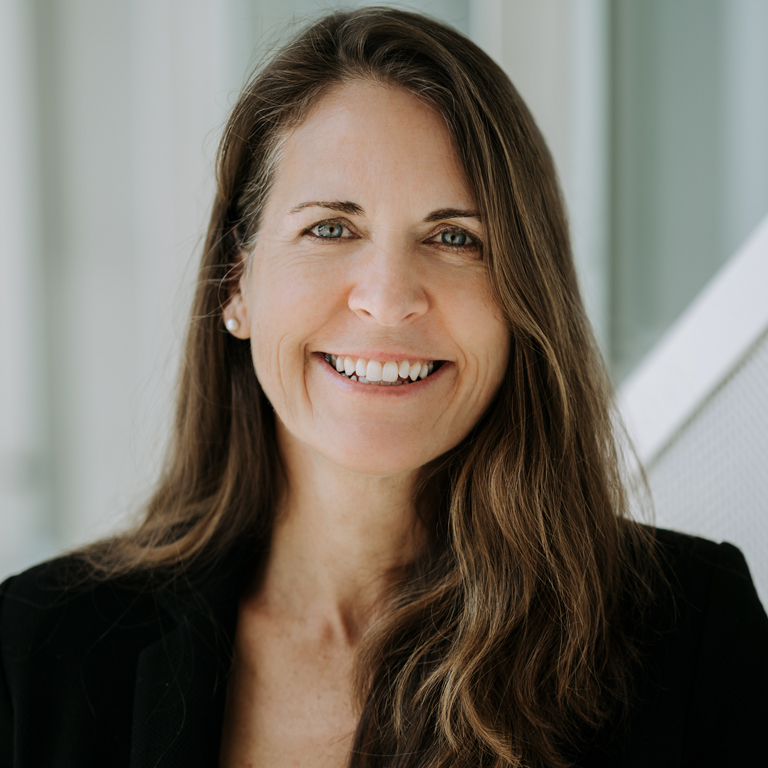
Bei Cui is a Senior Research Fellow at the Monash Centre for Financial Studies Impact Labs (Monash University). She holds a PhD in Finance from the University of Hong Kong. Her research focuses on sustainable investment, climate change, modern slavery disclosures, and capital markets dynamics. Cui has led or contributed to four major research projects including the 'Research Consolidation of the Superannuation Industry' and 'Australian Energy Regulator (AER) data series review'. She was awarded the 2023 Dean's Award for Research Engagement and Impact. Education: Doctor of Philosophy (Finance), University of Hong Kong (2019). Key collaborations include work with the CFA Institute and multiple industry stakeholders. Cui's research bridges academic rigor with practical industry insights, addressing topics such as carbon pricing mechanisms, superannuation fund strategies, and corporate sustainability reporting. Recent activities include keynote speaking at the 15th Research Symposium for Chinese PhD Students and peer review for the Journal of Economic Behavior and Organization. Media engagements include contributions to articles on superannuation dilemmas and carbon pricing challenges.
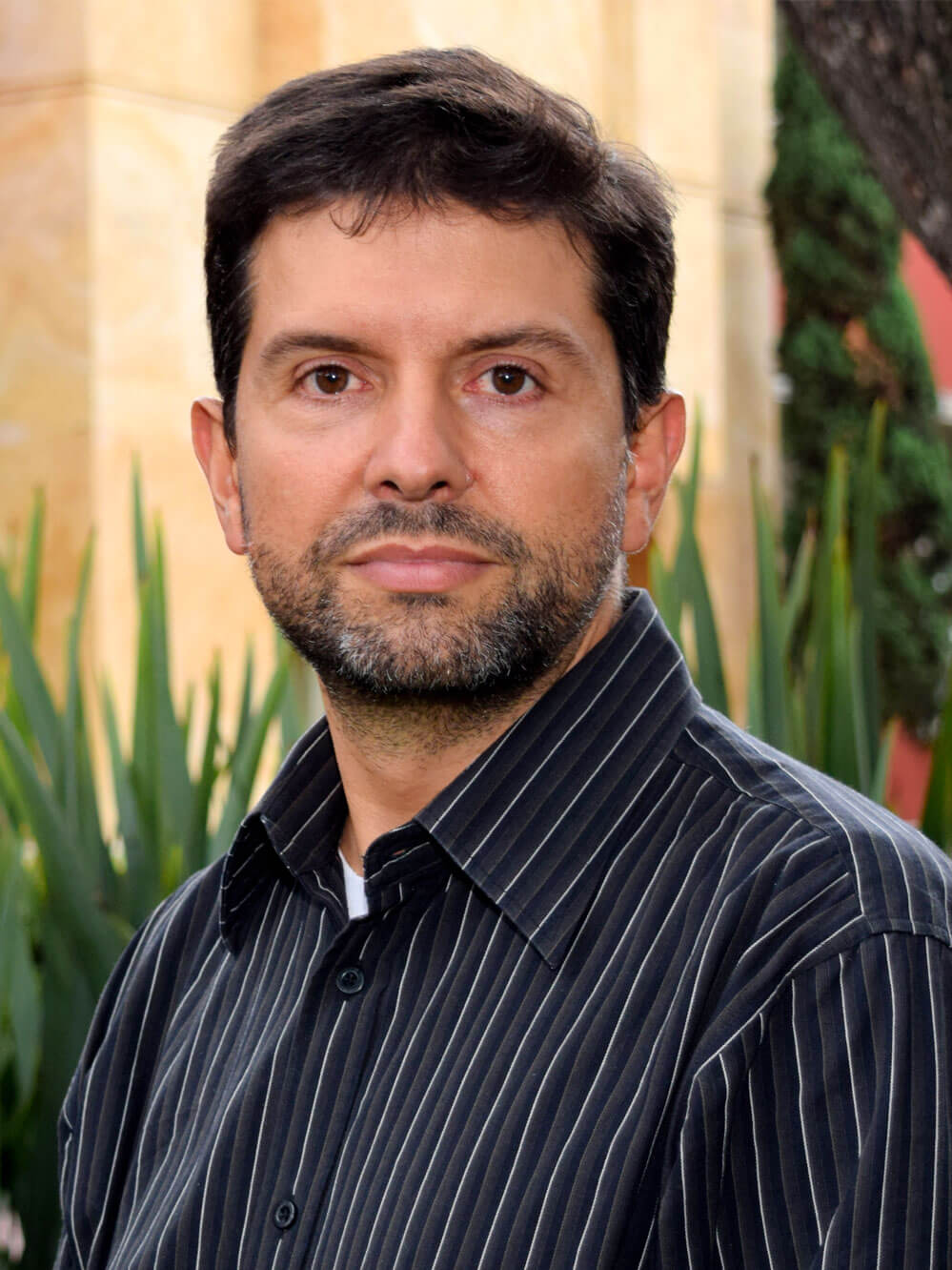
Aurelio Vásquez is an Associate Professor in Finance at ITAM's Business Academic Division within the Administration Department. He holds a PhD in Finance from McGill University, a Master's in Financial Mathematics from the University of Toronto, and a Bachelor's in Industrial Engineering from the University of the Andes, Colombia. His research focuses on risk management, derivatives valuation, and empirical asset pricing. He has published extensively in top journals including the Journal of Financial Economics , Journal of Finance , and Management Science , exploring topics like volatility term structures, default risk, and market anomalies in emerging economies. Key publications include Non-Standard Errors (2024), analyzing multinational research collaborations, and Default Risk and Option Returns (2023), examining credit risk's impact on derivatives pricing. He organizes the annual ITAM Finance Conference and contributes to policy debates on market efficiency. His work bridges theoretical finance with empirical applications, addressing critical issues in global financial markets. Despite no explicitly listed awards, his prolific publication record underscores his scholarly impact.
Cristián Bravo Roman is Professor and Canada Research Chair in Banking and Insurance Analytics at Western University's Department of Statistical and Actuarial Sciences. He holds a Ph.D. from the University of Chile (2013) and leads research on financial analytics, machine learning applications in banking, and risk modeling. His work develops AI-driven approaches for credit scoring, risk assessment, and financial decision-making. Recent publications explore reinforcement learning for credit limit optimization, fuzzy entropy methods for portfolio selection, and transformer models for corporate default prediction. Bravo supervises multiple graduate students in financial analytics and machine learning applications. He has received the Canada Research Chair award (Tier 2) and multiple NSERC grants. Bravo's industry collaborations focus on implementing research insights in banking and insurance sectors through the NSERC Alliance Grant.
Geneviève Gauthier is a Full Professor in the Department of Decision Sciences at HEC Montréal, a leading business school in Canada. She holds a Ph.D. in Mathematics from Carleton University and an M.Sc. in Mathematics from UQAM. As a member of the Study and Research Group on Decision Analysis (GERAD) and a researcher at the Interuniversity Center for Research in Organizational Analysis (CIRANO), she bridges academic research with practical applications in quantitative finance. Her educational background includes: Ph.D. in Mathematics, Carleton University, Ottawa M.Sc. in Mathematics, Université du Québec à Montréal (UQAM) Professor Gauthier specializes in financial engineering with expertise spanning stochastic calculus, probability and statistics, mathematical modeling, pricing, risk management, and credit risk. Her research focuses on developing advanced mathematical models for financial markets, with particular emphasis on option pricing, volatility modeling, and credit risk analysis. She integrates machine learning techniques with traditional quantitative methods to address complex financial problems, contributing significantly to both academic literature and industry practice. Her recent publications demonstrate a strong trend toward integrating deep learning with traditional quantitative finance methods, particularly in hedging strategies and volatility surface modeling. She has made significant contributions to understanding the informational content of high-frequency option data and developing semi-closed-form solutions for complex derivatives. Her work spans energy markets, credit risk modeling, and the intersection of machine learning with traditional financial engineering approaches. Professor Gauthier has received numerous prestigious awards recognizing her contributions to finance and statistics: The Canadian Derivatives Institute CDI Conference Best Discussion Award (2022) Research Professorship in Financial Engineering at HEC Montréal (2019-2028) SSC Award for Impact of Applied and Collaborative Work (2018) Best Paper Award on Derivatives from the Northern Finance Association (2017) Best paper award in the Accounting and Finance section at the World Business and Economics Research Conference (2012) As an academic advisor, Professor Gauthier has supervised 69 students throughout her career, including 2 PhD candidates, 10 Master's theses, and 7 supervised projects in the last five years alone. Her PhD students have worked on advanced topics like multivariate stochastic volatility models and extreme events in financial markets, while her Master's students have explored areas ranging from VIX option pricing to electricity price forecasting. She teaches graduate courses in numerical methods, stochastic calculus, and machine learning applied to financial data. Professor Gauthier is actively involved with research groups including GERAD (Group for Research on Decision Analysis) and CIRANO (Centre for Interuniversity Research and Analysis on Organizations), where she collaborates with interdisciplinary teams to advance quantitative methods in finance and risk management. Her work often bridges theoretical developments with practical applications in the financial industry.
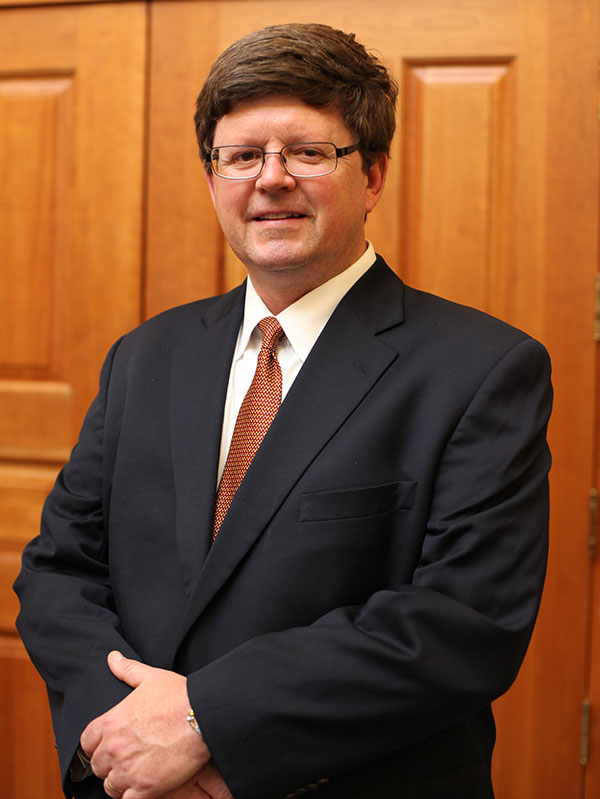
Christian A. Johnson is a Commonwealth Professor of Business Advising and Director of the Business Advising Program at Widener University Commonwealth Law School. He previously served as the inaugural Dean of the Law School (2015–2020) and held the Hugh B. Brown Presidential Endowed Chair at the University of Utah College of Law. His career includes roles as Associate Dean for Academic Affairs, Professor at Loyola University Chicago School of Law, and legal practice at firms like Milbank Tweed and Mayer Brown. He is a CPA with a background in accounting and tax law. Education B.A. in Accounting, University of Utah (Magna cum laude) Masters of Accounting, University of Utah J.D., Columbia Law School (Harlan Fiske Stone Scholar) Research Interests Professor Johnson specializes in global capital markets, central banking, and financial regulation. His work focuses on OTC derivatives, Dodd-Frank Act implementation, repo markets, and cross-border financial frameworks. He has authored/co-authored five books and over 60 articles, including influential pieces on derivatives documentation, insolvency events, and regulatory harmonization. Professional Contributions Testified before the U.S. Congress on financial regulation Consulted for the Federal Reserve Bank of Chicago Member of boards and committees including the U.S. Army Heritage Center Foundation and the NYC Bar’s Futures and Derivatives Committee Public Engagement He frequently lectures at institutions globally, including the University of Economics (Poland), British University Dubai, and the Irish Central Bank. His media commentary addresses topics like pandemic-era legal challenges and financial crises.
Sami Attaoui is a Full Professor of Finance and Head of the Finance Department at NEOMA Business School. He also serves as the Academic Director of the Global Executive MBA program. Holding a PhD in Management and Finance from the University of Paris Panthéon-Sorbonne, his research focuses on capital structure decisions, green financing, and financial asset valuation. His work bridges theoretical finance with practical corporate finance challenges, emphasizing the interplay between corporate debt structures and environmental economic factors. Key research areas include capital structure optimization, mergers & acquisitions financing, and green bond mechanisms. He has published extensively in top-tier journals such as Financial Management , Journal of Corporate Finance , and Journal of Economic Dynamics and Control . His recent studies explore the fundamentals of Sharpe ratios in commodity markets and the impact of ambiguity aversion on corporate leverage. Dr. Attaoui is an active member of professional organizations, including the Association Française de Finance and the American Finance Association. His academic contributions span theoretical models of debt prioritization, optimal payment methods in acquisitions, and the valuation of performance-sensitive debt instruments. While no specific awards are highlighted, his work has been presented at major international conferences such as the Eastern Finance Association Annual Meeting and the FMA European Conference. His teaching and research integrate real-world financial markets, emphasizing practical applications of financial theories. Current projects continue to explore the intersection of environmental finance, corporate governance, and innovative debt structures. Labs/Teams: Not explicitly mentioned in the provided materials.
Dr. Amirhossein SADOGHI is an Assistant Professor in the Finance and Accounting Department at Rennes School of Business. He holds a Doctor rerum politicarum (Dr. rer. pol.) in Finance from Frankfurt School of Finance and Management, alongside Master’s degrees in Statistics and Data Mining (Linköping University) and Industrial Engineering (Linköping University). His research focuses on Machine Learning applications in Finance, Systemic Risk, Network Analysis, and High-Frequency Trading. He has contributed to interdisciplinary fields such as econometrics, numerical optimization, and text mining. Education: PhD in Finance, Frankfurt School of Finance and Management Master of Statistics and Data Mining, Linköping University Master of Industrial Engineering, Linköping University His work experience includes a Postdoc Fellowship in Stuttgart (2017–2019) and teaching/research roles at Frankfurt School (2012–2017). He is affiliated with SIAM, IMS, and other academic societies. His research articles address topics like optimal liquidation strategies in illiquid markets and systemic risk contagion in payment systems. Collaborations span institutions like the Institute Louis Bachelier and Financial Management Association Europe.
Prof. Anton Gerunov is an Associate Professor in Risk Management and Methods for Public Policy Analysis at the Department of Industrial Economics and Management, Faculty of Economics and Business Administration, Sofia University. He holds a DEconSc and PhD in Economics. His career spans academia, public service (economic advisor to Bulgaria's Council of Ministers), and private-sector consulting in innovation and e-government projects. He transitioned from part-time to full-time faculty roles since 2011, becoming Associate Professor in 2017. Research focuses on risk management frameworks, automated decision systems, and public policy analysis. Key interests include financial risk modeling, behavioral economics, and digital asset risks. He has contributed to international journals like the International Journal of Public Administration and Journal of Economics and Political Economy . Prof. Gerunov chairs the Institute for Data Ethics and Analytics and serves on the Scientific Council of the Centre for Socio-Economic Systems Modelling. His publications reflect interdisciplinary approaches, blending machine learning with economic theory. Notable recent work addresses cryptocurrency risk metrics, Markov switching models for stock returns, and agent-based analysis of socio-economic choices. He has held roles in e-government policy, emphasizing privacy-by-design methodologies and open data implementation. Current projects include socio-economic enablers of e-government in Bulgaria and experimental studies on economic expectations.
İnci Gümüş is an Associate Professor of Economics at Sabanci University, affiliated with the Faculty of Arts and Social Sciences. Her research focuses on macroeconomic dynamics, emerging market economies, credit markets, and real estate economics. She has contributed to understanding credit transmission mechanisms, fiscal policy impacts during crises, and cross-country analyses of housing markets. Her work explores how household and business credit shocks influence sectoral output, the role of real estate in economic policy, and behavioral aspects of decision-making in educational settings. She has published in journals like Economics Letters , Journal of Corporate Finance , and Journal of International Money and Finance . No scientific awards are explicitly listed in the provided information. Details on advising students or grants are not available in the current data.
Nikolaos Karampatsas is an Assistant Professor at the Research Centre for Financial & Corporate Integrity, University of Surrey. He holds a PhD in Management (Finance) from the University of Surrey, an MSc in Finance from Coventry University, and a degree in Marketing from the Alexander Technological Educational Institute of Thessaloniki. His research focuses on corporate finance, credit ratings, mergers and acquisitions, and investor sentiment. He has contributed to numerous peer-reviewed journals and conferences globally. Doctorate: The Effects of Credit Ratings in Mergers and Acquisitions (University of Surrey, 2010–2013) MSc Finance: Coventry University (2007–2008) Marketing Degree: Alexander Technological Educational Institute of Thessaloniki (2003–2007) His research interests span corporate governance, credit risk, sustainable business practices, and quantitative methods. He has presented at leading conferences such as the European Financial Management Association and the American Finance Association. His work has been recognized with awards, including a nomination for the Best Paper Award in Corporate Finance (EFMA 2018) and Top 10% Articles in European Financial Management (2024). Dr. Karampatsas has supervised three PhD students, including Daniel Boos (Swiss Banking Analysis) and Shuhui Wang (Determinants of Inside Debt). He is actively involved in peer reviewing for journals like the Journal of Corporate Finance and European Journal of Finance. His research contributes to the UN Sustainable Development Goals through sustainable business and corporate responsibility studies.
Dr. Yaseen Ghulam is a Senior Lecturer at the University of Portsmouth, affiliated with the School of Accounting, Economics and Finance within the Faculty of Business & Law. His research focuses on financial systems, sovereign debt dynamics, banking reforms, and labour economics. He holds a PhD and actively supervises doctoral students. Education: PhD (details unspecified in text). Research Interests: Dr. Ghulam’s work spans financial appraisal of development projects, household income analysis in developing economies, banking sector reforms, and SME financing challenges. His recent studies emphasize sovereign debt risk, defence spending impacts, and productivity trends in privatized industries. Publications Trends: His 2020–2025 articles highlight critical analyses of sovereign debt feedback mechanisms, SME access to credit during crises, and reforms in emerging markets. Methodologies include survival analysis and comparative institutional studies. Advising: Supervises doctoral research on topics like cement industry privatization and banking sector reforms. No explicit grant details provided in text.
Maria Milagros Vivel Bua is a Professor at the University of Santiago de Compostela, affiliated with the Department of Financial Economy and Accounting and the Faculty of Economic and Business Sciences. She is a member of the Interuniversity Research Center in Economics and Business for Society (ECOBAS) and leads the VALFINAP research group focusing on applied financial valuation. Her PhD (2010) examined exchange risk management in Spanish listed companies under Dr. Luis Otero González and Dr. Sara Fernández López. Research Interests: Her work spans financial risk analysis, ESG performance evaluation, tourism economics, retirement savings strategies, and innovative teaching methods in accounting. She applies machine learning techniques to predict credit defaults in microfinance and analyzes spatial impacts on hotel sector profitability. Teaching Innovation: Implements multimedia tools like video lectures and neural network simulations for auditor training. Her pedagogical research includes one-minute paper feedback systems and group project methodologies. Key Focus Areas: Recent studies investigate ESG ETFs' role in diversified portfolios, Uruguayan microcredit delinquency patterns, and the interplay between innovation and firm growth. She also explores gender dynamics in tourism entrepreneurship and retirement savings behaviors across European countries. Research Collaborations: Active in interdisciplinary projects through ECOBAS, focusing on socio-economic impacts of financial policies and digital transformation in accounting education. Her work bridges theoretical frameworks with real-world applications in banking, tourism, and microfinance sectors.