Sreedhar Bharath is the Richard C. Kraemer Professor of Finance at Arizona State University's W. P. Carey School of Business, where he has been since 2010. He holds a Ph.D. from New York University, an MBA from the Indian Institute of Management Ahmedabad, and a B.Tech. from the Indian Institute of Technology Madras. His research focuses on Corporate Finance, Banking, and Credit Risk, with publications in leading journals like the Journal of Finance and Review of Financial Studies. Notable works include analyses of corporate bond liquidity risk, private equity exits, and creditor recoveries during industry distress. Awards: LECG Best Paper Award (2007), Journal of Financial Economics Best Paper (2007), Crowell Memorial Prize (2012). Teaching: Courses include Risk Management in Banks, AI in Finance, and Corporate Finance. Research Activity: Explores banking relationships, debt structure, and governance impacts on corporate finance decisions.
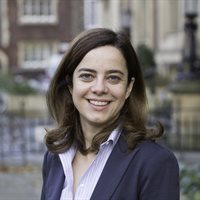
Elisabeth de Fontenay serves as the Karl W. Leo Distinguished Professor of Law at Duke University School of Law, where she researches corporate law and finance with emphasis on less-regulated financial markets. Her work examines the decline of public companies, rise of private capital, and private equity's role in debt markets and corporate governance. She has testified before Congress and presented at the U.S. Securities and Exchange Commission. Education: B.A. in Economics, summa cum laude and Phi Beta Kappa, Princeton University (two-time All-American rugby player) J.D., magna cum laude, Harvard Law School Professor de Fontenay's research bridges corporate law, finance, and regulatory frameworks, focusing on market behavior in unregulated spaces. Her scholarship analyzes contractual complexity in debt agreements, value creation by transactional lawyers, and the public/private market equilibrium. She employs interdisciplinary methods combining legal doctrine with financial market analysis to address evolving regulatory challenges. Her recent publications (2023-2025) reveal a concentrated focus on private market dynamics, debt market regulation, and governance structures in non-public entities. Key trends include examining regulatory arbitrage between public and private markets, contractual innovations in private equity, and judicial responses to complex debt disputes. Her work increasingly addresses systemic implications of declining public listings and the expansion of private capital. Professional Affiliations: Member, American Law Institute (ALI) Associate Reporter, ALI’s Restatement of the Law of Corporate Governance Research Member, European Corporate Governance Institute (ECGI) Board of Directors, American Law and Economics Association Prior to academia, Professor de Fontenay practiced corporate law at Ropes & Gray specializing in mergers and acquisitions, debt financing, and private investment funds. She maintains active engagement with policymakers through congressional testimony and SEC presentations, translating academic research into practical regulatory insights while teaching courses including Business Associations, Corporate Finance, and Private Equity and Hedge Funds.
Xiaoping Lu is an Associate Professor at the School of Mathematics and Applied Statistics, University of Wollongong, Australia. She has served as Academic Program Director for the Bachelor of Mathematics (Advanced) program since 2008 and holds an ORCID identifier (0000-0003-1090-8437). Her research focuses on applied mathematics and financial mathematics, particularly in option pricing, stochastic volatility models, and computational finance. Research Themes: Transaction cost modeling, regime-switching financial markets, numerical methods for PDEs, utility-indifference valuation, and stochastic optimization algorithms. Awards: 2024 AustMS-WIMSIG Anne Penfold Street Award 2024 Cheryl E. Praeger Travel Award Leadership: President of the Asia Pacific Consortium of Mathematics for Industry (APCMfI) since 2024; leadership roles in ANZIAM and WIMSIG committees. Teaching: Coordinated courses like MATH142, MATH141, and MATH283; currently available for PhD supervision in topics including financial derivatives and stochastic liquidity risk. Funding: Contributed to grants like 'The AI Tutor' (2024) and industry partnerships for advanced mathematics education.
Zhijian Huang is an Associate Professor in the Department of Finance and Accounting at Saunders College of Business, Rochester Institute of Technology, with expertise in corporate finance, behavioral finance, and risk management. Education: B.Eng., Shanghai Jiaotong University (China) M.S., Michigan State University M.Eng., Cornell University Ph.D., Pennsylvania State University His research focuses on financial markets, cognitive dissonance in investor behavior, cryptocurrency volatility, and climate policy impacts on stock prices. Recent publications explore asymmetric responses to earnings news, social media sentiment effects, and credit risk modeling. Huang teaches courses in equity analysis, options/futures, and risk management, with a strong emphasis on derivative instruments and portfolio optimization strategies.
Roine Vestman is a Professor of Economics at Stockholm University and a visiting researcher at the Swedish House of Finance. He serves as the director for CeMoF and is a Research Fellow at CEPR. Additionally, he holds significant advisory positions including board member at AP7 (Sjunde AP-fonden), scientific advisor to the Swedish Debt Office (Riksgälden), and has previously advised the Swedish FSA (Finansinspektionen) and government inquiries on macroprudential policy. Vestman's educational background includes: Ph.D. in Economics from New York University, USA M.Sc. degree from Stockholm School of Economics Professor Vestman's research focuses on household finance, examining how individuals make consumption, savings, and housing decisions and how these choices impact the broader economy. His work specifically investigates pension plan design, the functioning of mutual fund industries, and household debt dynamics. His research combines theoretical models with empirical analysis of detailed Swedish data to provide insights into financial behavior and policy implications. Vestman has made significant contributions to understanding how default options in pension systems can be optimized to improve outcomes for passive investors. His recent publications demonstrate a strong focus on household financial decision-making, with particular attention to pension systems, housing markets, and investment behavior. Vestman's work often employs sophisticated empirical methods using detailed administrative data from Sweden, allowing for nuanced analysis of household financial behavior. A recurring theme across his publications is the examination of how financial institutions and policies affect individual economic outcomes, with implications for designing better financial products and regulatory frameworks. Through his advisory roles at AP7, the Swedish Debt Office, and previous engagements with Sveriges Riksbank and Finansinspektionen, Vestman actively translates his research into practical policy recommendations. His work on default pension fund allocation has particularly influenced discussions about how to improve retirement savings systems through personalized approaches that consider individual financial circumstances beyond just age.
Maria Correia is a faculty member in the Department of Accounting at the London School of Economics and Political Science, where she teaches AC416 Topics in Financial Reporting and maintains office hours by appointment. Her research focuses on credit markets, default prediction, business groups, and corporate governance, with publications in leading accounting and finance journals. Her research examines: Credit risk assessment methodologies and bankruptcy prediction models Corporate governance structures within business groups Impact of accounting standards on corporate investment decisions Regulatory effects on disclosure credibility in emerging financial platforms Dr. Correia's recent publications demonstrate a consistent focus on financial distress prediction, corporate governance mechanisms, and regulatory impacts in accounting. Her work combines empirical finance with accounting theory to address practical challenges in credit markets and corporate reporting. She has received numerous honors including: 2022 Excellence in Refereeing Award (Journal of Accounting Research) 2020 Best Referee Award (Review of Accounting Studies) LSE Excellence in Education Awards (2018, 2019) Best Paper Award at Review of Accounting Studies Conference (2011) Multiple doctoral fellowships at Stanford Graduate School of Business Her research has been supported by grants from London Business School (RAMD Awards 2009-2013, 2013-2015) and the Portuguese Foundation for Science and Technology (2013). She serves on editorial boards of Accounting Review, Journal of Business Finance & Accounting, and Review of Accounting Studies, while acting as Associate Editor for Accounting and Business Research and European Accounting Review.
Marielle De Jong is an Associate Professor at Grenoble Ecole de Management, serving as the Academic Director of the USA DBA program. Her expertise spans portfolio management, fixed income, and sustainable investing, with a focus on bond portfolio construction and liquidity scoring. MSc in Econometrics from Erasmus University of Rotterdam MSc in Operational Research from Cambridge University PhD in Finance from the University of Aix-Marseille Defended HDR in 2022 Her research integrates quantitative finance with sustainability, addressing topics like ESG investing, derivatives in asset management, and risk modeling. She has extensive industry experience in investment management, notably with HSBC Sinopia and Amundi, where she led fixed-income quant research teams. Marielle's publications highlight trends in bond risk assessment, CDS applications, and green finance. She is Editor-in-Chief of the Journal of Asset Management, emphasizing rigorous quantitative methodologies and sustainable investment frameworks.
Vesa Pursiainen is an Associate Professor at the School of Business and Economics , University of St. Gallen (SBF-HSG). His research focuses on corporate finance, fintech, environmental economics, crowdfunding, and behavioral finance, with a particular emphasis on how technology, social dynamics, and crises impact financial decisions and market behavior.
Professor Stavros A. Zenios is a Professor of Operations Management and Finance at the University of Cyprus on sabbatical leave, affiliated with Durham University (stavros.zenios@durham.ac.uk). He serves as a Member of the National Academy of Sciences, Letters, and Arts of Cyprus, and a Non-resident Fellow of Bruegel in Brussels. His academic leadership roles include Rector of the University of Cyprus (two terms), first Dean of the School of Economics and Management, and President of UNICA-Universities of the European Capitals. He has held governmental advisory roles, including Vice-Chairman of the Cyprus Council of Economic Advisors and Board Member of the Central Bank of Cyprus. Zenios’ research focuses on risk management, financial engineering, and sovereign debt sustainability, particularly integrating climate change impacts and political risk. His work spans 130+ peer-reviewed articles and three influential books, including Practical Financial Optimization and Performance of Financial Institutions . He received the EURO Excellence in Practice Award and INFORMS Computing Prize, alongside two Marie Sklodowska-Curie Fellowships. His consulting engagements include the World Bank, European Stability Mechanism, Union Bank of Switzerland, and governments like Finland’s Ministry of Finance. Recent research emphasizes green bonds, GDP-linked debt instruments, and the climate-sovereign debt nexus. He advocates for financial education spillover effects and robust optimization frameworks under ambiguity.
Frédéric Vrins is a Professor at the Louvain School of Management (LSM) , UCLouvain , affiliated with the Louvain Institute of Data Analysis and Modeling in economics and statistics (LIDAM) and Louvain Finance (LFIN). His work bridges theoretical and applied finance, with a focus on risk modeling, portfolio optimization, and machine learning applications. His research interests include: Quantitative Finance: Derivatives pricing, stochastic processes, and model calibration. Risk Management: Credit concentration risk, recovery rates, and wrong-way risk in financial markets. Portfolio Optimization: Mean-variance strategies, diversification metrics, and robustness under parameter uncertainty. Machine Learning in Finance: Applications to recovery rate prediction and option pricing frameworks. Recent publications highlight trends in: Credit risk modeling for Collateralized Loan Obligations (CLOs) and consumer credit. Machine learning integration in derivatives pricing and portfolio construction. Stochastic methods for Brownian bridges, CDS spreads, and recovery rates. Empirical studies on Loan-to-Value policies and business cycle impacts. Affiliations and locations: Louvain School of Management (LSM) - Building B, Chaussée de Binche 151, 7000 Mons Louvain Finance (LFIN) - Traverse d'Esope 1, 1348 Louvain-la-Neuve Louvain School of Management (LSM) - BATA Building, Chaussée de Binche 151, 7000 Mons
Professor Rodrigo Olivares-Caminal is a leading academic in Banking and Finance Law at Queen Mary University of London's Centre for Commercial Law Studies (CCLS). He holds an LLB from Buenos Aires, an LLM from Warwick, and a PhD from London. His roles include Editor-in-Chief of the Business Law Review and advisory roles at UNCTAD, World Bank/IFC, and international law firms. His expertise focuses on international finance, insolvency law, cross-border litigation, and sovereign debt restructuring. Education: LLB (Buenos Aires) LLM (University of Warwick) PhD (London) Research Interests: Specializes in sovereign debt crises, cross-border insolvency frameworks, and legal aspects of financial crises. His work bridges law, economics, and public policy, addressing systemic risk, creditor equality, and the design of sustainable debt management frameworks. He advocates for improved transparency in sovereign lending and equitable restructuring mechanisms. Professional Contributions: Authored/edited 7 books and over 100 peer-reviewed articles/chapters. Key works include *Debt Restructuring* (OUP), *Expedited Corporate Debt Restructuring in the EU*, and *Legal Aspects of Sovereign Debt Restructuring*. Serves on editorial boards of major law journals and advises international institutions on financial regulation and crisis containment. Grants & Awards: No specific awards mentioned, but recognized internationally for contributions to insolvency law and sovereign debt policy. Has received honors from Saudi Arabia’s Bankruptcy Commission and participation in high-level policy dialogues (e.g., UNCTAD, IMF). Teaching & Mentorship: Leads postgraduate courses on Corporate Finance Law, Sovereign Debt Restructuring, and Bank Resolution. Teaches globally at institutions in Spain, Italy, Greece, France, China, and Argentina. Active in professional training programs across Africa, Asia, Middle East, and Europe. Labs/Teams: Core member of Queen Mary’s Insolvency & Governance Research Group. Collaborates with global networks like the International Insolvency Institute and the European Banking Authority. Leads interdisciplinary projects on sovereign debt frameworks and cross-border financial stability.
Shiang Liu is an Associate Professor of Finance at the University of Wisconsin-La Crosse. His research focuses on Empirical Corporate Finance, Bank Mortgage, FinTech, Real Estate Finance, and Corporate Strategy. He holds a PhD in Finance from the University of North Texas, an MA in Economics from Clemson University, an MS in Financial Engineering from Rensselaer Polytechnic Institute, and a BS in Economics from Zhejiang Gongshang University. His recent work explores topics such as cryptocurrency ETFs, FinTech lenders' impact on mortgage markets, CEO decision-making in FinTech adoption, and the interplay between corporate cash holdings and institutional investors' site visits. He is an Associate Editor of Economic Analysis and Policy and teaches courses like FIN 360 (Principles of Insurance and Risk Management) and FIN 370 (Corporate Finance). Key research areas include analyzing the real effects of financial instruments (e.g., CDS trading), geographic diversification strategies, and the macroeconomic implications of bank mortgage lending behaviors. His articles span journals such as Finance Research Letters , Journal of Financial Services Research , and Journal of Real Estate Finance and Economics .
David Saunders is an Associate Professor in the Department of Statistics and Actuarial Science at the University of Waterloo, affiliated with the David R. Cheriton School of Computer Science. His research focuses on quantitative risk management, mathematical finance, and stochastic optimization with applications to credit risk, portfolio optimization, and derivatives pricing. Professor Saunders has held academic positions at the University of Pittsburgh and Cyprus International Institute of Management, and has consulted for institutions like RiskMetrics, TD Bank, and Central Bank of Cyprus. Education: PhD studies at the University of Toronto with industry collaboration at Algorithmics Inc., followed by roles at Cyprus International Institute of Management and University of Cyprus's HERMES Center. His work bridges theoretical stochastic analysis and practical financial risk management challenges. Research interests prominently feature credit risk management, optimal stopping problems, and analytical techniques in finance. Recent work addresses inverse default boundary problems, wrong-way risk in derivatives, and efficient algorithms for portfolio optimization under complex return distributions. Collaborations with financial institutions drive applied research in capital allocation, operational risk modeling, and regulatory compliance. Advising and grants include directing the Professional Science Master's in Mathematical Finance at Pitt, supervising student-industry projects on credit risk and CDO pricing, and securing funding for computational finance initiatives. Active in RiskLab Cyprus and HERMES European Center, his research extends to equity risk management and market risk frameworks.
Stefano Caselli is a Full Professor of Banking and Finance at Bocconi University and holds the Algebris Chair in Long-Term Investment and Absolute Return. He serves as the Dean of the SDA Bocconi School of Management and previously served as Vice Rector for International Affairs at Bocconi University (2012–2022). He has been a member of the SDA Bocconi School of Management board since 2006. His academic career includes teaching roles in the MSc in Finance, MSc in International Management, and CEMS programs, focusing on courses such as Investment Banking, International Finance, and Private Equity & Venture Capital. His research explores the interplay between financial systems and industrial sectors, emphasizing banking regulation, corporate finance, private equity, and venture capital. Education: MSc in Business Administration from the University of Genoa and a Ph.D. in Financial Markets and Institutions from the University of Siena. Research Interests: Caselli’s work spans financial stability, banking structure, corporate finance, and the role of venture capital in innovation. He has published extensively in journals like Journal of Financial Intermediation and Journal of Financial Stability , and authored textbooks such as Corporate and Investment Banking: A Hands-On Approach and Private Equity and Venture Capital in Europe . Labs and Initiatives: Co-founded the “Equita Research Lab in Capital Markets” (2013) and the “Algorand Fintech Lab” (2021) at Bocconi’s Baffi-Carefin Research Center. These labs focus on financial market dynamics and fintech innovations.
Jeffrey R. Brown is the Josef and Margot Lakonishok Professor of Business and Dean of the Gies College of Business at the University of Illinois at Urbana-Champaign. He also serves as Director of the National Bureau of Economic Research (NBER) Retirement Research Center and previously led the Center for Business and Public Policy. His expertise spans macroeconomics, finance, and political economy, with a focus on retirement security, public insurance markets, and policy design. Education: Brown holds a PhD in Economics from MIT (1999), an M.P.P. from Harvard (1995), and B.A. degrees in Economics and Political Science from Miami University (1990). He has held roles at the White House Council of Economic Advisers, the Social Security Advisory Board, and as a consultant to federal agencies and financial firms. Research Interests: His work examines the intersection of public and private insurance markets, particularly retirement-related topics like annuities, pensions, Social Security, and long-term care. He explores behavioral economics barriers to optimal retirement planning and the impact of tax policies on savings behavior. Publications: Brown’s recent work analyzes trends in retirement income strategies, political connections and firm value, and the effects of policy interventions on consumer decisions. His articles appear in leading journals such as the Review of Economics and Statistics and Journal of Financial Economics . Awards: He has received prestigious honors including the Paul A. Samuelson Award and Lumina Award. His leadership roles include trustee positions at TIAA and advisory roles at the Brookings Institution’s Tax Policy Center. Administration & Governance: As Dean, Brown oversees strategic initiatives and academic programs. He also chairs the TIAA Audit Committee and contributes to policy discussions through roles at the Center for Audit Quality and UI Singapore Research LLC.