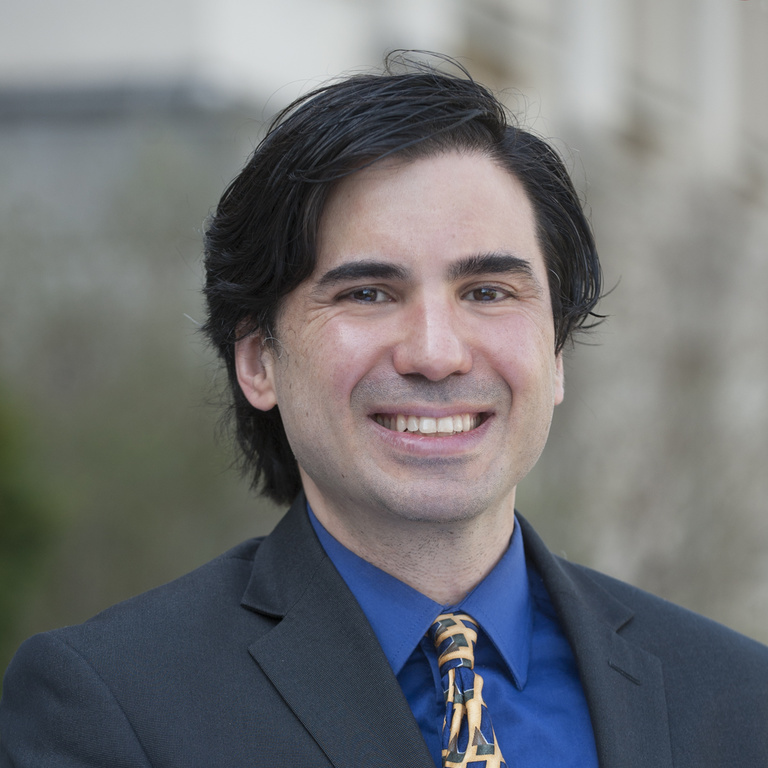
Matthew Kay is an Associate Professor in the Department of Communication Studies at Northwestern University's School of Communication, with a secondary appointment in Computer Science. He serves as Co-Director of Graduate Studies for the PhD in Technology and Social Behavior program. His research focuses on human-computer interaction and information visualization, specializing in uncertainty communication, usable statistics, and personal informatics. He employs mixed-method approaches including behavioral analysis, interactive system development, and visualization technique evaluation to address real-world data interpretation challenges. Analysis of his recent publications reveals dominant themes in visualization literacy development, uncertainty representation for decision-making, and health informatics applications. His work consistently bridges theoretical frameworks with practical implementations, particularly in educational assessment tools and election forecast visualizations. Professor Kay co-directs the Midwest Uncertainty Collective (MU collective), a research group advancing uncertainty communication methodologies. Previously faculty at the University of Michigan School of Information, he maintains active contributions to visualization tool development including the ggdist R package for uncertainty visualization.
Dr. Christopher T. Trigani is a Professor of Psychology at Georgian Court University (GCU), affiliated with the School of Arts, Sciences, and Education and the Department of Psychology and Counseling. He holds a B.A. (1985) from GCU, M.S. (1987) and Ph.D. (1991) in Educational Psychology from Fordham University, and postdoctoral coursework for a School Supervision Certificate (2015). Research Focus: Creativity, problem-solving, ADHD in youth, autism spectrum disorders, and educational psychology. Professional Experience: 35+ years teaching at undergraduate, master’s, and doctoral levels (School Psychology/Psy.D); 33 years as a school psychologist in NJ public schools; 25+ years in private practice; and Medical Staff membership at Hackensack Meridian Health. Leadership & Service: Associate Chair of Psychology (2015–2018), former Chair of Faculty Assembly (1997), and ethics committee member for NJASP. He has provided expert testimony in special education litigation and led evaluations for the NJ Commission for the Blind and Visually Impaired. Awards: Recipient of the GCU McCallion Award (2011). Certifications: NJ School Psychologist (1987), Licensed Psychologist (1995), School Supervisor (2015), and Autism Diagnostic Observation Schedule (ADOS) Certification (2003).
Lappeenranta-Lahti University of Technology LUTFinland
Sami Sykkö serves as a Professor of Practice at LUT University's School of Economics, where his working life professorship (1.9.2022–31.12.2025) focuses on bridging academic theory with practical business applications. Funded by OP cooperative banks with 140,000 euros, his position emphasizes responsible business practices and evolving consumer behavior trends. Sykkö holds a Master's in International Marketing from the University of Vaasa (1996) with additional studies at Parsons School of Design in New York. His educational background combines economics with design sensibility, creating a unique interdisciplinary perspective. As he states: 'Clothing is more responsible the longer and more often it is used' , reflecting his philosophy on sustainable consumption. His research centers on what he calls 'a megatrend that's hard to imagine being more interesting' - responsibility in business and consumption. Sykkö examines how consumer patterns are shifting, where customer flows are heading next, and how needs, habits, and desires are changing. He emphasizes that 'not only trade but also the life of all humanity is at stake' in these discussions. Through his Taloustango podcast series, Sykkö analyzes economic trends by bringing together university experts and business representatives to discuss greenwashing, sustainable consumption, and design's future. His approach favors real-world examples over theoretical lessons, drawing from his extensive professional network. Professional Recognition Nominated for Presenter of the Year (2018) Widely praised for hosting skills: 'The highest quality hosting I've ever experienced,' 'A master of situational awareness' Academic Engagement Sykkö plans to host 'Professor Sykkö's Question Hour' with Finnish business leaders and aims to become 'Finland's first TikTok professor' to reach younger audiences. His co-hosted 'Sami & Jorma' podcast (42,497 followers) demonstrates his ability to connect academic concepts with cultural discussions on fashion, design, and travel. Professional Activities Beyond academia, Sykkö has interviewed three Finnish presidents, Karl Lagerfeld, and Jane Fonda. He has reported on major global events including the London terrorist attack and Paris Fashion Week. His editorial work includes revamping Gloria magazine and editing publications for the Didrichsen Art Museum.
Ronny Scherer is Center Director and Professor at CEMO (Center for Educational Measurement) and Deputy Director at CREATE (Center for Research on Equality in Education) at the University of Oslo's Faculty of Educational Sciences. His work bridges educational measurement, assessment, and evaluation with a focus on research syntheses and complex sampling surveys. Dr. Scherer's research spans two interconnected domains: substantive areas including digital divides, equity and equality in education, and measurement of complex cognitive skills (such as complex problem solving, adaptability, computational thinking, and executive functioning); and methodological areas focusing on advanced meta-analytic techniques, multilevel structural equation modeling, and spatial analysis of complex survey data. His work frequently utilizes international large-scale assessment data from PISA, ICILS, TIMSS, PIRLS, PIAAC, and TALIS. His publication record demonstrates a clear trajectory toward increasingly sophisticated meta-analytic approaches, with recent work focusing on second-order meta-analyses, AI-assisted screening methods, and advanced techniques for handling complex survey data. His research consistently addresses critical educational challenges related to equity, digital literacy, and measurement of 21st century skills. Dr. Scherer has secured significant research funding for projects including ARISE (Academic resilience in mathematics and science among vulnerable students), DiDiRes (Digital inequalities in education), and ADAPT21 (Educational assessments of the 21st century: Measuring and understanding students' adaptability in complex problem solving situations). Co-director of CREATE (Centre for Research on Equality in Education) since 2023 Professor of Educational Assessment and Measurement at CEMO since 2019 Extensive experience with international large-scale assessments including ICILS, TALIS, and PIAAC As an educator, Dr. Scherer teaches advanced courses in measurement models, multilevel models, meta-analysis, and equity in education. He actively supervises graduate students interested in his research areas and has developed numerous workshops on structural equation modeling and meta-analytic methods for international audiences.
Prof. Dr. Marc de Vries is a Full Professor in the Department of Values, Technology and Innovation at Delft University of Technology (TU Delft), Faculty of Technology, Policy and Management. He also holds affiliate professorships at Eindhoven University of Technology and KTH Royal Institute of Technology, Stockholm. His academic journey began with an M.Sc. in Physics from the Free University Amsterdam (1982) and a Ph.D. in Science Education from Eindhoven University of Technology (1988). M.Sc. in Physics, Free University Amsterdam (1982) Ph.D. in Science Education, Eindhoven University of Technology (1988) His research focuses on the philosophy and ethics of technology , with particular interests in epistemology of technology, ethics of nanotechnology, and utopian thinking in technological development. He is a leading figure in technology and science education , especially in design-based learning, argumentation in science, and values in engineering. His work bridges philosophy, pedagogy, and practical engineering education. His recent publications reflect a strong trend in design education, spatial thinking in children, argumentation in physics, and biomimicry . These works emphasize student-centered learning, cognitive development, and the integration of ethical and philosophical reflection into science and engineering curricula. His editorial role in key journals and co-authorship of foundational textbooks like Philosophy of Technology: An Introduction for Technology and Business Students underscores his influence in the field. While no specific scientific awards are listed, his extensive publication record and leadership roles indicate significant scholarly recognition. Prof. de Vries has supervised numerous students and researchers, though specific names are not listed. He has led major research initiatives in technology education and contributed to national and international curriculum development. His work is supported by academic and educational institutions, and he actively collaborates with scholars across Europe. He is affiliated with the Section Ethics/Philosophy of Technology within his department and has been instrumental in shaping philosophy of technology courses at both bachelor's and master's levels. His research group focuses on values in technological development, design pedagogy, and the integration of philosophical reflection in engineering education.
Darko Etinger is an Associate Professor and currently serves as the Dean of the Faculty of Informatics at Juraj Dobrila University of Pula in Croatia. His academic career spans over two decades with significant contributions to the fields of information systems, educational technology, and artificial intelligence. He teaches undergraduate courses including Artificial Intelligence, Business Information Systems, Business Process Management, ICT Fundamentals, Information Systems, Introduction to Artificial Intelligence, and Multimedia Systems. At the graduate level, he teaches Development of IT Solutions, IT Management, Modelling and Simulation, and Project Management. He also supervises doctoral research in Management of Information Technologies in Education. Dr. Etinger's research interests span several key areas in computer science and education technology. He has made significant contributions to understanding how information and communication technologies can support children with special educational needs, as evidenced by his 2024 and 2025 books on the topic. His work also focuses on business process management, educational data mining, and the application of artificial intelligence in educational contexts. His 2024 book 'Introduction to R and RStudio' demonstrates his commitment to data science education. Analysis of his recent publications shows a strong focus on practical applications of technology in education and business. His work spans educational robotics, learning management systems analysis, business process modeling, and the application of large language models in healthcare. He has a particular interest in how technology can be made accessible and beneficial for diverse learner populations, including those with special needs. His research often takes a human-centered approach, examining not just the technology itself but how it's adopted and used by end users. His 2025 bibliometric analysis of metaverse security demonstrates his ability to tackle emerging technological challenges. Associate Professor at Faculty of Informatics, Juraj Dobrila University of Pula Current Dean of Faculty of Informatics Author of multiple publications on educational technology and information systems Supervisor for numerous graduate theses on educational technology topics Active participant in EDIH Adria project as evidenced by 2025 publications Researcher in educational robotics implementation in Croatian schools Dr. Etinger has advised numerous students completing their theses, with a focus on educational technology applications. His research has been published in various international conferences and journals including IEEE Engineering Management Review, Procedia Computer Science, and System Dynamics Review. His current research appears to be heavily focused on the EDIH Adria project, which is a European Digital Innovation Hub initiative focusing on technology transfer and business innovation. He maintains an active research program with publications spanning from 2003 to the present, demonstrating sustained scholarly contribution to his fields of expertise.
Prof. Frida Ben-Ami is a faculty member at Tel Aviv University, affiliated with the George S. Wise Faculty of Life Sciences and the School of Zoology. She maintains an active research laboratory focusing on host-parasite interactions and the ecological impacts of climate change. Her research combines ecology and evolutionary biology to examine how global warming and extreme weather conditions affect disease spread and host-parasite dynamics. Her work primarily uses model systems including Daphnia -microparasites (bacteria and microsporidia), crustaceans, rotifers, and freshwater snails. She investigates how infection by multiple parasite strains affects virulence evolution, environmental and epigenetic effects on host immunity, and the relationship between sexual reproduction and parasite presence through field work, laboratory experiments, and molecular methods. Prof. Ben-Ami's laboratory is currently recruiting researchers at all levels to study parasite adaptation to extreme climate conditions, requiring creative thinking, potential background in evolutionary biology or ecology, analytical skills, and strong English communication abilities. Her laboratory is located in Sherman 304 at Tel Aviv University, with contact available through email frida@tauex.tau.ac.il and office/lab phone numbers +972-(0)3-6406080 and +972-(0)3-6405347 respectively.
Juan Pablo Hourcade is a Professor at the University of Iowa's Department of Computer Science and serves as Director of Graduate Studies for the Interdisciplinary Graduate Program in Informatics. His research focuses on Human-Computer Interaction, particularly the design, implementation, and evaluation of technologies that enhance creativity, collaboration, well-being, and information access for diverse users, including children and older adults. His work addresses critical areas such as ethical considerations in emerging technologies for children, health informatics for rare diseases, and the integration of robotics in early education. Key projects include Robotito for computational thinking and StoryCarnival for social play. He emphasizes participatory design methods and frameworks like the 4Cs (Create, Connect, Communicate, Control) to guide child-centered technology development. Recent publications highlight his efforts in democratizing technology ethics, developing voice agents for inclusive play, and advancing educational robotics. He also contributes to systematic reviews of technologies teaching computational thinking and co-designing with mixed-ability groups for inclusive education.
Paul Shaw is a Professor of Neuroscience in the Department of Neuroscience at Washington University School of Medicine. He leads the Shaw Lab, which focuses on understanding the fundamental mechanisms of sleep and its relationship to cognitive function and neurological disorders using Drosophila melanogaster as a model organism. Dr. Shaw's research has demonstrated that enhancing sleep can fully restore cognitive functioning in various memory mutants and even reverse cognitive deficits in models of Alzheimer's disease. His work suggests sleep plays a vital role in neuronal plasticity beyond simple memory consolidation, including improving creative thinking and problem-solving abilities. Dr. Shaw's educational background includes a BA in Psychology & Criminal Justice from Niagara University (1985), an MA in Psychology from San Jose State University (1990), and a PhD in Biopsychology from the University of Chicago (1996). His recent research has focused on the molecular mechanisms that allow sleep to initiate extreme forms of neuronal plasticity capable of reversing cognitive deficits caused by genetic and structural lesions. In 2021, Dr. Shaw received a one-year $2.3 million grant from the National Institute on Aging of the NIH for research titled "Bidirectional interactions between sleep and Alzheimer's disease: Functional dissection of the brain transcriptome in humans and Drosophila." Dr. Shaw's publications reveal consistent research trends in sleep neuroscience, with particular emphasis on: The relationship between sleep and memory consolidation Mechanisms of sleep homeostasis and regulation The role of sleep in cognitive resilience and recovery from neurological damage Using Drosophila models to understand fundamental sleep mechanisms relevant to humans The connection between sleep disruption and neurodegenerative diseases Dr. Shaw actively mentors students and researchers in the Shaw Lab and has numerous ongoing research projects exploring the fundamental biological purpose of sleep. His work has significant implications for understanding and potentially treating sleep disorders and neurodegenerative conditions.
María Elena Arce Fariña is a Professor in the Department of Industrial Engineering at the Escola Politécnica de Enxeñaría de Ferrol, Universidade da Coruña (UDC). Her academic profile demonstrates extensive involvement in both teaching and research activities within the field of engineering education and sustainable technologies. Her research interests span multiple domains including Sustainable Engineering, Graphic Expression in Engineering, Industrial Design, Energy Efficiency, Textile Technology, Building Energy Analysis, and Computer-Aided Design. These research areas are reflected in her diverse publication record and collaborative projects. Dr. Arce Fariña's recent scholarly output shows a strong focus on interdisciplinary research connecting engineering education with sustainability challenges. Her publications reveal consistent contributions to high-impact journals in materials science, energy, sensors, and engineering education, demonstrating her ability to bridge theoretical knowledge with practical applications in sustainable industrial design and energy efficiency. She actively supervises bachelor's and master's theses, with recent projects focusing on luminaire design, energy analysis of buildings, industrial component replication through reverse engineering, and sustainable textile product development. Her teaching portfolio includes courses such as Digital Design and Development of Textile Products (Master's Degree in Textile Technology and Sustainable Fashion), Graphic Expression (across multiple engineering degrees), and supervision of Final Degree Projects and Master's Theses in Industrial Engineering programs. Dr. Arce Fariña participates in numerous research projects funded by entities including the European Commission, Consejo de Seguridad Nuclear, Fundación Española para la Ciencia y la Tecnología, and regional Galician organizations, demonstrating her ability to secure competitive research funding and collaborate across institutional boundaries.
Darren Mundy is Professor and Dean of the Faculty of Arts, Cultures and Education at the University of Hull, where he has been a faculty member since 2003. He has previously served as Head of School, Associate Principal, and Associate Dean, demonstrating sustained academic leadership. His work is centered in the Department of Screen within the Faculty of Arts, Cultures and Education. University: University of Hull School: Faculty of Arts, Cultures and Education Department: Screen Role: Dean and Professor Darren Mundy’s research focuses on the transformative role of technology in education and digital society. His early work explored engagement-enhancing technologies such as The Wild Thing and PAM-PAM, evolved into designing learning environments through the Euroversity project, and has matured into advancing critical digital literacies via the DETECT project. His interdisciplinary interests span educational technology, social media, eGovernment, information security, privacy, and eHealth. He has played a foundational role in establishing the Games Design program at Hull and has taught across web design, games art, and development for two decades. His recent publications reflect a strong trend in digital representation, technology acceptance models, and digital transformation, particularly in educational and governmental contexts. Articles such as 'An Analysis of Middle Eastern Female Athletes Visual Self-Presentation Strategies on Instagram' and 'Critical digital literacies at school level: A systematic review' highlight his focus on equity, representation, and critical engagement in digital spaces. His work often involves international collaboration and EU-funded initiatives. Darren has received recognition through multiple external examiner roles at institutions including the University of Bedfordshire, Coventry University, Ulster University, and the University of Bolton, underscoring his academic standing. He has led externally funded projects such as 'Who moved my block?' (AHRC) and 'DETECT' (European Commission), demonstrating his ability to secure research support. He has supervised over a dozen postgraduate students to completion, including eight PhDs and four MSc by Research students, and currently supervises a part-time PhD candidate exploring mixed reality applications for dementia care. His advisory work emphasizes real-world impact in technology-enabled learning and digital inclusion. Darren is also co-manager of the EU-funded Euroversity Network, promoting transnational educational collaboration. His leadership extends beyond research and teaching into institutional development and international academic service, making him a key figure in shaping digital education policy and practice.
Adam Chuderski is an Associate Professor at the Jagiellonian University in Krakow, where he serves as Head of the Cognitive Science Department and Head of MA Programs in Cognitive Science within the Faculty of Philosophy. With a strong interdisciplinary background spanning computer science and psychology, he has established himself as a leading researcher in cognitive science with particular expertise in fluid intelligence, working memory, and relational reasoning. MA in Computer Science, University of Łódź, 1999 PhD in Psychology, Jagiellonian University, 2006 Habilitation in Psychology, Jagiellonian University, 2014 Chuderski's research focuses on the cognitive and neurophysiological mechanisms underlying relational reasoning and learning, with special emphasis on fluid intelligence and working memory. He employs diverse methodologies including behavioral experimentation, psychometric methods, eye-tracking, electroencephalography (EEG), and functional near-infrared spectroscopy (fNIRS). His work integrates computational modeling, structural equation modeling, and advanced signal analysis techniques to understand how neural oscillations relate to cognitive abilities. He is also deeply interested in foundational questions in cognitive science, particularly biologically-plausible cognitive architectures and emergentist theories of the human mind. His extensive publication record demonstrates a consistent focus on how working memory relates to fluid intelligence, with particular attention to how time pressure affects this relationship. Recent work has explored neural oscillations (particularly theta and gamma rhythms) as potential mechanisms underlying individual differences in reasoning ability, and how transcranial stimulation techniques might modulate these processes. Several Prizes for scientific achievements awarded by the Rector of Jagiellonian University (2013-2016) Best paper prize (with K. Andrelczyk & T. Smoleń), International Conference on Cognitive Modeling, Berlin (2012) Featured article on Scientific American website (2013) Chuderski has secured substantial research funding from Poland's National Science Center and Foundation for Polish Science, including multiple OPUS and SONATA grants totaling over 5 million PLN. His research on neural dynamics underlying relational reasoning (2020-2023) and oscillatory mechanisms of reasoning ability (2016-2018) represents some of his most significant contributions. He has mentored numerous students through the Cognitive Science Department's programs and collaborates extensively with researchers across multiple laboratories including the Brain and Cognition Lab and ERPinator Lab at Jagiellonian University. His work bridges theoretical cognitive science with practical applications in understanding individual differences in cognitive abilities, with implications for educational approaches and cognitive enhancement techniques.
Marco Caliendo is a Professor of Empirical Economics at the University of Potsdam and a Research Fellow and Associated Member. Previously, he served as Director of Research at IZA (2009-2011) and Program Coordinator for labor market program evaluation (2011-2023). He earned his PhD in Economics from the Goethe-University of Frankfurt in 2005, following studies at the University of Manchester. His research focuses on labor market policy evaluation , human capital investments , and the role of personality traits in economic behavior. Key interests include: Active labor market policies and unemployment dynamics Economic preferences and treatment evaluation Entrepreneurial performance and psychological factors Recent publications (2023-2025) examine minimum wage effects, gender disparities in training, and pandemic mental health impacts, integrating psychological dimensions with labor economics through advanced microeconometrics. Scientific Awards: No major awards or fellowships are mentioned in the source material. Advising and Grants: There is no available information on doctoral students supervised or research grants obtained by Dr. Caliendo. Labs and Teams: Dr. Caliendo remains affiliated with IZA as an Associated Member, contributing to their global network of labor economists and continuing collaborative research on program evaluation.
Prof. Dr.-Ing. Carsten Deckert serves as Professor of Innovation and Production Management at Hochschule Düsseldorf University of Applied Sciences within the Faculty of Mechanical and Process Engineering. He leads the WIM (Business Information Systems and Management) program and teaches courses including Basics of Business Administration, Procurement and Supply Chain Management, Technology Management, Innovation and Technology Management, and Operations Management, along with electives in Sustainable Logistics and Behavioral Economics. Dr. Deckert's research focuses on the intersection of cultural influences and innovation capacity at both national and organizational levels, sustainable logistics systems, engineering creativity, and social innovation. His work examines how cultural dimensions such as collectivism, performance orientation, trust, and tolerance impact a nation's ability to innovate. He has pioneered research on measuring engineering creativity and comparing it with artificial intelligence capabilities, while also exploring sustainable logistics solutions including micro-depots for urban parcel delivery and underground cargo transport systems. His extensive publication record of 117 publications with over 57,000 reads demonstrates significant scholarly impact across multiple disciplines. The recent articles reveal a clear research trajectory examining cultural determinants of innovation, sustainable logistics solutions for urban environments, and creativity in engineering education. His work bridges theoretical frameworks with practical business applications, often presented through detailed case studies on topics ranging from synthesizer development to rap music commercialization. Dr. Deckert actively supervises bachelor's and master's theses in areas including cultural influences on innovation capacity, creativity in engineering, social innovation, sustainable logistics, and behavioral economics. He encourages students to submit inquiries regarding thesis supervision with details about their degree program, expected supervision period, preferred subject areas, and academic transcripts. His research projects include the assessment of the ecological and economic implementation of the CargoCap system at the Bergisch Gladbach site, demonstrating his commitment to practical, sustainable logistics solutions.
Maziar Raein is an Associate Professor at the Oslo National Academy of the Arts (KHiO) , specializing in Graphic Design and Methodology. He holds a BA (Hons) in Fine Art and an MA in Independent Film from Central Saint Martins (CSM). Before moving to Oslo, he taught on the BA Graphics course at CSM, leading the Context programme, and founded Codex Design, a brand identity agency that worked with companies like Lastminute.com. Research Focus : Visual and spatial ability, reflective practice, typographic archives, and audience engagement in music performance. Leadership Roles : Director of KHiO's Typographic Archive and Senior Advisor in Research at CEMPE (Centre of Excellence in Music Performance Education). His publications and projects explore interdisciplinary methodologies, asemic writing, and craftsmanship. Recent work includes the Radical Interpretations research program reinterpreting musical works for percussion. Scientific Contributions : Co-developed the landmark Writing-PAD project with Julia Lockheart. Recognized by HEFCE-FDTL for advancing creative writing models in art & design.