Stefania SpinaView profile
Professor
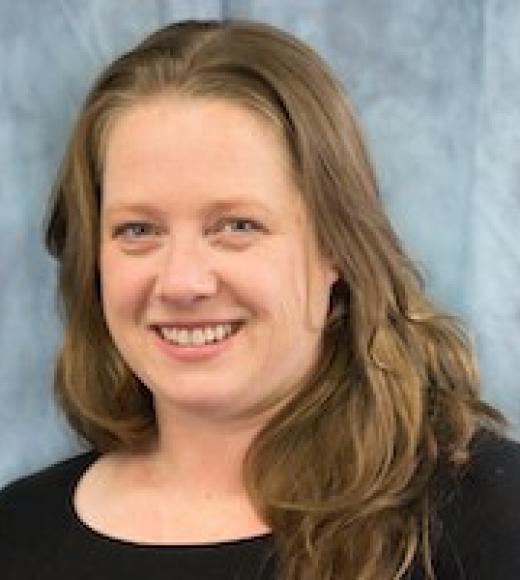
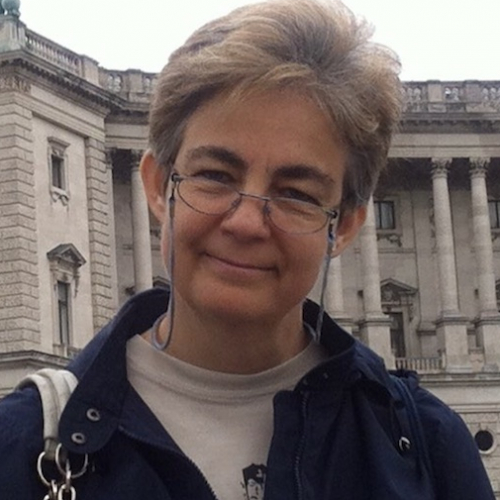
Stefania Spina is a Full Professor of Glottology and Linguistics at the University of Perugia for Foreigners, affiliated with the Department of Italian Language, Literature, and Arts in the World (LILAIM). She has held this position since August 1, 2020, and is actively engaged in research, teaching, and academic leadership. Her work focuses on corpus-based linguistic analysis, particularly in the context of Italian as a second language. Her research interests include corpus linguistics, second language acquisition, learner corpus development, phraseology, discourse analysis of media and academic texts, text complexity assessment, and computational processing of linguistic data. She has created several influential linguistic resources, such as the Perugia Corpus, Corpus of Spoken Italian (CIP), and learner corpora including LOCCLI, COLI, and CELI. She also developed MALT-IT2, a web tool for automated text difficulty classification aligned with CEFR levels. Her recent publications reflect a strong engagement with contemporary language trends, digital humanities, and media discourse. Topics include the lexical impact of AI, metaphor in political journalism, and the evolution of public language. A central theme across her work is the application of corpus methods to understand how language functions in educational, media, and technological contexts. She is the principal investigator of the PRIN 2022 project DICI-A, which aims to build a digital collocation dictionary for Italian L2 learners, in collaboration with computer scientists. Her teaching portfolio includes courses in sociolinguistics of new media, corpus linguistics, and digital humanities. She maintains an active public intellectual presence through her blog (now hosted on Substack) and social media. Email: stefania.spina@unistrapg.it Twitter: @sspina She supervises academic projects and leads research teams but no individual students are named in the provided texts. There are no mentions of scientific awards or grants beyond the PRIN project. She works in digital environments, utilizing tools like Python and AI for linguistic analysis, and contributes to the development of language technologies for education and research.