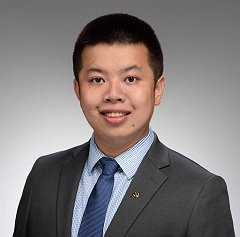
John Lowe is a Teaching Professor of Sequential Art at Savannah College of Art and Design (SCAD), holding this position since 2012. Previously, he served as Dean of the School of Communication Arts (2008–2012), Chair of the Sequential Art Department (2003–2008), and Professor of Sequential Art (2002). His career spans academic leadership and professional inking for major comic publishers like DC Comics, Marvel Comics, and Archie Comics. Education: M.F.A., Sequential Art, Savannah College of Art and Design B.F.A., Drawing/Studio Art, University of Knoxville His research interests focus on advancing sequential art education and visual storytelling techniques. He has curated exhibitions such as Contemporary Cartoonists (2006) and Panel Progressions: 100 Years of Sequential Art (2005). His publications include textbooks like Foundations in Comic Book Art (2014) and articles in Varoom Magazine . Awards: Presidential Fellowship (SCAD, 2006) Outstanding Graduate Student (SCAD, 2002) Board of Trustees Fellowship (SCAD, 2000) He has advised numerous students through his editorial roles in anthologies and has engaged in civic initiatives linking art education to community projects.
Dr. Wim Biemans is an Associate Professor at the Faculty of Economics and Business of the University of Groningen, specializing in Innovation Management and Marketing. He holds a PhD from Eindhoven University of Technology (1989) and has over 25 years of experience in research, teaching, and consulting. His work focuses on service innovation, B2B marketing, customer involvement in innovation, and the marketing-sales interface. He has authored over 100 peer-reviewed articles and books, including the best-selling Dutch B2B marketing textbook. His research has been recognized with awards like the Thomas P. Hustad Best Paper Award. He serves as Triage Editor for the Journal of Product Innovation Management and editorial board member for Industrial Marketing Management and Journal of Business & Industrial Marketing. Biemans teaches at the University of Groningen and multiple international institutions, including guest professor roles in Europe, Asia, and the U.S. He also designs executive programs for managerial training in innovation management and customer value creation. His recent research explores humor’s impact on creativity, digital tools in sales-marketing integration, and bridging technology-to-product development gaps. He emphasizes end-to-end value creation through intra-organizational collaboration and has published on the Valley of Death ecosystem challenges in innovation commercialization.
Claire Battershill is an Assistant Professor jointly appointed in the Faculty of Information and the Department of English at the University of Toronto. She holds a PhD from the University of Toronto and a BA (Hons) from the University of Oxford. Her research focuses on the history and future of the book, with a particular emphasis on feminist experimental publishing, literary aesthetics, and 20th/21st-century publishing practices. She is Co-Director of the Modernist Archives Publishing Project (MAPP), a critical digital archive of early 20th-century publishers’ records, and Co-Creator of the SSHRC-funded 'Make Believe' research-creation project. Her publications include Women and Letterpress Printing: Gendered Impressions (2022) and Using Digital Humanities in the Classroom (2022). Dr. Battershill has held prestigious roles such as Wendy M. Cecil Professor in VicOne at Victoria College and Fellow of the Royal Historical Society. She has secured grants including the SSHRC Impact Award (2017) and funding from the Canada Council for the Arts. Her teaching spans courses like INF2228H (The Future of Things: Digitization and Remediation) and BKS1002H (Book History in Practice), blending theory with hands-on engagement in digital humanities and book studies. Her research interests span digital humanities pedagogy, collaborative publishing projects, and the intersection of feminist theory with material book culture. She actively contributes to interdisciplinary initiatives like the Critical Digital Humanities Initiative (CDHI) at the University of Toronto.
Anocha Aribarg is a Professor of Marketing and Area Chair of Marketing at the Ross School of Business, University of Michigan, with additional faculty affiliation at the Center for Southeast Asian Studies (CSEAS). Her interdisciplinary research bridges psychological theory, consumer behavior, and advanced statistical modeling to address complex marketing challenges. Education: PhD in Marketing, University of Wisconsin, 2004 MBA, University of Wisconsin-Milwaukee, 1998 BS in Statistics, Chulalongkorn University, Thailand, 1994 Research Focus: Prof. Aribarg investigates cognitive processes in consumer decision-making, specializing in individual/joint choice dynamics, product search behaviors, and responses to marketing stimuli. Her methodology integrates Bayesian econometrics with physiological measures (eye tracking, skin conductance) and multi-method experimental designs to uncover hidden decision mechanisms. Publication Trends: Her 14 recent publications (2009-2024) reveal consistent innovation in choice modeling, with increasing emphasis on attention dynamics (2020), moral psychology in aesthetics (2022), and high-frequency service data integration (2023). Work appears predominantly in Marketing Science Journal of Marketing Research, and Psychological Science, demonstrating methodological rigor across consumer behavior, advertising, and service contexts. Academic Service: She serves as Associate Editor for Marketing Science, Journal of Marketing, and Journal of Marketing Research, while contributing to the Journal of Retailing editorial board. Teaching: Prof. Aribarg delivers graduate-level courses in Marketing Research and Analytics and Predictive Analytics at Ross, emphasizing data-driven decision frameworks.
John Gallagher is Associate Professor in English and Information Sciences at UIUC. His research examines how writers adapt to participatory audiences in digital environments, including social media interactions and AI writing tools. Using case studies and computational methods, he explores algorithmic audiences, ethical implications of AI, and technical communication in institutional contexts. He teaches courses in professional writing, digital rhetoric, and research methodologies. Recent projects analyze content creators' narratives about platform algorithms, inclusive emoji design, and academic integrity challenges posed by generative AI.
Ming Yin is an Associate Professor in the Department of Computer Science at Purdue University. Her research bridges human-computer interaction, applied artificial intelligence, computational social science, and behavioral sciences. She focuses on leveraging human behavior data to design intelligent systems that balance machine efficiency with human understanding, trust, and engagement. Education : PhD in Computer Science (Harvard University, 2017), B.E. in Computer Software (Tsinghua University, 2011) Previous Roles : Postdoctoral researcher at Microsoft Research New York City (2017–2018) Teaching : Courses on AI, Human-AI Interaction, Data Mining, and Human-Centered Computing Research Interests center on social computing, crowdsourcing, human-AI interaction, and ethical AI. She employs experimental and computational methods to study how human behavior can improve AI systems' design, fairness, and user trust. Her work has significant implications for gig economy platforms, decision support systems, and algorithmic accountability. Scientific Contributions include over 15 recent articles in top venues like CHI, IJCAI, and ACL. These works explore topics such as LLM-driven trust calibration, adversarial social influence, and ethical AI design. Her research has been recognized with the NSF CAREER Award Siebel Scholar (Class of 2017) Multiple Best Paper and Honorable Mention Awards at CHI, CSCW, and HCOMP Teaching Expertise spans courses like Introduction to Artificial Intelligence (CS 471), Human-AI Interaction (CS 592-HAI), and Data Mining (CS 573). She emphasizes project-based learning and designing systems for real-world problems, such as "learning in a new era" in her 2025 HCI course.
Felicity McArdle is a Professor in the Department of Early Childhood Education within the Faculty of Education at Queensland University of Technology. With a distinguished career spanning over two decades, her work centers on reimagining early childhood pedagogy through critical lenses of social justice, art education, and play-based learning. Her research has significantly influenced Australian early childhood policy and practice. McArdle's research interests demonstrate a consistent commitment to transformative education. She critically examines how art and play function as vehicles for social justice, challenging neoliberal discourses in early childhood education. Her work on refugee children's artistic expression and anti-bias curriculum development reveals her dedication to equity-oriented pedagogy. Through collaborative drawing methodologies and visual research approaches, she has pioneered innovative ways of understanding children's perspectives. Her publication trends reveal a sophisticated evolution from foundational work on visual arts in education (2001-2010) toward increasingly critical examinations of power, policy, and social justice (2011-2021). The consistent citation impact of her work—particularly her 2002 paper 'Early Childhood Art Education: A Palimpsest' with over 13,000 citations—demonstrates her field-defining contributions to reconceptualizing art education as critical praxis. McArdle has held significant editorial roles including co-editing the influential 2013 volume 'Young Children, Pedagogy and the Arts' and serving on the editorial board of Australian Journal of Early Childhood. Her collaborations with leading scholars like Susan Grieshaber, Jennifer Sumsion, and Linda Knight have produced seminal work on intentional teaching and play-based learning. Her research methodology expertise centers on visual and arts-based approaches, particularly collaborative drawing techniques that engage children as active research participants. This methodological innovation reflects her commitment to ethical research practices that honor children's agency while generating meaningful insights about early childhood experiences.
Kyle Bellucci Johanson serves as a Visiting Critic in Cornell University's College of Architecture, Art, and Planning, Department of Art. Holding an MFA from California Institute of the Arts and a BA in Art and Reconciliation Studies from Bethel University, he merges artistic practice with critical theory through performance architecture and collaborative media. Whitney Independent Study Program (2022–23) Founding fellow at land's edge free school (Los Angeles) Teaching experience at SAIC, UIC, CUNY, and Cooper Union His research investigates: Power structures through spatial interventions Critical theory applications in art practice Post-capitalist imaginaries Hauntology and historical materialism Transdisciplinary approaches to social critique Project trends reveal: Reinterpretation of Soviet design principles Investigation of worker identity in post-industrial contexts Temporal and spatial dislocation in artistic practice Monument critique through performative methods Quantum theory-inspired architectural concepts Reimagining of common spaces as political sites Scientific awards include: Creative Research Grant (2025) Whitney ISP participation (2022–23) Automata Studio Residency (2022) Artists Run Chicago Grant (2021) BOLT Residency (2020–21) Through projects like KLUB WRKR —a nomadic workers' club reimagined for the gig economy—and table (2018–2022), a Chicago-based experimental space for artistic practice, he interrogates institutional frameworks while fostering community through discursive meals and collaborative exhibitions.
Alexey Vladimirovich Vdovin is a Professor and Senior Research Fellow at the National Research University Higher School of Economics (HSE), working within the Faculty of Humanities and School of Philological Sciences. He began his tenure at HSE in 2012 and has accumulated 15 years of scientific and teaching experience. His academic journey includes a Doctor of Philology degree from HSE (2023), a PhD from the University of Tartu (2011), and his initial degree in 'Russian language and literature' from Vyatka State Humanitarian University (2007). He has held significant roles including Deputy Dean for Science at the Faculty of Humanities (2018-2020) and serves on numerous academic councils and committees. Vdovin's educational background demonstrates both depth and international perspective. After completing his undergraduate studies at Vyatka State Humanitarian University in 2007, he pursued doctoral studies at the University of Tartu, where he earned his PhD in 2011 with a dissertation on 'The concept of 'chapter of literature' in Russian criticism of the 1830-1860s.' His academic development has been enriched by numerous international experiences, including visiting researcher positions at Selwyn College, University of Cambridge (2019), Jordan Center at New York University (2017), and multiple research stays at Humboldt University in Berlin through the Aurora Erasmus Mundus program. Professor Vdovin's research focuses on Russian intellectual history, the history of ideas, the Russian Empire, Russian literature of the 19th century, and nationalism studies. His work particularly examines the formation of the Russian literary canon, representations of peasants in literature, and the relationship between literature and society. He has authored approximately 80 articles and 4 monographs on 19th-century Russian literature, culture, and criticism, with works on major figures like Turgenev, Dostoevsky, Tolstoy, Goncharov, Belinsky, Chernyshevsky, Dobrolyubov, and Nekrasov. His recent book 'Monsters at the Threshold: Dracula, Frankenstein, Viy and Other Literary Monsters' (2024) demonstrates his expanding interest in literary archetypes and cultural phenomena. Vdovin has received numerous awards and recognitions for his scholarly work, including the Moscow Government Prize for young scientists (2017), multiple 'Best Teacher' awards (2013-2015, 2017-2024), and recognition as a winner of HSE's competition for best Russian-language scientific works (2022, 2024). He has also received various letters of gratitude from HSE administration, the Faculty of Humanities, and the School of Philology for his contributions to academic life. As an advisor, Vdovin has supervised numerous student research projects, including Smirnova T.V.'s 2014 master's thesis on 'Representation of 'Russianness' and 'Otherness' in Russian essays of the 1840s.' He has also served as a curator for HSE's Personnel Reserve Program at the School of Philological Sciences and has been actively involved in dissertation councils. His research has been supported by significant grants, including a 2024-2025 Russian Science Foundation grant 'The Genre of 'Peasant Life Story' in Russian Literature Before 1861: Poetics, Plots, Socio-Cultural Functions' (No 24-28-00184) and a 2018-2020 RFBR grant on 'State and Literary Institutions: From Peter I's Reforms to the 'Great Reforms.' Professor Vdovin is actively engaged in academic communities beyond HSE, serving as editor-in-chief of the HSE preprint series 'Literary Studies' and participating in the Big Project 'Literature and Society: An Experience of Sociocultural Description.' He is also involved in public scholarship, frequently giving public lectures through platforms like 'Arzamas,' 'Postnauka,' and 'Stradarium,' and appearing on the 'Observer' television program (Culture channel). Since 2015, he has been a mentor at Maya Kucherskaya's Creative Writing School, bridging academic scholarship with creative practice.
Jennifer Minner is an Associate Professor in the Department of City and Regional Planning at Cornell University’s College of Architecture, Art, and Planning. She directs the Just Places Lab and is actively engaged in research on urban change, memory, and equitable development. Her affiliations span urban planning, regional science, and media studies, and she serves on the faculty advisory board of Cornell Cinema. Ph.D. in Community and Regional Planning, University of Texas at Austin M.U.R.P., Portland State University B.A. in Cultural Anthropology, University of Washington Her research centers on adaptive reuse, circular economies in cities, historic preservation, and social justice . She investigates how communities care for, preserve, and reimagine places through participatory planning and material reuse. Her work connects urban policy with climate action, embodied carbon, and the social legacies of mega-events such as the Olympics and World Expos. She uses spatial analytics, film, and community-based methods to explore equitable urban futures. Her recent publications reflect a strong trend toward environmental justice, circular construction, and urban memory . Topics include deconstruction policy, UAVs in preservation, and post-mega-event urban development. These works span disciplines including urban planning, sustainability, media studies, and public policy, with a consistent focus on equity and community engagement. Town and Gown Award (2024) for CR0WD network Climate Neutral Cities Alliance grant on embodied carbon and justice Atkinson Center Fast Grant for NYS circular construction policy NCPTT grant on reuse scenario planning with 3D modeling Mui Ho Center grant on scaling circular construction in NY Jennifer Minner mentors graduate and undergraduate researchers, co-founded the CR0WD network, and leads the CURTA-Y student club. She has secured multiple grants focused on deconstruction, policy design, and community engagement. Her teaching includes courses on circular cities, land use planning, and advanced planning theory, emphasizing participatory and justice-oriented methods. She leads the Just Places Lab , which fosters interdisciplinary research on urban care, memory, and equity. The lab collaborates with the Circular Construction Lab, Historic Ithaca, and community partners on exhibitions, walking tours, and policy initiatives. Projects like Deconstructing Demolition and Waste(d) Imagination Tour exemplify their community-engaged, creative approach to urban sustainability.
Sophie Whitehouse is a Lecturer in Marketing (Education) at King's Business School, King's College London. She holds a PhD in Marketing, an MA in English Language and Linguistics, and a BA in Management with Marketing from the University of Leicester. She is a Fellow of the Higher Education Academy and has been teaching since 2013. PhD in Marketing, University of Leicester MA in English Language and Linguistics, University of Leicester BA in Management with Marketing, University of Leicester Sophie's research centers on marketing in the creative and cultural industries, especially music. She explores consumer culture, authenticity, nostalgia, and the materiality of consumption in a digital age. Her work employs qualitative methodologies and has examined why consumers remain committed to physical formats like vinyl records despite the dominance of digital streaming. Her recent publications reveal a consistent focus on the intersection of marketing, culture, and emotion. She investigates how nostalgia shapes consumption, how record artwork fosters cultural identity, and how pedagogical tools like crib sheets affect student well-being. Her upcoming work extends into collaborative arts research and societal inclusion in higher education. Her scientific contributions have been recognized with the Elsevier Peer Recommendation Prize at the University of Leicester’s Festival of Postgraduate Research. Elsevier Peer Recommendation Prize, University of Leicester’s Festival of Postgraduate Research Sophie has extensive experience supervising undergraduate, Master’s, and MBA dissertations. She is currently open to supervising PhD students whose projects align with her interests in marketing and nostalgia, consumer culture, and the creative industries. While no specific grants are mentioned, her research output and invited talks indicate active scholarly engagement and external collaboration. Sophie is involved in academic events and roundtables such as 'La Pensée Artistique: Artistic Thinking in Consumer Research' and 'The Future of Higher Education,' indicating her integration into research networks and thought leadership in her domain.
Dina Verdín serves as Assistant Professor in Engineering Education Systems and Design at Arizona State University's Polytechnic School, where she leads research on broadening participation in engineering through critical analysis of access and persistence barriers for first-generation, minoritized, and women students at intersectional identity junctions. Her educational foundation includes: Ph.D. in Engineering Education from Purdue University M.S. in Industrial Engineering from Purdue University B.S. in Industrial & Systems Engineering from San José State University Verdín's research program employs asset-based frameworks to examine how funds of knowledge and identity development influence engineering pathways. Her access strand investigates high school exposure barriers through culturally responsive activities that foster engineering interest and agency, while her persistence strand analyzes undergraduate institutional structures affecting identity negotiation and degree completion. This work centers intersectional methodologies to redefine engineering identity beyond traditional norms. Analysis of her 15 most recent publications (2020-2024) reveals consistent focus on first-generation Latinx students, classroom belonging mechanisms, and funds of knowledge applications. Her work predominantly utilizes mixed-methods approaches within Hispanic Serving Institutions, with growing emphasis on migratory student populations and critical engineering agency development. Her accolades include: NSF Graduate Research Fellowship IEEE Frontiers in Education Best Diversity Paper Award College of Engineering Outstanding Graduate Student Research Award AGEP Distinguished Scholar Award AERA Division D Top 3 In-Progress Research Verdín currently directs multiple NSF-funded initiatives including SAFE Teams (Student Asset-based Approach to Equitable Teams) and Reconceptualizing Community Cultural Wealth in engineering design. Her grants portfolio exceeds $1.3 million as PI/Co-PI, focusing on mastery learning implementation, engineering discipline disparities, and migratory student empowerment through gamified curricula. She teaches core courses in engineering statistics and research methods while mentoring graduate researchers. Her work actively shapes engineering education through community-engaged scholarship that centers student assets and challenges deficit-oriented paradigms in STEM persistence research.
Jeff B Murray serves as Professor and Department Chair in the Department of Marketing at the Sam M. Walton College of Business, University of Arkansas, teaching in the full-time MBA, Executive MBA, and Marketing Doctoral programs. His leadership extends to international doctoral seminars across Europe and Australia, reflecting his scholarly influence. His academic foundation includes a Ph.D. from Virginia Tech. His research program examines critical marketing, interpretive consumer research, and philosophy of science through frameworks like Consumer Culture Theory and Transformative Consumer Research. Murray's scholarly contributions reveal a trajectory from foundational critical theory toward contemporary applications in arts markets, sustainable fashion, and digital consumption. His work consistently bridges philosophical inquiry with empirical consumer phenomena, emphasizing emancipatory interests and societal transformation. Recent publications demonstrate growing interdisciplinary engagement with sociology, anthropology, and sustainability studies. Outstanding All-Around Professor Award (2002) Charles and Nadine Baum Faculty Teaching Award (2002) Editorial board service for leading journals including Journal of Consumer Research He mentors doctoral students now holding faculty positions globally, with recent workshops in Germany, France, and Scandinavia highlighting his international impact. His professional engagements span the American Marketing Association, Association for Consumer Research, and American Sociological Association, where he contributes to critical theory development through initiatives like Consumer Culture Theory. Murray maintains active scholarly networks through Transformative Consumer Research and regularly presents at international conferences, advancing critical perspectives on marketing's societal role.
Toby Jia-Jun Li is an Assistant Professor in the Department of Computer Science and Engineering at the University of Notre Dame, where he leads the SaNDwich Lab. He also serves as the Director of the Human-Centered Responsible AI Lab in the Lucy Family Institute for Data & Society and is a Faculty Fellow at the Institute for Educational Initiatives (IEI). Previously, he was affiliated with Carnegie Mellon University's Human-Computer Interaction Institute (HCII) and GroupLens Research. Dr. Li's research spans the intersection of Human-Computer Interaction (HCI), End-User Software Engineering, Machine Learning (ML), and Natural Language Processing (NLP), with recent work focusing on addressing societal challenges in the future of work through human-AI collaborative approaches. His work has resulted in over 40 publications at premier venues including CHI, UIST, CSCW, ACL, and ICSE, with 8 papers winning Best Paper or Honorable Mention awards. His recent publications demonstrate a strong focus on human-AI collaboration across various domains, including code understanding, privacy, accessibility, and creative tools. The work shows a trajectory toward increasingly sophisticated integration of human-centered design with AI capabilities, particularly using large language models to enhance human productivity and address societal challenges. Google Research Scholar Award recipient Recipient of Yahoo! Fellowship ($100,000/year) Best Paper Award at UIST 2020 Best Paper Honorable Mention Award at CHI 2021 Best Paper Award at CSCW 2024 Best Paper Award at CHI 2025 Dr. Li actively mentors Ph.D. students and has established collaborations with Google, Microsoft Research, IBM Research, Adobe, Verizon, and J.P. Morgan. His research has been supported by NSF, Google Research Scholar Program, AnalytiXIN Initiative, Yahoo! InMind project, and J.P. Morgan. He is currently recruiting Ph.D. students and undergraduate researchers for his SaNDwich Lab, which focuses on developing interactive systems to empower individuals to create, configure, and extend AI-powered computing systems.
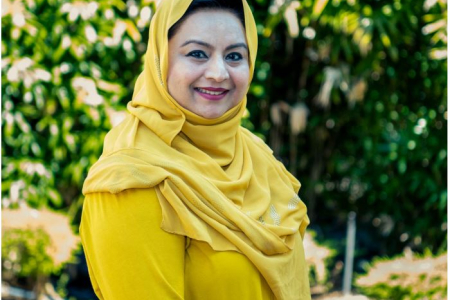
Dr. Farha Sattar is a Lecturer in Education (Mathematics) at the Faculty of Arts and Society, Charles Darwin University. With over thirty years of teaching experience in Mathematics, Science education, GIS, Remote Sensing, and e-Learning technologies at undergraduate and postgraduate levels, Dr. Sattar brings extensive expertise to her academic role. She holds a PhD in Geospatial Science from Charles Darwin University, focusing on Spatial Mathematical Modelling for 3D Gully Mapping and Erosion Quantification. Her educational background includes: PhD in Geospatial Science (Three Dimensional Gully Mapping and Erosion Quantification within a Geoinformatics Framework), Charles Darwin University (2012) Prior academic experience at several Asian and European universities Dr. Sattar's research spans multiple interdisciplinary fields with a strong focus on the intersection of education and technology. Her primary research interests include Mathematics Education, STEM Education, Geoscience Education, Spatial Mathematical Modelling, Drone Technology, Remote Sensing, Geographic Information Systems, and Innovative Pedagogies such as experiential learning and inquiry-based approaches. She has developed expertise in cognitive development, particularly in fostering critical and creative thinking skills through iSTEM approaches. An analysis of Dr. Sattar's recent publications reveals a consistent trajectory toward integrating emerging technologies like drones, augmented reality, and geospatial artificial intelligence into educational contexts. Her work demonstrates a progression from foundational geospatial research on erosion mapping to innovative applications in STEM education. Recent publications increasingly focus on drone technology for educational purposes, spatial data infrastructure for policy development, and computational thinking development through technology-enhanced learning. Dr. Sattar has received numerous accolades for her contributions to education and research: NT Science Week Awards – Inspired NT STEM Hero of the Year award (2021) Long Service Recognition Award (2023) Finalist, CDU Alumni Award (2023) Multiple Best Presentation Awards (2008, 2010, 2017) Australian College of Educators - 2021 College Medal Nominee As a supervisor, Dr. Sattar mentors postgraduate research students including Ayesha Farhan, who is working on "A Framework for Cognitive Development: Fostering Critical and Creative Thinking Skills, Using iSTEM Approach." She actively secures research funding through various projects such as "DBELaSTEM: Drone-Based Experiential Learning and STEM Education," "STEM_D & VR: Youth STEM Learning and Empowerment with Drones and VR," and "CodProg Drone Lab." Her research is supported by grants from NT Government projects and other external funding sources. Dr. Sattar leads the CodProg Drone Lab, an innovative research space exploring drone technology applications in education. She is a certified drone pilot and aeronautical radio operator, which enables her to bridge theoretical knowledge with practical applications. Her work with the "Flying Forward: Drones, STEM Equity, and Indigenous Empowerment" initiative demonstrates her commitment to community engagement and addressing educational disparities through technology.