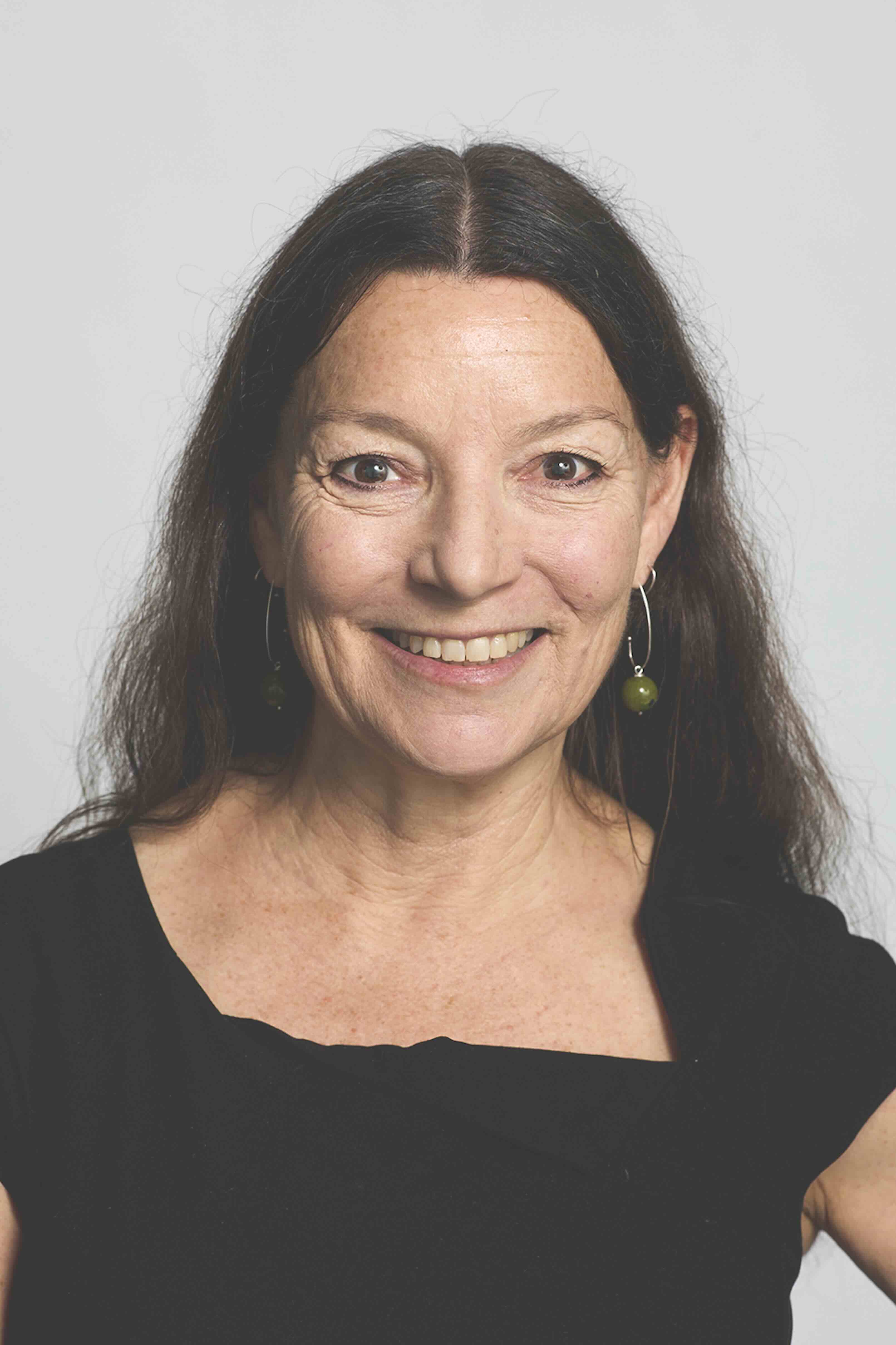
Luis de Miranda is a Senior Research Fellow in Philosophy at the Turku Institute for Advanced Studies (TIAS) and affiliated with Uppsala University's Center for Research & Bioethics (CRB), the Center for Wellbeing, Welfare and Happiness, and the House of Innovation at the Stockholm School of Economics. His work bridges philosophy, existential creativity, and bioethics. As the creator of the SMILE_PH (Sense-Making Interviews Looking at Elements of Philosophical Health) and Crealectic methods, he focuses on aligning personal values with everyday actions through concepts like compossibility (derived from Leibniz). His research explores philosophical dimensions of wellbeing, AI ethics, judicial automation, and organizational innovation. Key Research Themes : Philosophical Health, Compossibility, Crealectics, AI-Human Collaboration, Existential Counseling Recent Publications : 2025 studies on AI companions, judicial anthrobots, and existential metrics; 2024 books integrating philosophical health with creativity.
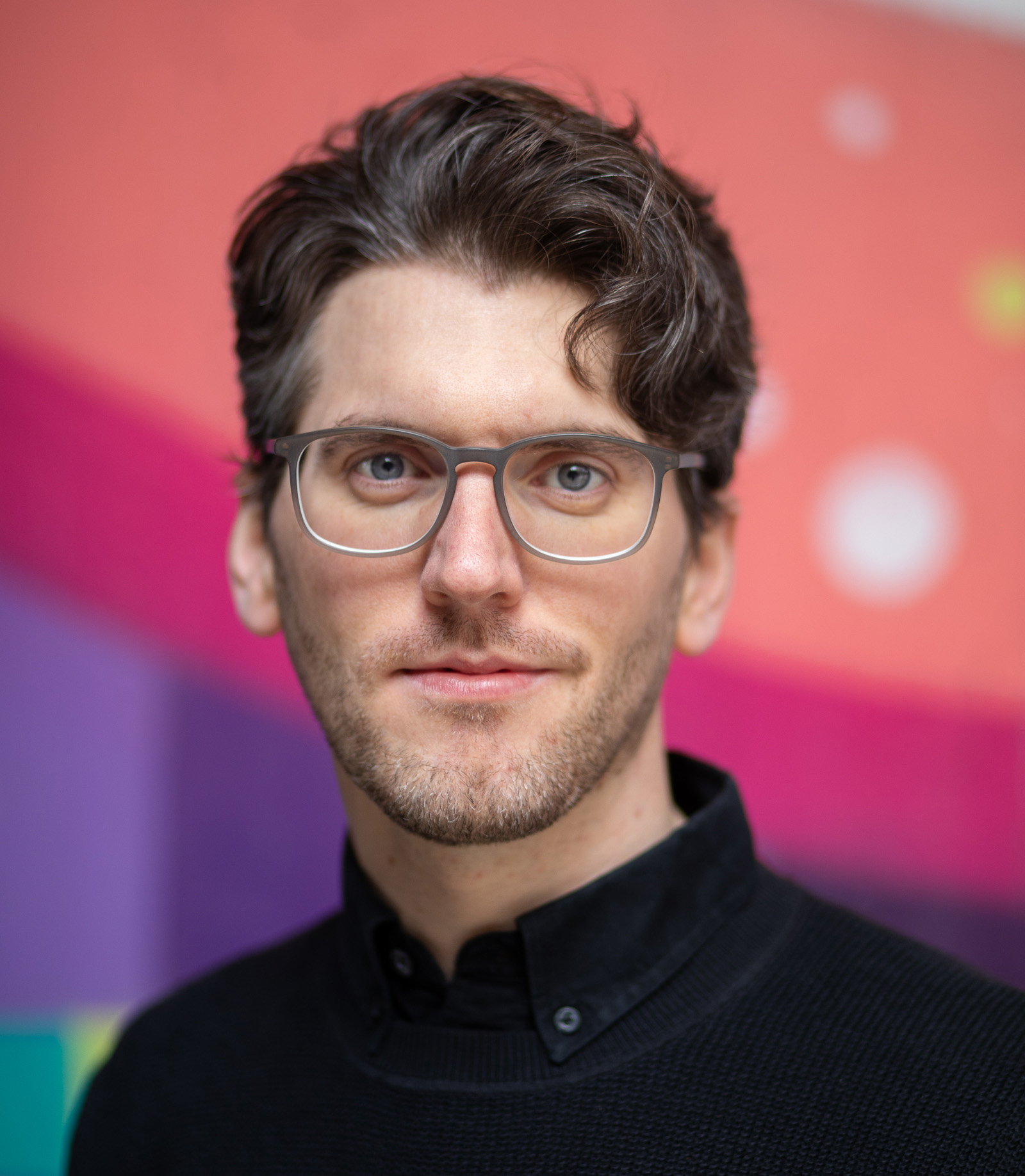
Augusto Esteves is an Assistant Professor at Instituto Superior Técnico, University of Lisbon, specializing in Human-Computer Interaction (HCI) and eXtended Reality (XR). He leads an interdisciplinary research group of ten students and researchers, focusing on innovative interaction techniques for future computing systems. Research Focus: Human-Computer Interaction, eXtended Reality, Gaze Interaction, Smartwatch Interfaces, Energy Communities, Biomechanics, Digital Health, Tangible Interaction His recent publications demonstrate strong engagement with gaze-driven interfaces, cross-reality interaction patterns, and accessibility in immersive technologies. Articles from 2024-2025 explore biofeedback systems, mental health interventions, and XR applications for marginalized user groups. Notable Awards: Best Short Paper (ETRA '24), Best Paper (UIST '15), Best WiP (SustainIT '17), Design United Research Award, Dutch Design Week Exhibition Esteves' work bridges academic research with practical applications, evidenced by collaborations with Samsung Electronics, NVIDIA, European Research Council, and FCT funding. His lab benefits from access to the Interactive Technologies Institute and Associate Laboratory of Robotics and Engineering Systems, equipped with AR/VR headsets, eye-trackers, and physical prototyping tools.
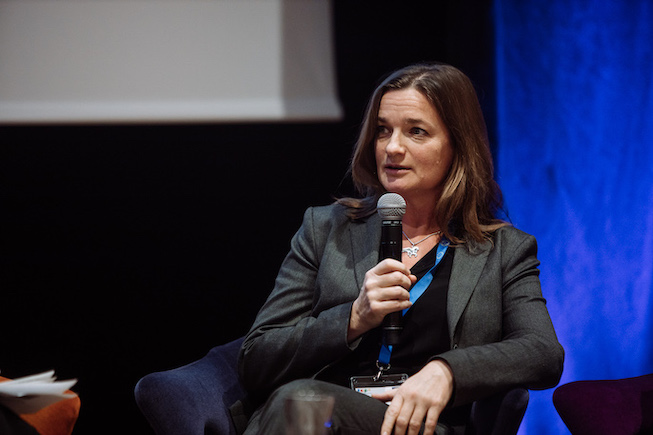
Sladjana Nørskov is a Danish academic with a multidisciplinary profile spanning Aarhus University 's institutions. She holds a Ph.D. in Organisation and Management and has served as an Associate Professor (tenured) at Aarhus BSS . Currently, she acts as a Special Advisor at the Danish School of Education (DPU) and owns Nørskov Coaching .
Christian Gagné is a Full Professor in the Department of Electrical Engineering and Computer Engineering at Laval University's Faculty of Science and Engineering. His research spans machine learning, artificial intelligence, and cybersecurity, with applications in healthcare and autonomous systems. Research Units: VITAM - Sustainable Health Research Center, CRDM (Center for Research in Massive Data), CeRVIM (Research Center in Robotics, Vision and Machine Intelligence), IID (Intelligence and Data Institute) Grants: Multiple MITACS-funded projects (2024-2026) on AI architecture, medical imaging, and autonomous driving His recent work focuses on adversarial robustness, data augmentation, and suicide risk prediction via health data analysis. He has supervised numerous Master's and PhD students in electrical engineering, computer science, and biophotonics. Scientific Awards: Recipient of the Teaching Star award from Laval University's Faculty of Science and Engineering (2008-2018)
Dr. Patricia Flanagan is a Lecturer at the University of New South Wales in the School of Art and Design, Faculty of Arts, Design and Architecture. She serves as co-director of the Interactive Media Lab and Lead Researcher for Wearables at the Creative Robotics Lab. Previously, she established the Wearables Lab at the Academy of Visual Art at Hong Kong Baptist University in 2009. Her international exhibition portfolio includes prestigious venues such as the Hong Kong Heritage Museum, Taipei Museum of Contemporary Art, and Kunstraum Kreuzberg/Bethanien Berlin, and she represented Oceania at the Tournai Contemporary Textiles Biennial in Belgium. Dr. Flanagan holds a Doctor of Philosophy in Public Art from the University of Newcastle Australia, a Master of Fine Arts in Public Art and New Artistic Strategies (1st class) from Bauhaus University Weimar Germany, a Bachelor of Fine Arts in Sculpture from the University of Newcastle Australia, and an Associate Diploma in Arts (Fashion Production, Custom Clothing) with honors from TAFE NSW. Her research investigates hybrid practices emerging at the intersection of digital technologies and traditional art and design practices. Specializing in new materials, wearables, and generative design, her work includes critical and speculative wearables, site-specific sculptural installations, social sculpture, and performance installations. Her practice combines hand-crafted art and design practices with digital technologies through a systems thinking approach. Current research projects include Landrelations (National Tour), Brigalow Belt Arts Project, Femufacture, The Peripatetic Institute for Praxiology and Anthropology, The Haptic InterFace Project, and Research Creativity – Praxis. Dr. Flanagan's recent publications demonstrate a strong focus on the intersection of craft, technology, and embodied experience. Her work explores how digital technologies can be integrated with traditional craft practices, particularly in the realm of wearables and interactive installations. She investigates how these hybrid practices can create new forms of expression, environmental awareness, and cross-cultural understanding. Among her notable awards and fellowships are the Powerhouse, Sydney Museum of Applied Arts and Science Visiting Research Fellowship, Centre for Mobilities Research at Lancaster University Visiting Fellowship, Max Fabre Foundation Award for Environmental Awareness, and selection to represent Oceania at the 7th International Contemporary Textile Triennale in Tournai, Belgium. Dr. Flanagan actively supervises research students in areas including Art and Design, Textiles, Wearables, Tangible Embodied HCI, Future Materials, Generative Design, and Environmental Humanities. She is on the steering committee for the World Craft Council affiliated Knowledge House of Craft and is the founding member of TTIGOC (Tracing the Intangible Gestures of Craft), a collaboration with Chinese ethnic minority master craftspeople and researchers at GYPEC Guiyang, China. Her current PhD students include Syna Chen, Jingwen Yuan, and Jaiying Qian, all working on innovative projects at the intersection of craft, technology, and human experience.
Joongi Shin is a Postdoctoral Researcher at Aalto University, affiliated with the Computational Behavior Lab and User Interfaces Research Group. He earned his Ph.D. in Industrial Design from KAIST in 2021. His research focuses on integrating artificial intelligence (AI) into creative and design activities to enhance human creativity while addressing challenges like idea convergence and reduced creative agency. Shin's research interests span Human-Computer Interaction (HCI) , collaborative creativity , and generative AI , with secondary focus areas including unobtrusive interaction , robotic furniture , and VR/AR . His work explores how AI can support design workflows without overshadowing human expertise, emphasizing empathy and task delegation between humans and AI. His publications highlight trends in AI-augmented design, including the efficacy of chatbots in consensus-building, LLM limitations in problem reframing, and AI's role in persona generation. Notably, he advocates for hybrid human-AI workflows where human strengths in grouping data and AI strengths in summarization produce representative personas. Scientific Awards: Postdoctoral research fellowship from the National Research Foundation of Korea (NRF), 2022 Shin has received recognition through invited talks (e.g., AI and I Hackathon 2024, Southern University of Science and Technology 2023) and collaborations with prominent researchers like Prof. Antti Oulasvirta and Prof. Andrés Lucero. He actively contributes to academic discourse through workshops like the CHI '23 event on AI in human-human collaborative ideation.
Yi Ren serves as an Associate Professor in the Department of Aerospace and Mechanical Engineering within the School for Engineering of Matter, Transport and Energy at Arizona State University. He leads the Design Informatics Laboratory, pioneering computational and data-driven methodologies to transform engineering and industrial design processes. His academic foundation includes: Ph.D. in Mechanical Engineering from the University of Michigan (2011) M.S. in Mechanical Engineering from the University of Michigan (2009) B.S. in Automotive Engineering from Tsinghua University, China (2007) Ren's research integrates optimization , product/configuration design , human-computer interaction , and machine learning to develop human-AI collaborative design frameworks. His work emphasizes differential games , reinforcement learning , and data-driven design augmentation , with applications spanning autonomous systems, swarm robotics, and secure AI development. This interdisciplinary approach bridges theoretical advances with real-world engineering challenges. Analysis of his recent publications reveals a pronounced focus on solving complex multi-agent decision problems using game-theoretic approaches combined with deep learning. His work systematically addresses state-constrained differential games, asymmetric information settings, and human feedback integration in control systems—primarily advancing autonomous driving safety, swarm coordination, and generative model security. Ren actively mentors graduate students through dissertation and research courses (MAE 792/799) and has secured research funding including a University of Michigan project on "Creativity through Collaborative Human-Machine Interactions" (2015-2016). His Design Informatics Laboratory at ASU develops computational tools that enhance engineering design through human-AI collaboration, with current emphasis on game-theoretic optimization, adversarial robustness, and physical interaction modeling.
Dr. Megan Catherine Rose is a cultural sociologist and artist based in Sydney, Australia, affiliated with the Vitalities Lab at UNSW Sydney and the Australian Research Council Centre of Excellence for Automated Decision Making and Society . Her research focuses on visual cultures, creativity, wellbeing, and inclusion, with a specialization in participatory methods centered on marginalized communities, including queer and disabled groups in English and Japanese online spaces. Current affiliations: Vitalities Lab (UNSW Sydney), Australian Research Council Centre of Excellence for Automated Decision Making and Society Megan’s work explores self-determined cultures for autistic adults, care robot design, and neuro-queer femme subcultures in Tokyo (Harajuku/Akihabara). She has collaborated on initiatives like the Somerset House UK's 2023 'Cute' exhibition , linking 'cute studies' to care, queer identities, and neurodiversity. Her expertise spans sociology, affect theory, and interdisciplinary arts-based research. Previous roles include work at Australia’s National Research Organisation for Women’s Safety and the Disability Innovation Institute , with advisory board service as a disability advocate. Her research integrates collective cultures for safety and belonging, emphasizing care and technological equity.
Carlos González Morcillo is a Professor at the Higher School of Computer Science, University of Castilla-La Mancha (UCLM), where he has served since 2002 with over 3,000 teaching hours. He currently holds multiple leadership positions including Academic Director of the Vice-Rectorate of Digital University, Director of the G9 Shared Digital Campus (since 2025), and Director of the Center for Digital Technologies and Content (C:TED). As Creative Director of Furious Koalas, a UCLM spin-off, and member of the AIR Research Group, he bridges academic research with industry applications. European PhD in Computer Science (UCLM, 2007) Degree in Computer Science with Extraordinary End-of-Degree Award (2002) Technical Engineer in Computer Systems (2000) His research focuses on two primary areas: Artificial Intelligence and Computer Graphics, with significant contributions to educational technology, virtual reality applications, and AI integration in academic settings. With over 30 technology transfer projects and 9 as principal investigator (total funding exceeding €550,000), his work spans from generative AI applications in education to VR-based rehabilitation systems. His research demonstrates consistent evolution from technical game development toward transformative AI applications across multiple domains. His publication record shows a clear trajectory toward AI integration across disciplines, with recent work examining generative AI's role in academic communication, VR shopping environments, and medical rehabilitation. The interdisciplinary nature of his research connects computer science with education, healthcare, and consumer behavior, demonstrating practical applications of emerging technologies. Blender Foundation Certified Trainer (2009 - First Spaniard) ICEIS 2025 Best Student Paper Award (team recognition) Multiple plenary invitations at national and international conferences As an academic leader, he has directed 42 undergraduate theses, 10 master's theses, and 3 doctoral dissertations while establishing the Expert Course in Video Game Development (30 ECTS) with 8 successful editions. His research management includes 3 six-year research periods (2004-2021) and 1 six-year transfer period (2006-2017). Through Furious Koalas, he leads projects combining AI, mixed reality, and IoT for industrial applications, recently winning the MEISA technology challenge at ANCES Open Innovation 2025. His laboratory and team structure centers around the AIR Research Group and C:TED center, with Furious Koalas serving as the commercialization arm. Current projects focus on creating Spain's most important digital training metacampus through the G9 Shared Digital Campus initiative, which integrates capabilities from nine Spanish universities to expand educational offerings, particularly in artificial intelligence.
Henglien Lisa Chen is an Associate Professor in Social Work at the School of Education and Social Work, University of Sussex, UK. With a PhD and MA/Dip in Social Work, she serves as Deputy Director of the Centre for Social Work Innovation and Research . Her work focuses on long-term care systems, dementia care, and cross-national policy comparisons in social work education. Education: PhD, MA/Dip in Social Work Role: Deputy Director, Centre for Social Work Innovation and Research Research interests include: Social gerontology and care policies for older adults Integration of care services and workforce challenges Digital tools for active ageing and dementia care Participatory approaches in social work education Cross-national comparisons of care systems Recent articles highlight her focus on decolonizing social work pedagogy, pandemic-era educational adaptations, co-produced dementia care technologies, and comparative studies of care systems in Europe and Asia. Themes span policy innovation, digital transformation, and participatory research methods. Grants include: ESRC Impact Acceleration Account (2020) for dementia care innovation NIHR-funded care home quality improvement project (2017-2020) PhD studentship on working carers' wellbeing Taiwanese Ministry-funded migrant care worker study Teaching leadership includes modules on Context of Social Work and Adult Care , with contributions to dementia studies and human development curricula. Supervision covers 4 doctoral students in care-related fields.
Nguyen-Truc-Dao Nguyen is a researcher at the Department of Mathematics , University of Michigan, Ann Arbor , with a focus on Optimal Control , Variational Analysis , and Mathematical Optimization . He leads a research team and has secured grants such as a $25,000 NSF conference grant for the Midwest Optimization Meeting 2023. Research Interests : Optimal Control of Sweeping Processes, Robotics, Data Science, Crowd Motion Modeling, and Biomedical Applications of Plant-Based Compounds. Key Collaborations : Boris Mordukhovich, Ebrahim Sarabi, Jiawang Nie, and others. Recent Publications (15 most recent) explore: Time-delay systems and stability analysis in control theory Applications in robotics (unmanned vehicles, nanoparticle modeling) Optimization frameworks for free-time and nonconvex problems Plant-based compounds and their biomedical/nutritional impacts (Gac fruit, carotenoids) Interdisciplinary work in linguistics and education Scientific Awards : Assigned Time for Research, Scholarship, and Creative Activities (AY 25-26) at University of Michigan $25,000 NSF grant for Midwest Optimization Meeting 2023 Advising & Leadership : His student Anthony Cortez presented a poster on neural network-based Model Predictive Control. He organizes seminars like the Variational Analysis and Optimization Seminar and co-organized the MIDWEST Optimization Meeting 2023 .
Christian Guckelsberger is an Assistant Professor in Creative Technologies at Aalto University, leading the Autotelic Interaction Research (AIR) group. He also serves as a visiting scholar at the School of Electronic Engineering and Computer Science, Queen Mary University of London, and is a principal investigator (PI) at the Finnish Center for Artificial Intelligence (FCAI) and a member of the European Laboratory for Learning and Intelligent Systems (ELLIS). His research focuses on engineering creative artificial systems that interact meaningfully with humans, leveraging intrinsic motivation as a core driver of creativity. He bridges disciplines such as artificial intelligence (AI), human-computer interaction (HCI), psychology, philosophy, and creative practice, with applications in videogames, fine art, and design. Recent research trends include modeling intrinsic motivation for AI creativity, developing formal theories of competence, applying reinforcement learning to game design, and exploring human perception of AI-generated content. His work emphasizes sustainable adoption of creative AI in society and the workplace. Scientific awards include: Honorable Mention (CHI PLAY 2023) Finalist in “AI Game Dev” Competition (2021) Best Paper Award (International Conference on Computational Creativity, 2020) Best Paper Award (IEEE Conference on Computational Intelligence and Games, 2018) Finalist in EPSRC’s “Creative Computing” Competition (2018) Best Paper Honourable Mention (CHI Play, 2017) Christian is actively involved in mentoring, offering opportunities for research visits, postdocs, PhD, and Master’s thesis projects. His work intersects AI, game design, and interdisciplinary creativity research.
Vaike Fors is Professor in Design Ethnography at Halmstad University's School of Information Technology, Sweden. She concurrently serves as Partner Investigator in the Automated Decision Making Centre of Excellence (ADM+s) hosted by RMIT University, Australia, and as Adjunct Professor at Monash University's Emerging Technologies Research Lab. Her academic leadership spans interdisciplinary research at the intersection of design, technology, and everyday human experience. Her research centers on visual, sensory, and design ethnography to investigate how people learn to live with emerging technologies in everyday contexts. Key focus areas include autonomous driving futures, sustainable urban mobility systems, and participatory design for socially resilient communities. Fors employs co-creative methods like living labs, sensory ethnography, and design anthropology to explore human-technology entanglement in blended physical-digital environments. Analysis of her recent publications reveals dominant trends in community-centered urban mobility solutions, reframing 'last mile' challenges through ethnographic lenses, and developing design toolkits for responsible innovation. Her work consistently bridges theoretical scholarship with applied practice in automated decision-making systems. Professor Fors leads the REBEL research program and has directed major interdisciplinary projects including SPINE, GREEN-LOG, OsMaaS, AHA (Future Urban Mobilities), and REALLOCATE. Her grant portfolio emphasizes international collaboration on sustainable technology adoption and human-centered automation. She co-founded the Data Ethnographies Lab and actively contributes to the Centre of Excellence for Automated Decision-Making & Society, establishing international networks for ethnographic approaches to technology development. Her work emphasizes embodied, sensory methodologies for understanding technology in everyday life contexts.
Djordje Grbic is a Lecturer at the IT University of Copenhagen, actively contributing to research in artificial intelligence, robotics, and maritime logistics. He is affiliated with the Creative AI Lab, Robotics, Evolution, and Art Lab, and The Maritime Hub Robotics, Evolution and Artificial Life Lab. His research focuses on: Deep reinforcement learning for complex planning tasks Evolutionary computation in artificial life systems AI optimization of maritime container stowage Procedural content generation for games Sequence evolution simulations for biological systems Recent publications (2023-2024) demonstrate expertise in applying deep reinforcement learning to maritime logistics problems and developing systems for sequence evolution simulation. Collaborations span computational logistics, bioinformatics, and game design domains. Current affiliations include: Creative AI Lab (ITU Copenhagen) Robotics, Evolution, and Art Lab The Maritime Hub for logistics research
Aniruddha Kembhavi is an Affiliate Associate Professor at the University of Washington's Computer Science & Engineering department and currently serves as Director of Science Strategy at Wayve AI in London, UK. Previously, he led computer vision efforts as Senior Director at Allen Institute for AI (AI2) in Seattle and contributed to Microsoft's Image and Video Search division. His research spans 20+ years in Computer Vision , Robotics , and Embodied AI , focusing on open-source frameworks like AI2-THOR and Molmo. His work emphasizes procedural environment generation , vision-language integration , and 3D asset creation , with large-scale datasets such as Objaverse becoming foundational in 3D computer vision. CVPR 2025 Best Paper (Honorable Mention) CVPR 2023 Best Paper Winner Neurips 2022 Outstanding Paper CoRL 2024 Outstanding Paper IROS 2024 Best Mobile Manipulation Paper ICRA 2024 Best Paper Winner Allen Institute Test Of Time Award 2020 NVIDIA Pioneer Award 2018 His recent publications analyze vision-language models , 3D generation evaluation , and diffusion architectures for unified generation. He actively contributes to community-building as Program Chair for ICCV 2025 and Senior Area Chair for CVPR 2024.