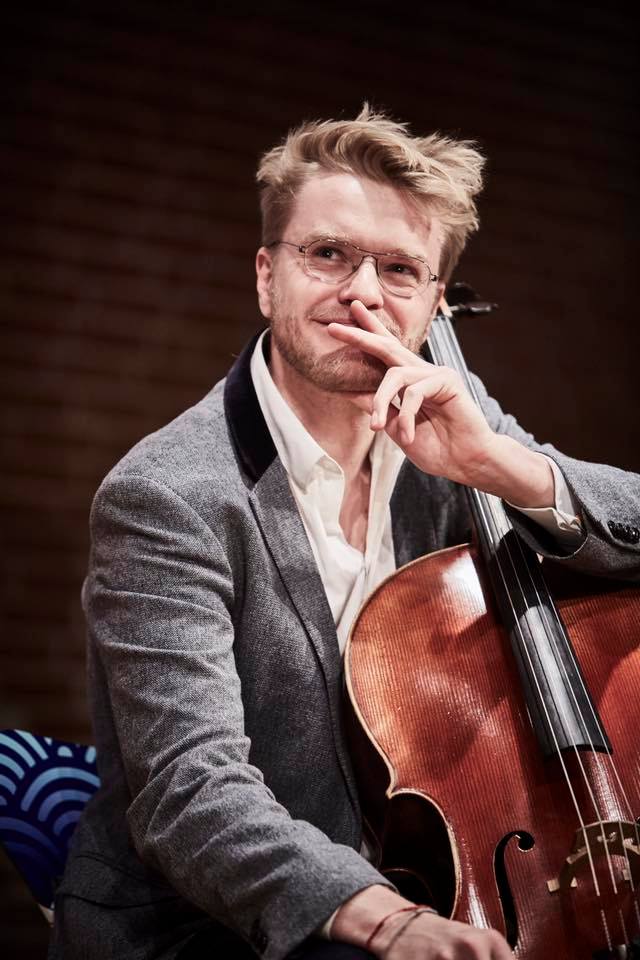
Dr. phil. Nino Ferrin is a permanent research associate at the Didaktik Deutsch division within the Department of Education and Psychology at Free University Berlin . Holding a Marie Curie Fellowship and serving as Vice Dean for Studies and Teaching since 2018, he specializes in media education, educational anthropology, and practice theory. Freie Universität Berlin: 2011 PhD ( summa cum laude ), 2005-2008 Research Assistant, 2002-2005 Student Assistant University of Crete (2013): ERASMUS Teaching Mobility Marie Curie Alumni Association (since 2014) His research interests span media education, educational anthropology of the Anthropocene, performative learning cultures, and digital body practices. He employs reconstructive ethnography and praxeological methods to investigate how media technologies shape educational experiences. Recent publications focus on Anthropocene sustainability education, narrative spaces for possibility thinking, and digital game culture analysis. His scientific awards include Marie Curie Actions-Fellowship (2012-2016) International recognition through EU-funded DIGIT-M-ED project His teaching involves graduate seminars on primary education research (15+ semesters since 2007) and master's thesis supervision. Current projects examine Metasorge and media techniques (habilitation) 1000+ Concerts for social inclusion Visual metaphors in education
Kristen Warner is an Associate Professor in the Department of Performing and Media Arts at Cornell University's College of Arts and Sciences. Her research focuses on racial representation in media industries, examining casting practices and employment implications for creative professionals both in front of and behind the camera. Ph.D. in Radio-TV-Film from University of Texas at Austin (2010) M.A. in Media Arts from University of Arizona (2005) B.A. in Print Journalism from Louisiana State University (2000) Prior to joining Cornell in 2023, she served as faculty at the University of Alabama. Her expertise has been sought by media companies for strategic consultation, and she frequently contributes to public discourse through appearances in major media outlets including The Los Angeles Times , The Chicago Tribune , NBC Nightly News, and NPR. 2023 Society for Cinema and Media Studies Distinguished Service Award
Jessica D. Payne is a Professor of Psychology at the University of Notre Dame , where she directs the Sleep, Stress, and Memory (SAM) Lab . As a Sleep and Stress Neuroscience Expert , her research explores how sleep and stress interact to influence memory consolidation , emotional processing , and leadership performance . She has received prestigious accolades including the Laird Cermak Award , the Early Career Award from the Psychonomic Society , and election as a Kavli Fellow by the National Academy of Sciences. Education: Ph.D. in Psychology/Cognitive Neuroscience, University of Arizona Postdoctoral Fellowships at Harvard Medical School and Harvard University M.A. in Experimental Psychology, Mount Holyoke College B.A. in Psychology, University of San Diego Research Focus : Payne’s work demonstrates that sleep is not passive but an active process where the brain consolidates emotional memories , enhances creativity , and regulates neurochemicals like cortisol . Her studies reveal sleep’s role in selective memory consolidation , particularly for negative emotional stimuli , with implications for understanding mental health disorders like PTSD and depression. Scientific Contributions : 2025: Eveningness and sleep quality in aging 2024: Targeted memory reactivation during NREM sleep 2023: Cognitive reappraisal’s interplay with sleep 2022: Sleep’s preferential consolidation of negative memories Organizational Impact : As an internationally recognized speaker and consultant for 20 years, Payne applies her findings to Fortune 500 companies , healthcare organizations , and athletics teams . She advocates for flexible work schedules aligned with circadian rhythms and promotes sleep-friendly leadership practices to enhance productivity and well-being. Teaching Excellence : Payne’s popular course “The Sleeping Brain” earned teaching awards from both Harvard and Notre Dame. She serves as Associate Editor for Journal of Experimental Psychology: General and Learning & Memory . Labs & Collaborations : The SAM Lab at Notre Dame conducts interdisciplinary research integrating psychophysiological measurements , fMRI studies , and behavioral experiments to uncover how sleep and stress shape cognition.
David Scott is Head of Division at the School of Business and Creative Industries , University of the West of Scotland. As a widely published academic and practitioner , his work spans songwriting, performance, broadcasting, and practice-based research. He has originated academic programs, developed knowledge exchange projects, and contributed to discourse on Scottish music culture through BBC Radio Scotland and 6 Music documentaries.
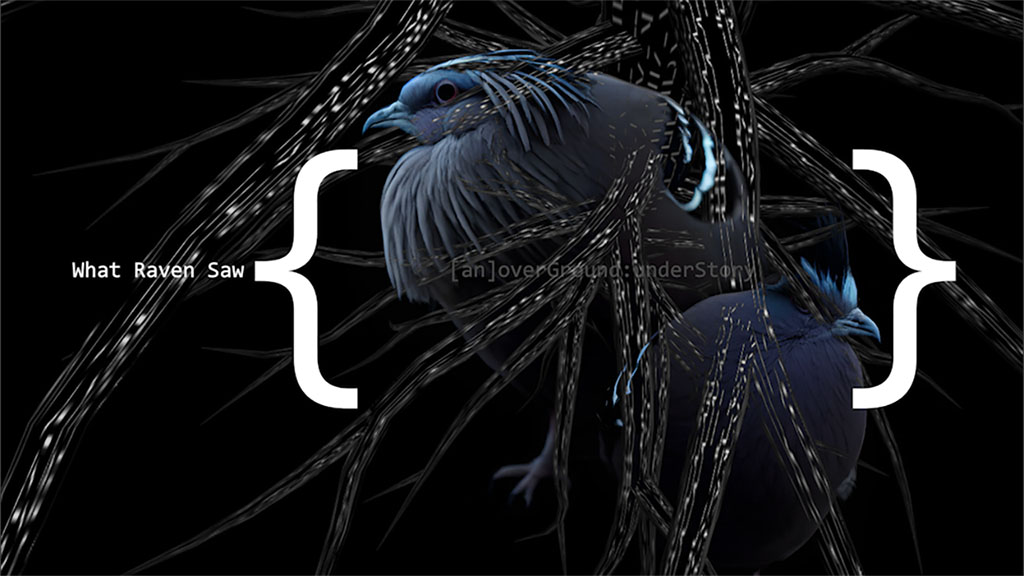
Dr. Andrew Burrell is a Senior Lecturer in Visual Communication at the University of Technology Sydney's Faculty of Design and Society. He is a practice-based researcher and educator exploring virtual and digitally mediated environments as sites for the construction, experience, and exploration of memory as narrative. His work sits at the intersection of digital media, virtual reality, and environmental humanities, with a particular focus on more-than-human ecologies and queer approaches to virtual environments. Andrew's research investigates the relationship between imagined and remembered narrative and how the multi-layered biological and technological encoding of human subjectivity may be portrayed within, and inform the design of, virtual environments. His networked projects in virtual and augmented environments have received international recognition, with recent works including "Twice, again" and "overGround:underStory," which explore the role of memory and forgetting in machine-mediated spaces and more-than-human encounters between physical and virtual ecologies. His creative practice informs his traditional research outcomes, which include publications in journals such as the Leonardo Electronic Almanac and Virtual Creativity. Andrew is particularly interested in how emerging and speculative technologies are implicated in more-than-human ecologies, and he uses creative practice to research and understand the complexities of these technologies. Andrew is a member of the UTS Visualisation Institute, a multidisciplinary research group focused on the creation of data visualizations, stories, and immersive experiences, and the School of Design's Critical Visualisation research group. He has received funding from various sources including the Australian Research Council (ARC) Discovery Projects and Create NSW. Research Interests Virtual and Augmented Reality as narrative spaces Memory construction in digital environments More-than-human ecologies and digital storytelling Queer approaches to virtual embodiment Creative applications of machine learning and AI Data visualization and environmental storytelling Accessibility and ethics in digital humanities Notable Projects Twice, again : Examines the role of memory and forgetting in machine-mediated spaces overGround:underStory : Explores entangled networks between physical and virtual ecologies Waves of Words : ARC Linkage initiative investigating language movement in pre-colonial times can't buy me love : A virtual environment collaboration with Amala Groom Layered Horizons : A geospatial humanities research platform Scientific Recognition MMUVE IT - Inter-Arts Office Australia Council Grant (2008) International presentations at conferences including ISEA (International Symposium on Electronic Art) Teaching and Supervision Andrew is an advocate for studio-based learning in which students design solutions to real-world questions through iteration and experimentation. He considers design as an anchor for interdisciplinary practice and regularly brings cross-disciplinary perspectives into his teaching. He currently supervises five PhD and master's students, with an interest in working with students at the intersection of traditional and practice-based research approaches. Research Themes in Recent Publications Andrew's recent publications demonstrate a consistent focus on the intersection of virtual environments, narrative construction, and ecological thinking. His work explores how digital technologies can be used to create new forms of storytelling that acknowledge our entanglement with non-human entities. There's a strong emphasis on ethical considerations in digital design, particularly regarding accessibility and representation. His research also investigates the application of machine learning technologies in creative practice, examining both their potential and limitations for representing human experience.
Tate Carson is an Assistant Professor in Digital Sound Design at Dakota State University, affiliated with the College of Arts & Sciences. His academic and creative work bridges music, technology, and interactive media, with a strong emphasis on human-computer interaction and new musical interfaces. His educational background includes a Ph.D. in Experimental Music and Digital Media from Louisiana State University, an M.F.A. in Electronic Music and Recording Media from Mills College, an M.M. in Jazz Studies from the University of New Orleans, and a B.M. in Music Industry Studies with a concentration in Jazz Bass from Loyola University New Orleans. Carson’s research and teaching focus on innovative applications of technology in music, including web audio, mobile music, and networked performance systems. His work explores how digital tools can enable participatory and environmentally responsive musical experiences. He has developed open-source curricula and taught programming for art and music at both university and high school levels. The most recent publications highlight trends in peer-to-peer music platforms, environmental sound awareness, audience-driven compositions, and collaborative circuit-bent devices. These works reflect a consistent interest in decentralization, interactivity, and ecological engagement through sound. 2nd place in Musicworks' 2016 Electronic Music Composition Contest for 'Before, I wandered as a diversion' Carson has advised and mentored students through undergraduate research and has been involved in curriculum development, particularly within STEM-integrated arts programs. He has secured teaching roles supported by initiatives like the LSU STEM Certification Pathways. His collaborative projects often involve interdisciplinary teams and open-access educational tools. He is actively involved in research labs and creative teams focused on web audio, networked music performance, and digital sound design, frequently presenting at leading international conferences such as the Web Audio Conference and New Interfaces for Musical Expression (NIME).
Jon Ivan Gill is an Assistant Professor of Philosophy at Gustavus Adolphus College , specializing in interdisciplinary intersections of philosophy, religious studies, and cultural theory. His work bridges Afrofuturism, Hip-Hop, and poststructuralist critiques of race and religion. His research explores philosophy of race , process philosophies , theopoetics , and decolonial frameworks , with a focus on applying Hip-Hop aesthetics to philosophical and theological inquiry. He has authored and edited publications examining these themes, including a forthcoming monograph on reimagining race through process thought. Recent publications include: 2025 : Multi/race/less/ness: A Process Alternative to Category (Bloomsbury's Continental Philosophy series) 2022 : Toward Afrodiasporic and Afrofuturist Philosophies of Religion (Wipf and Stock, edited student volume) 2019 : Underground Rap as Religion (Routledge Studies in Hip-Hop and Religion) Gill integrates creative practices into academia, co-owning the record label Serious Cartoons Records and Aesthetic Religion Records and Texts record store. He performs as the Hip-Hop artist "Gilead7" and collaborates with musical collectives like Tomorrow Kings and Crystal Radio . His teaching emphasizes innovative, transformative approaches through courses on Battle Rap Philosophy , Afrofuturism , and Atheism .
Jacob Shaw is Professor of Cello at the Royal Northern College of Music and Visiting International Chair of Cello at the Royal Welsh College of Music and Drama. An internationally acclaimed British cellist with a career spanning nearly two decades across five continents, he has performed at major concert venues including Carnegie Hall, Berlin Konzerthaus, and Royal Albert Hall. Based in Denmark for over 15 years, he balances his academic roles with leadership of the innovative Scandinavian Cello School. Shaw's research interests focus on transformative approaches to music education, particularly through his groundbreaking work at the Scandinavian Cello School (SCS) , which he founded in 2016. His research spans three key areas: Biodiversity and Sustainability in Performing Arts (2022-2025), Mental Health within Elite Classical Music Training (2016-2024), and the MERITAcubed European partnership project (2025-2029). The SCS represents a holistic approach to music education that combines world-class training with mental wellness practices, sustainable living, and community engagement. His recent publications reveal a consistent focus on innovative approaches to cello performance and music education. The 2024 Strad article 'The Road to Vienna' and corresponding recording explore performance preparation, while the 2021 New York Times feature highlighted his unique 'Musical Farm' concept that went viral with 2.1 billion views. His work increasingly emphasizes the integration of sustainability practices, mental wellness, and community engagement within classical music training. His scientific recognition includes the Danish National Radio Firesoul Award for his mental health work in music education, along with numerous competition prizes during his performing career. Additional honors stem from the viral success of SCS, which has been featured in major global media outlets. Shaw has secured substantial research funding including support from the Danish Arts Council, Augustinus Foundation, W. Demant Foundation, Greenland Resources, and most significantly a €2.8 million grant from Creative Europe. His advisory work extends through SCS Consultancy, serving industry leaders like Deutsche Grammophon and business clients including Ernst & Young and McKinsey & Company. In 2022, he served as Director of Culture for the UNESCO World Heritage Site of Stevns Klint. The Scandinavian Cello School operates from a historic 1800s farm near the UNESCO World Heritage site of Stevns Klint in Denmark, welcoming approximately 150 guests annually. The school has gained international recognition for its unique ethos that achieves a healthy work-life balance alongside world-class music training. Outreach concerts, outdoor experiences, and collective living form part of their philosophy to create more balanced and ultimately better musicians. The school has succeeded in bringing classical music to new audiences in untraditional surroundings, challenging and strengthening both international and Danish musical talents.
Oriane Maubert is a PhD candidate at Montpellier 3 Paul-Valéry University and a full-time Lecturer at Sorbonne Nouvelle University Paris 3. She specializes in Theater Studies through her role at the Institute of Theater Studies and is affiliated with the RIRRA21 laboratory, focusing on Romanticism to 21st-century reality representation. PhD in Theater Studies (2013-present) Master 2 Research (2013) Licence in Theater Studies (2011) Her research bridges puppetry and contemporary dance , analyzing gestural reactivation through intermedial collaborations. Keywords: dance, puppet, gesture, corporeality, intermediality, contemporary stagecraft, object-body dynamics. Recent publications explore themes like: Choreographic puppet-body interactions Gender through historical lenses Interdisciplinary methodologies Spectator training frameworks She received scholarships from the International Puppet Institute and RIRRA21 for global conference participation. As an educator, she teaches: Dramaturgy and spectator analysis (Paris 3) Theater-video intersections (Paris 3) Interdisciplinary puppetry-dance studies (Paris 8) She co-edits the Manip journal and directs the Action Parallèle platform for doctoral researchers.
Jan Bang serves as Professor in the Department of Rhythmic Music at the University of Agder (UiA), Norway, with office K2022 at Universitetsveien 25, Kristiansand. A prominent Norwegian composer, musician, and producer of international standing, he co-founded and directs the Punkt Festival with Erik Honoré since 2005. The festival's live sampling concept has been presented in 25 cities globally including London Jazz Festival, Paris' Banlieues Bleues, and San Sebastian Jazz Festival. His primary research interests focus on Electronic Music, Jazz Studies, Live Sampling, and Music Production. Bang explores real-time remix methodologies, the intersection of silence and sound, and political dimensions of art. His work emphasizes technological innovation in performance contexts while maintaining strong ties to Norwegian and global jazz traditions through collaborative improvisation and cross-genre experimentation. Recent publications (2023-2025) reveal concentrated activity in live electronic performance documentation, festival curation, and artistic responses to global conflicts. Collaborations with Ensemble Modern and Eivind Aarset dominate output, alongside politically engaged commentary like his 2025 La Stampa piece on Gaza. Themes consistently address latency as creative material, cultural memory in sound, and the role of electronic processing in contemporary music ecosystems. Bang conducts international masterclasses (Barcelona, Rome) but no formal graduate students or specific grant projects are documented in the source text. His advising appears practice-based through festival workshops and performance collaborations rather than traditional academic supervision. He co-founded the Punkt Festival as a primary creative platform, operating as both artistic director and research vehicle. Additionally affiliated with UiA's Electronic Music and Songwriting and Production research groups, his work integrates festival operations with academic inquiry through projects like Stillefeldt vs Punkt (with Birmingham City University) and Global Jazz Studies networks.
Laura Gonzalez is a Professor of Research and Interdisciplinary Work at the Royal Conservatoire of Scotland and an Athenaeum Research Fellow. She serves as a summer faculty member, advisor, and supervisor for the MFA and PhD residency program at Transart Institute. Her work spans performance art, medical humanities, psychoanalysis, and embodied practices, with a particular focus on hysteria studies and breathwork. Her educational background includes: PhD in Cultural Communication and Computing Research Institute (C3RI), Art and Design Research Centre, Sheffield Hallam University (2005-2010) Postgraduate Certificate in Learning and Teaching in Art, Design and Communication (2004-2005) Master of Fine Art: Drawing, Wimbledon School of Art (2000-2001) Licenciada en Bellas Artes (BA equivalent), Universidad del Pais Vasco, Spain (1995-2000) Gonzalez's research explores the intersections of performance, psychoanalysis, and medical humanities, with particular emphasis on hysteria as a cultural and embodied phenomenon. Her work investigates how knowledge is produced through the body, especially through 'illegitimate forms of knowledge' such as intuition, magic, and oracles. She examines the relationship between breath, performance, and consciousness, developing practices that connect somatic awareness with artistic expression. Her research also engages with feminist theory, exploring how women's bodies have been historically pathologized while simultaneously serving as sites of resistance and creative transformation. Her recent publications reveal a consistent trajectory exploring embodiment, hysteria, and breath as artistic and scholarly concerns. She has increasingly focused on the medical humanities, examining historical medical texts and case histories through performance. Her work demonstrates a movement from theoretical analysis of seduction in art toward practical applications of breathwork and embodied knowledge in performance contexts. The interdisciplinary nature of her scholarship bridges art practice, psychoanalytic theory, and medical history. Her notable awards and recognitions include: Shortlisted for the Adrian Howells Award For Intimate Performance (2019) Athenaeum Award – Knowledge Exchange Route (2023) Glasgow Medical Humanities Network Foundation Award (2023) Athenaeum Award for research (2021) Multiple Research Development Funds from The Glasgow School of Art (2012-2016) AHRC Collaborative Doctoral Awards (2005, 2006, 2013) Gonzalez has supervised numerous doctoral students across institutions including the Royal Conservatoire of Scotland, Glasgow School of Art, and Transart Institute. Her supervision focuses on interdisciplinary projects at the intersection of performance, visual arts, and embodied research. She has secured significant grant funding for projects exploring the relationship between imitation and dance, breath practices, and hysteria studies. Her collaborative projects often involve partnerships with medical humanities scholars, performance practitioners, and community organizations. She is actively involved in several research collectives including The Workroom (since 2017), where she develops collaborative performance projects. She co-founded @TheGlasgowJam (2015-2018), creating space for multidisciplinary arts exploration. In 2021, she created the Scottish Breath Network, fostering interdisciplinary research on breathing practices. She also co-founded the Dialectical Materialist Book Group with Ian Macbeth, exploring Marxist theory through collective reading.
Professor David Cross is Professor of Visual Arts at Deakin University within the Faculty of Arts and Education/School of Communication and Creative Arts. Based at Melbourne Burwood Campus, he maintains an active studio practice alongside his academic responsibilities, with his professional website providing further insight into his artistic work. David Cross's research interests focus on visual arts, particularly public art, performance, installation, video, curation, and theories of subjectivity. His practice extends across multiple media including inflatable structures to negotiate interpersonal exchange, examining themes of risk, pleasure, and participation. He has performed internationally at live art festivals in Poland and Croatia and represented New Zealand at the 2011 Prague Quadrennial. His recent publications demonstrate a strong focus on public art practice, curatorial methods, and contemporary art theory. The articles reveal consistent engagement with site-specific interventions in public spaces, environmental contexts, and community engagement. Cross frequently explores the relationship between art and infrastructure, particularly in water treatment facilities and coastal environments. His work shows a commitment to collaborative practices and international contexts, with projects spanning Australia, New Zealand, Europe, and Asia. Cross co-founded the Public Art Commission (PAC) research initiative at Deakin University in 2017 with Cameron Bishop, which has developed numerous significant projects including Treatment series (2015-2023), Venetian Blind (2019), Six Moments in Kingston (2019), and Front Beach Back Beach (2022). He currently serves as Research Leader of the Public Exchange Bureau at Deakin. Cross has extensive supervision experience with 8 current doctoral candidates and 1 current masters student, plus 15 completed doctoral candidates. His grant history shows consistent funding for public art projects from various councils and organizations including Wyndham City Council, Mornington Peninsula Shire Council, and Creative Victoria. As an active member of the academic community, Cross serves as Treasurer for the Deans of Design and Creative Arts, Australia, and as a Board Member for NETS (National Exhibition Touring Scheme), Victoria. His professional practice bridges academic research, artistic creation, and community engagement through numerous public art commissions and curatorial projects.
Dr. Julie Andreyev is an Associate Professor in the Audain Faculty of Art at Emily Carr University of Art + Design. Her work bridges art and ecology, focusing on multispecies collaboration and biophilic ethics. She teaches courses in New Media + Sound Arts and Critical Studies. Education: PhD in Biophilic Ethics and Creativity with More-Than-Human Being from Simon Fraser University (2016). Research Interests: Interspecies creativity Eco-poetics and soundscapes Climate emergency adaptation Acoustic ecology Animal ethics in art Urban forest ecosystems Grants & Support: 2021 Art Apprenticeship Network Grant 2018 Emily Carr University Internal Research Grant Funded by Canada Council for the Arts and SSHRC Key Projects: Bird Park Survival Station (2015-ongoing) – climate emergency project with local birds Branching Songs (2024) – multispecies art project with old-growth trees Wild Empathy (2018) – VR project for ecological empathy EPIC_Tom (2014-16) – canine creativity performance Vegan Congress (2013) – activist art collective Publications: Lessons from a Multispecies Art Studio (2021 book), Responding to Dogs (2017 essay), and articles in BC Studies , Humanimalia , and Public Art Dialogue . Labs/Teams: Her Animal Lover studio and collaborations with researchers like Simon Lysander Overstall.
Mag. phil. Mag. art. Dr. phil. Stephan Hametner is a Professor at PH-OÖ (University College of Teacher Education Upper Austria) since 2014, specializing in Subject Didactics for General Music Education across elementary and secondary levels. His expertise spans Systemic-constructivist didactics Empirical research in music education Curriculum development Academic supervision Organizational development Academic background highlights include: PhD in Music Education/Pedagogy (2004, magna cum laude ) Diploma in Music Education (University of Music and Performing Arts Vienna & University of Vienna, 2000 magna cum laude ) Diploma in Rhythmics (1996 magna cum laude ) Research focuses on systemic-constructivist music pedagogy , with key contributions in Didactic frameworks for music interpretation Empirical validation of teaching methods Integration of movement and music Subject-oriented educational theory His publications analyze music's role in cognitive development and pedagogical innovation, emphasizing experiential learning. He also contributes to media education through 50 ethnomusicological radio programs (Radio Orange 94.0, 2000-2005) Interactive educational CD-ROMs Academic case studies Active in international collaborations, he serves as expert for Bern University of the Arts and contributes to the Rhythmic Expositur Biel project. Current projects include reception-aesthetic film analysis for teacher training and music identity development in educational settings.
Marina Grishakova serves as Chair Professor of Literary Theory and Intermedial Studies at the Institute of Cultural Research, Faculty of Arts and Humanities, University of Tartu. Elected to Academia Europaea in 2016, she holds prominent leadership roles including membership on the International Comparative Literature Association (ICLA) Executive Council and supervision of the International Research Training Group Baltic Peripeties (Universities of Greifswald, Tartu, and Trondheim). Her academic trajectory shows steady progression from Lecturer (1993-2004) to Associate Professor (2008-2015) and finally to full Professor (2015-present), with significant international engagement through Fulbright, DAAD, and British Academy fellowships. Professor Grishakova's research spans narratology, literary theory, intermedial studies, and semiotics of culture, with particular focus on narrative complexity, literature-film relationships, and cognitive approaches to narrative. Her scholarly evolution demonstrates movement from early work on Nabokov's spatial models toward increasingly sophisticated interdisciplinary frameworks that bridge humanities with cognitive science. She has made substantial contributions to understanding how narrative structures shape human cognition and cultural evolution, especially during periods of crisis and transformation. Her recent publications reveal thematic concentration on narrative complexity, intermediality in digital contexts, and pandemic narratives. The 15 most recent articles show consistent exploration of how narrative forms adapt to represent complex systems and experiences, with growing emphasis on cross-media applications and the epistemological dimensions of fiction. Her work increasingly integrates insights from cognitive science, systems theory, and media studies to develop new theoretical frameworks for understanding narrative representation. Member of Academia Europaea (2016) British Academy Visiting Scholar grant (2011) Honorary badge of the University of Tartu (2011) Fulbright scholarship for senior researchers (2008) DAAD research scholarship (2007) NordForsk grant as project leader (2008) Special issue of CompLit nominated for ESCL Excellence Award (2023) Professor Grishakova has supervised 9 doctoral students and 5 postdoctoral researchers across international institutions, with projects spanning cognitive approaches to fiction, narrative ethics, and digital storytelling. She has led major international collaborations including the European Network of Comparative Literary Studies (2011-2013) and Nordic Network of Narrative Studies (2007-2011), and currently participates in COST Action INDCOR on Interactive Narrative Design and the CELSA project 'Re-Familiarizing the Body and its Umwelt.' Her extensive service includes editorial board membership for five international journals and advisory roles for prestigious book series. Directing the Narrative, Culture, Cognition research group at the University of Tartu, Professor Grishakova maintains an active international presence with over 30 recent guest lectures and plenary presentations across Europe. Her scholarly impact extends through translation of her works into French, Spanish, Czech, Bulgarian, and Chinese, demonstrating significant global influence in literary theory and narratology.