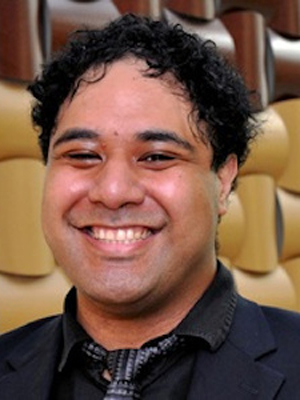
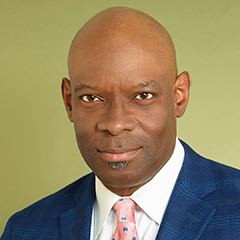
Oden Groth is an Assistant Professor of Digital Marketing and Information Systems at Fairleigh Dickinson University (FDU), affiliated with the Department of Marketing, Management and Entrepreneurship within Silberman College. He holds a BSc from the University of York (UK), MSc from the University of Oxford (UK), and a PhD from Baruch College, CUNY. His research focuses on digital marketing strategies, consumer behavior in technology-driven markets, and sensory marketing applications. Key interests include crossmodal sensory effects on consumer preferences, authenticity perceptions in digital formats, and the role of haptic feedback in advertising. Recent publications explore topics like disability identity's impact on innovation, physical vs digital product symbolism, and multisensory consumer experiences. His work bridges marketing theory with practical applications in e-business and digitization trends. No awards or grants explicitly listed. He teaches courses including Social Media Marketing, E-Business, and Sensory Marketing.
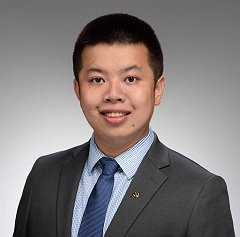
Toby Jia-Jun Li is an Assistant Professor in the Department of Computer Science and Engineering at the University of Notre Dame, where he leads the SaNDwich Lab. He also serves as the Director of the Human-Centered Responsible AI Lab in the Lucy Family Institute for Data & Society and is a Faculty Fellow at the Institute for Educational Initiatives (IEI). Previously, he was affiliated with Carnegie Mellon University's Human-Computer Interaction Institute (HCII) and GroupLens Research. Dr. Li's research spans the intersection of Human-Computer Interaction (HCI), End-User Software Engineering, Machine Learning (ML), and Natural Language Processing (NLP), with recent work focusing on addressing societal challenges in the future of work through human-AI collaborative approaches. His work has resulted in over 40 publications at premier venues including CHI, UIST, CSCW, ACL, and ICSE, with 8 papers winning Best Paper or Honorable Mention awards. His recent publications demonstrate a strong focus on human-AI collaboration across various domains, including code understanding, privacy, accessibility, and creative tools. The work shows a trajectory toward increasingly sophisticated integration of human-centered design with AI capabilities, particularly using large language models to enhance human productivity and address societal challenges. Google Research Scholar Award recipient Recipient of Yahoo! Fellowship ($100,000/year) Best Paper Award at UIST 2020 Best Paper Honorable Mention Award at CHI 2021 Best Paper Award at CSCW 2024 Best Paper Award at CHI 2025 Dr. Li actively mentors Ph.D. students and has established collaborations with Google, Microsoft Research, IBM Research, Adobe, Verizon, and J.P. Morgan. His research has been supported by NSF, Google Research Scholar Program, AnalytiXIN Initiative, Yahoo! InMind project, and J.P. Morgan. He is currently recruiting Ph.D. students and undergraduate researchers for his SaNDwich Lab, which focuses on developing interactive systems to empower individuals to create, configure, and extend AI-powered computing systems.
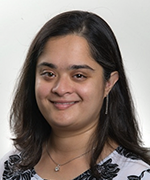
Devi Parikh is an Associate Professor at the School of Interactive Computing, Georgia Institute of Technology, and a Research Director at Meta’s FAIR lab. Her research focuses on generative models, AI for creativity, computer vision, and natural language processing. Education: B.S. in Electrical and Computer Engineering from Rowan University (2005), M.S. and Ph.D. in Electrical and Computer Engineering from Carnegie Mellon University (2007, 2009). Research interests include embodied AI, human-AI collaboration, and creative applications of AI. She has held visiting positions at Cornell, MIT, CMU, and others. Awards include NSF CAREER Award, IJCAI Computers and Thought Award, and multiple fellowships. Led development of Habitat , a platform for embodied AI research, and contributed to the Open Catalyst Project for renewable energy storage.
Amalia Foka is an Assistant Professor in Computer Science Applications for the Arts at the Department of Fine Arts & Art Sciences , School of Fine Arts , University of Ioannina , Greece. She has held academic positions at the University of Patras (2005-2013), University of Ioannina (2005-2008), and Computer Technology Institute & Press "Diophantus" (2014-2015). Her research bridges Artificial Intelligence with Digital Art , focusing on Generative AI , Social Media Mining , and Human-Computer Interaction within artistic contexts. Education: BEng in Computer Systems Engineering (1998) from the University of Manchester Institute of Science & Technology (UMIST) , UK MSc in Advanced Control (1999) from UMIST PhD in Robotics (2005) from the Department of Computer Science , University of Crete Her artistic research includes projects like Bushwalking (StyleGAN2 landscape generation), Breaking the Silence (NLP analysis of taboo topics), and The Invisible Structures of the Artworld (social media-driven network visualization). She leads the Multimedia Lab at the University of Ioannina, focusing on AI in Creative Processes and Digital Interaction methodologies.
Paul Taele is an Instructional Assistant Professor and Deputy Lab Director in the Sketch Recognition Lab at Texas A&M University's Department of Computer Science & Engineering. He holds a Ph.D. (2019), M.S. (2010), and dual B.S. degrees in Computer Science and Mathematics from the University of Texas at Austin (2006). His research focuses on sketch recognition, haptics, and intelligent interfaces for education and accessibility, with notable work in mid-air gesture recognition, educational sketching tools, and assistive technologies for disabilities. He has contributed to projects like Kanji Workbook , Hashigo , and HaptiMoto , and has published over 50 peer-reviewed articles across venues like CHI, IUI, and AAAI. Taele has received awards including the NSF Student Travel Grant (2014) and Ford Foundation Honorable Mention (2015). He teaches courses in capstone design, programming, and sketch recognition, and mentors students across all academic levels through strict eligibility criteria for research collaborations. Education : Ph.D. Computer Science, Texas A&M University (2019) M.S. Computer Science, Texas A&M University (2010) B.S. Computer Science & Mathematics, University of Texas at Austin (2006) Concentration in Mandarin Chinese, National Chengchi University (2007) Research Interests : Taele's work bridges HCI and AI to create accessible educational interfaces. His projects emphasize: Sketch Recognition : Developing algorithms for mid-air gestures, children's developmental assessments, and language learning Accessibility : Haptic systems for visually impaired learners and algebra education Educational Tech : Intelligent tutoring systems for music, math, and East Asian languages Awards & Grants : EAAI-20 Travel Grant (2020) Ford Foundation Dissertation Honorable Mention (2015) NSF East Asia-Pacific Summer Institutes (2013, 2012) Royce E. Wisenbaker Fellowship (2009) Lab & Teams : Director of the Sketch Recognition Lab (SRL) and collaborator with global institutions like Singapore Management University and National Taiwan University. Active in organizing workshops like SketchRec at IUI conferences.
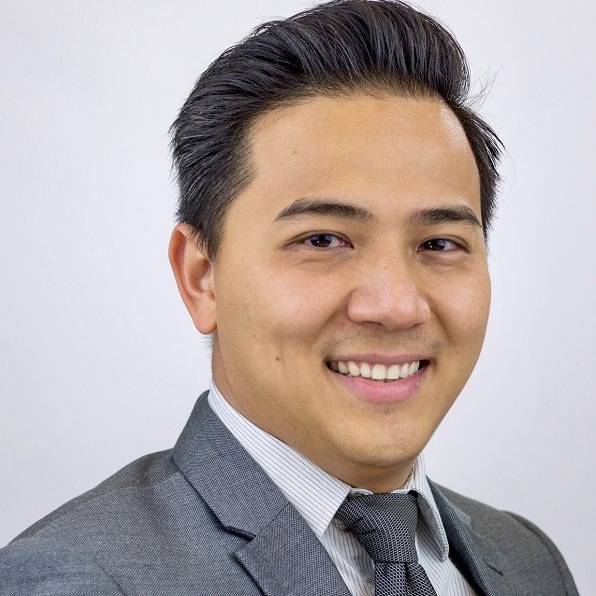
N. Rich Nguyen is an Assistant Professor in the Department of Computer Science at the University of Virginia (UVA), where he joined in August 2018. He's part of the School of Engineering and Applied Science and is on a teaching track , focusing on making machine learning accessible and engaging for all students. Research and Innovation: Rich Nguyen's research interests include biomedical image analysis , machine learning , and computer science education . He aims to reinvent instructional activities to make them adaptive and engaging by incorporating art and music elements to help everyone learn coding. Notable research contributions include: Floodwatch : A system for flood monitoring using crowdsourced images TuneScope : A digital music creation tool combining SoundScope and Snaps! technology CAD Library : Open-source design tools for educators AI for early sepsis detection : Highlighted in UVA Today Teaching Accomplishments: Before UVA, Rich taught computer science courses at UNC Charlotte for four years to a total of 1,458 students. At UVA, he teaches several courses including: CS 4774: Machine Learning (multiple semesters) CS 2501: Machine Learning for All (launched in Fall 2021) SYS 6016 / SDS 6050: Deep Learning CS 2150: Data and Program Representation (multiple semesters) CS 6316: Machine Learning (Graduate Level) CS 2910: CS Education Practicum (for Teaching Assistants) He previously taught at UNC Charlotte: ITCS 1600: Computing Professionals ITCS 2600: Computing Professionals for Transfer Students ITCS 4156: Introduction to Machine Learning ITCS 2215: Design and Analysis of Algorithms Academic Achievements: Rich Nguyen has received several notable awards and grants: Google Faculty Award for Machine Learning Education with TensorFlow (2019) Best Paper Award at IEEE BigDataSE (2022) Best Poster Award at SITE Conference (2022) CCI Faculty Innovation Award (2018) NSF grants for Smart and Connected Communities (2022) and Computational Thinking (2021) 3 Cavaliers Grant on Coding and Music (2021) Student Mentorship: Rich has mentored numerous students and teaching assistants who have achieved recognition. Notable students include: Joy Qiu - Published in Clinical Infectious Diseases Louisa Edwards and Zach Boner - Invited to Ken Ono Podcast Mike Ferguson - Winner of CS Louis T. Rader Undergraduate Teaching Award He has also served as faculty advisor for HooHacks (UVA's hackathon) and co-founded CharlotteHack at UNC Charlotte. Labs and Collaborations: Rich Nguyen leads the ML4VA (Machine Learning for Virginia) initiative, engaging students in project-based learning to apply machine learning to real-world problems affecting Virginia communities. He collaborates with institutions for symposiums on smart cities, particularly with ASEAN universities, and has partnered with Premier Healthcare for hackathons and with Glen Bull on educational technology projects.
Miguel Ángel Bernal Merino serves as a Part-Time Lecturer in the Department of Modern Philology, Translation and Interpretation at the University of Las Palmas de Gran Canaria. Concurrently, he acts as convener of the MA in Translation at the University of Roehampton in London, managing its Specialised Translation, Audiovisual Translation, and Intercultural Communication pathways since 2005. His academic profile bridges theoretical research and industry application in localization disciplines. PhD in The Localisation of Video Games, Imperial College London MSc in The Localisation of Multimedia Interactive Entertainment Software, Imperial College London Certificate in Software Localisation, University of Limerick CELTA, University of Cambridge MPhil in Lip-Synched Dubbing, Universidad de Alicante MA in Hispanic Literature, University of Rhode Island BA in English & Spanish Linguistics, Universidad de Alicante Bernal Merino's research pioneers the expansion of Translation Studies into interactive media domains. His work on video game localization examines interactivity, cultural adaptation, glocalisation, and playability, while his audiovisual translation research investigates creativity in lip-synched dubbing, subtitling, and audiodescription. He extends these frameworks into gaming-based language learning through haptic environments and multisensory reinforcement, exploring physiological aspects of multilingual cognition and polysemiotic neural networks. This multidisciplinary approach fundamentally challenges traditional boundaries in translation theory. His publication trajectory reveals evolving industry-academia integration, shifting from foundational game localization frameworks (2008-2015) toward user-centered research and educational applications (2018-2024). Recent work emphasizes measurable business impacts through quality localization, regional market adaptations, and crowd-sourced methodologies, demonstrating consistent influence on professional standards across gaming and translation sectors. Fellow of the Higher Education Academy Bernal Merino supervises doctoral research on mobile game localization, transmedia fan experiences, and historical game content translation while developing industry-academia pipelines through projects like AHRC's Media Across Borders. His funded initiatives—including Maximising ROI through Quality Game Localisation and Video Games for Language Learning—bridge theoretical innovation with commercial implementation, focusing on glocalisation strategies, interactivity metrics, and playability optimization. These collaborations connect European universities, gaming studios, and localization service providers. As chair of the IGDA Localization SIG and member of GIR Discourse, Communication and Society, he directs international forums for game localization discourse. His work with Routes into Languages promotes audiovisual media in language education, while REF-readiness collaborations enhance research excellence across European institutions through his professional network spanning industry conferences like GDC Summit and Game Global.
David Salesin is an Affiliate Professor in the Department of Computer Science & Engineering at the University of Washington and a Principal Scientist/Director at Google Research since 2019. He has held academic roles at Cornell University (Visiting Assistant Professor, 1991-92) and guest professorships at Zhejiang University. His career spans academia and industry, including leadership at Adobe's Creative Technologies Lab (2005-17) and Microsoft Research (1999-2005). PhD, Stanford University (1991) Sc.B., Brown University (1983) His research focuses on computer graphics, particularly non-photorealistic rendering, digital typography, color science, and adaptive document layout. He pioneered techniques in image-based rendering, pen-and-ink illustration, and facial animation, with applications in multimedia and user interface design. Article Trends : His work bridges procedural content generation, 3D visualization, and artistic computing, emphasizing user-driven tools for creative industries. Key subfields include texture advection, multiresolution modeling, and real-time camera control for virtual cinematography. Scientific Awards : ACM Fellow (2002) ACM SIGGRAPH Achievement Award (2000) Carnegie Foundation Professor of the Year (1998) NSF Presidential Faculty Fellow (1995-98) Alfred P. Sloan Research Fellowship (1995-97) Numerous industry grants and lab donations He has advised over 30 PhD and Master's students, including leaders at Microsoft, Pixar, and Google. His labs at UW and Adobe focused on graphics, imaging, and creativity tools.
Ian Condry is a Professor of Japanese Culture and Media Studies at MIT, affiliated with the Department of Anthropology. He holds a BA in Government from Harvard (1987) and a PhD in Anthropology from Yale (1999). His research focuses on Japanese popular culture, media globalization, and creative industries. He is best known for his seminal work on hip-hop in Japan and anime production, emphasizing collaborative creativity and cultural hybridity. Condry leads the MIT Spatial Sound Lab, exploring immersive audio technologies, and co-founded the music discovery platform Hearby.com. He hosts the 'Near and Far' Japanese hip-hop radio show on WMBR 88.1FM since 2018 and releases music as Leftroman. Condry’s academic roles include former Head of Global Studies and Languages at MIT and Executive Committee member of the Technology Broadcasting Corporation. His work bridges academic research with creative practice, including organizing the Dissolve Music conference and curating multimedia projects. He has pioneered open-access publishing, making his books available under Creative Commons licenses. His research spans media anthropology, youth culture, and digital media’s societal impact. Key projects include the MIT/Harvard 'Cool Japan' research initiative and studies on post-3/11 cultural recovery. Condry’s interdisciplinary approach integrates ethnographic methods with technological innovation, addressing themes of global cultural flows and participatory media production.
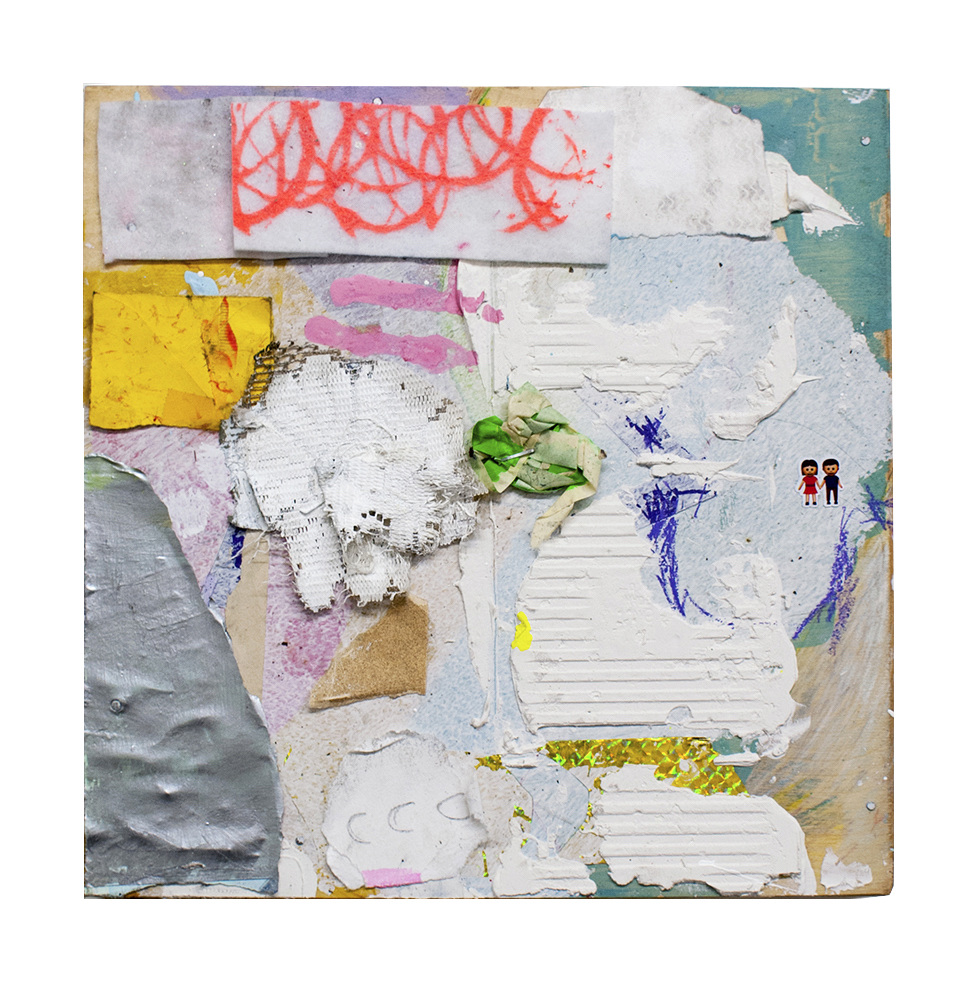
Laura M Denzer is an Adjunct Assistant Professor in the Drawing, Painting Department of the School of Art + Art History at the University of Florida. She holds a BFA from the School of the Art Institute of Chicago (2011) and an MFA from the University of Florida (2017). Her practice focuses on spatial and corporeal investigations through collage, painting, and mixed media, exploring themes of memory, identity, and transformation. Denzer’s research examines how physical and abstract spaces shape personal and collective narratives. Her work often incorporates fragmented forms, architectural references, and domestic patterns to reflect on liminal states and life transitions. Recent projects address motherhood and pandemic experiences as catalysts for reimagining selfhood and temporal continuity. Her artistic output includes over 100 works across decades, with notable series from 2023-2024 featuring screenprints that blend color theory and narrative imagery. Earlier works like Arms Folded (2016) and Party Favors (2011) demonstrate her evolving engagement with material experimentation and conceptual layering. Denzer’s practice also extends to curatorial roles, including her guest editorship of Number Magazine #96: Dependency . Her creative process integrates found materials, intuitive color choices, and formal investigations to create compositions that balance rootedness and transience. Current work explores spatial fragmentation as a metaphor for life transitions, reflecting on both personal and societal upheavals.
Martha Stiegman is an Associate Professor at the Faculty of Environmental and Urban Change, York University. Her research integrates Indigenous knowledge, food sovereignty, and arts-based methodologies to address issues of social, environmental, and disability justice. She is actively engaged in community-based research and public scholarship in Toronto and Mi’kma’ki (Nova Scotia). Her educational background includes a PhD from Concordia University’s Special Individualized Program and a BA in English Literature & Political Science from McGill University. This interdisciplinary foundation supports her work at the intersection of activism, research, and art. Stiegman’s research focuses on three interconnected domains: Indigenous/settler treaty relations, food sovereignty and justice movements, and participatory video and arts-based research. She emphasizes decolonizing methodologies and community-led knowledge production. Her work explores how arts-based approaches can deepen dialogues across communities and strengthen collective action for justice. Her recent publications and multimedia projects demonstrate a strong trend toward interdisciplinary, community-engaged scholarship that bridges Indigenous epistemologies, environmental justice, and disability justice. She frequently uses film, digital storytelling, and public art to mobilize knowledge and challenge colonial narratives. Co-creator of A Treaty Guide for Torontonians (2022) Lead on the Polishing the Chain project exploring Toronto’s treaty relationships Editor of the forthcoming Anti Colonial Food Systems (Routledge) Active collaborator with Indigenous scholars and artists including Dr. Sherry Pictou, Ange Loft, and Elder Kerry Prosper Stiegman has been involved in significant research grants such as the Atlantic Aboriginal Health Research Program. While specific advisees are not listed, her collaborative projects suggest active mentorship and supervision. She does not appear to lead a formal lab but works within research collectives and community partnerships.
Stephen Kimber is the Inglis Professor and Cohort Director of the MFA in Fiction program at the University of King's College, Halifax. He holds a Master of Fine Arts from Goucher College and has been a prominent figure in Canadian literature, journalism, and broadcasting for decades. His academic affiliations include extensive teaching roles in the School of Journalism, Writing & Publishing from 1983 to 2021, serving thrice as director and co-founding the MFA in Creative Nonfiction program. Professor at University of King's College Cohort Director for MFA in Fiction Former Director of the School of Journalism, Writing & Publishing His research and creative work span fiction, nonfiction, and multimedia projects. He has authored 13 books, including the award-winning novel Reparations and the biographical Alexa! , which earned the Evelyn Richardson Award. Current projects include a WWII-era Halifax TV series and novel series with Two East Productions. His writing has appeared in major Canadian publications, and he has held roles as a political columnist for the Daily News , CBC broadcaster, and contributor to Atlantic Business Magazine . He serves on the National Advisory Council of The Walrus and has leadership roles in writers' organizations such as the Writers’ Federation of Nova Scotia. Key awards include the Evelyn Richardson Award and nominations for major Canadian literary prizes. His grants and advisory work are intertwined with his academic and creative leadership in Halifax's cultural landscape.
Catherine Guastavino is a Professor at McGill University's School of Information Studies (within the Faculty of Arts) and an Associate Member at the Schulich School of Music. She also contributes to the Centre for Interdisciplinary Research in Music Media and Technology (CIRMMT). Her roles include leading research projects and supervising graduate students in music technology and related fields. She holds a PhD in Psychoacoustics from Université Pierre et Marie Curie (Paris VI), an MSc from IRCAM (France), and a BSc in Mathematics from McGill University. Her research focuses on auditory perception, soundscape analysis, human-computer interaction, and urban acoustics. Notable projects include the 'Sounds in the City' partnership addressing urban noise policy and the development of immersive soundscape simulation tools. She leads or co-leads grants from SSHRC, NSERC, and MITACS, emphasizing interdisciplinary approaches to sound in urban environments. Guastavino's work bridges academic research with practical applications, such as designing sound installations for public spaces and improving acoustic environments in transportation and performance venues. She collaborates with city planners, musicians, and engineers, reflecting her commitment to making cities sound better through evidence-based strategies. Key Projects: SSHRC Partnership Grant for urban soundscape management (2018-2023) NSERC Discovery Grant on auditory localization (2019-2024) MITACS projects on Montreal festival soundscapes and noise policy Labs & Partnerships: Multimodal Interaction Laboratory (MIL) Collaborations with Ville de Montréal and Quartier des Spectacles Education: PhD: Psychoacoustics (Paris VI) MSc: Computer Science & Music Technology (IRCAM) BSc: Mathematics (McGill) Her teaching includes courses like Music Information Retrieval, integrating computational methods with artistic and scientific applications.
Kevin Crowston is a Distinguished Professor of Information Science at Syracuse University's School of Information Studies (iSchool), where he examines how information technology enables new organizational forms through empirical studies, theoretical modeling, and system design. His work focuses on coordination-intensive processes in virtual settings, with significant contributions to citizen science, data science teamwork, and journalism transformation. Education A.B. in Applied Mathematics (Computer Science), Harvard University, 1984 Ph.D. in Information Technologies, MIT Sloan School of Management, 1991 Research Focus : Crowston investigates coordination mechanisms in human-AI collaboration, particularly through projects like Gravity Spy (combining citizen scientists with machine learning for gravitational wave analysis) and journalism innovation (e.g., ReelFramer for AI-assisted news-to-video translation). His framework addresses how intelligent systems reshape work design, knowledge production, and team dynamics in scientific and media contexts. Publication Trends : Recent articles (2024-2025) reveal three dominant threads: (1) Human-AI co-creation in journalism (deskilling/upskilling dynamics, creative tool adoption), (2) Citizen science evolution with AI (co-learning systems, lexical entrainment), and (3) Socio-technical governance of intelligent machines (control-accountability alignment, project archetypes). These reflect his central inquiry into how technology reconfigures work structures. Scientific Recognition ACM Distinguished Speaker Research Leadership : Crowston currently directs two major NSF initiatives: (1) HCC grant 21-06865 on intelligent support for non-expert information navigation, and (2) FW-HTF grant 21-29047 exploring human-technology collaboration in journalism. He spearheaded a Research Coordination Network establishing socio-technical frameworks for work in the age of intelligent machines, culminating in a special issue of Information, Technology & People . Collaborative Infrastructure : He co-leads the Gravity Spy citizen science ecosystem (integrating LIGO physicists, machine learning systems, and volunteers) and serves as co-editor-in-chief of Information, Technology and People , previously editing ACM Transactions on Social Computing . His MIDST platform research advances stigmergic coordination for data science teams.
Dr. Ronald C. McCurdy is a Professor of Music at the University of Southern California's Thornton School of Music and former Chair of the Jazz Studies Department (2002-2008). A distinguished academic and performer, he has held leadership roles such as Associate Dean of the Culture, Community & Impact Committee and served as Director of the Thelonious Monk Institute of Jazz at USC (1999-2001). His career spans decades, including chairing the Afro-African American Studies Department and directing Jazz Studies at the University of Minnesota (1990-1999), and a Visiting Professorship at Maria-Curie Sklodowska University in Lublin, Poland (1997). PhD, University of Kansas (1983) MM, University of Kansas (1978) BM, Florida A&M University (1976) Dr. McCurdy's research and professional work focus on Jazz Studies , African American Music , and Artist Entrepreneurship . He has pioneered innovative educational approaches through publications like Teaching Music in Performance Through Jazz and The Artist Entrepreneur , blending pedagogy with cultural analysis. His Langston Hughes Project , a multimedia exploration of Hughes' poetry, has been performed internationally with artists like Ice-T and premiered at iconic venues such as Disney Hall (2015) and the Grammy Museum (2019). His publications demonstrate expertise in Jazz education , African American cultural theory , and performance pedagogy , with works including African Americans and Popular Culture (2007) and Meet the Great Jazz Legends (2004). These contributions reflect his commitment to preserving jazz heritage while advancing contemporary academic discourse. Jazz Educator of the Year 2005 (LA Jazz Society) Distinguished Alumni Award, University of Kansas (2001) FM Awards Winner for Best 'Live' Performance (2015) Dr. McCurdy has shaped global jazz education through roles at the Grammy Foundation , Jamey Aebersold Jazz Camp , and Walt Disney All-American Summer College Jazz Ensemble . He has collaborated with legendary artists including Joe Williams , Rosemary Clooney , Arturo Sandoval , and Dianne Reeves , while performing with Yamaha International Corporation as a featured artist. His creative projects, such as the Shanghai Jazz: A Cultural Mix premiere (2019), highlight his dedication to cross-cultural artistic exchange.