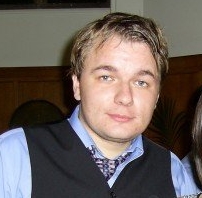
Katherine R. Larson is a Professor at the University of Toronto Scarborough (UTSC) and Vice-Dean of Teaching, Learning, and Undergraduate Programs. Her academic work bridges Early Modern Literature, Gender Studies, and Musicology through groundbreaking research on 16th-17th century women’s writing, embodiment, and song culture. Current projects: Special issue of Sidney Journal , The Post-Pandemic University (Routledge), and Cambridge Companion to Mary Wroth Collaborative initiatives: Co-developer of Early Modern Songscapes digital platform with Sarah Williams and Scott Trudell Research Focus: Integrates feminist theory with textual analysis of early modern poetry, drama, and musical practices. Key themes include gendered soundscapes, spatial production of songs, and critical pedagogy innovations. Awards: John Charles Polanyi Prize for Literature Rhodes Scholarship 2014 Co-Editor Recognition from Society for the Study of Early Modern Women Grant Support: Funded by SSHRC, Connaught Foundation, Folger Shakespeare Library, and Jackman Humanities Institute.
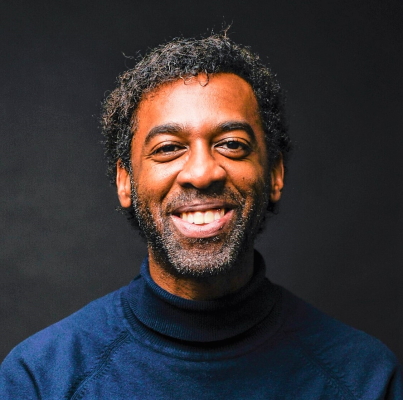
Ian Williams is a Professor, Graduate Faculty, and Undergraduate Instructor at the University of Toronto, where he serves as Director of the MA in English in the Field of Creative Writing. He holds a BSc, MA, and PhD from the University of Toronto. His research explores the intersections of literature, identity, and form, with a focus on contemporary creative expression. Research Focus Williams specializes in: Poetry and poetic innovation Fictional narrative structures African Canadian literary traditions Contemporary Canadian literature Creative nonfiction methodologies Awards and Honors Scotiabank Giller Prize (2019) for Reproduction Griffin Poetry Prize Shortlist for Personals Raymond Souster Award (2021) for Word Problems Danuta Gleed Literary Award for short fiction Dublin Literary Award Longlist for global fiction Multiple ReLit Prize and book award nominations Leadership and Future Work Williams directs UofT's Creative Writing MA program and will be the 2025 Miegunyah Distinguished Fellow at the University of Melbourne. His forthcoming novel You've Changed releases in August 2025.
Dr Stephen Butler is a Lecturer in English (Modern Fiction) at the School of Arts & Humanities , Ulster University, Coleraine campus. His research spans modern fiction, folk horror, witchcraft studies, and Freudian theory, with a focus on interdisciplinary applications in digital humanities and cultural critique. Affiliation: Ulster University, Faculty of Arts, Humanities & Social Sciences Contact: s.butler@ulster.ac.uk | +442870124539 His research explores intersections between contemporary British/Irish crime fiction and globalization, the psychological dimensions of Banville’s work, and folk horror motifs in digital media like The Witcher 3 . Projects include a creative collaboration on the 1711 Islandmagee witch trials. Recent publications analyze speculative fiction’s role in decolonization discourse, the legacy of Alan Moore and William Burroughs in subverting genre norms, and the Wiley-Blackwell Companion to Contemporary British and Irish Literature as an editorial co-editor. Activities include organizing the 'Books Beyond Boundaries' conference (2022) and a collaborative screening/Q&A event for 'The Witch Film' (2022). His work aligns with UN SDGs in cultural preservation and critical discourse.
Piera Rossetto is a Researcher at the Department of Asian and North African Studies, Ca' Foscari University of Venice. Her work bridges Jewish studies, migration, memory, and creative methodologies, with a focus on postcolonial North African and Middle Eastern Jewish communities, especially from Libya. She leads major research projects and teaches Hebrew language and social research methods. PhD in Languages and Civilizations of Asia and the Mediterranean Africa, Ca' Foscari University and EHESS Toulouse (2015) MA in South and Western Asia: Languages, Cultures, and Institutions, Ca' Foscari University (2011) Her research explores memory, identity, and belonging through narrative cartography and co-creative methods. She investigates Jewish Mediterranean migrations, particularly of Libyan Jews, using oral histories, literary sources, and digital tools. Her work emphasizes marginalized voices and interdisciplinary, artistic approaches to research. The recent articles highlight a strong trend in narrative and creative cartography, Jewish postcolonial memory, and interdisciplinary research-creation. Themes include the poetics of identity, mapping invisible migrations, and digital documentation of diasporic memories. Her publications span monographs, journal articles, book chapters, and multimedia outputs. Scientific awards and fellowships include: Rita Levi Montalcini Program for Young Researchers (Principal Investigator) FWF Hertha Firnberg Postdoctoral Fellowship Fondazione Rothschild Doctoral Fellowship Fondazione CDEC Research Fellow She has secured competitive grants, including the FWF-funded "Europe's (In)Visible Jewish Migrants" and the ongoing Rita Levi Montalcini project on gender, aging, and migration. She has advised collaborative, interdisciplinary research teams and supervised creative digital projects. Her work often involves partnerships across Europe and digital humanities platforms. She leads the research project "Genere, invecchiamento e migrazioni: memorie e mascolinità ebraiche del Nord Africa e del Medio Oriente" and previously led an FWF-funded project at the University of Graz. She also contributes to digital initiatives like the World Jewish Congress’s MENA Jewish legacy project and co-developed interactive visualizations and audio-documentaries.
Professor Mark Levine is a leading figure in social psychology at Lancaster University , affiliated with the Department of Psychology and multiple interdisciplinary research centers including Security Lancaster (Behavioural Science) , Cyber Security Research Centre (Psychology) , Data Science Institute , and Social Processes . His research lies at the intersection of psychology and technology, focusing on social identity, group dynamics, and prosocial behavior in public and digital environments. His research interests include bystander intervention, violence prevention, urban resilience, cybersecurity, emergency response, public safety, and the role of technology in shaping human behavior. He employs diverse methodologies such as virtual reality, CCTV analysis, smartphone data collection, and computational text analysis. His work is highly applied, informing policy and practice in policing, emergency services, and community safety. The trends in his recent publications reflect a strong interdisciplinary focus, combining social psychology with computer science, criminology, and urban studies. His articles frequently analyze real-world behavioral data from public spaces and digital environments, emphasizing the protective role of group identity in emergencies and the feasibility of technological interventions for societal challenges. Scientific grants and projects he has led include: REASON: Resilient Autonomous Socio-cyber-physical agents (£3.3M, EPSRC) RBOC Network+: Urban resilience in 2050 (£2.25M, EPSRC) Challenging the Bystander Effect via Documentary Film (A$356K, ARC) STRETCH: Technology-enhanced support for older adults (£1.3M, EPSRC) “Being There”: Humans and Robots in Public Space (£2.4M, EPSRC) Advising and grants : He supervises 7 postgraduate research students and has secured over £15 million in research funding from EPSRC, ESRC, DSTL, NCSC, Home Office, and international bodies. He advises government departments, police forces, and city councils on public safety and prosocial behavior. His collaborative work extends to creative industries and third-sector organizations like AGE-UK Exeter. Research groups and collaborations : He is deeply embedded in interdisciplinary networks, contributing to projects involving computer scientists, roboticists, software engineers, and HCI researchers. His affiliations with Security Lancaster and the Data Science Institute reflect his central role in socio-technical research at Lancaster.
André Rui Graça is a Lecturer at Lusófona University and an active researcher at CICANT . He has previously held guest professorships at Universidade da Beira Interior and Instituto Politécnico de Tomar, while contributing as a post-graduate teaching assistant at University College London. Education : PhD and MA in Film Studies (UCL), Executive MBA (University of Coimbra), BA in Art Studies (University of Coimbra) with merit awards Research Interests His research focuses on Portuguese cinema , film-market dynamics , film-music interrelations , and filmmaker theory . Publications explore cultural policies, precarity in European film industries, and entrepreneurship education, particularly in tourism contexts. Recent peer-reviewed articles examine global-local tensions in Portuguese cinema, precarity representation in media, and audience engagement with comedy films, reflecting his interest in socioeconomic and cultural dimensions of film. Conference presentations at NYU, Oxford, and UNICAMP highlight international recognition of his work. Scientific contributions include editing volumes on filmmaker theory and serving as a journal reviewer. His CresCine project (EU-funded) addresses competitiveness in small European film industries, demonstrating policy-oriented research expertise.
Dr. Tim Lindgren is a Senior Lecturer in the Fashion program at the School of Design, Faculty of Creative Industries, Education & Social Justice, Queensland University of Technology (QUT). With over thirty years of experience as a commercial fashion designer in Australia and China, he brings extensive industry expertise into his academic role. He is the study area coordinator for the fashion program and actively contributes to curriculum development, including the implementation of mid-year entry. He also serves as the Academic Integrity Officer and Equity Representative for the School of Design. PhD, Queensland University of Technology Master of Global Competition and Consumer Law, University of Melbourne Master of International Business (Hons), Griffith University Graduate Certificate of Research Commercialisation, QUT Tim’s research focuses on fashion in China, fashion consumption, wearable technology, policy and legal frameworks in fashion, and principles of the circular economy. His methodologies are primarily qualitative, involving field-based primary data collection. His teaching spans both practical and theoretical domains, including fashion studios, product development, and wearable technology. His recent publications (2010–2021) explore the evolving role of Chinese fashion designers, the Shanghai fashion system, branding in China, and the integration of industry experience into academia. These works reflect a consistent engagement with global fashion systems, cultural legitimacy, and sustainable innovation. Award-winning fashion label (specific awards not named) Tim supervises postgraduate research and is an expert witness in legal fashion matters. He contributes to Standards Australia and the International Standards Organization. He is also recognized for integrating equity, integrity, and sustainability into his pedagogical practice, preparing students to be ethical leaders in the global fashion industry. He leads research on the future of fashion and market failures, and his work emphasizes sustainable practices and systemic change within the fashion industry.
Tamara Moore is a Professor of Engineering Education at Purdue University, holding the title of Purdue University Faculty Scholar . She is affiliated with the School of Engineering Education , part of Purdue's College of Engineering. Her research focuses on integrating engineering principles into K-12 and higher education curricula to enhance STEM learning through computational thinking, systems thinking, and interdisciplinary approaches. Education: Ph.D., Engineering Education, Purdue University M.S.Ed., Mathematics Education, Purdue University B.S.E., Interdisciplinary Engineering, Purdue University B.S., Mathematics with minor in Mathematics Education, Purdue University Research Interests: Dr. Moore investigates how engineering methodologies (e.g., design thinking, systems analysis) can be used to improve mathematics and science education at all levels. She develops curricula and professional development programs for teachers, emphasizing STEM integration through projects like the STEM Road Map and Engineering Design-Based Curricula . Her work explores computational thinking in early childhood, microelectronics education, and the use of evidence-based reasoning in student projects. Key Contributions: Authored the STEM Road Map framework for K-12 integrated education Developed curricula like Turn the Lights On! and Mineral Mayhem Conducted studies on microelectronics awareness and systems thinking in synthetic biology Advocated for inclusive computational thinking education in early childhood Awards: Purdue University Faculty Scholar (current) Lab & Teams: Her research is conducted from the WANG 3514 Lab , focusing on teacher professional development, student learning trajectories, and curriculum design. Collaborates with interdisciplinary teams on NSF-funded projects like EngrTEAMS: Engineering to Transform the Education of Analysis, Measurement, and Science .
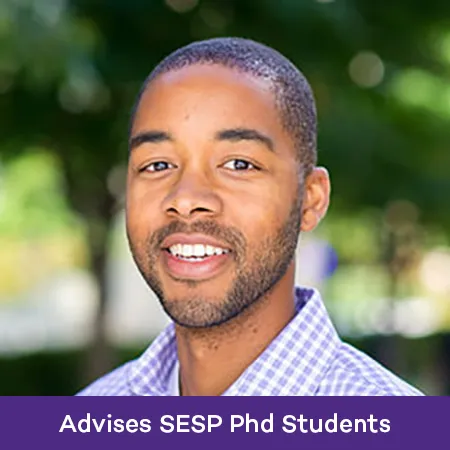
Marcelo Worsley is the Karr Family Associate Professor in Computer Science and Learning Sciences at Northwestern University's School of Education and Social Policy (SESP). His research focuses on promoting STEM education for underserved populations through hands-on, project-based learning. He holds a PhD and MS in Learning Sciences and Computer Science from Stanford University, along with dual bachelor's degrees in Chemical Engineering and Portuguese. His work emphasizes inclusive learning technologies, multimodal learning analytics, and fostering agency in students to address real-world challenges. Research Interests: Worsley’s research spans four core areas: (1) designing meaningful hands-on learning experiences; (2) extracting and analyzing multimodal data; (3) developing naturalistic interfaces for education; and (4) bridging engineering education with conceptual change. His Technological Innovations for Inclusive Learning and Teaching (tiilt) Lab aims to address inequities in education by co-designing tools with teachers and learners. Grants & Projects: Worsley has led initiatives such as Multimodal Learning Analytics (funded by NSF EAGER) and PE++ , integrating computer science with physical education. His projects often involve intergenerational making, refugee youth engagement, and culturally responsive computing. Publications: His work appears in journals like Journal of Learning Analytics and conferences such as ICLS and EDM. Recent themes include AI in education, embodied learning in games like Minecraft, and leveraging sports for computational thinking.
John J. Stuhr is the Arts and Sciences Distinguished Professor of Philosophy and American Studies at Emory University. He holds a BA from Carleton College, MA and PhD from Vanderbilt University. His research focuses on pragmatism, ethics, political philosophy, and 19th/20th-century European philosophy. Stuhr directs the American Philosophies Forum and serves as Co-Editor of the Journal of Speculative Philosophy. He has received grants including the Templeton Foundation Grant (2017–2023) and a Fulbright Fellowship (1984). His current projects include books on Peirce’s pragmatism, Dewey’s philosophy of experience, and a Very Short Introduction to American philosophy. Stuhr’s work bridges pragmatism with postmodernism, addressing contemporary issues like authoritarianism and environmental justice. His teaching spans undergraduate and graduate courses on pragmatism, Deleuze, and political theory. Notable honors include the Greenlee Prize (1981) and roles as President of the Society for the Advancement of American Philosophy (2004–06). He has organized international conferences and collaborates with institutions globally, including Università degli Studi di Milano and the Positive Psychology Center at the University of Pennsylvania. Stuhr’s publications span monographs, edited volumes, and over 50 articles. His grants include the Marcus Foundation (2008, 2014) and NEH funding (2001). He advises no listed students but mentors through seminars and conferences, fostering interdisciplinary dialogue between academia and public sectors.
William Kaigler serves as an Adjunct Professor of Entrepreneurship at Carnegie Mellon University's Tepper School of Business, teaching over 40 course instances since 2018 including Introduction to Entrepreneurship, Innovation & Entrepreneurial Mindset, and specialized courses for computer scientists and creative industries. He leverages two decades of entrepreneurial experience founding health-tech companies such as medSage Technologies (acquired by Philips Electronics in 2011) and NewCare Solutions, alongside current roles as Managing Director of WJK Enterprises and advisory board member for Idelic Inc. His educational background includes: MBA with Distinction in Entrepreneurship and Marketing from Carnegie Mellon University (1997) B.S. in Mechanical Engineering from West Virginia University (1985) Professor Kaigler's expertise focuses on translating entrepreneurial theory into health technology practice, particularly through elderly care monitoring systems and patient management solutions. His professional activities bridge academic instruction with hands-on startup mentorship at Alpha Lab, business coaching through Vistage International, and strategic investments in health-tech ventures. This applied approach emphasizes disruptive innovation in regulated industries while maintaining commercial viability. His teaching portfolio demonstrates consistent engagement with CMU students across disciplines, with recent courses addressing lean methodology and sector-specific entrepreneurship. Beyond the classroom, he cultivates entrepreneurial ecosystems through executive coaching and startup advisory roles, emphasizing his core philosophy: 'To be a success in business, be daring, be first, be different.'
Ruth Adams is Reader in Cultural and Creative Industries at King's College London and served as founding contributor to the MA in Cultural & Creative Industries. She holds a Ph.D. from The London Consortium focused on institutional sociology of the Victoria and Albert Museum. Education: Ph.D. Cultural Studies & Humanities, The London Consortium M.Res. Cultural Studies & Humanities, The London Consortium Her interdisciplinary research examines representations of Englishness, heritage discourse politics, youth subcultures, and class/gender dimensions of cultural consumption. Current projects include: 1) 'Culture Wars' in creative industries; 2) Grime music as expressions of postcolonial identity; 3) Aristocratic representations in popular culture. Methodologically bridges cultural sociology, museum studies, and popular music research. Publications address diverse cultural phenomena from country houses to punk aesthetics, consistently analyzing how class, gender and postcolonial identities shape cultural production and consumption. Professional Engagement: Media commentator for BBC/Netflix documentaries Keynote speaker at international conferences Former AHRC Peer Review College member Editorial board service for major journals Teaches undergraduate and graduate courses on cultural theory, media representation, and creative industries. Supervises doctoral research on cultural heritage, subcultures, and identity politics.
Eamonn Bell is an Assistant Professor in the Department of Computer Science at Durham University, with affiliations to the Institute of Advanced Study. His research focuses on digital humanities, applying computational methods to musicology and examining the history of digital technology in music production. He leads projects like CCP-AHC and DISKAH to enhance digital infrastructure for arts researchers. Previously, he was a postdoctoral Research Fellow at Trinity College Dublin, studying the cultural impact of the Compact Disc. He holds a PhD in Music Theory from Columbia University (2019) and a joint degree in Music and Mathematics from Trinity College Dublin (2013). His educational background includes advanced studies in music theory, digital humanities, and mathematics. He teaches courses on algorithms, software engineering, and music processing within Durham’s Computer Science curriculum. Supervision includes postgraduate students focusing on music technology and computational analysis. Research interests span digital musicology, the history of technology, and accessibility of computational tools for non-specialists. Awards include the Government of Ireland Postdoctoral Fellowship (2019–2021). His work addresses ethical issues in genetic studies of musicality and explores emerging digital tools for music analysis, such as time-coded YouTube comments and CD data extraction techniques. Key initiatives include designing DRI projects for UK-based researchers and advancing digital skills through collaborative frameworks. He actively participates in academic conferences and has published widely on topics ranging from media archaeology to interdisciplinary computational research.
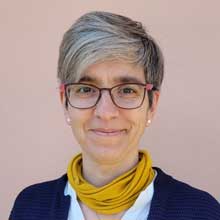
Angela Naimou is an Associate Professor of English at Clemson University’s College of Arts and Humanities, where she teaches literatures of the Middle East and North Africa, postcolonial and world literatures, American literatures of race/ethnicity/migration, and world literature. She serves as Editor of Humanity: An International Journal of Human Rights, Humanitarianism, and Development and has held editorial roles at Contemporary Literature and College Literature . Her research bridges literary form, legal theory, and political movements, with a focus on how aesthetics interrogate legal personhood's fictions. Ph.D., English, Cornell University M.A., English, Cornell University B.A., English, University of Michigan Her scholarship engages anti-colonial/postcolonial theory, race/diaspora/migration studies, law and literature intersections, and world literature in translation. She explores how legal fictions—from the 19th-century maritime law to modern refugee policy—shape narratives of exclusion and survival. Recent publications analyze legal precedent’s role in global fiction, refugee temporalities, and war’s banalization in cultural discourse. Her work critiques liberal legal frameworks and death-bound biopolitical paradigms, advocating for decolonizing methodologies that prioritize marginalized voices. ASAP Book Prize (2015) for Salvage Work MLA William Sanders Scarborough Prize Honorable Mention (2015) for Salvage Work At Clemson, Naimou collaborates on the Every Campus a Refuge initiative, integrating refugee resettlement advocacy with academic research. She is currently studying contemporary Arabic literature and refugee narratives to expand her analysis of global border regimes and humanitarian practices.
Dr. John Howlett is a Lecturer in Education at the School of Social Sciences, Keele University. He joined the institution in September 2011 and commenced his role in January 2012. As BA Education Programme Director and Editor of the War Poetry Review journal, he bridges educational history with literary scholarship. Education: MA (History), M.Phil (Educational History), PhD (Educational History) from University of Cambridge Professional Affiliations: Fellow of the Royal Historical Society, Fellow of the HE Academy, member of BERA, History of Education Society (UK), Historical Association His research spans two major domains: history of education (progressive and comparative education, Victorian and 20th-century pedagogy) and poetic scholarship as editor of Victorian and 20th-century poetry. Recent publications emphasize intentionality in historical analysis, progressive education philosophies, and war poetry's cultural legacy. Teaching focuses on modules like Back to the Future: Issues in the History of Schooling , Progressive Education and its Discontents , and Comparative Issues in British and US Education . He has led postgraduate modules on research methods, critical theories, and thesis preparation. Key publications include: Books : Progressive Education: A Critical Introduction (2013), Edmond Holmes and Progressive Education (2016), and the forthcoming Challenging the Orthodox: The Development of Progressive Education in the UK 1850–1950 (2023) Edited Poetry Collections : Works by Henry Newbolt, W.E. Henley, Paul Dehn, and others Scientific contributions recognized through peer-review roles for journals like History of Education , Oxford Review of Education , and publishers like SAGE and Routledge. Supervision includes 19 current and completed EdD, PhD, and MPhil students on topics spanning creativity in education, clinical supervision, professional identity, and curriculum theory. Funders include Keele University, Thai Government, and ESRC. Media engagements include BBC Stoke, LBC Radio, BBC Three Counties Radio appearances discussing education policy, and interviews in BBC History Magazine on grammar schools and historical educational debates.




:quality(75)/https%3A%2F%2Fassets.lareviewofbooks.org%2Fuploads%2F201712naimou-photo.jpg)