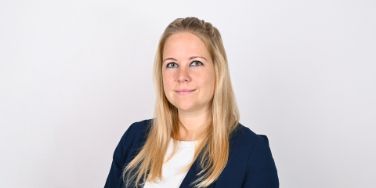
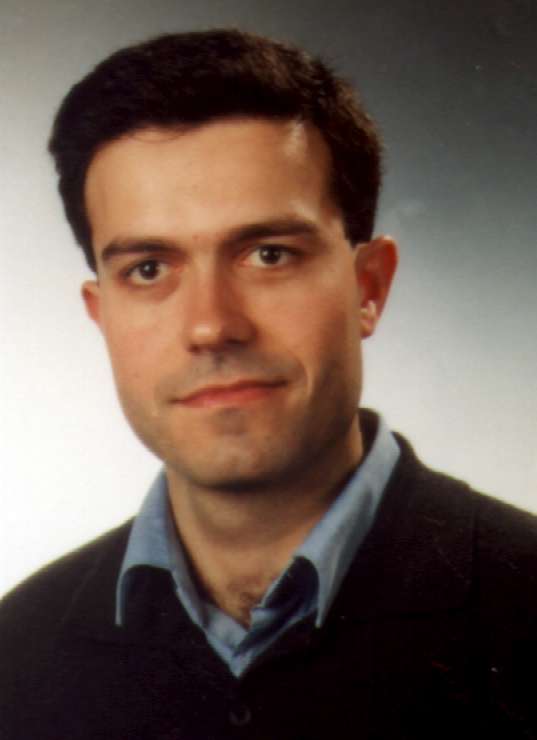
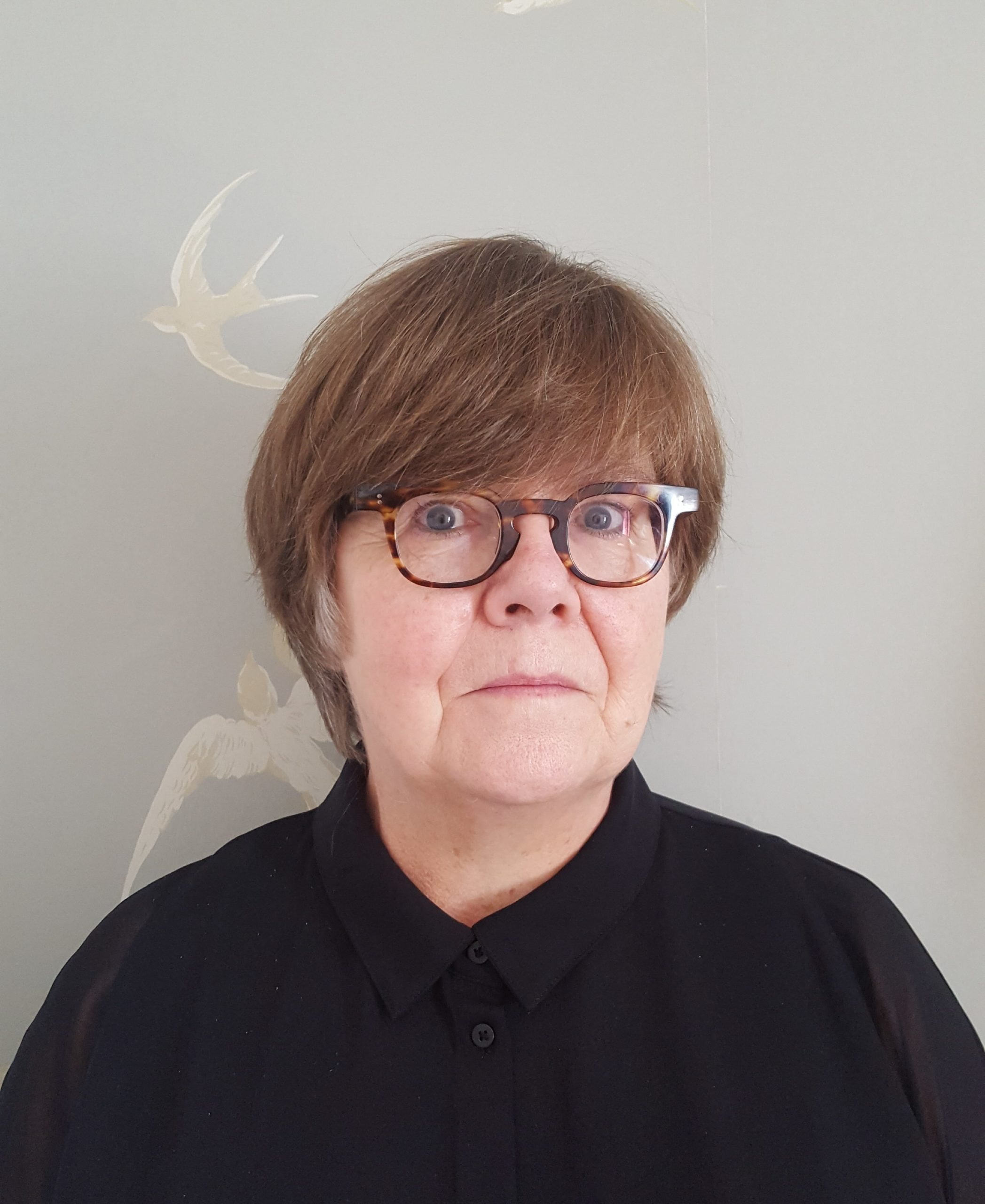
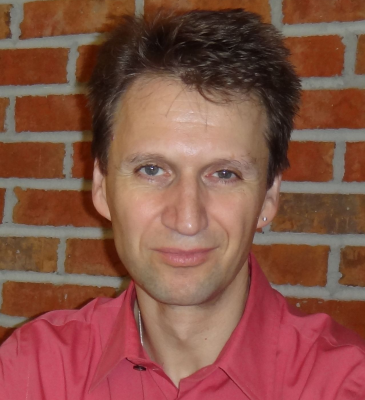
Prof. Dr. Mascha Kurpicz-Briki is a computer science professor at the Bern University of Applied Sciences, leading the Applied Machine Intelligence research group within the Institute for Data Applications and Security (IDAS). Her work focuses on human-centered applications of natural language processing in mental health and societal challenges, particularly addressing bias mitigation in AI systems. Education: PhD in energy-efficient cloud computing from University of Neuchâtel Expertise: Applied NLP, fairness in AI, augmented intelligence for health Leadership: Deputy lead of Applied Machine Intelligence Research Group Her research emphasizes augmented intelligence - creating AI systems that support rather than replace humans. Current projects investigate NLP applications for: Burnout and depression detection in clinical psychology Fairness measurement in word embeddings and language models Human augmentation through AI in industrial and healthcare settings Recent publications highlight her contributions to: Bias detection frameworks for European languages Machine learning in eating disorder diagnostics Generative AI integration in art therapy She maintains active memberships in IEEE, ACM, ACL, and the Swiss Center for Augmented Intelligence, with expertise in German, English, and French language technologies.
Øystein Elle is an Associate Professor in Music and Performing Arts at Østfold University College, holding positions at both the Faculty of Teacher Education and Languages and the Academy of Performing Arts. He has been affiliated with the institution since 2006, initially as a teacher of singing, composition and improvisation, then as a research fellow, and since autumn 2017 as an associate professor. Elle earned his Master of Arts from the Hoogeschool voor de Kunsten in Utrecht, Netherlands, and a Bachelor of Arts from the Music Conservatory at the University of Agder. He completed a doctorate in performing arts with interdisciplinary composition as his specialty and was a scholarship holder at the National Program for Artistic Development from 2013-2017. His research focuses on performance, post-dramatic theatre, composed theatre, intercultural art production, avant-gardism, cross-artistic composition, and extended vocal techniques. His work bridges Baroque, Dadaism, and European/North American Avant-Garde traditions, creating polystylistic compositions that alternate between atonal, melodic, noise-based, collage-influenced and improvised styles. His artistic practice particularly explores music-driven dramaturgy and "Composed Theatre." Elle's recent publications reveal a strong focus on experimental performance, sensory aesthetics, and interdisciplinary work, with particular attention to performance for young children (0-3 years) through projects like "Rock me Baby" and "Stemmestammen." His work increasingly explores political dimensions through public interventions and direct action theater, while maintaining his signature blend of vocal experimentation and cross-cultural influences. Funding from Arts Council of Norway Funding from Composers' Remuneration Fund Funding from Fund for Performing Artists Funding from Fund for Sound and Image Funding from New Music Funding from Ministry of Foreign Affairs Elle has collaborated extensively with international institutions including NTNU (editing the anthology "The Complexity and Width of Music Studies"), the University of South-East Norway (research on avant-gardism in music education), the American College in Athens and Patras University (research on ancient Greek masks), and the Kindergarten Teacher Training Program at HiØ (editing "Art Encounters and Aesthetic Processes with the Youngest Children"). He leads the Capto Musicae project, creating sonic and musical theatre in contemporary artistic contexts, and is involved in research groups focused on creativity, art and innovation in education, knowledge creation through artistic research, and material strategies. His artistic collective, Capto Musicae, has produced over 30 performing arts productions presented across Europe, Asia, the USA and South America, often featuring collaborations with international artists from diverse disciplines. Current projects include "HEXE," a physical performance concert bridging Nordic and Japanese culture, continuing his exploration of avant-garde traditions and intercultural dialogue.
Leonora Onarheim Bergsjø is an Associate Professor at Inland Norway University of Applied Sciences, specializing in digital ethics, artificial intelligence, and interdisciplinary research. She teaches digital judgment, ethics, and religious studies in teacher education programs, while also serving as a guest lecturer at institutions like the University of Oslo and MF University College. PhD from the University of Oslo Editor of 'Sensoriness and Transcendence: Perceptions, Revelations, and the Arts' (Brill, 2015) Author of 'Religious Citizenship: Disability, Equality and Human Perspectives' (Cappelen Damm, 2020) Her research focuses on ethical risk assessment of AI applications (ENACT project), e-health innovations (eCardiacRehab), and digital security frameworks. She leads the Norwegian Council for Digital Ethics (NORDE) and contributes to policy-making for authorities like the Ministry of Education and the Norwegian Institute of Public Health. Recent publications address algorithmic bias, ethical AI implementation, and metaverse ethics. She has received recognition for academic outreach, including a 2022 nomination for HiØ's Dissemination Award. Collaborates with international institutions on AI ethics Develops digital competence frameworks for kindergarten teachers Provides expert commentary on AI governance in media
José Manuel Torres is an Associate Professor at the Faculty of Science and Technology of Fernando Pessoa University , where he has been teaching since at least 1997. He holds a PhD in Computer Science from Lancaster University (2005) and a MSc in Electrical and Computer Engineering (1997). His research focuses on Visual Information Retrieval , Multimedia Systems , and Database Modeling . PhD Thesis: "Visual Information Retrieval through Interactive Multimedia Queries" (Lancaster University, 2005) Current Research: Investigator at ISUS and LIACC research centers Email: jtorres@ufp.edu.pt Research interests span multiple domains including: Artificial Intelligence applications in multimedia Multimodal Interfaces for information retrieval Object-Oriented Database Systems modeling Computational Semiotics in digital systems MPEG-7 Standard contributions for multimedia description Visual Query Systems with region-based feedback His scholarly work shows trends in: Interactive multimedia query systems Electromagnetic teaching methodologies Database architecture comparisons Information preservation standards Adaptive interface design Visual search algorithms Teaching portfolio includes: PhD-level Artificial Intelligence courses Undergraduate Algorithms and Data Structures sequences Master's Computer Vision instruction Comprehensive Electromagnetism course development
Carys Lewis serves as a Lecturer in English Studies at the University of Brest, France, within the Heritage and Creation in Text and Image (HCTI) research group (EA 4249). She teaches undergraduate Applied Foreign Languages (LEA) courses in British civilization and graduate programs in International Project Management (Applied Project Management in English, Professional Translation) and Celtic Languages in Contact (Welsh Literature, Welsh Language Introduction). Her academic credentials include: English aggregation (1994) Doctoral thesis (2009): "The place of People of the Black Mountains in the work of Raymond Williams: between historical-geographical metafiction and Welsh postcolonial narrative" Specializing in British Studies , Cultural Studies , and Welsh cultural area , Dr. Lewis employs discourse analysis to investigate nationalism, devolution, and social class identities. Her research examines post-Brexit narratives in literature, social media's role in Welsh independence movements, and electoral dynamics in Wales, with particular focus on Raymond Williams' theoretical legacy and working-class representation. Her scholarly output demonstrates consistent interdisciplinary analysis of UK political and cultural identity through literary and media lenses. Recent publications explore Brexit's impact on working-class communities in contemporary fiction, digital activism for Welsh sovereignty, and Plaid Cymru's electoral strategies, contributing significantly to British and Celtic studies through methodological synthesis of political science, literary criticism, and media theory. As an active member of the HCTI research group, she participates in interdisciplinary projects examining cultural heritage and creative expression through textual and visual media frameworks.
Nathalie Narváez is a Lecturer in Spanish at the University of Western Brittany (Brest), affiliated with the Heritage and Creation in Text and Image (HCTI, EA 4249) research group. Her work bridges academic inquiry with practical engagement in gender studies, extreme violence, and cultural representation. Doctorate in Spanish Language, Literature and Civilization (University of Western Brittany/University of Brittany Loire, 2016) Master 2 Pro in teaching French as a foreign language (UBO, 2009) Advanced Studies Diploma in "Gender, Identity and Citizenship" (University of Cadiz, Spain, 2009) Her research examines women's narratives from sub-Saharan Africa and Central America, focusing on gendered testimonies of extreme violence, discourse construction, and global circulation of narratives through translations and cultural policies. She analyzes how female-authored texts navigate postconflict memory, bodily representation, and sociopolitical identities. Recent publications include chapters on feminist translation practices, diasporic textualities, and performative art as resistance. Her 2024 work explores university space gender dynamics, while 2022-2023 studies examine territorial creativity and Central American artivism. Conference participation spans topics like gender-based violence, trans-sport practices, and narrative reception. She actively contributes to academic knowledge transfer through scientific communication workshops.
Evi Wusk serves as Assistant Professor of Secondary Education in the Department of Education/English at Nebraska Wesleyan University, teaching core courses including ENG 1010, EDUC 3260, EDUC 3390, and EDUC 2060 with Monday-Thursday 9-10 a.m. office hours. Her academic credentials include: Ed.D. in Teaching, Learning, and Teacher Education (University of Nebraska-Lincoln) School Library Science Certification (University of Nebraska-Omaha) M.S. in Curriculum & Instruction with Technology Focus (Peru State College) B.S. in Language Arts Education (Peru State College) Dr. Wusk pioneers human-centered research at the AI-education intersection, examining writing pedagogy through mixed-methods approaches while innovating pre-service teacher training via comedy and improv techniques. Her work champions ethical, creative, and practical frameworks for educators navigating technological disruption, emphasizing Paulo Freire's philosophy that teachers enable students to become themselves rather than shaping them. Analysis of her 2022-2025 publications reveals three dominant trends: (1) critical interrogation of AI's classroom impact beyond efficiency gains, (2) strategies for sustaining teacher joy amid technological change, and (3) development of respectful discourse models for polarized educational environments. These works span scholarly articles, multimedia resources, and podcast features reaching diverse educator audiences. She actively mentors emerging teacher-writers in scholarly and creative practice while facilitating dialogues about humanity in AI-driven education. Professional service includes Nebraska Educational Technology Association Board membership (2024-2027) and prior Nebraska Writing Project Board service (2012-2013), reflecting sustained commitment to educational innovation.
Rich Rice is a Professor in the Department of English specializing in Technical Communication & Rhetoric at Texas Tech University. He serves as Director of the Center for Global Communication and Director/Judge of UIL Ready Writing. His scholarly work spans composition and rhetoric, new media, and intercultural communication with a strong focus on practical applications in educational settings. Ph.D. from Ball State University (2002) Professor Rice's research focuses on contemporary composition and rhetoric, new media, problem-based learning, portfolio assessment, intercultural communication, online writing instruction, and service-learning. His work bridges theoretical frameworks with practical applications, particularly in how digital technologies transform writing instruction and global communication. He has developed innovative approaches to portfolio assessment and has been at the forefront of integrating intercultural communication competence into writing pedagogy. His recent work has increasingly focused on the ethical integration of artificial intelligence in writing education, examining how emerging technologies reshape literacy instruction across global contexts. Rice's scholarly output demonstrates a consistent trajectory from traditional composition studies toward increasingly global and technology-mediated approaches to writing instruction. His early work focused on portfolio assessment and writing pedagogy, which evolved into exploring online writing environments and intercultural communication. More recently, his research has addressed the challenges and opportunities presented by generative AI in writing education, while maintaining his commitment to intercultural communication and global perspectives. His publications reveal a scholar deeply engaged with both theoretical developments in rhetoric and composition and practical applications in the classroom. TTU Libraries' 2024 Advocacy for Open Access Award Schovanec Teaching Development Scholarship (2024) Empowering educators: Strategies for multicultural communication and modern teaching (2024) TTU Faculty International Scholarship Global Vision Award (runner-up, 2018) U.S. Fulbright Scholar South and Central Asia Regional Travel Program (2014) U.S. Fulbright-Nehru Scholars Award (2014) Professor Rice has secured significant grant funding for international educational initiatives, including projects in India and China. He serves as Director of the Center for Global Communication and sponsors international scholars. His work extends beyond traditional academic boundaries through community engagement as a Board Member of Community Assistance Volunteers and through directing the UIL Ready Writing program. His recent grants focus on multicultural communication, global film series, and developing cultural empathy in university settings. Rice has developed innovative approaches to global communication through projects like the "Smart" Connect-Exchange Study Abroad Model and through his leadership of the Center for Global Communication. His work with new media exhibits, including the Synoptics Wordscape Exhibition at the TTU Museum, demonstrates his commitment to exploring the intersection of digital technology and communication in creative ways.
Dr. Chihiro Inoue is an Associate Professor in Language Assessment at the Centre for Research in English Language Learning and Assessment (CRELLA), part of the Faculty of Creative Arts, Technologies and Science at the University of Bedfordshire. She holds a Master's in TESOL from Tokyo University of Foreign Studies and a PhD in Language Testing from Lancaster University, with over a decade of experience in language assessment research and practice. Expertise in mixed-method research on L2 speaking assessment Specializes in task design, test accommodations, and CEFR linking Professional service: Editorial Board for Language Assessment Quarterly and Language Education and Assessment Her recent research explores technology-driven assessment innovations, including video-conferencing testing, automated scoring systems, and AI behavior in language evaluation. Key trends in her work highlight validity, accessibility, and construct equivalence across delivery modes. Scientific awards include the 2021 Text Inspector Research Scholarship Award. She supervises PhD and MA students in topics like IELTS writing, EMI classrooms, and synthesis writing feedback.
Alfred P. Flores is an Associate Professor of Asian American Studies in the Department of Humanities, Social Sciences, and the Arts (HSA) at Harvey Mudd College. He holds extended faculty status in the History Department at Claremont Graduate University and is a core faculty member in the Intercollegiate Program in American Studies at the Claremont Colleges. His academic work bridges history, ethnic studies, and Pacific Islander scholarship. PhD in History, University of California, Los Angeles Graduate Concentration in Asian American Studies, UCLA M.A. in History, University of California, Riverside B.A. in History, University of California, Riverside A.A. in Liberal Arts, College of the Desert Professor Flores's research centers on settler colonialism, militarization, labor, and indigeneity in Oceania, particularly Guåhan (Guam). His scholarship explores U.S. empire, diaspora, oral history, and the intersections of race and power in the Pacific. He is deeply committed to decolonizing methodologies and amplifying Pacific Islander voices in academic discourse. His recent publications reflect a strong thematic focus on U.S. colonialism in the Pacific, civilian military labor, and the development of Pacific Islander Studies as a field. His 2023 monograph Tip of the Spear is a landmark contribution, analyzing land, labor, and militarism in postwar Guam. Other works appear in American Quarterly , Amerasia Journal , and Oxford Research Encyclopedia of American History , demonstrating interdisciplinary reach and scholarly impact. While no specific awards are listed, his publications in top-tier journals and university presses indicate recognition in the field. His collaborative work with scholars like Kēhaulani Vaughn and Juliann Anesi underscores a commitment to collective knowledge production. He has advised and contributed to the development of curricula in Asian American and Pacific Islander Studies, including teaching courses on Pacific Islander history, militarization, and decolonization. His work in pedagogy emphasizes first-generation scholar experiences and institutional equity in academia. Though not explicitly stated, his affiliations and research suggest engagement with interdisciplinary research collectives focused on American Studies, ethnic studies, and Pacific Islander communities. His advocacy through writing and academic service contributes to broader institutional and societal change.
Dr. Elizabeth Wren-Owens is Reader in Italian and Translation Studies at Cardiff University's School of Modern Languages, where she also serves as University Dean of Postgraduate Research. She holds external leadership roles including Vice-Chair (Research) for the University Council of Modern Languages. Her educational background includes a first-class degree in French and Italian from Warwick University (2001), an MA in Italian from Bristol (2002), and a PhD in Italian Studies from Warwick (2006). Her research explores transnational textual mobility through three interconnected strands: (1) Translation and adaptation of Italian regional identities, particularly Sicilianness; (2) Transnational reception of Antonio Tabucchi's works, documented in her monograph In, on and through translation ; and (3) Italian diasporic narratives, especially comparative analysis of Welsh-Italian communities. Her methodologies bridge Translation Studies, Cultural Studies, and World Literature frameworks. Analytical review of her publications reveals strong emphasis on transnational textual flows , with 67% of recent works examining translation/adaptation processes. Cultural identity construction appears in 83% of publications, while 50% specifically analyze Italian diaspora narratives. Methodologically, 33% employ comparative analysis across linguistic/cultural boundaries. She actively supervises PhD candidates in Translation Studies and migrant identity narratives, including projects on Arabic-English audiovisual translation and transnational Calabrian identity. As co-director of the Representing Migration and Mobility in European Culture network and general editor of New Readings journal, she fosters collaborative research. Her professional memberships include AHRC Peer Review College and Institute for Languages, Cultures and Societies advisory boards.
Katrina Sluis is Associate Professor and Head of Photography & Media Arts at the Australian National University's School of Art & Design within the College of Arts & Social Sciences. She co-convenes the Computational Culture Lab and serves as Chair of the Research Committee. Previously, she was Senior Lecturer and founding Co-Director of the Centre for the Study of the Networked Image at London South Bank University, and held the inaugural position of Senior Curator (Digital Programmes) at The Photographers' Gallery in London, where she now continues as Adjunct Research Curator. Her educational background includes a PhD from the University of Sunderland, MA from University of the Arts London, PGCHE from London South Bank University, and BFA (Hons) from the University of New South Wales. Sluis serves on the Editorial Advisory Boards of Photographies (Routledge) and Media:Art:Write:Now (Open Humanities Press), and is a Board Member of PhotoAccess, the ACT's center for photography. She advises Serpentine Galleries on Future Art Ecosystems 2 & 3, and has served on international juries for the P3 Post-Photography Prototyping Prize, Organ Vida Festival, and Brighton Photo Fringe's OPEN20 SOLO award. Sluis' research focuses on the politics and aesthetics of art and photography in computational culture, examining social circulation, automation, and cultural value. As a curator and educator, she has worked extensively with museums and galleries to develop digital strategies, programming, and pedagogy. Her current work addresses emerging paradigms of human-machine curation in response to the massive intensification of global image production and circulation. Funded by the Swiss National Science Foundation, her project 'Curating Photography in the Networked Image Economy' explores the transit of data analytics and AI imaginaries into museums. Her recent publications reveal a strong focus on the intersection of photography, artificial intelligence, and network culture. Key themes include machine vision's photographic theory, generative AI's impact on photographic style, the cultural value of photographic documentation in the age of big data, and the transformation of museum practices in the networked image economy. Her work consistently bridges technical developments in computer vision with critical cultural analysis. Editorial Advisory Board, Photographies (Routledge) Editorial Advisory Board, Media:Art:Write:Now (Open Humanities Press) Board Member, PhotoAccess Incorporated Advisor, Serpentine Galleries Future Art Ecosystems Peer Assessor, Creative Australia International jury member for P3 Post-Photography Prototyping Prize Funded by the Swiss National Science Foundation, her project 'Curating Photography in the Networked Image Economy' explores the transit of data analytics and AI imaginaries into museums, while an AHRC-funded research strand examines computational reproduction's impact on the art object. She is registered to supervise higher degree research students and co-convenes the Computational Culture Lab, which investigates how network culture transforms the production and circulation of images and cultural objects. Her research has generated 267 citations with an h-index of 4 according to Scopus.
Nathan Jones is a Senior Lecturer in Fine Art: Digital Media at Lancaster University's School of Arts. His practice-based research explores intersections between new media, language, and publishing technologies. Key research areas: AI-generated writing, glitch practices, post-digital publishing Collaborations: Abandon Normal Devices festival, The New Networked Normal Programme, Institute for Social Futures Creative projects: 'Glitch Poetics' book, 'distributed critique' methodology Teaching includes LICA's Fine Art Studio Practice modules, focusing on net-art, post-humanism, and interactive technologies. Co-director of Torque Editions publisher with Sam Skinner. Recipient of the Deans Award for Outstanding Contribution to Engagement.
Kateryna Novikova serves as Assistant Professor in the Department of Sociology at SWPS University's Faculty of Social Sciences in Warsaw, where she contributes to both the Department of Sociology and the Center for the Study of History and Justice. Her academic profile bridges sociological theory, historical analysis, and contemporary digital society research with particular emphasis on Central and Eastern European contexts. Her research program centers on digital sociology methodologies including ethnography, discourse analysis, and content analysis. Key investigation areas encompass public discourses on emerging technologies, human agency within digital ecosystems, micro-entrepreneurship dynamics, and knowledge-sharing mechanisms in social innovation. Recent publications demonstrate consistent exploration of how digital transformations reshape labor markets, social identity formation, and organizational human capital. Analysis of her 15 most recent publications reveals a distinctive interdisciplinary trajectory connecting Soviet-era cultural studies with contemporary digital challenges. Her work consistently examines labor transformation across temporal contexts—from Soviet cinematic representations to modern platform economies—while maintaining focus on Polish societal evolution within European frameworks. Methodologically, she integrates qualitative digital ethnography with historical comparative analysis. Dr. Novikova actively participates in international research ecosystems as an expert evaluator for major funding bodies including the Polish Academy of Sciences, COST, FNRS Belgium, and EU education agencies. Her practical engagement includes serving as Managing Editor of Statistics Poland's 'Statistics in Transition' journal (2020) and collaborating with Internews on digital civil society development (2020-2021). She co-founded Poland's Digital Sociology Section and participates in the Polish Sociological Association's Social Anthropology Section. At SWPS University, she teaches courses on diversity and community building, intercultural communication, business etiquette, and digital transformation's societal impacts. Her pedagogical approach connects theoretical frameworks with contemporary case studies examining technology's influence on social capital and organizational behavior.
Klaus Mueller is a Professor in the Computer Science Department at Stony Brook University , with additional appointments in Biomedical Engineering and Radiology. He serves as Director of the Visual Analytics and Imaging (VAI) Lab, Liaison for the SUNY Korea CS Program, and Interim Chair of the Department of Technology and Society . His career spans roles at Brookhaven National Lab and leadership positions at SUNY Korea. Dr. Mueller earned his PhD in Computer and Information Science (1998), MS in Computer and Information Science (1996), and MS in Biomedical Engineering (1990) from The Ohio State University , alongside a BS in Electrical Engineering (1987) from the Polytechnic University of Ulm, Germany. His research focuses on visual analytics , explainable AI , algorithmic fairness , computational imaging , and medical imaging . He has pioneered GPU-accelerated CT reconstruction techniques, bias mitigation frameworks (e.g., D-BIAS), and tools like DOMINO for causal reasoning. His work bridges data science , human-computer interaction , and medical applications , often integrating large language models for visualization tasks. Recent publications highlight advances in multivariate volume rendering , LLM-driven bias detection , and mDDPM-based medical image synthesis . His articles span IEEE Transactions , Nature Machine Intelligence , and conferences like IEEE VIS and ACM CHI . Award highlights include NSF CAREER (2000), SUNY Chancellor Award (2011), IEEE Golden Core Award (2016, 2022), induction into the National Academy of Inventors (2018), and elevation to IEEE Fellow (2024). He has chaired major conferences and served as Editor-in-Chief of IEEE Transactions on Visualization and Computer Graphics (2019-2022). He teaches graduate and undergraduate courses in visualization , medical imaging , and GPGPU programming , and leads the Visual Analytics Seminar (CSE 648). His lab ( VAI Lab ) fosters interdisciplinary research in GPU-accelerated analytics and ethical AI.