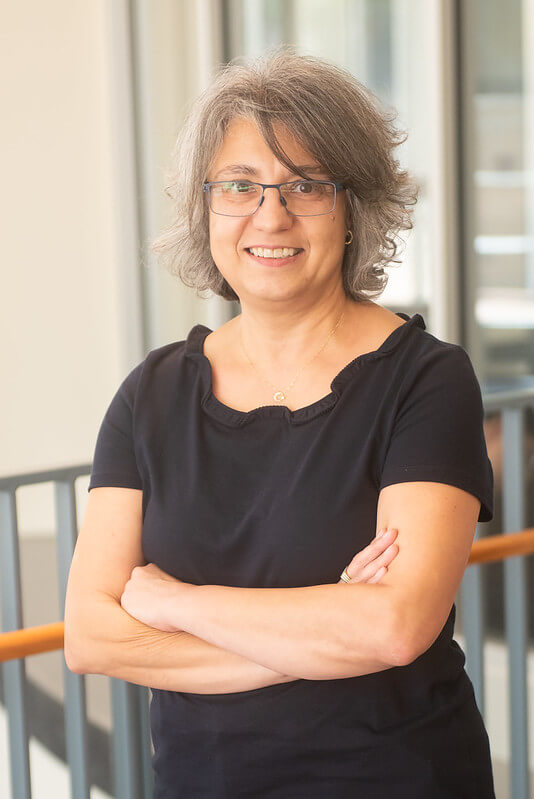
Derya Akleman is an Instructional Professor and Director of the Master's Program in the Department of Statistics at Texas A&M University, part of the College of Arts & Sciences. Her research focuses on time series analysis, stochastic processes, risk analysis, artificial intelligence, econometrics, and interdisciplinary topics such as genomics and tourism. She holds a faculty position with over three decades of academic experience, spanning diverse fields from computational art to agricultural economics. Her work integrates statistical methodologies with practical applications, including causal inference in transportation systems, web-based creative tools for visual storytelling, and economic modeling of agricultural commodities. She has contributed to foundational research in speech recognition, network reliability, and regional tourism development. Dr. Akleman’s academic career reflects a commitment to both theoretical advancements and real-world problem-solving. She oversees the Master's program curriculum, emphasizing hands-on learning and interdisciplinary collaboration. Her publications bridge statistics with computer science, engineering, and social sciences, highlighting her role as a cross-disciplinary scholar. She currently serves in administrative and teaching roles within Texas A&M’s Statistics Department, contributing to both education and research initiatives. Her office is located in Blocker 450B, and she can be reached at derya@stat.tamu.edu.
Hila Peleg is an Assistant Professor in the Department of Computer Science at the Technion – Israel Institute of Technology, where she co-leads the TecSE lab with Prof. Shachar Itzhaky. Her research lies at the intersection of Programming Languages, Software Engineering, and Human-Computer Interaction, focusing on program synthesis and interactive developer tools. Her research interests center on creating intelligent, theory-driven tools that enhance programmer productivity and correctness. She explores interaction models that integrate formal methods like separation logic into practical synthesis systems, enabling more versatile and reliable code generation. Her work spans both foundational models and real-world applications, from web layout synthesis to computational crafting. The trend in her recent publications shows a strong focus on interactive and practical program synthesis, blending formal verification with user-centered design. She investigates how synthesis can be made more usable through live programming, best-effort results, co-design of tools and languages, and integration with developer workflows. Her work increasingly emphasizes the human aspect of programming tools. Distinguished Paper Award, PLDI 2021 Distinguished Artifact Award, SPLASH 2020 Hila Peleg advises multiple graduate students, including PhD and MSc candidates, and leads the ERC-funded EXPLOSYN project, which supports advanced research in program synthesis. She has taught advanced courses such as User-Centered Programming Tools and seminars in programming languages, and is actively involved in the academic community through conference service and organization. She is a core member of the TecSE lab, which focuses on advancing software engineering through programming language theory and interactive systems. The lab fosters interdisciplinary research at the boundary of formal methods and human-centered tool design.
J.P. Spicer-Escalante is a Full Professor in the Department of World Languages & Cultures within the College of Humanities, Arts, and Social Sciences at Utah State University, where he has taught since 2003. His work bridges academic scholarship and artistic practice, focusing on Latin American literature, cinema, and socio-cultural documentary photography. Educational Background: Ph.D. in Latin American Literature, University of Illinois at Urbana-Champaign (1999) M.A. in Spanish, University of Illinois at Urbana-Champaign (1992) B.A. in Economics and Spanish, Kansas State University (1987) His research centers on 19th to 21st century Hispanic cultural production, with a strong emphasis on literary and cinematic naturalism, travel writing, and the socio-cultural dimensions of traditions like Día de los Muertos. Since 2020, he has expanded into documentary photography and videography, exploring themes of identity, globalization, tradition, and human connection. His exhibitions have been featured across the United States, South America, and Europe, reflecting a deeply interdisciplinary and globally engaged practice. The recent creative outputs of Dr. Spicer-Escalante are predominantly artistic exhibitions that function as scholarly contributions, documenting cultural rituals, community identities, and the interplay between modernity and tradition. These works span solo and group shows, often focusing on Mexican celebrations, intergenerational relationships, and pandemic-era social dynamics, demonstrating a consistent thematic thread of cultural representation and humanistic inquiry. Dr. Spicer-Escalante plays a significant role in academic publishing as the Founding Co-Director and Managing Editor of Decimonónica: Revista de producción cultural hispánica decimonónica , and as a member of the editorial committee for Excavatio , an international journal on Naturalism. These roles reflect his commitment to advancing multidisciplinary scholarship in Hispanic studies. While no formal grants are mentioned, his sustained exhibition record suggests external or institutional support for his creative research. He regularly teaches key courses such as Survey of Hispanic American Literature II, Topics of Hispanic American Cultural Production, and Introduction to Hispanic Cinema. His artistic and academic work is closely tied to institutional spaces such as the Nora Eccles Harrison Museum of Art at Utah State University, the Latinx Cultural Center, and international galleries in Argentina, Greece, and Minnesota. These venues serve as labs and platforms for public engagement, where scholarly inquiry meets community and artistic audiences.
Siiri Paananen is a University Teacher (part-time) and Doctoral Researcher at the University of Lapland's Faculty of Art and Design. She is affiliated with the Discipline-specific doctoral programme LUX and the Lapland User Experience Design research group. Her work focuses on Human-Computer Interaction (HCI), cultural heritage preservation, game design, virtual reality applications, and ethical technology integration in Indigenous contexts. Her research interests span participatory design methodologies, interactive museum technologies, and multiperspectival approaches to cultural storytelling. Key projects include "Xstory - Lapland narratives with experience technologies" (2023-2025) and "Muittut, muitalusat" (2020-2022), which explore digital storytelling and Sámi cultural narratives. She has also contributed to projects like "REBOUND TTK" (2023-2026), addressing Arctic resilience through co-creation. Paananen's articles emphasize ethical design in cultural heritage contexts, AI-driven creativity, and immersive technologies for historical accuracy. Recent work includes co-design frameworks for museums, robot-assisted public engagement, and decolonizing digital heritage practices. She received the Arctic Five Fellow award (2023-2024), recognizing her contributions to Arctic research partnerships. Her activities include organizing workshops on Arctic design education and sustainability, as well as visiting research at the Arctic University of Norway. She actively participates in conferences like UBISS and Aboagora, focusing on Indigenous perspectives and technological ethics.
Lucy Gilson is a Full Professor and Department Head at the University of Connecticut, holding a concurrent Visiting Professor position at CATÓLICA-LISBON. She is also the Academic Director of the Geno Auriemma UConn Leadership Conference. Her academic journey includes an MBA and PhD in Organizational Behavior from the Georgia Institute of Technology, USA, and an undergraduate degree from Georgetown University's School of Foreign Service. Her research focuses on teams, team effectiveness, and creativity, with notable contributions to virtual team dynamics, creativity management, and organizational behavior. Key areas of exploration include the interplay between standardization and creativity, cross-level effects in teams, and global virtual team performance drivers. Lucy has held the Advanced Institute of Management (AIM - UK) Visiting International Research Fellowship (2008-2010). Her work emphasizes practical frameworks for fostering innovation, such as leveraging museum metaphors for idea curation and addressing challenges in radical vs incremental creativity management. While no specific advising or grant details are highlighted, her research spans empirical studies on empowerment, virtual collaboration tools, and cultural diversity impacts in teams. Her academic contributions are anchored in advancing theoretical and practical understanding of organizational systems and creative processes.
Dr. Joanne Kuai is a Research Fellow in the School of Media and Communication at RMIT University, Australia, with expertise in digital journalism, AI governance, and the social implications of algorithmic systems. She holds a PhD from Karlstad University, Sweden, and serves as an Affiliate of the ARC Centre of Excellence for Automated Decision-Making and Society (ADM+S). Her educational background includes doctoral studies at Karlstad University where she focused on AI's impact on journalism in China's media landscape. Prior to academia, she gained practical experience as a reporter, editor, and news anchor in China. Dr. Kuai's research centers on the intersection of journalism, artificial intelligence, and media governance, with particular attention to Chinese media contexts. Her work explores how algorithmic systems are reshaping news production, distribution, and consumption while examining the policy frameworks needed for responsible AI implementation in media environments. Her publications reveal a strong focus on cross-cultural comparisons of AI applications in journalism, particularly examining political information retrieval across different language contexts. She investigates how search engine chatbots powered by large language models perform in political information retrieval, highlighting issues of bias, representation, and governance in algorithmic media systems. Co-guest editor of Information, Communication & Society special issue on Generative AI Governance Regular contributor to New Books Network podcast Faculty at JournalismAI Academy, Polis, London School of Economics Dr. Kuai actively participates in academic mentoring and knowledge sharing, contributing to the JournalismAI Academy while maintaining connections with emerging scholars in the field. Her work bridges academic research with practical applications in journalism and media organizations navigating the AI transformation.
Paul Ziche is Professor of History of Philosophy at Utrecht University's Faculty of Humanities, Department of Philosophy and Religious Studies. He currently serves as Director of the Descartes Centre for the History and Philosophy of the Sciences and Humanities (2023-present) and is a member of Utrecht University's Open Science platform. He has held numerous leadership positions including Director of Research for the Research Institute for Philosophy and Religious Studies (2018-2021), Chairman of the Descartes Centre Board (2014-2023), and Head of Department for Philosophy and Religious Studies during two separate periods. PhD in Philosophy (1992-1995), Ludwig-Maximilians-Universität München Habilitation for Philosophy (2003), Ludwig-Maximilians-Universität München M.A. in Philosophy with minors in physics and psychology (1992) Post-Graduate Studies at Balliol College, Oxford (1989/1990) Undergraduate studies in physics and philosophy, Ludwig-Maximilians-Universität München (1986-1992) Professor Ziche's research focuses on German idealism, particularly the works of Schelling, Hegel, and Kant, with special attention to the history and philosophy of science around 1900. His expertise spans natural philosophy, history of psychology, and the relationship between creative humanities and scientific thought. He examines how philosophical concepts transitioned from romantic frameworks to more analytical approaches, with particular interest in how emotions, atmospheres, and epistemic frameworks functioned in 19th and early 20th century thought. His work often explores the intersections between philosophy, science, and cultural history, revealing how conceptual frameworks shaped scientific and philosophical developments. Analysis of Professor Ziche's recent scholarly activities reveals a consistent focus on the history of philosophical concepts, particularly examining how 19th and early 20th century thinkers navigated the relationship between science and philosophy. His work frequently addresses Schelling's philosophy of nature, the development of scientific concepts, and the role of emotions in philosophical discourse. A notable trend is his exploration of 'atmospheric epistemology' and how conceptual frameworks evolved during periods of scientific and philosophical transition, particularly around 1900. His research demonstrates how philosophical concepts function as bridges between specialized disciplines and broader intellectual frameworks. Professor Ziche has served as primary supervisor for doctoral candidates, including defense of the thesis 'Pars melior nostri: The Structure of Spinoza's Intellect' in 2018. He has coordinated multiple research master's programs and served on examination committees for humanities programs. His leadership roles in research institutes and centers have involved significant grant proposal management and quality control for PhD programs, demonstrating his commitment to advancing philosophical research and education. As Director of the Descartes Centre for the History and Philosophy of the Sciences and Humanities, Professor Ziche leads an interdisciplinary research team focused on the historical development of scientific and philosophical concepts. The center serves as a hub for scholars examining the intersections between science, philosophy, and cultural history, with particular strength in 19th and early 20th century European thought. His work with the Open Science platform at Utrecht University demonstrates engagement with contemporary issues in academic research practices while maintaining deep connections to historical perspectives on knowledge production.
Kjell Lemström is a Senior University Lecturer at the Department of Computer Science, University of Helsinki's Faculty of Science. He leads the Bachelor's Programme in Computer Science and directs the DEFA project focused on digital education and admissions. His research spans computational musicology (music pattern matching, rhythm analysis) and computer science education (MOOC effectiveness, curriculum design). Research interests include: Music Informatics: Polyphonic pattern detection, transposition-invariant algorithms, rhythmic analysis, and symbolic music processing Computational Methods: String algorithms, geometric computing, and optimization techniques for large-scale data Educational Innovation: Programming pedagogy, student retention in MOOCs, and competency-based admissions systems His recent publications (2021-2024) reflect dual focus areas: 60% explore music information retrieval (algorithm development for pattern detection), while 40% investigate computing education (curriculum transitions and MOOC effectiveness). He received the Award for senior researcher (2003) for contributions to computational musicology. Supervisory roles include doctoral thesis supervision (e.g., Teppo Ahonen) and hosting visiting academics like Darrell Conklin. Current project leadership includes Computer Science Admission Policies and Study Analytics (2024-present).
Professor Kate Sweetapple is a design academic and Head of the School of Design at the University of Technology Sydney (UTS). Her research focuses on the role of design in shaping systems, services, and social practices within contemporary care spaces, including health, disability, and aged care environments. She utilises visualisation to reveal patterns, relationships, and invisible states, with a particular emphasis on data-driven interventions in these fields. PhD, University of Western Sydney (2004) BDesign (Hons) in Visual Communication, UTS (1990-1993) Her research explores the intersection of design, digital humanities, and data aesthetics, including projects like the Adrift tool for ocean data visualisation and a visualisation project with Northcott to enhance decision-making in disability care. She advocates for expanded visual languages that incorporate qualitative data representations to generate knowledge. Kate’s scholarly output includes 15 recent publications (2007–2025) that span visualising care systems, experimental cartography, digital humanities, and design-led data analysis. These works often bridge disciplines such as healthcare, environmental science, and literary studies. Available for Masters/PhD student supervision She is affiliated with UTS research groups such as the Designing for Social and Service Transitions research group, the Visualisation Institute, and the UTS Ageing Research Collaborative (UARC). Her creative works, including the Map of Sydney: Avian Surnames series, are held in major Australian collections like the National Library of Australia.
Pavel Štekauer is a Professor at Károli Gáspár Reformed University 's Institute of English within the Faculty of Humanities and Social Sciences. He holds a PhD in English linguistics from Comenius University (1991), a habilitation (1995) and full professor qualification (2002) from Masaryk University, and a DrSc degree (2006) from Slovak Academy of Sciences. Major research areas: Word-formation , Morphology , Lexical semantics , Psycholinguistics , and Typology His publications focus on derivational morphology , compound structures , and cross-linguistic typology , with recent work addressing productivity constraints and meaning predictability in word-formation. He has served as principal investigator for VEGA 1/0094/12 and supervised the KWARK international double diploma project . Scientific honors: Rector's awards (Prešov University 2000; PJ Safarik University 2006, 2013) Doctoral supervision: 12 PhD students (2002-2012) in topics ranging from forensic linguistics to sociolinguistic factors in word-formation
Katharine Craik is Professor in Early Modern Literature (1500–1750) and Director of Research at Oxford Brookes University, where she is affiliated with the School of Education, Humanities and Languages. Her research investigates the intersections of literature, emotion, sensation, and embodiment, with a focus on Shakespeare and critical-creative writing. She has published widely on early modern affect, sensory experience, and theatricality, and is currently completing two monographs under contract with Oxford University Press: Lifelike Shakespeare and Shakespeare and the Senses . BA, MPhil, PhD – University of Cambridge Lectureships – Worcester College (University of Oxford), University of Leeds, University College London Her research interests center on the affective and sensory power of early modern literature. She explores how texts generate vividness, simulate lifelikeness, and engage readers’ embodied responses. Her work bridges literary criticism and creative practice, as seen in her poetry publications and collaborative projects with theatre practitioners and visual artists. She is particularly interested in the intersections of literature with medicine, performance, and material culture. The most recent publications reflect a sustained engagement with Shakespearean rhetoric, emotional representation, and the poetics of presence. Her articles span topics from sympathetic sonnets to anatomical discourse in poetry, demonstrating a consistent focus on how literature mediates human experience. The keywords across her work include Shakespeare Studies, Affect Theory, Sensory History, and Literary Embodiment, with subfields ranging from rhetorical vividness to confessional discourse and performance studies. She has received significant recognition for her interdisciplinary scholarship and creative output: Fellow of the English Association Senior Fellow of the Higher Education Academy Member of the AHRC Peer Review College Longlisted for the National Poetry Prize (2020, 2022) Shortlisted for the Bridport Prize and Dermot Healy Poetry Competition Katharine Craik has led major research projects funded by the Wellcome Trust, British Academy, and Arts Council England. Her Wellcome Trust-funded project Watching explored the history of sleep through a collaboration between academics, scientists, and theatre practitioners, culminating in site-specific performances. She co-wrote Marina , a play based on Shakespeare’s Pericles , developed with the Royal Shakespeare Company. She supervises doctoral research in Shakespeare and early modern literature and has examined PhDs at institutions including Cambridge, King’s College London, and the University of Sydney. She is Executive Secretary of The Malone Society and co-edits the experimental critical-creative series beyond criticism with Boiler House Press. She leads and collaborates on interdisciplinary research groups including the Poetry Centre at Oxford Brookes and the Gender and Technologies research group. Her project Unbelonging , a critical-creative collaboration with visual artist Catriona Dooley, is funded by Arts Council England. She also participates in networks such as the Life of Breath project and the Shakespeare Association of America, organizing seminars and conferences on topics like 'Shakespearean Sensations' and 'Class and Emotion in Shakespeare'.
Katrin Bahr is an Assistant Professor of German at Centre College, where she also serves as the Fulbright Fellowship Advisor and is affiliated with African & African American Studies. She joined the faculty in 2020, bringing interdisciplinary expertise in German studies, GDR history, and German-African relations. Her research interests include: GDR History and Memory Socialism in Post-colonial Africa Photography and Visual Culture Women and Gender Studies Post-1989 East German Literature and Film Decolonization and Curriculum Reform Bahr’s scholarly work centers on lived experiences under socialism, particularly focusing on East Germans in Mozambique during the 1980s. Her publications and curated photo exhibitions highlight private narratives and transnational solidarities. She actively contributes to public scholarship through blogs, podcasts, and film subtitling, especially on DEFA films related to Palestine. Her recent publications and creative projects reflect a strong thematic focus on memory, identity, and decolonization, bridging historical research with contemporary social issues such as racial justice and intergenerational trauma. The recurring motifs in her work include photography, oral history, and the legacy of socialist internationalism. Scientific awards and recognitions include: Fellowship, Berlin Program for Advanced German and European Studies (2015–2016) Dissertation Fieldwork Grant, UMass Amherst (2017) Research Grant, Central European History Society (2018) German Teacher of the Year, AATG-KY (2022) DEFA Film Library Program Award (2024) Bahr advises students on Fulbright applications and is the co-founder of the Third Generation Ost network in the U.S., supporting descendants of East Germans. She has secured grants for events on right-wing extremism and generational memory in Germany. Her teaching spans language, culture, activism, and decolonial thought. She is involved in collaborative academic networks such as the Diversity, Decolonization, and the German Curriculum (DDGC) mutual aid group and is active in professional associations including the German Studies Association and the Black German Heritage and Research Association.
Gil Bettman is a Professor at Chapman University's Lawrence and Kristina Dodge College of Film and Media Arts , where he specializes in camera directing, action sequences, and visual storytelling. With a Harvard University Bachelor of Arts (English Literature, with honors) and a UCLA Master of Fine Arts, Bettman bridges decades of Hollywood experience with academic rigor. Education : Harvard University, Bachelor of Arts (with honors in English Literature) University of California, Los Angeles, Master of Fine Arts Research and Creative Work focuses on: Democratizing cinematic techniques for low-budget filmmakers Camera movement theory (externally/ internally generated motion) Action sequence design (foot chases, lens psychology) Director-actor collaboration dynamics Contemporary film language evolution Notable Publications : Directing the Camera (2014) - Technical guide on camera movement First Time Director (2003) - Practical filmmaking survival guide Hollywood Filmmaking Masterclass (2017) - Online instructional course Industry Contributions include mentorship under Academy Award-winner Robert Zemeckis and practical experience directing for major studios like Universal and Warner Brothers. His work emphasizes collaborative creativity and technical mastery for narrative effectiveness.
Annette Kinder is a Professor of Psychology of Learning (W2) at the Department of Education and Psychology, Freie Universität Berlin. She has held this position since 2010, following a Heisenberg Fellowship (2004–2010) at the University of Potsdam and a substitute professorship at the same institution in 2008. Her academic journey includes roles as a university assistant at Philipps-Universität Marburg (1999–2004) and research associate in a DFG project on associative learning (1995–1999). She obtained her habilitation in psychology (specializing in general psychology) in 2003 and completed her PhD in 1996 at Philipps-Universität Marburg with a scholarship from Hessian Promotion for Junior Researchers. Research Interests: Cognitive Psychology Artificial Grammar Learning Numerical Processing Educational Diagnostics Machine Learning in Education Neurocognitive Poetics Scientific Awards: Heisenberg Fellowship (2004–2010) Teaching: She has taught courses like 'Pädagogische Diagnostik' (Educational Diagnostics) and research colloquia for qualifying theses since 2018/2019, focusing on cognitive and educational psychology.
Dr. Sacha Davis is a Lecturer in History at the University of Newcastle, Australia, where he has been teaching since 2008. He is affiliated with the School of Humanities, Creative Industries and Social Sciences, specializing in European history with a focus on German communities in Central and Eastern Europe and the historical persecution of Roma communities. Dr. Davis received his PhD in History from the University of New South Wales following additional studies in Sydney and Cluj-Napoca, Romania. His academic journey includes teaching positions at the University of Sydney, Macquarie University, and Australian Catholic University, as well as being a visiting researcher at the University of Turku. Dr. Davis's research spans two primary interconnected strands: German diaspora communities in Eastern Europe and historical representations of Roma. His work on Transylvanian Saxons examines how these communities negotiated their identity between German nationalism and local contexts, while his Romani studies investigate how negative stereotypes developed over centuries and continue to shape contemporary discrimination. He has made significant contributions to understanding how travel writing, ethnography, and state policies reinforced anti-Romani attitudes, particularly through analyses of costume descriptions, civilizing missions, and child removal policies that parallel Australia's Stolen Generations. His recent publications reveal sophisticated interdisciplinary approaches, blending visual history, cultural studies, and linguistic analysis. The research shows consistent thematic development from early work on Transylvanian Saxons to more recent examinations of Romani history and German heritage language maintenance in Australia, demonstrating how historical processes continue to shape present-day realities for minority communities. Dr. Davis has successfully supervised multiple PhD students to completion and currently oversees nine doctoral candidates working on diverse historical topics. His research has been supported by grants from the Australian Linguistic Society, including projects on German as a heritage language in Newcastle and the Hunter Valley, totaling over $14,000 in funding since 2017. He collaborates extensively with Dr. Jaime Hunt on German diaspora studies in Australia.