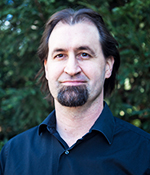
Samuel Trainor is a British-born Lecturer in the Department of English Studies (ANGELLIER) at Université de Lille's Faculty of Languages, Culture and Societies. His work focuses on translation studies, particularly contrapuntal translation methods, the intersection of translation and politics, and literary creation practices. Specializes in both technical and literary translation Developed the Synoptic Translation Project Created translation theories including Functional Layering, The Creative Calque, and The Synoptic Hypothesis His research explores the blurred boundaries between technical and creative translation, with additional interests in textual comprehension studies.
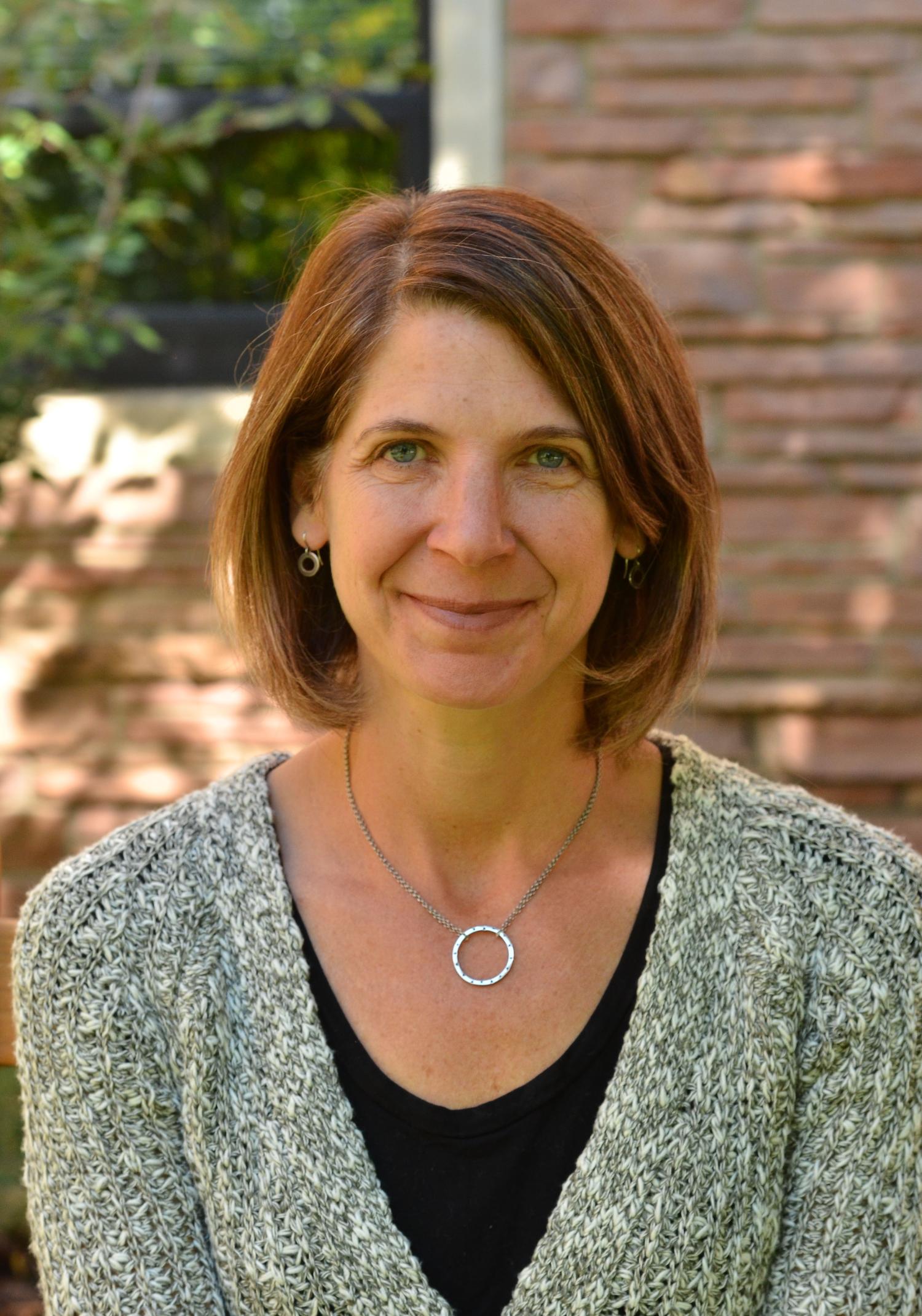
Kevin Hirschi, Ph.D., is an Assistant Professor in the Bicultural-Bilingual Studies Department at the University of Texas at San Antonio (UTSA) within the College of Education and Human Development. He specializes in second language acquisition (SLA) with a focus on pronunciation, technology for language analysis, and corpus linguistics. Ph.D. in Applied Linguistics (Northern Arizona University, 2024) His research explores the intersection of technology and SLA, particularly using machine learning for pronunciation evaluation, mobile-assisted learning, and discourse intonation. He has taught language pedagogy courses in three countries and has over 15 years of experience in ESL instruction, international teaching assistant training, and self-access learning systems. Selected Awards: Most Promising Graduate Student Research Scholar 2023 (Northern Arizona University) Presidential Fellow, Northern Arizona University ($9000, 2019-2023) Gates Millennium Scholar ($5000, 2001-2006) Grants: Office of Undergraduate Research and Creative Activity Faculty CURE Development Grant ($7000, 2023-2024) TIRF 2023 Doctoral Dissertation Grant ($2500) Duolingo Dissertation Research Grant ($5000, 2022-2023) Language Learning Dissertation Grant ($2000, 2022-2023)
Dr. José Luis Correa Santana serves as a University Professor within the Department of Specific Didactics at the Faculty of Teacher Training, University of Las Palmas de Gran Canaria. His academic work resides in the Branch of Knowledge of Social and Legal Sciences, specifically focusing on the Area of Knowledge of Didactics of Language and Literature, where he has established himself as a leading authority in primary education pedagogy. Professor Correa Santana's research program centers on the didactic methodologies for language and literature instruction, with particular emphasis on reading-writing acquisition (lectoescritura), linguistic skills development across oral and written modalities, and the integration of aesthetic education in primary classrooms. His theoretical frameworks bridge cognitive development theories with practical classroom applications, emphasizing how literary engagement fosters both linguistic competence and emotional intelligence in young learners. The interdisciplinary nature of his work connects educational psychology, literary theory, and curriculum design to create holistic language learning environments. Analysis of his publication trajectory from 1999 to 2023 reveals a sustained scholarly commitment to foundational language education, evolving from conceptual frameworks in the late 1990s toward comprehensive pedagogical systems in recent years. His work consistently addresses critical gaps in primary literacy instruction, particularly the integration of oral language development with reading-writing skills and the role of aesthetic experiences in cognitive development. The collaborative nature of his publications—frequently co-authored with colleagues like Juana Ángeles Perera Santana and Juana Rosa Suárez Robaina—demonstrates his embeddedness in academic communities focused on educational innovation. Professor Correa Santana actively contributes to the GIR IATEXT research group (Didactics, Learning and Motivation in Specific Contexts), where his work informs teacher training curricula and educational policy development. His textbooks and book chapters serve as foundational resources for Spanish primary education programs, particularly within the University of Las Palmas de Gran Canaria's teacher preparation initiatives. His ongoing publication activity through 2023 indicates continued scholarly productivity and relevance in contemporary educational discourse.
Marie Sörlin is a University Lecturer at Uppsala University's Department of Nordic Languages. Her work spans conversation analysis, institutional communication, and applied linguistics, with a focus on drama dialogue and technical language. Academic Affiliation: Department of Nordic Languages, Uppsala University Research Focus: Institutional conversations, government communication, drama dialogue Her research examines: Dynamics of communication in public e-services Positioning in Facebook interactions between authorities and citizens Linguistic patterns in Swedish drama dialogue across centuries Textbook analysis for language education Comprehension challenges in legal judgments Recent publications explore: (1) Grammar conversations among college students (2024), (2) Conceptual contexts in linguistic sociology (2023), and (3) Conflict sequences in drama dialogue (2010). Her work appears in conference proceedings and journals like Svenskan and Language and Style . She has contributed to studies on professional writing in European companies and government communication.
Blair C. Armstrong is an Assistant Professor in the Department of Psychology at the University of Toronto, with undergraduate and graduate appointments at its Scarborough and main campuses, respectively. He is also an Affiliated Researcher at the Basque Center on Cognition, Brain, and Language (BCBL). His research focuses on cognitive and neural mechanisms in word comprehension and semantic memory, particularly ambiguous word processing, cross-linguistic differences, and integration of computational modeling with empirical methods (e.g., behavioral and electrophysiological techniques). He develops tools like Chronset (speech onset detection), eDom (homonym dominance ratings), and SOS (stimulus optimization), often involving Python and MATLAB scripts for data processing. Scientific contributions include databases such as UNION (merged SUBTL and CMU Pronunciation Dictionary) and EsPal (Spanish lexical norms). His work emphasizes open-source software under GPL and Creative Commons licenses to advance psycholinguistic research methodologies.
Michael Spivey is a Professor in the Cognitive & Information Sciences department at the University of California, Merced. His work bridges cognitive science, linguistics, and neuroscience, focusing on how embodied processes shape cognition and language. Dr. Spivey's research interests span language processing, eye movements, embodied cognition, and dynamical systems. He investigates how cognitive processes unfold in real-time through methods like eye-tracking and mouse-tracking. His work challenges traditional computational models of cognition, advocating for dynamical systems approaches that emphasize continuous, non-linear processes. He has made significant contributions to understanding how language and vision interact, how moral decisions are shaped by sensorimotor processes, and how creativity relates to spatial foraging behaviors. His recent publications reveal a strong trend toward investigating cognition as a dynamic, embodied process. Rather than viewing the mind as a digital computer, Spivey's work emphasizes continuous trajectories in cognitive state space, showing how seemingly discrete cognitive phenomena emerge from underlying continuous processes. His research often employs innovative methodologies that capture the temporal dynamics of cognitive processes. Dr. Spivey is the author of "Who You Are: The Science of Connectedness" (2020, MIT Press), which explores how human cognition extends beyond the brain to incorporate the body and environment. His laboratory investigates the real-time dynamics of cognitive processes through eye-tracking, mouse-tracking, and other behavioral measures. Current research examines how social context influences perspective-taking, how creativity relates to spatial search behaviors, and how physiological fluctuations relate to cognitive timing.
Neelamegham Sriram is UB Distinguished Professor in the Department of Chemical and Biological Engineering , with joint appointments in Biomedical Engineering and Medicine at the University at Buffalo, State University of New York . Since 1997 he has progressed from Assistant Professor to his current distinguished rank, leading an interdisciplinary laboratory that integrates molecular, cellular and computational approaches to solve problems in human health and disease. Education PhD, Chemical/Biomedical Engineering, Rice University, 1996 B.Tech, Chemical Engineering, Indian Institute of Technology, Delhi, 1991 Post-doctoral training, Baylor College of Medicine, 1995–1997 Research Interests Prof. Neelamegham’s work is anchored in Bioengineering and Systems Glycobiology . His group deciphers how complex cell-surface glycans modulate leukocyte and platelet adhesion under fluid shear, with implications for inflammation , thrombosis , cancer metastasis and viral infection . Using high-throughput glycomics, CRISPR screens, microfluidics and machine-learning models, the lab develops: Novel glycosylation inhibitors and glycoengineered stem-cell targeting strategies. Mechanistic insights into von Willebrand factor (VWF) self-association under shear. Open-source bioinformatics tools (e.g., GNAT, DrawGlycan-SNFG) for systems glycobiology. Publications & Impact Across 140+ peer-reviewed articles, patents and book chapters, recent work (2020-2025) emphasizes AI-driven glycan structure prediction, SARS-CoV-2 glycobiology, cancer glycocalyx disruption, and next-generation VLP/mRNA delivery systems, positioning the lab at the forefront of translational glyco-engineering. Scientific Awards & Honors NIH Independent Scientist Award SUNY Chancellor’s Award for Excellence in Scholarship and Creative Activities (2015) Schoellkopf Medal, Western New York ACS (2018) Fellow, AIMBE (2012) Fellow, BMES (2019) Advising & Grant Leadership The lab hosts post-doctoral researchers, graduate students, research technicians and undergraduates, supported by multiple NIH R01 and NSF awards. Active recruitment is advertised for post-doctoral associates and full- or part-time research technicians. Laboratory & Collaborations Located in 906 Furnas Hall, the Neelamegham Laboratory operates core facilities for glycomics, microfluidic shear devices, and computational modeling. Collaborations extend across UB’s Clinical and Translational Research Center, Roswell Park Comprehensive Cancer Center, and national consortia including NCBI-glycans (SNFG standards).
Dr. Alison Boardman is an Associate Professor in the School of Education at the University of Colorado Boulder. Her research focuses on equity, bilingualism, biliteracy, and the implementation of evidence-based instructional strategies such as Project-Based Learning (PBL) and Collaborative Strategic Reading (CSR) in inclusive classrooms. She collaborates closely with teachers and school leaders to innovate reading instruction methods that support emergent bilingual learners and students with disabilities. Dr. Boardman’s work emphasizes teacher professional development, particularly through co-design frameworks and video self-reflection techniques to enhance instructional practices. She leads a design-based implementation research study developing a PBL course for high school language arts classrooms, investigating its sustainability and adaptations for students with disabilities. Her research also explores the integration of CSR strategies to promote student-led discussions and improve engagement among diverse learners. Dr. Boardman has a background as a special education teacher and advocates for high expectations and inclusive practices in education. As a principal investigator, she has contributed to studies on scaling PBL initiatives, teacher leadership roles, and addressing systemic inequities in teacher preparation programs. Her interdisciplinary approach bridges special education, literacy, and curriculum design to foster accessible and effective learning environments.
Amanda Snyder serves as a Full-Time Instructor in the Department of English at the University of Alabama, specializing in undergraduate instruction for UA's Early College program which enables high school students to earn college credit through advanced English coursework. Her academic credentials include a Master of Arts (MA) degree, though specific institutional details of her graduate education are not provided in the source material. Snyder's pedagogical expertise spans an exceptionally broad spectrum of English studies disciplines, with demonstrated specialization across 16 distinct areas: Creative Writing instruction including composition techniques and literary forms Composition & Rhetoric with emphasis on academic writing development Comprehensive Literature coverage spanning African-American, Early American, Late American, Medieval, Renaissance, Restoration & 18th Century, 19th-Century British, 20th-Century British, and Postcolonial traditions Linguistics/TESOL methodologies for English language learners Digital Humanities applications in literary analysis Critical Theory frameworks for textual interpretation She maintains active involvement in the Strode Program, a specialized initiative within the department. As a dedicated teaching-focused faculty member, Snyder contributes to curriculum development for foundational English courses while mentoring Early College students through university-level literary analysis and writing proficiency requirements.
Vivian Maria Vasquez is a Professor of Education at American University , with over 40 years of experience in education. She has held leadership roles in organizations like the National Council of Teachers of English (NCTE) , American Educational Research Association (AERA) , and Whole Language Umbrella . Her work focuses on critical literacy , early literacy , and technology integration in classrooms. Education: EdD, Language and Literacy Education, Indiana University, Bloomington MA, Literacy, Mount Saint Vincent University BEd Pre-Service and In-Service, Lakehead and York Universities BSc, University of Toronto Research interests emphasize critical literacy as a lifelong practice, digital technologies in early education, and social justice in curricular design. She has authored 16 books and over 100 peer-reviewed publications, with works like Negotiating Critical Literacies with Young Children becoming foundational texts. Recent articles highlight trends in: 2024: Civic engagement through critical thinking 2023: Critical comprehension strategies 2019: Game-based learning and critical visual discourse Awards include the NCTE Outstanding Elementary Educator Award (2019) , AERA Division B Outstanding Book Award (2006) , and the Vivian Vasquez Teacher Scholarship in her honor. She hosts the CLIP Podcast and co-edits the Using Art Critically book series. Her multimedia initiatives and 21st-century pedagogy have redefined literacy instruction, blending technology , art , and social action to empower young learners.
Sophie Booton is a postdoctoral researcher at the University of Oxford's Department of Education, specializing in childhood cognitive development. Her work focuses on creativity and language acquisition in early to middle childhood, with a particular emphasis on English as an Additional Language (EAL) and the impact of digital technologies on learning. She is currently involved in the LiFT project (Learning for Families through Technology), a collaboration between Ferrero international and the Department of Education aimed at improving equitable learning through digital tools. PhD in Psychology, University of Sheffield MEd in Mind, Brain, and Education, Harvard Graduate School of Education BA in Experimental Psychology, University of Oxford Her research explores two key themes: language development , including lexical ambiguity and digital interventions for EAL children, and factors affecting creativity , such as bilingualism and mobile app design. Recent publications analyze how digital media features influence social interactions, writing challenges in EAL children, and the role of parent-child engagement during reading and play activities. She has also investigated the relationship between mood states and executive functions like delay of gratification and task-switching in primary school children. Article trends indicate a focus on educational technology to bridge learning gaps in EAL populations, systematic reviews of digital tools, and experimental psychology to assess cognitive development. Her work combines developmental psychology , language acquisition , and digital literacy to address equitable learning outcomes. Sophie has collaborated with scholars like Victoria Murphy, Andrew Hodgkiss, and Daniel Carroll on studies related to vocabulary development, creativity, and emotional regulation in children. While no specific scientific awards are mentioned, her research contributes to understanding the intersection of technology, language, and cognitive growth in early education.
Naomi S. Baron is Professor Emerita of Linguistics at American University, specializing in language-technology interactions. With expertise spanning digital reading patterns, AI's impact on writing, and language acquisition, she has authored ten influential books including 'Who Wrote This?' examining AI's effects on human writing. Her career includes leadership roles as Associate Dean and department chair. Research Contributions: Pioneering studies on digital vs. print reading comprehension; critical analyses of AI's impact on writing pedagogy and critical thinking development. Honors: Guggenheim Fellowship Fulbright Specialist (Louvain-la-Neuve) Duke of Edinburgh English Language Book Award (2008, 2021)
Elena Luchina is a Lecturer in the Department of Judaic Studies at the University of Michigan, affiliated with the Frankel Center for Judaic Studies. She also holds roles as a Faculty Associate with the Center for Russian, East European, & Eurasian Studies (CREES) and the Weiser Center for Europe and Eurasia (WCEE). Her expertise focuses on Yiddish language education, European Jewry, and Jewish diasporic communities in the Americas. She teaches a comprehensive Yiddish language sequence, including undergraduate and graduate courses across beginner, intermediate, and advanced levels. Luchina’s academic affiliations include the Jewish Languages and European Jewry programs. She oversees the university’s 4-semester Yiddish curriculum, which includes creative projects and is open to students from other institutions. Her teaching spans departments such as German, Judaic Studies, and Yiddish, reflecting her interdisciplinary contributions. No scientific awards or recent articles are listed in the provided materials. Her professional activities emphasize language pedagogy and cultural preservation, supported by her affiliations with multiple academic centers.
Alison Gopnik is a Professor in the Department of Psychology at the University of California, Berkeley, affiliated with the Institute of Human Development. She holds a D.Phil. from Oxford University. Her research focuses on cognitive development, causal learning, and the intersection of psychology and philosophy. She leads the Cognitive Development and Learning Lab, part of the UC Berkeley Developmental Labs consortium, exploring how children acquire causal understanding through methods informed by 'theory theory' and Bayesian models. Her work bridges developmental psychology with AI, examining parallels between children's learning and machine learning. She collaborates with computer scientists to model causal reasoning and has contributed to studies on caregiving dynamics, exploration-exploitation trade-offs, and cross-cultural cognitive development. Gopnik's lab conducts studies with children aged 3-14 years, emphasizing causal relational problem-solving and metaphor comprehension. Publications highlight topics like intrinsic motivation in human-AI systems, AI's sociocultural implications, and children's superior creative search strategies compared to large language models. She advocates for interdisciplinary approaches, integrating empirical research with computational models to understand foundational cognitive processes.
Dr. Naomi Eichorn is an Associate Professor at the University of Memphis's School of Communication Sciences and Disorders. She directs the Cognition, Language, and Speech Laboratory, focusing on cognitive processes (attention/memory) interacting with speech/language functions. Her research examines attention's role in speech disfluencies and stuttering development. She joined the faculty in 2016 and holds a Ph.D. (2014) in Speech, Language, and Hearing Sciences from The Graduate Center, CUNY, preceded by an M.S. (2000) and B.S. (1998) in Speech Pathology/Audiology. Education PhD, Speech, Language and Hearing Sciences, The Graduate School and University Center (2014) MS, Speech Language Pathology, Brooklyn College, City University of New York (2000) BS, Speech Pathology and Audiology, Touro College (1998) Research Interests Dr. Eichorn investigates how attention, working memory, and executive functions influence speech processes. Key projects include identifying attentional factors affecting developmental stuttering in preschoolers and studying how manipulating attentional resources impacts fluency in adults with and without stuttering disorders. Her work bridges cognitive science and clinical speech pathology, emphasizing natural recovery patterns in early childhood stuttering. Article Trends Recent publications focus on attention-cognition interactions in stuttering, interprofessional education innovations, and developmental speech disorder mechanisms. Notable themes include cognitive load effects on speech fluency, working memory in adults with stuttering, and music-based interprofessional training methods. Scientific Awards 2023: Reviewer Recognition Award (Journal of Fluency Disorders) 2022: Reviewer Recognition Award (Journal of Communication Disorders) 2019: UM First-Time Principal Investigator Recognition 2019: ASHA Continuing Education Award Grants & Advising R21 Early Career Research Award (NIDCD/NIH, $553K, 2023–2026) New Investigators Research Grant ($10K, 2017–2018) SCSD Faculty Research Grant ($6.5K, 2020–2021) Labs/Teams Directs the Cognition, Language, and Speech Laboratory (CLAS), collaborating with students on projects involving EEG/eye-tracking to study attention-speech interactions. Leads interprofessional education initiatives using music improvisation and simulation-based training for healthcare teams.