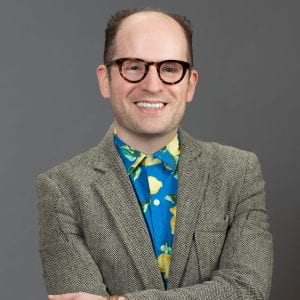
Matthew Potolsky is Professor of English at the University of Utah, specializing in nineteenth-century literature and literary theory. His career spans from 1998 Lecturer at Harvard University to current University Professorship. He earned a BA in Comparative Literature and Philosophy (1990), followed by MA and PhD in Comparative Literature (1992, 1997) from UC Irvine. Chair of English Department (2013-2016) University Professor (2014-2016) Research focuses on Decadence , Mimesis , Finance-Aesthetics intersections , and Government Secrecy . His work traces connections between financialization and decadent aesthetics, revealing how economic cycles influence artistic production. Key themes include: Decadent anti-realist literary movements Finance capital's cultural impact Decadent counterpublic formations Victorian aesthetic education debates Sublime aesthetics in national security Cosmopolitanism in literary communities Recent publications analyze: Decadent style as financialization rhetoric Reintroduction of verisimilitude theory Decadent responses to financial crises Mimetic labor in artistic production Decadent cosmopolitan counterpublics Historical parallels between financialization and literary decadence
Andrew Radin is a Senior Political Scientist at the RAND Corporation and Associate Director of the Master of National Security Policy Program at the RAND School of Public Policy. His work focuses on European security, military activities in space, and state-building, with expertise in NATO, Russia, Ukraine, and Afghanistan. Ph.D. in Political Science, MIT B.A. in Political Science and Mathematics, University of Chicago Postdoctoral Fellow, Harvard Kennedy School Postdoctoral Fellow, University of Southern California His research centers on European and Eurasian security , military strategy , and state-building in weak states . He emphasizes the role of local politics in institution-building and has conducted case studies in Bosnia, Kosovo, Iraq, Timor-Leste, and Ukraine. His work explores hybrid warfare, deterrence, security sector reform, and U.S. policy toward Russia and China. His recent publications reveal a strong trend in analyzing space as a domain of military competition , NATO deterrence strategies , and Russian gray-zone aggression . Topics frequently include escalation dynamics, allied cooperation, and the future of the liberal international order. His research combines policy relevance with academic rigor. Scientific Contributions and Recognition: Author of Institution Building in Weak States: The Primacy of Local Politics (Georgetown University Press) Published in Security Studies , Journal of Conflict Resolution , Washington Quarterly , and War on the Rocks Contributor to high-impact RAND reports on Ukraine, NATO, Russia, and international order Andrew Radin has advised on national security policy, including serving as Country Director for Afghanistan in the Office of the Under Secretary of Defense for Policy. He previously taught as an adjunct professor at Georgetown University. He has not received mention of specific grants or student advisees, but his leadership in the Master of National Security Policy program suggests mentorship and program development responsibilities. He is active in shaping U.S. defense and foreign policy through research and commentary. Laboratories, Teams, and Research Groups: He is affiliated with the RAND Corporation’s international security research division and contributes to projects on global competition, military strategy, and political warfare. His work is often collaborative, involving multidisciplinary teams focused on defense policy and strategic stability.
Joseph Felter is a Research Fellow at the Hoover Institution (Stanford University) and the William J. Perry Fellow at the Center for International Security and Cooperation. His career bridges academia, military service, and policy advising, with expertise in counterinsurgency, national security, and US-China relations. He coauthored the influential book Small Wars, Big Data: The Information Revolution and Modern Conflict (2018) and developed the Hacking for Defense curriculum to connect military needs with Silicon Valley innovation. Military Background: Former US Army Special Forces officer with combat deployments in Panama, Iraq, and Afghanistan. Served as commander of the COMISAF Counterinsurgency Advisory and Assistance Team. Academic Roles: Assistant Professor at West Point’s Department of Social Sciences, Adjunct Associate Professor at Columbia University’s School for International and Public Affairs, and current codirector of Stanford’s Empirical Studies of Conflict Project. Research Focus: Politically motivated violence, economic development in conflict zones, and defense innovation. His work appears in top journals like American Economic Review and Journal of Conflict Resolution . Policy Engagement: Key advisor on US defense strategy (2017–2019) and founder of BMNT, a Silicon Valley defense technology incubator. Currently serves on Spirit of America’s board. Scientific Awards: Recognized as a William J. Perry Fellow and US Army War College Fellow. His empirical conflict research informs both academic and policy debates.
Professor Shoon Murray is a distinguished faculty member at American University's School of International Service, specializing in American foreign policy and civil-military relations. Holding a PhD in political science from Yale University, she teaches foundational courses including Analysis of US Foreign Policy (SISU-230) and Foreign Policy: Theory and Decision Making (SIS-689). Education: PhD in Political Science, Yale University Research Focus: Dr. Murray's scholarship critically examines war powers, decision-making theory, and the interplay between public opinion, media, and foreign policy formation. Her work analyzes how political leaders navigate security crises, congressional-authority tensions in military actions, and institutional shifts in diplomatic practices amid global power diffusion. She investigates enduring phenomena like the “rally ‘round the flag’” effect while documenting the post-9/11 militarization of U.S. strategic approaches. Publication Trends: Recent research centers on the evolution of the 2001 AUMF, combatant commanders' diplomatic roles, and State Department-DoD institutional competition. Her scholarship reveals how military actors increasingly shape foreign policy narratives while traditional diplomatic channels erode, with implications for democratic accountability and strategic coherence in counterterrorism operations.
Mehmet Esat Belviranli is an Assistant Professor in the Computer Science Department at the Colorado School of Mines, where he directs the High Performance Systems and Software Lab (HyperSys). His research focuses on increasing resource utilization in heterogeneous architectures through runtime systems, scheduling algorithms, and performance modeling, with publications in top venues including MICRO, PPoPP, and SC. Education: Ph.D. in Computer Science, University of California, Riverside (2016) M.S. in Computer Science, Bilkent University (2009) B.S. in Computer Science, Bilkent University (2006) Belviranli's research spans heterogeneous architectures, runtime systems, performance modeling, parallel programming, autonomous computing, deep learning acceleration, cyber-physical systems, and edge-cloud platforms. His work develops analytical models and programming abstractions to address resource management, scheduling, and security challenges in diversely heterogeneous systems, with applications in edge computing, autonomous systems, and machine learning acceleration. Recent projects emphasize real-world constraints and security implications. His publication trends reveal increasing focus on edge-cloud resource management (e.g., HARNESS), security vulnerabilities in heterogeneous systems (e.g., MC3), and deep learning acceleration under resource constraints. Key themes include memory contention modeling, scheduling for cyber-physical systems, and concurrent DNN execution, reflecting a shift toward practical deployment in security-sensitive edge environments. Scientific Awards: U.S. Air Force Research Lab Summer Faculty Fellowship Award (2022) U.S. Air Force Research Lab Summer Faculty Fellowship Award (2021) Oak Ridge National Laboratory Significant Event Award (2019) Best Paper Finalist, IEEE HPEC 2018 Outstanding Paper Award, DATE 2024 Belviranli mentors Ph.D. students Ismet Dagli (MLCommons Rising Star 2024, CGO'24 SRC finalist) and Justin Davis (DATE'24 Outstanding Paper Award winner). He has secured $2M+ in funding from NSF, DoE, and SRC, including an NSF-SaTC grant on mobile security (2024), a DoE grant on superconductive systems (2023), and an NSF FuSe grant on graphene nanoribbons (2023), often leading multi-institutional teams from Rochester, Virginia, Arizona, and Minnesota. The HyperSys Lab develops ecosystems for high-performance heterogeneous systems, with recent projects including HARNESS for edge-cloud resource management and MC3 for mobile SoC security. The lab has received equipment donations from Google Coral.ai and Xilinx, and collaborates with national labs on security challenges and next-generation semiconductor technologies.
Edward H. Kaplan is the William N. and Marie A. Beach Professor of Management Sciences at the Yale School of Management, Professor of Public Health at the Yale School of Medicine, and Professor of Engineering at the Yale School of Engineering and Applied Sciences. He holds secondary appointments in Chemical and Environmental Engineering, Health Policy & Management, the Institution for Social and Policy Studies, and Statistics. Education: PhD in Urban Studies, Massachusetts Institute of Technology (1984) SM in Mathematics, Massachusetts Institute of Technology (1982) SM in Operations Research and City Planning, Massachusetts Institute of Technology (1979) BA in Urban/Economic Geography, McGill University (1977) Kaplan is an expert in operations research, mathematical modeling, and statistics, focusing on public policy and management. His research spans counterterrorism, HIV prevention, bioterrorism, and public health modeling. He has developed models for suicide bomber detection, smallpox response logistics, needle exchange program effectiveness, and wastewater-based disease surveillance. His work has been recognized with numerous awards, including the Koopman Prize (2003, 2005), INFORMS President’s Award (2002), Charles C. Shepard Science Award (2009), and INFORMS Fellow (2005). He has also served as President of INFORMS (2016) and co-directs the Daniel Rose Technion-Yale Initiative in Homeland Security.
Alfred W. McCoy is the Harrington Professor of History at the University of Wisconsin-Madison. His work spans modern empires, Philippine political history, global drug trafficking, and CIA covert operations. He holds a Ph.D. from Yale University, alongside an M.A. from the University of California-Berkeley and a B.A. from Columbia College. His research has produced seminal works such as The Politics of Heroin (1972), which exposed CIA complicity in drug trafficking, and To Govern the Globe (2021), analyzing imperial systems from the Black Death to climate crisis. His investigations into torture, surveillance, and Philippine military culture have won major awards, including the Wilbur Cross Medal (2012) and the Association for Asian Studies’ Kahin Prize (2011). McCoy has advised students like Christopher Hulshof and Daniel Jackson. His teaching focuses on Southeast Asian history, U.S. foreign policy, and imperial studies. Courses include The Vietnam Wars and CIA Covert Warfare . His contributions include exposing Marcos’s 'fake medals' in the New York Times and co-editing award-winning volumes on Philippine historiography. He currently holds the J.R.W. Smail Chair in History and has received the Hilldale Award for Arts & Humanities.
Joshua D. Kertzer is the John Zwaanstra Professor of International Studies and Government at Harvard University, where he also serves as Director of Graduate Studies. His research integrates international security, political psychology, and foreign policy analysis. His work examines public opinion formation, elite decision-making, and experimental approaches to international relations. Recent studies focus on how observers assess resolve in international conflicts, partisan influences on foreign policy attitudes, and the psychological foundations of reputation costs. Publications demonstrate methodological innovation in combining survey experiments with archival research, exploring topics from democratic credibility to signaling in crisis diplomacy. His award-winning research has been recognized by the International Studies Association and American Political Science Association.
David Wentzlaff is a Professor of Electrical and Computer Engineering at Princeton University, with associated faculty roles in Computer Science and the High Meadows Environmental Institute (HMEI). He leads research in computing architecture, green computing, and sustainable system design. As Director of Undergraduate Studies, he shapes educational programs in his field. Education: Ph.D., Electrical Engineering, MIT (2012) M.S., Electrical Engineering and Computer Science, MIT (2002) B.S., Electrical Engineering, University of Illinois at Urbana-Champaign (2000) Research Focus: Future Computing Systems: Designing manycore architectures, cloud computing infrastructure, and chiplet-based systems for exascale computing. Sustainability: Developing energy-efficient hardware, recyclable computing systems, and eco-friendly decommissioning strategies. Hardware-Software Co-Design: Exploring FPGA integration, in-memory computing, and parallel processing frameworks. Advising & Grants: Advises 8 current graduate students, focusing on topics like chiplet design, neural acceleration, and sustainable computing. Recipient of NSF grants for projects like OpenPiton (open-source manycore research platform) and CAREER awards for energy-efficient architectures. Labs & Collaborations: Leads the Wentzlaff Research Group at Princeton. Develops open-source frameworks like PRGA (FPGA prototyping) and OpenPiton (manycore processor).
Lindsey O'Rourke is an Associate Professor of Political Science at Boston College's Morrissey College of Arts and Sciences. Her research examines U.S. foreign policy, international security, and covert regime change operations. Her work analyzes the causes, conduct, and consequences of U.S.-orchestrated covert interventions during the Cold War, gender dynamics in terrorism, and the strategic implications of regime change. Her book 'Covert Regime Change: America's Secret Cold War' received significant scholarly recognition. She teaches courses on U.S. foreign policy since 1945, the World Wars, and foreign-imposed regime change. Publications demonstrate three interconnected research streams: 50% on covert operations and regime change, 30% on gender dimensions of political violence, and 20% on contemporary security challenges. Her work combines historical analysis with contemporary policy implications.
Brad Campbell is an Associate Professor in the Department of Computer Science and Electrical and Computer Engineering at the University of Virginia, where he is a member of the Link Lab, a cross-disciplinary research group focused on cyber-physical systems. His research centers on designing and building scalable, effective, and unobtrusive embedded systems for the Internet of Things, with applications in smart buildings, smart cities, and personal health. His work spans hardware design, networking, and cloud infrastructure, with a strong emphasis on energy-harvesting systems, low-power wireless communication, and resilient embedded operating systems. He has led projects such as the Living Link Lab, a heavily instrumented smart building testbed, and has developed open-source platforms for self-powered sensing and IoT ecosystems. His recent publications reflect a strong trend toward privacy-preserving federated learning, contactless occupancy sensing using WiFi and light, decentralized edge computing, and sustainable IoT systems. These works are published in top venues including SenSys, BuildSys, MobiCom, and IPSN, indicating a high impact in the systems and networking community. NSF CAREER Award (2022) Best Paper Award at DFHS’19 Multiple graduate fellowships and teaching awards for his students UVA Engineering Endowed Graduate Fellowships Link Lab Seminar Award CPS Rising Star recognition Brad Campbell has advised numerous PhD and master’s students, many of whom have gone on to academic and industry roles. He has secured significant research funding, including from the NSF, and has contributed to curriculum development in cyber-physical systems. He is actively involved in teaching courses on computer networking, IoT, and operating systems, and has co-taught wireless IoT courses across multiple institutions. His lab focuses on real-world deployment of IoT systems, emphasizing scalability, fault tolerance, and long-term sustainability. He continues to push the boundaries of what embedded systems can achieve in everyday environments, from homes to cities.
Abbas Milani serves as a Research Fellow and co-director of the Iran Democracy Project at the Hoover Institution, and as the Hamid and Christina Moghadam Director of Iranian Studies at Stanford University. His expertise centers on US/Iran relations and Iranian cultural, political, and security issues. Milani's research interests span Iranian history, politics, and US-Iran relations, with a particular focus on the evolution of Iranian political thought, regime dynamics, and the historical context of contemporary Iranian politics. His scholarship bridges academic analysis with policy relevance, examining how historical patterns shape current geopolitical realities in the Middle East. His recent publications demonstrate consistent focus on Iranian regime stability, nuclear policy, US-Iran relations, and regional power dynamics. Milani's analytical approach combines historical perspective with contemporary political analysis, revealing patterns in Iranian leadership behavior, regime survival strategies, and the interplay between domestic politics and foreign policy. Member of the American Association of Political Science Member of the American Academy of Political and Social Science Member of the Association of Iranian Studies Milani maintains an active role in mentoring emerging scholars and engaging with policy communities, translating complex historical and political analysis into accessible insights for broader audiences. His work often appears in major media outlets, demonstrating his commitment to bridging academic research and public understanding of critical geopolitical issues.
Nick Cullather is a Professor in the Department of International Studies at the Hamilton Lugar School of Global and International Studies, Indiana University Bloomington. His research focuses on U.S. foreign relations, particularly the historical use of intelligence, development aid, and technology as instruments of American power during the Cold War. Educational Background: B.A., Indiana University, 1981 Ph.D., University of Virginia, 1993 His research interests include diplomatic history, modernization theory, U.S.-Asian relations, and the history of intelligence. He examines how the United States has used food, statistics, covert operations, and technological interventions to reshape societies abroad, often under the guise of development and democracy promotion. His work critically engages with the ideological and structural mechanisms behind U.S. foreign policy. The recent publications reflect a strong thematic focus on Cold War-era development projects, food politics, and intelligence operations. His writings explore the intersection of ideology, technology, and statecraft, particularly in Asia and Latin America. Key trends include the use of modernization as a geopolitical tool, the weaponization of nutrition, and the moral contradictions of democratic nations employing covert regime change. Scientific Awards: No scientific awards listed in the provided text. Nick Cullather has contributed significantly to the historiography of U.S. foreign policy through archival research and critical analysis. He has advised numerous students and secured research grants for projects on intelligence and development, though specific names and grant details are not provided. His current project, First Line of Defense , investigates the historical evolution of the CIA and the democratic tensions inherent in centralized intelligence. He is affiliated with the Hamilton Lugar School, a leading center for international studies, where he contributes to academic programs and public discourse on global affairs.
Quentin Covert serves as a Lecturer at The Beacom College of Computer & Cyber Sciences, Dakota State University, designing and delivering courses in Cyber Defense, Cyber Operations, and Computer Science at both graduate and undergraduate levels. His academic background includes: Ph.D. Candidate in Cyber Defense, Dakota State University M.S. in Computer Science, Dakota State University (2019) B.S. in Computer Science, University of Nebraska – Lincoln (2018) Covert specializes in data privacy frameworks, with research centered on Data Privacy Ontology to structure privacy concepts within cybersecurity systems. His teaching emphasizes practical applications of information security management, directly supporting the college's focus on defensive cyber operations and risk mitigation strategies. Professionally, he consults for international organizations on privacy data mapping and develops software tools for third-party security risk management, bridging academic theory with real-world implementation challenges. While his role involves course instruction and curriculum development, the provided text specifies no formal student advising relationships or research grants. His prior five years as a graduate assistant and adjunct professor at Dakota State University demonstrate progressive institutional engagement.
Mike J. Harman serves as Assistant Professor of Psychology at the University of Northern Iowa within the College of Social & Behavioral Sciences, specializing in behavior analysis with applications to developmental disorders and decision-making processes. His academic credentials include: Ph.D. in Psychology from University of Wisconsin-Milwaukee (2018) M.S. in Psychology from University of Wisconsin-Milwaukee (2015) B.S. in Psychology from University of Wisconsin-Superior (2013) Dr. Harman's research program investigates three interconnected domains: skill acquisition interventions for developmental disorders (particularly autism), covert verbal behavior in complex repertoire development, and parameters influencing delay discounting and impulsive choices. His work bridges experimental analysis with clinical applications, emphasizing methodological rigor in behavior analytic procedures. His 14 recent publications (2018-2024) reveal consistent focus on treatment integrity measurement, verbal behavior mechanisms, and decision-making paradigms across human and animal subjects. The corpus demonstrates strong methodological innovation in single-case designs while addressing clinically relevant questions in autism intervention and behavioral economics. Dr. Harman actively mentors students whose work regularly appears at national conferences and in top behavior analysis journals. He serves on the editorial board of The Analysis of Verbal Behavior and reviews for Behavior Modification , Journal of Applied Behavior Analysis , and other leading publications. He maintains an active research laboratory focused on experimental analysis of behavior, where students conduct hands-on investigations of verbal behavior, delay discounting, and skill acquisition protocols.