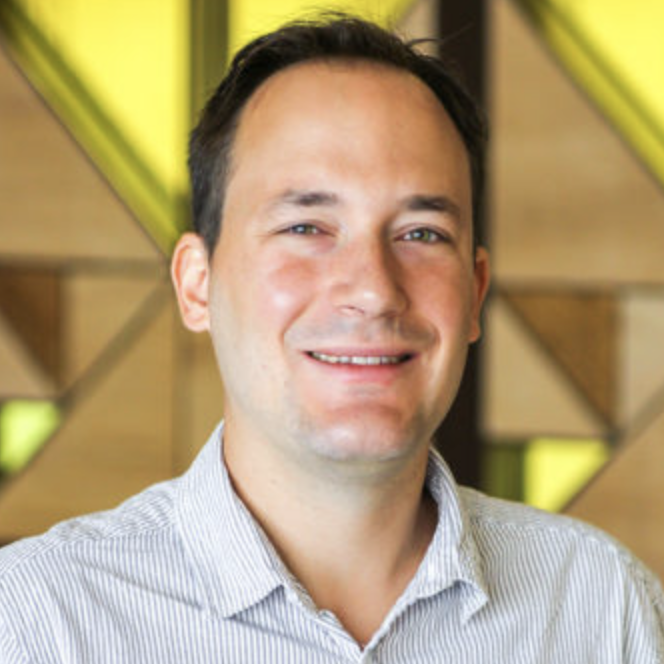
Dr. Eduardo Feo Flushing is an Assistant Teaching Professor in the Software and Societal Systems Department at Carnegie Mellon University's School of Computer Science , based in Pittsburgh, PA. His role involves academic instruction and research at the intersection of software engineering, societal computing, and intelligent systems. Research Focus: His work spans robotics, distributed AI, and networked systems, with applications in critical domains. Primary research themes include: Multi-robot coordination for spatially distributed tasks Machine learning in healthcare diagnostics and renewable energy Wireless network optimization for mobile systems Human-robot collaboration under uncertainty Publication Trends: Recent articles (2021-2025) demonstrate a strong emphasis on applied machine learning (LLMs for medical ECG, deep learning for solar panel inspection) and advanced robotics (indoor mapping, task allocation in communication-constrained environments). Earlier work (2016-2020) focused on foundational aspects of multi-robot coordination, optimization, and wireless network resilience.
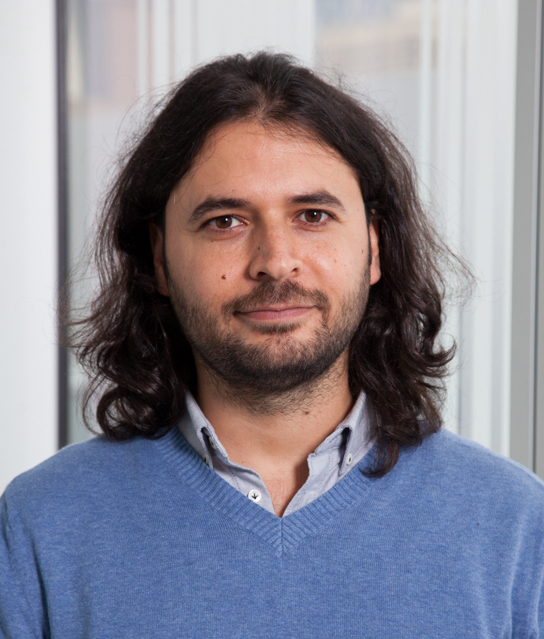
Ömür Arslan is an assistant professor in the Department of Mechanical Engineering at the Eindhoven University of Technology (TU/e) , affiliated with the Robotics Group and the EAISI Mobility and EAISI High Tech Systems institutes. His research focuses on the algorithmic foundations of robotics, particularly safe adaptive motion planning algorithms for robots operating around humans. Education: PhD in Electrical and Systems Engineering (2016), University of Pennsylvania MSc in Electrical Engineering (2012), University of Pennsylvania MSc in Electrical & Electronics Engineering (2009), Bilkent University BSc in Electrical & Electronics Engineering (2007), Middle East Technical University His research interests span robotics, motion planning, control theory, sensor networks, dynamical systems, optimization, machine learning , and machine perception . Recent work includes safe unicycle control, probabilistically safe corridors, and statistical coverage control of mobile sensor networks. He has received nominations for best paper awards at ICRA 2018 and WAFR 2016 . Ömür has supervised student projects such as Hancheng Min's MSc thesis on statistical coverage control and Vincent Pacelli's work on local geometry in motion planning .
Pascual Campoy Cervera is a Full Professor at the Universidad Politécnica de Madrid (UPM) and holds visiting professor positions at Delft University of Technology, Tongji University, and Queensland University of Technology. His work focuses on Control Systems , Machine Learning , and Computer Vision for Unmanned Aerial Vehicles (UAVs) . As Principal Investigator of the Computer Vision and Aerial Robotics group at UPM's Center for Automation and Robotics (CAR), he has led over 40 R&D projects with European, national, and industrial funding. Current affiliations: UPM, TU Delft, CAR-UPM Research themes: UAV autonomy, swarm robotics, embedded vision systems His research integrates cutting-edge technologies in image processing, control theory, and artificial intelligence to enhance UAV capabilities in unstructured environments. Recent projects include: Autonomous firefighting systems High-speed drone racing frameworks Swarm-based solar farm inspection Thrust vectoring for heavy UAVs Notable scientific awards include multiple international prizes at UAV competitions (IMAV12–17). His team has developed the Aerostack and Aerostack2 frameworks for aerial robotics, which address execution control, mission planning, and sensor fusion challenges.
Prof. Pieter Vansteenwegen is a full professor at KU Leuven's Faculty of Engineering Science, leading the Centre for Industrial Management/Traffic and Infrastructure (CIB) and chairing the KU Leuven Institute for Mobility (LIM). With a PhD in Operations Research (2008), he works on robust public transport systems, metaheuristics for logistics, and demand-responsive mobility solutions. Chair, KU Leuven Institute for Mobility Program Director, Master of Mobility and Supply Chain Engineering Board member, International Association of Railway Operations Research His research integrates transportation engineering , logistics optimization , and smart mobility systems , focusing on: Demand-responsive public transportation Metaheuristic algorithm development Inventory routing problems Smart waste collection strategies Multi-robot scheduling Recent publications demonstrate expertise in variable neighborhood search , Benders decomposition , and genetic algorithms applied to public transport, satellite scheduling, and circular economy logistics. His work has been cited over 9,400 times (Google Scholar H-index 51). Scientific recognition includes: Multiple IAROR best paper awards Best Reviewer European Journal of Operational Research BIVEC-GIBET PhD awards (2009, 2021, 2023) RASIG-INFORMS Student Paper Prizes He directs KU Leuven's Planning and Operational Research subdivision , serves on faculty councils, and founded spin-off dyNAVic for electronic tourist guides. His teaching portfolio includes courses in Public Transportation Design , Distribution Logistics , and Operational Management .
Arthur G Richards serves as Professor of Robotics and Control within the Dynamics and Control department at the University of Bristol's School of Engineering Mathematics and Technology. His research specializes in trajectory optimization for aerospace applications, focusing on UAV autonomy, spacecraft rendezvous, and air traffic management through advanced optimization techniques. His educational foundation includes an M.Eng. from the University of Cambridge and S.M./Ph.D. degrees from MIT. Research interests center on solving complex aerospace challenges through: Non-convex optimization for obstacle avoidance in cluttered environments Robust model predictive control for real-time disturbance compensation Distributed optimization enabling large-scale vehicle cooperation Scalable algorithms for high-traffic scenarios with minimal fuel consumption Analysis of his 132 research outputs reveals evolving emphasis on reliability-aware UAV path planning, interpretable reinforcement learning for aircraft control, and swarm robotics with real-world validation. Recent work increasingly integrates machine learning with traditional control theory while addressing practical constraints like sensor noise and system failures. Professor Richards has supervised 22 research students and secured funding for 11 projects, including the active Aerial Robotics for Search and Rescue (2022-2026) and PORTAL (2022-2024) initiatives. His industry collaborations with Thales and focus on technology transfer demonstrate strong academic-industrial integration. He actively contributes to the Smart Networks for Sustainable Futures and Robotics research groups, developing frameworks for multi-robot systems that balance theoretical rigor with practical deployment requirements in conservation, inspection, and exploration scenarios.
Joseph S.B. Mitchell is a SUNY Distinguished Professor at the Department of Applied Mathematics and Statistics, State University of New York at Stony Brook. His office is located in Math Tower, Room P-138A. His research spans computational geometry, algorithms, optimization, and related fields. Research Interests: Prof. Mitchell's work focuses on fundamental and applied problems in geometric computing, including: Algorithm design for spatial optimization (e.g., art gallery problems, dispersion) Robotics applications (multi-agent path planning, sensor deployment) Efficient solutions for geometric data structures and visibility constraints Recent Publications: His 15 most recent articles (2024-2025) demonstrate a consistent focus on geometric optimization, visibility problems, and algorithm design for polygons and networks. Common themes include approximation algorithms, multi-robot coordination, and combinatorial solutions for spatial challenges. Awards: SUNY Distinguished Professor (recognizing exceptional academic contributions)
Mikael Vejdemo-Johansson is an Associate Professor of Data Science and Mathematics at the Department of Mathematics, CUNY College of Staten Island, with concurrent roles as Executive Officer of Computer Science and Director of Data Science at the CUNY Graduate Center. His work bridges applied algebraic topology, computational mathematics, and data science, with a focus on topological data analysis (TDA) and its applications to diverse domains. He has contributed extensively to software development in TDA, notably creating JavaPlex, and has co-authored foundational work on persistent homology, cohomology, and the Mapper algorithm. His research explores topological modeling of political data, motion capture, and biomedical applications, while advocating for mental health awareness in academia through initiatives like the Depressed Academics blog. His recent publications emphasize persistent cohomology, error classification in predictive models, and distributed algorithms for evasion problems. He mentors graduate students in computational topology, machine learning, and data science, and his artistic endeavors include mathematical art exhibitions at major conferences like the Bridges Mathematical Art Conference.
Professor Robert Fitch is a distinguished academic leader and one of Australia's foremost authorities in robotics at the University of Technology Sydney (UTS), where he serves as Professor in the School of Mechanical and Mechatronic Engineering. He holds significant leadership roles as Director of the NSW Defence Innovation Network and was previously Director of UTS Tech Lab and Head of School of Mechanical and Mechatronic Engineering from 2019-2023. His career bridges academia, research, and industry collaboration to develop engineering solutions for tomorrow's societal challenges. PhD from Dartmouth College (1998-2004) Former Senior Research Fellow at Australian Centre for Field Robotics, University of Sydney Current Director of NSW Defence Innovation Network (since 2023) Founding Co-Director of NSW Space Research Network (2021-2023) Professor Fitch specializes in autonomous field robotics, developing outdoor robotic systems for diverse industry applications from agriculture to aeronautics, environmental science to space exploration. His research spans multiple domains including multi-robot coordination, hydrogen storage systems, maritime robotics, and AI-driven automation. He operates at the critical nexus of academia, research, and industry, collaborating with businesses and government organizations to deliver innovative solutions to complex real-world challenges. His work demonstrates exceptional translational impact, turning academic research into commercial ventures and practical applications. His recent publications reveal a strong focus on advancing robotics through novel planning algorithms for multi-robot systems operating in complex environments. There's a clear trend toward practical applications in maritime operations, hydrogen energy storage, and warehouse automation, reflecting his commitment to solving real-world engineering challenges. His research integrates theoretical advances with industry needs, particularly in marine robotics, autonomous systems for agriculture, and energy storage technologies. Professor Fitch's work has received significant recognition with numerous accolades and extensive media coverage including appearances on ABC's flagship 7.30 program, Weekend Australian, BBC, and The Hindu. His research has been featured in over 15 news outlets and blogged about extensively, demonstrating its broad societal impact. He has graduated 20 PhD students who are now leading work in field robotics, mechanical and mechatronic engineering, and autonomous systems. Since 2011, he has secured nearly $30 million in grants funding over 50 projects, including major collaborations with industry partners like Space Machines Company, Advanced Navigation, and Australian Wool Innovation. His leadership has been instrumental in growing startups from small beginnings to significant operations, such as Space Machines Company which launched the largest Australian-made satellite into orbit aboard a SpaceX transporter in March 2024. Professor Fitch leads the UTS Robotics Institute and has been instrumental in establishing collaborative spaces like UTS Tech Lab, which has fostered successful partnerships with multiple companies. His work with Wildlife Drones demonstrates how academic research can translate into successful commercial ventures, having grown from research projects into an established business. His leadership extends to numerous industry and academic organizations, boards, and committees, where he serves as director, chair, and co-chair.
Sudip Misra is a Professor in the Department of Computer Science and Engineering at the Indian Institute of Technology Kharagpur, West Bengal, India. With an extensive publication record of 168 publications and over 1,142 citations, he has established himself as a leading researcher in networking and sensor systems. His work spans multiple domains within computer science and engineering, with a particular focus on practical applications of theoretical concepts. Dr. Misra's research interests encompass Wireless Sensor Networks, Internet of Things (IoT), Mobile Networks, Routing Protocols, Network Security, Energy Efficiency, Underwater Sensor Networks, UAV Networks, and Machine Learning applications for networking. His work demonstrates a consistent focus on solving real-world problems through innovative networking solutions, particularly in resource-constrained environments. He has made significant contributions to security protocols, energy management, and connectivity solutions across various network paradigms. Analysis of his recent publications reveals a strong trend toward practical applications of networking technologies, with increasing focus on IoT security, vehicular networks, underwater communication systems, and UAV-enabled networks. His work shows evolution from fundamental networking protocols to more complex, application-specific solutions addressing contemporary challenges in smart transportation, precision agriculture, and secure cloud-based IoT services. Dr. Misra has mentored numerous students and researchers, as evidenced by his extensive co-authorship record. His collaborative work spans multiple institutions across India and internationally, demonstrating strong research leadership and networking capabilities. His research has been supported by various funding mechanisms, though specific grants are not detailed in the available information. His laboratory or research group appears to focus on sensor networks, IoT systems, and related communication technologies, with particular emphasis on security, energy efficiency, and practical deployment scenarios. The research output suggests a well-established team working on cutting-edge networking challenges with real-world applicability.
Professor Magnus Karlberg serves as Professor and Head of Department within the Department of Engineering Sciences and Mathematics at Luleå University of Technology. He leads the Division of Product and Production Development and focuses his research on machine design and autonomous systems for forestry applications. His work bridges engineering sciences with practical forestry solutions, positioning him at the forefront of robotics innovation in natural resource management. Professor Karlberg's research interests center on autonomous forestry operations, with particular emphasis on machine vision, path planning algorithms, and virtual environment simulation for training autonomous systems. His work explores how virtual training data can be effectively transferred to real-world forestry applications, addressing challenges in object detection, navigation, and task execution in complex forest environments. This research has significant implications for developing sustainable, efficient, and safe forestry practices through advanced robotics and machine learning. His recent publication record demonstrates a strong trajectory in autonomous forestry systems, with multiple high-impact publications between 2024-2026. These works show a consistent focus on solving practical challenges in forestry automation, with increasing technical sophistication from basic feasibility studies to advanced path planning and species-specific regeneration techniques. The research spans computer vision, robotics, and sustainable forestry, indicating a multidisciplinary approach that integrates engineering principles with environmental considerations. Professor Karlberg's work is supported by significant funding from multiple sources including Norrbotten County Council, Interreg Aurora, Vinnova, and The Kempe Foundations. His research projects, particularly SAMHand (Sustainable Autonomous Material Handling) and AutoPlant, focus on developing practical autonomous systems for forestry operations. These projects involve collaboration with multiple researchers and institutions, reflecting the interdisciplinary nature of modern forestry technology development. While specific laboratory information isn't provided in the available materials, Professor Karlberg's research appears to involve substantial work with virtual environments, digital twins, and real-world forestry equipment testing. His publications suggest access to both simulation environments and physical forestry machinery for hardware-in-the-loop validation, indicating a well-equipped research infrastructure capable of bridging theoretical development with practical field testing.
Marie-Eve Carignan serves as Full Professor in the Department of Communication at Université de Sherbrooke, holding key leadership roles including Program Director for the Master's in Communication (course-based track in international political communication and democratic risks) and responsibility for third-cycle development. She co-holds and directs the Media Pole at the UNESCO Chair for the Prevention of Radicalization and Violent Extremism (UNESCO-PREV Chair), demonstrating deep institutional integration. Her academic credentials include dual doctorates: a PhD in Information and Communication Sciences from Sciences Po Aix-en-Provence (France) and a joint PhD in Communication from Université de Montréal (with Concordia University and UQAM). Additional qualifications comprise a Master's and Bachelor's in Social Communication from Université du Québec à Trois-Rivières, and a Journalism and Television Animation diploma from ProMédia School. Professor Carignan's research critically examines press discourse, journalistic practices during crises (including terrorism and industrial disasters), cultural industry statistics, and media ethics. Her work bridges theoretical frameworks with practical applications, particularly analyzing ethical boundaries in native advertising and community resilience communication during events like the Lac-Mégantic rail tragedy. She investigates how media coverage shapes public understanding of complex crises while maintaining journalistic integrity. Recent publications reveal consistent focus on crisis communication dynamics, with significant attention to media coverage of terrorist attacks (Ottawa 2014) and industrial disasters. Her scholarship increasingly addresses digital transformation challenges, particularly native advertising's ethical implications and niche media development. This trajectory demonstrates evolving expertise from traditional press analysis toward contemporary digital media ethics and crisis response frameworks. She actively contributes to multiple research collectives including the Society, Law and Religions Research Center (SoDRUS) at Université de Sherbrooke, the Cultural Audiences Research Laboratory (LRPC), the International Network for Communicator Professionalization (RESIPROC), and the CHERPA research center, fostering interdisciplinary collaboration across communication, sociology, and cultural studies domains.




 Magnus Karlberg2.jpg)
