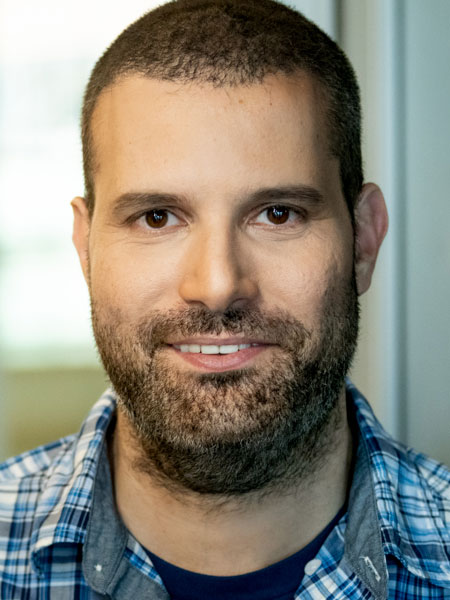
Nuno Gonçalo Coelho Costa PomboView profile
Associate Professor
Nuno Gonçalo Coelho Costa Pombo is an active researcher and faculty member at the University of Beira Interior, Portugal, where he works in the School of Technology and Management within the Department of Computer Science. His academic career spans over a decade with consistent publication output from 2014 through 2025, demonstrating sustained research productivity and evolving expertise across multiple domains. Dr. Pombo's research interests center on the intersection of computer science and healthcare applications. His work prominently features ECG signal processing for medical diagnostics, with significant contributions to sleep apnea detection systems and clinical decision support systems . He has pioneered approaches in activities of daily living recognition using sensor data from mobile devices, which has important applications in elderly care and chronic disease management. His research methodology often combines machine learning techniques with Internet of Things (IoT) frameworks to create healthcare monitoring solutions that balance effectiveness with user privacy concerns. Recent work has expanded into educational technology applications, including augmented reality for programming instruction and futuristic thinking development in education. An analysis of Dr. Pombo's publication trends reveals a natural progression from foundational research in activity recognition to increasingly sophisticated healthcare applications. His early work focused on basic activity recognition frameworks, while more recent publications demonstrate advanced applications in specific medical conditions including diabetes management, mental health support, and cardiovascular diagnostics. The interdisciplinary nature of his research is evident in his extensive collaborations across engineering, medical, and social science domains, reflecting a holistic approach to healthcare technology development. Dr. Pombo maintains an active supervision role, with numerous publications featuring co-authors who appear to be students or early-career researchers. His work has been supported by research initiatives focused on healthcare technology innovation, though specific grant details are not evident from publication records. The consistent output across reputable venues including IEEE Access, Sensors, and international conferences demonstrates sustained research impact in his field.