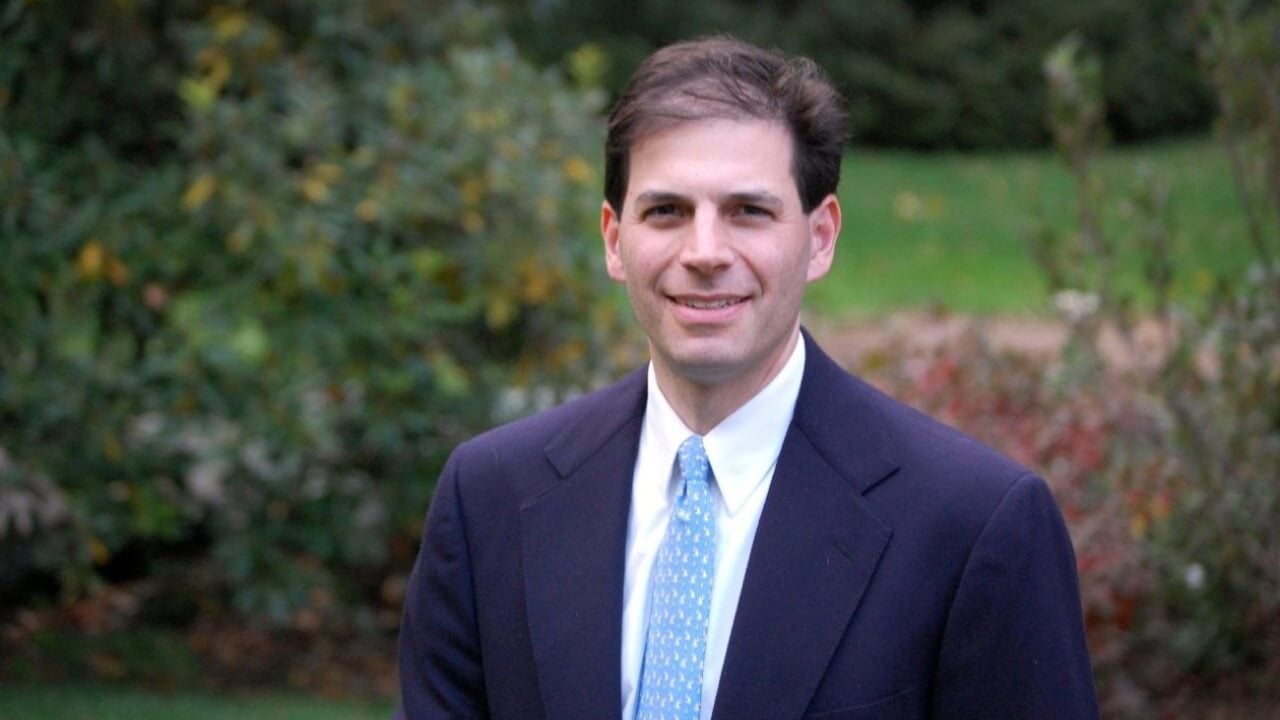
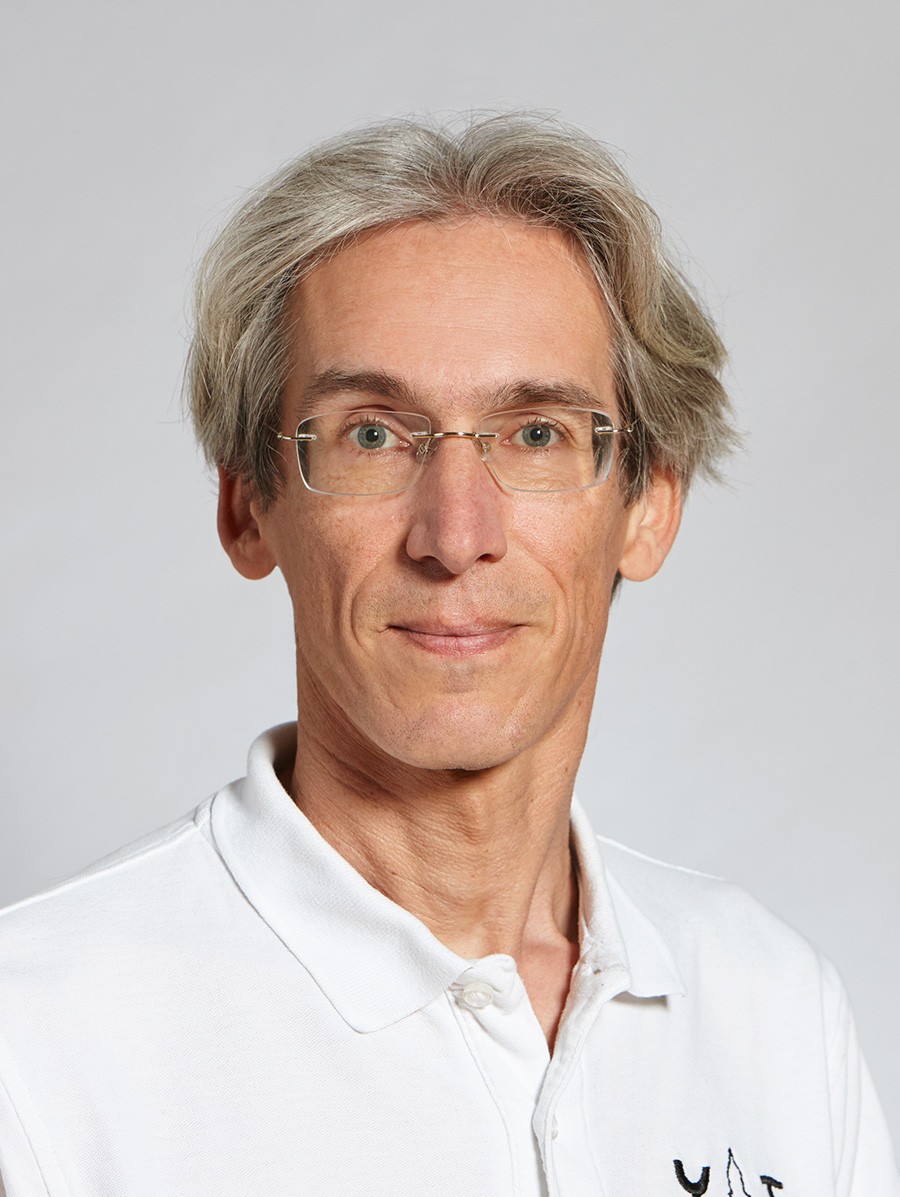
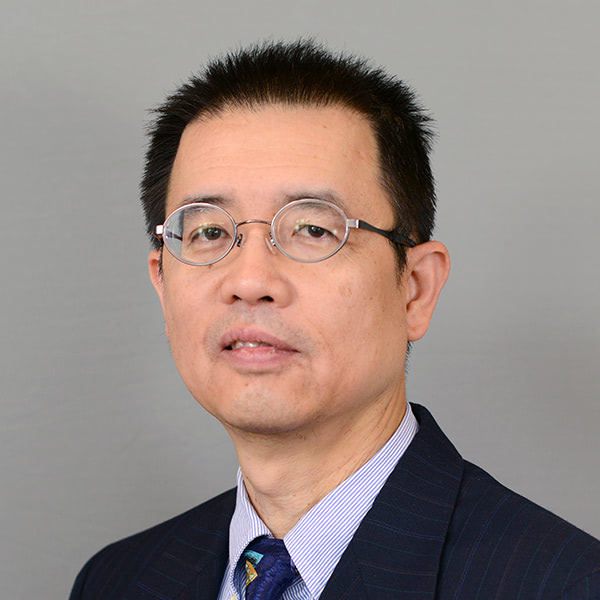
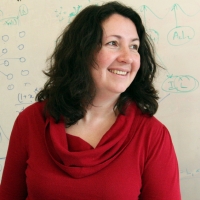
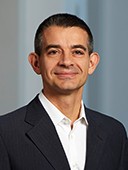
Jeffrey A. Cooper is a Professor of Law at Quinnipiac University School of Law , where he teaches courses in estate planning, wills and trusts, and taxation. He previously served as Associate Dean for Research and Faculty Development and is currently faculty adviser to the Quinnipiac Probate Law Journal . Education: AB from Harvard University, JD from Yale University, LLM from New York University Research Interests: His work focuses on tax policy , estate and gift taxation , and the intersection of federal tax law with state probate systems . He specializes in trust enforceability , uniform trust code , and historical analysis of tax legislation. Publications: Recent articles address perpetual trusts , state death tax decline , and curriculum reforms in estate planning education. His scholarship is widely published in national law journals and cited in casebooks. Scientific Awards: Academic Fellow, American College of Trust and Estate Counsel (ACTEC) Faculty Scholar, Quinnipiac University Professional Background: Before academia, Cooper practiced law for over a decade as a principal at Cummings & Lockwood, senior officer at United States Trust Company, and special counsel to Shipman & Goodwin. He also served as a senior adviser to Fiduciary Trust Company International.
Jessica Straley is an Associate Professor in the Department of English at the University of Utah, where she has served since 2005 (Visiting Assistant Professor 2005-2007, Assistant Professor 2007-2016, Associate Professor 2016-present). She holds a PhD in English from Stanford University, an MA in Literature, Culture, and Modernity from Queen Mary and Westfield College, University of London, and a BA in English from Cornell University. Education: PhD, English - Stanford University MA, Literature, Culture, and Modernity - Queen Mary and Westfield College BA, English - Cornell University Her research focuses on intersections between Victorian literature, children's literature, animal studies, disability studies, and ecocriticism. She explores how literary imagination interacts with scientific and moral discourses, particularly in 19th-century contexts. Recent publications analyze feral child narratives, zoo representations, and evolutionary theory in children's texts. Her work bridges historical literary analysis with contemporary critical frameworks like disability rights and environmental ethics. Scientific Awards: Faculty Fellowship Award (University Research Council, 2017) Ramona W. Cannon Award for Teaching Excellence (2016) Tanner Humanities Center Fellowship (2016) University Research Committee Faculty Fellowship (2011) Newberry Library Short-Term Library Research Fellowship (2008) She teaches courses in 19th-Century British Literature, Intellectual Movements, and Honors Thesis/Project supervision. Her external grant (Animal Testing URC, 2017-2018) demonstrates institutional support for her interdisciplinary work.
Prof. Ahmet Atay holds the rank of Professor of Communication Studies at the College of Wooster, serving as Program Chair of Global Media & Digital Studies and liaison to the Digital Visual Storytelling Pathway. His academic journey includes degrees from Marmara University (B.A., 1998), Ohio University (M.A., 2001), University of Northern Iowa (M.A., 2003), and Southern Illinois University (Ph.D., 2009). His research focuses on transnational communication, digital media's societal impact, cultural identity formation in global contexts, and queer diasporic experiences. He actively explores media representation of gender/sexuality, critical pedagogy, and autoethnography as research methodologies. Notable projects include editing works on millennial media ecology, intercultural communication pedagogy, and transnational queer cinema. Teaching responsibilities include courses on intercultural communication, mediated gender studies, and digital storytelling for social justice. He has held leadership roles in professional organizations like the National Communication Association and Central States Communication Association. Prof. Atay's recent publications emphasize digital ethnography, decolonizing communication studies, and queer pedagogy innovations. His work bridges theoretical frameworks with practical educational applications, addressing contemporary issues like diversity in academia and media's role in shaping cultural narratives.
Prof. Konrad Schindler holds the position of Full Professor at the Department of Civil, Environmental and Geomatic Engineering at ETH Zürich. He is also the Head of the Institute of Geodesy and Photogrammetry (IGP), leading research and educational activities in geomatics and computer vision. His career spans roles as a Photogrammetric Engineer, scientific assistant, postdoc researcher, and academic faculty across institutions including Graz University of Technology, Monash University, and TU Darmstadt before joining ETH Zürich in 2010. Education: Undergraduate studies in Geodesy (1992–1995), Graz University of Technology, Austria MEng in Photogrammetry and Geoinformation (1995–1999), Vienna University of Technology, Austria PhD in Computer Science (2001–2003), Graz University of Technology, Austria Research focuses on Photogrammetry , Remote Sensing , Computer Vision , and Image Understanding with interdisciplinary applications in environmental monitoring, geospatial analysis, and disaster response. He develops computational methods for 3D reconstruction, fusion of multi-modal data, and AI-driven solutions for satellite imagery interpretation. His work bridges geomatic engineering and machine learning to address challenges in urban mapping, climate modeling, and biological systems analysis. Publications reflect expertise in geospatial AI, diffusion models, and benchmarking datasets for disaster resilience. Notable works include Marigold (image analysis adaptation) and BRIGHT (building damage assessment). His research emphasizes practicality and scalability, such as affordable depth estimation and global biomass datasets. He has received the 2013 Marr Prize Honourable Mention (IEEE) and the 2012 U.V. Helava Award (ISPRS), alongside several Best Presentation Awards. His contributions span technical leadership, editorial roles (ISPRS Journal), and service to Swiss remote sensing commissions. Advising and grants: While no specific advisee names or grant details are listed, his career trajectory includes mentoring postdocs and junior faculty. He teaches advanced courses in Photogrammetry , Image Interpretation , and Machine Vision , integrating cutting-edge AI techniques into curricula. His research group collaborates on global-scale projects like canopy height mapping and satellite-based climate variable assessments. Labs/Teams: As Institute Head, he oversees the IGP lab at ETH Zürich, with prior affiliations including the Digital Perception Lab (Monash University) and the Computer Vision Lab (ETH Zurich). His work often involves multi-institutional collaborations focused on geospatial AI and environmental science.
Joshua D. Angrist is the Ford Professor of Economics at the Massachusetts Institute of Technology, where he has been a faculty member since 1996. He is also a co-founder and director of MIT's Blueprint Labs and a Research Associate at the National Bureau of Economic Research. Angrist shares the 2021 Nobel Prize in Economic Sciences with David Card and Guido Imbens for their methodological contributions to the analysis of causal relationships. Angrist received his B.A. from Oberlin College in 1982 and completed his Ph.D. in Economics at Princeton University in 1989. Prior to joining MIT, he taught at Harvard University and the Hebrew University of Jerusalem. His academic journey began somewhat unconventionally, as he left high school early after 11th grade, worked for over a year, and only later discovered his passion for economics through an inspiring teacher at Oberlin. Angrist's research focuses on developing and applying innovative econometric methods to answer important economic questions using natural experiments. His work spans labor economics, education economics, and causal inference methodology. He is particularly known for his contributions to instrumental variables methods and the Local Average Treatment Effect (LATE) framework developed with Guido Imbens. His research explores the economics of education and school reform, the impact of social programs on labor markets, and the effects of immigration and regulation. His recent publications reveal a continued focus on causal inference methods applied to education policy questions, labor market issues, and health economics. The trend shows increasing sophistication in research design, with particular attention to addressing selection bias and developing methods for external validity. His work spans theoretical econometric contributions alongside empirical applications in education, labor markets, and health. Sveriges Riksbank Prize in Economic Sciences in Memory of Alfred Nobel (2021) Fama Prize for Graduate Education (2018) Fellow of the American Academy of Arts and Sciences Fellow of the Econometric Society Angrist is deeply committed to teaching and mentoring. He has developed influential econometrics textbooks including 'Mostly Harmless Econometrics' and 'Mastering Metrics' with Jörn-Steffen Pischke. At MIT, he teaches courses including Labor Economics I (14.661), Econometric Data Science (14.32), and Labor Economics and Public Policy (14.64). He emphasizes selecting UROP students who have mastered foundational economics through courses like 14.64 and 14.32. Beyond MIT, Angrist co-founded Avela, a software startup using cutting-edge research to help schools improve enrollment and operations. Angrist co-founded and directs MIT's Blueprint Labs, which brings together researchers from economics, computer science, and education to develop innovative solutions for educational challenges. Through Blueprint Labs and Avela, his work bridges academic research with practical applications in education policy and technology.
Prof. Peter Scholze is a leading mathematician at the University of Bonn and the Max Planck Institute for Mathematics (MPIM). He holds a professorship in the Mathematical Institute at the University of Bonn and is affiliated with MPIM as a principal investigator. His research focuses on arithmetic geometry, representation theory, and p-adic geometry, with notable contributions to perfectoid spaces, prismatic cohomology, and the geometrization of the local Langlands correspondence. Scholze has organized several advanced seminars (ARGOS) and taught courses on topics like condensed mathematics, p-adic geometry, and algebraic geometry. He collaborates widely with researchers such as Laurent Fargues and Bhargav Bhatt. His recent work includes groundbreaking papers on wild Betti sheaves, motivic geometrization of the local Langlands correspondence, and the Habiro ring of number fields. Scholze has pioneered the use of prismatic cohomology to unify p-adic Hodge theories and has developed foundational frameworks in derived algebraic geometry. His research also intersects with representation theory and topological cyclic homology. Affiliations: University of Bonn (Mathematical Institute), Max Planck Institute for Mathematics (MPIM) Research Groups: Arbeitsgruppe Arithmetische Geometrie und Darstellungstheorie Teaching: Recent courses include 'Selected Topics in Algebraic Geometry' and 'Six-Functor Formalisms'. His work frequently explores connections between algebraic geometry and number theory, with a focus on geometric approaches to arithmetic problems. Scholze is a key figure in modern arithmetic geometry, influencing both foundational theory and applied areas like the Langlands program.
Minh Q. Phan is an Associate Professor of Engineering at Dartmouth College's Thayer School of Engineering. His expertise spans system identification, iterative learning control, model predictive control, robotic swarm control, and intelligent control systems. He holds a BS from the University of California, Berkeley, and MS/M.Phil/PhD degrees from Columbia University in Mechanical Engineering. Dr. Phan has contributed to over 50 peer-reviewed publications and serves as an Associate Editor for the Journal of Guidance, Control, and Dynamics. His research focuses on advancing control theory applications in robotics, structural health monitoring, and sustainable construction materials. Key contributions include the development of OKID (Observer/Kalman Filter Identification) methods and bilinear system identification frameworks. Education History: Bachelor of Science in Mechanical Engineering, UC Berkeley, 1985 Master of Science in Mechanical Engineering, Columbia University, 1986 Master of Philosophy in Mechanical Engineering, Columbia University, 1988 Doctor of Philosophy in Mechanical Engineering, Columbia University, 1989 Research Interests: Advanced control methodologies for dynamic systems Model-based predictive control strategies Applications in robotics and aerospace engineering Structural health monitoring via system identification Machine learning for materials science Teaching Responsibilities include courses like ENGG 149 (Systems Identification), ENGS 145 (Modern Control Theory), and ENGG 148 (Structural Mechanics). His work bridges theoretical control systems with practical industrial applications, including automation in food processing and sustainable construction practices. Dr. Phan has collaborated on projects addressing viral epidemiology in Vietnam and coastal erosion mitigation strategies.
Amir Zamir is a tenure-track Assistant Professor of Computer Science at the Swiss Federal Institute of Technology Lausanne (EPFL) in the School of Computer & Communication Sciences. Previously, he worked at UC Berkeley, Stanford, and UCF with prominent researchers including Silvio Savarese, Jitendra Malik, Mubarak Shah, Rahul Sukthankar, and Leonidas Guibas. He currently leads the Visual Intelligence & Learning Lab at EPFL and serves as chief scientist of Duranta, having previously been the CVML chief scientist of Aurora Solar (a Forbes AI 50 company valued at $4B in 2022) from 2015 to 2022. Dr. Zamir's research spans computer vision, machine learning, and artificial intelligence, with a focus on developing general multi-modal/multi-task vision systems that operate as active agents in the real world. His work emphasizes slow science principles, seeking fundamental understanding over quick publications. Key research areas include embodied vision, multimodal foundation models, computational imaging, and vision-language integration. His notable projects include 4M, Taskonomy, Gibson Environment, Omnidata, and MultiMAE, which have significantly influenced the field of computer vision and embodied AI. Zamir has made substantial contributions to the computer vision community through numerous high-impact publications and leadership roles. His work demonstrates a consistent focus on creating vision systems that go beyond narrow and passive methods toward more general, active, and embodied approaches. The trajectory of his research shows increasing sophistication in handling multiple modalities and tasks within unified frameworks, culminating in recent work on multimodal foundation models that can handle diverse vision tasks. Dr. Zamir has received numerous prestigious awards including the Young Researcher Award 2022 from ECCV, the PAMI Mark Everingham Prize 2022, SIGGRAPH 2022 Best Paper Award for CLIPasso, CVPR 2018 Best Paper Award for Taskonomy, and CVPR 2016 Best Student Paper Award. He is also an ELLIS Faculty Scholar and received the NVIDIA Pioneering Research Award in 2018 for the Gibson Environment. As an advisor, Dr. Zamir has mentored numerous PhD students including Roman Bachmann, Andrei Atanov, Rishubh Singh, Jason Toskov, Kunal Pratap Singh, Zhitong Gao, Mingqiao Ye, and Muhammad Uzair Khattak. His former PhD students include Oguzhan Kar (now at Apple), Alexander Sasha Sax (co-advised with Jitendra Malik, now at Meta FAIR), and Teresa Yeo (now at MIT-Singapore Alliance). Dr. Zamir teaches several advanced courses including CS-503 Visual Intelligence, CS-500 AI Product Management, COM-304 Intelligent Systems, and ENG-615 Topics in Autonomous Robotics. Dr. Zamir leads the Visual Intelligence & Learning Lab at EPFL, which focuses on developing fundamental methods for visual intelligence that can operate effectively in real-world environments. The lab takes an interdisciplinary approach combining computer vision, machine learning, robotics, and cognitive science to create systems that can perceive, understand, and interact with the world. Current research directions include multimodal foundation models, computational imaging, embodied vision, and personalization of generative models.
Polina Golland is a Professor in the Department of Electrical Engineering and Computer Science (EECS) at MIT and a Principal Investigator in the Computer Science and Artificial Intelligence Laboratory (CSAIL). Her research focuses on developing novel techniques for biomedical image analysis and understanding, particularly in medical vision, AI/ML, and health care applications. She leads the Medical Vision Group and collaborates with the Vision Group at CSAIL. Her work emphasizes statistical modeling of medical images, shape modeling, and predictive analytics for biological processes. Current projects include fetal MRI analysis, cardiac MRI segmentation, and quantitative assessment of pulmonary edema in chest X-rays. She has secured grants from NIH, MIT-IBM Watson AI Lab, and other institutions to support her research. Dr. Golland teaches courses on inference, probability, and probabilistic systems. She advises graduate students in MIT's EECS program and has mentored numerous postdocs and researchers. Her lab focuses on translating advanced imaging techniques into clinical workflows, with applications in neuroimaging, fetal health monitoring, and cardiovascular disease analysis. Notable collaborations include work with Harvard Medical School affiliates, Brigham and Women's Hospital, and the MIT Jameel Clinic. Her research aims to bridge computational methods with clinical needs, improving diagnostic tools and treatment planning through machine learning and medical imaging innovation.
Sara Ng is a Visiting Assistant Professor in the Department of Linguistics at Western Washington University. She holds a PhD in Linguistics from the University of Washington (2024) and an MS in Computational Linguistics (2023), alongside a B.A. in Linguistics and B.S. in Applied Mathematics from the University of Utah (2017). Her research focuses on computational models of prosody, speech perception, and their integration with speech technologies like automatic speech recognition (ASR). She investigates how prosody conveys pragmatic meaning, influences conversational dynamics, and impacts listeners with hearing impairments. Her work bridges computational methods and linguistic theory, addressing challenges in clinical and technological applications. Education PhD in Linguistics, University of Washington, 2024 MS in Computational Linguistics, University of Washington, 2023 B.A. in Linguistics (Honors), B.S. in Applied Mathematics, University of Utah, 2017 Research Interests Ng’s research explores computational linguistics, prosody modeling, speech technology, and hearing impairment studies. She develops methods to leverage prosodic cues for tasks like punctuation prediction and investigates the impact of hearing loss on speech perception. Grants & Awards 2024: Nominated for UW Excellence in Teaching Award 2023: Excellence in Linguistic Research Graduate Fellowship 2017: University of Utah Top Scholar Award Teaching Ng teaches courses in phonetics, computational linguistics, and linguistics for honors students. She emphasizes pedagogical innovation and inclusivity, with experience as an instructor of record and teaching assistant at both Western Washington University and the University of Washington. Labs & Collaborations She collaborates with the TIAL Lab (University of Washington), Phonetics Lab, Hearing Aid Laboratory (Northwestern University), and CLILLAC-ARP (Université Paris Cité). Her work intersects with clinical and engineering domains, addressing real-world applications of speech technology.
Dr. Guillermo Amador is an Assistant Professor in the Experimental Zoology department at Wageningen University & Research. His research focuses on understanding how animals interact with complex environments through locomotion, adhesion, and fluid dynamics. He investigates biological systems like insects, plants, and marine organisms to inspire bio-engineered solutions for robotics, microfluidics, and material science. Amador received his PhD in Mechanical Engineering from Georgia Institute of Technology (USA), followed by postdoctoral research at the Max Planck Institute for Intelligent Systems (Germany) and a Marie Sklodowska-Curie fellowship at TU Delft (Netherlands). His expertise spans biophysics, biomaterials, and biomechanics, with a focus on self-cleaning mechanisms and bioadhesion. He collaborates with the 4TU consortium on Dutch Soft Robotics to develop bio-inspired designs. His work bridges fundamental biology with engineering applications, emphasizing interdisciplinary approaches to solve challenges in robotics and environmental science. Amador teaches courses including Biomimetics and Functional Zoology , integrating his research into education. His research highlights include studies on cuttlefish suction cups, stick insect adhesion, and pollen transport mechanisms in pollinators.
Luca Carlone is the Boeing Career Development Associate Professor in the Department of Aeronautics and Astronautics at MIT and a Principal Investigator at the Laboratory for Information & Decision Systems (LIDS) . He leads the SPARK Lab , focusing on developing certifiable perception algorithms for autonomous systems. PhD in Mechatronics (Polytechnic University of Turin, 2012) Research spans robotics, computer vision, and optimization Research Interests : Certifiable Perception algorithms for high-integrity systems High-level Perception (geometric, semantic, physical understanding) Efficient Perception methods for resource-constrained robots Scientific Contributions include: 2024 Outstanding Systems Paper Award (RSS) 2023 IEEE Transactions on Robotics King-Sun Fu Award 2021 NSF CAREER Award 2020 AIAA Advising Award 2019 Amazon Research Award Advising : Teaches graduate courses like Visual Navigation for Autonomous Vehicles and Robotics: Science and Systems . Collaborates with institutions including JPL, Caltech, and KAIST through the DARPA SubT Challenge.
Luca Benini is a Full Professor at the Department of Information Technology and Electrical Engineering at ETH Zurich. He works at the Institute for Integrated Systems, located at Gloriastrasse 35, 8092 Zurich, Switzerland. His contact number is +41 44 632 66 64. Research Interests: Focus on VLSI design and FPGA-based systems development. Teaching: Offers the course VLSI 1: HDL Based Design for FPGAs in the Fall semester 2025. Contact: lbenini@iis.ee.ethz.ch
Michael Kaess is an Associate Professor at the Robotics Institute, Carnegie Mellon University (CMU), within the School of Computer Science. He leads the Robot Perception Lab (RPL) and contributes to the Field Robotics Center (FRC) and Computer Vision Group (CV). His research focuses on efficient perception algorithms for mobile robots, particularly in 3D mapping, SLAM, and sensor fusion using vision, LiDAR, inertial, and sonar data. Kaess holds a PhD in Computer Science from Georgia Tech and was a postdoc at MIT's Marine Robotics Lab. Education: Georgia Institute of Technology, PhD in Computer Science (2008) MIT, Postdoctoral Associate (2008–2010) Research Interests: Kaess develops algorithms for robust and efficient inference in robotics, emphasizing factor graphs and linear algebra. His work spans underwater robotics, aerial systems, tactile SLAM, and multi-sensor integration. Key areas include SLAM with planes/lines, imaging sonar reconstruction, and neural field methods for LiDAR-visual fusion. Publications: Over 145 papers, including work on EDPLVO (visual odometry), HoloOcean (underwater simulation), and neural radiance fields with LiDAR. Recent trends focus on robust incremental smoothing, acoustic-optical fusion, and real-time volumetric mapping. Awards: Recognized with the RSS Test of Time Award (2020), Outstanding Associate Editor (2022), and paper awards at ICRA/ICRA. Active in conference organization (IROS/ICRA program committees). Advising & Grants: Supervises 10+ current PhD/MSc students, with past advisees contributing to CoRL/ICRA work. Manages grants in perception, autonomy, and marine robotics. Teaches courses like Robot Localization and Mapping (16-833). Labs/Teams: Directs RPL, collaborates with FRC on field robotics. Develops open-source tools like GTSAM (GNU Toolkit for Smoothing and Mapping).
Colin Raffel , currently an Associate Professor at the University of Toronto and Associate Research Director at the Vector Institute , is a leading researcher in machine learning and natural language processing . His career spans roles at Hugging Face (Faculty Researcher), Google Brain (Senior Research Scientist), and UNC Chapel Hill (Assistant Professor). Education: PhD in Electrical Engineering (Columbia), MA in Music/Science (Stanford), BA in Mathematics (Oberlin) Key affiliations: Google Brain (2016-2020), Hugging Face (2021-present), Vector Institute (2023-present) His research focuses on language model development , attention mechanisms , efficient machine learning , and music information retrieval . Recent work explores model merging , parameter-efficient fine-tuning , and data-constrained language models . Teaching : Has instructed courses at University of Toronto and UNC Chapel Hill on Neural Networks , Deep Learning , and Information Theory . Academic service includes organizing ICLR workshops and serving as Senior Area Chair for NeurIPS and EMNLP . Notable awards : NSF CAREER (2022), Caspar Bowden Award (2023), NeurIPS Outstanding Paper (2023) Key contributions : Core developer of WT5 , Git-Theta , and mir_eval software