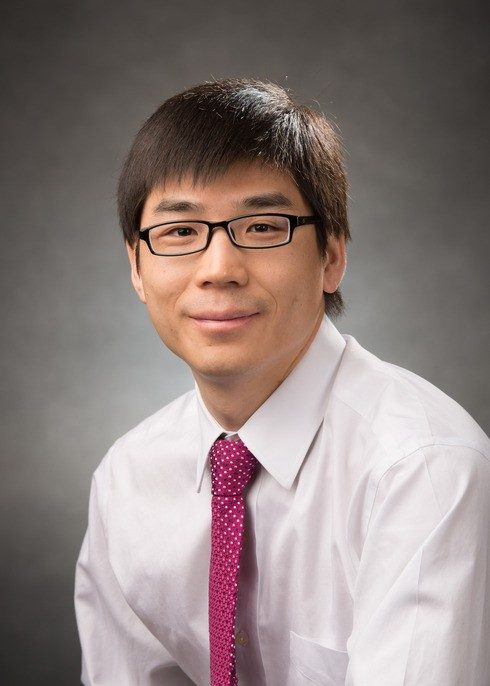
Scott Kovaleski is Professor of Electrical Engineering and Computer Science at the University of Missouri. He holds a Ph.D. and M.S.E. from the University of Michigan and a B.S. from Purdue University. His research develops charged particle sources, electromagnetic systems, and nanofabrication methods using pulsed power and computational techniques. Current projects focus on piezoelectric-driven particle accelerators, metamaterial design optimization, and carbon nanotube electron sources. His laboratory advances compact radiation sources and computational methods for electromagnetic simulations. Recent publications demonstrate growing integration of deep learning in optical metasurface design and electromagnetic modeling. Key themes include physics-informed neural networks for inverse design, nanofabrication techniques, and vacuum electronics applications. His federally funded projects include research in charged particle generation, electromagnetics simulation, and pulsed power systems. Laboratory capabilities include computational modeling and experimental validation of particle acceleration systems.
Pavlo Krokhmal is a Professor in the Department of Systems and Industrial Engineering at the College of Engineering, University of Arizona. He serves as the Director of Industrial Engineering and is a member of the Graduate Faculty. He has previously held academic positions at the University of Iowa and the University of Florida. Education: PhD in Operations Research, University of Florida, Gainesville, Florida, United States PhD in Mechanics of Solids and Applied Mathematics, Kyiv National Taras Shevchenko University, Kyiv, Ukraine MS in Applied Mathematics and Mechanics, Kyiv National Taras Shevchenko University, Kyiv, Ukraine His research focuses on stochastic optimization, risk analysis, and decision-making under uncertainty, with applications in financial engineering, network resilience, and renewable energy systems. He also contributes to multidisciplinary optimization and cooperative control. His work bridges applied mathematics, engineering, and operations research. The most recent publications reflect a strong trend in risk-averse optimization under uncertainty, especially in network structures, energy systems, and combinatorial problems. His work integrates advanced mathematical modeling, stochastic programming, and computational algorithms. Topics frequently include risk measures like CVaR, p-cone programming, and PDE-constrained optimization with stochastic inputs. Scientific Awards and Honors: Diploma in the Competition of Young Scientists and Students for the Best Research Project, National Academy of Sciences of Ukraine, Spring 1997 Soros Student Award, International Soros Science and Education Program, Fall 1994 Scholarship for scientific and academic achievements, National Academy of Sciences of Ukraine, Spring 1994 Air Force Summer Faculty Fellowship Award (multiple years: 2011, 2012, 2014, 2018, 2019) NRC Senior Research Associateship Award, National Research Council, Spring 2015 Donald E. Bently Faculty Fellowship of Engineering, University of Iowa, Fall 2013 Recognition for Excellence in Teaching, College of Engineering, University of Iowa (2010, 2013) Dr. Krokhmal has been actively involved in advising graduate students and leading research projects funded by agencies such as the Air Force Office of Scientific Research. His collaborations span across institutions and disciplines, including work with researchers at the University of Florida, University of Iowa, and military research labs. He has served on editorial boards and contributed to academic leadership through journal editorials and peer review. His research is conducted within interdisciplinary teams focusing on optimization, risk modeling, and complex systems. These teams often involve mathematical modeling, algorithm development, and simulation for real-world applications in defense, energy, and infrastructure resilience.
Stefano Scialò is an Associate Professor at the Department of Mathematical Sciences (DISMA) at the Polytechnic University of Turin. He is also a member of the Interdepartmental Center Ec-L - Energy Center Lab and serves as Academic Advisor for Mathematics for Engineering. His academic journey at Politecnico di Torino began with a Master's degree in Aerospace Engineering (2007), followed by a PhD in Mathematics for Engineering (2014), after which he progressed from postdoctoral fellow to Assistant Professor and ultimately to his current position as Associate Professor. Scialò's research focuses on advanced numerical methods with particular emphasis on Virtual Element Methods (VEM), development of discretization strategies for non-conforming meshes, and numerical approaches for coupled problems with high dimensionality gaps (3D-1D). His work addresses flow simulation in complex geometries, PDE-constrained optimization, and uncertainty quantification techniques. He has made significant contributions to the development of domain decomposition strategies based on optimization approaches, which have applications in porous media flow, fracture modeling, and biomedical simulations. Analysis of his recent publications reveals a consistent focus on extending and refining the Virtual Element Method framework, particularly for challenging applications involving complex geometries, fractures, and multi-dimensional coupling. His work demonstrates a strong integration of theoretical development with practical implementation, often targeting high-performance computing environments. The research spans multiple application domains including geoscience, biomedical engineering, and computational fluid dynamics, showcasing the versatility of his numerical approaches. Scialò actively supervises graduate students, with Matteo Trombini currently pursuing a PhD under his guidance in the Mathematical Sciences program. He contributes to multiple research projects, most notably as Scientific Director of the FREYA project (2023-2026) focused on fault reactivation modeling. His teaching portfolio is extensive, covering advanced numerical methods, scientific computing, and mathematical foundations across various engineering disciplines at both undergraduate and graduate levels. He participates in multiple research networks including the INdAM-GNCS Project (2018-2019) and aligns his work with Sustainable Development Goals related to quality education, industry innovation, and sustainable cities. His research group within DISMA focuses on Numerical Analysis and Scientific Computing, with particular expertise in 3D-1D coupled problems.
Antonio Miguel Márquez Durán is an Associate Professor in the Department of Economics, Quantitative Methods and Economic History at Universidad Pablo de Olavide in Seville, Spain. His academic career spans over three decades with significant contributions to numerical analysis and partial differential equations. His research focuses on developing and analyzing finite element methods for fluid mechanics, solid mechanics, and fluid-structure interaction problems. PhD from University of Seville (2005) Thesis: Contribution to the study of some models governed by non-autonomous and/or stochastic evolution equations Supervised by Dr. Tomás Caraballo Garrido and Dr. José Real Anguas Professor Márquez Durán's research interests center on numerical methods for partial differential equations , particularly finite element methods for fluid mechanics, solid mechanics, and fluid-structure interaction problems. His work often involves developing mixed formulations, analyzing error estimates, and studying the coupling of different physical models. He has made significant contributions to pseudostress-based formulations, Brinkman models, and non-autonomous/stochastic evolution equations. His research bridges theoretical mathematical analysis with practical computational applications in engineering and physics. His publication record shows a consistent focus on developing robust numerical methods for complex physical systems. Recent work emphasizes mixed-hybrid and discontinuous Galerkin methods for dynamical systems, coupling techniques between different numerical methods (VEM and BEM), and analysis of fluid-solid interaction problems. The research trajectory demonstrates increasing sophistication in handling time-dependent problems, nonlinearity, and multi-physics coupling. Professor Márquez Durán has established productive collaborations with leading researchers in computational mathematics, most notably Gabriel N. Gatica (24 joint publications) and Salim Meddahi (22 joint publications). His work has been cited 815 times across 465 documents, indicating significant impact in his field. He has published in top journals including Computer Methods in Applied Mechanics and Engineering, SIAM Journal on Numerical Analysis, and IMA Journal of Numerical Analysis. His academic activities include extensive research collaboration, with 25 co-authors and 521 co-co-authors. While specific grant information isn't detailed in the provided materials, his sustained publication record suggests successful funding acquisition. Professor Márquez Durán appears to be an active member of the computational mathematics research community, contributing to both theoretical developments and practical applications of numerical methods.
Prof. Didier Trichet is a full Professor in Electrical Engineering at Polytech'Nantes (School of Engineering) of Nantes University, France. He became chair of the IREENA lab (Nantes-Atlantique Electrical Energy Research Institute) in 2022 after serving as former head of Nantes University's Master 2 Electrical Energy international program. PhD in Electrical Engineering (Nantes University, 1999) Accreditation to supervise researchers (2012) His research focuses on advanced numerical modeling of multi-physic and multi-scale electromagnetic phenomena applied to low frequency devices, electrothermal processes, Non-Destructive Testing (NDT), diagnosis of complex electrical structures, fuel cell power trains, and power electronics. He has authored/co-authored over 130 papers and 32 technical reports, with expertise in FP7, H2020, and PHC projects. Recent publications analyze: Carbon fiber composite conductivity via inversion methods Domain decomposition for electromagnetic simulations Topology optimization of actuators Inter-ply percolation in laminated composites Magnetic permeability evaluation using eddy currents Induction welding of composites Scientific Awards: 2 research awards from French Ministry of Education IEEE Transactions on Magnetics Associate Editor French Excellence Research Grant recipient since 2007
Dr. Ergun Simsek is an Assistant Professor of Computer Science and Electrical Engineering at the University of Maryland, Baltimore County (UMBC) and serves as the Director of Graduate Data Science Programs. He is a member of the Computational Photonics Laboratory and leads the Computational Photonics for Multilayered Structures (CPMS) research group. Education: Ph.D., Electrical and Computer Engineering, Duke University (2006) M.S., Electrical and Computer Engineering, University of Massachusetts Dartmouth (2003) B.S., Electrical and Electronics Engineering, Bilkent University (2001) Research Focus: Dr. Simsek's expertise lies in computational photonics , with emphasis on: Wave propagation and scattering in complex, multilayered media Nano-photonic and optoelectronic device design Machine-learning-assisted electromagnetic inversion and inverse photonic design Photodetectors, plasmonic sensors, electro-optic modulators, and 2-D material devices He has published over 100 peer-reviewed journal and conference papers and is a Senior Member of both IEEE and Optica as well as a Licensed Professional Engineer. Scientific Recognition: Senior Member, IEEE Senior Member, Optica (formerly OSA) Licensed Professional Engineer (PE) Advising & Teaching: Dr. Simsek currently advises PhD students Ishraq Anjum and Raonaqul Islam , and has mentored undergraduate researchers. He teaches graduate and undergraduate courses including Machine Learning and Photonics , Electromagnetic Theory , Electromagnetic Waves and Transmission , and Introduction to Data Science . Laboratory & Facilities: He directs research within UMBC’s Computational Photonics Laboratory and the CPMS group , utilizing facilities in the TRC Building (Technology Research Center) and the ITE Building (Information Technology and Engineering).
Yimin Zhong is an Assistant Professor of Mathematics and Statistics at Auburn University. He holds a Ph.D. from the University of Texas at Austin (2017). His research focuses on applied mathematics, scientific computing, and machine learning, with expertise in inverse problems, radiative transfer, and nonlinear optics. He leads undergraduate research initiatives and collaborates on projects involving biomedical imaging and transport models. Key research areas include PDE learning, neural networks for high-frequency approximation, intrinsic complexity of datasets, and imaging with physical models. Zhong's work bridges theoretical analysis with computational methods, addressing challenges in data-driven modeling and inverse problem uniqueness/stability. He has contributed to fast algorithms for radiative transport and implicit boundary integration techniques for macromolecular electrostatics. His projects span collaborations with industry (e.g., Boeing) and academic networks, emphasizing interdisciplinary applications. Current interests also include graph theory, randomized algorithms, and geometric measure theory. Despite no explicit awards listed, his extensive publication record reflects recognition in computational and applied mathematics fields. Education: Ph.D. in Mathematics, University of Texas at Austin (2017) Advising: Mentored undergraduate research in inverse problems and numerical methods Labs/Teams: Leads Auburn's Undergraduate Research Network in Mathematics Open Problems: Active in transport equation analysis, nonlinear diffusion, and geometric measure theory challenges
Dr.-Ing. Alexander Schwarz is a Senior Academic Councillor at the Institute of Mechanics, Faculty of Engineering, University of Duisburg-Essen, Germany. He is actively involved in research and teaching in computational mechanics, with a focus on finite element methods, particularly least-squares formulations for solid and fluid mechanics. He has served as Course Director of the International Master's Program in Computational Mechanics since 2011. PhD in Engineering, University of Duisburg-Essen (2009) Diploma in Civil Engineering, University of Essen and University of Adelaide (2004) Research Assistant, Institute of Mechanics (2005–2009) Academic Councillor (2010), Senior Academic Councillor (since 2013) His research interests center on the development and analysis of mixed finite element methods, especially least-squares approaches, applied to problems in solid mechanics (hyperelasticity, elasto-plasticity, finite deformations), fluid dynamics (incompressible Navier-Stokes), fluid-structure interaction, and porous media. His work emphasizes numerical stability, accuracy, and efficient implementation. The recent publications highlight a strong trend in advancing least-squares finite element formulations for both fluid and solid mechanics. His work spans theoretical development, numerical implementation, and comparative studies, with applications in incompressible flow, hyperelasticity, plasticity, and multi-physics problems like FSI and phase change. The use of stress-velocity or stress-displacement formulations is a recurring theme, aiming to improve conservation properties and solution accuracy. No scientific awards are listed in the provided information. Dr. Schwarz has supervised numerous master’s and bachelor’s theses in computational mechanics, particularly on finite element formulations for Navier-Stokes equations, plasticity, and hyperelasticity. His collaborations with prominent researchers like Jörg Schröder, Carina Nisters, and Solveigh Averweg indicate strong integration into an active research group. While no specific grants are mentioned, his sustained publication output and leadership in the master’s program suggest ongoing research funding and academic responsibility. He is a core member of the Institute of Mechanics at the University of Duisburg-Essen, contributing to both research and academic leadership. His team focuses on advanced computational methods in mechanics, with a strong emphasis on finite element technology and its application to complex material and fluid behavior.
Enrico Napoli is a Full Professor in the College of Engineering at the University of Palermo, where he has been since 2001 (promoted from Associate Professor). He conducts research in numerical modeling of incompressible fluid flows with applications across civil, environmental, and industrial engineering domains, particularly focusing on turbulence analysis. He developed the PANORMUS open-source software (with finite-volume and SPH modules) for 3D hydrodynamic simulations, fully parallelized via MPI libraries and distributed as free software. As a delegate for the Rector's Program and Strategic Plan implementation, he also serves on the University's Academic Senate since 2009. Graduated Magna Cum Laude in Civil Hydraulic Engineering (1993) at University of Palermo His research covers: (1) 3D hydrodynamic modeling using finite-volume and SPH methods for free-surface and confined flows; (2) Development of PANORMUS open-source software (including hybrid FVM-SPH capabilities); (3) Water distribution network modeling with characteristic method applications; (4) Turbulence analysis in environmental and engineering contexts; (5) Biomedical fluid dynamics applications including cardiovascular FSI and thrombus formation. His computational work addresses both fundamental fluid mechanics and applied problems like desalination technologies , water quality management , and pollutant dispersion . Scientific activities include: Computational Advancements : Developed PANORMUS software with multi-domain parallelization and deformable wall capabilities Environmental Applications : Studied Augusta Harbour hydrodynamics, Stagnone Lagoon circulation, and urban stormwater pollution Biomedical Research : Modeled thrombus formation in cardiovascular systems using SPH Engineering Solutions : Analyzed energy recovery systems with PAT technology and flow regulation via PRVs
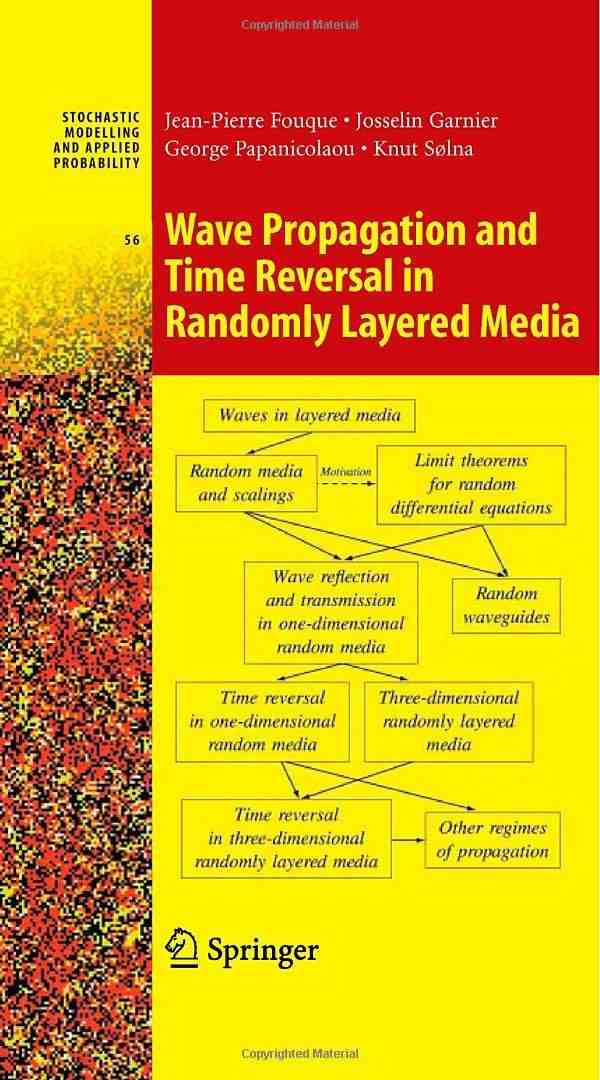
Josselin Garnier is a Professor at Ecole Polytechnique, France, affiliated with the Center for Applied Mathematics. His research focuses on wave propagation in random media, imaging techniques, uncertainty quantification, and inverse problems. He has authored/co-authored multiple influential books including Wave Propagation and Time Reversal in Randomly Layered Media (2007) and Multi-Wave Medical Imaging (2017). His work bridges mathematical theory with applications in optics, seismology, and nuclear engineering. Research interests emphasize stochastic dynamics, nonlinear wave interactions, and Bayesian methods for parameter estimation. He leads a large research group with over 30 PhD students, many working on interdisciplinary projects such as thermalization in optical fibers and seismic fragility analysis. His contributions include developing reduced order modeling approaches for inverse problems and advancing methodologies for uncertainty quantification in nuclear reactor simulations. Key collaborations involve institutions like the French Mathematical Society and the Ciroquo Research & Industry Consortium. His educational contributions include the widely used All-in-one Mathematics textbook series for undergraduate students.
Professor Jason Sharples is a Professor at UNSW Canberra in the School of Science. His research focuses on extreme bushfires and the development of mathematical and computational models to understand fire behavior, fire-atmosphere interactions, and fire propagation in complex landscapes. He is actively involved in developing education and training materials for firefighters and has contributed to operational protocols for fire agencies, enabling them to better monitor dangerous weather conditions and anticipate rapid escalations in fire growth and intensity. Professor Sharples holds a B.Sc., B.Math. (Hons), and PhD. He is recognized as a Fellow of the Australian Academy of Technological Sciences and Engineering, Fellow of the Royal Society of New South Wales, and Fellow of the Modelling and Simulation Society of Australia and New Zealand. His research addresses the growing global problem of extreme bushfires, exacerbated by climate change and urban expansion. Professor Sharples and his team use sophisticated mathematical and computational models to study dynamic fire behavior, particularly how bushfires interact with the atmosphere to produce dangerous forms of fire propagation. They investigate critical fire weather events such as heatwaves, mountain winds, and frontal systems, and their association with major fire outbreaks like the 2019-20 'Black Summer' fires. His work demonstrates that extreme fires behave fundamentally differently from typical fires, allowing for better anticipation and prediction of their occurrence and behavior. Analysis of Professor Sharples' recent publications reveals a strong focus on wildfire modeling, fire-atmosphere interactions, and the development of predictive tools for fire behavior. His work spans computational modeling, field studies, and practical applications for fire management. Key themes include fire front dynamics, fuel moisture modeling, fire weather prediction, and the development of visualization tools for fire behavior. His research increasingly incorporates machine learning techniques and interdisciplinary approaches to address complex fire phenomena. Fellow of the Australian Academy of Technological Sciences and Engineering Fellow of the Royal Society of New South Wales Fellow of the Modelling and Simulation Society of Australia and New Zealand Professor Sharples serves as Associate Editor for several prestigious journals including Environmental Modelling and Software, PLoS Climate, and the International Journal of Wildland Fire. He is an active member of multiple professional societies including the International Association of Wildland Fire, the Australian Mathematical Society, and the Australia and New Zealand Industrial and Applied Mathematics Society (ANZIAM). His research has been incorporated into operational protocols for fire agencies, helping them monitor dangerous weather conditions and anticipate rapid escalations in fire growth and intensity. Professor Sharples leads a research group focused on extreme fire behavior, with particular emphasis on fire-atmosphere coupling and the development of mathematical models for fire spread prediction. His team collaborates with fire agencies and other researchers to translate scientific findings into practical applications for fire management and firefighter safety. The group utilizes advanced computational techniques and field observations to study complex fire phenomena, with the goal of improving fire prediction capabilities and reducing fire-related risks to communities and ecosystems.
Paula Strohbeck is a Researcher and Doctoral candidate at the University of Stuttgart , affiliated with the Institute of Applied Analysis and Numerical Simulation under the Chair of Applied Mathematics . Her research focuses on numerical methods for coupled free-flow and porous-medium systems, particularly Stokes-Darcy problems, preconditioning techniques, and interface conditions. Education: PhD candidate since 2022, advised by Priv.-Doz. Dr. Iryna Rybak. M.Sc. in Mathematics (2021–2022), thesis: “Efficient preconditioners for coupled Stokes-Darcy problems” . B.Sc. in Mathematics (2017–2021), thesis: “Optimization of sharp interface location for coupled porous-medium and free-flow systems” . Research Interests: Paula specializes in numerical simulation of multi-scale problems, preconditioners for fluid-structure interactions, and the development of robust algorithms for fluid-porous media interfaces. Her work bridges computational fluid dynamics and applied mathematics, addressing challenges in coupling Stokes and Darcy systems. Projects: She participates in the Collaborative Research Centre (SFB) 1313 project A03 , focusing on interface-driven multi-field processes in porous media. This involves averaging techniques to enhance computational efficiency in complex flow simulations. Publications: Paula’s recent work includes advancements in preconditioners for Stokes-Darcy systems and modifications to the Beavers-Joseph interface conditions, emphasizing robustness and scalability in numerical methods.
Krutika Tawri is a Morrey Visiting Assistant Professor at the Department of Mathematics, University of California Berkeley , appointed in 2022. She specializes in stochastic and deterministic nonlinear partial differential equations arising from fluid dynamics, geophysics, and biomechanics. Current research focuses on stochastic moving-boundary problems in biofluid mechanics and aerodynamics Develops reduced models for blood flow and numerical schemes robust to thermal fluctuations PhD thesis work on Lévy noise-driven PDEs and singular perturbation theory for Primitive Equations Her research is funded by the NSF grant DMS-240719 (Principal Investigator). She co-organizes the UC Berkeley-Lawrence Berkeley Lab Applied Math Seminar and Applied PDEs student seminar . Awards include the Bhatnagar Award for Outstanding Thesis in Applied Mathematics (2022) and multiple NSF/SIAM/AMS grants. Recent publications span stochastic Navier-Stokes equations , Allen-Cahn eigenvalues , and compressible fluid-structure interaction , with a focus on existence theory and numerical robustness. She has mentored graduate students through research funding programs and serves on seminar organizing committees.
Heng Xiao is a Professor of Data-Driven Fluid Dynamics at the University of Stuttgart, affiliated with the Institute of Aerospace Thermodynamics (ITLR) and the Cluster of Excellence EXC 2075 'Data-Integrated Simulation Science' in the Stuttgart Center for Simulation Science (SC SimTech). He previously served as Associate Professor (2020-2022) and Assistant Professor (2013-2020) at Virginia Tech, USA, and was a Postdoctoral Researcher/Lecturer at ETH Zürich (2009-2012). Ph.D., Civil Engineering, Princeton University, 2009 M.S., Scientific Computing, Royal Institute of Technology (KTH), 2005 B.S., Civil Engineering, Zhejiang University, 2003 His research focuses on integrating data science (machine learning, uncertainty quantification, data assimilation) with traditional physical models to advance predictive capabilities in multi-scale fluid systems. Key areas include Data-Driven Turbulence Modeling , Laminar-Turbulent Transition , Subsurface Flows , and Particle-Laden Flows . His work addresses turbulence modeling through neural operators, Bayesian inference, and physics-informed machine learning, with applications in aerospace, ocean engineering, and geosciences. Recent publications highlight trends in Neural Operators for Nonlocal Models , Ensemble Kalman Methods for Turbulence Inference , and Machine Learning for Permeability Prediction . Collaborative projects, such as the DFG-funded development of coupled turbulence and heat-flux models for film cooling, underscore his focus on real-world impact. Fellowship, Center of Turbulence Research Summer Program, Stanford University (2016) Finalist, Undergraduate Research Advisor Award, Virginia Tech (2014) Advisor to doctoral students including Jian-Xun Wang, Rui Sun, Jin-Long Wu, and Carlos Michelén-Ströfer, he leads the 'Data-Driven Fluid Dynamics' group at Stuttgart. The team collaborates with academia and industry, emphasizing high-performance computing and open-source tools like SediFoam for sediment transport simulations.
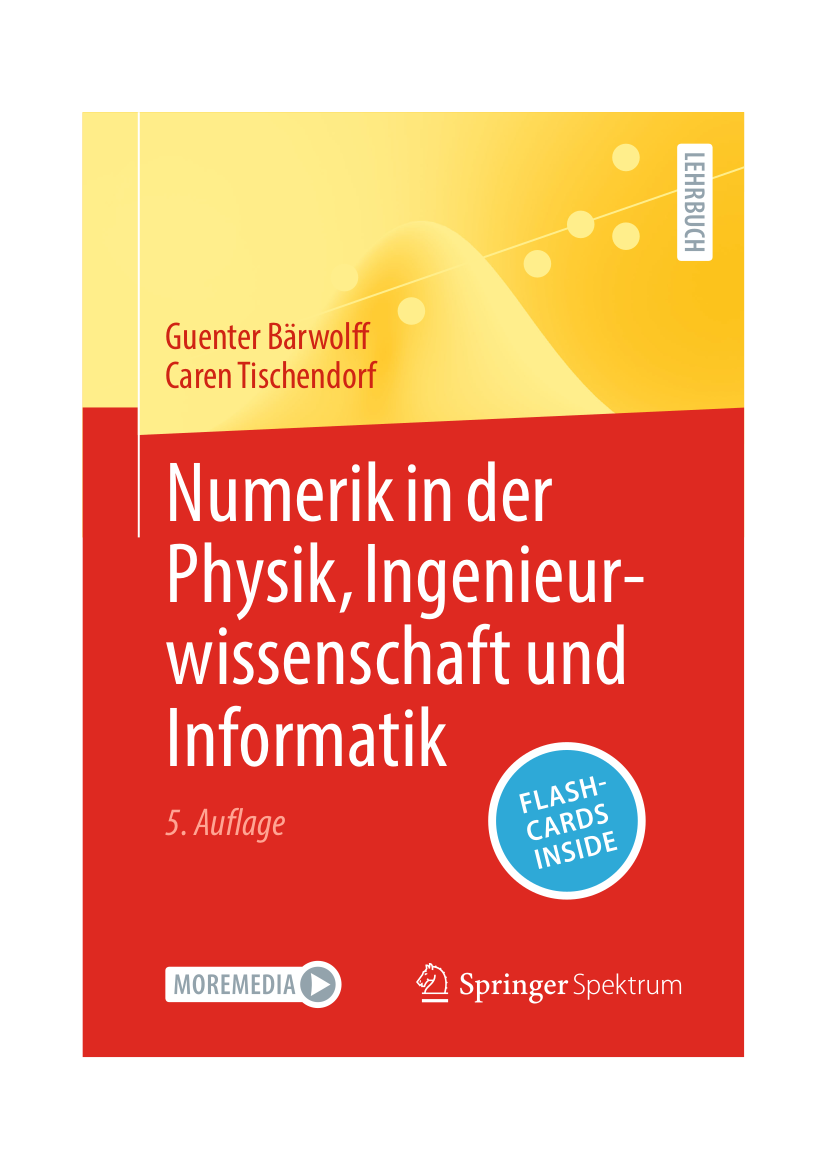
Günter Bärwolff is a retired Professor of Applied Mathematics at the Department of Mathematics, Technische Universität Berlin. Though retired, he continues to engage in academic activities and research. His work focuses on numerical methods for partial differential equations, computational fluid dynamics, and mathematical modeling of crystal growth and fluid flows. He has authored influential textbooks such as Numerik für Ingenieure, Physiker und Informatiker and Numerik in der Physik, Ingenieurwissenschaft und Informatik , the latter co-authored with Caren Tischendorf. His research interests span applied mathematics, numerical analysis, and their applications in engineering and natural sciences. Key areas include finite volume methods, direct numerical simulation (DNS), control of turbulent flows, and optimization of fluid dynamics problems. He has also contributed to pedestrian dynamics modeling using hybrid macroscopic approaches and cellular automata techniques. Bärwolff has been actively involved in international conferences and collaborations, presenting on topics such as crystal melt modeling with magnetic fields, boundary control of Navier-Stokes equations, and multi-destination crowd simulation. His work bridges theoretical developments with practical applications in areas like semiconductor crystal growth and public transport management. Despite retirement, his research continues to address challenges in computational science and engineering.