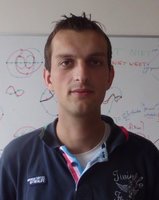
Frank Staals is an Assistant Professor in the Department of Information and Computing Sciences at Utrecht University. He holds a PhD from Utrecht University and was previously a PostDoc at MADALGO, Aarhus University. His research focuses on Computational Geometry , with emphasis on algorithms for moving objects, geometric data structures, and shortest-path problems. Applications include Geographic Information Science (GIS) and Visualization. Research Interests: Staals develops theoretically rigorous and efficient algorithms for geometric data. Key areas include: Trajectory analysis (grouping, segmentation) Geodesic computations in polygons and terrains Dynamic data structures for spatial queries Robust classification of geometric data His publications demonstrate a trend toward scalable algorithms for real-world spatial data, including trajectory grouping, visibility queries, and terrain analysis. Recent work addresses the computational complexity of geodesic spanners and dynamic connectivity in geometric graphs. Awards: Best Paper Award at SIGSPATIAL 2019 Staals leads courses in Functional Programming and Geometric Algorithms and develops open-source software (HGeometry). He collaborates with international teams on projects in GIS and algorithmic geometry.
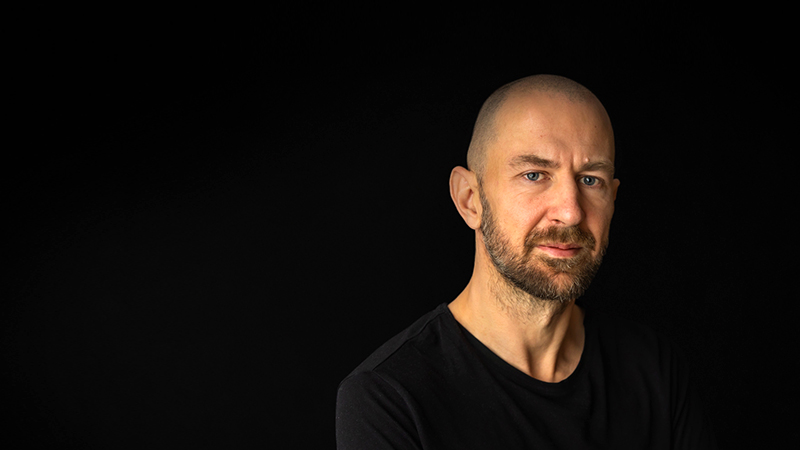
Jan-Paul Lerch is a researcher affiliated with the Faculty of Mathematics at the University of Bielefeld. His work focuses on Mathematical structures within geometry and representation theory, particularly through the collaborative research project SFB/TRR 358 Integral Structures in Geometry and Representation Theory (subproject C4: Counting points on quiver Grassmannians). His recent publications span algebraic topology, category theory, and interdisciplinary applications in bioinformatics. Email: lerch@math.uni-bielefeld.de Office: UHG V5-210, University of Bielefeld Research Trends : His work bridges fundamental mathematical concepts (e.g., persistence modules, block decomposition) with computational methods in proteomics and topological data analysis. Key keywords include Algebraic Topology , Representation Theory , and Bioinformatics . Strategic Research Context : The University of Bielefeld emphasizes Transcending Boundaries through interdisciplinary collaboration. Jan-Paul's research aligns with the Mathematical World strategic area, which develops and applies fundamental mathematical theories to solve complex problems in natural sciences and economics.
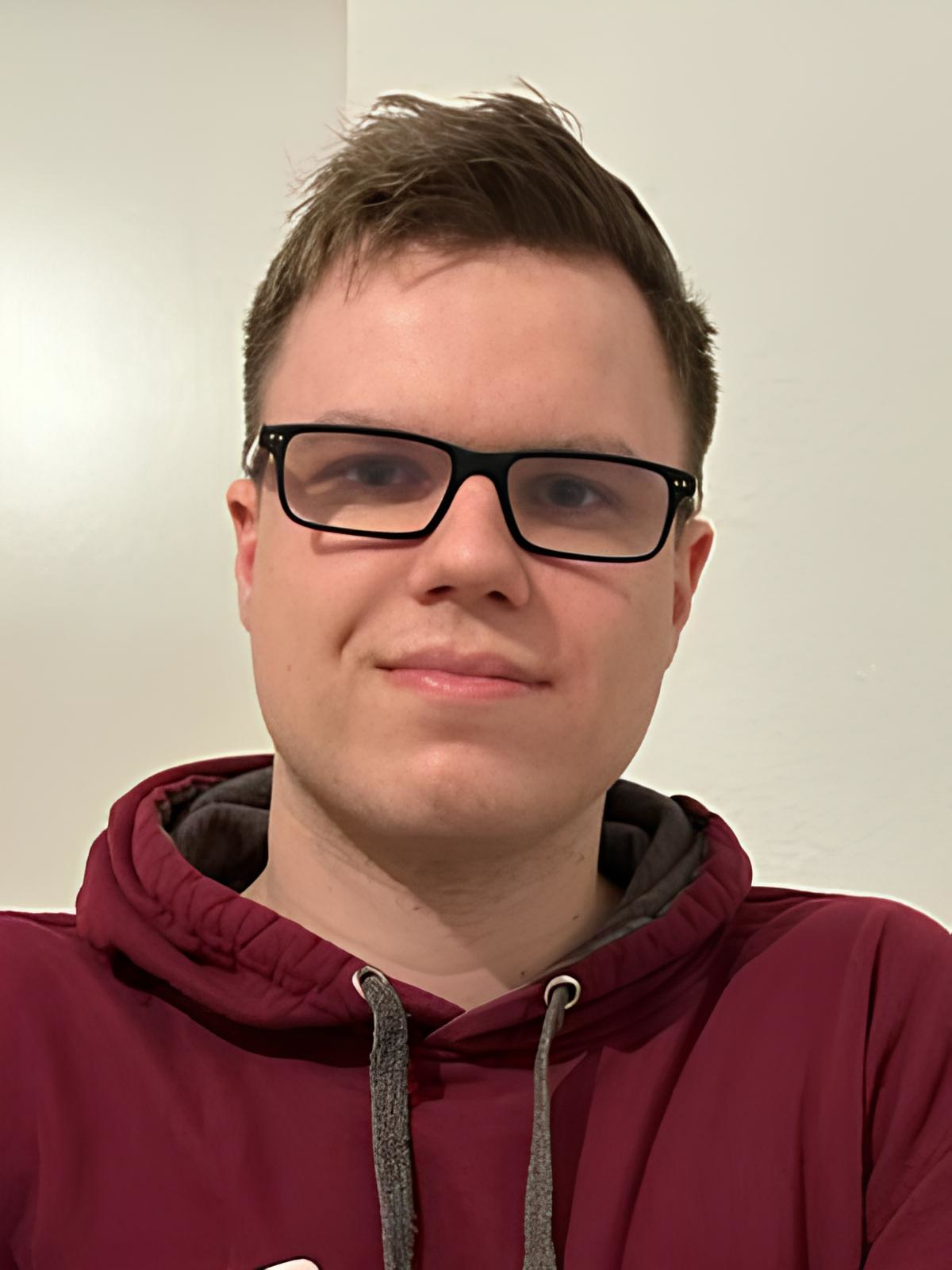
Mikhail Tamm is a Senior Research Fellow at Tallinn University's School of Digital Technologies, where he applies statistical physics and complex network theories to human-generated data. His academic journey includes positions as Associate Professor at Moscow State University and Higher School of Economics, Lecturer at Moscow Physical Technical Institute, and postdoctoral research at Université Paris-Sud. He holds a PhD in Physics from Moscow State University (2002), supervised by Igor Erukhimovich. Research interests focus on interdisciplinary applications of physics methodologies: Statistical physics approaches to social/cultural data analysis Complex network theory for transport patterns and psycholinguistics Dimensional reduction techniques for human activity patterns Modeling abrupt transitions in social systems Publication analysis reveals consistent focus on network science applications across physics, biology, and cultural studies, with recent emphasis on hyperbolic networks, language coexistence models, and computational cultural analytics. Methodological innovations in statistical mechanics form the core of his interdisciplinary work. Current research projects include: Principal Investigator: 'Learning Processes in Language Dynamics' (Estonian Research Council, 2024-2025) Team member: 'Cultural Data Analytics Open Lab' (Tallinn University, 2024-2027) Team member: 'Learning Processes in Language Dynamics' (PRG1059, 2021-2025) Previous projects include the EU-funded 'Cultural Data Analytics' (2019-2024) and 'Kinokroonika Exploration Project' (2021-2022).
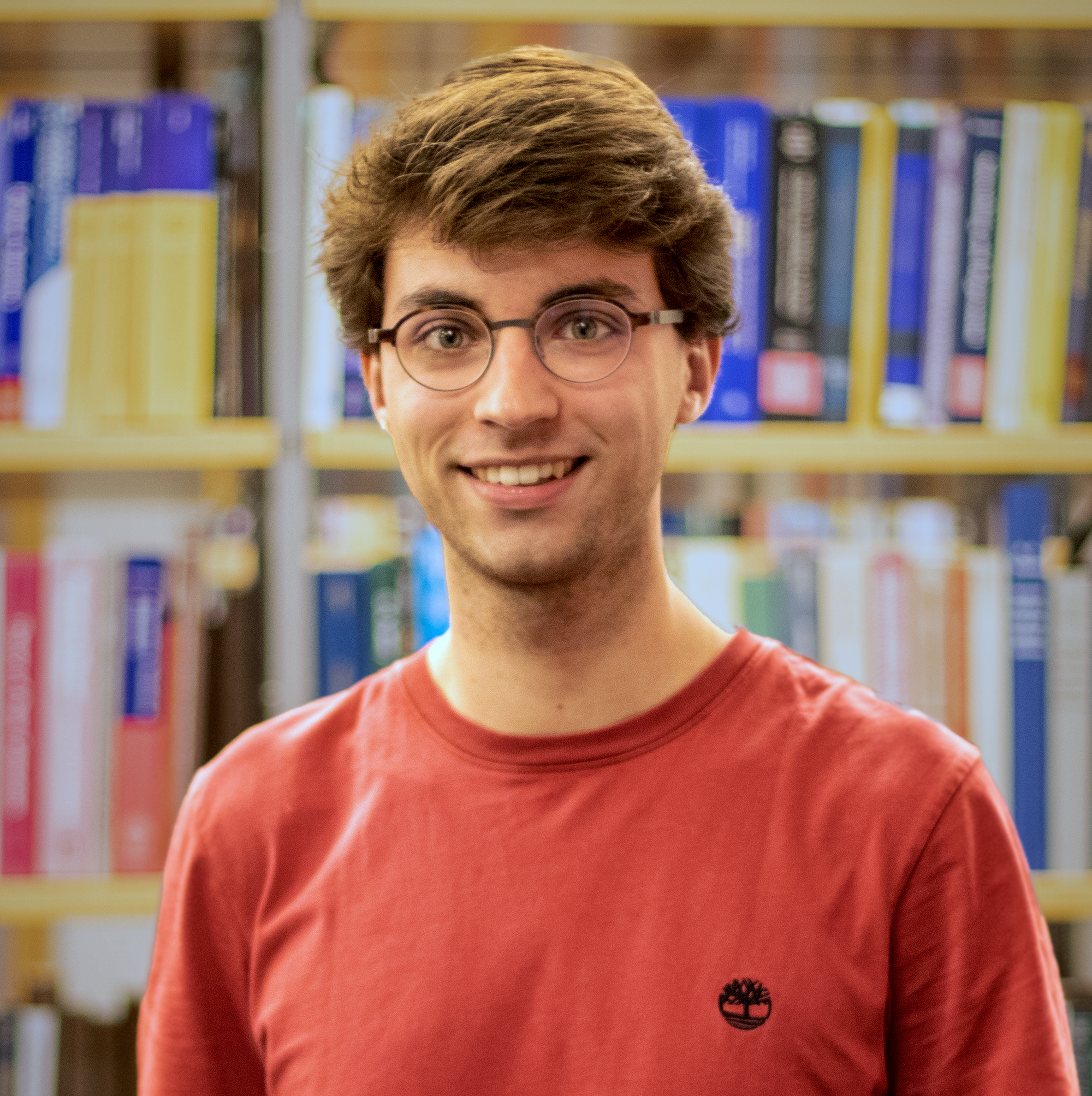
Simon Döring is a Ph.D. student in Computer Science at Universität des Saarlandes and Max-Planck-Institut für Informatik , specializing in Counting Problems , Parameterized Algorithms , and Complexity Theory . His research focuses on graph theory and combinatorial algorithms, particularly in subgraph enumeration and treewidth applications. Research Interests : Counting Problems Parameterized Algorithms Complexity Theory Graph Theory Combinatorics Publications (2024–2025) span international symposia like STOC, SODA, ESA, and STACS, addressing subgraph counting, treewidth, and complexity bounds. His work bridges algorithm design and theoretical mathematics, including collaborations with researchers such as Radu Curticapean and Dániel Marx.
Mima Stanojkovski is a researcher in the Nonlinear Algebra group at the Max Planck Institute for Mathematics in the Sciences (MPI MiS) in Leipzig, Germany, under Bernd Sturmfels. Previously, she held a postdoctoral position at the University of Bielefeld from 2017 to 2019. She earned her PhD in Mathematics from Leiden University in 2017, supervised by Hendrik Lenstra. Her doctoral dissertation focused on 'Intense automorphisms of finite groups'. Her research centers on group theory, with specialized work in p-groups, isomorphism problems, and counting functions. She maintains broad mathematical interests across algebraic structures and combinatorial methods. Outside research, she integrates hip-hop into her workflow, appreciates natural aesthetics, and enjoys Italian aperitivo culture. As a core member of the Nonlinear Algebra group, she contributes to advancing algebraic techniques for solving complex nonlinear systems in scientific applications, with documented involvement from 2019 through 2022.
Máté L. Telek is a postdoctoral researcher at the Max Planck Institute for Mathematics in the Sciences (MPI-MiS) in Leipzig, Germany, working in the Nonlinear Algebra research group under Bernd Sturmfels. He completed his PhD in 2024 at the University of Copenhagen under Elisenda Feliu and will move to Leipzig University in January 2026 with a prestigious Marie Curie Fellowship to work on the project 'Positive Solutions in the Sciences'. His educational background includes a PhD from the University of Copenhagen (2024), an M.Sc. from Heidelberg University (2020), and a B.Sc. from Heidelberg University (2018). His doctoral thesis was titled 'Signed Support of Multivariate Polynomials and Applications'. Telek's research centers on real algebraic geometry and tropical geometry, with significant applications in particle physics and chemical reaction networks. His work bridges abstract mathematical theory with practical scientific problems, particularly in understanding the geometric structures underlying polynomial systems and their positive solutions. He has made notable contributions to generalizing Descartes' rule of signs to multivariate settings and analyzing connectivity in parameter regions of biochemical networks. His publication record shows a strong focus on computational aspects of algebraic geometry, with recent papers exploring connections between tropical geometry, Feynman integrals in physics, and multistationarity in reaction networks. His work demonstrates interdisciplinary reach spanning pure mathematics, theoretical physics, and systems biology. Scientific Awards: Best Talk Award at the Conference on Geometry: Theory and Applications Telek has been actively involved in the academic community through conference presentations, seminar organization (including a minisymposium at SIAM-AG25), and participation in numerous workshops. His teaching experience includes leading exercises for graduate courses at both MPI-MiS Leipzig and the University of Copenhagen, focusing on applied algebra and geometry. As a member of the Nonlinear Algebra group at MPI-MiS, Telek collaborates with an international team of researchers exploring the frontiers of algebraic methods in science. His upcoming move to Leipzig University with a Marie Curie Fellowship indicates significant recognition of his research potential and promise for future contributions to the field.
Marie Trin is a postdoctoral researcher at the Max Planck Institute for Mathematics in the Sciences (Leipzig) working in Prof. Anna Wienhard's research group since completing her PhD in June 2024. She maintains dual academic engagement through ongoing teaching appointments at Université de Rennes. Her research focuses on the intersection of geometric structures with topological dynamics, particularly examining: Geodesic currents and their applications to surface geometry Mapping class group actions on curve complexes Thurston compactification for non-compact hyperbolic surfaces Combinatorial properties of arc systems on surfaces Recent publications demonstrate methodological innovation in applying geometric group theory to solve longstanding problems in surface topology, with particular emphasis on counting techniques for geometric structures and stability properties of subgroup embeddings. Her 2024 thesis “Application des courants géodésiques à la géométrie des surfaces” established foundational connections between geodesic current theory and classical surface geometry. As an educator, she implements Federico Ardila’s teaching axioms through mathematics outreach projects and structured coursework in Euclidean geometry, probability, and computational mathematics using Python/Xcas. Her doctoral training at Université de Rennes under Juan Souto culminated in significant contributions to the geometric analysis of surface curves. She actively participates in research networks including the “Groups, Dynamics and Surfaces” conference series and maintains collaborative projects across European mathematical institutes through the Max Planck research framework.
León Carvajales is an Adjunct Professor at the Institute of Statistics, Faculty of Economic and Administrative Sciences, University of the Republic (Uruguay). His academic journey includes postdoctoral research at Heidelberg University (mentored by Anna Wienhard and Beatrice Pozzetti) and a postdoctoral fellowship at the Mathematical Sciences Research Institute (MSRI), guided by Fanny Kassel. PhD in Mathematics, Universidad de la República (Uruguay) PhD in Mathematics, Sorbonne Université (France) Carvajales’ research lies at the intersection of geometry, dynamical systems, and Lie groups, focusing on Anosov representations and higher Teichmüller-Thurston theories. His work explores domains of discontinuity, growth of quadratic forms, and counting problems under Anosov subgroups, contributing to the understanding of discrete subgroups in Lie groups. His recent publications highlight advancements in asymmetric metrics for Anosov representations, counting problems in special-orthogonal representations, and geometric dynamics on homogeneous spaces. Collaborations with prominent researchers like Beatrice Pozzetti and Anna Wienhard underscore his engagement in collaborative mathematical exploration.
Richard Evan Schwartz is the Chancellor's Professor of Mathematics at Brown University, where he has been a faculty member since 2005, becoming Chancellor's Professor in 2010. His research spans several areas of geometry and dynamical systems, with particular focus on billiards, projective geometry, and topological phenomena. Dr. Schwartz received his B.S. in Mathematics from UCLA in 1987 and his Ph.D. from Princeton University in 1991. Prior to joining Brown, he held positions at various institutions including the University of Maryland, where he served as Associate Professor (1997-2000), Professor (2000-2004), and Ruth Davis Professor (2004-2005). His research interests include mathematical billiards, particularly outer billiards; projective geometry and the pentagram map; CR geometry; and the geometry of paper folding including Moebius bands and tori. He approaches these topics with a unique blend of theoretical analysis, computational experimentation, and visual intuition. His work often reveals surprising connections between seemingly disparate mathematical areas and frequently produces beautiful geometric patterns and structures. Dr. Schwartz's recent publications demonstrate a continued focus on geometric optimization problems, particularly in paper folding geometry. His work on optimal Moebius bands represents a significant breakthrough in a problem that had remained unsolved for decades. He has also made substantial contributions to understanding the pentagram map and its connections to integrable systems, as well as exploring connections between continued fractions, graph theory, and projective geometry. National Merit Scholar (1984-7) NSF Graduate Fellow (1987-90) Sloan Dissertation Fellow (1991) NSF Postdoctoral Fellow (1993-5) Sloan Research Fellow (1996-8) ICM Speaker (2002 and 2022) Guggenheim Fellow (2003) IAS member (2003-4 and 2020-1) Clay Research Scholar (2009) Multiple Simons Sabbatical Fellowships (2012-3, 2016-7, 2020-1, 2024-5) Dr. Schwartz has mentored numerous students through his research and teaching activities. His current research is supported by NSF grant DMS-2102802 and a Mercator Fellowship. He serves as an organizer for the Brown University Geometry/Topology Seminar, fostering academic exchange in his field. His work bridges pure mathematics with creative visualization, as evidenced by his development of numerous interactive Java programs to accompany his research. He has also authored several expository works and popular mathematics books including 'You Can Count on Monsters,' 'Really Big Numbers,' and 'Gallery of the Infinite,' making complex mathematical concepts accessible to broader audiences.
Maximilian Wiesmann is a mathematician working as an ELBE Postdoctoral Fellow at the Center for Systems Biology Dresden, Germany. Previously, he completed his PhD at the Max-Planck-Institute for Mathematics in the Sciences in Leipzig under the supervision of Eliana Duarte and Bernd Sturmfels. Mentored by Aida Maraj and Ivo Sbalzarini at CSBD, his work bridges pure mathematics with applications in computational biology and quantum information. His educational background includes: PhD in Mathematics, Max-Planck-Institute for Mathematics in the Sciences, Leipzig (2025) MASt in Pure Mathematics, University of Cambridge (2022) B.Sc. in Mathematics, University of Bonn (2021) Wiesmann's research focuses on the intersection of algebraic geometry and computational mathematics, particularly in nonlinear algebra applications. His work spans theoretical investigations in toric geometry and combinatorics to practical implementations in quantum information and machine learning. He has developed significant software tools including the EulerStratifications.jl Julia package, which accompanies his research on hypersurface families. His publications demonstrate a consistent trajectory from foundational mathematical structures to their applications in statistical modeling and computational science. Analysis of his 11 most recent publications reveals a strong focus on algebraic statistics and geometric approaches to statistical problems, with increasing attention to machine learning applications. His work connects pure mathematical structures with practical computational frameworks, particularly through the lens of nonlinear algebra. The development of specialized software like EulerStratifications.jl demonstrates his commitment to making theoretical advances accessible for practical computation. Wiesmann has served as a tutor in linear algebra and foundational mathematics at the University of Bonn during winter terms 2019/20 and 2020/21. He also completed a Quantum Science Summer Internship at Riverlane in Cambridge, UK in 2021, and was a visiting student at the Institute for Mathematical and Statistical Innovation at the University of Chicago in September and October 2023. At CSBD, Wiesmann is part of a vibrant research environment focused on systems biology, where he applies his expertise in algebraic geometry to biological modeling problems. His work with the Nonlinear Algebra Community on Zenodo demonstrates his commitment to open science and community building in his field.
Prof. Sunil Golwala is a Professor of Physics at the California Institute of Technology (Caltech), affiliated with the Division of Physics, Mathematics, and Astronomy. His research focuses on dark matter and dark energy, employing cutting-edge experiments such as the Cryogenic Dark Matter Search (CDMS), Bolocam, and Microwave Kinetic Inductance Detectors (MKIDs). He leads efforts in detector development for cosmological and particle physics applications, including projects like the Germanium Observatory for Dark Matter (GEODM) and the Cornell-Caltech Atacama Telescope (CCAT). Education: B.A., University of Chicago (1993); M.A., University of California, Berkeley (1995); Ph.D., UC Berkeley (2000). Academic roles include Assistant Professor (2003–2010), Associate Professor (2010), and Professor (2010–present). He served as Director of the Caltech Submillimeter Observatory (2013–2024) and is currently Deputy Executive Officer for Astrophysics. Research Interests: Prof. Golwala’s work bridges experimental particle physics and cosmology. Key areas include: Direct detection of WIMP dark matter using cryogenic detectors. Submillimeter astronomy with Bolocam to study galaxy clusters via the Sunyaev-Zeldovich (SZ) effect. Development of MKID technology for dark matter and cosmological applications. Future projects include the CCAT telescope and the GEODM ton-scale experiment. Teaching: He teaches advanced courses in classical physics (Ph106bc), quantum mechanics (Ph125ab), and non-accelerator particle physics (Ph135c). Courses emphasize rigorous problem-solving and foundational techniques. Labs/Teams: Active in the Caltech Submillimeter Observatory and collaborations with CDMS/SuperCDMS, CCAT, and MKID development teams.
Dr. Ban Pin Tan is a Mathematics Lecturer at the National University of Singapore (NUS), holding a PhD from NUS awarded in 1997. His research focuses on graph theory and digraph properties, particularly in kings in multipartite digraphs, eccentric digraphs, Roman domination, bondage numbers, and optimal orientations. He has contributed to over 8 peer-reviewed publications since 1995, addressing structural properties of tournaments and multipartite graphs. His work includes foundational studies on dominance hierarchies, 3/4-kings enumeration, and digraph orientation optimizations. Dr. Tan emphasizes teaching methodologies that foster deep conceptual understanding through systematic lecture notes, 'Pause and Think' sessions, and problem-solving exercises. He believes in inspiring students to apply mathematical principles to real-world challenges, aligning with Singapore's knowledge-based economy goals. His pedagogical approach combines rigorous problem sets with frequent quizzes to enhance critical thinking and engagement. His long-term research program includes: (1) studying kings-of-kings in semicomplete multipartite digraphs, (2) analyzing eccentric digraphs of various graph classes, (3) determining optimal orientations for graph families, (4) evaluating Roman domination and bondage numbers, and (5) exploring magic graph properties. Current investigations focus on eccentric digraphs, Roman domination extensions to digraphs, and magic graph characteristics.
Friedrich Slivovsky is a researcher at the Institute of Logic and Computation within the Faculty of Informatics at Technische Universität Wien (Vienna University of Technology). His work focuses on theoretical and practical aspects of computational logic, with particular expertise in Quantified Boolean Formulas (QBFs), Propositional Model Counting (#SAT), and Knowledge Compilation. His research interests span the theoretical foundations and practical applications of computational logic. Slivovsky investigates the complexity of logical reasoning problems, develops efficient algorithms for solving them, and creates practical tools that implement these theoretical advances. His work bridges the gap between theoretical computer science and practical applications in areas like hardware verification, artificial intelligence, and electronic design automation. Analysis of his publication trends reveals a consistent focus on QBF solving techniques, with increasing emphasis on circuit minimization, proof complexity, and practical solver engineering. His recent work (2023-2024) shows a strong focus on circuit minimization techniques, combining QBF and SAT approaches to solve complex optimization problems in hardware design. Earlier work (2019-2021) emphasized dependency schemes, certification methods, and theoretical foundations of QBF solving. Slivovsky leads several significant software projects that have become important tools in the computational logic community: Qute : A dependency learning QBF solver with GitHub repository showing active development (latest commit December 2024) Unique : A preprocessor for (D)QBF that computes unique Skolem and Herbrand functions Pedant : A certifying DQBF solver These projects demonstrate his commitment to translating theoretical advances into practical tools that benefit the broader research community.
Thomas Eiter is a Professor at TU Wien's Institute of Logic and Computation. His research focuses on declarative programming paradigms, knowledge representation, and artificial intelligence. He leads projects in neurosymbolic systems, answer set programming (ASP), and stream reasoning, with applications in visual question answering, scheduling optimization, and semantic scene generation. Eiter has contributed to foundational work in ASP semantics, computational complexity, and hybrid reasoning frameworks. His work bridges logical formalisms with practical AI challenges, emphasizing explainability and scalability. Projects like ALASPO and neurosymbolic integration showcase his focus on advancing both theoretical and applied aspects of AI. Projects: HumanE AI Network, WASP, REWERSE Research Themes: Neurosymbolic AI, Answer Set Programming, Stream Reasoning Notable achievements include pioneering work on semiring-based reasoning frameworks and developing efficient ASP solvers like Alpha. His contributions span over 471 publications, emphasizing interdisciplinary applications in computer vision, robotics, and automated planning.
Ilias Zadik is an Assistant Professor at Yale University's Department of Statistics and Data Science. His research focuses on computational-statistical trade-offs in modern machine learning, high-dimensional statistics, and probability theory. He has held postdoctoral positions at MIT (2021-2023) and NYU (2019-2021), and earned his PhD from MIT (2019), advised by David Gamarnik. He teaches courses like Stochastic Processes and has contributed to numerous conferences and workshops. His awards include MIT's Best Student Paper Honorable Mention (2017) and scholarships from Trinity College and the Onassis Foundation. Education: PhD in Operations Research, MIT (2019) MASt in Mathematics (Part III), University of Cambridge (2014) BA in Mathematics, University of Athens (2013) Internship at Microsoft Research New England (2017) Research Interests: Computational-statistical trade-offs, phase transitions in inference (e.g., All-or-Nothing phenomena), cryptographic methods in statistics, privacy-cost analysis, and algorithmic lower bounds. Awards: MIT Operations Research Best Student Paper Honorable Mention (2017) Trinity College Senior Scholarship (2014) Onassis Foundation Scholarship (2013-2014) SEEMOUS Gold Medal (2011), IMC First Prize (2011) Teaching & Service: Instructor for Yale's S&DS 351 (Stochastic Processes) and advanced courses on computational-statistical trade-offs. Co-organized the MaD+ seminar during the pandemic. Served on program committees for COLT, NeurIPS, and FOCS. Labs/Teams: Active in MIT's NSF/Simons Collaboration on Theoretical Foundations of Deep Learning and NYU's Math and Data group.