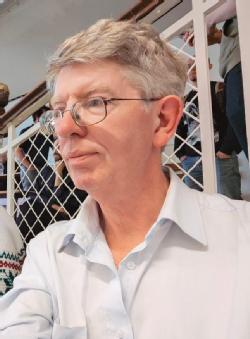
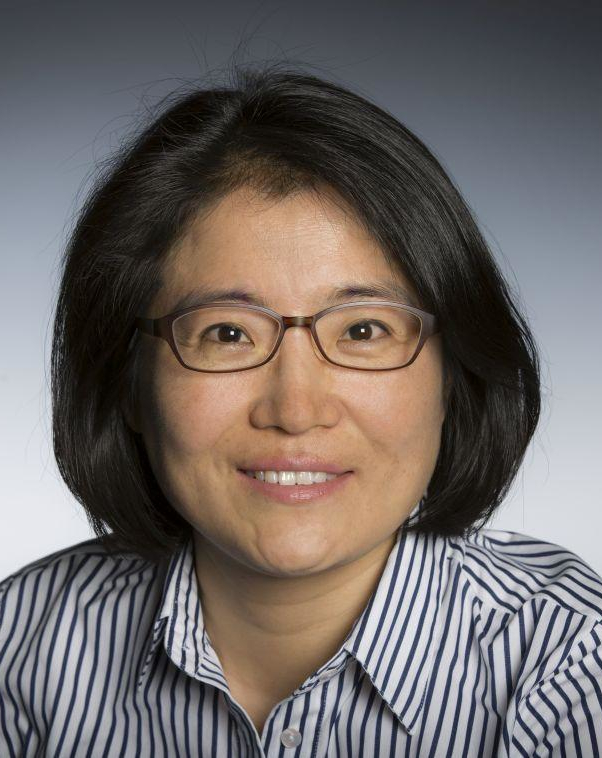
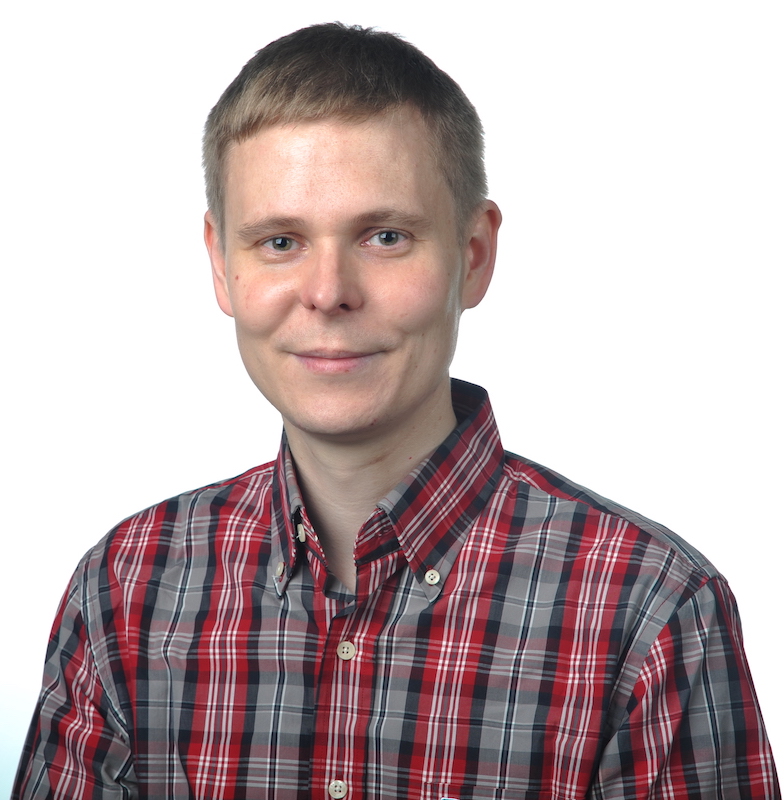
Stefan Woltran is a Full Professor in the Databases and Artificial Intelligence department at TU Wien. He serves as Vice Dean of Academic Affairs for the Informatics Master program and leads the Research Unit for Databases and Artificial Intelligence. His research focuses on logic-based AI, including Propositional Logic, Nonmonotonic Reasoning, Argumentation frameworks, Knowledge Representation, and Logic Programming. He coordinates the Double-Degree Program Logic and Computation. His research projects include analyzing formal properties of logic-based AI approaches, complexity analysis, and developing algorithms via logic and dynamic programming. Notable projects include the HYPAR and REVEAL-AI initiatives exploring abstract argumentation and AI problem-solving. He has contributed to over 150 publications since 2001, focusing on argumentation frameworks, computational complexity, and formal methods. Woltran teaches courses such as Abstract Argumentation, Formal Methods in Computer Science, and Theoretical Computer Science. His work integrates theoretical advancements with practical solver development, such as the ASPARTIX system for argumentation tasks. He actively participates in international conferences and competitions in computational argumentation, emphasizing the application of formal methods to real-world problems.
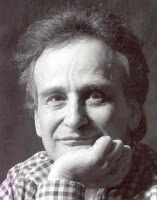
Dan Sheldon is a Professor in the Department of Computer Science at the University of Massachusetts Amherst, holding a Five College joint faculty position with Mount Holyoke College. His research focuses on developing algorithms to address environmental challenges using large datasets, emphasizing computational sustainability. Key areas include spatial optimization for endangered species conservation, continent-scale bird migration modeling, and interpreting weather radar data for ecological insights. Methodologically, his work leverages probabilistic inference, network modeling, and machine learning. Sheldon earned a PhD in Computer Science from Cornell University and an AB in Mathematics from Dartmouth College. His postdoctoral training at Oregon State University was supported by an NSF Bioinformatics Fellowship. He co-leads the BirdCast project, an NSF-funded initiative applying novel machine learning to avian migration studies. His research affiliations include the Center for Data Science and the Computational Social Science Institute. Research interests span computational biology, machine learning, and data privacy. Notable contributions include algorithms for ecological decision-making, differentially private synthetic data techniques, and Gaussian process applications in environmental forecasting. Awards include an NSF Fellowship in Bioinformatics. Current projects integrate radar data analysis, biodiversity tracking, and privacy-preserving statistical methods. Grants include the BirdCast NSF grant and collaborations in computational sustainability. His work bridges theoretical computer science with applied ecological challenges, emphasizing interdisciplinary approaches to global-scale environmental problems.
Peter A. Lloyd is a Professor of Integrated Design Methodology at the Faculty of Industrial Design Engineering, Delft University of Technology. He is a leading figure in design research, serving as Editor-in-Chief of Design Studies and former Chair of the Design Research Society. His work bridges design theory, ethics, and artificial intelligence. Doctorate in Psychological Investigations of the Conceptual Design Process, University of Sheffield (1994) His research focuses on design thinking, methodology, and the cognitive processes in design. He explores how designers and AI can collaborate, emphasizing ethical considerations and reflective practice. His work contributes to the UN Sustainable Development Goals, particularly in education and responsible innovation. The recent publications highlight a strong trend in integrating AI into design processes, examining designer-AI dialogue, synthetic users, and the role of reflection in design practice. His research spans cognitive science, human-computer interaction, and organizational transformation through creative practices. Editor-in-Chief, Design Studies (2017–present) Chair, Design Research Society (2017–2022) Vice President, IASDR (2021–present) Prof. Lloyd has supervised research students and contributes extensively to editorial and peer-review activities. He has been involved with Delft University of Technology’s Faculty of Industrial Design Engineering since at least 2001 in editorial and academic roles. His work is supported through academic leadership and collaborative research networks. He is actively involved in the Design Research Society and contributes to major conferences such as DRS and IASDR, often in organizational and editorial capacities. His research group or network includes collaborators from various institutions, focusing on interdisciplinary design innovation.
Professor Matthew Simpson is a leading figure in applied mathematics at the School of Mathematical Sciences, Faculty of Science, Queensland University of Technology (QUT). He holds the position of Professor of Applied Mathematics and is an Australian Research Council (ARC) Future Fellow, reflecting his sustained research excellence. His work bridges mathematical theory and biological applications, particularly in cell migration, tissue invasion, and multiscale modeling. BE (Environmental) Honours 1, University of Newcastle (1995–1998) PhD (with Distinction), Environmental Engineering, University of Western Australia (2000–2003) Research Fellow, Department of Mathematics and Statistics, University of Melbourne (2003–2006) ARC Postdoctoral Fellow, University of Melbourne (2006–2009) Lecturer (2010–2011) and Senior Lecturer (2011–2013), QUT Associate Professor (2013–2014), QUT Professor and ARC Future Fellow (2014–present), QUT Matthew Simpson’s research focuses on mathematical and computational modeling of biological systems , particularly collective cell motion, diffusion processes, and reaction-diffusion dynamics. His interests span multiscale modeling , random walk processes , cell biology , and numerical and computational mathematics . He develops and analyzes models to understand phenomena such as wound healing, cancer progression, and tissue engineering. His recent publications (2023–2025) demonstrate a strong trend toward integrating data-driven modeling , likelihood-based inference , and equation learning with traditional mechanistic models. These works emphasize parameter identifiability , uncertainty quantification , and prediction robustness in biological contexts. Themes include sharp-fronted wave propagation, mechanical cell interactions, tumor spheroid formation, and generalized diffusivity in food drying, showcasing the breadth and depth of his modeling expertise. Among his key accolades are: J.H. Michell Medal (2012) – Awarded by ANZIAM for distinguished research by an early-career applied mathematician in Australia and New Zealand. ARC Future Fellowship (2013–2017) – For the project 'New data-driven mathematical models of collective cell motion' (FT130100148). Professor Simpson has also played significant editorial and leadership roles, including: Executive Associate Editor, Journal of Engineering Mathematics Academic Editor, PLoS ONE Editorial Board Member, ANZIAM Journal Co-chair of the 2015 ANZIAM meeting He has supervised PhD students on topics such as moving boundary problems, first-passage times, stochastic simulations, and curvature-dependent growth in biological systems. His research projects have been funded by competitive Australian grants (ARC DP and FT schemes), including studies on 3D cell migration, ghrelin’s role in cell invasion, and epithelial-to-mesenchymal transition in cancer and wound healing. He is actively involved in developing computational tools for biological modeling and promoting best practices in scientific publishing.
Donald Robertson is a Lecturer in Pure Mathematics at the University of Manchester, specializing in ergodic theory with applications to additive combinatorics. His work connects measurable dynamics with combinatorial number theory problems. Research explores ergodic properties of interval exchange transformations, sumset configurations in infinite sets, and equidistribution in homogeneous dynamics. Recent publications address Erdős' sumset conjecture (2022), saddle connection distributions (2023), and disjointness in measurable group actions. He teaches measure theory and ergodic theory courses, employing problem-based learning through weekly take-home tests. Coursework emphasizes Lebesgue integration, ergodic theorems, and connections between dynamics and combinatorics.
Ambrus Pal is a Reader in Pure Mathematics at the Department of Mathematics, Imperial College London, within the Faculty of Natural Sciences. His research interests span Pure Mathematics, Mathematical Physics, and Applied Mathematics, with a focus on algebraic geometry, number theory, and cohomology theories. He is affiliated with the CNRS-Imperial Abraham de Moivre UMI and contributes to both research and teaching in mathematics. His work often addresses cohomological pairings, arithmetic geometry, and the Brauer-Manin obstruction. Notable projects include studies on p-adic cohomology, motivic Euler characteristics, and the arithmetic Yau-Zaslow formula. Pal has collaborated on international conferences and schools, such as the LMS-CMI Research School on Homotopy Theory and Arithmetic Geometry. His publications reflect a deep engagement with abstract algebraic structures, including quasi-Boolean groups, Grothendieck-Witt rings, and real projective geometry. While his research emphasizes theoretical advances, applications to arithmetic applications and global function fields are recurrent themes. No scientific awards or advising records are explicitly mentioned.
Mark Pollicott is a Professor of Mathematics at the University of Warwick, where he has held positions since 1992 and 2005. He previously served at Edinburgh, Porto, and Manchester Universities, including a Fielden Chair. His research focuses on Thermodynamic Formalism, Ergodic Theory, and Dynamical Systems, with applications to geometry, number theory, and fractal analysis. Pollicott earned his BSc (1981) and PhD (1984) in Mathematics and Physics from Warwick, under the supervision of William Parry. He has held prestigious fellowships, including Royal Society and ERC grants, and organized major programs at the Newton Institute, CIB-Lausanne, and ICERM. He serves on editorial boards for journals like Nonlinearity and Journal of Fractal Geometry . His research explores topics such as fractal dimensions, geodesic flows, and validated numerics. Notable contributions include studies on the Hausdorff dimension of Cantor sets and Bernoulli convolutions. He has supervised 19 PhD students and mentored 18 postdoctoral researchers. Recent grants include EPSRC funding for computational ergodic theory and dynamical zeta functions. His work bridges pure mathematics with applications in geometry, analysis, and number theory. Awards: ERC Advanced Grant, EPSRC Leadership Fellowship, Royal Society Fellowships, Jean Morlet Chair Grants: EPSRC (2019-2025, 2026-2030), ERC (2019-2025) Collaborations: Co-organized programs on Thermodynamic Formalism and Dynamics at CIRM and Warwick
Xi Chen is an Associate Professor in the Department of Computer Science at Columbia University. Prior to this, he was a postdoctoral researcher at the Institute for Advanced Study (Princeton University) and the University of Southern California. He holds a B.S. in Physics/Maths from Tsinghua University (2003) and a Ph.D. in Computer Science from Tsinghua University (2007), advised by Professor Bo Zhang under the guidance of the Institute for Theoretical Computer Science led by Andrew Chi-Chih Yao. His research focuses on Algorithmic Game Theory, Economics, and Complexity Theory. His work is supported by an NSF CAREER award, a Sloan Research Fellowship, and Columbia University startup funds. He has received the EATCS Presburger Award and multiple best paper awards, including at FOCS 2006, ISAAC 2009, and CCC 2017. Xi Chen has taught courses such as Analysis of Algorithms , Lower Bounds in Theoretical Computer Science , and Introduction to Computational Complexity . He co-advises current PhD students Tim Randolph and Erik Waingarten, and has graduated students like Timothy Sun (Emory University) and Xiaorui Sun (University of Illinois at Chicago). He has served on program committees for conferences like WINE, SODA, and STOC. His research spans theoretical computer science, including property testing, graph isomorphism, and fixed-point computation. He is affiliated with Columbia's Theory Group and actively participates in the Theory Seminar organized by Alex Andoni. Xi Chen's research also extends to algorithmic economics, exploring mechanisms, pricing strategies, and market equilibria. His work on complexity theory includes contributions to counting problems and circuit complexity. He maintains a lab and collaborates with researchers in theoretical computer science and algorithmic game theory.
Saharon Shelah is an Israeli mathematician renowned for his groundbreaking work in mathematical logic and set theory. He currently holds the Robinson Chair for Mathematical Logic at Hebrew University, a position he has held since 1978, and has been a Professor at Hebrew University since 1974. Additionally, he serves as a Distinguished Visiting Professor at Rutgers University since 1986. His educational background includes: B.Sc. from Tel Aviv University (1964) M.Sc. from Tel Aviv University (1967) M.Sc. from Hebrew University (1968) Ph.D. from Hebrew University of Jerusalem (1969), summa cum laude, supervised by Michael Rabin Shelah's research primarily focuses on mathematical logic, particularly model theory and set theory. His work has revolutionized these fields through the development of stability theory, PCF theory, and proper forcing. He has made significant contributions to understanding the connections between logic and other mathematical disciplines including algebra, computer science, and combinatorics. His approach often involves creating general frameworks that solve multiple problems simultaneously, demonstrating extraordinary depth and breadth in mathematical thinking. An analysis of Shelah's extensive publication record reveals consistent innovation across mathematical logic. His work shows a progression from foundational model theory in the 1970s through the development of stability theory, to groundbreaking set theory results in the 1980s and 1990s, particularly in cardinal arithmetic and PCF theory. Recent publications continue to expand abstract model theory while finding new applications across mathematics. His research demonstrates remarkable consistency in quality and originality over five decades. Shelah's exceptional contributions have been recognized with numerous prestigious awards: 2013 AMS Steele Prize 2011 EMET Prize in Mathematics 2001 Wolf Prize in Mathematics 2000 Bolyai Prize 1998 Israel Prize for Mathematics 1992 SIAM George Pólya Prize 1991 Honorary Foreign Member of the American Academy of Arts and Sciences 1988 Member of the Israel Academy of Sciences and Humanities 1983 Karp Prize 1982 Rothshild Prize 1977 Erdös Prize Throughout his career, Shelah has mentored numerous students and collaborated with over 200 coauthors. His research has been supported by multiple grants from prestigious organizations including the Israel Science Foundation and the National Science Foundation. Shelah's work has fundamentally shaped modern mathematical logic, with his classification theory providing frameworks that continue to guide research directions. His ability to connect seemingly disparate areas of mathematics through logical structures has made his contributions exceptionally influential. Shelah maintains an active research group at Hebrew University, where he continues to supervise doctoral students and postdoctoral researchers. His research program, known for its depth and technical sophistication, continues to generate new directions in mathematical logic. The Shelah Archive (http://shelah.logic.at) serves as a comprehensive repository of his extensive publication record, which surpassed 1190 papers by the end of 2024.
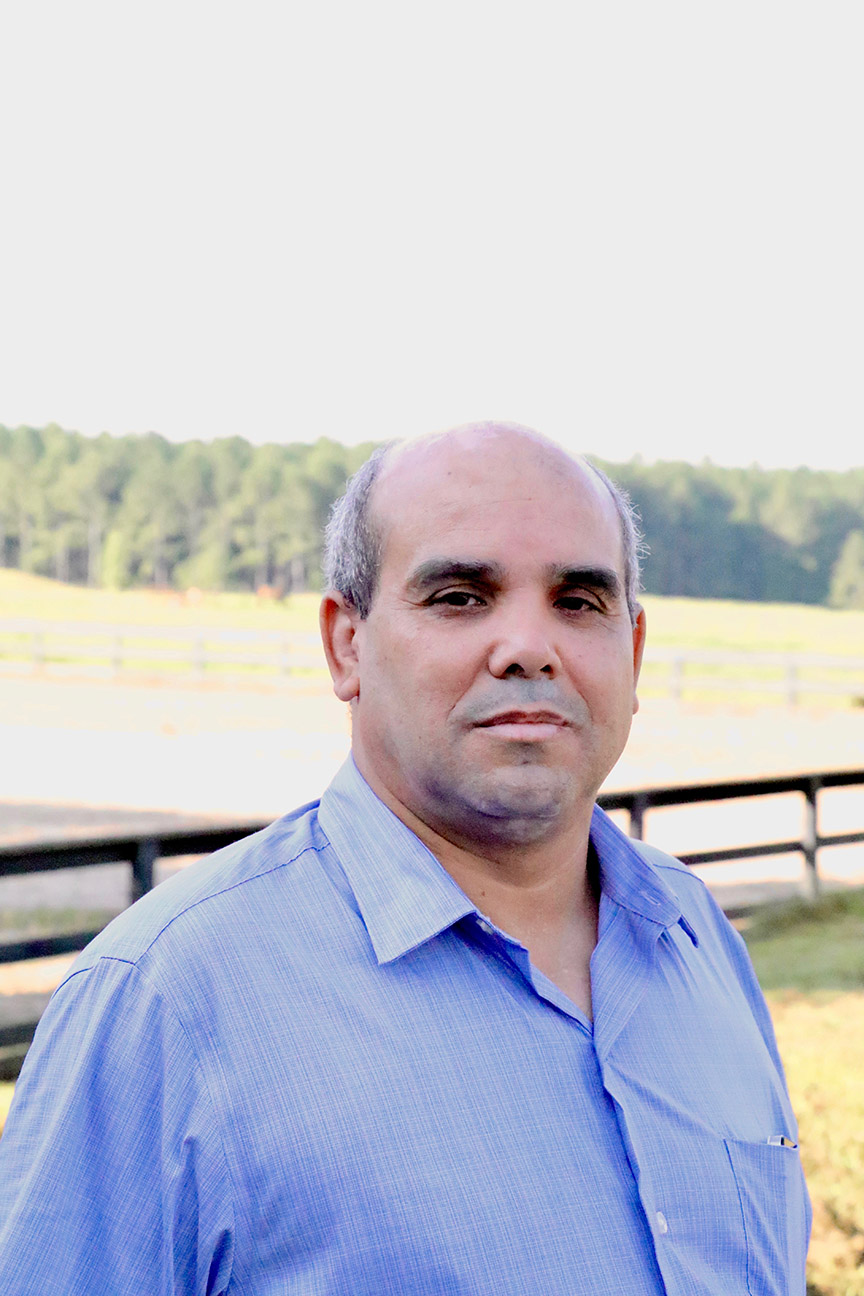
Romdhane Rekaya serves as a Professor in the Department of Animal and Dairy Science within the College of Agricultural & Environmental Sciences at the University of Georgia. He also holds courtesy faculty positions in the Department of Statistics and is an associate faculty member with the Institute of Bioinformatics at UGA. His research program focuses on developing statistical and computational tools for analyzing large genetic and genomic datasets with applications in livestock, poultry, and human health. Dr. Rekaya's educational background includes: Agriculture Engineer from the High Institute of Agriculture, Tunisia Master of Science from the International Center for Advanced Studies in Mediterranean Agriculture of Zaragoza, Spain Ph.D. from the Polytechnic University of Madrid, Spain Dr. Rekaya's research interests span quantitative genetics, genomics, biostatistics, and bioinformatics. His work centers on developing statistical and computational methodologies for analyzing big genetic and genomic data sets with practical applications in livestock, poultry, and human health. His research has been particularly focused on addressing critical challenges in animal agriculture including horn fly resistance in beef cattle, water utilization efficiency in poultry, and greenhouse gas emissions in dairy production. His methodological approaches often integrate machine learning, Bayesian statistics, and genomic technologies to solve complex biological problems. Dr. Rekaya's publication record demonstrates a consistent focus on statistical methodology development for genetic analysis, with recent work increasingly emphasizing practical applications of genomic technologies in animal agriculture. His research spans both theoretical statistical development and practical implementation in livestock improvement programs, with particular emphasis on innovative approaches to traditional breeding challenges. Among his professional recognitions: Student Career Success Influencer Award 2024 Mini-Sabbatical Award Student Career Success Influencer Award 2022 Carnegie fellowship Carnegie African Diaspora Fellow Faculty with significant positive impact of at least one graduate student Gamma Sigma Delta outstanding Research Achievements Award Dr. Rekaya has successfully mentored numerous graduate students including PhD candidates Amanda Warner, Mahsa Zare, Koushik Das, and Evan Hartono, along with undergraduate researchers. His research has been consistently supported by major funding agencies including USDA NIFA, USDA ARS, Georgia Agricultural Commodity Commission for Beef, National Academy of Sciences, and industry partners including Tyson Foods and Cobb-Vantress. Current projects include developing genetic solutions to the horn fly problem in beef cattle, improving water utilization efficiency in poultry, and examining associations between greenhouse gas emissions and feed efficiency in dairy cattle. Dr. Rekaya leads an active research laboratory that collaborates with multiple departments and institutions. His lab focuses on applying advanced statistical and computational methods to solve pressing problems in animal agriculture, with particular emphasis on integrating genomic information into practical breeding programs. The lab maintains strong industry connections and international collaborations, particularly with researchers in Africa through the African Animal Breeding Network.
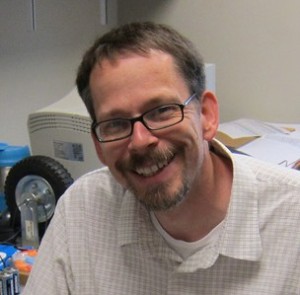
Dr. Tim Oates is a Professor in the Department of Computer Science and Electrical Engineering at the University of Maryland, Baltimore County . His research spans machine learning, artificial intelligence, and brain-machine interfaces, with a focus on weakly supervised methods, human-in-the-loop reinforcement learning, and grounded policy development for robotics. Ph.D., Computer Science, University of Massachusetts, Amherst, 2000 M.S., Computer Science, University of Massachusetts, Amherst, 1997 B.S., Computer Science and Electrical Engineering, 1989 Current research threads include: Developing non-invasive brain injury severity assessment via medical time series Modeling human brain development through computational frameworks Designing algorithms for autonomous robotic learning Recent publications highlight AI security mechanisms (backdoor detection via tensor decomposition, matrix factorization) Medical applications (3D artery reconstruction, skin lesion diagnosis, EEG denoising) Neuro-symbolic integration (holographic representations, language-guided reinforcement learning) Mathematical reasoning (schema-based problem solving, subitizing algorithms) Contact: oates@cs.umbc.edu | Office: 336 Information Technology and Engineering (ITE) Building
Noriko Yui is a Professor of Mathematics at Queen's University in Kingston, Ontario. She holds academic affiliations within the Department of Mathematics and Statistics under the Faculty of Arts and Science. Her research bridges number theory, algebraic geometry, and mathematical physics, with a focus on arithmetic geometry and mirror symmetry, particularly in the modularity of Calabi-Yau threefolds. Yui earned her B.S. from Tsuda College (1966) and her Ph.D. in Mathematics from Rutgers University (1974), supervised by Richard Bumby. She has held visiting roles at the Max-Planck-Institute in Bonn and Newnham College, University of Cambridge. Her work includes collaborations with Fernando Q. Gouvêa, notably proving the modularity of rigid Calabi-Yau threefolds over Q. Her research areas span arithmetic geometry, number theory, algebraic/differential geometry, and particle physics theory. Key contributions include studies on L-functions, mirror symmetry, and the applications of Calabi-Yau manifolds in physics. Since 2007, she has served as managing editor of the journal Communications in Number Theory and Physics . Yui co-authored influential works such as Generic Polynomials: Constructive Aspects of the Inverse Galois Problem and edited volumes like Mirror Symmetry V . Her research emphasizes interdisciplinary connections between mathematics and theoretical physics, particularly in string theory contexts.
Mihyun Kang is a Professor in the Institute of Discrete Mathematics at Graz University of Technology (TU Graz), leading the Combinatorics Group. She holds significant academic positions and has been recognized with a Heisenberg Fellowship (German Research Foundation) and a Friedrich Wilhelm Bessel Research Award (Alexander von Humboldt Foundation). Her research focuses on combinatorics, discrete probability, and algorithms, with a specialization in random graph theory. She contributes to editorial boards, including Random Structures & Algorithms . Her research interests emphasize high-dimensional graphs, percolation processes, and structural properties of random graphs. She explores topics such as phase transitions, graph enumeration, and algorithmic applications in combinatorial problems. Her work bridges theoretical foundations with practical applications in algorithm design and probabilistic modeling. Dr. Kang’s scientific achievements include pioneering studies on hypergraphs, bootstrap percolation, and the evolution of random graph processes. Her recent publications highlight advancements in understanding graph components, connectivity thresholds, and universality phenomena in random structures. She collaborates widely, contributing to conferences and international initiatives like the SFB “Discrete random structures: enumeration and scaling limits.” Her professional activities include advising doctoral students and supervising research projects at TU Graz. She leads the Combinatorics Group, which hosts the Graz Combinatorics Seminar and actively engages in academic outreach. Her contributions extend to textbook authorship, including Diskrete Mathematik für die Informatik , and she maintains an active presence in discrete mathematics education and research.
Lutz Warnke is a Professor of Mathematics at the University of California, San Diego, with prior affiliations at Georgia Institute of Technology (where he received tenure in 2021) and Peterhouse, Cambridge University (Junior Research Fellow until 2016). His research focuses on probabilistic combinatorics, random graphs, phase transitions, and combinatorial probability, with applications to extremal combinatorics and Ramsey theory. Education : Ph.D. in Mathematics from the University of Oxford (2012), supervised by Oliver Riordan. Dr. Warnke's research explores the structure and evolution of random graphs and processes, including Achlioptas processes, Ramsey numbers, and extremal problems. His work often bridges probabilistic methods with algorithmic applications and theoretical computer science. His publications from 2022–2025 reveal trends in random graph isomorphisms, clique coloring thresholds, extremal subgraph counts, and hardness of online algorithms. Key subfields include percolation, phase transitions, and probabilistic methods applied to combinatorial structures. Scientific Awards : Dénes König Prize (2016), Alfred P. Sloan Research Fellowship (2018), NSF CAREER Award (2020), Richard Rado Prize (2014). Dr. Warnke actively supervises PhD students and postdocs, including Matthew Cho (PhD ongoing), Erlang Surya (PhD 2025), Emily Zhu (PhD 2025), and He Guo (PhD 2021). He has received teaching accolades at Georgia Tech and contributes to graduate courses in probabilistic combinatorics, random graph theory, and stochastic processes.
Christoph Hertrich is a tenure-track professor for Applied Discrete Mathematics at University of Technology Nuremberg, where he conducts research at the intersection of discrete mathematics, theoretical computer science, and machine learning. His work particularly focuses on applying polyhedral geometry and combinatorial optimization techniques to neural network theory, with significant contributions to understanding the computational complexity and expressivity of neural networks. Hertrich received his BSc and MSc degrees from TU Kaiserslautern (2013-2018) working with Sven O. Krumke, followed by his PhD at TU Berlin (2018-2022) under the supervision of Martin Skutella. His doctoral thesis, titled "Facets of Neural Network Complexity," laid foundational work for his current research direction. Prior to joining UTN, he held postdoctoral positions at Université libre de Bruxelles (2023-2024) with a Marie Skłodowska-Curie fellowship under Samuel Fiorini, and at LSE London (2022-2023) with László Végh. He also served as a substitute professor for discrete mathematics at Goethe-Universität Frankfurt during the winter semester of 2023/24. Hertrich's research interests center on the mathematical foundations of neural networks, with particular emphasis on polyhedral geometry approaches. His work explores computational complexity questions related to neural network training and architecture, expressivity bounds, and connections to combinatorial optimization problems. He has made significant contributions to understanding the relationship between neural network depth and function representation, the complexity of counting linear regions in ReLU networks, and the application of extended formulations to neural network theory. His approach combines rigorous theoretical analysis with practical implications for neural network design and optimization. His recent publication record reveals a strong trend toward establishing fundamental theoretical limits and connections between deep learning and discrete mathematics. A significant portion of his work examines computational complexity of various neural network problems, often proving hardness results or establishing bounds on expressivity. He has also developed novel connections between polyhedral combinatorics and neural network architecture, demonstrating how techniques from operations research can inform deep learning theory. Marie Skłodowska-Curie fellowship Since February 2025, Hertrich has been supervising PhD student Moritz Stargalla at UTN. His research has been supported by prestigious fellowships including a Marie Skłodowska-Curie fellowship during his postdoctoral period in Brussels. He is organizing a workshop on "Polyhedral Geometry for Neural Networks" in March 2026 in Nuremberg, highlighting his leadership in this emerging interdisciplinary field.