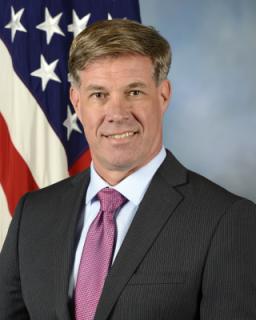
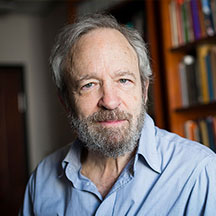
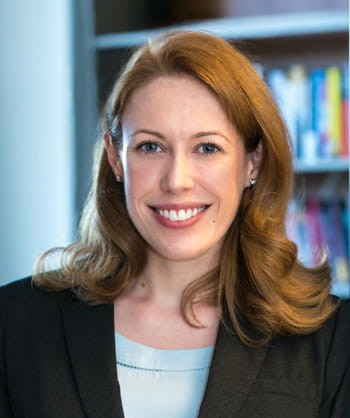
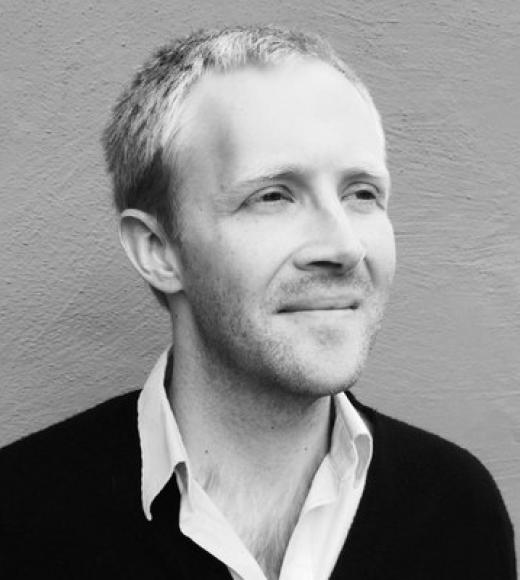
Joseph Felter is a Research Fellow at the Hoover Institution (Stanford University) and the William J. Perry Fellow at the Center for International Security and Cooperation. His career bridges academia, military service, and policy advising, with expertise in counterinsurgency, national security, and US-China relations. He coauthored the influential book Small Wars, Big Data: The Information Revolution and Modern Conflict (2018) and developed the Hacking for Defense curriculum to connect military needs with Silicon Valley innovation. Military Background: Former US Army Special Forces officer with combat deployments in Panama, Iraq, and Afghanistan. Served as commander of the COMISAF Counterinsurgency Advisory and Assistance Team. Academic Roles: Assistant Professor at West Point’s Department of Social Sciences, Adjunct Associate Professor at Columbia University’s School for International and Public Affairs, and current codirector of Stanford’s Empirical Studies of Conflict Project. Research Focus: Politically motivated violence, economic development in conflict zones, and defense innovation. His work appears in top journals like American Economic Review and Journal of Conflict Resolution . Policy Engagement: Key advisor on US defense strategy (2017–2019) and founder of BMNT, a Silicon Valley defense technology incubator. Currently serves on Spirit of America’s board. Scientific Awards: Recognized as a William J. Perry Fellow and US Army War College Fellow. His empirical conflict research informs both academic and policy debates.
Rod Andrew Jr. is a Professor and Alumni Master Teacher in the Department of History at Clemson University, affiliated with the College of Arts and Humanities. He retired as a Colonel in the U.S. Marine Corps Reserve and previously served as Officer-in-Charge of the Field History Branch at the U.S. Marine Corps History Division. His research focuses on U.S. Military History, the American South, and cultural history, with notable works on Southern figures like Wade Hampton and Andrew Pickens. Education: Ph.D., University of Georgia (1997) M.A., Clemson University (1993) B.A., University of North Carolina (1987) Research Interests: Combines Southern history with military and cultural analysis, emphasizing leadership, institutional crises, and regional identity. Current projects include a forthcoming book on post-WWII Marine Corps challenges. His work bridges military strategy, political dynamics, and cultural narratives. Recognition: Mary Lawton Hodges Prize in Southern Studies (2009) Harry M. Ward Book Award (for Andrew Pickens biography) His teaching spans courses on the American South, military history, and World War II. He actively collaborates with military history institutions, contributing to official historical documentation and analysis.
Jonathan P. Wong is a Senior Policy Researcher at the RAND Corporation and Professor of Policy Analysis at the RAND School of Public Policy. His work bridges academic research and defense policy, focusing on military strategy, acquisition, force planning, and the integration of emerging technologies into military operations. Education: Ph.D. and M.Phil. in Policy Analysis (Pardee RAND Graduate School), M.A. in Security Studies (Georgetown University), B.A. in Political Science (UC San Diego) Professional Experience: U.S. Marine Corps infantry officer (2001–2011), Consultant at Boston Consulting Group, current RAND researcher and professor Wong’s research interests center on defense innovation, military logistics, artificial intelligence in warfare, space capabilities, and the human dimension of military operations. He has led studies on human-machine teaming, non-lethal weapons, defense acquisition reform, and U.S. military posture in the Indo-Pacific. His work emphasizes practical, policy-relevant insights grounded in operational experience. The trends in his recent publications reveal a deep engagement with modern defense challenges: integrating commercial technologies into military systems, improving acquisition agility, enhancing battlefield awareness, and ensuring that defense innovation serves warfighter needs. His research spans strategic, operational, and tactical levels, often focusing on the U.S. Army and Marine Corps. Wong has not received public recognition in the form of listed awards in the provided texts, but his leadership in congressionally mandated studies and high-impact policy research suggests significant influence in defense circles. Advising & Grants: Co-led major projects such as the Long Range Precision Fires study and research on integrating women into Marine Corps infantry. His work is frequently funded by the Department of Defense and other federal entities, though specific grant details are not listed. Wong is affiliated with RAND’s defense and national security research teams, contributing to strategic analysis and policy development. He is not associated with a formal lab but works within RAND’s collaborative research environment, often partnering with other veterans and defense experts to produce actionable insights for military leaders and policymakers.
Serra Hakyemez is Assistant Professor of Anthropology and Global Studies at the University of Minnesota, currently on leave until January 2023. Her research examines the intersection of counterinsurgency warfare and judicial violence in Turkey's Kurdish regions, focusing on prison solidarity networks and decolonial resistance. She employs interdisciplinary methods combining political anthropology, legal studies, and ethnography to analyze state violence and resistance movements. Education includes: Ph.D. in Cultural Anthropology, Johns Hopkins University, 2016 M.A. in Sociology and Anthropology, Central European University, 2008 M.Sc. in Social Policy, London School of Economics, 2006 B.A. in Political Science & Business Administration, Bogazici University, 2005 Her research investigates the juridical and visual economies of counterinsurgent violence, with ongoing work on prison-based solidarity and insurgent justice frameworks in Kurdistan. Publications explore themes including feminist resistance in conflict zones, archival politics of state violence, and the anthropology of dissent. Awards include: ACLS Fellowship Wenner-Gren-Hunt Fellowship
Alexander Dunlap is a Research Scientist at Boston University's Institute for Global Sustainability (IGS) and a visiting research fellow at the University of Helsinki's Global Development Studies department. He holds a PhD in Social Anthropology from Vrije Universiteit Amsterdam, an MSc in Modules from the University of Sussex (UK), an MA in Environment, Development and Policy from Sussex, and a BS in Political Science from Portland State University (USA). His work critically examines energy transitions, extractive industries, and the socioecological impacts of green capitalism. Research Interests: Political ecology of low-carbon technologies Green extractivism in global contexts Decolonial and anarchist approaches to sustainability State violence and counterinsurgency tactics Environmental justice in renewable energy projects Publications: Dunlap’s recent work focuses on solar energy injustices in California, industrial solar manufacturing in Ohio, and the militarization of nature. His articles interrogate how 'green' infrastructure reinforces colonial and capitalist systems, often through spatial dispossession and anti-Indigenous violence. Labs/Teams: Active in IGS research clusters studying infrastructural harm and energy justice. Co-editor of Human Geography , a journal promoting radical interdisciplinary scholarship. Future Work: Continuing research on solar project lifecycles, particularly mining-to-decommissioning impacts, and expanding analysis of Europe’s energy grid conflicts.
Alfred W. McCoy is the Harrington Professor of History at the University of Wisconsin-Madison. His work spans modern empires, Philippine political history, global drug trafficking, and CIA covert operations. He holds a Ph.D. from Yale University, alongside an M.A. from the University of California-Berkeley and a B.A. from Columbia College. His research has produced seminal works such as The Politics of Heroin (1972), which exposed CIA complicity in drug trafficking, and To Govern the Globe (2021), analyzing imperial systems from the Black Death to climate crisis. His investigations into torture, surveillance, and Philippine military culture have won major awards, including the Wilbur Cross Medal (2012) and the Association for Asian Studies’ Kahin Prize (2011). McCoy has advised students like Christopher Hulshof and Daniel Jackson. His teaching focuses on Southeast Asian history, U.S. foreign policy, and imperial studies. Courses include The Vietnam Wars and CIA Covert Warfare . His contributions include exposing Marcos’s 'fake medals' in the New York Times and co-editing award-winning volumes on Philippine historiography. He currently holds the J.R.W. Smail Chair in History and has received the Hilldale Award for Arts & Humanities.
William Reno is Professor and Chair of the Department of Political Science at Northwestern University's Weinberg College of Arts and Sciences. With a PhD from the University of Wisconsin (1992), he has established himself as a leading scholar in African politics, conflict studies, and international relations. His career spans over three decades of research on state collapse, insurgency, and security assistance in fragile states, with particular expertise in West Africa and the Horn of Africa. His educational background includes a B.A. from Haverford College (1984), M.A. from the University of Chicago (1985), and Ph.D. from the University of Wisconsin (1992). Reno has held significant administrative roles including Director of the Program of African Studies (2012-2018) and currently serves as Department Chair since 2019. He previously served as non-resident Fellow at the Modern War Institute of the US Military Academy and has extensive experience as the department's graduate director. Reno's research focuses on the comparative politics of Africa, politics of violent conflict, political effects of foreign military assistance, and asymmetrical warfare. His work examines how patronage-based regimes operate in weak states, the evolution of insurgency in Africa, and security assistance strategies in fragile contexts. He has conducted extensive field research in Sierra Leone, Liberia, Nigeria, and Congo, with particular attention to how state collapse reshapes political authority and armed group behavior. His scholarship reveals critical insights about why contemporary African insurgencies differ from earlier anti-colonial movements in their organizational capacity and political programs. Reno has supervised numerous doctoral students who have gone on to prominent positions in academia, government, and military institutions. His advisees include scholars examining topics ranging from minority communities in conflict zones to military effectiveness in African states. Many of his students have military backgrounds or policy experience, reflecting Reno's own engagement with practical security challenges. He has secured significant research funding including Fulbright-Hays Fellowships, Boren Fellowships, and support from organizations like the Social Science Research Council. Reno maintains active research collaborations with scholars globally, particularly through his work with the Program of African Studies. His current projects focus on the politics of security force assistance, political economy of jihadism, and armed groups in contexts of state collapse. His scholarly approach combines deep area expertise with theoretical innovation, often challenging conventional wisdom about conflict dynamics in fragile states.
David Nugent is a Professor in the Department of Anthropology at Emory University. He holds a PhD from Columbia University (1988) and specializes in sociocultural anthropology, political economics, and Latin American studies. His research focuses on state formation, race/ethnicity, agrarian societies, and the interplay between knowledge systems and power. Nugent’s fieldwork spans diverse regions including the Peruvian Andes, East Africa, the Canadian Arctic, and the U.S. Southwest. Key publications include The Encrypted State (2019), Modernity at the Edge of Empire (1997), and co-edited volumes such as State Theory and Andean Politics (2015). He has received the Choice Magazine ‘Outstanding Academic Title’ award for his collaborative work. Current projects explore vernacular sovereignties in Pacific-facing Latin America and underground democratic forms in Peru. Nugent’s research bridges historical and political anthropology, examining how states negotiate legitimacy through symbolic systems, fear, and displacement. His work critiques colonial and neocolonial knowledge frameworks while analyzing contemporary challenges like urban inequality and smart city governance. Education: PhD in Anthropology, Columbia University (1988) Awards: Choice Magazine ‘Outstanding Academic Title of 2004’ Projects: Co-editing ReOrienting Latin American History and authoring Sacropolitics: Group Sacrifice and the State of Redemption
Paul Staniland is an Associate Professor of Political Science at the University of Chicago, where he chairs the Committee on International Relations and serves as Associate Director of the Chicago Project on Security and Threats. He is also a Nonresident Scholar in the South Asia Program at the Carnegie Endowment for International Peace. His research focuses on political violence, international security, and strategic dynamics in South Asia, particularly India and Pakistan. His work explores insurgent cohesion, civil-military relations, and the interplay between domestic and international politics, with a strong emphasis on comparative studies and empirical analysis. Staniland’s publications span academic journals like International Security and Security Studies , as well as policy outlets such as Foreign Affairs and Foreign Policy . Recent projects include a book on state-armed group relations in South Asia since 1947 and analyses of public opinion, leftist insurgencies, and social media usage in regional politics. Scientific Awards Award-winning book ' Networks of Rebellion: Explaining Insurgent Cohesion and Collapse ' (2014). Advising and Grants No explicit details provided. Labs & Teams Associate Director, Chicago Project on Security and Threats (CPOST), University of Chicago.
Lindsey O'Rourke is an Associate Professor of Political Science at Boston College's Morrissey College of Arts and Sciences. Her research examines U.S. foreign policy, international security, and covert regime change operations. Her work analyzes the causes, conduct, and consequences of U.S.-orchestrated covert interventions during the Cold War, gender dynamics in terrorism, and the strategic implications of regime change. Her book 'Covert Regime Change: America's Secret Cold War' received significant scholarly recognition. She teaches courses on U.S. foreign policy since 1945, the World Wars, and foreign-imposed regime change. Publications demonstrate three interconnected research streams: 50% on covert operations and regime change, 30% on gender dimensions of political violence, and 20% on contemporary security challenges. Her work combines historical analysis with contemporary policy implications.
Ian Campbell is an Associate Professor in the Department of History at the University of California, Davis. He holds a Ph.D. (2011) and B.A. (2005) in History from the University of Michigan, followed by a postdoctoral fellowship at Harvard University's Davis Center for Russian and Eurasian Studies. His research focuses on pre-Revolutionary Russia, particularly the dynamics between non-Russian territories and imperial governance. Campbell’s work emphasizes colonialism, military history, and environmental transformations in the Russian Empire. His first book, Knowledge and the Ends of Empire , explores tsarist policies toward the Kazakh steppe, analyzing bureaucratic knowledge systems and local intermediaries. Current projects include The Bleeding Edges , studying counterinsurgency across Russian borderlands, and Sowing Russianness? , reframing Kazakhstan through settler colonialism frameworks. His research has been supported by prestigious grants such as the Fulbright-Hays Doctoral Dissertation Award and the American Councils Title VIII Fellowship. Campbell teaches courses on European history, Russian history, and military history at both undergraduate and graduate levels. His publications span journals like The Russian Review and Ab Imperio , with a focus on violence, colonialism, and environmental adaptation in imperial contexts. Awards include the Fondiler Dissertation Prize for outstanding doctoral work (2011).
Yuri Zhukov is an Associate Professor at Georgetown University, holding dual appointments in the Edmund A. Walsh School of Foreign Service and the Department of Government (College). His research focuses on armed conflict, state repression, and geospatial data science, with notable work on the Russian invasion of Ukraine and historical legacies of political violence. He earned his Ph.D. in Government from Harvard University, an M.A. in National Security Studies from Georgetown, and a B.A. in International Relations from Brown University. Education: Ph.D., Government, Harvard University M.A., National Security Studies, Georgetown University B.A., International Relations, Brown University His research interests span the intersection of political violence and quantitative methods. He has pioneered geospatial analysis tools like VIINA to track conflict incidents and developed databases such as xSub for subnational violence studies. His work on Ukraine’s economic resilience during the 2022 invasion and vaccine hesitancy in low-income countries highlights his interdisciplinary approach to global challenges. His articles frequently address modern warfare dynamics, repression strategies, and historical conflict impacts. Awards include the 2015 Bruce Russett Award for excellence in conflict research. Zhukov’s advising and grants focus on military conflict, authoritarian regimes, and global health policy, reflecting his commitment to understanding systemic drivers of violence and governance.
Graham T. Allison, Jr. is the Douglas Dillon Professor of Government at Harvard Kennedy School, where he has taught for five decades. He previously served as the Founding Dean of Harvard's John F. Kennedy School of Government and as Director of the Belfer Center for Science and International Affairs until 2017. His career spans academia, government service, and international policy analysis, with significant contributions to national security studies and international relations. Dr. Allison's educational background includes: Davidson College Harvard College (B.A., magna cum laude, in History) Oxford University (B.A. and M.A., First Class Honors in Philosophy, Politics, and Economics) Harvard University (Ph.D. in Political Science) As a leading analyst of national security, Dr. Allison specializes in nuclear weapons policy, US-Russia relations, US-China relations, and decision-making processes in international crises. His research has profoundly influenced how scholars and policymakers understand great power competition and conflict prevention. He is particularly renowned for developing the concept of the "Thucydides Trap" to analyze the historical patterns when a rising power threatens to displace an established power. Dr. Allison's recent scholarly output demonstrates consistent focus on contemporary geopolitical challenges, particularly US-China strategic competition, nuclear weapons policy, and conflicts in the Middle East and Eastern Europe. His publications bridge academic rigor with policy relevance, often providing historical context to current crises while offering concrete recommendations for policymakers. The breadth of his work spans traditional academic journal articles, policy briefs, and commentary in major media outlets, demonstrating his commitment to engaging both scholarly and public audiences. Dr. Allison has received numerous prestigious awards for his contributions to national security: Defense Department's highest civilian award, the Defense Medal for Distinguished Public Service Distinguished Public Service Medal (awarded twice - first by Secretary Cap Weinberger and second by Secretary Bill Perry) Throughout his career, Dr. Allison has advised multiple presidential administrations, serving as Assistant Secretary of Defense in the Clinton Administration and Special Advisor to the Secretary of Defense under President Reagan. He has been a member of the Secretary of Defense's Advisory Board for every Secretary from Weinberger to Mattis. His work has been supported by significant sponsored projects including the "Russia Matters Web Portal" funded by the Carnegie Corporation of New York and programs to help students train for Russia-related jobs funded by the U.S. Russia Foundation. Dr. Allison has maintained strong connections with the Belfer Center for Science and International Affairs, which he directed until 2017 and which remains ranked as the "#1 University Affiliated Think Tank" in the world. Through the Belfer Center, he has fostered relationships with international security experts from around the world, particularly with Israeli security officials and analysts with whom he has collaborated extensively.
S. Paul Kapur is a Professor in the Department of National Security Affairs at the United States Naval Postgraduate School and a Visiting Fellow at the Hoover Institution, Stanford University. His expertise spans South Asian politics, nuclear security, and Indo-Pacific strategy. He previously served on the State Department’s Policy Planning Staff (2020-2021), focusing on South Asia, Central Asia, and U.S.-India relations. He also directed U.S.-India Track 1.5 strategic dialogues for the Department of Defense. Education: Ph.D., University of Chicago B.A., Amherst College His research interests include nuclear proliferation dynamics, South Asian geopolitical conflicts, and U.S. foreign policy in the Indo-Pacific. He has authored/co-authored influential books on nuclear deterrence, Islamist militancy, and strategic stability in South Asia, as well as articles in International Security , Security Studies , and Asian Survey . His work bridges academic analysis with policy engagement, particularly in U.S.-India strategic cooperation. Grants and advisory roles include Department of Defense-funded Track 1.5 dialogues and academic collaborations with institutions like Stanford University and Claremont McKenna College.
Devin Leigh is an Adjunct Professor (Part-Time) specializing in Atlantic World history, focusing on connections between the Caribbean, West Africa, and Great Britain in the eighteenth century. He holds a PhD in History from UC Davis (2021), an MA from Loyola University Chicago (2015), and a BA from DePaul University (2012). His research explores slavery, abolition, colonialism, and ethnographic methods, with publications in Atlantic Studies , Journal of Caribbean History , and History in Africa . Affiliations: Teaches at University of San Francisco, UC Berkeley, College of Marin, and others. Education: PhD in History (UC Davis, 2021); MA in History (Loyola University, 2015); BA in History & African Diaspora Studies (DePaul, 2012). His research interests include eighteenth-century biography, colonial ethnography, and the intellectual history of abolition. Notable awards include fellowships from the Omohundro Institute (2021) and the Eccles Center (2019).