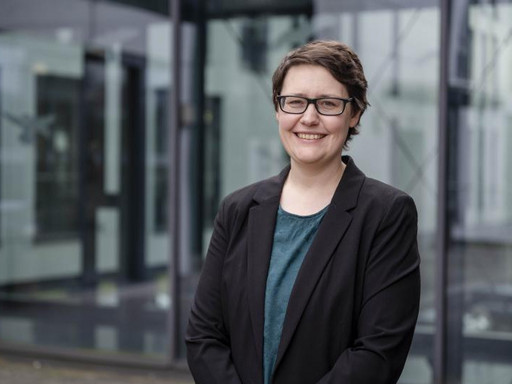
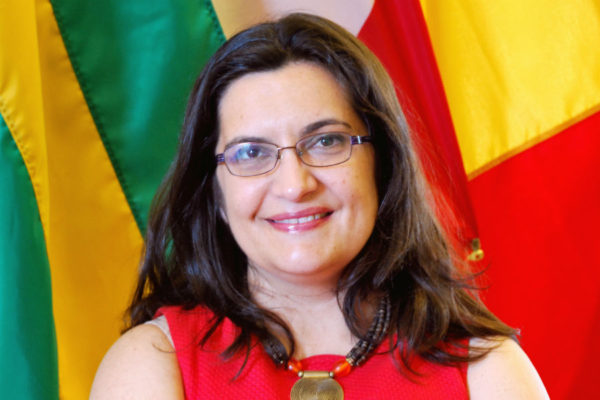
Binneh Minteh serves as an Assistant Professor in the Department of Criminal Justice at Salem State University, teaching foundational and advanced courses including Introduction to Criminal Justice, Cybercrime, Homeland Security, and Global Crime and Justice. His educational qualifications feature: B.S. in Management Information Systems from New York University M.S. in Global Affairs from New York University M.S./Ph.D. in Global and International Affairs from Rutgers University Dr. Minteh's research critically examines policing dynamics, terrorism frameworks, and transnational criminal networks involving drugs, arms, and human trafficking, alongside cybersecurity threats and national security policy. His work integrates practical military experience with academic analysis to address systemic challenges in global justice systems. As a former Gambian Army First Lieutenant trained at Turkey's Land Forces Command School and Gendarmerie Officers School, he bridges operational security expertise with scholarly inquiry in criminal justice education.
Dr. Deniece Dortch serves as Assistant Professor of Higher Education Administration in the Department of Educational Leadership at George Washington University's Graduate School of Education and Human Development. Her research critically examines systemic oppression through the lens of African American students' experiences with race and racism at predominantly white institutions, employing critical phenomenological methodologies to investigate psychological violence, fear manifestation, and racial agency development. Her educational foundation includes: Ph.D. in Higher & Postsecondary Education Leadership from University of Wisconsin-Madison Ed.M. in Higher & Postsecondary Education from Teachers College, Columbia University M.A. in Intercultural Service, Leadership & Management from School for International Training B.A. from Eastern Michigan University Dr. Dortch's research program centers on how psychological violence operates within academic spaces and how students develop resistance strategies. She investigates intra-racial dynamics among Black students, gendered racism's impact on doctoral persistence, and the role of peer networks in mitigating institutional hostility. Her work bridges theoretical analysis with practical interventions, focusing on how racial agency manifests as revolutionary acts against oppressive systems. Recent projects examine tokenism's psychological toll and maladaptive coping mechanisms that inadvertently perpetuate marginalization. Her publication trajectory shows increasing sophistication in documenting how Black students navigate and resist racism. The 2023-2024 works move beyond identifying problems to mapping resistance pathways, with emphasis on collective action through peer networks and the development of racial agency as transformative practice. This evolution reflects her commitment to generating knowledge that directly informs anti-racist institutional change. Dr. Dortch's scholarly impact is recognized through: 2021 AERA Carlos J Vallejo Award for Emerging Scholarship AAUW grant for 2022-23 research on racialized trauma Media coverage in Phys.org for peer support research 2025 panel invitation for AAUW equity webinar Election as Chair of AERA's Graduate Education SIG (2024) Her mentorship philosophy is operationalized through structured programs like the African American Doctoral Scholar's Initiative and Sista to Sista, emphasizing socialization into academic spaces while developing resistance strategies. Current research funded by AAUW examines how students' coping mechanisms with racism may trigger behaviors that perpetuate oppression, aiming to develop institutional mechanisms for creating genuinely anti-racist environments. As a returned Peace Corps Volunteer (Morocco and Jamaica), she brings global perspective to understanding educational equity challenges.
Dr. Laxima Niure Kandel is an Assistant Professor in the Department of Computer, Electrical, and Software Engineering at Embry–Riddle Aeronautical University. Her research spans wireless security, UAV detection, and cybersecurity, with a strong focus on AI-driven solutions for aviation and IoT systems. Her core research interests include: Wireless sensing and localization Machine learning applications in cybersecurity GPS spoofing detection for aviation RF fingerprinting for device authentication Adversarial resilience in deep learning models Recent publications (2025) demonstrate a dominant focus on transformer-based security models, UAV protection systems, and explainable AI. Over 80% of her latest work involves deep learning techniques applied to real-world threats like GPS spoofing, ADS-B attacks, and adversarial patches in autonomous vehicles.
Marian-Andrei Rizoiu is an Associate Professor leading the Behavioral Data Science lab at the University of Technology Sydney's Data Science Institute, Faculty of Engineering and Information Technology. He holds concurrent appointments as an Honorary Lecturer at Australian National University and Honorary Research Scientist at Data61. Previously, he has held visiting professor positions at Imperial College London, Jean Monnet University, and Max Planck Institute for Software Systems. Associate Professor in Behavioral Data Science, UTS Data Science Institute (Jan 2024 - present) Senior Lecturer in Behavioral Data Science, UTS Data Science Institute (Jul 2021 - Jan 2024) Lecturer in Computer Science, UTS Faculty of Engineering and Information Technology (Feb 2019 - Jul 2021) Dr. Rizoiu's research focuses on interdisciplinary work crossing computer and social sciences, blending psycholinguistics, digital communication, and stochastic modeling to understand human attention dynamics online, the emergence of influence, and opinion polarization. His key contributions include developing theoretical models for online information diffusion that can account for complex social phenomena, and building skill-based real-time occupation transition recommender systems that link social media-predicted personality profiles with occupation skill requirements. His research outputs reveal strong trends in misinformation detection, social influence measurement, and online radicalization pathways. Recent publications demonstrate sophisticated modeling approaches including state space models for early misinformation prediction, multivariate Hawkes processes for analyzing partially interval-censored data, and ideology detection pipelines. His work spans computational social science, machine learning, and practical applications for countering harmful online content. Excellence Award and Academic of the Year at the 2023 Australian Defence Industry Awards ADMA'22 Best Application Paper Dr. Rizoiu has successfully secured over $2.9 million in research funding from selective funders including Meta Research, Defence Science and Technology Group, Department of Home Affairs, and Defence Innovation Network. He has supervised 3 PhD students to completion and more than 10 Honours students, most achieving High Distinction. His research has been applied in real-world contexts including serving as an expert for NSW government's Defamation Law Reform and providing evidence for Australian Federal Senate inquiry into media diversity. He leads the Behavioral Data Science lab which focuses on modeling human behavior in online environments, with particular emphasis on mis- and disinformation detection and labor market analysis. The lab has developed tools like TRACK, UTS OPEN's software for recommending personalized learning pathways, used by over 750 students and professionals.
Prof. Dr. Andreas Dellnitz is a Professor of Quantitative Methods at Leibniz University of Applied Sciences, specializing in Operations Research and Computational Social Sciences. He also serves as Head of the Sustainable and Digital Transformation program and has been Vice President for Research since 2025. Education Dr. Dellnitz holds the following academic qualifications: Master of Science (Business Information Systems), FernUniversität in Hagen (2019) Doctor of Economics (summa cum laude), FernUniversität in Hagen (2015) Diploma in Economics (honors), Ruhr University Bochum (2010) Research Interests Dr. Dellnitz's research centers on multi-criteria optimization and (eco-)efficiency analysis , with applications in sustainability. His methodological focus includes linear and combinatorial optimization, algorithmic geometry, and entropy-driven analytics for social and power networks. He investigates sustainability-oriented production planning, energy systems, and social network structures. Publication Trends His recent work (2021-2025) integrates Data Envelopment Analysis (DEA) with machine learning for cost estimation and eco-efficiency assessment. Key applications include sustainable production planning under energy pricing schemes, gas-to-power demand response, and battery storage systems. His research bridges theoretical operations research with industrial sustainability challenges. Scientific Awards No scientific awards were mentioned in the available information. Grants and Advising Dr. Dellnitz has led third-party funded projects such as MaXFab I (2016-2018) and MaXFab II (2019-2021) on energy-flexible factories. He supports student projects and participates in study committees, emphasizing practical applications of operations research in business and sustainability.
Toke Møldrup Wolff serves as Assistant Professor at the Centre of African Studies and Assistant Lecturer at the Board of Studies for Theology within the Faculty of Theology at the University of Copenhagen. His research critically examines state-formation processes, identification systems, and bureaucratic practices across African contexts, with specialized focus on Somaliland and Uganda. His academic credentials include: MSc in Africa and International Development MA in African Studies (awarded 1 September 2013) Wolff investigates the material dimensions of state infrastructure , particularly ID documents, to unravel how states classify and govern populations. His work exposes the inherent tension between digital identification's potential for service delivery enhancement and its capacity for surveillance and exclusion. Through ethnographic examination of traditional authority in rural Africa, he illuminates intersections between customary laws and formal state institutions, directly contributing to Sustainable Development Goal 16 (Peace, Justice and Strong Institutions) frameworks. Analysis of Wolff's publication history (2013-2022) reveals evolving scholarly emphasis from Somali piracy and Somaliland's political development toward contemporary digital governance challenges and climate-related diaspora mobilization. His interdisciplinary approach bridges political anthropology with development studies, consistently interrogating power dynamics in state-citizen relations and the unintended consequences of certification infrastructures across African societies. Currently embedded in the Certifications of Citizenship in Africa (CERTIZENS) project, Wolff explores digital ID management systems' societal implications. No formal advisees or scientific awards are documented in the available information.
Rebekah Overdorf is a Research Professor and Chair for Security and Trustworthiness of Online Information at Ruhr University Bochum, where she leads research at the intersection of computer security, privacy, and information integrity. She is also affiliated with the Research Center for Trustworthy Data Science and Security. Her research focuses on identifying and mitigating threats to information integrity in online platforms, with particular expertise in detecting disinformation campaigns, analyzing propaganda distribution channels, and developing methods to protect user privacy. Overdorf's work combines data science and machine learning approaches with security expertise to address contemporary challenges in online information ecosystems. Analysis of her recent publications reveals a consistent focus on security and privacy challenges in social media environments, with particular attention to Telegram and Twitter platforms. Her research spans technical analysis of bot networks and propaganda distribution mechanisms, development of detection methodologies for disinformation campaigns, and creation of protective technologies that empower users against algorithmic manipulation. Over the past decade, her work has evolved from foundational research in stylometry and authorship attribution to more applied security challenges in contemporary social media ecosystems. Professor Overdorf has received recognition through publications in top security and social media conferences including USENIX Security, ICWSM, EuroS&P, and FAT*. Her collaborative research approach is evident in her extensive co-authorship network spanning multiple institutions across Europe and North America. Her advising and research activities focus on training the next generation of security researchers while developing practical solutions to pressing information integrity challenges. Through her leadership of the Chair for Security and Trustworthiness of Online Information, she oversees research projects that address real-world security threats while maintaining academic rigor. The Chair for Security and Trustworthiness of Online Information serves as a hub for interdisciplinary research, bringing together computer scientists, social scientists, and policy experts to develop comprehensive approaches to online security challenges. Current projects focus on detecting coordinated inauthentic behavior, analyzing state-sponsored disinformation campaigns, and developing privacy-aware technologies that maintain functionality while protecting user data.
Mascha Salgado de Matos serves as Research Fellow in the Chair of Philosophy at Academy of Fine Arts Munich, working under Prof. Dr. Maria Muhle. Her current dissertation explores "Artistic Historiographies of Portugal from the Dictatorship to the Present," examining oceanic motifs as conceptual frameworks. Active in teaching and research, she maintains weekly consultation hours and contributes to academic discourse through publications and international collaborations. Her educational foundation includes interdisciplinary studies at Ludwig Maximilian University of Munich, where she specialized in: Near and Middle Eastern Studies (Arabic/Islamic focus) Philosophy History of Art Research interests center on modern/contemporary art theory and aesthetics, with distinctive emphases on Portuguese art historiography, feminist practices since 1974, and anthropomorphism in visual culture. She investigates how oceanic metaphors structure artistic thought during political transitions, while analyzing intersections between artistic freedom and contemporary cancel culture debates. Her work bridges continental philosophy, postcolonial theory, and visual anthropology to decode cultural memory in Iberian and Lusophone contexts. Recent scholarly output shows evolving thematic depth: early contributions (2020-2021) focused on African/Maghrebi photographic practices within global frameworks, while her 2024 editorial leadership of 'colophon Nr. 7' demonstrates consolidation in anthropomorphism studies. Current projects integrate oceanic theory with diaspora studies, reflecting her participation in Kiel University's water phenomenology seminar. As an educator, she designs courses exploring motherhood tropes in contemporary art (WiSe 24/25), anthropomorphic projection (SoSe 24), and Portuguese feminist art (SoSe 22). Her moderation of international panels—including the 2024 'Atlantic Exchange' with Afro-diasporic artists—provides students with access to global artistic networks. Though not leading a formal laboratory, her research group operates through the Chair of Philosophy, fostering collaborations with institutions like Zentralinstitut für Kunstgeschichte and Lothringer 13.
Vincent Weaver is an Associate Professor in the Electrical and Computer Engineering Department at the University of Maine's College of Engineering. He leads the VMW Research Group, focusing on low-level systems research including hardware performance counters, computer architecture, and operating systems. Weaver received his BS in Electrical Engineering from the University of Maryland College Park in December 2000, followed by MS (January 2009) and PhD (May 2010) degrees in Electrical and Computer Engineering from Cornell University. He joined the University of Maine faculty in July 2012 as an Assistant Professor and earned tenure and promotion to Associate Professor in September 2018. His research centers on hardware performance analysis, architectural simulation, and systems programming with emphasis on Linux kernel development and embedded systems. Weaver's work bridges theoretical computer architecture with practical systems implementation, often resulting in open-source tools that advance the field. His publications reveal a consistent focus on performance analysis techniques, code optimization, and security through low-level system understanding. Weaver maintains an active teaching schedule including courses in embedded systems, operating systems, and network engineering. He values students with strong programming skills and encourages open source contributions as part of the learning process. His research group provides hands-on experience with cutting-edge processor architectures and performance analysis tools.
W. Travis Morris is a Professor and Director of the NU Peace and War Center at Norwich University's School of Criminology and Criminal Justice, where he has served since 2011. His work bridges academic research with real-world security applications through international field studies. His educational background includes: Bachelor of Arts in Criminology from Northern Illinois University Master of Science in Criminal Justice from Eastern Kentucky University Doctorate from the University of Nebraska Morris specializes in violent extremist propaganda analysis, information warfare, and text network analysis, with extensive research on terrorism, counterterrorism, and counter-insurgency operations. His ethnographic fieldwork in Yemen examines crime within socio-cultural justice systems, culminating in the book "Dark Ideas: How Violent Jihadi and Neo-Nazi Ideologues Have Shaped Modern Terrorism". He connects theoretical frameworks to practical security challenges through interdisciplinary methodologies. As an educator, Morris teaches Terrorism, Policing, Homeland Security, and Criminology courses while securing grants for student learning trips across the Balkans, Central Asia, and Middle East. These experiential programs immerse cadets in conflict zone diplomacy and cultural analysis, directly linking classroom theory to global security contexts. He directs the John and Mary Frances Patton Peace & War Center, which serves as Norwich University's hub for conflict resolution research, international student exchanges, and cross-cultural security education. The center facilitates initiatives like the 2025 Olmsted Field Study in the Baltics, advancing Norwich's mission in peace and conflict studies.
Dr. Anna Kruglova is a Lecturer of Terrorism Studies at the University of Salford's School of Arts, Media and Creative Technologies, where she teaches Security Studies, Terrorism: Threat and Response, and Contemporary Information Warfare. She maintains significant external affiliations as an Associate Fellow at The Hague's International Centre for Countering Terrorism (ICCT) and member of the AVERT Research Network, with recent Visiting Fellowship (2022-2023) enhancing her counter-terrorism policy engagement. Her educational foundation includes: PhD in International Studies, Queen's University Belfast (2017-2020) MA in International Conflict Studies, King's College London (2014-2015) MSc in Security Studies, UCL (2013-2014) Kruglova's research pioneers the intersection of marketing theory and terrorism studies, examining how extremist groups weaponize social media through narrative advertising and authenticity construction. Her work spans jihadist, far-right, and post-Soviet movements, revealing how disinformation ecosystems facilitate recruitment by mimicking commercial branding strategies. This innovative approach identifies psychological mechanisms behind online radicalization that traditional security frameworks overlook. Her publication trajectory demonstrates consistent focus on propaganda mechanics across diverse extremist contexts, with recent work analyzing Russian Imperial Movement's nationalist narratives and ISIS's storytelling techniques. This body of research establishes terrorism as a market-driven phenomenon where ideological content functions as branded merchandise targeting vulnerable demographics. Dr. Kruglova actively supervises PhD candidates on online extremist propaganda in Western and post-Soviet contexts, emphasizing methodological rigor in digital ethnography and discourse analysis. Her supervision integrates policy-relevant insights from her ICCT affiliation, preparing students for impactful careers in counter-terrorism analysis. As part of the University of Salford's Politics & Contemporary History Research Centre, she contributes to interdisciplinary security research while maintaining her independent scholarly brand through publications and the akruglova.com platform.
Steven R. Hooper serves as an Assistant Professor in the Global Security and Intelligence Studies Department, College of Business, Security and Intelligence at Embry-Riddle Aeronautical University. A retired FBI agent with 30 years of service, he held key leadership roles including Acting Special Agent in Charge of the Phoenix Field Office and head of the National Security Branch overseeing Counterintelligence, Counterterrorism, and Critical Incident Response programs. His prior experience spans the U.S. Secret Service (1982-1984) and international operations like leading a Russian Organized Crime Task Force in Budapest. His academic credentials include: M.S. in Criminal Justice/Homeland Security from Saint Joseph's University B.S. in Criminal Justice from Saint Anselm College Advanced training at the George C. Marshall School for European Security Studies and Kellogg School of Business Professor Hooper's expertise centers on operational security disciplines: Counterintelligence, National Security, Crisis Management, and Counterterrorism. His teaching integrates Cold War espionage investigations, Soviet GRU operations, and executive protection protocols into courses like SIS 335 (Counter-Intelligence) and SIS 395K (Critical Incident Response Planning). This practitioner-focused approach emphasizes real-world threat assessment over theoretical frameworks. As a Certified Protection Professional (CPP) and co-owner of Tripwire Security Solutions, he bridges academic instruction with active industry consulting in risk analysis and incident response. While no formal research grants or publications are documented, his Secret Service and FBI background provides students with unique access to intelligence community methodologies. His advising style prioritizes career readiness through tactical training and professional network access via AFIO and ASIS affiliations.
Alix Boucher is a Research Fellow at the Africa Center for Strategic Studies , part of the National Defense University , specializing in peace operations , UN sanctions , and security sector reform in African contexts. Expertise : Peace operations in Africa, UN sanctions, security sector reform, post-conflict governance, transnational threats, countering violent extremism Education : B.A. in International Relations from Mount Holyoke College M.A. in International Relations and International Economics from Johns Hopkins University School of Advanced International Studies Research Focus : Boucher’s work centers on multilateral sanctions, security sector reform, and building accountable institutions in conflict/post-conflict environments. Her recent publications analyze electoral dynamics in West Africa and the role of parliamentary oversight in security sectors. Professional Affiliations : Former roles include the Targeted Sanctions Research Consortium , the Stimson Center , the Center for Complex Operations , and the Global Center on Cooperative Security . She is a native French speaker, enhancing her expertise in Francophone African regions.
Sergio Castaño Riaño serves as faculty at Camilo Jose Cela University (UCJC), teaching in the Bachelor's in International Relations, Double Degree in International Relations + Law, Master's in Public Policies of Security and Defense, and Master's in International Relations and Communication. With over a decade of academic experience, he previously held teaching positions at University of Valladolid, International University of La Rioja, and American University of Europe, alongside visiting professorships across Europe, Latin America, and North Africa. His academic credentials include: Bachelor of Arts in History (1999) Master in European Integration PhD in European Integration with Extraordinary Doctoral Prize (University of Valladolid, 2013) Castaño's research centers on political Islam's impact in Europe, examining institutional penetration within EU bodies, radicalization dynamics in Spain, and external influences like Qatar's role. His work bridges security studies and international relations, analyzing how Islamist movements navigate European political systems while addressing economic dimensions such as Halal trade's impact on Spanish industries. This focus reflects urgent contemporary challenges in European integration and societal security. His 2021-2023 publications reveal consistent thematic development across multiple formats - academic books, journal articles, and edited volume chapters - with increasing analytical depth on institutional engagement strategies. The corpus demonstrates sophisticated understanding of how Islamist actors operate within European political spaces, evolving from broad analyses of 'silent advances' to nuanced examinations of moderation-radicalization spectra and economic adaptation mechanisms. His scientific recognition includes: Extraordinary Doctoral Prize from University of Valladolid (2013) Castaño actively contributes to international research ecosystems through collaborations with institutions like EICTP (Vienna) and University of Cologne, alongside participation in multi-institutional projects including NEPAS (Arab Spring policy analysis) and Bolzano's migration studies. His teaching integrates these research insights, preparing students for careers in international security and EU policy through practical analysis of contemporary geopolitical challenges, while his business sector background informs real-world applications of academic frameworks.
Dr. Magdalena El Ghamari is a Lecturer and Head of the Cultural Security Workshop at Civitas University's Institute of Political Science and International Relations in Warsaw. She holds a PhD in Defense Studies (2013) and specializes in terrorism, radicalization, and MENA region security. Her international affiliations include a Visiting Professorship at Heidelberg Skopje (2023-2025) and expert roles for NATO, FRONTEX, and UNESCO. Her research centers on: Terrorism & Radicalization : Daesh propaganda, foreign fighter recruitment, and deradicalization strategies. Cultural Security : Military operations in culturally diverse environments (e.g., Iraq, Afghanistan). Migration Crises : Libyan refugee camps, Mediterranean migration routes, and EU border security. Recent publications emphasize evolving security threats in Libya, digital radicalization, and dystopian migration discourses. Her 2024 work examines China's Belt and Road Initiative in Libya and religious aesthetics in governance. Awards : Minister of Science Scholarship for Outstanding Young Scientists (2017-2020) She currently leads a Ministry of Foreign Affairs-funded project analyzing Poland's image in the MENA region (2024-2025). As lab head of the Cultural Security Workshop, she coordinates research on conflict-zone cultural dynamics.