Paul SavariappanView profile
Teaching Professor
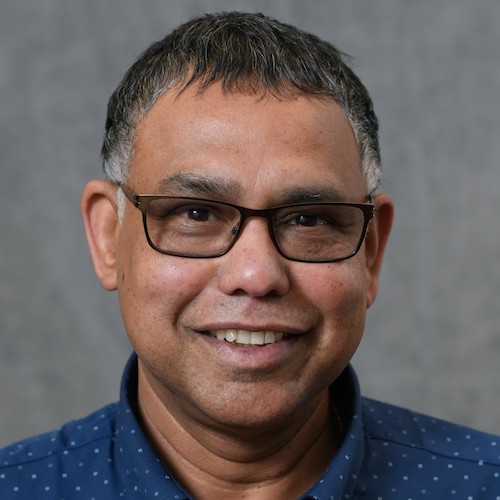
Paul Savariappan is an Associate Teaching Professor in the Department of Statistics at North Carolina State University (NC State), where he has served since January 2018. Previously, he held roles including Visiting Associate Professor at the University of Wisconsin-Madison (2015-2016), Associate Professor at Luther College (2012-2017), and faculty positions at Loyola College, India (1986-2003). He holds a Ph.D. in Statistics from the University of Madras (2000), an M.S. in Biomathematics from Marquette University (2006), and multiple advanced degrees from Indian institutions. Education: Ph.D. in Statistics, University of Madras, 2000 M.S. in Biomathematics, Marquette University, 2006 M.Phil. in Statistics, University of Madras, 1991 M.Sc. in Statistics, Loyola College, 1984 B.Sc. in Statistics, St. Joseph’s College, 1982 Research Interests: Dr. Savariappan specializes in Queueing Theory , focusing on tandem queues, blocking mechanisms, and service rate analysis. His work in Reliability Analysis involves bivariate/trivariate exponential models and system dependability. He applies statistical methods to engineering and biological systems, with a strong emphasis on Bayesian inference and stochastic processes. Articles & Trends: His publications emphasize theoretical and applied aspects of queueing systems and reliability engineering. Recent work explores statistical inference for complex queueing networks and multivariate exponential distributions in system reliability. Earlier contributions address bulk arrival queues and maintenance optimization strategies. Awards: Three-time recipient of NC State’s “Thank a Teacher” award “Thank an Advisor” recognition from the Advising Professional Development Committee Advising & Grants: He advises over 60 students annually and co-advises master’s theses (e.g., Fernando David Soler Diaz’s work in Animal Science). He contributed to a USDA NIFA grant (2025) and developed NC State’s ST525 course for the Agriculture and Data Science certificate program. His service includes department diversity initiatives and peer teaching evaluations. Labs & Collaborations: Active in interdisciplinary projects, including data science collaborations with Duke University’s Data Fest. His work bridges statistics with engineering, biology, and agriculture through applied statistical methodologies.