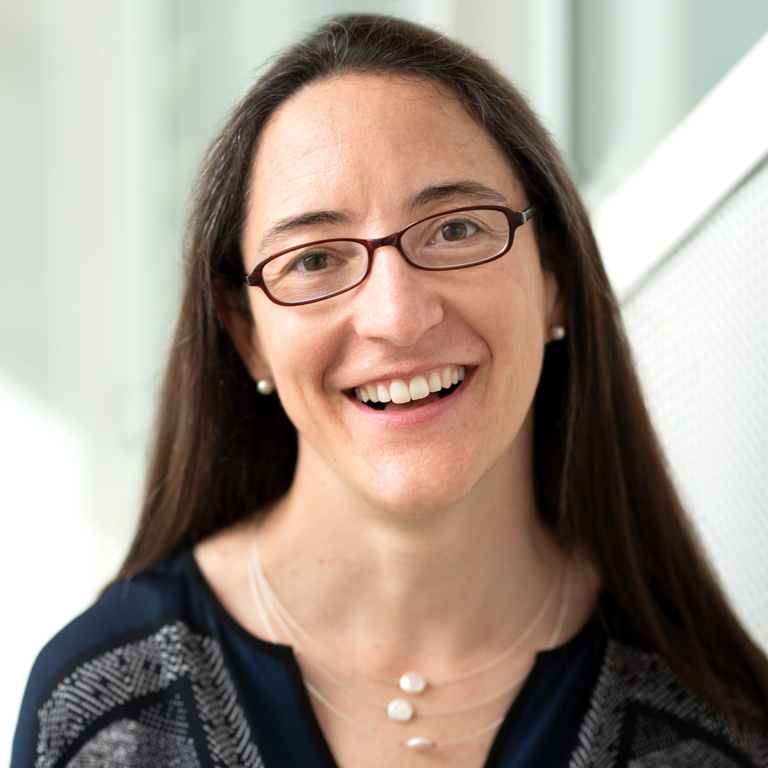
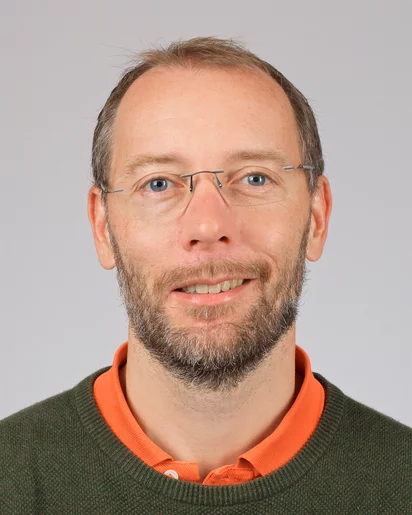
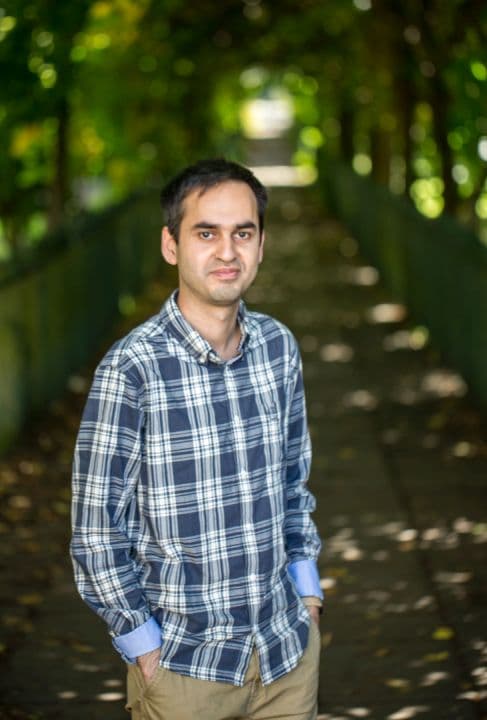
Dan Suciu is a Microsoft Endowed Professor in the Paul G. Allen School of Computer Science & Engineering at the University of Washington. His research focuses on data management, query optimization, probabilistic databases, parallel data processing, and information theory applications to databases. Awards : ACM Fellow (2011), American Academy of Arts and Sciences (2024), ACM SIGMOD Codd Innovation Award (2022), NSF Career Award (2001), Alfred P. Sloan Fellow (2001-2002). Research Trends : Recent work emphasizes cardinality estimation using Lp-norms, submodular width for query evaluation, dynamic query processing, and tensor program optimization. His publications highlight intersections between database systems and formal methods, driven by mathematical rigor. Key Collaborators : Mahmoud Abo Khamis, Dan Olteanu, Amir Shaikhha, Maximilian Schleich, Kyle Deeds, Moe Kayali. Advising : PhD students Gerome Miklau (2006), Christopher Re (2010), Paris Koutris (2016), Nilesh Dalvi (2008 runner-up), Yisu Remy Wang (2024 runner-up) have excelled in dissertation awards.
James Aspnes is the Harold W. Cheel Professor of Computer Science at Yale University, specializing in distributed algorithms and randomized methods. He holds a PhD from Carnegie Mellon University and degrees from MIT. His research focuses on distributed systems, peer-to-peer networks, and sensor networks, emphasizing tools for efficient data management and fault-tolerance. Education: PhD (CMU, 1992), SM & SB (MIT, 1987) Affiliations: Yale since 1993, IBM Almaden Research Center (1992–1993) Research interests include distributed algorithms, randomization, and applications in biology and economics. Notable contributions include skip graphs, population protocols, and consensus algorithms. He has received the ACM-EATCS Dijkstra Prize (2020) and Dylan Hixon Prize (2000). Publications span distributed computing, algorithms, and cryptography. Recent work explores consensus protocols and privacy in population models. Grants include NSF awards totaling over $2M. Active in editorial roles (Algorithmica, Distributed Computing) and conference organization (PODC 2005, DCOSS 2007).
Richard A. Davis is the Howard Levene Professor of Statistics at Columbia University's Faculty of Arts and Sciences. He is affiliated with the Data Science Institute (DSI) and the Financial and Business Analytics Center. His research focuses on applied probability, time series analysis, stochastic processes, and extreme value theory, with applications to financial data and spatial modeling. He co-founded the Space-Time Aquatic Resources Modeling and Analysis Program (STARMAP), supported by an EPA-STAR grant. Education details are not explicitly provided in the text, but his academic roles indicate advanced qualification in statistics. His work combines theoretical advancements with practical applications, such as analyzing financial time series models (e.g., GARCH) and spatial environmental data. Recent research emphasizes high-dimensional extremes, sparsity, and privacy-preserving methods. His articles explore cutting-edge topics like kernel PCA for multivariate extremes, quantile treatment effects, and goodness-of-fit testing for time series. He has also contributed to applications in healthcare imaging and disaster economics. His collaborative projects aim to bridge statistical theory with environmental and societal challenges. Key contributions include the STARMAP initiative and grants focused on extreme value analysis. His work often integrates advanced statistical techniques with real-world data challenges, reflecting a commitment to both methodological innovation and interdisciplinary impact.
Albert Atserias is a Professor in the Department of Computer Science at the Universitat Politècnica de Catalunya (UPC), affiliated with the Faculty of Informatics of Barcelona (FIB) and the ALBCOM research group (Algorithms, Bioinformatics, Complexity, and Formal Methods). He is also associated with the Institut de Matemàtiques de la UPC-BarcelonaTech. His research is central to theoretical computer science, with a strong emphasis on logic and complexity. Atserias's research interests span Computational Complexity, Logic in Computer Science, Finite Model Theory, Proof Complexity, and Constraint Satisfaction Problems . His work explores the fundamental limits of computation, the expressive power of logical languages over finite structures, and the complexity of proving mathematical statements. He investigates the algebraic and combinatorial properties of proof systems, the limits of efficient algorithms for constraint solving, and the theoretical foundations of databases. His research often bridges logic, algebra, and combinatorics to provide deep insights into computational phenomena. The trends in his recent publications show a sustained focus on the logical and algebraic underpinnings of computational problems. Key themes include the consistency and complexity of database queries , the power and limitations of proof systems (like resolution and sum-of-squares), and the expressive power of homomorphism counts in graph theory. His work on the hardness of automating resolution and the development of circular proof systems are particularly significant contributions to proof complexity. The 2024 PODS Best Paper Award for work on relational consistency underscores the impact and timeliness of his research. Among his notable scientific awards are the prestigious ICREA Acadèmia , the PODS 2024 Best Paper Award , the Premi Extraordinari de Doctorat (Extraordinary Doctoral Prize), and the Kleene Award for Best Student Paper . These accolades reflect both the excellence of his early work and his continued leadership in the field. Atserias has been a principal investigator on numerous competitive research projects, including funding from the European Research Council (ERC) and the Spanish Ministry of Science. He has advised doctoral students, such as Toni Hakoniemi, whose thesis on proof complexity he supervised. His extensive collaborative network includes leading researchers like Phokion Kolaitis, Anuj Dawar, and Victor Dalmau. He has also served on the scientific committees of major conferences, contributing to the academic community. He is a core member of the ALBCOM research group , a leading team at UPC focused on theoretical aspects of computer science, which provides a vibrant environment for research in algorithms, complexity, and formal methods. His work is also connected to the broader Institut de Matemàtiques de la UPC, fostering interdisciplinary collaboration between computer science and mathematics.
Keming Yu is a Professor and Chair in Statistics at the Department of Mathematics, Brunel University London, within the College of Engineering, Design and Physical Sciences. He is also the Impact Champion for REF in Mathematical Sciences. He joined Brunel in 2005 after holding positions at the University of Plymouth, Lancaster University, and The Open University. He earned his PhD from The Open University and earlier degrees in Mathematics and Statistics from Chinese institutions. PhD in Statistics – The Open University, UK MSc in Statistics – China BSc in Mathematics – China His research centers on quantile regression, Bayesian modeling, survival analysis, and statistical methods for big data . His work spans applications in health, finance, environment, and social sciences. He has made significant contributions to robust and flexible regression methods, including expectile, mode, and censored quantile regression. His recent publications (2023–2025) show a strong focus on streaming data, spatiotemporal modeling, high-dimensional data, and Bayesian methods . He frequently publishes in top-tier journals such as the Journal of the Royal Statistical Society Series A, B, and C , Statistica Sinica , and Computational Statistics and Data Analysis . His work often involves collaboration with international researchers, especially in China and Europe. He has contributed to methodological discussions in leading statistical journals, demonstrating active engagement with the academic community. His work on financial risk, environmental statistics, and health data analysis reflects interdisciplinary impact. Reviewed and contributed to discussions on safe testing, confidence sequences, and betting-based inference. Active in developing methods for nonignorable missing data, censored models, and functional covariates. He supervises PhD students and is involved in teaching and curriculum development, including as Course Director for the MSc Statistics with Data Analytics. His research is supported by extensive publication output and academic service. He leads or contributes to research on Bayesian models, robust regression, and scalable methods for big data , often involving collaborations in interdisciplinary teams. His lab or research group focuses on statistical methodology development with real-world applications.
Dr. Alan Huang is a Senior Lecturer at the School of Mathematics and Physics, University of Queensland. He holds a PhD in Statistics from the University of Chicago (McCormick Fellowship) and an Honours degree in Science (Advanced Mathematics) from the University of Sydney. His academic career includes lecturing roles at the University of Wisconsin-Madison and the University of Technology Sydney before joining UQ. Research Focus: Biostatistics, nonparametric methods, and statistical modeling for dispersed counts. Key Projects: Bayesian methods for agricultural data, trend analysis of pesticide concentrations in the Great Barrier Reef, spectral water quality analysis. Article Trends: His work spans generalized linear models, count data analysis, and environmental statistics, with recent emphasis on Conway-Maxwell-Poisson regression and time-series modeling. Collaborations include environmental science applications. Awards: McCormick Fellowship (University of Chicago). Supervision: Currently advising PhD research on count data methods. Past supervision includes topics in geotechnical uncertainty and rock mechanics. Collaborates with Queensland Department of Environment and Science on water quality projects.
Louis Du Plessis is a Lecturer at ETH Zürich's Department of Biosystems Science and Engineering in Basel, Switzerland. His research focuses on computational evolution with particular emphasis on infectious disease dynamics and genomic analysis. He maintains an active research profile with numerous high-impact publications in top-tier journals. Dr. Du Plessis completed his doctoral studies at ETH Zürich in 2016 with a thesis titled 'Understanding the spread and adaptation of infectious diseases using genomic sequencing data,' building upon his 2011 Master's work on evolutionary rate variation. His current research sits at the intersection of computational biology, epidemiology, and evolutionary genetics. His research interests span computational epidemiology, phylodynamics, viral evolution, and infectious disease modeling. He has made significant contributions to understanding pandemic dynamics, particularly regarding influenza and SARS-CoV-2, using genomic and epidemiological data integration. His methodological work includes developing computational approaches for estimating epidemic dynamics and viral transmission patterns. Analysis of his recent publications reveals a strong focus on how pandemics disrupt normal viral circulation patterns, with particular attention to influenza evolution during the 2009 H1N1 and COVID-19 pandemics. His work often combines phylogenetic analysis with epidemiological modeling to extract maximum information from genomic and case count data. Dr. Du Plessis has received research funding from European Commission projects including 'From Foundations of Phylodynamics to new applications in Cell Biology' (grant 101001077) and 'MOnitoring Outbreak events for Disease surveillance in a data science context' (grant 874850). He is actively involved in developing computational tools for analyzing pathogen genomic data and has contributed to several software packages used in the field. His work has significant implications for public health surveillance and pandemic preparedness.
Associate Professor LIN Zhenhua serves as a Presidential Young Professor in the Department of Statistics and Data Science at the National University of Singapore (NUS), with additional affiliation at the Institute of Data Science since 2021. His research develops cutting-edge statistical methodologies for complex data structures across multiple domains. Dr. LIN completed his Ph.D. at the University of Toronto in 2017 under Fang Yao's supervision, following M.Sc. degrees from Simon Fraser University (2013, 2010) and a B.Sc. from Fudan University (2008). Ph.D., University of Toronto, 2017 (Advisor: Fang Yao) M.Sc., Simon Fraser University, 2013, 2010 B.Sc., Fudan University, 2008 His research program spans functional data analysis (developing techniques for curves and surfaces), non-Euclidean data analysis (statistical methods on manifolds), high-dimensional statistics (p > n problems), and constrained statistical modeling. LIN's work bridges theoretical statistics with practical applications through rigorous mathematical frameworks and computational implementations. Recent publications reveal strong emphasis on bootstrap methods for high-dimensional inference, Riemannian geometry approaches for manifold-valued data, and innovative functional data techniques. His research shows consistent output with multiple 2025 publications in top journals including Biometrika, Bernoulli, and Journal of the American Statistical Association. Professional Recognition Presidential Young Professor, NUS (2019-present) Associate Editor, Bernoulli (2022-2024) Associate Editor, Statistics (2023-present) Young Researchers Committee, Bernoulli Society (2020-2024) Professor LIN actively mentors graduate students as evidenced by numerous collaborative publications with trainees. He teaches advanced courses including ST5215 Advanced Statistical Theory, DSA4211 High-dimensional Statistical Analysis, and ST5223 Statistical Models across multiple academic years. His research group develops specialized software packages including hdanova, matrix-manifold, synfd, mcfda, and iRFDA, making advanced statistical methods accessible to practitioners.
Thomas C. M. Lee is a Distinguished Professor of Statistics and Associate Dean of the Faculty in Mathematical and Physical Sciences at the University of California, Davis, within the College of Letters and Science. He holds a prominent position in the Department of Statistics and serves as a key academic leader at UC Davis. Education: B.App.Sc. (Math) from University of Technology, Sydney, Australia (1992) B.Sc. (Hons) (Math) with University Medal from University of Technology, Sydney, Australia (1993) Ph.D. from Macquarie University and CSIRO Mathematical and Information Sciences, Sydney, Australia (1997) Professor Lee's research spans multiple areas of statistics with a focus on developing innovative methodologies. His work particularly emphasizes nonparametric and semiparametric modeling , statistical learning , and statistical image and signal processing . He has made significant contributions to applying statistical methods across various scientific disciplines, demonstrating the versatility and power of statistical approaches in solving complex real-world problems. His research often bridges theoretical developments with practical applications, creating methodologies that are both mathematically sound and practically useful. Scientific Awards and Honors: Elected Fellow of the American Association for the Advancement of Science (AAAS, 2019) Elected Fellow of the American Statistical Association (ASA) Elected Fellow of the Institute of Mathematical Statistics (IMS) Elected Senior Member of the IEEE Professor Lee has held significant editorial roles including serving as Editor-in-Chief for the Journal of Computational and Graphical Statistics (2013-2015) and currently as Review Editor for the Journal of the American Statistical Association. From 2015 to 2018, he chaired the Department of Statistics at UC Davis. He has taught numerous statistics courses including STA 13 (Elementary Statistics), STA 131C (Introduction to Mathematical Statistics), STA 243 (Computational Statistics), and STA 401 (Statistical Consulting). His leadership extends beyond research to academic administration, where he has shaped statistics education and departmental direction at UC Davis.
Carolina Osorio is a Professor at HEC Montréal, holding the Scale AI Research Chair in Artificial Intelligence for Urban Mobility and Logistics. She is affiliated with the Department of Decision Sciences and is a member of the Group for Research in Decision Analysis (GERAD) and the Interuniversity Research Centre on Enterprise Networks, Logistics and Transportation (CIRRELT). Her research focuses on transportation optimization, urban mobility, and data-driven simulation-based methods. She has been recognized among the world’s most influential researchers in 2023 and 2024. Education: Ph.D. in Mathematics, École Polytechnique Fédérale de Lausanne (EPFL) M.Sc. in Statistics, University College London (UCL) Bachelor’s in Engineering, École nationale supérieure d'informatique et de mathématiques appliquées de Grenoble (ENSIMAG) Research Interests: Her work emphasizes scalable transportation modeling, simulation-based optimization, and AI applications for urban logistics. She develops methods for large-scale network analysis, traffic demand estimation, and sustainable urban mobility solutions. Key areas include traffic signal optimization, car-sharing service design, and high-dimensional stochastic systems. Publications: Recent articles highlight advancements in scalable traffic demand estimation, Bayesian optimization for transportation systems, and simulation-based toll optimization. Her work addresses challenges in global highway networks, urban congestion dynamics, and multi-city calibration. Awards: Scale AI Research Chair (Artificial Intelligence for Urban Mobility and Logistics) Recognition as a world-leading researcher in transportation science Advising & Grants: Osorio collaborates on projects funded by Scale AI and leads research initiatives through GERAD and CIRRELT. Her supervision activities include teaching courses such as Decision Analysis and Sample Efficient Optimization at HEC Montréal. Labs & Teams: She contributes to interdisciplinary teams at GERAD and CIRRELT, focusing on integrating advanced analytics into urban transportation systems.
Can Firtina is a Lecturer at ETH Zurich's Department of Information Technology and Electrical Engineering and a Senior Researcher in the SAFARI Research Group. His research focuses on accelerating genome analysis through algorithm-architecture co-design, particularly leveraging hardware-software integration for bioinformatics workloads. He holds a PhD in Electrical and Computer Engineering from ETH Zurich and degrees from Bilkent University. As of Fall 2025, he will join the University of Maryland, College Park (UMD) as an Assistant Professor of Computer Science. Education: PhD in Electrical and Computer Engineering (D-ITET), ETH Zurich MSc in Computer Engineering, Bilkent University BSc in Computer Engineering, Bilkent University Research Interests: His work bridges bioinformatics and computer architecture, emphasizing real-time, accurate, and energy-efficient genome analysis. Key areas include raw nanopore signal processing (e.g., RawHash, Rawsamble), hardware-software co-design for bioinformatics, and scalable metagenomic analysis. His algorithms address noise mitigation and accelerate applications like assembly polishing (Apollo) and alignment remapping (AirLift). Labs & Collaborations: He leads research within the SAFARI Group, collaborating with institutions like NVIDIA, AMD, and Huawei. His contributions span tools like GenASM (approximate string matching) and BLEND (fuzzy seed matching). He also organizes workshops on bioinformatics acceleration and serves on review boards for venues like ISMB and RECOMB. Future Directions: Future work includes end-to-end raw signal analysis without basecalling, reference-free genome assembly, and leveraging emerging hardware for real-time field applications. He will expand these efforts at UMD, hiring students in Fall 2025.
Associate Professor Fengling Han is affiliated with RMIT University's School of Computing Technologies in Melbourne, Australia. He holds the rank of Associate Professor since January 2022. His research focuses on complex networks, industrial electronics, AI/machine learning, and network security. Notable contributions include steganography frameworks for healthcare data, sliding mode control for energy systems, and blockchain applications in surveillance and voting systems. His work spans interdisciplinary areas such as renewable energy integration, battery management systems, and privacy-preserving recommendation systems. He has supervised numerous projects, including AI-driven chatbots, medical imaging watermarking, and peer-to-peer energy trading systems. Han's service roles include conference reviewing and committee memberships in international conferences like IEEE and ISMST. Research Interests: His expertise spans electrical engineering, control systems, and AI applications. Key areas include battery management, cybersecurity, and smart manufacturing. Recent projects emphasize Industry 5.0 technologies, blockchain for data integrity, and deep learning for steganalysis. Teaching and Supervision: Teaches network security, data communication, and IT infrastructure. Current supervision includes AI-powered business modeling, medical imaging tampering detection, and renewable energy sharing systems. Over 14 research projects are documented, reflecting his interdisciplinary impact. Awards and Recognition: While specific awards are not listed, his extensive publications (over 150 outputs) and high citation counts (e.g., 119 citations for the Industry 5.0 survey) highlight his scholarly contributions.
Aldo Mozzanica is a Researcher at the Paul Scherrer Institute (PSI) in Switzerland, affiliated with the Laboratory for X-ray Nanoscience and Technologies. He holds a degree in Physics from Insubria University and a Ph.D. from the University of Milan, where his doctoral work focused on scintillating fiber vertex detectors for CERN's Antiproton Decelerator facility. At PSI, he leads detector development projects for synchrotron and free-electron laser applications. His research centers on advancing X-ray detector technology, including: Developing next-generation integrating pixel/strip detectors (JUNGFRAU, GOTTHARD) Improving frame rates, noise performance, and radiation hardness Exploring novel detector concepts for XFEL/synchrotron applications Enabling new experimental capabilities in structural biology and materials science Mozzanica's 135+ publications focus on X-ray detector innovation, with recent work emphasizing: Hybrid pixel detector optimization for 4th-generation light sources On-chip digitization and charge transport modeling High-speed data acquisition systems Applications in crystallography, spectroscopy, and phase-contrast imaging As principal developer of the JUNGFRAU detector, he oversees: ASIC design, testing, and characterization Readout electronics and firmware development Module production and supply chain management Commissioning at SwissFEL endstations
Dr. Haiyan Liu is an Associate Professor of Quantitative Methods, Measurement, and Statistics in the Department of Psychological Sciences at the University of California, Merced, within the School of Social Sciences, Humanities, and Arts. She earned her Ph.D. in Quantitative Psychology from the University of Notre Dame (2018). Her research focuses on advanced statistical modeling of psychological and educational data, including high-dimensional, longitudinal, and social network data. She develops Bayesian methodologies and machine learning techniques to enhance understanding of human behavior, with recent emphasis on structural equation modeling, network dynamics, and nonparametric growth curves. Her work addresses challenges in survey methodology and behavioral data analysis. Dr. Liu’s educational background includes a Ph.D. in Quantitative Psychology from the University of Notre Dame (2018), complementing her current academic role. Her lab, accessible at https://sites.google.com/view/ucmhaiyanliu , supports her research activities. Her research interests span Bayesian SEM, social network analysis, and applications of machine learning to behavioral data, aiming to bridge methodological innovation with practical psychological inquiry. Her recent articles highlight advancements in Bayesian model selection, longitudinal sentiment analysis, and social network mediation. She emphasizes prior specification rigor in Bayesian frameworks and explores nonlinear relationships in social dynamics. Though no awards are explicitly listed, her contributions to statistical methodologies in psychological research reflect significant scholarly impact. Dr. Liu advises students in quantitative methods and has developed software tools like logistic4p for misclassification correction in logistic regression. Her work integrates computational methods with theoretical advancements, positioning her as a key contributor to modern quantitative psychology.
Dr. Danial Chitnis is a Chancellor's Fellow and Lecturer in Electronics at the School of Engineering, University of Edinburgh. He holds a DPhil in Engineering Science from the University of Oxford (2013) and has expertise in microelectronics, biomedical engineering, and quantum imaging. His research focuses on SPAD arrays, time-of-flight sensors, and wearable optical systems for biomedical applications. Education: BSc in Electronics Engineering, Chamran University of Ahvaz (2002–2007) MSc in Advanced Microelectronics Systems Engineering, University of Bristol (2007–2008) DPhil in Engineering Science, University of Oxford (2009–2013) Research Interests: Single-Photon Avalanche Diode (SPAD) arrays for optical communications and biomedical imaging Quantum-enhanced imaging via QuantIC Hub Wearable sensors for near-infrared spectroscopy (NIRS) AI-driven automation in test and measurement systems Articles Trends: Recent work emphasizes AI integration in electronics design, photon-counting receivers for 6G networks, and portable biomedical devices. Notable contributions include SYCL-based acceleration of circuit simulations and FPGA-driven time-to-digital converters. Grants & Collaborations: Principal Investigator of multiple grants, including EPSRC-funded projects on AI-enhanced human-machine interfaces and quantum technology applications. Collaborates with UCL, QuantIC, and industry partners like Keysight Technologies. Labs/Teams: Co-investigator at QuantIC, the UK Quantum Technology Hub in Quantum Enhanced Imaging. Leads interdisciplinary research on detector arrays and systems for quantum physics and consumer cameras.