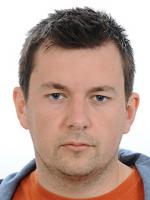
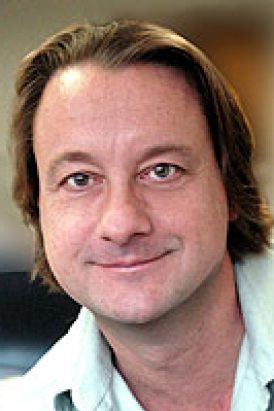
Dr Zvonimir Vlah is a Lecturer in the Department of Applied Mathematics and Theoretical Physics (DAMTP) at the University of Cambridge, affiliated with the Relativity and Gravitation research group. His primary research focuses on cosmology, astrophysics, and gravitational physics, particularly in modeling large-scale structure observables, perturbation theory, and redshift-space distortions. He contributes to the Euclid mission and other cosmological surveys, advancing theoretical frameworks for understanding cosmic structure evolution. Affiliations: University of Cambridge, Faculty of Mathematics, DAMTP Research interests include: Cosmological perturbation theory and its applications to galaxy clustering and dark matter dynamics Lagrangian and Eulerian approaches to structure formation Optimization of cosmological observables and data analysis techniques Recent work emphasizes improving models for galaxy power spectra, intrinsic alignments, and angular correlators, with implications for precision cosmology. His publications span high-impact journals like Physical Review Letters and Journal of Cosmology and Astroparticle Physics . Collaborations include the Euclid consortium and international teams analyzing large-scale surveys.
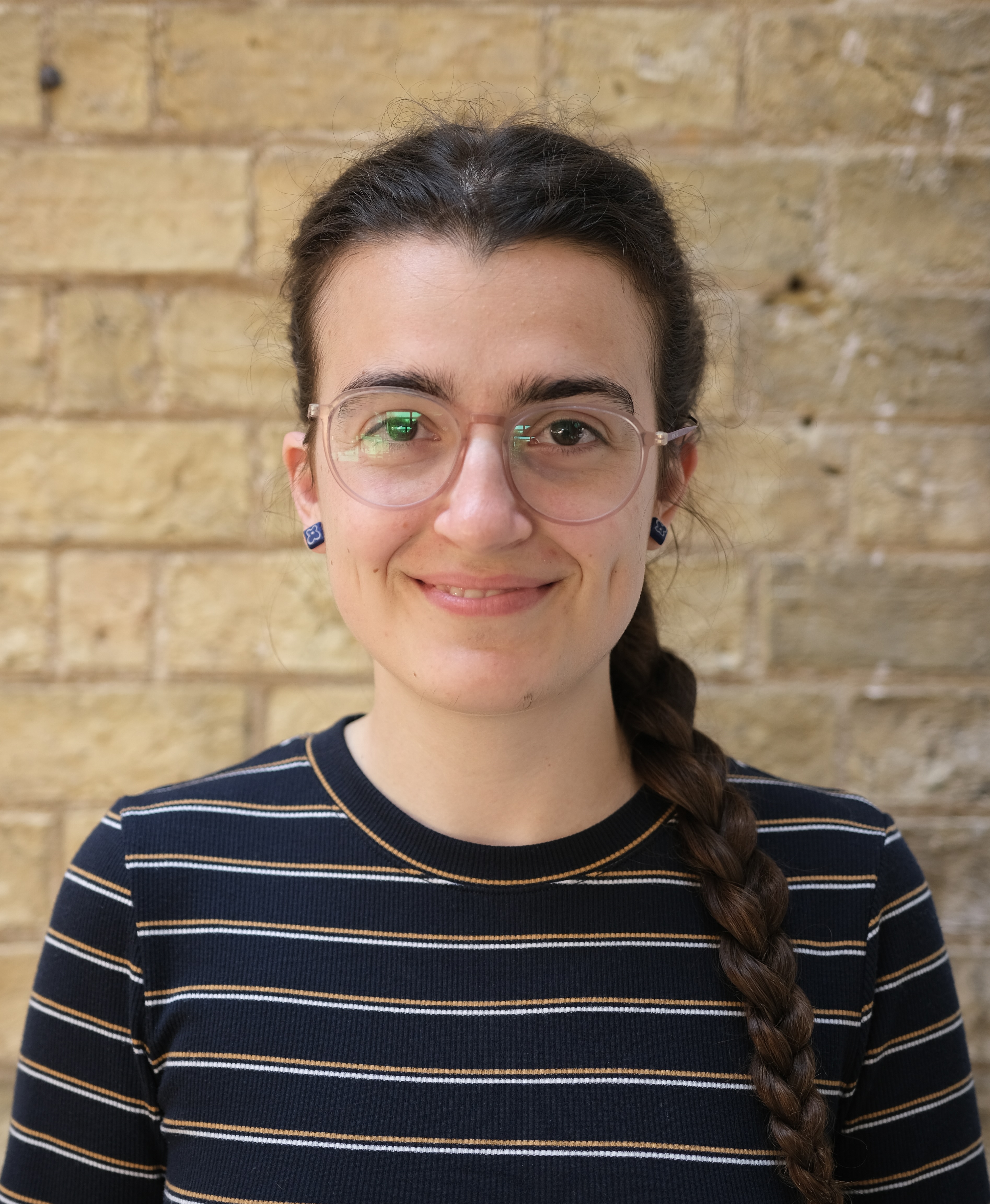
Irene Abril-Cabezas is a PhD student in Cosmology at the University of Cambridge's Department of Applied Mathematics and Theoretical Physics (DAMTP), part of the Faculty of Mathematics. She works under Prof. Blake Sherwin, focusing on CMB lensing and collaborating with the ACT and Simons Observatory. Her research explores the Cosmic Microwave Background (CMB) to understand the early universe and dark matter distribution. Education: PhD candidate in Applied Mathematics and Theoretical Physics (since 2022), MASt in Astrophysics (2021-2022, ranked 1/7), and a Physics Degree from Universidad Complutense de Madrid (2021, with the Extraordinary End-of-Degree Award). Research Interests: Cosmology, gravitational physics, CMB analysis, non-Gaussian foregrounds, and dark matter distribution. She actively participates in collaborations like the Simons Observatory and Atacama Cosmology Telescope projects. Awards: Smith-Knight and Rayleigh-Knight Prize (2024), V WONNOW Women in Science Award (2024), and multiple scholarships including the Mauricio y Carlota Botton Foundation and Cambridge Trust. Teaching: Supervisor for Part IA Dynamics & Relativity and Part III Cosmology courses at Cambridge. Engaged in departmental service, including organizing workshops and EDI initiatives. Publications: Over 15 peer-reviewed articles on cosmological observations, gravitational wave studies, and interstellar medium analysis. Active in conferences and collaborations worldwide.
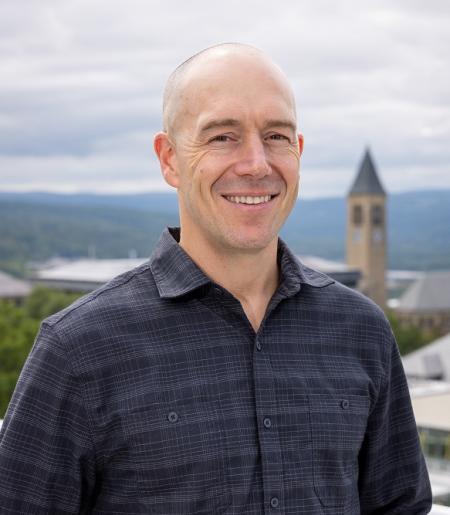
Michael Niemack is a Professor of Physics and Astronomy at Cornell University, where he has been a faculty member since 2013. He is affiliated with the College of Arts and Sciences and holds joint appointments in both the Physics and Astronomy departments. His research focuses on experimental cosmology and astrophysics, particularly through precision measurements of microwave radiation. Education: B.A. Physics, Amherst College, 2002 Ph.D. Physics, Princeton University, 2008 Professor Niemack's research interests span cosmology, astrophysics, and fundamental physics, with a focus on studying inflation, dark energy, dark matter, neutrinos, galaxy clusters, and galaxy evolution using cosmic microwave background and sub-mm measurements. His work also encompasses detector arrays and applied superconductivity, including low-temperature detector arrays, superconducting detectors, transition-edge sensor bolometers, and SQUID measurement systems. Additionally, he specializes in astronomical optics and receivers, with expertise in optics design, optical coatings, material properties, and cryogenic instruments. His research group develops new instrumentation to study the formation and evolution of the universe through precision measurements of microwave radiation, building on past measurements of the cosmic microwave background that provided an exquisite picture of the early universe. Professor Niemack's work has led to significant advancements in cosmological observations, including contributions to the Atacama Cosmology Telescope (ACT) which operated from 2008-2022, and ongoing work with the CCAT Observatory, Simons Observatory, and CMB-S4 projects. His research has produced first detections of the power spectrum of CMB gravitational lensing and the kinematic Sunyaev-Zel'dovich effect, as well as some of the best constraints on the Hubble constant yet. Scientific Awards: Centennial Fellow, Princeton University (2002-2007) National Research Council Postdoctoral Fellow, National Institute of Standards and Technology, Boulder, CO (2008-2010) NSF CAREER Award Young Scientist by World Economic Forum (2018) Professor Niemack has advised numerous graduate students and postdoctoral researchers, including Zachary Huber, Benjamin Keller, Lawrence Lin, Alicia Middleton, Cody Duell, Eve Vavagiakis, and others. His research is supported by major funding sources including the National Science Foundation, National Aeronautics and Space Administration, and Simons Foundation, which have enabled the development of cutting-edge instrumentation for cosmological observations. His work has led to significant advancements in detector technology, including the design, build, and deployment of some of the largest arrays of superconducting detectors yet, with thousands of transition-edge sensor (TES) detectors cooled to sub-Kelvin temperatures. Professor Niemack leads the Experimental Cosmology and Astrophysics group at Cornell, which works in the Cornell Nanoscale Facility developing new optics and detector microfabrication techniques. The group has played a significant role in building and observing with the six-meter Atacama Cosmology Telescope and is now developing new instruments for the CCAT Observatory and Simons Observatory, as well as longer-term development of CMB-S4 to measure microwave radiation with far better sensitivity than previous observatories.
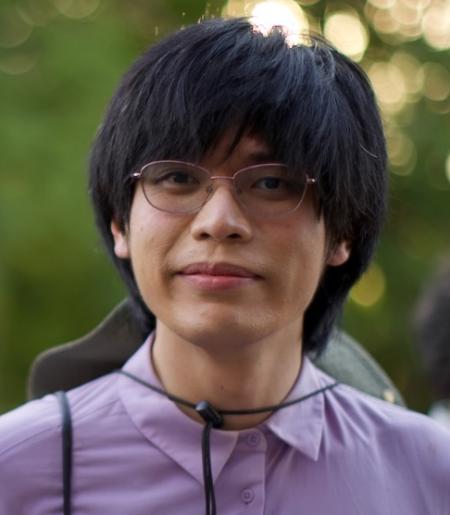
Dongwoo Chung is an Assistant Professor in Astronomy at Cornell University's College of Arts and Sciences. He researches signals of star formation in the early universe using line-intensity mapping (LIM), tracing cosmic structure via spectral lines like [CII] and CO. His work focuses on the 'cosmic dawn' to 'cosmic noon' epochs, complementing galaxy observations from telescopes like JWST. Chung leads projects including the CO Mapping Array Project (COMAP), the Tomographic Ionized-carbon Mapping Experiment (TIME), and spectroscopic surveys with the Epoch of Reionization Spectrometer (EoR-Spec) on the CCAT facility. His group develops simulations, statistical methods, and observational strategies to analyze cosmic matter distribution. He teaches undergraduate courses on universe history and stellar evolution. Contact: dc2223@cornell.edu.
Oscar Hernández is an Adjunct Professor in the Department of Physics at McGill University and a Faculty Member at Marianopolis College. He holds affiliations with the Trottier Space Institute (TSI), Centre de Recherche en Astrophysique du Québec (CRAQ), and is a SALTISE Innovator. His research focuses on 21 cm cosmology , cosmic strings , neutrino physics , and machine learning applications in astrophysics . He develops algorithms like CosmicStringNN for detecting cosmic strings in CMB maps and contributes to software projects such as CMBstraightStrings. Teaching emphasizes active learning techniques, flipped classrooms, and visual pedagogy in physics and history of science courses. He engages Cégep and undergraduate students in theoretical physics research. His work spans collaborations with institutions like CRAQ and TSI, with publications in astrophysics and machine learning journals. Research highlights include studies on cosmic string signatures in 21 cm radiation, neutrino mass effects on cosmological structure, and neural network-based detection methodologies. His software contributions enable simulations and analyses critical to modern cosmological research.
Katherine L. Bouman is an Associate Professor of Computing and Mathematical Sciences, Electrical Engineering, and Astronomy at the California Institute of Technology (Caltech), and a Rosenberg Scholar. She holds dual appointments as an Investigator at the Heritage Medical Research Institute and is affiliated with the Division of Physics, Mathematics, and Astronomy. Her research focuses on computational imaging, integrating algorithm and sensor design to observe phenomena such as black holes, leveraging signal processing, computer vision, and machine learning. Education: B.S. in Electrical Engineering (University of Michigan, 2011), M.S. and Ph.D. in Electrical Engineering and Computer Science (MIT, 2013 and 2017). Postdoctoral work at the Event Horizon Telescope (2018–2019) led to her role as a Paper Coordinator in the team that produced the first black hole image (2019). Research interests include computational imaging systems, inverse problems, and applications in astrophysics. Her group develops algorithms for imaging black holes, MRI acceleration, and scientific discovery through generative AI. Notable contributions include the Event Horizon Telescope’s imaging framework and gravitational lensing tomography. Key awards include the PECASE, Sloan Fellowship, NSF CAREER Award, and co-recipient of the Breakthrough Prize in Fundamental Physics. Over 150 peer-reviewed publications span computational imaging, astrophysics, and machine learning. Advising and mentoring include 7 Ph.D. students and postdoctoral researchers. Grants include funding from NSF, NASA, and heritage foundations. Her labs focus on AI-driven imaging, with collaborations across academia and industry.
Christopher Martin is the Edward C. Stone Professor of Physics and Director of the Caltech Optical Observatories at the California Institute of Technology. He holds a B.A. from Oberlin College (1978) and a Ph.D. from the University of California (1986). His research focuses on galaxy evolution, intergalactic medium (IGM) dynamics, and experimental astrophysics, particularly imaging emission from the cosmic web. He leads projects like the Keck Cosmic Web Imager and the Superpressure STABLE Cosmic Web Imager (SCWI), designed to map baryonic structures. His work includes developing instruments such as the Palomar Cosmic Web Imager and the GALEX mission, where he served as Principal Investigator. He advises graduate students Zeren Lin, Xihan Deng, and Nic Prusinki. His team explores gas accretion, galactic feedback, and the connection between galaxies and their halos. Future projects include balloon flights for SCWI to study low-redshift cosmic web emission. Education: B.A., Oberlin College, 1978; Ph.D., University of California, 1986. Research Interests: Intergalactic Medium dynamics, circumgalactic medium (CGM) interactions, cosmic web imaging, star formation history, and instrumental development for UV spectroscopy. His lab’s instruments enable detection of low-surface-brightness emission, advancing understanding of galaxy evolution and baryonic structure formation. Key Projects: KCWI, SCWI, GALEX, FIREBALL-2, and HALO missions. Collaborations include CNES, Columbia University, and international teams. Upcoming SCWI balloon flights aim to map CGM and IGM from z=0 to z=8.
Charles Steidel is the Lee A. DuBridge Professor of Astronomy at Caltech, with a focus on observational cosmology and galaxy formation. He has held academic roles since 1995, including Assistant Professor (1995-97), Associate Professor (1997-98), and full Professor (1998-2004), before becoming DuBridge Professor in 2004. He served as Executive Officer (2004-2007). Education: A.B. in Physics from Princeton University (1984), Ph.D. in Astronomy from Caltech (1990). Research: Specializes in studying galaxy formation, intergalactic medium, and baryonic processes using telescopes like Palomar, Keck, Hubble, and Spitzer. Active in instrument development, including MOSFIRE for Keck and contributions to the Thirty Meter Telescope (TMT). Collaborates extensively with graduate students, many of whom continue partnerships post-graduation. Teaching: Teaches courses such as Astrophysics 122a (Instrumentation) and Astrophysics 127 (Cosmology) at Caltech. Instrumentation: Supervised construction of MOSFIRE and contributed to WFOS (Wide Field Optical Spectrograph) for TMT. Involved in KCWI (Keck Cosmic Web Imager) projects. Awards: Not explicitly listed in provided texts, but recognized for contributions to observational astronomy. Future Work: AURORA Survey with JWST, studying high-redshift galaxies, and advancing TMT instrumentation.
Fred Adams is the Ta-You Wu Collegiate Professor of Physics and Director of the Leinweber Center for Theoretical Physics at the University of Michigan. His affiliations include the Department of Physics within the College of Literature, Science, and the Arts, and he holds office space in the Homer A. Neal Lab. Adams specializes in theoretical astrophysics and cosmology, focusing on star formation processes, planetary system dynamics, and cosmological phenomena like dark matter halos and cosmic fine-tuning. Education: Ph.D. in Physics from the University of California, Berkeley (1988), B.S. in Physics from Iowa State University (1983). Research interests span theoretical astrophysics with emphases on star formation mechanisms, planetary system evolution, and cosmological theories involving inflationary universes and dark matter dynamics. His work bridges astrophysical observations with mathematical modeling, as seen in studies of circumstellar disks and gravitational instabilities in stellar clusters. Notable contributions include analyses of the Sun’s birth environment, orbital dynamics in planetary systems, and long-term cosmic evolution scenarios. His research often integrates interdisciplinary methods from applied mathematics and computational physics. Labs/Teams: Directs the Leinweber Center for Theoretical Physics, fostering collaborations in cosmology and astrophysical theory.
Professor Joshua Spitz is a faculty member at the Department of Physics, University of Michigan (Ann Arbor). His research focuses on experimental particle and astroparticle physics, particularly neutrino detection and characterization. Education: Ph.D. in Physics from Yale University (2011); B.A. in Physics and Astronomy from University of Colorado at Boulder (2006) Research interests include: Measuring neutrino properties (mass hierarchy, matter-antimatter asymmetry) Developing neutrino detection technology Investigating neutrino interactions in astrophysical contexts Recent publications highlight his work with the MicroBooNE, SBND, DUNE, and JSNS2 collaborations, advancing understanding of neutrino-nucleus cross sections, proton decay constraints, and sterile neutrino searches.
Dr. Madusha Gunawardhana is a researcher affiliated with the School of Physics at The University of Sydney . His work focuses on astrophysics, particularly galaxy evolution, star formation processes, cosmology, and stellar population analysis. He has contributed extensively to the Galaxy And Mass Assembly (GAMA) survey, investigating environmental effects on galaxy formation and interactions. Research interests include: Galaxy formation and evolution Stellar population dynamics Cosmological structures and dark matter Star formation rate dependencies Galactic cluster metallicity Multi-wavelength galaxy surveys His publications highlight collaborations on projects like the MUSE Hubble Ultra Deep Field Survey and SAMI Galaxy Survey, with a focus on spectral analysis and modeling of galactic phenomena.
Associate Professor Helen Johnston is affiliated with the Faculty of Science at the University of Sydney, based in the Physics Building. Her research focuses on astrophysics, radio astronomy, and interstellar medium studies, with recent work on space weather phenomena, galaxy evolution, and ionization processes in high-redshift radio sources. She holds a grant titled "The environments of massive galaxies" (2006) funded by the Australian Nuclear Science and Technology Organisation. No awards or advisees are explicitly listed in the provided text. Her contributions include observational studies using advanced instruments like ASKAP and analysis of stellar and galactic phenomena.
Professor Geraint Lewis is a faculty member in the Department of Physics at the University of Sydney, affiliated with the Faculty of Science. His research focuses on cosmology, astrophysics, and galactic evolution, particularly investigating dark energy, dark matter, gravitational lensing, and the structure of the Milky Way and Andromeda galaxies. He collaborates internationally with institutions such as the University of Strasbourg and the University of Cambridge. His work includes studying stellar streams from disrupted dwarf galaxies, probing cosmic expansion through quasar time dilation, and analyzing the distribution of dark matter using gravitational lensing. He actively supervises PhD students in topics like cosmological principles, galaxy evolution, and dark matter properties. Prof. Lewis has contributed to major projects like the Dark Energy Survey (DES) and the GALAH survey, which explore supernovae, galaxy formation, and stellar abundances. His research aligns with the university's 'Understanding the Universe' research theme, addressing fundamental questions about the universe's structure and fate. He has published extensively in journals such as Nature Astronomy , Monthly Notices of the Royal Astronomical Society , and The Astrophysical Journal , covering topics from gravitational lensing to the philosophical implications of cosmic fine-tuning.
Liam Connor is an Assistant Professor of Astronomy at Harvard University, affiliated with the Center for Astrophysics | Harvard & Smithsonian. His research focuses on Fast Radio Bursts (FRBs), leveraging AI and computer vision to advance observational cosmology and radio telescope instrumentation. He leads projects like the Deep Synoptic Array (DSA-2000) to map the GHz sky and study galactic halos via FRB dispersion measures. Education details are not explicitly provided, but his work integrates advanced computational methods with astrophysical phenomena. Key research areas include FRB origins, cosmic web structure, and the application of neural networks for 3D reconstruction. Recent articles highlight discoveries of galactic halos via FRBs, correlations between FRB dispersion measures and large-scale structure, and polarization studies of localized bursts. His work often emphasizes instrumentation innovations like the DSA-2000 and kotekan data pipelines. Liam collaborates on projects such as the Canadian-Chilean Array for Radio Transient Studies (CHARTS) and has contributed to the Apertif Radio Transient System (ARTS). His lab focuses on developing next-generation radio arrays and AI-driven analysis tools for transient astronomy.
Douglas Finkbeiner is Professor of Astronomy and Physics at Harvard University, affiliated with the Harvard-Smithsonian Center for Astrophysics. His research focuses on dark matter, Galactic microwave emission, cosmic microwave background radiation, and large-scale astronomical surveys. He earned dual majors in physics and German literature from the University of Michigan and a PhD from UC Berkeley. Finkbeiner developed foundational dust maps for Galactic extinction estimation and contributed significantly to the Sloan Digital Sky Survey through photometric calibration. His analysis of WMAP data revealed spinning dust emission and the Galactic 'haze' potentially linked to dark matter annihilation. He currently investigates dark matter through cosmic-ray electron observations and participates in the Pan-STARRs survey. Professor Finkbeiner teaches astrophysics and mentors graduate students. His work contributes to understanding interstellar medium properties and foreground subtraction for precision cosmology. He has published extensively in astronomical data analysis and computational astrophysics.