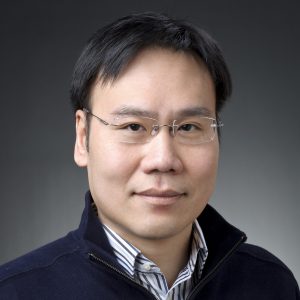
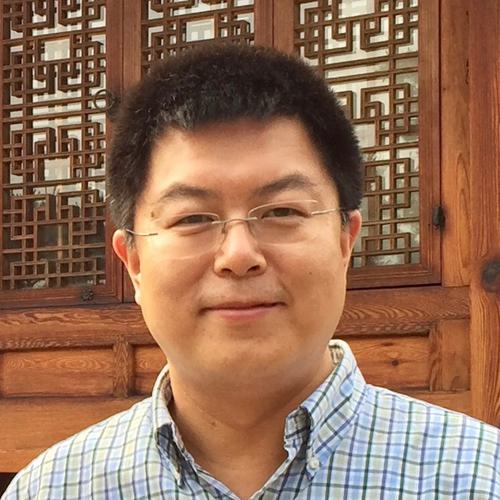
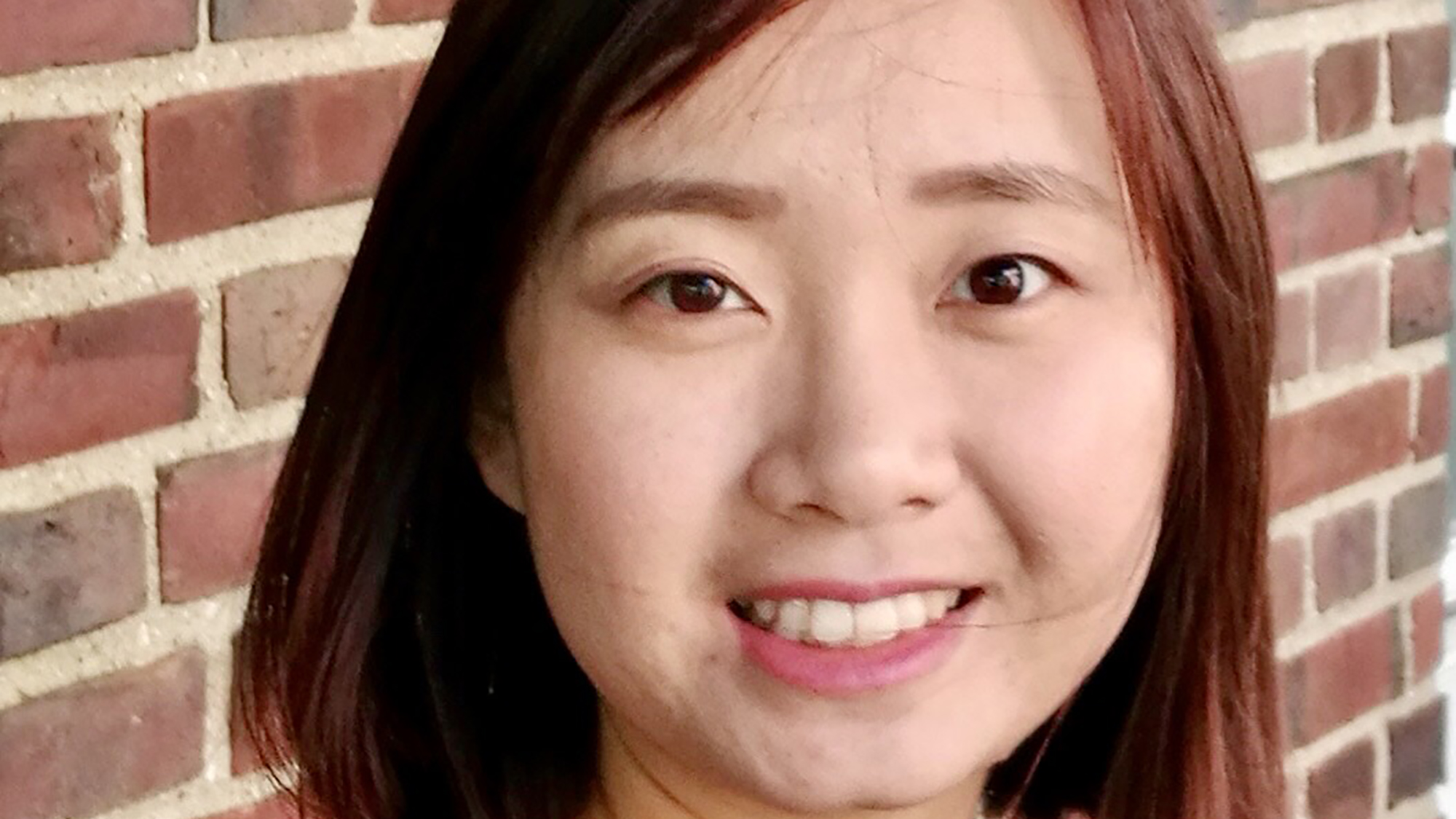
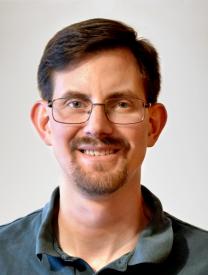
Ori Tavor is Senior Lecturer in Chinese Studies and Director of the Master of Arts Program in the Department of East Asian Languages and Civilizations at the University of Pennsylvania's School of Arts & Sciences. His research explores early Chinese religion and thought, with emphasis on ritual practices, ancestor worship, and the relationship between religion and medicine in ancient Chinese society. Research Focus Examines cultural trauma responses through ritual and music, the role of the body in religious contexts, and Confucian utopian visions. His work integrates textual analysis with anthropological approaches to understand therapeutic dimensions of religious practices. Academic Service Serves on the steering committee of the Confucian Traditions Unit at the American Academy of Religion and editorial board of the Journal of the American Academy of Religion.
Priyamvada Natarajan is the Joseph S. and Sophia S. Fruton Professor of Astronomy and Professor of Physics at Yale University, serving as Chair of the Astronomy Department and Chair of the Women Faculty Forum. Her research focuses on cosmology, gravitational lensing, and black hole physics. She explores topics like dark matter distribution, supermassive black hole formation, and the interplay between galaxy evolution and AGN feedback. Natarajan has pioneered methods for mapping dark matter in galaxy clusters using gravitational lensing and has contributed to understanding cosmic structure formation through large-scale simulations. Education: Ph.D. in Astrophysics from Cambridge University (1998). Research interests include the nature of dark energy, galaxy formation, and the history and philosophy of science. She leads projects like DAVOS (Dwarf AGN variability studies) and QUOTAS, a platform for discovering supermassive black holes. Her recent work includes detecting overmassive black holes at high redshifts, analyzing gravitational-wave signals with NANOGrav, and utilizing JWST data to probe the cosmic dawn. Notable honors include the 2022 Liberty Science Center ‘Genius Award’. Natarajan’s collaborations span multi-messenger astronomy, leveraging gravitational lenses as cosmic telescopes. She advocates for gender equity in academia and has advised numerous observational and theoretical studies, though specific student names are not listed. Key projects involve the BUFFALO survey for cluster lens modeling and the ngEHT (next-generation Event Horizon Telescope) to study black hole environments. Her lab integrates cosmological simulations, observational data, and theoretical frameworks to address fundamental questions in astrophysics.
Prof. Gary Shiu is a Professor of Physics at the University of Wisconsin-Madison, leading research at the intersection of string theory, particle physics, and cosmology. He is affiliated with the Department of Physics and has held academic appointments at institutions like the Hong Kong University of Science and Technology and the CERN. His research focuses on quantum gravity, the Swampland program, inflationary cosmology, and AI applications in physics. He has received notable awards including the Guggenheim Fellowship, Kavli Frontiers Fellowship, and Chancellor’s Distinguished Teaching Award. Education: PhD in Physics (Cornell University, 1998), BSc in Physics (Chinese University of Hong Kong, 1993). Academic roles include founding director of the Center for Fundamental Physics at HKUST and co-initiator of the Physics ∩ ML seminar series. He advises graduate and undergraduate students in theoretical physics and cosmology, with notable advisees contributing to projects in dark energy, string vacua, and machine learning. Research highlights include formulating the Weak Gravity Conjecture in AdS space, developing methods for cosmological parameter inference using topological data analysis, and exploring the String Genome Project. His work bridges theoretical physics with experimental observables, leveraging advanced computational techniques and interdisciplinary collaborations. Key awards include the Kellett Mid-Career Award, Vilas Associate Award, and multiple fellowships from prestigious societies. He actively participates in international conferences and editorial boards, contributing to initiatives like the Gordon Research Conference on String Theory and Cosmology. Labs/Teams: Theoretical and Computational Cosmology Group, AI ∩ Universe Initiative, and collaborations in string phenomenology and machine learning applications.
Dr. Wolfgang Eppler is a Researcher at the Institute for Technology Assessment and Systems Analysis (ITAS) at the Karlsruhe Institute of Technology (KIT), where he has been working since 2023. His research focuses on the societal implications of digital technologies, particularly artificial intelligence and digital transformation. Prior to his current position, he served in various leadership roles related to staff representation at KIT and its predecessor institutions. Dr. Eppler received his education at the University of Stuttgart, where he completed his computer science studies from 1980 to 1986. He then worked as a research assistant at the University of Karlsruhe and the Research Center for Information Technology (FZI) from 1987 to 1993, during which time he earned his doctorate on the topic of "Pre-structuring of neural networks with fuzzy logic." Dr. Eppler's research spans multiple domains at the intersection of technology and society. His early work focused on neural networks, fuzzy logic, and their applications in areas such as electronic noses, medical imaging, and high-energy physics data processing. In recent years, his research has shifted toward technology assessment, particularly examining the societal impacts of artificial intelligence, digital transformation, and the governance of emerging technologies. His interdisciplinary approach combines technical expertise with social science perspectives to address complex questions about the role of technology in society. Analysis of Dr. Eppler's recent publications reveals a strong focus on the ethical, governance, and societal implications of artificial intelligence. His 2024-2025 work addresses critical issues such as EU AI regulation, generative AI for technology assessment, the grounding of large language models, and algorithmic bias. This represents an evolution from his earlier technical work on neural networks and data processing systems toward more policy-oriented research that bridges technical and social dimensions of technological change. Throughout his career, Dr. Eppler has been actively involved in institutional governance and staff representation. From 2009 to 2023, he served as Chairman of the Staff Council at KIT, and from 2005 to 2009 as Chairman of the Works Council at the Karlsruhe Research Center. His publications on university governance, particularly regarding the KIT merger and models for democratic science institutions, reflect his practical experience and theoretical interest in participatory decision-making in academic settings. Dr. Eppler is a member of the Research Group "Digital Technologies and Social Change" at ITAS, where he contributes to projects examining the societal dimensions of technological innovation. His interdisciplinary background enables him to bridge technical and social science perspectives in assessing emerging technologies.
Dr. Matthew Hull serves as a Senior Teaching Fellow in the School of Mathematics and Physics at the University of Portsmouth, where he has taught continuously since 2014 across core physics and mathematics undergraduate programs. His academic qualifications include: PhD in Physics from the University of Portsmouth, awarded with an STFC research studentship for work on alternative gravity models in cosmology MSc with distinction in Theoretical Physics, specializing in Quantum Field Theory and Early Universe Cosmology MMath degree in Mathematical Physics Dr. Hull's research integrates Theoretical Physics and Mathematics , with primary focus on Modified Gravity theories and their cosmological applications. His work in Particle Cosmology examines connections between quantum field phenomena and cosmic evolution, while his mathematical research explores advanced Differential Geometry concepts including the Calabi Conjecture and Kahler-Einstein metrics . This interdisciplinary approach bridges abstract mathematical structures with physical models of the universe. Analysis of his recent publications (2015-2017) reveals concentrated expertise in Galileon and Horndeski gravity theories, particularly investigating self-accelerating cosmological solutions and inflationary constraints. His work demonstrates consistent integration of particle physics mechanisms—such as the Higgs mechanism—into gravitational frameworks, highlighting a distinctive cross-disciplinary methodology in theoretical cosmology. While specific research grants and student supervision details aren't documented in available materials, Dr. Hull's teaching portfolio indicates substantial mentorship through courses including Electricity & Magnetism, Computational Physics, Thermodynamics, and Particle Physics. His role as Senior Teaching Fellow reflects dual commitment to educational excellence and advancing theoretical physics research.
Daniel M. Scolnic is an Associate Professor of Physics at Duke University's Trinity College of Arts & Sciences and holds a joint appointment in the Department of Electrical and Computer Engineering at the Pratt School of Engineering. His research focuses on cosmology, particularly using Type Ia supernovae and near-infrared observations to probe dark energy and resolve the Hubble tension. Ph.D. (2013), Johns Hopkins University B.S. (2007), Massachusetts Institute of Technology As a leading figure in supernova cosmology, Scolnic works on refining the cosmic distance ladder, studying time-evolving dark energy, and analyzing systematic uncertainties in cosmological measurements. His work leverages data from the Dark Energy Survey (DES), Pantheon+ collaboration, and James Webb Space Telescope (JWST) to address discrepancies in the Hubble constant (H₀) derived from early- and late-universe observations. His recent publications highlight advancements in inverse distance ladder techniques, host galaxy dust modeling, and the role of photometric redshifts in cosmological analyses. Notably, his team's JAGB 2.0 study improves Hubble constant constraints using JWST. Defense Science Study Group (DSSG) Clarivate Most Highly Cited Scientists Fred Kavli Plenary Lectureship Sloan Research Fellowship in Physics Department of Energy Early Career Award Packard Fellowship Scolnic leads major grants from NASA, the Packard Foundation, and the Department of Energy, including a NASA Roman Project Infrastructure Team grant (2023-2028) and a Packard Fellowship (2019-2027) to investigate cosmological tensions. He actively collaborates with the Duke Cosmology Group and contributes to the Nancy Grace Roman Space Telescope's High-Latitude Time-Domain Survey.
Jonathan Blazek is an Assistant Professor of Physics at Northeastern University's College of Science, specializing in observational and theoretical cosmology. His research focuses on large-scale astronomical surveys to understand cosmic structure and dark energy, particularly through galaxy clustering and weak gravitational lensing. He is a key member of the Dark Energy Survey and Vera C. Rubin Observatory collaborations, leading efforts to combine multi-wavelength datasets for cosmological insights. Blazek earned his Ph.D. from UC Berkeley and completed postdoctoral fellowships at EPFL (Switzerland) and Ohio State University. Education: Ph.D. in Physics, University of California, Berkeley Postdoctoral Fellowships: EPFL (Switzerland), Ohio State University Research Interests: His work centers on cosmological modeling using galaxy surveys, particularly refining analytic and numerical methods to connect observations with theoretical frameworks. Key areas include: Weak gravitational lensing and galaxy clustering Combined-probe cosmology (integrating datasets across wavelengths) Dark matter and dark energy dynamics Large-scale structure formation Publications & Grants: Blazek has authored over 50 peer-reviewed articles, including foundational work on intrinsic alignment modeling and cosmic shear analysis. He leads the NSF CAREER grant project exploring dark sector physics with galaxy surveys. His recent publications address baryonic feedback effects, CMB lensing cross-correlations, and next-generation survey methodologies. Labs & Collaborations: He contributes to the Northeastern Cosmology Group and the Dark Energy Science Collaboration, advancing projects like the Legacy Survey of Space and Time (LSST) at Vera Rubin Observatory.
Mingwei Song is the Mayling Soong Professor of Chinese Studies and Professor of Chinese at Wellesley College, with a Ph.D. from Columbia University and postdoctoral fellowships from Harvard and Princeton. His research spans modern Chinese literature , science fiction , posthuman theories , and Neo-Baroque aesthetics , focusing on how literary forms engage with technology, ethics, and cultural modernity. Education: B.A., Shandong University M.A., Fudan University Ph.D., Columbia University Research Themes include the posthuman in Sinophone fiction, contemporary science fiction as world literature, and the Bildungsroman in late Qing and Republican China. He pioneered studies on the "new wave" of Chinese science fiction since 2008, emphasizing authors like Liu Cixin and Han Song, and co-edited The Reincarnated Giant (2018) and Fear of Seeing (2023). Academic Impact is marked by grants from the An Wang Postdoctoral Fellowship , Chiang Ching-kuo Foundation , and Dilworth Fellowship . His edited volumes and translations have expanded global access to Chinese science fiction, while his poetic works (e.g., White Horse and Black Camel , 2022) reflect his dual identity as scholar-poet. Song also mentors doctoral students at Harvard and Uppsala, bridging academic and creative practices.
Keith Olive is a Distinguished McKnight University Professor in the School of Physics and Astronomy at the University of Minnesota, holding the Gloria Becker Lubkin Chair in Theoretical Physics at the William I. Fine Theoretical Physics Institute and serving as a Member of the Minnesota Institute for Astrophysics. His work bridges fundamental particle physics with cosmological phenomena, addressing core questions about the universe's origin and structure. Professor Olive's research spans cosmology and particle physics , with primary focus on big bang nucleosynthesis (explaining light element formation up to 7Li), particle dark matter , big bang baryogenesis (resolving matter-antimatter asymmetry), and inflation theory (solving standard cosmology's outstanding problems). His theoretical frameworks integrate supersymmetry, grand unified theories, and early universe dynamics to model cosmic evolution from primordial conditions. Recent publications (2024-2025) reveal concentrated exploration of dark matter detection mechanisms, inflationary model refinements, and string theory-cosmology intersections. Key trends include gravitational portal dynamics during reheating, R²-inflation derived from 4D string frameworks, curvaton behavior post-Planck data, and electroweak corrections in wino dark matter detection—highlighting his leadership in connecting quantum gravity, particle phenomenology, and observational cosmology. Honors include: Distinguished McKnight University Professor Gloria Becker Lubkin Chair in Theoretical Physics Professor Olive actively mentors graduate researchers and leads the DOE-funded project "Theoretical High Energy Physics at the University of Minnesota" (2014-2026), securing $X million for dark matter and particle cosmology research. This initiative fosters collaboration with co-investigators Gherghetta, Peloso, and Voloshin across theoretical frameworks and observational constraints. He directs research within the William I. Fine Theoretical Physics Institute and Minnesota Institute for Astrophysics, coordinating the High Energy Theory group and Particle Data Group contributions. These teams drive interdisciplinary work connecting string theory, collider physics, and cosmic microwave background analysis to decode fundamental universal laws.
Bharat Ratra is a Professor at the Department of Physics , Kansas State University , focusing on Cosmology and Astroparticle Physics . He develops theoretical models of the universe's large-scale structure and tests them using observational data, particularly from cosmic microwave background radiation (CMBR) anisotropy, dark energy dynamics, and large-scale matter distribution . His work frequently involves collaborations with the Kansas State University High Energy Physics Group , University of Kansas Cosmology Group , and use of computational resources at the Kansas State University Center for Scientific Supercomputing . Ratra's research has been supported by the National Science Foundation , and he has made significant contributions to understanding the time-variable cosmological constant , inflationary models , and dark energy through over 50 publications. His 15 most recent selected publications focus on constraining cosmological parameters using supernova data, CMBR anisotropy experiments (COBE, MAX, ARGO, White Dish), and large-scale structure observations, with a particular emphasis on Hubble constant determination, spatial curvature analysis, and dark energy dynamics . Among his research advisees is Silviu Podariu , and he has collaborated with postdoctoral associates such as Dr. Pia Mukherjee , Dr. Tarun Souradeep , and Dr. Graca Rocha (now at University of Oxford). Ratra's work bridges theoretical cosmology with observational data to refine our understanding of the universe's geometry and evolution.
Yang Yang is a Lecturer in the Global Languages department at Massachusetts Institute of Technology (MIT). She holds a B.A. in Teaching Chinese as a Second Language from Xi’an International Studies University and an M.A. in Teaching English to Speakers of Other Languages from Adelphi University. Currently, she is pursuing a second M.A. in Teaching Chinese as a Second Language at Middlebury College. Her pedagogical interests focus on second language acquisition, Chinese language pedagogy, and cultural communication. Prior to MIT, she developed a Chinese culture and language program at Quincy Asian Resources, Inc., and served as an online tutor for the Center for Talented Youth at Johns Hopkins University. Her professional experience includes teaching at Middlebury Language Schools and creating curriculum for diverse learner demographics. Yang’s expertise emphasizes culturally responsive teaching methodologies and bridging linguistic and cultural gaps in language education. She contributes to the MIT Global Languages initiative by fostering intercultural competency and language proficiency among students. Educational Background: B.A., Teaching Chinese as a Second Language, Xi’an International Studies University (China) M.A., Teaching English to Speakers of Other Languages, Adelphi University (New York) Pursuing M.A., Teaching Chinese as a Second Language, Middlebury College Her research interests explore effective instructional strategies for heritage learners and integrating technology into language acquisition. While no specific awards are listed, her academic trajectory reflects a commitment to advancing language pedagogy through continuous professional development.
Timothy A. McKay serves as the Arthur F. Thurnau Professor of Physics, Astronomy, and Education at the University of Michigan's College of Literature, Science, and the Arts (LSA), where he also holds the administrative role of Associate Dean for Undergraduate Education. His dual expertise bridges astrophysics research and educational innovation, with significant contributions to both observational cosmology and learning analytics. His educational background includes: B.S. in Physics from Temple University (1986) Ph.D. in Physics from the University of Chicago (1992) McKay's research spans two interconnected domains. In observational cosmology, he pioneered work with major astronomical surveys including the Sloan Digital Sky Survey (SDSS), Robotic Optical Transient Search Experiment (ROTSE), and Dark Energy Survey (DES), focusing on galaxy clusters, cosmic rays, and large-scale structure. Since 2015, he has strategically shifted toward learning analytics, applying data science to transform STEM education. His innovative projects include E 2 Coach (a personalized student support system) and the NSF-funded REBUILD initiative, which creates intergenerational research teams to develop evidence-based teaching practices across physics, chemistry, astronomy, biology, and mathematics. Analysis of his publication trajectory reveals a deliberate pivot from astrophysics to educational research around 2015. While his early work centered on galaxy clusters and cosmological phenomena, recent publications (2020-2024) overwhelmingly focus on systemic equity gaps in STEM education, data-driven interventions, and multi-institutional collaborations. This evolution demonstrates how his data science methodology transitions seamlessly between cosmic structures and educational ecosystems. His scientific recognition includes: Prestigious Arthur F. Thurnau Professorship (awarded for exceptional undergraduate teaching) McKay directs the NSF-funded REBUILD project and the Digital Innovation Greenhouse, securing substantial research funding while mentoring undergraduate and graduate students in interdisciplinary teams. His work with the Big Ten Academic Alliance (CIC) has generated cross-institutional studies on grading patterns, performance disparities, and student support systems, with practical applications implemented across multiple universities. He actively collaborates with faculty across STEM disciplines to develop scalable educational technologies. His research infrastructure includes the Digital Innovation Greenhouse (an educational technology incubator) and REBUILD project teams, which integrate undergraduates, graduate students, postdocs, and faculty in evidence-based educational research. These teams operate at the intersection of data science and pedagogy, developing tools that analyze institutional datasets to personalize student support while maintaining rigorous scientific methodology.
Cristiano Porciani is Professor of Astrophysics at the University of Bonn's Argelander Institute for Astronomy, specializing in cosmological structure formation and galaxy evolution. He leads a research group working on numerical simulations of large-scale structure and theoretical cosmology. His research focuses on dark matter distribution, galaxy bias, and cosmological parameter estimation using perturbation theory and high-performance computing. Recent work examines relativistic effects in large-scale structure and intensity mapping techniques. Publications show strong emphasis on Euclid mission science, including instrument characterization, survey simulations, and cosmological tests. Article trends reveal consistent development of statistical methods for analyzing next-generation sky surveys. Supervises 9 graduate students working on cosmological simulations, galaxy clustering statistics, and radiative transfer modeling. Leads research projects within the Euclid Consortium and Transregional Collaborative Research Centre.
James E. Aguirre is an Associate Professor in the Department of Physics and Astronomy at the University of Pennsylvania. His research focuses on understanding galaxy formation, cosmology, and large-scale structure through advanced instrumentation and observational techniques. He leads projects such as HERA (Hydrogen Epoch of Reionization Array) and TIM (Terahertz Intensity Mapper), dedicated to studying the early universe and distant star-forming galaxies. Aguirre’s work involves cutting-edge millimeter-wave and radio instrumentation design, including Z-Spec, PAPER, and MUSTANG. He has contributed to significant discoveries, such as detecting massive water reservoirs around quasars and determining distances to gravitationally lensed galaxies. Supported by NSF grants, his research bridges observational astronomy with cosmological theory. Education: Ph.D. in Astrophysics (thesis work on TopHat balloon-borne telescope). Teaching: ASTR011 Introduction to Astrophysics I. Current Projects: HERA, TIM, Simons Observatory, and PAPER. Grants: NSF Grant No. 0807990 and others. His research group collaborates on instrumentation like the Bolocam Galactic Plane Survey and explores techniques for mitigating calibration errors and improving signal analysis in radio interferometry. Aguirre’s efforts advance both observational methods and our understanding of cosmic evolution from the epoch of reionization to present-day galaxy formation.
Tobias Marriage is a Professor in the William H. Miller III Department of Physics & Astronomy at Johns Hopkins University, within the Krieger School of Arts & Sciences. He co-leads the Cosmology Large Angular Scale Surveyor (CLASS) project and contributed to the Atacama Cosmology Telescope (ACT) by designing its initial receiver and analysis pipeline. His research focuses on understanding the universe's evolution through measurements of the cosmic microwave background (CMB) and studying dusty star-forming galaxies (DSFGs) and galaxy clusters. Education: PhD in Physics from Princeton University. He actively collaborates on large-scale cosmological surveys and develops cutting-edge instrumentation for millimeter-wave observations, including aerogel filters and polarization-sensitive detectors. His work addresses fundamental questions about cosmic inflation, reionization, and the thermal Sunyaev-Zel’dovich effect in galaxy clusters. Research highlights include leading the CLASS telescope’s design and operations, analyzing ACT data for extragalactic point sources, and exploring quasar feedback mechanisms. His contributions span both observational cosmology and instrument innovation, with a focus on maximizing sensitivity and reducing noise in CMB measurements. Notable projects include the CLASS experiment’s E-mode polarization measurements and efforts to characterize the physical properties of high-redshift DSFGs. He emphasizes the need for future space-based far-infrared telescopes to advance studies of these galaxies. His work also includes calibrating galaxy cluster masses via weak-lensing techniques and improving data analysis pipelines for large-scale surveys.