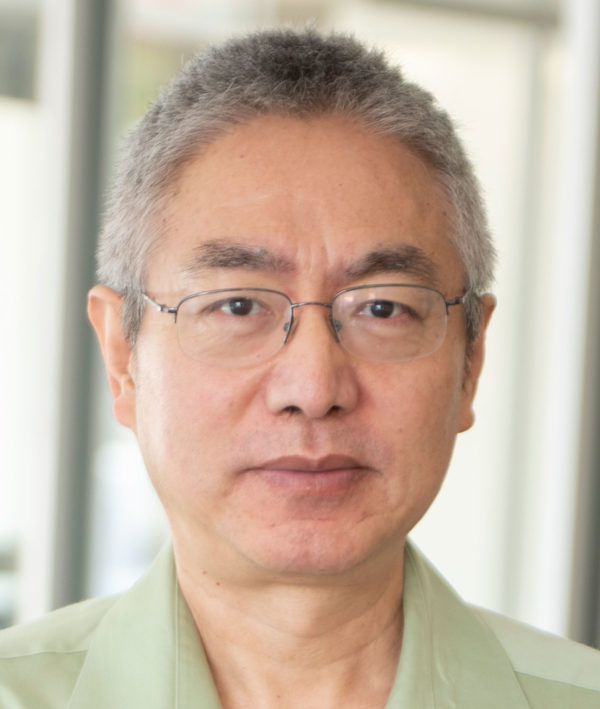
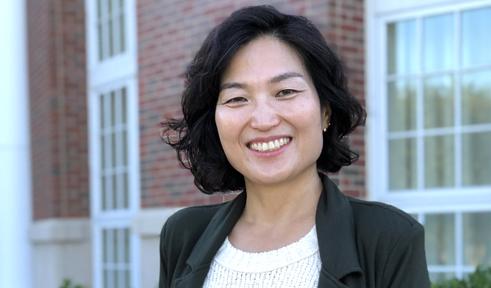
Christa Gall is an Associate Professor at the Niels Bohr Institute , University of Copenhagen, specializing in astrophysics within the DARK and Cosmic Dawn Center (DAWN) research groups. Her work focuses on the life cycle of cosmic matter, particularly elemental synthesis in massive stars and subsequent cosmic dust formation. Research Areas : Astrophysics, Cosmic Dust Evolution, Supernovae Studies, Galaxy Formation, Machine Learning Applications Projects : Villum Experiment COSMO-BRIDGE, LSST transient follow-up systems, Gravitational Wave Multi-messenger Studies Methodologies : Bayesian modeling, Hierarchical data analysis, Multi-wavelength observations Her publications demonstrate expertise in Type Ia supernova standardization, dust removal timescales in galaxies, and real-time transient detection systems. She contributes to machine learning implementations for time-domain astronomy and gravitational wave counterpart studies. Collaborations span institutions in Europe, North America, and Asia, with recent work appearing in Astronomy & Astrophysics and Monthly Notices of the Royal Astronomical Society . She actively participates in international telescope campaigns and data stream optimization initiatives.
Aaron Robotham is a Senior Principal Research Fellow at the International Centre for Radio Astronomy Research (ICRAR), The University of Western Australia. His research focuses on observational extragalactic astronomy and computer simulations of galaxy evolution, leading major surveys like GAMA, DEVILS, and WAVES. He holds an ARC Future Fellowship and has contributed to over 321 publications. Education: MSc in Physics & Astrophysics (University of Bristol, 2001–2005), PhD in Astrophysics (University of Bristol, 2005–2008). Postdoctoral roles at the University of St Andrews (2008–2012) before joining ICRAR in 2010. Research Interests: Galaxy surveys, mergers, dark matter, cosmic structure, and the proposed Maunakea Spectroscopic Explorer telescope. His work spans observational data and simulations to understand galaxy evolution across cosmic time. Recent Articles: Focus on galaxy size-mass relations, merger rates, and cosmic reionization studies using JWST. Highlights include DEVILS survey findings and PEARLS high-redshift galaxy analyses. Awards: ASA Anne Green Prize (2024), Mid-Career Research Award (2022), Early Career Investigators Award (2014). Grants: ARC-funded projects on galaxy evolution and exoplanet imaging (e.g., "Hot Fuzz," "Beacons in the Night"). Labs/Teams: Leads ICRAR's observational and simulation teams, collaborates internationally on surveys like SAMI and H-ATLAS.
Douglas Bergman is a Professor in the Department of Physics & Astronomy at the University of Utah. His research focuses on experimental particle and astrophysics, particularly ultra-high energy cosmic rays (UHECRs). He leads projects like the Telescope Array (TA) and its extensions, TALE and NICHE, which detect UHECR-induced air showers via fluorescence and Cherenkov radiation. Bergman has held academic positions including Associate Professor at the University of Utah (2009–2022) and roles at Rutgers University. He earned a Ph.D. in Physics from Yale University (1997) and a B.A. from the University of Chicago (1989). His education includes postdoctoral training at Rutgers (1997–2004). Research highlights include the High Resolution Fly’s Eye (HiRes) experiment and contributions to cosmic ray composition studies, spectral modeling, and detector development. He teaches courses in computing for physics, electronics, and quantum theory. Current student projects include TALE fluorescence measurements and NICHE development. Bergman’s work involves collaborations like the Telescope Array and Pierre Auger Observatories. He specializes in atmospheric detection techniques, shower reconstruction using universality models, and low-energy threshold extensions. His research addresses cosmic ray origins, propagation, and energy loss effects over cosmological distances.
Adam Riess is a Bloomberg Distinguished Professor and Thomas J. Barber Professor of Physics and Astronomy at Johns Hopkins University's Krieger School of Arts and Sciences, with joint appointments at the Space Telescope Science Institute. His research examines physical cosmology through observations of distance indicators like supernovae and Cepheids, focusing on dark energy and the expansion history of the universe using optical and near-infrared instruments. Educated at MIT (BSc Physics, 1992) and Harvard University (PhD, 1996), Riess leads the SHOES Team improving Hubble Constant measurements and the HIgher-z Team studying distant supernovae. His landmark work on cosmic acceleration earned him the 2011 Nobel Prize in Physics and Science magazine's 'Breakthrough Discovery of the Year' (1998). Research Focuses: Observational cosmology through supernovae and Cepheid variables Dark energy properties and cosmic expansion dynamics High-redshift universe exploration with HST and JWST Major Honors: Nobel Prize in Physics (2011) Albert Einstein Medal (2011) MacArthur Fellowship (2008) Gruber Cosmology Prize (2007) Shaw Prize in Astronomy (2006)
Prof. Glenn Kacprzak is a Professor at Swinburne University's Centre for Astrophysics and Supercomputing, specializing in galaxy formation and evolution. He uses quasar absorption spectroscopy to study circumgalactic medium (CGM) dynamics, particularly focusing on gas inflows/outflows and their role in galactic evolution. His research integrates gravitational lensing techniques and high-resolution imaging to explore galaxy evolution at cosmological scales. Affiliations: Swinburne University of Technology Key Roles: Interim Director (2019-2020), ARC Centre of Excellence Participation His research interests span quasar absorption line studies , CGM kinematics , and high-redshift galaxy evolution . He employs Hubble, JWST, and ground-based telescopes to analyze galactic winds, inflows, and AGN feedback mechanisms. Recent work includes detecting gas inflows in starbursting galaxies and mapping cool gas around quiescent systems using gravitational lensing. Publications highlight advancements in understanding outflow mass loading, AGN fractions in massive galaxies, and the role of mergers in shaping CGM complexity. His work bridges observational data with cosmological simulations, addressing discrepancies in galaxy evolution models. Awards: ARC Fellowships (2014, 2011), Vice-Chancellor's Research Excellence Awards (2020, 2016) Grants: ARC Centre of Excellence (2017-2024), Physics of Gas Flows around Galaxies (2017-2021) Prof. Kacprzak supervises PhD students in topics like gravitational lensing applications, baryon cycle dynamics, and CGM-environment interactions. His laboratory focuses on multi-wavelength observational astronomy and computational modeling of galactic-scale processes.
Jonathan Henshaw is a Researcher in the Department of Planet and Star Formation at the Max Planck Institute for Astronomy (MPIA) in Heidelberg, Germany, where he contributes to the Star Formation research group. His work focuses on observational astrophysics, utilizing cutting-edge facilities like ALMA and JWST to investigate star and planet formation processes across diverse galactic environments from the Milky Way's Galactic Center to nearby extragalactic systems. His primary research interests encompass molecular cloud dynamics, star formation efficiency, and interstellar medium physics. Key specializations include the structure and kinematics of the Central Molecular Zone (CMZ), cloud-cloud collisions, shock-induced star formation, and the role of galactic environments in regulating star formation. He actively analyzes data from major international surveys including PHANGS (Physics at High Angular resolution in Nearby GalaxieS) and ALMA CMZ Exploration Survey (ACES), with particular emphasis on high-resolution gas properties and feedback mechanisms. Analysis of his 15 most recent publications (2023-2025) reveals a strong concentration on Galactic Center phenomena, especially 3D structure modeling of the CMZ using multi-wavelength data. His work consistently bridges observational data with theoretical frameworks to understand star formation laws, with recurring themes including molecular gas depletion times, cloud-scale physics, and the impact of supernova remnants on interstellar clouds. The PHANGS collaboration dominates his extragalactic research, examining star formation across 70+ nearby galaxies at unprecedented resolution. As an active member of MPIA's Star Formation group, Dr. Henshaw participates in collaborative projects analyzing ALMA and JWST datasets to unravel the initial conditions of star and planet formation. His research leverages MPIA's expertise in millimeter-wave astronomy and computational modeling to address fundamental questions about how molecular clouds evolve and fragment under various galactic conditions, with implications for understanding galaxy evolution across cosmic time.
Professor Lifan Wang is a leading astrophysicist at Texas A&M University, specializing in supernova studies, cosmology, and astronomical instrumentation. He leads the DECam Search for Intermediate Redshift Transients (DESIRT) and is part of the TAMIDS Scientific Machine Learning Lab. His research focuses on dark energy, cosmic distance scale measurements, and spectropolarimetry of supernovae. Wang is a key figure in the Antarctic observatory project at Dome A, aiming to deploy telescopes to study dark energy through distant supernovae observations. Research Team: Includes Peter Brown, Xingzhuo Chen, and Ping Yang Institutional Partnerships: Mitchell Institute for Fundamental Physics & Astronomy His work integrates machine learning with large astronomical datasets to analyze supernova properties. Recent studies include polarization surveys of Type Ia supernovae and radiative transfer modeling of SN 1987A light echoes. Wang’s research bridges observational astronomy with theoretical modeling, contributing to both cosmological parameter estimation and stellar explosion mechanisms.
Charles Dalang is a Post-Doctoral Research Assistant at the University of Portsmouth's Faculty of Technology, specifically within the Institute of Cosmology & Gravitation. He maintains a dual affiliation, also working as a Postdoctoral Research Assistant at Queen Mary University of London since October 2022. His research spans multiple institutions as evidenced by his extensive collaboration network across Europe and beyond. His educational background includes a PhD from the University of Geneva (2018-2022) in the Department of Theoretical Physics, with a focus on cosmology and astroparticle theory. Prior to this, he earned a Master of Science from the Swiss Federal Institute of Technology Zurich in May 2016, and completed his undergraduate studies at EPFL. Dalang's research interests focus on the intersection of gravitational physics and cosmology. He investigates methods to test gravity, astrophysics, and cosmology through the propagation of light, particles, and gravitational waves. His work includes formal aspects of gravitation, large-scale structure formation, and cosmic microwave background physics. As an active member of the LISA cosmology working group since 2018, his research has significant implications for space-based gravitational wave astronomy. Analyzing his recent publications reveals a strong focus on precision cosmology using multiple observational techniques. His work connects gravitational wave astronomy with traditional cosmological probes, particularly exploring how peculiar velocities affect cosmological measurements. The recurring themes across his publications include statistical methods for cosmological inference, multi-messenger astronomy approaches, and tests of fundamental physics through cosmological observations. Dalang has been highly active in the academic community, delivering over 35 presentations across 8 different countries. He serves as a reviewer for prestigious journals including Physical Review D, Journal of Cosmology and Astroparticle Physics, and Monthly Notices of the Royal Astronomical Society. He is also one of the organizers of the London Cosmology Discussion Meetings held at the Royal Astronomical Society, which brings together cosmologists from various London universities. His current research is supported through the SHADE (Statistical Host Identification As a Test of Dark Energy) project, funded by the European Commission from February 2021 to January 2026. As a team member under Principal Investigator T. Baker, this project focuses on gravitational wave astronomy, galaxy catalog analysis, and dark energy testing. Dalang has recently been invited to speak at prominent institutions including the Lorentz Center at University of Leiden, Aix-Marseille Université CNRS, Université de Montpellier, and the Royal Astronomical Society.
Dr. Mathew Smith is a Lecturer in Astrophysics at Lancaster University's Department of Physics. His research focuses on understanding the Universe through observations of Type Ia Supernovae, which serve as standard candles for measuring cosmic distances. He is a core member of major international experiments including the Dark Energy Survey (DES), the Zwicky Transient Facility (ZTF), and the Legacy Survey of Space and Time (LSST). Dr. Smith's research spans cosmology and astrophysics, with particular emphasis on Type Ia Supernovae as tools for measuring the expansion history of the Universe. He investigates the physical processes behind these explosions and their use in determining cosmic evolution. His work extends to studying superluminous supernovae, gravitational wave transients, and applying astronomical techniques to medical fields such as skin cancer detection and cardiovascular medicine. His approach combines observational data analysis with computational methods including machine learning for data classification. His recent publication record shows a concentrated effort on Type Ia supernovae research through the ZTF SN Ia Data Release 2 (DR2), with numerous papers exploring environmental dependencies, light curve properties, spectral features, and cosmological applications. These works demonstrate sophisticated analysis of large datasets and address systematic effects that impact cosmological measurements. Dr. Smith actively supervises PhD students Melzie Ghendrih and Samuel Shilling in Observational Astrophysics. His research projects include measuring the 3D distribution of matter in the nearby Universe and studying the most extreme astrophysical explosions using data from upcoming surveys like LSST, which will begin operations in 2026 and discover millions of transients annually. He collaborates extensively with international researchers across France, Germany, Sweden, Ireland, and the USA.
Adam Guy Riess is an American astrophysicist and Bloomberg Distinguished Professor at Johns Hopkins University and the Space Telescope Science Institute. He is renowned for his groundbreaking research on the accelerating expansion of the universe, for which he shared the 2011 Nobel Prize in Physics with Saul Perlmutter and Brian Schmidt. Riess currently leads the SH0ES (Supernova, H 0 , for the Equation of State of dark energy) team, which has produced increasingly precise measurements of the Hubble constant. His educational background includes: Bachelor of Science from Massachusetts Institute of Technology (1992), where he was Phi Beta Kappa PhD from Harvard University (1996), supervised by Robert Kirshner and William H. Press Riess's research focuses on using Type Ia supernovae as cosmological probes to measure the expansion history of the universe. His early work with the High-z Supernova Search Team provided the first evidence for cosmic acceleration, suggesting the existence of dark energy. More recently, he has been at the center of the scientific debate regarding the 'Hubble tension'—a discrepancy between measurements of the universe's expansion rate using nearby supernovae and measurements inferred from the cosmic microwave background radiation. His work with the SH0ES team has achieved measurements of the Hubble constant approaching 1% precision. Analysis of Riess's publication record reveals a consistent focus on observational cosmology using supernovae as standard candles. His work has evolved from the initial discovery of accelerating expansion to increasingly precise measurements of cosmological parameters. Recent publications center on resolving the Hubble tension, with sophisticated analyses of Cepheid variables and Type Ia supernovae to refine local measurements of the Hubble constant. His research bridges observational astronomy, statistical analysis, and theoretical cosmology. Among his numerous scientific honors are: Nobel Prize in Physics (2011) Shaw Prize in Astronomy (2006) Breakthrough Prize in Fundamental Physics (2015) Albert Einstein Medal (2011) MacArthur Fellowship (2008) Gruber Cosmology Prize (2007) Riess has received substantial research funding supporting his work on cosmic expansion measurements. As a Bloomberg Distinguished Professor at Johns Hopkins University since 2016, he leads a research group focused on precision cosmology. He has mentored numerous students and postdoctoral researchers, though specific names aren't detailed in the source material. His work with the SH0ES team involves collaboration between Johns Hopkins University, the Space Telescope Science Institute, and other institutions worldwide. Riess leads the SH0ES collaboration, which utilizes the Hubble Space Telescope to measure the local value of the Hubble constant with unprecedented precision. The team combines observations of Cepheid variable stars and Type Ia supernovae to construct a cosmic distance ladder. Their work represents one of the most precise local measurements of cosmic expansion and continues to challenge our understanding of fundamental cosmology through the persistent Hubble tension.
Hee-Jong Seo is an Associate Professor in the Department of Physics and Astronomy at Ohio University's College of Arts and Sciences, where he also serves as the Director of the Astrophysics Institute. His research focuses on high-precision cosmology using large-scale structure to probe dark energy and dark matter. Research Interests: High-precision cosmology with large-scale structure Baryon Acoustic Oscillations (BAO) from galaxy surveys and 21cm intensity mapping Redshift-space distortions and cosmic shear Mitigation of observational systematics using deep learning Constraints on neutrino mass and dark energy Galaxy-halo connection and clustering analysis The recent publications reflect a strong focus on BAO reconstruction techniques, systematic error mitigation in galaxy surveys, and cosmological parameter estimation using data from SDSS-III/BOSS, SDSS-IV/eBOSS, and DESI. His work combines theoretical modeling, numerical simulations, and observational data analysis to improve distance measurements and test fundamental physics. Scientific Awards: Department of Energy Early Career Award (DE-SC0019091) Advising and Grants: Dr. Seo has secured significant research funding as PI and Co-PI from the Department of Energy, including an Early Career Award. His grants focus on improving dark energy constraints using low-redshift large-scale structures and developing robust reconstruction methods for BAO, redshift-space distortions, and the Alcock-Paczynski effect. While no students are listed, his leadership in major collaborations suggests active mentorship within large survey teams. Labs and Teams: Dr. Seo is actively involved in major cosmological surveys, including the Dark Energy Spectroscopic Instrument (DESI), where he co-chairs the Galaxy Quasar Clustering Science Working Group, and the Sloan Digital Sky Survey (SDSS-IV/eBOSS), where he served as Tiling Coordinator and SDSS-IV Architect. He also contributes to the development of public BAO forecasting tools and collaborative research in cosmology.
Massimo Marengo is a Professor in the Department of Physics at Florida State University (FSU). As a stellar astrophysicist, he specializes in observational studies of variable stars, extrasolar planetary systems, and the structure of the universe. His research leverages data from NASA, National Science Foundation, and European Southern Observatory facilities. Education Ph.D. in Astrophysics (2000), International School for Advanced Studies (SISSA/ISAS), Trieste, Italy Laurea cum Laude in Physics (1993), University of Torino, Italy His research spans three main areas: precise cosmic distance determination using variable stars, stellar population analysis, and extrasolar planetary system characterization. He contributes to understanding dust production in primitive environments, Galactic halo formation, and the chemical composition of RR Lyrae stars through multi-wavelength surveys like GALAH and DUSTiNGS. Recent publications focus on RR Lyrae period-luminosity relations, dust dynamics in symbiotic systems, and JWST-based studies of metal-poor galaxies. Key facilities include Gaia, Spitzer, and Rubin/LSST. Scientific Awards Iowa State University LAS Award for Teaching (2022) Iowa State University Mid-Career Achievement in Research (2015) NASA Group Achievement Award for Spitzer Telescope (2004) Smithsonian Institution Predoctoral Fellowship (1997) SISSA/ISAS Full Graduate Fellowship (1994) Marengo serves as Iowa State University representative to AURA (2016-2022) and co-chair of NASA SAG-10 Galactic Processes. He reviews proposals for NASA's Hubble, SOFIA, and Spitzer programs, and NSF's AST and Mid-Scale Innovations. His work appears in The Astrophysical Journal, Monthly Notices of the Royal Astronomical Society, and other journals.
Dr. Benjamin Gompertz is an Assistant Professor at the University of Birmingham's School of Physics and Astronomy and the Institute for Gravitational Wave Astronomy. His research focuses on extreme astrophysical phenomena, including short gamma-ray bursts (GRBs), kilonovae from neutron star mergers, and energetic supernovae driven by massive stellar collapses. He actively participates in transient detection programs like GOTO (Global Relay of Observatories for Optical Monitoring) and collaborates with multi-messenger astronomy initiatives involving gravitational wave observations. Dr. Gompertz's work integrates optical, X-ray, and gamma-ray observations to study transient events, with a particular emphasis on understanding the progenitor systems and energetic mechanisms behind these cosmic explosions. His recent publications highlight contributions to GRB afterglow analysis, gravitational lensing effects on transients, and the identification of nearby broad-line Type Ic supernovae. Key affiliations include: School of Physics and Astronomy, University of Birmingham Institute for Gravitational Wave Astronomy His research has led to discoveries of optical counterparts to GRBs and gravitational wave events, with findings published in journals like Monthly Notices of the Royal Astronomical Society and The Astrophysical Journal. While no formal awards or student advisement records are listed, his collaborative projects suggest involvement in large-scale observational campaigns and international astronomy networks.
Benjamin Racine is a Visiting Fellow at Yale University, where he focuses on observational cosmology, particularly using data from the Dark Energy Science Collaboration (DESC) and the Simons Observatory. Previously, he held a permanent researcher position at the Marseille Particle Physics Center (CPPM, CNRS) since 2020, following postdoctoral roles at the University of Oslo (2014–2017) and Harvard University’s Center for Astrophysics (2017–2020). His work spans cosmic microwave background (CMB) analyses, including contributions to the BICEP/Keck and Planck collaborations, and now centers on using Type Ia supernovae (SN Ia) as distance indicators to probe cosmic expansion and dark energy. He is a key contributor to the Zwicky Transient Facility (ZTF) and the upcoming Legacy Survey of Space and Time (LSST). Education: PhD in Astroparticle Physics and Cosmology from Université Paris Diderot (2014), undergraduate studies at the same institution. Research interests include CMB bispectrum analysis, B-mode polarization from primordial gravitational waves, and SN Ia standardization. He also investigates velocity fields and gravitational effects on cosmic structures through DESI data and CMB observations. Research highlights include leading studies on CMB-S4 experiment design, analyzing BICEP/Keck data to constrain inflationary models, and co-authoring the ZTF SN Ia DR2 release. His current projects aim to refine peculiar velocity measurements with LSST and explore transient phenomena in LSST data.
Professor Alan Heavens is a cosmologist and astrophysicist at Imperial College London's Department of Physics, part of the Faculty of Natural Sciences. His primary research focuses on dark matter, dark energy, gravitational lensing, and cosmological models. He has contributed to projects like the Euclid mission and co-led the CosmoVerse initiative addressing observational tensions in cosmology. He has also engaged in interdisciplinary work, including studies on medical treatments for severe cases of SARS-CoV-2 infections through the RECOVERY trials. Heavens' cosmological research explores fundamental physics questions, such as testing Einstein's gravity theory and analyzing the Standard Cosmological Model's limitations. His techniques include Bayesian inference, data compression, and machine learning applied to cosmic surveys. Notable collaborations include work on weak lensing, cosmic shear, and parameter inference from galaxy surveys. His publications span cosmology, astrophysics, and medical research, reflecting his dual engagement in theoretical physics and applied clinical studies. He has advised on large-scale observational projects and contributed to international initiatives like the Snowmass 2021 process. No specific awards or grants are detailed in the provided texts, though his active research profile suggests significant contributions to the field.