Emil Mottola is an Adjunct Professor in the Department of Physics and Astronomy at The University of New Mexico (UNM) . His research focuses on theoretical high energy physics, with particular emphasis on quantum gravity, cosmology, and black hole alternatives such as gravitational vacuum condensate stars (gravastars). He holds a PhD from Columbia University (1979). Key research interests include the conformal anomaly, dark energy dynamics, and the interplay between quantum field theory and spacetime structure. He has contributed to understanding de Sitter vacuum instability, gravitational wave phenomena, and cosmic frontier challenges like cosmological tensions in observational data. Selected recent work spans gravastar models, axion physics in condensed matter systems, and quantum information applications in nuclear physics. His publications address fundamental questions in cosmology, particle physics, and the validity of semiclassical gravity approximations. No specific advising or grant information is provided in the source materials. His work connects theoretical physics with observational cosmology and condensed matter analogues, reflecting a multi-disciplinary approach to fundamental physics challenges.
Anson Hook is an Associate Professor in the Department of Physics at the University of Maryland. He holds the Richard A. Ferrell Distinguished Faculty Fellowship and is affiliated with the Maryland Center for Fundamental Physics. Hook's research focuses on theoretical particle physics, particularly theories beyond the Standard Model, dark matter phenomenology, and cosmological model building. His work includes analyzing particle physics signatures at colliders and designing experiments to detect dark matter candidates like axions and dark photons. Hook earned his Ph.D. in Physics from Stanford University (2012), followed by postdoctoral research at the Institute for Advanced Study and Stanford. He joined the University of Maryland faculty in 2018. He teaches advanced courses such as Physics 851 (Advanced Quantum Field Theory) and Physics 624 (Advanced Quantum Mechanics). His research interests span axion physics, dark matter detection strategies, gravitational wave cosmology, and early universe models. Notable contributions include studies of axion-dark photon interactions, CMB spectral distortions, and experimental proposals using ultra-high Q cavities. Hook's work bridges particle physics theory with cutting-edge experimental techniques, aiming to uncover new physics beyond the Standard Model. Key awards include the Richard A. Ferrell Distinguished Faculty Fellowship. His research group collaborates on initiatives like the Dark SRF cavity experiment and contributes to international efforts like the Muon Collider white paper. Future work emphasizes gravitational wave probes of fundamental physics and precision tests of dark sector interactions.
Daniel Ang is a Researcher and staff scientist at the Quantum Technology Center (QTC) of the University of Maryland, working under Prof. Ron Walsworth. He leads efforts in quantum sensor development for directional detection of dark matter and neutrinos using nitrogen-vacancy (NV) centers in diamond. Previously, he completed a PhD in atomic physics at Harvard University, contributing to the ACME EDM experiment to measure the electron's electric dipole moment. Education: PhD in Atomic Physics, Harvard University (2023) Bachelor's in Physics, Amherst College (2015) Research Focus: Quantum sensing with NV centers for dark matter/neutrino detection Development of quantum materials (hexagonal boron nitride, silicon carbide) Super-resolution microscopy and strain sensing techniques Machine learning-driven molecular dynamics simulations ACME Experiment Contributions: Optimized ThO molecule lifetime measurements Improved photodetector and data acquisition systems Enhanced magnetic field control for EDM sensitivity Current Projects: 3-stage dark matter detector design using diamond segments 3D quantum diamond microscopy for nanoscale track imaging Collaboration with Sandia National Lab on ion-implanted damage tracks Labs/Teams: Quantum Technology Center (QTC) at University of Maryland, Walsworth Group.
Dr. Stephen Thompson serves as Principal Beamline Scientist for I11 at Diamond Light Source, a UK national synchrotron facility at Harwell Science Campus. Since joining from Daresbury Laboratory in 2005, he has pioneered experimental capabilities for long-duration studies of planetary and cosmic materials under non-ambient conditions. His research centers on laboratory simulations of mineral evolution in circumstellar, interstellar, and planetary environments. Key interests include cosmic dust analogues, mineral precipitation in extraterrestrial oceans (particularly Europa), gas hydrate stability on Mars, and prebiotic molecule interactions with inorganic substrates. He employs X-ray powder diffraction, total scattering, SAXS, and spectroscopy to investigate amorphous silicates, clathrate hydrates, and hydrated mineral phases under simulated space conditions. Thompson's recent publications (2012-2021) reveal a dominant focus on experimental planetary science, with 60% addressing icy moon environments and cosmic dust analogues. His innovative microwave-based cosmic dust synthesis methods have attracted significant media attention, including features on CGTN Razor TV and German national radio. The work demonstrates strong interdisciplinary connections between astrophysics, mineralogy, and astrobiology. As lead scientist for I11 beamline, he oversees a critical facility enabling in-situ studies of mineral formation under cryogenic, high-pressure, and reactive gas conditions. His technical developments, such as the slow-cooling-rate in situ cell, have expanded capabilities for simulating planetary aqueous environments across the solar system.
Ronald Walsworth is the Minta Martin Professor of Physics and Founding Director of the University of Maryland's Quantum Technology Center. His interdisciplinary research focuses on precision measurement tools, quantum sensing, and their applications in physical and life sciences. He holds affiliations with the Department of Physics, Electrical and Computer Engineering, Institute for Research in Electronics & Applied Physics, and the Joint Quantum Institute. Education: Ph.D. in Physics from Harvard University (1991), B.S. in Physics from Duke University (1984). Awards include the Francis Pipkin Award (2005), APS Fellow (2001), and Smithsonian Exceptional Service Award (1993). Research interests span quantum sensing, NMR/MRI, bioimaging, and astrophysics. Recent work includes diamond-based quantum microscopy, ultralow-mass NMR, and applications in dark matter detection. His lab has spun out multiple startups. Key grants and projects include MURI collaborations and development of quantum diamond microscopes. Advises graduate students like Andrew Beling. Active in NASA quantum sensing assessments and cosmic frontier research (e.g., dark matter, pulsar timing). Labs/Teams: Quantum Technology Center, Walsworth Lab Group, collaborations with aerospace and biomedical institutions. Current projects focus on machine learning-enhanced sensing, quantum diamond microscopes for bioimaging, and directional dark matter detection systems.
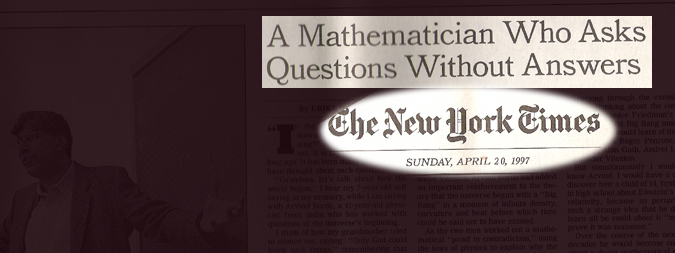
Arvind Borde is a Senior Professor of Mathematics and Physics at Long Island University, Post campus, where he also serves as Graduate Co-Director in the Department of Mathematics. He is affiliated with the College of Liberal Arts and Sciences and has made significant contributions to mathematical physics, particularly in relativity, cosmology, and topology. His work has had international recognition, including citations at Stephen Hawking's 60th birthday symposium and features in Nature . B.S., Bombay University M.A., Ph.D., Stony Brook University His research focuses on foundational questions in theoretical physics: whether the universe had a beginning, its global shape, and the nature of energy in spacetime. He is best known for the BGV theorem (with Guth and Vilenkin), which proves that inflationary models cannot be past-complete, suggesting a cosmic beginning. His work uses abstract mathematical methods pioneered by Penrose, Hawking, and Geroch to derive general results about spacetime structure. In addition to physics, Borde has deep expertise in computer science, especially in the TeX typesetting system, having authored multiple books and software tools. More recently, he has explored design and food history, co-authoring a biography of ceramic artist Eva Zeisel. The 15 most recent publications reflect a sustained engagement with cosmology, general relativity, and mathematical physics, with key themes including initial singularities, energy conditions, topology change, and baby universes. Later works also highlight his contributions to computing and digital document design, showing a unique interdisciplinary trajectory. Notable scientific awards include: Trustees Award for Scholarly Achievement (1995/96, single work) Trustees Award for Scholarly Achievement (2005, lifetime achievement) KITP Scholar, Kavli Institute for Theoretical Physics, UC Santa Barbara (2007–2009) He has advised graduate students in physics and mathematics and secured grants supporting advanced computing infrastructure, including founding the Southampton College Technology Center. He has held visiting positions at MIT, Tufts University, Brookhaven National Lab, and UC Santa Barbara. His outreach includes establishing a computer museum at LIU Post and contributing to public discourse through media features in The New York Times , Newsday , and the Boston Globe . Borde leads interdisciplinary research initiatives combining physics, computing, and design. He founded the advanced computing facility at Southampton College and maintains an active research group exploring quantum gravity, cosmology, and digital publishing technologies.
Scott A. Hughes is a Professor in the Department of Physics at the Massachusetts Institute of Technology (MIT), School of Science. He is affiliated with the MIT Kavli Institute for Astrophysics & Space Research and leads the Hughes Group, focusing on astrophysical general relativity. He previously served as the Astrophysics Division Head (2019–2023) and held the Adam J. Burgasser Chair in Astrophysics and the Class of 1956 Career Development Professorship. Education: B.A. in Physics, Cornell University (1993); Ph.D. in Physics, California Institute of Technology (Caltech), advised by Kip Thorne. Postdoctoral Experience: University of Illinois, Caltech, Kavli Institute for Theoretical Physics (UCSB). Joined MIT Faculty: January 2003. His research centers on astrophysical general relativity , with a focus on black holes , gravitational-wave sources , and strong-field gravity . He investigates waveform modeling, testing black hole spacetimes, and cosmological applications of gravitational waves ('standard sirens'). His work integrates high-performance computing and numerical relativity, contributing to LIGO science. He has authored numerous influential publications on extreme mass-ratio inspirals, ringdown spectroscopy, and gravitational wave cosmology. Analysis of his recent publications reveals a strong trend toward gravitational wave astrophysics , combining theoretical modeling with observational implications for LIGO and future space-based detectors like LISA. His work spans black hole dynamics , numerical relativity , cosmological parameter estimation , and tests of general relativity . There is a growing integration of machine learning and data analysis techniques in his recent work. Scientific Awards and Honors: American Physical Society Fellow (2012) John Simon Guggenheim Fellow (2012) Margaret MacVicar Faculty Fellow, MIT (2017–2027) Buechner Outstanding Advisor Award, MIT Physics (2016) MIT School of Science Prize for Excellence in Undergraduate Teaching (2005–2006) National Science Foundation Career Grant (2005) Buechner Teaching Prize, MIT Physics (2005) Class of 1956 Career Development Professor, MIT (2004) Professor Hughes is a dedicated educator and mentor. He has received multiple teaching awards and is recognized as an outstanding advisor. He teaches core courses including graduate 8.962 (General Relativity) , undergraduate 8.033 (Relativity) , and 8.022 (Electricity and Magnetism) . He has developed extensive open lecture notes for these courses. He is also a first-generation college graduate and actively supports first-generation students at MIT. He leads a research group and mentors graduate students, though specific student names are not listed in the provided text. His research has been supported by the NSF and other grants. He is actively involved in the international gravitational wave community, regularly presenting at major conferences and serving on thesis committees abroad. Laboratories and Research Groups: Hughes Group - Astrophysical General Relativity @ MIT (gmunu.mit.edu), affiliated with the MIT Kavli Institute for Astrophysics & Space Research.
Dr. Ben McAllister is a Research Fellow at Swinburne University of Technology's School of Science, Computing and Emerging Technologies . He serves as leader of the Swinburne Axion Group and a node leader in the ORGAN and ADMX collaborations, with a focus on axion dark matter detection and quantum sensor development . His work bridges fundamental physics and quantum technology, supported by two major ARC grants. Research Areas : Axion dark matter detection, quantum sensors, microwave engineering, semiconductor physics, deep underground physics Awards : ARC DECRA Fellow Supervision : Available for PhD supervision in dark matter research McAllister's research explores the intersection of quantum technology and dark matter physics . Key projects include: Developing ultra-low-noise axion haloscopes using Josephson parametric amplifiers Advancing tunable cavity resonator designs for higher-frequency dark matter searches Investigating semiconductor conductivity at millikelvin temperatures for quantum applications Establishing cryogenic facilities for low-background fundamental physics experiments His scientific publications demonstrate expertise in: Microwave cavity design for dark matter detection Quantum-limited amplifier integration Material science for quantum devices Statistical analysis of dark matter coupling parameters Theoretical modeling of axion-electromagnetic interactions Scientific Awards : Australian Research Council DECRA Fellowship Research Leadership : • Leads Swinburne Axion Group • Node leader in ORGAN and ADMX dark matter experiments • Victorian lead for CELLAR cryogenic underground facility • Collaborates with Engineering and Optical Sciences Centre researchers Grants : • Enhancing Australian Dark Matter Searches with Quantum Technology (2025-2028) • Cryogenic Experimental Laboratory for Low-background Australian Research (2024-2025)
Prof. Dr. Georgi Dvali is a Professor and Chair of Theoretical Particle Physics at the Faculty of Physics, Ludwig-Maximilians-University (LMU) in Munich. He leads a research group focused on theoretical aspects of particle physics, cosmology, and quantum field theory. His work involves collaborations with institutions such as the Max Planck Institute for Physics (MPP), Arnold Sommerfeld Center, and the Excellence Cluster Universe. Research Interests Topological defects in quantum field theories Cosmic strings and domain walls Collider phenomenology Thermal fluctuations in cosmological systems Colored Higgs triplet models 3-form gauge theories Contact Information Institution: Ludwig-Maximilians-University, Faculty of Physics Department: Theoretical Particle Physics Address: Theresienstraße 37, 80333 Munich Email: Georgi.Dvali@physik.uni-muenchen.de
Jean-François Boland is a Professor in the Department of Electrical Engineering at École de technologie supérieure (ÉTS), where he leads research in aerospace systems and embedded technologies through the LASSENA Laboratory. His expertise spans avionics, autonomous systems, digital design methodologies, and functional verification. Research Interests: Aeronautics & Aerospace : Flight control systems, radiation-hardened avionics, integrated modular architectures Intelligent Systems : Bipedal robot control, adaptive algorithms, autonomous navigation Digital Design : RTL verification, fault modeling, high-level synthesis His recent publications emphasize fault-tolerant aerospace systems , with 60% focused on radiation effects mitigation, 25% on autonomous robotics, and 15% on design methodologies. Key trends include AI-enhanced verification (2019), SEU-resistant flight controls (2013–2016), and bipedal locomotion control (2021–2022). Awards and Honors: Ambassadeur Honoraire (ÉTS, 2020) CNESST Safety Award & GREPCI Finalist (2017) CRIAQ Project Excellence Award (2012) Two ÉTS Teaching Excellence Awards (2011, 2013) He actively advises graduate students, with 16+ supervisees working on projects like fault-tolerant avionics and quadcopter control systems. Laboratory work at LASSENA emphasizes resilient embedded systems and aerospace-grade validation platforms.
Dr. Roshani Silwal serves as an Assistant Professor in the Department of Physics and Astronomy at Appalachian State University, where she leads experimental research at the intersection of atomic, nuclear, and plasma physics. Her academic journey includes: Postdoctoral Fellowship at TRIUMF, Canada (2020) PhD in Physics from Clemson University, USA (2018) MS in Physics from St. Xavier’s Campus, Tribhuvan University, Nepal (2012) BS in Physics from St. Xavier’s Campus, Tribhuvan University, Nepal (2008) Dr. Silwal's research focuses on developing ion trapping techniques for highly charged ions and applying precision atomic spectroscopy to solve fundamental and applied problems. Her work spans nuclear physics through isotope shift measurements that probe nuclear charge radii, plasma diagnostics for fusion energy and astrophysical applications, and radiation physics for medical therapy development. She specializes in extreme ultraviolet and x-ray spectroscopy of exotic atomic systems, using these measurements to test quantum electrodynamics and atomic models while developing practical diagnostic tools. Her publication record from 2017-2022 reveals consistent contributions to high-impact journals, with research clusters in precision mass spectrometry of exotic nuclides, dielectronic recombination studies for plasma diagnostics, and nuclear charge radius measurements using highly charged ions. These works demonstrate strong international collaboration patterns and facility utilization at major research centers. Dr. Silwal actively mentors students in experimental atomic physics, providing hands-on training with advanced instrumentation including electron beam ion traps and precision spectroscopy systems. Her research program integrates students into national collaborations while addressing challenges in fusion energy diagnostics, astrophysical plasma interpretation, and medical radiation applications. Her laboratory work centers on ion manipulation techniques and precision spectroscopy, with research groups typically engaging in vacuum system operation, laser spectroscopy, and data analysis for atomic physics experiments. Current projects focus on developing diagnostic tools for next-generation fusion reactors and advancing precision measurement techniques for nuclear structure studies.