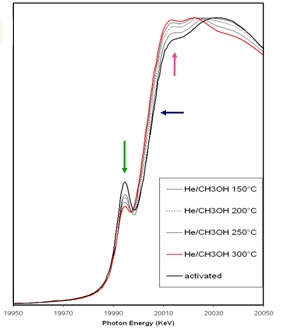
Sylvain Cristol is a Professor at the University of Lille within the Heterogeneous Catalysis department and the Modeling and Spectroscopy (MODSPEC) group. He teaches quantum chemistry, chemical bonding, statistical physics , and X-ray absorption spectroscopy at the university’s European Master’s program. PhD in Molecular and Organic Chemistry (1997-2000, Université de Provence) Postdoctoral work at Davy-Faraday Research Lab, Royal Institution of Great Britain (2000-2002) His research focuses on modeling hydrodesulfurization and hydrodeoxygenation catalysts for biomass valorization, supported by ANR-PNRB project ECOHDOC (with Caen, Poitiers, and TOTAL). He pioneered operando X-ray absorption spectroscopy for characterizing supported oxides (Mo/Re on alumina/anatase) via the ANR SAXO project (Paris VI, Grenoble, SOLEIL). Collaborative work with Francesco Mauri (Paris VI) advanced NMR parameter modeling in solids. Publications span DFT studies , XANES spectroscopy , and solid-state NMR applied to catalysis. Scientific awards include the UCCS Thesis Prize (highest honors) for his work on dibenzothiophene reactivity on molybdenum sulfide.
Prof. Ricardo Pereira Nogueira holds the position of University Professor at Grenoble INP/PHELMA, affiliated with the LEPMI laboratory. His research focuses on electrochemistry, corrosion science, and materials engineering, with particular emphasis on surface interactions, stochastic processes in electrochemical systems, and sustainable energy applications. He has significantly contributed to understanding corrosion mechanisms in various environments and developing advanced materials for energy storage and biomedical applications. His teaching activities include courses on electrochemistry, corrosion, and statistical analysis. With over 104 peer-reviewed articles and 6 book chapters, Prof. Nogueira has also supervised 25 doctoral theses and 19 Master's theses. His work spans topics such as electrocatalyst design for biofuel production, corrosion inhibition in CO₂ environments, and the electrochemical behavior of metals in aggressive media. He has delivered 12 invited lectures and participated in over 100 international conferences, showcasing his global academic impact. Prof. Nogueira's research group at LEPMI investigates interfaces in metal-electrolyte systems, stochastic modeling of electrochemical processes, and the development of durable materials for infrastructure and energy systems. His contributions to understanding hydrogen evolution reaction dynamics and material degradation mechanisms have advanced both fundamental science and industrial applications.
Raji Susan Mathew is an Assistant Professor at the School of Data Science, Indian Institute of Science Education and Research Thiruvananthapuram (IISER TVM). Her research focuses on regularization techniques, compressed sensing, and deep learning for medical image reconstruction, particularly in magnetic resonance imaging (MRI) and quantitative susceptibility mapping (QSM). Current affiliation: School of Data Science, IISER TVM Prior appointments: C. V. Raman Postdoctoral Fellow and Research Associate III at Indian Institute of Science, Bangalore Education: Ph.D. in MR image reconstruction from IIIT-Kerala, M.Tech in Signal Processing from Cochin University of Science and Technology, B.Tech in Electronics and Communication Engineering from Mahatma Gandhi University Her recent publications highlight expertise in AI-driven medical imaging solutions, including QSM optimization , vision transformers for nerve tracking , and unsupervised learning for corrosion analysis . She has also contributed to book chapters on parallel MRI theory and regularization frameworks. Scientific awards include the C. V. Raman Postdoctoral Fellowship and Maulana Azad National Fellowship , supporting her work on efficient algorithms for medical image processing. Dr. Mathew advises Ph.D. and BS-MS students on topics like spiking neural networks in imaging , uncertainty-aware QSM reconstruction , and lightweight AI models for disease classification . She actively reviews for journals like IEEE Transactions on Medical Imaging and conferences like ISBI and ICASSP.
BEDDIAR Karim is an Assistant Professor and Head of Research and Innovation at CESI (West), an engineering school in France. He holds a PhD and MSc in Civil Engineering from École Nationale des Ponts ParisTech (2001) and a DUT in Civil Engineering from IUT Nancy-Brabois (1997). His professional experience includes roles as Head of Research and Innovation (2013–present), Head of Continuing Education in Civil Engineering (2010–2013), and Program Leader for post-MSc programs in civil engineering. He has coordinated numerous French/European research projects, advised 4 PhD theses, and teaches subjects such as sustainable construction, building materials, and project management. His research focuses on concrete durability , sustainable city development , and building information modeling (BIM) . He has pioneered integration of BIM with lean principles, VR/AR technologies, and blockchain for smart grids. He also serves as a Visiting Professor at Northumbria University (UK) and an external examiner at Abertay University (UK). Key achievements include the Ponts ParisTech Best Thesis Award (2001) , leadership in EU-funded projects like NovBuild and S2E2, and over 70 publications in journals like Energies and conference proceedings. His work bridges innovation in construction technology with practical applications in energy efficiency, smart buildings, and digital transformation. Education : PhD/MSc Civil Engineering, École Nationale des Ponts ParisTech (2001) DUT Civil Engineering, IUT Nancy-Brabois (1997) Awards : Ponts ParisTech Best Thesis in Soil Mechanics (2001) Grants/Projects : EU-funded research on BIM and sustainable construction French/European projects on energy management Labs/Teams : Research team at CESI focusing on innovation in construction
Rudina Bleta is an Associate Professor at the University of Artois , specializing in the synthesis of nanostructured porous materials via soft chemistry routes. Her research focuses on heterogeneous catalysis for environmental and energy applications. Education : B.Sc. in Physical-Chemistry, University of Bordeaux (2002) M.Sc. in Materials Chemistry, University of Bordeaux (2004) Ph.D. in Molecular Physical-Chemistry, University of Nancy (2007) Research Interests encompass cyclodextrin-based supramolecular assemblies for designing functional materials, with applications in air purification, corrosion inhibition, and sustainable energy. She has contributed to heterogeneous catalysts for biodiesel production, VOC degradation, and biomass conversion. Recent Publications highlight her expertise in cyclodextrin-templated mesoporous materials, enzymatic nanoreactors, and photocatalytic systems for pollutant removal. Key trends include tailoring pore structures, integrating biomolecules into inorganic matrices, and optimizing catalytic performance through nanostructuring. Labs & Teams : Affiliated with the Supramolecular Catalysis Team at UCCS Artois, collaborating with institutions like CNRS and Université Paul Sabatier Toulouse III on aerospace and environmental projects.
Céline Perlot-Bascoulès is a Professor at the University of Pau and Pays de l'Adour (UPPA), holding a position at the School of Civil Engineering and Building Trades (ISA BTP) and conducting research at the Laboratory of Engineering Sciences Applied to Mechanics and Electrical Engineering (SIAME). She serves as Head of the Geomaterials and Civil Engineering Structures team and was appointed as a Junior Member of the prestigious Institut Universitaire de France (IUF) in 2021 for scientific innovation, granting her a two-thirds release from teaching duties to focus on research for five years. Her educational background includes a PhD in Materials and Durability of Construction from Paul Sabatier University in Toulouse and the University of Sherbrooke, Canada, with a thesis on cementitious materials for radioactive waste storage. She also holds a Diploma of Advanced Studies in Materials specializing in Polymers, and Master's and Bachelor's degrees in Chemistry and Physics from Paul Sabatier University. Perlot-Bascoulès specializes in sustainable construction materials, particularly raw earth and low-carbon alternatives to conventional concrete. Her research focuses on understanding the microstructure, transfer properties, and durability of geomaterials under extreme conditions including chemical exposure, high temperatures, and mechanical stress. She investigates how to optimize natural stabilization of earth-based materials to improve hygrothermal regulation and building comfort while reducing the construction industry's environmental impact, which accounts for 39% of global CO 2 emissions. Her 15 most recent publications demonstrate a consistent focus on sustainable construction materials, with particular emphasis on raw earth technologies, recycled concrete aggregates, and biopolymer stabilization techniques. The research spans material characterization, durability testing under various environmental conditions, and development of innovative eco-materials that reduce construction's ecological footprint. Junior Member of the Institut Universitaire de France (2021) As an academic advisor, Perlot-Bascoulès has supervised numerous doctoral and post-doctoral researchers working on projects related to sustainable construction. She leads significant research initiatives including the National TERRE project on fire safety of earth construction and serves in leadership roles for international technical committees with RILEM (International Union of Laboratories and Experts in Construction Materials). Her research has been supported by grants from Andra (radioactive waste management), ADEME (environmental agency), and regional and European funding programs. Perlot-Bascoulès directs the Geomaterials and Civil Engineering Structures team at SIAME laboratory, where she coordinates research on sustainable construction materials. Her team collaborates internationally with institutions including EPFL in Lausanne, CFM in San Sebastian, and participates in European networks focused on developing eco-materials that could significantly reduce construction's environmental impact while maintaining structural integrity and building performance.
DE BARROS Silvio is a Research Director and Head of the Materials & Process team at CESI LINEACT. He holds an HDR from Nantes University (2019) and a PhD from the University of Versailles-St Quentin en Yvelines (2005). His research focuses on mechanics of materials, composite materials, bonded joints, durability assessment, and bio-sourced materials. He has extensive teaching experience, including roles as a Visiting Professor at GeM (Nantes), Professor at CEFET/RJ (Brazil), and Lecturer at UFPB (Brazil). His educational activities include teaching Engineering Mechanics and Materials Science to engineering students (1st–3rd years). He supervises multiple PhD programs addressing topics like geopolymer composites, structural repairs, and creep behavior. Recent postdoctoral research includes studies on 3D printed components and aging effects on adhesives. With 91 Scopus-indexed publications (h-index 18), his work spans adhesion science, geopolymer characterization, and composite durability. Key contributions include reviews on bonded joints and studies on natural filler impacts in biodegradable materials.
Valéry Botton is a Professor at the National Institute of Applied Sciences (INSA) Lyon and Director of the INSA branch of the Laboratoire de Mécanique des Fluides et d’Acoustique (LMFA - UMR 5509) . His research focuses on fluid dynamics, acoustics, and the solidification of metallic alloys. He teaches fluid mechanics, experimental methods, and engine-related subjects in the Department of Mechanical Engineering at INSA Lyon. Research Themes : Acoustic streaming, directional solidification, non-Newtonian fluid stability, solute segregation, and ultrasound applications in material processing. Recent Publications : 15 articles (2016–2024) explore topics like lattice Boltzmann simulations of acoustic flows, stability analysis of shear-thinning fluids, and ultrasound-enhanced silicon purification. Collaborations : Active in interdisciplinary projects such as the Carnot ASTRES initiative for photovoltaic silicon production and BRASSOA (Institut Carnot Ingénierie@Lyon). Technical Expertise : Experimental and numerical studies on convection, film flows, and mass transfer in liquid metals and complex fluids. Contact: valery.botton@insa-lyon
Alexandre LEGRIS is a Professor at the University of Lille within Polytech'Lille, conducting research in the Materials and Transformations Unit (UMR 8207 CNRS). He is a core member of the Physical Metallurgy and Materials Engineering research team, focusing on computational modeling of phase transformations in metallic alloys subjected to irradiation. His work has significant applications in nuclear materials science, particularly for nuclear reactor components and fuel cladding systems. LEGRIS specializes in crystallography, corrosion mechanisms, and phase transformations in metallic systems. His research employs advanced computational techniques including phase-field modeling, atomic-scale simulations, and multiscale approaches to understand radiation damage mechanisms in structural materials. His expertise spans zirconium alloys for nuclear applications, advanced steels, and oxide dispersion strengthened materials. His publication record demonstrates consistent contributions to understanding irradiation effects in nuclear materials, with recent work focusing on zirconium growth mechanisms, radiation-induced segregation, and dislocation behavior under irradiation. The research spans fundamental atomic-scale phenomena to engineering-scale applications in nuclear systems. Modeling radiation damage in zirconium alloys for nuclear fuel cladding Phase transformations in advanced steels under irradiation Computational prediction of microstructure evolution in nuclear materials Development of models for radiation-induced segregation and defect clustering LEGRIS has supervised numerous doctoral students whose research has advanced understanding of irradiation effects in nuclear materials. His students have investigated topics including ODS steels for fourth-generation reactors, thermomechanical treatments of austenitic steels, and additive manufacturing of radiation-resistant materials. Many of his former students have secured positions in industry and research institutions specializing in nuclear materials. He collaborates extensively with researchers at the national and international level, particularly on nuclear materials projects involving CNRS, CEA, and international nuclear research organizations. His work contributes to the development of advanced materials for next-generation nuclear energy systems.
Rachid Cherif is a Teacher-Researcher at the University of Limoges, France, affiliated with the E3-TDVM team. His work bridges civil engineering, materials science, and musicology, with a focus on chloride ion transport modeling in cementitious materials and musical discourse analysis in Tunisian traditional and modern music. Key research areas: Concrete durability, multi-ion transport, recycled aggregates, AI applications in construction, ethnomusicology, and music pedagogy. Email: rachid.cherif@univ-lr.fr His publications (2010–2025) span 15+ articles on topics like: Chloride migration models with thermodynamic equilibria Predictive AI frameworks for recycled concrete properties Non-invasive corrosion diagnostics Ethnomusicological studies of Tunisian popular music Hygrothermal behavior of bio-based concretes Collaborations include researchers like Abdelkarim Aït-Mokhtar, Carmen Andrade, and Emilio Bastidas-Arteaga. No scientific awards or students are explicitly mentioned. His work also explores music education in Tunisian primary schools and interplay between authenticity and modernity in Tunisian music.
Abdelali OUDRISS is an Associate Professor at the Department of Physics , La Rochelle University , France, and a member of the LaSIE UMR CNRS 7356 laboratory. He co-leads the Professional Bachelor for Optician program and serves as a teaching coordinator between La Rochelle University and EIGSI engineering school . Research Focus: Microstructure-electrochemistry coupling, hydrogen diffusion/trapping in metals, hydrogen embrittlement, and corrosion-fatigue interactions. Key Contributions: Mechanistic studies on hydrogen adsorption in nickel single crystals, modeling of hydrogen-assisted fracture, and characterization of archaeological iron alloys. Publications span Materials Characterization , Corrosion Science , and Acta Materialia , addressing hydrogen behavior in steels, nickel, and titanium alloys. His work emphasizes multi-scale analysis and experimental-numerical hybrid approaches. Administrative Roles: Secretary of SF2M West section, LaSIE council member, and teaching committee member. Techniques: EBSD, nanoindentation, thermal desorption spectroscopy, and finite element modeling.
Antonio Abrantes is an Associate Professor at TBS Education, specializing in Business Law and Human Resources Management within the Toulouse Business School. His research focuses on organizational behavior, crisis management, and improvisational strategies in high-stakes environments. He has contributed to understanding emergency improvisation through his work on 'Myopia during emergency improvisation' (2023), which examines the dangers of localized decision-making during crises like the Portuguese wildfire incident. This study highlights how structural failures can lead to improvisational myopia and catastrophic outcomes. His academic work intersects with broader themes in Operations Management and Management Science, emphasizing the development of resilient organizational practices.
Professor Jean-Bernard VOGT is affiliated with the Materials and Transformations Unit (UMET - CNRS UMR 8207) at the University of Lille. His research focuses on the mechanical behavior of advanced steels under extreme conditions, including fatigue damage , cyclic plasticity mechanisms , and liquid metal embrittlement in nuclear reactor environments. Key collaborations include Centrale Lille Institute and interdisciplinary nuclear projects Team leadership in Physical Metallurgy and Materials Engineering Research Interests : Specializes in microstructure-fatigue interactions , corrosion-mechanical synergy , and high-strain metallurgical analysis . Investigates hydrogen embrittlement , liquid metal-assisted fracture , and advanced characterization techniques (EBSD, ToF-SIMS, OIM). Publication Trends : Recent work emphasizes nuclear reactor materials (Lead-Bismuth Eutectic interactions), pearlitic steel fatigue , and protective coatings against corrosion. Uses multi-scale microscopy for damage mechanism visualization. Thesis Supervision : Co-directed 15+ theses on topics ranging from zinc coating corrosion to martensitic steel fatigue , with students now working at Thyssenkrupp, Villares Metals, and Nexans.
Sébastien Chevalier is a University Professor at the University of Burgundy, affiliated with the Institut Carnot de Bourgogne (ICB) laboratory. He serves as Deputy Director of the ICB laboratory since January 2017 and leads research in the Department of Metallurgical Processes, Sustainability, and Materials (PMDM). His educational background includes a doctoral thesis completed in October 1998 at the University of Burgundy on the durability of metallic materials at high temperatures, followed by a postdoctoral fellowship at Clausthal University of Technology in Germany. He was appointed Lecturer at ESIREM in 1999. Professor Chevalier's research focuses on high-temperature materials behavior, particularly: Study of degradation of metallic materials in aggressive atmospheres at high temperature Understanding mechanisms of corrosion at high temperature using advanced techniques like in-situ DRX, TEM, XPS, SIMS, SEM Application of protective surface treatments against high-temperature corrosion Aging and durability under complex atmospheres including H 2 O vapor, S 2 , H 2 S, and Cl 2 Development of metallic materials for energy production and sustainable development Study of aging of metallic materials produced by additive manufacturing His recent publications demonstrate strong focus on high-temperature corrosion mechanisms, protective coatings development, and materials for energy applications. His work often employs advanced characterization techniques including isotopic labeling to understand oxide layer growth mechanisms. Professor Chevalier has received recognition through: 106 publications in A-ranked journals 20 other publications 14 works He has supervised 16 PhD theses and participated in 59 Thesis and HDR Juries. His research collaborations include 22 research collaboration contracts and 4 ANRS projects. He has presented his work extensively with 91 international conferences, 51 national conferences, and 18 other conferences/popularization events. Professor Chevalier has held leadership positions including Head of the M4OxE team and Director of the PMDM department before becoming Deputy Director of the ICB laboratory.
Claire Chainais-Hillairet is a Professor at the Mathematics Department within the Faculty of Science and Technology at the University of Lille. She is affiliated with the Numerical Analysis and Partial Differential Equations team at the Paul Painlevé Laboratory (UMR 8524) and the CEMPI Labex. Her research focuses on the mathematical analysis of finite volume numerical schemes for partial differential equations arising in physics and engineering, with applications to semiconductor models, petroleum engineering, corrosion models, and related fields. Key Responsibilities: Member and manager of the RAPSODI project team at Inria Lille-Nord Europe, member of the ANR MOHYCON project.