Brandenburg University of Technology Cottbus-SenftenbergGermany
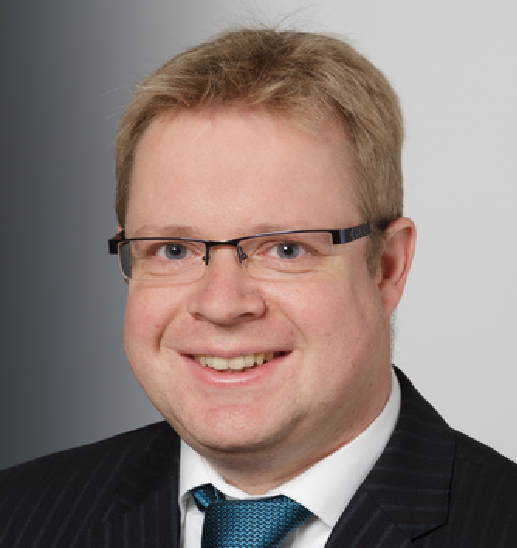
Ahsan Hayat is a Researcher at the Chair of Experimental Physics and Functional Materials at Brandenburg University of Technology Cottbus-Senftenberg (BTU). His role since 2019 focuses on the Growth and Characterization of GeSn nanostructures using Molecular Beam Epitaxy. He holds a Master's in Sustainable Materials-Crystalline Materials from Albert Ludwigs University of Freiburg (2016–2019), where his thesis addressed Photoelectron Spectroscopy of epitaxial thin films. His undergraduate degree (BE in Material Science and Engineering, 2009–2013) from National University of Science and Technology, Islamabad, involved developing eco-friendly corrosion inhibitors for carbon steels using pharmaceutical compounds. His research interests span functional materials, nanostructure growth, and sustainable materials science. He collaborates with the Experimental Physics and Functional Materials team led by Prof. Inga Fischer, contributing to advanced materials characterization projects. Key projects include GeSn nanostructure synthesis via MBE and corrosion inhibition mechanisms. Though no specific awards or articles are listed, his work aligns with cutting-edge materials physics and sustainable materials innovation.
Max Planck Institute for Sustainable MaterialsGermany
Dr. KN Sasidhar is a Researcher in the Department of Microstructure Physics and Alloy Design at Heinrich Heine University Düsseldorf. His work focuses on advanced materials science, particularly corrosion mechanisms, alloy design, and nanoscale structural analysis. He employs cutting-edge techniques like in situ synchrotron investigations and deep learning frameworks to study material behavior under extreme conditions. Current research emphasizes corrosion resistance in stainless steels, phase transformations during nitriding, and radiation effects on coatings. Key achievements include pioneering studies on nanoscale amorphization in metallic systems, data-centric approaches for materials discovery, and the development of predictive models for alloy performance. His work bridges experimental materials characterization with computational methods, addressing challenges in energy and aerospace applications. Publications span corrosion analysis, microstructural evolution under irradiation, and phase separation phenomena. Collaborative projects involve synchrotron facilities and interdisciplinary teams focusing on materials informatics. No formal awards or grants are explicitly listed in the provided texts, though his prolific publication record indicates active academic engagement.
Dorina Siebert is a Researcher at the Chair of Metal Construction within the School of Engineering at the Technical University of Munich. She has been working as a research assistant at the Chair since 2019, contributing to various research projects related to steel and aluminum construction, fracture mechanics, and additive manufacturing in construction. Education: M.Sc. in Civil Engineering from Technical University of Munich (2012-2019) Affiliation: Chair of Metal Construction, School of Engineering, Technical University of Munich Contact: dorina.siebert@tum.de, Room 0101.Z1.038, +49 (89) 289-22527 Dorina's research primarily focuses on the fatigue strength of aluminum structures, fracture mechanics in railway bridges, and the application of additive manufacturing techniques in construction. Her work on powder bed-based laser beam melting of metal has significant implications for modern construction methods. She also investigates safe operating time intervals for historic steel bridges and has contributed to the development of a mobile vehicle barrier, demonstrating the practical applications of her theoretical work. Her publication record shows a strong trend toward computational and experimental analysis of material behavior under stress, particularly in aluminum alloys and steel structures. She has published extensively on fatigue properties, fracture mechanics calculations, and additive manufacturing applications, with a clear progression toward more complex modeling techniques and practical engineering solutions. Her work bridges theoretical computational models with real-world infrastructure challenges. Dorina teaches courses including 'Constructing with aluminum' for the Summer semester 2025 and 'Fracture mechanics and fatigue' for the Winter semester 2024/25. She also leads a seminar on plate buckling and steel bridge construction, sharing her specialized knowledge with engineering students. Her teaching directly reflects her research expertise, creating a strong connection between theoretical knowledge and practical application for her students.
Prof. Dr.-Ing. Johannes Henrich Schleifenbaum is a Professor and Chair of Digital Additive Production at RWTH Aachen University, where he leads research in the Profile area Production Engineering (ProdE). His work advances additive manufacturing (AM) through interdisciplinary approaches combining materials science, process engineering, and digital technologies. His research encompasses: Laser powder bed fusion (LPBF) process optimization and defect mitigation Development of novel alloys/composites for AM applications Sustainable manufacturing practices including material recycling Integration of AI/ML for accelerated material and process design Digital tools for automated design and distributed manufacturing Recent publications (2023-2025) demonstrate a strong focus on: Multi-material processing and microstructure control Machine learning-driven alloy development Standardization and scalability of AM processes Advanced simulations for meltpool dynamics and thermal behavior Applications in aerospace, construction, and biochemical engineering He leads the Chair of Digital Additive Production, collaborating with industry partners to translate research into industrial solutions for next-generation manufacturing.
Prof. Dr. Michael Schäferling is a Professor of Photonic Materials at the Department of Chemical Engineering (CIW), FH Münster - University of Applied Sciences. His research focuses on optical chemical sensors, upconversion nanomaterials, and surface functionalization for chemical sensing. He teaches courses in Functional Materials , Materials Science , and advanced topics like Chemical Sensors and Technology of Coatings . University : FH Münster - University of Applied Sciences School : Department of Chemical Engineering Department : Laboratory for Photonic Materials His recent publications (2019–2024) address fluorescence imaging for medical diagnostics, upconversion crystal synthesis , and sensor design for corrosion monitoring . Key trends include the development of ratiometric measurement techniques , core-shell nanoprobes , and environmentally stable sensor materials . Prof. Schäferling’s work emphasizes surface functionalization of nanomaterials for energy transfer systems and tailoring crystal morphology to optimize luminescence. He has contributed to applied inorganic chemistry and nanostructured materials for analytical applications. Contact: michael.schaeferling@fh-muenster.de
Leibniz Institute for Solid State and Materials ResearchGermany
Dr. Anke Kirchner is a Researcher at the Leibniz Institute for Solid State and Materials Research Dresden (IFW Dresden) in the Department of Functional Oxide Layers and Superconductors. Her work focuses on superconducting materials, magnetic systems, and advanced thin-film deposition techniques for applications in levitation and energy-efficient transportation. Her research spans high-temperature superconductivity, nanocrystalline magnetic materials, and REBCO coated conductor development. Key contributions include optimizing artificial pinning centers in superconducting films, analyzing grain boundary structures in permanent magnets, and pioneering microacoustic sol atomization (MASA) for thin-film deposition. Her interdisciplinary approach bridges fundamental materials science with practical engineering applications in transportation and energy. Analysis of her 15 most recent publications (2000-2024) reveals consistent focus on superconducting levitation technologies and REBCO conductor performance enhancement. Her work demonstrates evolution from foundational studies of NdFeB magnet microstructures to cutting-edge innovations in coated conductor joints and tape-stack levitation systems, with strong emphasis on nanoscale characterization and process optimization. No scientific awards are mentioned in the provided text. Information regarding student advising, doctoral supervision, or research grants is not specified in the source material. The department specializes in oxide layer engineering and superconductor development, with Dr. Kirchner contributing to IFW Dresden's internationally recognized research on quantum levitation and magnet-superconductor interactions, frequently collaborating with Prof. L. Schultz on applied superconductivity projects.
Christoph Gehlen is Professor and Chair of Materials and Materials Testing in Civil Engineering at the Technical University of Munich (TUM), based at Franz-Langinger-Str. 10 in Munich. His research group focuses on advanced concrete technologies, materials science, and digital construction methods, with significant contributions to additive manufacturing in civil engineering through the Collaborative Research Center TRR 277. His research spans concrete technology, durability assessment, and sustainable construction practices. Key interests include corrosion mechanisms in reinforced concrete, non-destructive testing methodologies, and additive manufacturing techniques like Selective Paste Intrusion (SPI). Recent work emphasizes 3D concrete printing for structural applications, life cycle assessment of printed elements, and fundamental studies on material behavior under environmental stressors including carbonation, chloride exposure, and freeze-thaw cycles. Analysis of his 15 most recent publications (2024-2025) reveals dominant research trajectories in digital fabrication of concrete structures, particularly SPI-based additive manufacturing. His work integrates materials science with structural engineering to develop functionally graded components, assess sustainability metrics, and solve reinforcement integration challenges. Significant interdisciplinary efforts address durability issues through electrochemical monitoring, coda wave interferometry, and advanced imaging techniques for concrete microstructure characterization. Gehlen leads the Chair of Materials and Materials Testing in Civil Engineering at TUM, which operates advanced laboratories for concrete characterization including confocal laser scanning microscopy and virtual testing environments. His team actively participates in TRR 277 (Additive Manufacturing in Construction), developing fabrication-aware design methods and experimental validation protocols for novel construction technologies.
Florian Hausen is a Professor for Applied Interface Electrochemistry at RWTH Aachen University and leads the scanning probe microscopy focused group at the Fundamentals of Electrochemistry (IET-1) department within Forschungszentrum Jülich . His work bridges electrochemistry, nanotechnology, and materials science, with a focus on energy storage systems. Education : Studied Chemistry at the University of Bonn PhD in Physics from Saarland University Hausen's research interests center on in-situ/operando scanning probe techniques to study interfaces in energy materials, including solid-state batteries , proton exchange membrane water electrolyzers , and ionic liquids . His group explores: Correlative microscopy (AFM, SEM, EPR) for multi-scale analysis Mechanical properties under electrochemical load Tribology of materials in battery systems Interphases in lithium, zinc, and silicon-based energy technologies The article trends reflect his expertise in: Nanoscale electrochemical characterization of battery and electrolyzer components Material degradation under dynamic cycling and electrochemical stress Correlation of electrical, mechanical, and chemical properties in energy systems Technique development for operando studies and data reproducibility His work contributes to understanding and improving: Lithium plating and SEI formation Nanomechanical stability of electrolyzer anodes and cathodes Carbon nanofiber properties for battery electrodes Doping effects in ceramic solid electrolytes
Fabiola Pineda serves as an Assistant Professor at the Faculty of Sciences, Universidad Mayor, and is a Principal Investigator at the Center for Applied Nanotechnology (CNAP). She also holds an Associate Researcher position at the Solar Energy Research Center (SERC-Chile). Bachelor of Chemistry, University of Santiago de Chile (2008) Chemist, University of Santiago de Chile (2008) Doctor of Engineering Sciences (Materials Science), University of Santiago de Chile (2013) Postdoctoral Research in Corrosion, Pontifical Catholic University of Chile (2018) Her research centers on three interconnected lines: (1) Design of nanomaterials for solar thermal energy storage, (2) Materials degradation in extreme environments including molten salts and high temperatures, and (3) Development of nanomaterial-based coatings for corrosion mitigation. She employs experimental and theoretical approaches to address corrosion in concentrated solar power systems and thermal energy storage. Analysis of her recent publications reveals a strong focus on MXene-enhanced nanofluids, molten salt corrosion mechanisms, and advanced coatings. Her work bridges fundamental materials science with renewable energy applications, particularly targeting efficiency improvements in solar thermal plants through novel nanomaterials. Pineda actively secures competitive research funding as Principal Investigator for FONDECYT REGULAR project 1241151 and EXPLORATION project 13240066, plus ANILLO project ATE240004. She previously led FONDECYT INICIACIÓN project 11200388 on in-situ corrosion monitoring. She directs the Center for Applied Nanotechnology (CNAP), where her team investigates material degradation and develops nanomaterial solutions for extreme-condition applications in energy systems.
Georg Agricola University of Applied SciencesGermany
Dr.-Ing. Horst Hill is a Lecturer for Additive Manufacturing at Georg Agricola University of Applied Sciences (THGA) since March 2022, where he teaches in the Master's program "Material Engineering & Industrial Heritage Conservation". Additionally, he serves as Head of Special Materials at Deutsche Edelstahlwerke GmbH (since 2017), overseeing approximately 70 employees in the development of specialty steels and materials. Education: Diploma in Mechanical Engineering (specialization in materials engineering) from Ruhr University Bochum (2003-2008, overall grade: 1.5) Dr.-Ing. (PhD) from Ruhr University Bochum, Department of Materials Science (2008-2011), with dissertation on "Novel metal matrix composites (MMC) to increase the service life of wear-stressed tools in the polymer processing industry" (grade: very good) Research Interests: Dr. Hill's expertise lies at the intersection of advanced materials science and manufacturing technologies. His primary research focuses on additive manufacturing processes , particularly the development of new materials for 3D printing applications. He specializes in metal matrix composites (MMCs) with enhanced wear and corrosion resistance, specialty steels for demanding industrial applications, and powder metallurgy techniques for producing high-performance materials. His work bridges fundamental materials research with practical industrial applications in polymer processing, tooling, and energy sectors. His research encompasses the entire value chain from material design and process optimization to application-specific performance evaluation, with particular emphasis on sustainable manufacturing practices and resource efficiency in materials production. Research Trends: Dr. Hill's publication record demonstrates a clear evolution from fundamental materials research to applied additive manufacturing technologies. His early work (2009-2012) focused on understanding sintering behaviors, microstructural design, and performance optimization of metal matrix composites and plastic mold steels. From 2015 onwards, his research shifted toward additive manufacturing applications, exploring novel materials for 3D printing, graded material structures, and process-specific material developments. Recent publications (2021-2022) showcase cutting-edge work in high-strength austenitic materials for additive manufacturing and compositionally graded structures, reflecting the rapid advancement in the field. Professional Affiliations: Georg Agricola University of Applied Sciences (THGA) - Lecturer for Additive Manufacturing (since 03/2022) AiF e.V. - Reviewer for Subgroup 7.4 "Additive Manufacturing" (since 01/2022) Düsseldorf University of Applied Sciences (HSD) - Teaching assignment in Materials Engineering (09/2021-02/2022) Deutsche Edelstahlwerke GmbH - Various roles including Head of Special Materials (since 2012) Industrial Leadership: At Deutsche Edelstahlwerke, Dr. Hill leads the Special Materials division with approximately 70 employees, focusing on developing and producing high-performance specialty steels and metal matrix composites. His team works on innovative solutions for demanding applications in polymer processing, tooling, and other industrial sectors, combining advanced metallurgy with cutting-edge manufacturing technologies.
Prof. Dr. Hans-Georg Steinrück is a faculty member at Forschungszentrum Jülich GmbH, affiliated with the Institute for Sustainable Hydrogen Economy (INW) and leading the Department of Catalytic Interfaces (INW-1). His research spans electrochemical systems, materials science, and interface engineering for energy applications. University: Forschungszentrum Jülich GmbH Institute: Institute for Sustainable Hydrogen Economy (INW) Department: Catalytic Interfaces (INW-1) Rank: Professor Research Focus: Dr. Steinrück investigates structural and dynamic properties of materials in electrochemical systems. Key areas include: Hydrogen economy and sustainable energy storage Thin film characterization via X-ray and electron diffraction Electrolyte dynamics in battery technologies Surface science applications for catalysis and corrosion resistance Organic electronics and molecular alignment in semiconductors Recent Publication Trends: Recent works emphasize operando structural analysis of energy materials, ion transport mechanisms in electrolytes, and advanced characterization techniques like grazing incidence X-ray diffraction (GIWAXS) and 3D electron diffraction. His research bridges fundamental materials science with applied energy technologies. Laboratory Affiliations: He leads the Catalytic Interfaces group within the Institute for Sustainable Hydrogen Economy, focusing on sustainable hydrogen systems and interfacial processes.
Georg Agricola University of Applied SciencesGermany
Jan Camphausen is a Professor of Technical Mechanics and Drive Technology at the Georg Agricola University of Applied Sciences (THGA) since 2013. Previously, he worked as a Calculation Engineer at Vestas Nacelles Deutschland GmbH (2009-2012) and as a Research Associate at Ruhr University Bochum (2003-2009), where he completed his doctoral studies on fatigue strength analysis of volumetric components. Education: Mechanical Engineering studies (1997-2003) and doctoral research (2003-2009) at Ruhr University Bochum. His research focuses on Mechanical Engineering and Materials Science , with expertise in technical drawing dynamics, transmission and drive technology, and strength of materials. His work emphasizes industrial applications such as wind turbine drivetrains and multiphase screw pumps, where he investigates fatigue analysis, vibration mitigation, and component optimization. Recent publications highlight his contributions to multibody simulations , corrosion phenomena in mechanical systems , and parametric design for reliability , particularly in offshore and industrial contexts. He is a member of the VDI (Verein Deutscher Ingenieure) and maintains active collaborations in mechanical engineering research.
Michael Raupach is a Professor at RWTH Aachen University holding the Chair of Building Materials Science - Building Conservation. His work focuses on concrete durability, reinforcement corrosion, and sustainable construction materials, with particular expertise in alkali-activated binders, carbon textile reinforcement, and electrochemical monitoring systems. Research Interests: Concrete durability, corrosion protection, sustainable materials, structural maintenance, BIM applications, and non-destructive testing. Recent Work: Investigates electrically heated carbon textile reinforced concrete systems, develops hybrid alkali-activated materials for realkalization, and explores chloride diffusion mechanisms in low-carbon binders. Publications: Active in journals covering concrete technology, corrosion engineering, and sustainable construction methods.
Prof. Dr. Kristina Tschulik is an Assistant Professor (Junior Professor) of Micro- & Nano-Electrochemistry at Ruhr-University Bochum, Germany, within the Faculty of Chemistry and Biochemistry. She leads the research group 'Electrochemistry & Nanoscale Materials' and is a Principal Investigator in the Collaborative Research Centre/Transregio 247 (CRC/TRR 247), focusing on Project A2: Electrocatalysis and In-Depth Electrochemical Characterization. Her research integrates electrochemistry, nanomaterials, and catalysis, emphasizing applications in energy materials and corrosion studies. Education: She earned her Doctoral degree in Chemistry from TU Dresden (2012), preceded by a Diploma in Chemistry (2008) from the same institution. She held postdoctoral positions at the University of Oxford (Marie Curie Fellow) and the Leibniz-Institute for Solid State and Materials Research Dresden. Research Interests: Her work spans electrochemical characterization of nanomaterials, single-entity electrochemistry, and advanced catalytic systems. Key themes include nanoscale material reactivity, surface transformations in energy materials, and development of novel electrochemical sensors. Publications: Her recent work focuses on nanomaterial characterization, catalytic mechanisms, and energy applications, with contributions to Anal. Chem. , Electrochimica Acta , and Adv. Energy Mater. Awards: Notable recognitions include the Joachim Walter Schultze Award (2016), Young Investigator Grant (2015), and Marie Curie Fellowship (2013-2015). Roles: She serves on the Executive Board of RESOLV Early Career Researchers and the Scientific Advisory Board of ICAMS. Her group participates in the Cluster of Excellence RESOLV and the Start4Chem initiative, fostering interdisciplinary research and industry collaboration.
Prof. Robert Meißner is a Professor at the Department of Surface Physics and Technology at TUHH. His research focuses on molecular simulation techniques applied to corrosion processes, energy storage systems, and nanomaterials. He develops computational tools like ELECTRODE and i-PI for electrochemical and advanced molecular dynamics simulations. His work addresses challenges in magnesium battery performance, structural health monitoring of composite materials, and interfacial phenomena in nanoscale systems. Education details are not explicitly provided in the text, but his professional trajectory reflects extensive academic and industrial experience in materials science. Research interests span from fundamental studies (e.g., water imbibition in nanopores, magnetite oxidation dynamics) to applied innovations (e.g., corrosion protection via layered double hydroxides, data-driven electrolyte design). His recent publications highlight trends in data-driven materials discovery, structural health monitoring via vibro-acoustic methods, and computational prediction of corrosion inhibitors. He collaborates on projects involving graphene-based supercapacitors, epoxy resin curing dynamics, and peptide-surface interactions. Advising and grants: While student names are not listed, his research group actively explores corrosion engineering, battery technology, and nanomaterials. Projects include EU-funded initiatives and industry partnerships. Technical expertise includes ATR-FTIR spectroscopy, molecular dynamics, and machine learning for sparse data scenarios. He leads teams focused on surface science and energy storage, maintaining lab facilities for in situ electrochemical analysis and advanced computational modeling. His work bridges theoretical insights with practical applications in materials durability and energy systems.