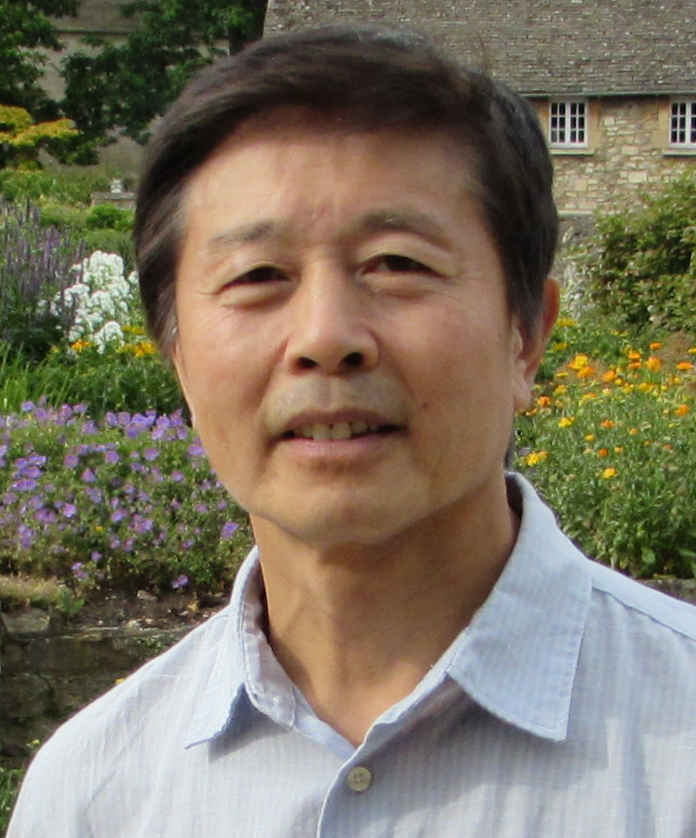
Walter van Heuven is an Associate Professor at the School of Psychology, University of Nottingham. His research focuses on monolingual and bilingual language processing , combining behavioral experiments (reaction times, eye-tracking), neuroimaging (ERP, fMRI), and computational cognitive modeling . Key interests include visual word recognition, bilingual brain mechanisms, translation activation, non-native speech perception, and executive control-language interactions. Research Themes : Cross-language activation and inhibition in bilinguals Orthographic/phonological processing in multilinguals Computational modeling of lexical decision tasks Neural correlates of translation priming Software Development : Created R packages strngram , strsim for psycholinguistic string similarity analysis Maintains jIAM browser-based models for BIA His recent publications (2017-2018) explore masked priming , multi-word expression processing , and cross-language neighborhood effects , with methodological innovations in statistical analysis and neuroimaging. He contributes to teaching modules like Computational Cognitive Psychology and Cognition in the Real World .
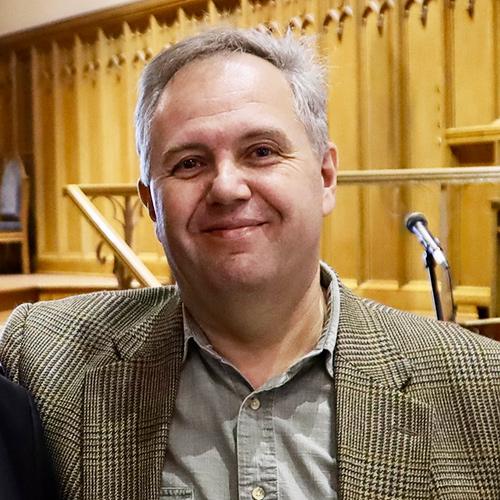
Morgan Sleeper serves as Associate Professor of Linguistics at Macalester College, maintaining an office in Humanities Room 203 with contact email msleeper@macalester.edu. His teaching portfolio includes foundational courses like Introduction to Linguistics (Ling 100) and advanced seminars such as Language and Music (Ling/Musi 220), reflecting his dual expertise in linguistic theory and musical analysis. PhD, University of California, Santa Barbara MA, University of California, Santa Barbara BA, Macalester College (2011) Sleeper's research centers on three interconnected domains: the structural and sociocultural relationship between language and music, Patagonian Welsh language contact phenomena, and linguistic representation in Japanese popular media. His innovative methodologies integrate ethnomusicological fieldwork with computational linguistics, particularly in documenting endangered languages through musical contexts. This approach has proven valuable for language revitalization initiatives seeking culturally resonant preservation strategies. Analysis of his publications (2017-2022) reveals consistent interdisciplinary focus, combining phonetic analysis with sociocultural frameworks across diverse contexts from Welsh rock music to anime translations. His work demonstrates particular strength in corpus-based methods for examining language contact effects and multimodal communication. Watson Fellowship (2011-2012) Sleeper actively mentors linguistics students through course-based research and independent projects, though specific advisee names aren't documented. His fieldwork in Patagonia and Minnesota's Twin Cities suggests engagement with external funding sources for language documentation, though grant details remain unspecified in available materials. While not formally affiliated with a named laboratory, Sleeper collaborates through international research networks including the Bangor Siarad corpus project. His fieldwork methodology emphasizes community-based approaches, as evidenced by ethnographic studies at venues like St. Paul's Celtic Junction, where Irish language instruction integrates musical and cultural transmission.
Sabine Arndt-Lappe is a Professor of English Linguistics at the University of Trier , Germany. She previously held research positions at the Universities of Marburg, Siegen, and Düsseldorf. As a structural linguist, her work bridges empirical and theoretical approaches to morphology and phonology. Research Focus : Variation and productivity in English lexicon, formal and semantic aspects of word-formation, prosodic morphology, analogy-based and usage-based grammatical models, computational analogical modeling, and Optimality Theory. Projects : Leads the DFG-funded AdvAnTheMorph project (2025–2028) and co-leads the DFG-ANR ERSaF project (2022–2025). Spokesperson for the Trier Center for Language and Communication research group on Patterns/Musterhaftigkeit (2020–2023). Publications span topics like name blending, stress assignment in English verbs, clipping mechanisms, affix rivalry, and cross-linguistic morphological analysis. Her work employs computational models (e.g., Naive Discriminative Learning) and corpus-based methodologies. Editorial Contributions : Editor-in-Chief of Morphology (2022–present), former Editor of Journal of Linguistics (2017–2021), and editorial board member for multiple journals including English Language and Linguistics and Journal of Linguistics . Teaching includes courses like LING 101: Introduction to Linguistic Studies , LING 801: Words in the Mind , and LING 804: Statistics for Linguists . She also mentors doctoral candidates and supervises software development for morphological research (e.g., M2E - Morph2Excel ).
Nicolai Pharao serves as an Associate Professor in the Department of Nordic Studies and Linguistics at the University of Copenhagen's Faculty of Humanities, with continuous affiliation since 2013. He maintains a dual appointment at the DNRF Center for Sociolinguistic Studies of Language Change in Real Time (LANCHART), reflecting his integrative research approach. His academic credentials include a PhD in Linguistics (2010) and MA in Linguistics (2004), both from the University of Copenhagen. The doctoral dissertation Consonant Reduction in Copenhagen Danish established his expertise in corpus-based phonetic analysis. Pharao's research centers on sociophonetics, investigating how phonetic variation in Copenhagen Danish encodes social meaning related to gender, sexual orientation, and regional identity. His methodology combines corpus linguistics with experimental perception studies, examining spontaneous speech processing and attitudes toward segmental variation. Recent work increasingly explores the cognitive interface between linguistic and social processing of phonetic cues. Analysis of his 2024-2025 publications reveals consistent focus on Danish prosody, regional variation, and social perception. Key thematic clusters include pitch accent systems, emotional correlates of formant patterns, geographical language attitudes, and societal reactions to non-standard speech. These works demonstrate methodological diversity spanning acoustic analysis, experimental perception tests, and sociolinguistic theory. As an educator, Pharao supervises student research across phonetic variation methodologies while teaching core courses in acoustic phonetics and linguistic theory. His pedagogical portfolio extends to advanced seminars on sociolinguistics, experimental phonetics, and language-gender dynamics at BA, MA, and PhD levels. He operates within collaborative frameworks including the LANCHART Center, where he investigates real-time language change dynamics. Current projects examine embodied affect in variation actuation and cross-dialectal perception patterns, maintaining strong ties between theoretical phonetics and sociolinguistic application.
Jan Heegård Petersen serves as an Associate Professor in the Department of Nordic Studies and Linguistics at the Faculty of Humanities, University of Copenhagen. His research focuses on Danish language evolution in diaspora communities, phonetic reduction phenomena, and documentation of the endangered Kalasha language of Pakistan. His academic credentials include: PhD in Linguistics (2006), University of Copenhagen MA in General Linguistics (1998), University of Copenhagen BA in General Linguistics (1993), University of Copenhagen Petersen's scholarly work spans heritage language dynamics, examining phonetic, morphological, and syntactic changes in Danish spoken by immigrant communities across the Americas. His investigations into phonetic reduction explore the spectrum between maximally expanded and extremely compressed speech forms, linking sound reduction to grammatical and pragmatic functions. The Kalasha language documentation project represents decades of fieldwork on this Indo-Aryan language's phonology, grammar, and cultural context. Recent publications (2024-2025) reveal concentrated research on heritage Danish varieties, with significant attention to grammatical gender systems, code-switching patterns, and phonetic innovations among diaspora speakers. These studies frequently employ corpus-based statistical methods and reflect international collaboration, particularly with Karoline Kühl of Hamburg. As an educator, Petersen supervises BA/MA projects across Danish linguistics domains. His research has received funding from the Carlsberg Foundation, A.P. Møller Foundation, and University of Copenhagen. Professional service includes editorial roles for NyS journal and treasurer position for the Linguistic Circle of Copenhagen.
Yi Xu is a Professor of Speech Sciences at the Division of Psychology and Language Sciences, University College London (UCL), where he investigates the fundamental mechanisms of speech production and perception in connected discourse. His research centers on how multiple layers of communicative meaning are encoded through articulation, with pioneering contributions to speech prosody modeling including the Target Approximation (TA) model and Parallel Encoding and Target Approximation (PENTA) model. He also developed the Bio-informational Dimensions (BID) theory for vocal expression of emotions and maintains active international collaborations on cross-linguistic prosody phenomena. Professor Xu's research spans speech prosody, computational phonetics, emotional speech, and coarticulation, focusing on dynamic articulatory mechanisms in tonal languages like Mandarin. His work integrates theoretical modeling, empirical validation, and tool development to address core questions about meaning encoding in speech. Key themes include the relationship between articulatory constraints and perceptual outcomes, neural processes in speech acquisition, and evolutionary perspectives on emotional expression. Recent publications (2023-2024) demonstrate strong interdisciplinary convergence across linguistics, computer science, and cognitive science, with emphasis on Mandarin tone-syllable interactions, deep learning applications in phonetic analysis, and cross-linguistic timing patterns. His work consistently bridges theoretical frameworks with practical computational implementations, advancing understanding of speech as a multi-layered communication system. He has created influential research tools including qTAtrainer for automatic intonation analysis based on the TA model, PENTAtrainer for function-loaded pitch target extraction, and FormantPro for large-scale formant movement analysis. These Praat-based tools are widely adopted in speech science for prosody research and have enabled large-scale empirical studies of connected speech phenomena.
Konstantin Sering is a researcher at the University of Tübingen within the Faculty of Philosophy, specifically working at the Seminar for Linguistics as part of the Quantitative Linguistics group. His academic journey bridges physics and psychology with computational linguistics, culminating in his 2023 PhD thesis on the PAULE (Predictive Articulatory speech synthesis Utilizing Lexical Embeddings) model. He maintains active collaborations with the Cognitive Modeling Group led by Martin V. Butz and the Quantitative Linguistics Group led by Harald Baayen. Sering's research interests center on the computational modeling of human speech production, with particular focus on the articulatory aspects of language. He approaches spoken language from the perspective of computer-aided modeling and simulation, extending the VocalTractLab model to produce spontaneous human speech. His work emphasizes the information-bearing nature of language over its meaning-bearing aspects, investigating how language signals contextual states and conditions. He combines artificial neural networks with predictive forward approaches to model vocal tract control parameters across multiple target spaces, including meaning and acoustic representations. Analysis of Sering's publication record reveals a consistent trajectory in articulatory speech synthesis and quantitative linguistics. His work demonstrates increasing sophistication in modeling the human speech apparatus, with recent publications focusing on improving the PAULE model through speech/non-speech classification, somatosensory feedback integration, and benchmarking methodologies. His research spans both theoretical computational linguistics and practical applications, with strong connections to cognitive science and psycholinguistics. The publications show interdisciplinary collaboration across linguistics, computer science, and cognitive psychology. Sering actively contributes to the academic community through teaching and software development. He has taught courses including Introduction to Psycholinguistics, Physics of Human Speech Production, and seminars on Predictive Articulatory Speech Synthesis. As software author and maintainer, he has developed several important tools for the field: Articubench (an articulatory speech synthesis benchmark), PAULE (his namesake speech synthesis model), create_vtl_corpus, and contributions to pyndl and other packages. His technical expertise spans Python, R, and specialized instrumentation for speech analysis. Based in room 188 at Keplerstr. 2 in Tübingen, Sering maintains an active research program with regular publications and software releases since 2013. His work environment benefits from the resources of the University of Tübingen's linguistics infrastructure and collaborative opportunities across disciplines.
Lubomir Ivanov is a Professor of Computer Science and current Chair of the Computer Science Department at Iona University, where he also serves as Game Development Coordinator and primary contact for all undergraduate programs. He joined Iona in 1999 after completing his academic training at Stevens Institute of Technology and has established himself as a versatile educator teaching courses ranging from computer architecture to virtual reality development. Education: Ph.D. in Computer Science, Stevens Institute of Technology M.S. in Computer Science, Stevens Institute of Technology B.S. in Computer Engineering, Stevens Institute of Technology Dr. Ivanov's research demonstrates exceptional interdisciplinary breadth, with dual pillars in Natural Language Processing and Applied Virtual Reality . His NLP work pioneers authorship attribution techniques using linguistic features from phonetic patterns (alliteration, assonance) to semantic dimensions (abstractness/concreteness), particularly for historical texts like Thomas Paine's writings. Simultaneously, his VR research creates impactful educational tools, including anti-bullying simulators with facial-expression recognition and mental health applications for non-suicidal self-injury assistance, reflecting strong collaborations with psychology departments. Analysis of his 15 most recent publications (2016-2024) reveals an evolving trajectory: early work focused on phonetic features for authorship analysis, progressively incorporating semantic and sentiment features, while his VR research matured from basic environments to sophisticated systems integrating real-time facial recognition and user experience optimization. Both strands consistently address real-world problems through computational methods. Scientific Awards: None mentioned in source material. Dr. Ivanov actively mentors students on research projects including the 'Bully' virtual environment and NSSI assistance software, securing collaborative grants with psychology departments. His leadership extends to university governance through the Faculty Senate and previous department chairmanship (2006-2009), alongside curriculum development for game development courses targeting non-CS majors. He directs a cross-disciplinary research ecosystem centered on the Game Development concentration, integrating computer science with education and psychology to create socially impactful technologies through ongoing VR and NLP innovation.
Leonardo Contreras Roa is an Associate Professor in English Phonology at the University of Picardy Jules Verne, where he is affiliated with the CORPUS research unit (UR UPJV 4295) and the LIDILE research group (Linguistics, Engineering, Language Teaching). His academic career spans multiple French institutions including University of Rennes 2, University of Lille, Sorbonne Nouvelle Paris 3, and research positions at IRIT and CNRS. Originally trained in translation in Chile, his academic journey evolved toward linguistics, phonetics, and language teaching, reflecting his interest in how ideas move between languages and what is gained or lost in the process. Dr. Contreras Roa's research interests center on the phonetics and phonology of second language acquisition, particularly examining interlanguage prosody of English learners with Spanish or French as their first language. His work spans acoustic phonetics, corpus linguistics, and the didactics of oral English. He investigates how rhythmic priming affects speech production in both typical speakers and those with Parkinson's disease, and explores the role of gesture in pronunciation learning. His research also extends to linguistic typology, reported speech strategies across diverse languages including West African and Turkic languages, and pathological discourse analysis. His publication record demonstrates consistent productivity with multiple articles per year across diverse venues. His work shows a clear trajectory from foundational research on interlanguage prosody toward increasingly sophisticated investigations of rhythmic priming, gesture-speech interface, and clinical applications. The research employs both corpus-based and experimental methodologies, with growing emphasis on multimodal approaches to speech production and perception. Dr. Contreras Roa teaches courses in oral English, phonetics, and English phonology at the undergraduate level, integrating his research expertise into his pedagogy. He has developed interactive scripts and tools for phonology instruction and explores innovative approaches to pronunciation teaching that incorporate rhythmic elements and gesture. His teaching philosophy appears informed by his research on affective factors in language learning, as evidenced by his work on promoting pleasure in language classrooms. His current research involves multiple collaborative projects examining speech production mechanisms, cross-linguistic influences in pronunciation, and applications of rhythmic priming in both typical and pathological speech contexts. He maintains active collaborations across multiple institutions and disciplines, reflecting the interdisciplinary nature of his work at the intersection of linguistics, cognitive science, and language pedagogy.
PD Dr. Peter-Arnold Mumm serves as scientific staff at the Institute for Phonetics and Speech Processing (IPS) within Ludwig Maximilian University of Munich (LMU). Holding the academic title of Privatdozent (PD), he possesses habilitation-level qualifications enabling independent teaching and research supervision in phonetics. His office is located in room 132 at Schellingstr. 3/II (VG), Munich, with regular office hours on Thursdays from 2 p.m. to 3 p.m. His research centers on experimental phonetics and speech processing, focusing on acoustic analysis of speech sounds, speech recognition systems, and articulatory modeling. This work bridges theoretical linguistics with applied speech technology, contributing to understanding human speech production mechanisms and developing computational speech analysis tools. Key methodologies include spectrographic analysis, prosody measurement, and corpus-based studies of phonetic variation. As a Privatdozent, Dr. Mumm participates in graduate supervision and advanced seminars at LMU, though specific student details are unlisted. The Institute for Phonetics and Speech Processing provides core infrastructure for acoustic analysis, but no dedicated laboratory under his direction is referenced. Prospective students should contact him directly regarding current research projects and supervision capacity.
Dr. Lisa Scheiwe serves as a Researcher at the Institute of English and American Studies within the Faculty of Cultural Studies at the University of Paderborn, a position held since October 2017. She completed her PhD in English Linguistics at the same institution in September 2024 with a dissertation examining English accent representation in German educational materials. Education: Bachelor of Education in English and Mathematics (2015), University of Paderborn Master of Education in English and Mathematics (2017), University of Paderborn PhD in English Linguistics (2024), University of Paderborn Her research centers on Global Englishes and Acoustic Phonetics, specifically analyzing how German secondary school textbooks represent diverse English accents through corpus-phonological methods. This work addresses critical gaps in pronunciation pedagogy by documenting the underrepresentation of non-native varieties like Australian and New Zealand English in educational contexts. Recent publications reveal a consistent focus on corpus-based analysis of ELT materials, with methodological innovations in speech corpus construction and phonetic evaluation. Her studies systematically document accent diversity (or lack thereof) in German classroom resources, contributing to international debates about linguistic imperialism in language education. Dr. Scheiwe actively participates in the academic community as a member of the International Pragmatic Association and German Association for English Language and Literature. She provides Study Abroad advising services and teaches specialized courses ranging from Global Englishes to dystopian fiction linguistics, reflecting her interdisciplinary approach to language study.
Takako Igeta is an Associate Professor (without tenure) at Waseda University's Center for Japanese Language. She holds a Ph.D. from Sophia University and an M.A. from Waseda. Her affiliations include the Faculty of Science and Engineering Global Center for Science and Engineering and the Global Education Center at Waseda. Her research explores Japanese phonetics , speech production/perception , and second language acquisition , with a focus on cross-linguistic challenges for Korean/Chinese learners. Key interests include vowel articulation, sociophonetic variation, and technology-enhanced language pedagogy. Recent publications emphasize phonetic training, online language assessment, and hybrid teaching methodologies. Her articles frequently integrate acoustic analysis, perceptual experiments, and educational technology design. She currently leads JSPS-funded projects examining: Yo-on sound production difficulties (2025–2030) Consonant/semivowel perception in learners (2020–2023) Foreign accent acceptability in Japan/US (collaborative, 2024–2027)
Manuel Macías Borrego serves as Professor at Camilo José Cela University (UCJC) in the Faculty of Education, teaching Early Childhood and Primary Education degrees. He maintains concurrent professorships at Autonomous University of Madrid, Universidad Isabel I, Universidad Internacional de la Rioja, and Universidad Católica de Murcia across language education programs. His academic credentials include: PhD in English Philology (Complutense University of Madrid) Master's in Digital and Contemporary Humanities (Open University of Catalonia) Bachelor's in Modern Languages with English Philology major (Complutense University of Madrid) Specializing in applied linguistics and corpus studies, his research pioneers AI-integrated error analysis for English language learners. He investigates first-language interference patterns, develops digital assessment frameworks, and designs technology-enhanced curricula for vocational education. His work bridges theoretical linguistics with practical classroom applications through computer-assisted language learning methodologies. Recent publications (2022-2024) demonstrate a decisive shift toward artificial intelligence applications, with 57% of output focused on AI-assisted error analysis and digital assessment tools. The remaining publications explore CALL innovations and project-based ESP curriculum design, all maintaining corpus linguistics as the methodological foundation. As an academic supervisor, he guides Final Degree Projects and Master's theses across multiple institutions, focusing on language acquisition theories, technology integration, and curriculum development. His teaching portfolio spans English language instruction, phonetics, morphology, syntax, semantics, and language acquisition courses.