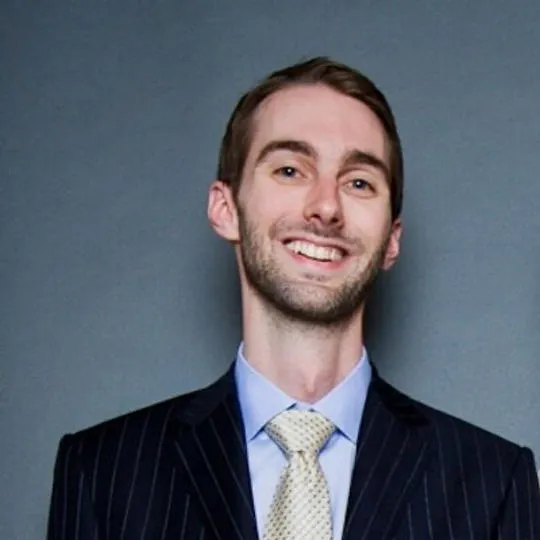
Ryan Heuser is an Assistant Professor in Digital Humanities at the University of Cambridge, specializing in computational approaches to literary and intellectual history, prosody, and artificial intelligence's impact on language. His work bridges data science, machine learning, and literary studies through digital methodologies. Doctoral training in Eighteenth-Century British Literature, Stanford University (2019) Founding member & Associate Research Director, Stanford Literary Lab Junior Research Fellow, King’s College Cambridge (2019-2022) Research interests span computational modeling of semantic revolutions, large-scale literary field analysis, and the intersection of digital methods with historical and intellectual studies. His book Explorations in the Digital History of Ideas (2023) co-edited with Peter de Bolla exemplifies this approach. Recent publications focus on historical semantics, metrical analysis, and digital mapping of emotions in literature, reflecting his interdisciplinary expertise in natural language processing, network theory, and literary data visualization. Currently leads teaching initiatives at Cambridge Digital Humanities and contributes to computational projects exploring textual rhythms and large language models.
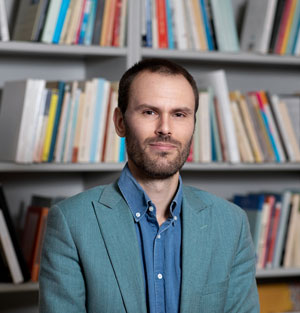
Erik Ketzan is a Lecturer in Digital Humanities and Cultural Computation at King's College London. He holds a PhD in English/Digital Humanities from Birkbeck, University of London, and has held postdoctoral roles at the University of Cologne and Trinity College Dublin, where he coordinated the MA in Digital Humanities and Culture. His research focuses on computational literary studies, legal/ethical issues in digital research, and corpus stylistics. He has published widely on topics such as Thomas Pynchon’s computational stylistics, legal frameworks for digital humanities research, and gender bias in historical texts. His work includes developing tools like Coleto for textual variant analysis and co-authoring the book *Thomas Pynchon and the Digital Humanities* (2022). Ketzan actively engages in policy advocacy, advising on copyright and data protection in DH, and has contributed to projects like CLARIN and the Leibniz Institute for the German Language. Education: PhD in English/Digital Humanities, Birkbeck, University of London Postdoctoral Researcher, University of Cologne (EncycNet Project) Postdoctoral Research and Teaching Fellow, Trinity College Dublin Research Interests: Computational approaches to literary analysis, legal challenges in data-driven research, corpus stylistics, and gender studies in historical corpora. Teaching: Courses include Python for the humanities, computational literary studies, and legal issues in digital humanities.
Mark Gales is Professor of Information Engineering at the University of Cambridge and an Official Fellow at Emmanuel College. He is currently on sabbatical leave for the 2024/25 academic year. Prior to his academic career, he worked as a consultant at Roke Manor Research Ltd, developing radar systems, before transitioning to speech and language processing. PhD in 'Model-Based Techniques for Robust Speech Recognition' (University of Cambridge, 1995) BA in Electrical and Information Sciences (University of Cambridge, 1988) His research focuses on speech and language processing , particularly in automated language assessment and low-resource speech technology . He leads the Automated Language Teaching and Assessment (ALTA) Institute , which collaborates with Cambridge University Press & Assessment (CUP&A) to develop commercial tools like Linguaskill and Speak & Improve . These platforms provide automated spoken/written assessment for millions of users globally. Recent publications highlight his work in LLM-driven speech processing , including adversarial attacks on foundation models, end-to-end spoken error correction, and uncertainty estimation frameworks. His team's research spans multilingual capabilities, with deployments in languages ranging from Dholuo to Tok Pisin . Awards : IEEE Fellow, ISCA Fellow Leadership : Fellows' Steward at Emmanuel College Mark has contributed extensively to Hidden Markov Model (HMM) applications in speech recognition, which underpinned early automatic speech systems. His work now bridges LLM-based language assessment with cross-lingual transfer learning and robustness testing for real-world deployments.
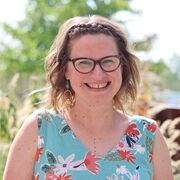
Professor Kay O'Halloran serves as Chair Professor and Head of Department of Communication and Media within the School of the Arts at the University of Liverpool since August 2019. She concurrently holds the position of Co-Director for the Digital Media and Society Institute (DMSI), demonstrating significant leadership across academic and research domains. Her career spans prestigious institutions including Curtin University (2013-2019) and National University of Singapore (1998-2013), where she directed the Multimodal Analysis Lab and served as Deputy Director of the Interactive & Digital Media Institute. PhD from Murdoch University (1996) Postdoctoral position at Martin Luther University (1997-1998) Visiting Distinguished Professor at Shanghai Jiaotong University (2017-2020) Professor O'Halloran's research focuses on multimodal discourse analysis, particularly the interaction of language with visual and mathematical resources. Her pioneering work in systemic functional multimodal discourse analysis (SF-MDA) has significantly impacted mathematics education and digital communication studies. Current research emphasizes digital tools for multimodal analysis and mixed methods approaches to big data analytics, addressing contemporary challenges in misinformation and public health communication. Her recent publications reveal strong thematic concentration in pandemic-related communication analysis, misinformation resistance mechanisms, and multimodal argumentation across social and cultural contexts. The 15 most recent articles demonstrate consistent application of multimodal frameworks to urgent societal issues including public health crises, political discourse, and digital literacy challenges. Founding editor of Routledge Studies in Multimodality book series (57+ volumes) Over 150 publications in leading international journals 50+ plenary/keynote presentations globally Competitive funding from National Research Foundation, MOE Singapore, US Air Force, ARC, NHMRC, and others Professor O'Halloran has directed interdisciplinary research teams comprising social scientists, computer scientists, and designers. Her leadership extends to developing commercial multimodal analysis software (Multimodal Analysis Image and Video) adopted internationally. Current projects include Eurovision 2023 wellbeing evaluation and COVID-19 misinformation immunity development, demonstrating continued relevance to contemporary societal challenges.
Matthew V. Novenson is a Professor of Biblical Criticism and Biblical Antiquities at the University of Edinburgh, where he also serves as Director of the Centre for the Study of Christian Origins. He holds honorary fellow status and has held visiting roles at Dartmouth College, Duke University, and Durham University. Novenson specializes in ancient Mediterranean religions, focusing on early Judaism and Christianity within Greco-Roman contexts. His research emphasizes Pauline epistles, early Christology, and the socio-political dimensions of messianic discourse. Qualifications include a BA, MDiv, ThM, and PhD. Teaching responsibilities span undergraduate courses on biblical languages, Second Temple Judaism, and New Testament themes, as well as postgraduate seminars on biblical exegesis and ancient religious texts. He actively supervises PhD students exploring topics like messianism in Pauline letters, ancient Christology, and eschatological frameworks. Novenson’s scholarship is reflected in major publications such as Christ among the Messiahs (2012), The Grammar of Messianism (2017), and Paul, Then and Now (2022), alongside edited volumes like The Oxford Handbook of Pauline Studies . His work interrogates the linguistic and ideological nuances of religious terminology in antiquity, particularly around concepts of messiahship, monotheism, and divine agency. Service roles include Associate Editor of New Testament Studies and co-editor of Edinburgh Studies in Religion in Antiquity . Past and current PhD advisees (listed above) reflect his commitment to mentoring rigorous research in early Christian origins and biblical interpretation.
Dr. Ewan Jones is Associate Professor in Nineteenth-Century Literature at the University of Cambridge's Faculty of English and a Fellow at Downing College, where he serves as Director of Studies for Part II. He completed his BA, MPhil, and PhD at King's College, Cambridge, and was previously Thole Research Fellow at Trinity Hall. His educational background includes comprehensive training in English literature at Cambridge, with specialization in nineteenth-century literary studies. His academic journey reflects deep engagement with both traditional literary scholarship and innovative computational approaches to textual analysis. Dr. Jones's research concentrates on poetics, embodied cognition, and computational approaches to intellectual history. His work fundamentally questions how we understand 'close reading' not as interpretation but as a specific cognitive practice. He explores how aesthetic phenomenology can illuminate historical reading communities, develops pedagogical routines to de-habituate standard attention modes, and seeks constructive engagement between computational analysis and traditional reading practices. His scholarship bridges literary studies with cognitive science, demonstrating how rhythm, attention, and cognition intersect in literary form. His research trajectory shows increasing focus on attentional practices in reading, with recent work examining group attention practices and rhythm in Victorian poetry. The computational dimension of his work has grown steadily, moving from individual textual analysis to large-scale corpus studies through projects like the Concept Lab. Fulbright Scholar Leverhulme Research Fellowship (2021/22) on 'Close Reading as Attentional Practice' Residential fellow at the Swedish Collegium of Advanced Study Visiting fellow at Ludwig Maximilian Universität Visiting fellow at Pomona College Dr. Jones supervises doctoral work on diverse topics including 'radical conservatism' in Victorian poetry, queer theory and historical poetics, Wagner reception in Anglophone poetry, morphogenetic conceptions of form, and metre and exact measurement. His interdisciplinary collaborations include work with Phyllis Weliver on digitizing Tennyson manuscripts and with Peter de Bolla on computational concept analysis projects that have secured significant research funding. He has developed innovative teaching approaches that integrate cognitive science with literary analysis. He co-founded and participates in the Concept Lab, an interdisciplinary project developing open-source computational resources for historical dataset analysis. This initiative has fostered collaborations across humanities and computer science disciplines, creating tools that bridge traditional literary scholarship with digital methods. His work with the Princeton Prosody Archive demonstrates his commitment to building scholarly infrastructure for rhythm and meter studies.
Professor Eric Atwell is a Professor of Artificial Intelligence for Language at the University of Leeds' School of Computer Science, part of the Faculty of Engineering and Physical Sciences. He holds additional roles as a LITE Fellow at the Leeds Institute for Teaching Excellence (40% part-time), Turing Fellow at the Alan Turing Institute, and member of the Leeds Institute for Data Analytics (LIDA) and Language at Leeds (LATL). His research focuses on AI applications in corpus linguistics, text analytics, and computational analysis of religious and medical texts, with a strong emphasis on Arabic and Islamic studies. He leads the AI4L research group and has supervised over 60 research students and fellows, many of whom have pursued careers in academia, tech, and AI-driven fields. Education: PhD in Corpus Linguistics and Language Learning (University of Leeds, 2008), BA (First Class) in Computing and Linguistics (Lancaster University, 1981) Grants: Includes EPSRC-funded projects like Natural Language Processing with Arabic and Islamic Studies (£337K, 2013-2015) and EDUBOTS chatbots for education (£94K, 2019-2022) Teaching: Leads modules in Data Mining, Text Analytics, and AI across multiple programs, including online Masters and PhDs. Known for innovative teaching approaches and student support, receiving positive feedback for engagement and course design. Research Interests: AI applied to corpus linguistics, Quranic text analysis, Arabic NLP, chatbots for education, and decolonizing curricula. Notable projects include Quranic semantic search tools, Hadith corpus analysis, and AI-driven fact-checking systems. Publications: Over 277 publications, with recent work focusing on Quranic QA systems, Arabic dialect identification, and generative AI applications in education. His research is widely cited, earning recognition from ResearchGate for high readership. Awards: Recognized for his most-read research items on ResearchGate (June 2021). Gallup StrengthsFinder highlights his top traits as Learner, Achiever, Ideation, Intellection, and Maximizer. Labs/Teams: Leads the AI4L research group and collaborates with international institutions including SUSTECH Sudan, King Saud University, and SWJT University (China). Active in research networks like LIDA and LATL.
Dr. Susana Castro-Kemp is an Associate Professor in Psychology and Human Development at University College London's Institute of Education (IOE), where she serves as Director of the Centre for Inclusive Education (CIE) since September 2023. Previously, she was a Reader in Education at the University of Roehampton for eight years. Her work focuses on inclusive education policy and practice globally, with particular expertise in special educational needs and disabilities (SEND), early childhood intervention, and mental health in schools. The IOE has been ranked number one in the world for Education for several consecutive years, providing an ideal environment for her impactful research. Dr. Castro-Kemp holds a PhD in Psychology jointly awarded in 2012 by the University of Porto (Portugal) and the University of North Carolina at Chapel Hill (USA). Her doctoral research was fully funded by the Foundation for Science and Technology/European Commission and the Global Education and Development Studies scholarships. She is a Chartered Psychologist with the British Psychological Society, a Senior Fellow of Advance HE, and a Recognised Research Supervisor by the UK Council for Graduate Education. Dr. Castro-Kemp's research centers on policy regulating education, health, and welfare services for children, particularly those with support needs. She examines inclusive education practices from users' perspectives, policy models leading to effective inclusive pedagogy, and country-level policy impacts on outcomes for children with special educational needs. Her work moves away from diagnostic labels toward engagement and civic participation as educational outcomes. She also investigates inclusion and early intervention in low- and middle-income countries, mental health in schools, and quality of early childhood education. Her recent publications reveal several key trends in inclusive education research. There's growing emphasis on understanding educational experiences through the voices of children and families rather than diagnostic labels. Much of her work examines the implementation gap between inclusive education policy and classroom practice. She has conducted significant research on how children with special educational needs experienced the pandemic, revealing both challenges and unexpected "silver linings" for some groups. Her corpus analysis of Ofsted reports shows narrow focus in early childhood education inspections, while her work on SEND policy increasingly takes an international comparative approach. Dr. Castro-Kemp has received recognition for her impactful work, including: Best Digital Humanities Project for Community Engagement Prize (2023) from the National Institute of Humanities and Social Sciences of South Africa for her project "Optimising collaborations and reducing inequalities of Early Childhood Intervention in post-Covid-19 South Africa" Dr. Castro-Kemp has secured approximately £1.3 million in research funding from various sources including ESRC, British Academy/Leverhulme Trust, European Commission, and private sponsors. Her current major project is 'ScopeSEND' (2024-2026), funded by the Nuffield Foundation (£250,000), examining international SEND policies. She has led numerous projects including "Transdisciplinary provision for children with disabilities in the Global South" (£3,500), "Optimising collaborations in South Africa" (£47,200), and "Froebel meets Ofsted" (£19,185). As a supervisor, she mentors MA/MSc and PhD students in education policy, early childhood, and inclusive education, having been nominated for student choice awards for excellent feedback and outstanding research supervision. As Director of the UCL Centre for Inclusive Education since 2023, Dr. Castro-Kemp leads a team focused on advancing knowledge exchange and research in inclusion and special needs. The Centre works with schools, educators, parents, and early years settings to translate research into practice. Her international collaborations include work with the World Health Organization as a technical advisor on the use of the International Classification of Functioning, Disability and Health (ICF) system in educational contexts. She also serves on the SEN Policy Research Forum and has provided oral evidence to the House of Commons Education Select Committee.
Gabrielle Hodge is a Senior Lecturer in Sign Language Linguistics at the University of Edinburgh's School of Philosophy, Psychology and Language Sciences. A deaf researcher, she specializes in sociolinguistics related to deaf communities, sign languages, and multimodal communication. Her work incorporates corpus linguistics, applied linguistics, and semiotics methodologies. Education: PhD in Linguistics (Macquarie University, 2014), BA (Hons) in Linguistics (La Trobe University, 2008). Teaching includes undergraduate and postgraduate courses in sign language linguistics and sociolinguistics. She chairs the University BSL Plan Implementation Group (2024-2030) and actively supervises PhD and MSc students in deaf community research. Research focuses on accessibility, sign language corpus methods, and inclusive language theory. Notable projects include the Accessibility & Inclusion Toolkit for deaf Australians and Signing to Know & Survive , exploring deaf communication resilience. She develops training for educators and interpreters, emphasizing direct access without relay systems. Key contributions include advancing corpus-driven sign language research, analyzing deaf professionals' trust in interpreters, and creating climate change resilience resources in Auslan. Her work challenges traditional linguistic frameworks to better incorporate deaf perspectives and embodied communication practices.
Professor Emma Moore is a leading sociolinguist at the School of English, University of Sheffield . Specializing in the social dimensions of language, her work integrates methodologies from anthropology and sociology to investigate how linguistic variation constructs identity and social affiliations. Research focus: Sociolinguistic style, dialect contact, youth language, identity negotiation, and community-based fieldwork Key projects: Adolescence and grammar (1999-), Isles of Scilly dialect (2008-), language and inequality (2014-), language perception software (2016-) Educational background : PhD in Sociolinguistics, University of Manchester Stanford University (USA) during PhD research Research trends across her 2021-2025 publications reveal interdisciplinary exploration of: Socio-syntactic variation Clinical linguistics (2025 MDS-UPDRS studies) Digital discourse post-pandemic Indexicality and cognitive representations Dialect contact in insular communities Educational policy implications Scientific recognition : British Academy Mid-Career Fellow (2019-2020) Elected Fellow, Royal Anthropological Institute (2014) AHRC/BA funded research projects (1999-2015) Research group leadership : Mentored 9 PhD students (2004-2024) and supervised 3 undergraduate SURE projects, including analyses of: Gender in rap performance Language style and workplace inequality Oral history digitization Professional contributions : Editorial Board: Language in Society (2015-), Gender and Language (2011-2017) External Examiner: Lancaster University MA in English Language (2013-2017) Collaborative software development for dialect perception testing
Professor Luke Harding is a faculty member at the Department of Linguistics and English Language , Lancaster University , within the School of Social Sciences . His work bridges applied linguistics, language assessment, and critical discourse studies, with a focus on the ethical and societal implications of testing. Research Interests : Language testing and assessment, World Englishes and English as a Lingua Franca (ELF), second language listening and pronunciation assessment, diagnostic approaches to language evaluation, and language assessment literacy. Recent projects integrate digital technology and corpus linguistics into testing frameworks. Publications : Published extensively in Language Testing , Applied Linguistics , and Language Assessment Quarterly . Co-edited the Routledge Handbook of Language Testing (Second Edition) (2022), a key reference work in the field. Teaching : Leads modules in Language Test Construction and Evaluation , Issues in Language Testing , and Statistical Analysis for Language Testing within the university's distance MA program. Leadership : Convened the Language Testing Research Group with colleagues Tineke Brunfaut and John Pill, advancing interdisciplinary approaches to assessment.
Dr Isobelle Clarke is a Lecturer in Security and Protection Science at the School of Social Sciences, Lancaster University. Her work bridges corpus linguistics, forensic linguistics, and sociolinguistics with a focus on media and social media discourses. Research Overview Current projects: Leverhulme-funded investigation of anti-science discourses (anti-vaccination, climate denialism, anti-GMO) Core Methodologies: Corpus analysis, discourse analysis, authorship attribution Her recent publications explore: Climate change denialism across conspiracy platforms Vaccine conspiracy theories on social media Representation of religion in press Spoken language patterns in American English She supervises PhD student Xinran Wang and contributes to academic activities like the FACTOR Summer School and Lancashire Cyber Education Week. Her work integrates computational methods with critical discourse analysis.
Lauren Hall-Lew is a Professor and Personal Chair of Sociolinguistics at the University of Edinburgh's School of Philosophy, Psychology and Language Sciences. She holds a BA from the University of Arizona (2002) and MA/PhD from Stanford University (2009). Her research focuses on phonetics, social meaning, language change, and sociopolitical identity. She has pioneered projects like the Lothian Diary Project, studying linguistic impact of the pandemic, and analyzed Scottish political speech, tourist language attitudes, and ethnicity-linked variation in San Francisco. Teaching contributions include courses on sociophonetics and language variation/change, earning her EUSA Teaching Award (2013). She has supervised over a dozen PhD students and is involved in EDI initiatives, including founding the Staff BAME Network Mentoring Programme (2019-2021), recognized via CAHSS Award and Principal's Medal nominations. Active in grant work, she leads projects on homelessness and linguistic variation (British Academy-funded), Scottish tour guide discourse, and political identity in phonetics. Awards include teaching accolades and EDI recognition. Her publications span sociolinguistic theory, phonetic analysis, and applied linguistic methods.
Dr. Tajul Islam is a Lecturer in Islamic Studies at the School of Languages, Cultures and Societies , University of Leeds , where he has been a member of staff since 2009. He also holds a visiting position at the University of the Punjab, Lahore. His academic work bridges traditional Islamic scholarship and critical theory, and he is a co-founder of Critical Muslim Studies (CMS) at Leeds, a framework aimed at centering Muslim subjectivity and decolonizing knowledge production in higher education. Education: BA in Arabic and Islamic Studies — University of Leeds PhD in Arab and Islamic Studies — University of Exeter Dr. Islam’s research encompasses a wide range of fields, including Islamic Theology (kalam) , Qur’anic Studies , Hadith , Islamic Law , Islamic Philosophy , Islamism , Islamophobia , antisemitism , racism , Biblical Studies , and Madrasa studies . His teaching emphasizes inclusivity and sensitivity to contemporary issues of identity and prejudice. His recent publications reflect a strong interdisciplinary trend, combining religious studies with food ethics, digital humanities, and decolonial theory. Key themes include theological minimalism , racial justice in early Islam , Islamic reform , and cross-traditional dialogue . He frequently presents at international conferences and public events on topics such as decolonial imagination, fatwa borrowing, and Muslim identity. Scientific Contributions and Recognition: Co-authored a well-cited article on Hanafi fiqh and British Muslims’ views on cultured meat. Published on Qur’anic phonetics and automatic lexis extraction. Contributed to encyclopedias on Ibn Mujahid and the Bible’s use in Islamophobic discourse. Co-founded the Iqbal Centre for Critical Muslim Studies. Dr. Islam supervises a diverse cohort of PhD students on topics ranging from blasphemy laws and translation studies to female religious authority and Qur’anic coherence. He has successfully guided over 15 doctoral candidates to completion. He is also involved in collaborative research and international academic partnerships, particularly with institutions in Pakistan. Labs and Research Groups: Co-Director, Iqbal Centre for Critical Muslim Studies Member of research groups in Arabic Cultural Studies , Conflict , and History
Oliver Bond is a Reader in Linguistics (Associate Professor) at the University of Surrey, affiliated with the Surrey Morphology Group (SMG) within the School of Literature & Languages. He holds a PhD from the University of Manchester and specializes in linguistic typology, morphology, syntax, and language documentation. His research focuses on the systemic properties of language, particularly in African and Himalayan languages, exploring features like agreement systems, case marking, and morphological complexity. Key roles include Deputy Director of SMG and PhD Coordinator. His research projects include studies on Nuer (South Sudan/Ethiopia), Tibeto-Burman languages of Nepal, and prominent internal possessors. He has received a prestigious British Academy Award for his work on language evolution and analogy in morphological change. Bond supervises PhD students in areas such as morphology, syntax, and language documentation. Notable former students include Dávid Győrfi and Tatiana Reid. His publications span typological studies, language documentation, and theoretical morphology, with recent work on contact effects in Tibeto-Burman languages and negation systems in African languages. Bond’s contributions include collaborative projects like the Nuer Literacy Initiative and the Manang Languages Project. He actively publishes in journals like Journal of Linguistics and Linguistic Typology , and maintains a comprehensive resource, the Nuer Lexicon .