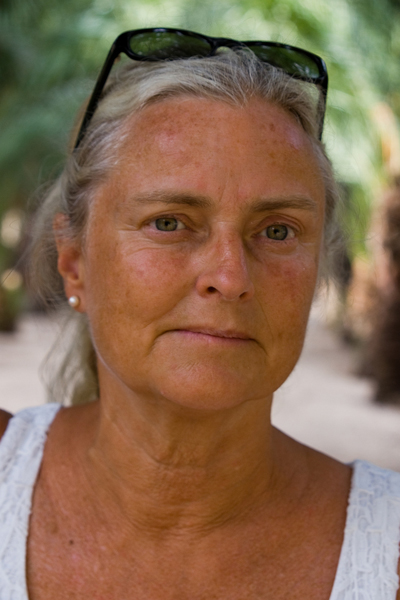
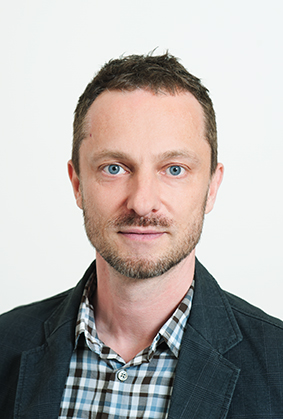
Carita Paradis is a Professor Emerita at Lund University's Centre for Languages and Literature, specializing in English Linguistics. She holds a PhD from Lund University (1997) and has held leadership roles including Chair of the Swedish Research Council's Linguistics panel (2010–2015). She coordinates the Language, Cognition and Discourse@Lund (LCD@L) research group, focusing on discourse meaning, language acquisition, and sociocultural variation. Her research spans cognitive linguistics, discourse analysis, semantics, and sensory language. She has authored/co-authored over 100 refereed publications, 5 books, and edited 10 journal volumes. Awards include membership in Academia Europaea (2016) and leadership roles in Scandinavian linguistic associations. She has supervised 14 PhD students and 8 postdocs, taught at all academic levels, and participated in numerous national/international research projects. Her editorial roles include serving on Cognitive Semantics, Languages, and Human Cognitive Processing series.
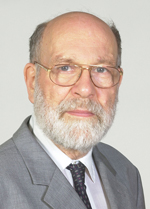
Dirk Geeraerts is a full Professor of Linguistics at the University of Leuven (KU Leuven), where he has held a faculty position since 1993. He studied Germanic languages (Dutch and English) and holds a bachelor's degree in Philosophy, earning his PhD in 1981. His academic career includes professorships at the Kortrijk campus of the University of Leuven (1986–1993) and the University of Leiden (1985–1986), as well as foundational research at the Instituut voor Nederlandse Lexicologie (1977–1985). Research Focus : Geeraerts specializes in lexical semantics , lexicology , and cognitive linguistics , particularly examining social variation , diachronic change , and empirical semantic methods . His work bridges theoretical and applied lexicography, notably through his editorial role in the Van Dale Groot woordenboek van de Nederlandse taal (1995–2005). Scientific Contributions : Founded the international journal Cognitive Linguistics Co-editor of The Oxford Handbook of Cognitive Linguistics Managing editor of the Cognitive Linguistics Research monograph series Honors and Awards : 1978: L.K. Engels Award 1992: Flemish Government Award for Wat er in een woord zit 2003: Member of the Royal Academy for Dutch Language and Literature (KANTL) 2020: Matthias de Vries Medal for Dutch lexicology contributions Labs and Teams : Established the Quantitative Lexicology and Variational Linguistics (QLVL) research group at the University of Leuven, advancing empirical approaches to lexical and semantic studies.
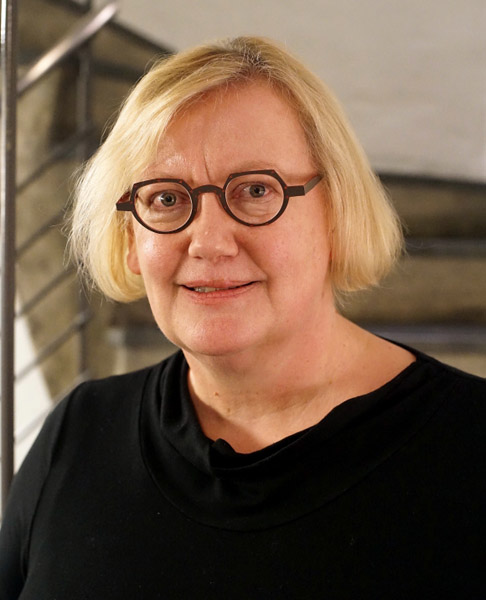
Wolfgang Ulrich Dressler is a Full Member of the Division of Humanities and Social Sciences at the Austrian Academy of Sciences since 1992 and maintains primary affiliation with the University of Vienna. His scholarly identity centers on foundational contributions to linguistic theory across multiple subdisciplines. His research traverses General linguistics, Psycholinguistics, Sociolinguistics, and Cognitive linguistics with particular emphasis on morphological processes, phonological structures, and the mental lexicon. Recent work demonstrates sustained focus on German morphonotactics and literary language phenomena, bridging theoretical frameworks with empirical corpus analysis. Publications from 2020-2024 reveal consistent investigation into word formation mechanisms, obstruent cluster patterning, and developmental lexicon acquisition. His scholarship integrates cognitive, corpus-based, and cross-linguistic methodologies while maintaining strong connections to literary and theatrical language contexts. Dr. Dressler's exceptional contributions are recognized through: Multiple honorary doctorates (Sorbonne, University of Athens, Adam Mickiewicz University) Prestigious lifetime achievement awards (Grand Cardinal Innitzer Prize, Theodor Körner Prize) Membership in leading academies including Norwegian Academy of Sciences, Academia Europaea, and Hungarian Academy of Sciences Honorary status in major linguistic societies (Linguistic Society of America, Societas Linguistica Europaea) His international standing is further evidenced by affiliations with the Royal Danish Academy, Accademia Nazionale dei Lincei, and Accademia della Crusca.
Vienna University of Economics and BusinessAustria
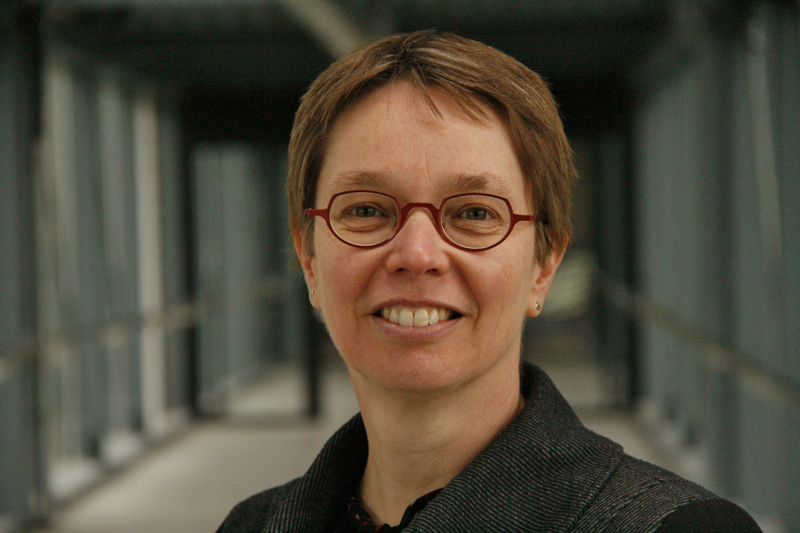
Gerlinde Mautner is a Full Professor at the Vienna University of Economics and Business (WU) , where she has held a chair since 2000. Her research focuses on the intersection of language with business and legal frameworks , combining corpus linguistics and critical discourse analysis . She has published extensively on topics like marketized language, interdisciplinary methodology, and linguistic landscapes. PhD in English from University of Vienna Habilitation (1997) at WU Visiting professorships at Cass Business School, Durham Business School, and Nottingham Business School Her methodological expertise includes mixed methods research and corpus-assisted discourse studies . Recent work examines large language models and public signage through discourse analysis. She has held leadership roles at WU as Vice-Rector for International Relations (1998-2002) and Head of Department (2005-2015), and served as Vice-President for Humanities at the Austrian Science Fund until 2024. Her textbooks on academic writing reflect her commitment to pedagogy across undergraduate, postgraduate, and executive programs. Notable trends in her 15 most recent publications include: Challenges of AI in discourse studies (2024) Methodological integration of corpus linguistics with qualitative analysis (2024) Analysis of managerial language evolution (2020) Critique of marketization in education (2005)
Vienna University of Economics and BusinessAustria
Susanne Kopf is a Lecturer at the Institute for English Business Communication at Vienna University of Economics and Business (WU Wien), where she holds a venia docendi in applied linguistics. With a PhD from Lancaster University, UK, she specializes in critical discourse analysis with a focus on digital communication platforms and their social implications. PhD in Applied Linguistics, Lancaster University, UK Venia Docendi (Habilitation) in Applied Linguistics, WU Wien Dr. Kopf's research sits at the intersection of Critical Discourse Studies and corpus linguistic methods, examining how digital platforms shape communication and power dynamics. Her work particularly focuses on Wikipedia as a site of knowledge production, EU representation in digital spaces, and social media discourse surrounding political events like Brexit. Her methodological approach uniquely combines qualitative linguistic analysis with quantitative corpus methods to uncover patterns in large-scale digital communication. Analysis of her recent publications reveals a consistent focus on digital discourse practices across multiple platforms. Her work shows how Wikipedia functions as a transnational public sphere, how social media platforms moderate content through vague policies, and how political events like Brexit are discursively constructed across different cultural contexts. These studies collectively demonstrate how digital communication both reflects and shapes broader social and political dynamics. Oberösterreichische Talentförderungsprämie Alois Mock science prize While specific details about her advising activities aren't provided in the available information, Dr. Kopf's extensive publication record and editorial work (including co-editing 'Discourses of Brexit' with Routledge) demonstrate significant scholarly leadership. Her research has been supported through academic positions at WU Wien that have enabled her substantial contributions to the field of digital discourse studies. Dr. Kopf maintains active research collaborations across European institutions, as evidenced by her multi-authored publications. Though not explicitly mentioned in the provided materials, her research focus on Wikipedia and digital platforms suggests engagement with digital humanities research groups and potentially corpus linguistics laboratories that support her methodological approach to analyzing large-scale digital communication.
Martina Werner is a Senior Postdoc and Research Fellow at the Austrian Centre for Digital Humanities (ÖAW), affiliated with the Institute of German Studies at the University of Vienna's Faculty of Philology and Cultural Studies. She holds a habilitation in German Linguistics from the University of Vienna (2019) and a PhD from LMU Munich (2009). Her academic appointments include visiting professorships at Universität Würzburg (2024–2025) and LMU Munich (2019–2020), along with a guest professorship at the University of Vienna (2017/2018). Research Focus: Werner specializes in morphology, historical linguistics, and corpus-based approaches. Her work explores grammar theory, language change, syntax-morphology interfaces, and digital humanities methodologies. Current projects include FWF-funded research on relational adjectives in historical German (RAHiG) and the diachrony of nominalized infinitives. Publication Trends: Her recent articles (2016–2025) predominantly analyze diachronic morphology in German, focusing on nominalization patterns, compound structures, and suffix evolution. Corpus linguistics methodologies underpin her investigations into grammaticalization, language variation, and comparative Germanic linguistics. A strong interdisciplinary thread connects linguistic theory with empirical data analysis. Awards & Grants: FWF Project Funding: RAHiG – Relational Adjectives in the History of German (2019–2026) Elise Richter Project Grant: Diachrony of the Nominalized Infinitive in German (2014–2019) LMUMentoring Excellence Program (2008–2011) HWP Doctoral Scholarship (2005–2006) Academic Service: Werner co-leads research teams at ÖAW's Digital Humanities Centre, collaborates internationally on Germanic linguistics projects, and supervises academic initiatives through the Vienna Linguistic Society. Her teaching covers historical linguistics, morphology, and language development at undergraduate and graduate levels.
Heike Behrens is a Full Professor of Cognitive Linguistics and Language Acquisition Research at the University of Basel, holding a joint appointment in both the Department of German Studies and Department of English within the Philosophical Faculty. She has maintained this position since 2005 and previously served as Full Professor for German Linguistics at the Rijksuniversiteit Groningen from 2002-2005. Her research spans multiple areas of linguistics including psycholinguistics, cognitive linguistics, language acquisition, and corpus linguistics, with specific focus on frequency effects in language, sensory semantics, and both German and English linguistics. Her scholarly approach integrates cognitive and acquisition perspectives across linguistic domains. Professor Behrens has secured significant research funding including the Ladenburger Kolleg project (2014-2016) funded by the Daimler & Benz Foundation, and participated in the DFG-Graduiertenkolleg on frequency effects at Freiburg University (2009-2014) as co-applicant and co-speaker. She has held substantial administrative roles including membership on the Schweizer Wissenschafts- und Innovationsrates (Swiss Science and Innovation Council) from 2009-2015, Executive Committee membership in the International Association for the Study of Child Language (2011-2015), and co-founding directorship of the Herrmann Paul School of Linguistics Basel Freiburg (2011-2013). Her editorial contributions include serving as Editor of the Journal of Child Language (2011-2015), Associate Editor (2010) and Co-Editor (2011) of the same journal, and membership on the Board of Consulting Editors for Linguistics since 2003.
Ernestus Mirjam is a Full Professor of Psycholinguistics at Radboud University, Netherlands, and the Scientific Director of the Centre for Language Studies. She holds a PhD from VU University Amsterdam (2000) and has held academic positions since 2000, including postdoctoral research roles at Radboud University and the Max Planck Institute for Psycholinguistics. Her research focuses on speech comprehension, laboratory phonology, and the psycholinguistic mechanisms underlying language processing in natural contexts. Ernestus has received prestigious awards, including the NWO VICI Grant (2011) and ERC Starting Grant (2011), and is a member of the Royal Netherlands Academy of Arts and Sciences. She has led over €7 million in research grants, including projects on spoken morphology and language interaction. Her work emphasizes the role of acoustic reduction and exemplar-based models in speech processing. Key contributions include the creation of corpora like the Ernestus Corpus of Spontaneous Dutch and the Nijmegen Corpus of Spanish English, advancing studies on casual speech and L2 acquisition.
Vladimir Plungian is a distinguished Russian linguist currently serving as Professor and Head of the Department of Theoretical and Applied Linguistics at Moscow State Lomonosov University's Faculty of Philology. He also holds significant leadership positions as Deputy Director of the Vinogradov Institute for Russian Language and Head of the Department of Linguistic Typology at the Institute of Linguistics, all part of the Russian Academy of Sciences. Plungian earned his undergraduate and graduate degrees at Moscow State Lomonosov University and The Institute of Linguistics of the Russian Academy of Sciences. His academic career spans several decades with continuous appointments at Moscow State University since 1989, progressing from Junior Research Fellow to full Professor. His research encompasses a remarkably broad spectrum of linguistic fields including general linguistics, morphology, grammatical typology, corpus linguistics, and poetics. Plungian has conducted extensive fieldwork on diverse language families including Slavic languages, African languages (particularly in Mali), languages of the Caucasus, and Austronesian languages. His work demonstrates a unique intersection between theoretical linguistics and practical language documentation. An analysis of his recent publications reveals a continued focus on grammatical typology, corpus linguistics, and the documentation of lesser-studied languages. His work spans both theoretical explorations of grammatical categories and practical applications in corpus construction, with particular attention to Slavic languages, Pamir languages, and Armenian. The Eastern Armenian National Corpus represents one of his major collaborative achievements. Full member, Russian Academy of Sciences (Department of History and Philology), 2016 "Prosvetitel" Prize (Humanities) for best popular-scientific book publication in Russian, 2011 Corresponding Member, Russian Academy of Sciences (Department of History and Philology), 2009 Plungian has played a significant role in developing major linguistic resources, most notably as one of the creators of both the Russian National Corpus and the Eastern Armenian National Corpus. Since 2016, he has served as editor-in-chief of Voprosy Jazykoznanija, the leading Russian linguistics journal. His international collaborations include work at scientific centers across Europe (Belgium, Germany, Norway, France) and fieldwork in Africa and various regions of the Russian Federation. Plungian leads multiple research teams across different institutions, including the Department for Corpus and Poetic Studies at the Vinogradov Institute for Russian Language, where he has directed research since 2003. His work bridges theoretical linguistics with practical applications in language documentation and corpus construction, creating a unique research environment that connects Slavic linguistics with the study of African and Caucasian languages.
Eszter Iklodi is a PreDoc Researcher at the Databases and Artificial Intelligence department (E192-02) of Vienna University of Technology (TU Wien). She contributes to research projects focusing on artificial intelligence, natural language processing, and legal informatics, particularly in the development of explainable frameworks and annotated legal corpora. Her recent work includes the creation of the BRISE-plandok German legal corpus for building regulations and the POTATO framework for explainable information extraction, both published in high-impact venues like Language Resources and Evaluation and the ACM International Conference on Information & Knowledge Management (CIKM).
Ailbhe Ní Chasaide is a Professor of Phonetics at Trinity College Dublin's School of Linguistic, Speech and Communication Sciences, where she has held continuous academic positions since 1979, progressing from Lecturer to Senior Lecturer and ultimately Professor in 2003. Her career spans over four decades of research excellence in phonetics with significant international collaborations including appointments at MIT, Haskins Laboratories, Oxford University, and Stockholm University. Professor Ní Chasaide's research focuses on experimental phonetics with particular expertise in voice quality analysis, prosody, and Irish language phonetics. Her work bridges theoretical phonetics with practical applications for Irish language documentation and revitalization. She has made significant contributions to understanding how voice quality interacts with melody in linguistic and expressive contexts, speech production mechanisms, and acoustic-perceptual relationships in speech. Her extensive publication record demonstrates consistent scholarly productivity, with recent work focusing on leveraging speech technology for Irish language maintenance. Her research on Irish dialects, particularly Connaught Irish, has provided valuable insights into micro-dialect variation and tonal alignment patterns unique to the language. Notable scientific awards include: Election to the ISCA IAC (Advisory Council to the International Speech Communication Association) in 2021 Long-standing election to the Council of the International Phonetic Association (re-elected consistently since 1991) Gradaim na Gaeilge 2015 Irish Language Service Award from Trinity College Dublin Fulbright Senior Research Fellowship for work at MIT Speech Group and Haskins Laboratories Government of Ireland Senior Research Fellowship Professor Ní Chasaide has received significant recognition for her contributions to Irish language technology, including being nominated for 'Person of the Year' following the development of the first Irish synthetic voice. Her work bridges academic phonetics with practical language preservation efforts, demonstrating commitment to both theoretical advancement and real-world application of speech science.
Univ.-Prof. Dr. Alexandra Lenz is a Professor of German Linguistics at the University of Vienna's Department of German Studies. Her research focuses on Austrian German dialects, lexical variation, and sociolinguistic dynamics, particularly through digital methods and corpus-based approaches. Key Research Areas: Austrian German dialects, lexical variation, sociolinguistic perception, and digital humanities. Projects: Leading contributions to the Special Research Programme 'German in Austria (DiÖ): Variation–Contact–Perception' and LexAT21 lexicon atlas. Methodology: Specializes in corpus linguistics, syntactic variation analysis, and experimental elicitation techniques. Recent Trends: Articles from 2025–2020 explore lexical responses to crises (e.g., pandemic language), grammaticalization pathways, and dialect syntax through comparative and interdisciplinary frameworks.
Gunther Kaltenböck is a Professor of English Linguistics at the University of Graz's Institute of English Studies. He holds an MA in English and French Language and Literature (University of Vienna), an MA in Modern English Language (University College London), and a PhD in English Linguistics (University of Vienna). His research focuses on Cognitive-Functional Grammar, Syntactic Variation and Change, and Corpus Linguistics. Notable works include co-edited volumes such as Outside the Clause (2016) and Insubordination (2019). His research explores grammatical structures, syntactic variation, and corpus-based methods. He has held academic roles at the University of Vienna and as a Visiting Professor at the University of Lille. Consultation hours are Tuesdays 15:30–16:30. Key research domains include thetical grammar, syntactic variation dynamics, and corpus linguistics applications. His articles analyze phenomena like complementizer omission and clause-initial constructions, emphasizing functional and cognitive perspectives. Collaborations with scholars like Bernd Heine and Tania Kuteva highlight interdisciplinary approaches. His academic contributions span edited volumes and monographs, with a focus on bridging theoretical frameworks and empirical data. Teaching and supervision activities are central to his role at the Institute of English Studies. He maintains an active research profile, combining quantitative corpus analysis with theoretical linguistics methodologies.
Prof. Dr. Sabine Schmölzer-Eibinger is a full professor of German as a Second Language and Language Didactics at the University of Graz, leading the Centre for German as a Second Language & Language Education. She also heads the Habilitation Forum for German Didactics and chairs the University Program in German as a Foreign/Second Language. Her research focuses on multilingualism in education, literacy development, and academic writing, particularly in linguistically diverse classrooms. She has led numerous international research projects funded by bodies like the FWF and EU Erasmus+. Education: PhD in Linguistics (1997), Habilitation in Language Teaching Research (2007), both from University of Graz. Visiting professorships at universities in Mexico, Berlin, Cuba, and the US. Recipient of the Charlotte Bühler Habilitation Fellowship (2004–2005). Research interests include language policy, argumentative writing, and the role of language in subject-specific teaching. She has published over 50 peer-reviewed articles and monographs, and developed curricula like the 'NaWiKon' project for scientific writing. Key membership roles: Scientific Advisory Board of the Mercator Institute, Symposium Deutschdidaktik, and German Society for Foreign Language Research. Teaching areas span multilingualism, literacy, and academic writing, with courses offered at the University of Graz and partner institutions globally.
Max Doppelbauer is a Senior Lecturer in Hispanic Linguistics and Spanish at the Department of Romance Studies, University of Vienna. His academic career spans over two decades with a focus on sociolinguistics, language policy, and the linguistic landscape of the Ibero-Romance region and its connections to Africa. He teaches Spanish language courses, regional studies, and linguistics seminars with special attention to Spanish in Africa and Equatorial Guinean literature. Education: Studied Romance Studies (Spanish/Portuguese with Catalan) at the University of Vienna Doctorate in Philosophy from the University of Vienna (2006) Doppelbauer's research explores the theoretical foundations of sociolinguistics as complex systems , the integration of artificial intelligence in language teaching , and language policy in the postcolonial context . His work particularly focuses on Spanish in Africa , literature from Equatorial Guinea , and the languages of Roma communities on the Iberian Peninsula . He examines how linguistic diversity interacts with cultural identity, colonial legacies, and contemporary political realities, with significant contributions to understanding minority language situations in Spain, North Africa, and postcolonial contexts. His recent publications demonstrate a growing interest in postcolonial language policy in Africa, particularly regarding Equatorial Guinea, and the application of artificial intelligence in language education. Doppelbauer's scholarly output shows consistent engagement with urban multilingualism, minority language rights, and the intersection of language with social exclusion, reflecting his interdisciplinary approach that bridges linguistics, cultural studies, and political science. Organizational Leadership: Editor-in-Chief of Europa Ethnica (since 2003) Scientific advisory board member of THESAVRVS and PUBLICACIONES Member of PEN Club, Vienna Data Science Group, and German Romance Studies Association Founder of Hispanoafricana Platform and organizer of the annual Semana de Literatura Guineoecuatoriana Doppelbauer has organized numerous academic conferences and symposia on topics ranging from Roma languages to postcolonial literature. His work with the Anxiety Culture Project at Kiel University demonstrates interdisciplinary reach beyond traditional linguistic studies. As a senior lecturer, he has supervised multiple research projects and mentored students in Hispanic linguistics and regional studies. Through the Hispanoafricana Platform, Doppelbauer has established a vibrant research community examining the complex cultural, linguistic, and historical connections between Iberia and Africa. His leadership in organizing the annual Semana de Literatura Guineoecuatoriana since 2009 has created a significant space for Equatorial Guinean literary voices in European academia, fostering cross-cultural dialogue and academic exchange.