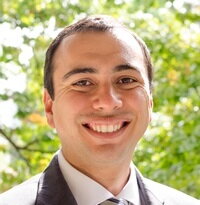
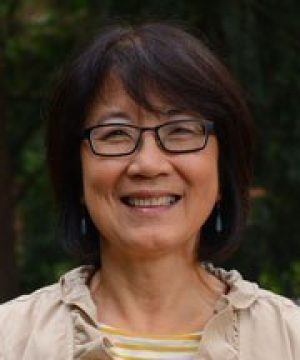
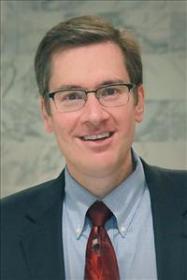
Bai Gao is a Professor of Sociology at Duke University. His research focuses on political economy, globalization trends, and industrial policy, particularly in the context of China and East Asia. He holds a Ph.D. from Princeton University (1994). Research Interests : Impact of state industrial policy on emerging technologies (e.g., electric vehicles in China) Globalization dynamics and post-neoliberal policy paradigms Comparative analysis of developmental models (China, Japan, Germany) Geopolitical implications of China's Belt and Road Initiative Key Contributions : Author of Japan’s Economic Dilemma (2001) and High-Speed Rail: An Analysis of the Chinese Innovation System (2021) Edited volumes on China-Pakistan Economic Corridor and global political economy Grants & Funding : "FDI and the Chinese Model of Economic Development" (2005-2007) "Institutional Analysis of Global Production Networks" (2003-2004) Courses Taught : SOCIOL 541: The United States and the Asian Pacific Region SOCIOL 344: Technology and Organizational Environments
Nikolai Roussanov is the Moise Y. Safra Associate Professor of Finance at the Wharton School, University of Pennsylvania, and a Faculty Research Fellow at the National Bureau of Economic Research. His research spans asset pricing, econometrics, household finance, and macroeconomics, with a focus on market dynamics and behavioral economic factors. His research interests include: Asset pricing anomalies and risk factor modeling Household financial decision-making under uncertainty Macroeconomic impacts on commodity and currency markets Behavioral finance and mental accounting mechanisms Recent publications analyze inflation risks across asset classes, corporate bond valuation, behavioral retirement strategies, and the role of leisure economics in declining work hours. His work frequently integrates empirical finance and econometric methodologies. Scientific contributions include: Faculty Research Fellow, National Bureau of Economic Research His scholarship bridges technical financial modeling with real-world economic phenomena, covering topics like oil price shocks, mortgage liquidity, and systemic market failures.
Kevin Lane Keller is the E.B. Osborn Professor of Marketing and Senior Associate Dean for Marketing and Communications at the Tuck School of Business, Dartmouth College. He holds a PhD in Marketing from Duke University (1986), an MSIA from Carnegie Mellon University (1980), and an AB in Math and Economics from Cornell University (1978). Prior academic appointments: Stanford University (marketing group head), UC Berkeley, UNC Chapel Hill, Duke University, and Australian Graduate School of Management. Industry experience: Marketing Consultant for Bank of America. Research Focus: Keller specializes in leveraging consumer psychology to enhance branding and marketing strategies. His work spans brand equity, brand architecture, integrated marketing communications, global branding, and digital brand management , with over 120 publications in top journals like the Journal of Marketing, Journal of Consumer Research, and Marketing Science. Recent research explores brand performance in hyper-competitive digital environments and the future of branding. Scientific Awards: 2019 Blair Award for Marketing Accountability (with Roger Sinclair) Ranked #105 Worldwide and #60 in the U.S. by Research.com (2023) Consulting & Public Engagement: Keller has advised Fortune 500 companies including Accenture, Disney, Ford, and Samsung. He co-authored the Marketing Management textbook (16th ed.) with Philip Kotler and Strategic Brand Management (5th ed.) with Vanitha Swaminathan, both foundational texts in their fields. His keynote speeches and workshops have influenced senior management at firms like Google, Microsoft, and Coca-Cola.
University of Illinois Urbana-ChampaignUnited States
Jorge Lemus is an Associate Professor of Economics at the University of Illinois at Urbana-Champaign, with a dual appointment in the College of Liberal Arts & Sciences and the College of Law. His research focuses on industrial organization, microeconomics, and the intersection of patent law with innovation policy. He holds a PhD in Economics and maintains affiliations in both economics and law schools, reflecting his interdisciplinary work. Key research interests include strategic patent examination processes, merger impacts on market competition, and design of contests and contracts in regulatory contexts. His work often addresses issues such as signaling in dynamic competitions, regulatory frameworks for innovation, and antitrust implications of patent settlements. Lemus has contributed to debates on topics like organizational disruption in the airline industry and the efficacy of post-grant patent opposition systems. Publications frequently explore empirical and theoretical dimensions of contests, patent litigation strategies, and regulatory outcomes. His work bridges economic theory with legal and policy analysis, particularly in areas affecting technological advancement and market dynamics. External collaborations and grants are not explicitly detailed in the provided texts, but his research website (https://sites.google.com/site/jorgelemuswebsite/) likely contains further details on ongoing projects and affiliations.
Sarah A. Soule is the Philip H. Knight Professor and Dean of Stanford Graduate School of Business and Morgridge Professor of Organizational Behavior. She has been a faculty member at Stanford since 2008 and previously taught at the University of Arizona and Cornell University. As of June 2025, she serves as the first woman dean of Stanford GSB, marking the school's centennial year. Her educational background includes a PhD and MA in Sociology from Cornell University (1995, 1991) and a BA in Sociology from the University of Vermont (1989). She has held significant leadership roles including Senior Associate Dean for Academic Affairs (2016-2023) and Director of the Center for Advanced Study in the Behavioral Sciences (2023-2025). Soule's research focuses on organizational theory, social movements, and political sociology, examining how social movements impact organizational and policy change. Her work bridges sociology and business, analyzing how protest influences corporate decisions and how organizations respond to social movement pressures. She has made significant contributions to understanding tactical innovation in social movements and the diffusion of protest strategies. Her scholarly output shows a consistent trajectory examining the intersection of social movements with business and policy. Early work focused on protest policing and movement tactics, while more recent research explores corporate activism, DEI initiatives, and the role of design thinking in organizational contexts. Her publications span top sociology and management journals, demonstrating interdisciplinary impact. Hank McKinnell-Pfizer Inc. Faculty Fellow, Stanford GSB, 2014 James and Doris McNamara Faculty Fellow, Stanford GSB, 2011 GSB Trust Faculty Fellow, Stanford GSB, 2010 Member, Sociological Research Association, 2009 Fellow, Michelle R. Clayman Institute for Gender Research, 2009 Magellan Circle Award for Excellence in Graduate Teaching, University of Arizona, 2006 Soule has served on multiple editorial boards including Sociological Science (founding team), Stanford University Press, and Cambridge University Press. She has advised numerous PhD students and has been actively involved in curriculum development, particularly in diversity, equity, and inclusion education. Her leadership extends to nonprofit boards including the Hasso Plattner Institute of Design (Stanford d.school) and the international advisory board to the president of the Stockholm School of Economics. She co-directs the Stanford LEAD Online Business Program and has developed executive education programs focused on coaching skills and diversity leadership.
Bee-yan Roberts is a Professor of Economics and Asian Studies at the Pennsylvania State University, affiliated with the Department of Asian Studies within the College of the Liberal Arts. She holds a Ph.D. from the University of Wisconsin - Madison (1980). Her research focuses on development economics, international economics, and industrial organizations, particularly analyzing firm-level dynamics in Asian economies. She has conducted extensive studies on Taiwanese firms' productivity, export strategies, R&D investments, and global competitiveness. Dr. Roberts' work explores topics such as the impact of R&D investments on firm productivity, the role of exports in shaping labor markets, and the comparative productivity of Taiwanese and South Korean manufacturers. Her recent publications examine Taiwanese multinational firms' foreign location decisions, the relationship between exports and technological upgrading, and the productivity evolution of small and medium enterprises in Taiwan. Her research trends emphasize firm heterogeneity, global market participation, and the interplay between innovation, exports, and economic growth. She collaborates frequently with scholars like Mark J. Roberts and Yi Lee, focusing on empirical analyses of Asian manufacturing sectors. No scientific awards are explicitly listed, but her prolific publication record reflects significant academic contributions. Additional details on grants, labs, or teams are not provided in the text.
Douglas Abbey is a Lecturer in Finance at the Stanford Graduate School of Business since 2005, specializing in real estate investment and urban development. He co-founded IHP Capital Partners, AMB Property Corporation (now Prologis), and Swift Real Estate Partners, contributing to industrial real estate and affordable housing sectors. Abbey holds an MCP from UC Berkeley and a BA from Amherst College. His research and teaching focus on real estate investment strategies, land use policies, and their socio-economic impacts. He emphasizes how market forces, demographics, and regulations shape housing affordability and urban integration. Abbey has authored multiple case studies analyzing real estate projects and development challenges. Education: MCP, UC Berkeley, 1979 BA, Amherst College, 1971 Abbey has served on boards of prominent organizations, including the Urban Land Institute (past Global Board member, Chairman of the ULI Foundation), Bridge Housing Corporation (emeritus after 20 years), and the Nantucket Yacht Club. He supports the Abbey Master in Real Estate Development + Design at UC Berkeley. His academic service includes teaching GSBGEN 306: Real Estate Investment and advising students on career paths in real estate. His case studies explore diverse topics like hotel development, distressed asset management, and industrial REIT strategies.
Kathryn Teigen De Master is Associate Professor of Agriculture, Society, and Environment at UC Berkeley's College of Natural Resources. Her research investigates farmland financialization, agricultural resilience, and socio-ecological benefits of diversified farming systems. She leads NSF- and USDA-funded projects on agri-food tech impacts and land ownership patterns. Research Focus: Political economy of agriculture, effects of corporate land ownership on rural communities, biodiversity benefits in farming systems, and water resource conflicts. Methodologically integrates sociological analysis with environmental science. Awards and Recognition: Recipient of the Rural Sociological Society Excellence in Instruction Award (2021), Distinguished Teaching Award from UC Berkeley's College of Natural Resources (2021), and Hellman Faculty Fellowship (2016-17) supporting research on farmland financialization. Publication Trends: Recent works emphasize systemic analyses of agricultural sustainability, including large-scale studies on diversified farming benefits, organic practice adoption, and corporate land investment impacts. Research consistently addresses power dynamics in food systems.
Simon Chadwick is a Professor of Sport and Geopolitical Economy at Skema Business School in France. He specializes in the intersection of sports, geopolitics, and economic transformation in the Middle East, particularly focusing on Gulf states' strategic investments in global sports ecosystems. His research examines how nations like Saudi Arabia and Qatar leverage sports to diversify economies, enhance soft power, and address unemployment. Key themes include the commercialization of football leagues, privatization of sports clubs, and the role of multinational corporations in shaping regional sports markets. Chadwick’s recent articles analyze the Gulf’s pursuit of the 2036 Olympics, the integration of esports into national strategies, and the challenges of building fan loyalty in the Saudi Pro League. His work also explores the economic implications of acquiring European football clubs and the long-term sustainability of Gulf-led sports initiatives. He has contributed to debates on 'sportswashing' and argues that Gulf investments extend beyond PR to systemic economic restructuring. His insights are frequently cited in analyses of Saudi Vision 2030 and its sports-related giga-projects like Neom and Diriyah.
Dan A. Iancu is an Associate Professor of Operations, Information & Technology at Stanford Graduate School of Business, affiliated with the Emmett Interdisciplinary Program in Environment and Resources (E-IPER). He holds a BS from Yale, SM from Harvard, and PhD from MIT. His research bridges operations, finance, and sustainability, focusing on dynamic optimization under uncertainty and its applications in supply chains, FinTech, and healthcare. Notable work includes designing financing solutions for global supply chains and promoting ethical analytics. Education: BS in Electrical Engineering (Yale, 2004), SM in Engineering (Harvard, 2006), PhD in Operations Research (MIT, 2010). Professional experience includes a Goldstine Fellowship at IBM Research and teaching roles at Wharton and INSEAD. He has won multiple awards including INFORMS Optimization Society (2009) and JFIG (2013) prizes. Research emphasizes fairness and environmental impact, with recent projects on sustainable palm oil production and climate impacts of digital supply chains. His work appears in Management Science, Operations Research, and Mathematics of Operations Research. Awards include Srivani Faculty Scholar (2023–24) and teaching commendations at Harvard, MIT, and INSEAD. He advises on multi-disciplinary projects involving engineering, environmental science, and business students.
Melissa A. Schilling is the Herzog Family Professor of Management at New York University Stern School of Business, where she is also Deputy Chair of the Management & Organizations Department and Director of the Innovation Initiative at the Fubon Center for Technology, Business and Innovation. She joined NYU Stern in 2001 and is a leading scholar in innovation and strategic management. Ph.D., Strategic Management, University of Washington, 1997 B.S., Business Administration, University of Colorado at Boulder, 1990 Melissa Schilling's research centers on innovation in high-technology industries, including smartphones, biotechnology, pharmaceuticals, and renewable energy. She explores platform ecosystems, network externalities, technological standards, and the cognitive and social traits of breakthrough innovators. Her work integrates strategic management with organizational behavior and technological evolution. She is particularly known for her studies on how firms can accelerate innovation adoption and create value in complex ecosystems. Her recent publications reveal a strong trend in digital transformation, platform competition, and the cognitive foundations of visionary leadership. She analyzes how firms manage innovation in platform-based markets and how breakthrough ideas emerge from outlier thinking. Her articles frequently appear in top journals such as Strategic Management Journal , Organization Science , and Management Science . Scientific Awards and Recognitions: National Science Foundation CAREER Award 2022 Sumantra Ghoshal Award for Rigour and Relevance in Management 2018 Leadership in Technology Management, PICMET Best Paper in Management Science and Organization Science, 2012 Broderick Prize for Excellence in Research, Boston University Melissa Schilling has advised numerous doctoral students and contributed to major research initiatives, including a National Academy of Sciences committee on electric vehicle deployment. She has secured grants from the NSF and Kauffman Foundation. She is a senior editor at Strategy Science and serves on the editorial boards of several leading management journals. She also leads the Innovation Initiative at the Fubon Center, fostering industry-academia collaboration in tech innovation. She is actively involved in research labs and innovation centers at NYU Stern, particularly those focused on technology ecosystems and digital transformation. Her leadership in the Fubon Center drives interdisciplinary research on how businesses can leverage technological change for competitive advantage.
Olivia Gu is an Associate Professor of Finance at Sy Syms School of Business, Yeshiva University. She holds a PhD in Finance from the University of Illinois at Urbana-Champaign and has previously taught investments and risk management at The University of Hong Kong (HKU). Her research spans asset pricing, corporate governance, ESG, and machine learning applications in finance. PhD in Finance, University of Illinois at Urbana-Champaign Research interests include: Asset Pricing Return Predictability Innovation Finance ESG Investing Corporate Governance Machine Learning Applications Gender Discrimination Analysis Recent publications analyze venture capital human capital impacts, price rigidities, market competition effects, and corporate diversification strategies. She received multiple prestigious awards including the Trefftzs Award and SAC Capital PhD Candidate Award. Trefftzs Award SAC Capital PhD Candidate Award for Outstanding Research HKU Research Output Prize Professor Gu serves on the editorial board of Review of Financial Economics and participates in finance conference committees.
William Milberg is a Professor of Economics at The New School for Social Research and Eugene Lang College of Liberal Arts, and Director of the Heilbroner Center for Capitalism Studies. He served as Dean of the New School for Social Research (2013-2023) and previously chaired the Economics Department (1998-2001, 2009-2012). His research bridges globalization, income distribution, and economic development, with a focus on global value chains, financialization, and the history of economic thought. Education: PhD in Economics, Rutgers University, 1987 Research Interests: Global labor markets, economic and social upgrading in global value chains, outsourcing, financialization, and the methodology of economics. Current projects include studies on neoliberalism's alternatives (funded by Open Society and Hewlett Foundations) and monopsony in global contexts. Teaching: Courses include international trade, political economy of corporations, and Coursera's 'Economics: Markets, Society and [In]equality.' Awards: 2013 Best Paper Award in Forum for Social Economics Grants & Leadership: Principal Investigator for projects on sustainable democratic economic policies and monopsony dynamics. Served as consultant to UNCTAD, ILO, and WTO. Editorial board member of International Review of Applied Economics , Journal of Post Keynesian Economics , and Politics and Society . Labs/Teams: Heilbroner Center for Capitalism Studies, a hub for interdisciplinary research on capitalism's social, political, and economic dimensions.
Stefania Garetto is an Associate Professor in the Department of Economics at Boston University. She specializes in international trade and macroeconomics, focusing on foreign direct investment, multinational corporations, and structural dynamic modeling. Her research explores the creation of multinational firms via mergers and acquisitions, their spatial expansion, and the interplay of real and financial factors in global markets. She is a Research Associate at the National Bureau of Economic Research (NBER) and a Research Fellow at the Centre for Economic Policy Research (CEPR). Education: PhD in Economics from the University of Chicago. Research interests include global banking, firm heterogeneity, risk-return dynamics in multinational production, and policy analysis. Her recent work combines empirical analysis with quantitative models to study topics like shock transmission in global banking systems and the origins of multinational premiums. Articles have been featured in Journal of International Economics , Quarterly Journal of Economics , and American Economic Journal: Macroeconomics . Teaching includes PhD-level International Trade (EC 791), master’s Globalization Economics (EC 598), and undergraduate courses in International Trade and Microeconomics. She has advised on numerous working papers and contributed to discussions at major conferences such as NBER ITI Summer Institutes and the Women in Macro Conference. Her current projects include analyzing the Cuban Embargo’s welfare impacts, real options in international economics, and long-run risks of FDI. She maintains an active presence in academic discussions, providing commentary on seminal papers in trade and financial integration.
Professor John W. O'Neill is a Professor of Hospitality Management at Pennsylvania State University's School of Hospitality Management. He serves as Director of the Hospitality Real Estate Strategy Group, focusing on real estate, asset management, and strategic management in the hotel industry. His research bridges financial analysis with operational strategies in hospitality. Education : B.S. in Hotel Administration from Cornell University M.S. in Real Estate from New York University Ph.D. in Business Administration from University of Rhode Island O'Neill's research explores hotel financial performance, debt servicing, brand affiliation, work-family dynamics, and market disruption from platforms like Airbnb. His work combines empirical analysis with strategic frameworks to address industry challenges. Leadership and Research Groups : Director, Hospitality Real Estate Strategy Group Active researcher in hotel valuation and operational risk