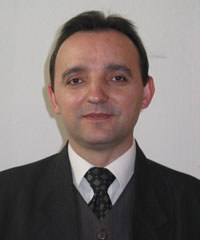
Prof. Damir Žarko is a Full Professor at the Department of Electric Machines, Drives and Automation, Faculty of Electrical Engineering and Computing (University of Zagreb). His work focuses on advanced electromagnetic modeling, optimization of electric machines, and industrial applications including traction motors, transformers, and renewable energy systems.
David Reavis serves as a Teaching Assistant Professor in the Department of Information Systems at the Walton College of Business, University of Arkansas. His academic role bridges technology and business education, with particular focus on practical applications in higher education settings and organizational contexts across diverse institutional environments. Reavis's research spans core Information Systems domains including business technology management, educational technology innovation, and the economics of information systems. His scholarly work addresses contemporary challenges such as AI integration in academia (notably ChatGPT applications), esports program development, and sustainable academic program design. His investigations consistently emphasize stakeholder engagement and practical implementation frameworks within educational and business ecosystems. Analysis of his publication trajectory reveals evolving focus from foundational IT topics (auditing, cloud migration, email retention) toward emerging educational technology challenges. Recent work demonstrates increasing concentration on program optimization, accreditation standards alignment, and technology adoption in academic settings, while maintaining strong connections to economic impact analysis and organizational technology management. His research consistently targets actionable solutions for real-world business and educational challenges.
Zbigniew Szular is a Lecturer at the Department of Electrical Engineering within the Faculty of Electrical and Computer Engineering at Cracow University of Technology. His academic profile shows active research and teaching engagement in the field of electrical engineering with a focus on power electronics and magnetic materials. Dr. Szular's research interests center on power electronics, particularly soft switching technologies for voltage source inverters, magnetic properties of electrical steel sheets, and hysteresis modeling. His work addresses critical challenges in energy conversion systems, transformer design, and electrical machine efficiency. The research spans both theoretical modeling and practical implementation of power electronic systems. Analysis of his publication record from 2016-2025 reveals a consistent research trajectory focused on improving power conversion efficiency through innovative soft switching techniques for various inverter topologies. His work spans three-phase systems, two-level and three-level inverters, and neutral-point-clamped configurations. A parallel research thread examines magnetic properties of electrical steel, with emphasis on hysteresis modeling, anisotropy effects, and crystallographic influences on magnetic behavior. Dr. Szular maintains an active research collaboration network, primarily with Witold Mazgaj and Bartosz Rozegnał, resulting in numerous joint publications in high-impact journals including IEEE Transactions on Power Electronics and Energies. His research demonstrates both theoretical depth in magnetic material modeling and practical engineering solutions for power electronic systems.
Christian Cech is a Professor at FH des BFI Vienna, serving as Department Head and Lecturer specializing in financial risk management and regulatory compliance. His institutional role centers on bridging academic research with banking practice through the Fachhochschule's applied science framework. His research focuses on quantitative risk modeling using copula-based methods to estimate Value-at-Risk and Expected Shortfall, with particular emphasis on Basel III regulatory requirements for banks. He investigates multivariate return distributions, capital adequacy frameworks, and liquidity risk measurement, contributing to financial stability through precise risk quantification methodologies. Recent work extends into climate-risk econometrics and regulatory reporting systems. Analysis of his 15 most recent publications reveals a consistent trajectory from foundational Basel II/III transition research toward integrated risk frameworks. His 2019-2022 output demonstrates growing interdisciplinary scope, connecting financial regulation with environmental economics while maintaining core expertise in copula-based portfolio modeling and regulatory reporting standards.
Kristen Booth serves as an Assistant Professor in the Department of Electrical Engineering at the University of South Carolina's Molinaroli College of Engineering and Computing, leveraging expertise in power electronics and digital twin technologies for modern power systems. Her academic foundation includes: Ph.D. in Electrical Engineering, North Carolina State University (2019) M.S. in Electrical Engineering, North Carolina State University (2017) B.S.E. in Engineering Physics, Murray State University (2015) Booth's research centers on advancing DC microgrids, transformer optimization, and electric vehicle infrastructure through AI-integrated power electronics. Her work addresses critical challenges in wide bandgap semiconductor reliability and high-frequency converter design, with applications spanning naval systems, electric aircraft, and solid-state transformers. Current projects emphasize digital twin frameworks for real-time power flow management and electro-thermal simulation. Analysis of her 2023-2025 publications reveals dominant trends in digital twin applications for naval DC microgrids, MHz-frequency power converter optimization, and battery longevity in electric aircraft. Key thematic clusters include real-time prognostics for powertrain systems, thermal management in water-cooled electronics, and pulsed load handling for military applications. No scientific awards are documented in available sources. Student advising activities and research grant details remain unspecified in current records. Booth previously contributed to The Ohio State University's Center for High Performance Power Electronics as a postdoctoral researcher, and now leads power electronics research within USC's Electrical Engineering department, focusing on next-generation semiconductor applications and grid resilience.
Stephen Parman is a Professor of Earth, Environmental, and Planetary Sciences at Brown University. He holds affiliations within the Department of Earth, Environmental, and Planetary Sciences and is associated with the High-Pressure Lab. Previously, he served as a Lecturer at Durham University (UK) and earned his Ph.D. in Geology and Geochemistry from MIT (2001). His research focuses on volatiles in Earth's interior, early Earth magmas, and mantle evolution, with recent work challenging traditional models through studies of noble gas solubility and mantle dynamics. Education: Ph.D. in Geology and Geochemistry, MIT (2001); Postdoctoral work at Durham University (2001-2004). Research interests include experimental petrology, mantle structure evolution, and planetary formation processes. His work integrates laboratory experiments with geochemical modeling to explore topics like Mercury's magma ocean crystallization and lunar volcanic degassing. Key contributions address Mercury's core composition, sulfur speciation in magmas, and exoplanet habitability under varying tectonic regimes. Recent publications highlight Mercury's bulk composition, lunar gas cloud chemistry, and mission concepts like Mercury Scout. His work often bridges Earth science and planetary exploration, with a focus on volatile cycling and planetary interiors. Collaborations include researchers like Reid Cooper (Brown) and Nitin Padture (Engineering). His lab develops novel analytical methods (e.g., atom probe tomography) to study mineral physics and volatile behavior in extreme conditions.
Mikael Björling serves as Associate Professor in Physical Chemistry and Senior Lecturer in Chemistry at the University of Gävle, where he actively contributes to the Environmental Technology research group. His work bridges environmental engineering applications and science education, with current international collaborations including ventilation studies for the Oslo Viking Museum remodeling (with University of Oslo) and New Zealand school ventilation projects (with University of Auckland). Björling's research spans two interconnected domains: environmental air quality systems and science pedagogy. In environmental science, he pioneers tracer gas methodologies for measuring air exchange rates in diverse structures—from historical wooden buildings to schools—with direct applications in public health (asthma/allergy mitigation) and heritage conservation. His parallel work in science education addresses didactic challenges in natural sciences, developing innovative approaches for teaching chemistry concepts to younger learners and improving STEM pedagogy through subject-specific didactics. Analysis of his recent publications reveals a strategic focus on sustainable ventilation solutions, where engineering precision meets policy relevance. Key trends include adapting low-cost monitoring technologies for real-world settings, establishing causal links between building ventilation and child health outcomes, and developing conservation protocols for sensitive historical structures. His work consistently emphasizes practical implementation over theoretical exploration, with growing attention to global applicability across Scandinavian, Chinese, and New Zealand contexts. No major scientific awards were documented in available sources. Björling currently supervises PhD candidate Dan Wahlborg's research on birch pollen allergen release mechanisms. His active grant portfolio features two significant international projects: the Viking Museum ventilation study addressing conservation challenges in historical structures, and the New Zealand school ventilation initiative examining airflow patterns in educational environments. These projects demonstrate his capacity to secure cross-border research funding while addressing tangible societal needs. As a core member of the University of Gävle's Environmental Technology research group, Björling participates in interdisciplinary teams developing sustainable solutions for indoor air quality challenges. His collaborations with institutions like the University of Oslo and University of Auckland extend this network globally, focusing on practical applications of ventilation science in culturally diverse settings.
Mykhailo Igorovich Kotsur is an Associate Professor at the Department of Electrical and Electronic Devices within the Electrical Engineering Faculty of Zaporizhzhia National Technical University. With over 14 years of academic service since 2011, he has established himself as a specialist in electromechanics and electromagnetic field modeling. His work bridges theoretical research with practical applications in industrial power systems, particularly focusing on energy efficiency improvements in electrical machinery and power distribution systems. Education: 2008: Graduated from Zaporizhia National Technical University with a degree in "Electrical Machines and Devices" 2012: Defended PhD thesis at Sevastopol National Technical University in specialty 05.09.03 "Electrical Complexes and Systems" on "Improving the Efficiency of the Pulse Regulation System of an Asynchronous Motor with a Phase Rotor" Professor Kotsur's research focuses on the investigation of electromagnetic, energy and thermal processes in electromechanical complexes and systems. His work particularly addresses challenges in electric drive systems, power quality issues related to harmonic distortions, and energy efficiency optimization in industrial applications. He has developed novel approaches for modeling electromagnetic fields in electrical machines and power distribution systems, with special attention to busbar systems and crane power supply networks. His methodologies combine theoretical analysis with practical field simulation techniques to solve real-world engineering problems. Analysis of Professor Kotsur's 15 most recent publications reveals a strong trend toward advanced electromagnetic field simulation methods applied to industrial power systems. His work consistently focuses on improving the accuracy of parameter determination for electrical systems, particularly busbar configurations and electric drive components. A significant portion of his recent research addresses the impact of higher current harmonics on industrial equipment performance, with practical applications in overhead crane systems and workshop power networks. His publications demonstrate a progression from fundamental electromagnetic modeling to increasingly sophisticated applications in energy-efficient industrial systems. Professor Kotsur actively contributes to academic training through teaching courses including "Automation of the design of electrical and electronic devices," "Methodology of scientific research in electromechanics," and "Optimization of engineering and design solutions in electromechanics." He has developed numerous instructional materials and laboratory guides for students specializing in electrical engineering and electromechanics. His work with students extends to supervising qualification projects and providing guidance on research methodology in the field of electromechanical systems. His research has resulted in multiple Ukrainian patents related to electric drive systems and control mechanisms, demonstrating the practical application of his theoretical work. These innovations focus on improving energy efficiency in industrial applications, particularly in systems involving asynchronous motors with phase rotors.
Prof. Dr. Branko Koprivica is a Full Professor at the Department of General Electrical Engineering and Electronics, Faculty of Technical Sciences in Čačak, University of Kragujevac, Serbia. He holds a PhD in Theoretical and General Electrical Engineering, focusing on hysteresis modeling and transient magnetization processes of ferromagnetic materials. His research spans Electromagnetics, Soft Magnetic Materials, and Virtual Instrumentation , with significant contributions to measurement systems, power loss analysis, and numerical methods in electrical engineering. Department: General Electrical Engineering and Electronics Academic Rank: Full Professor University: University of Kragujevac His research interests include electromagnetic characterization of electrical steel, hysteresis and power loss modeling , and virtual instrumentation applications in metrology. He has co-authored textbooks and monographs, and contributed to standards in energy efficiency for electric drives. Branko Koprivica’s recent publications focus on dynamic hysteresis modeling , magnetic anisotropy , and time-domain simulations of nonlinear circuits. He actively participates in international conferences and projects like TEMPUS, emphasizing education and technological innovation. His scientific work is supported by projects such as "Investigation, Development and Application of Energy Efficiency Policies in Electrical Drives" (TR33016, 2011–2016) and collaborations with institutions in Austria, Bulgaria, Italy, and Romania. He has also contributed to patents and remote laboratory systems in electrical engineering education.
Тетяна Євгеніївна Дівчук is an Associate Professor at the Department of Electrical Machines, Faculty of Electrical Engineering, Zaporizhzhia Polytechnic National University. With over 15 years of academic experience since joining the university in 2007, she has established herself as a respected researcher and educator specializing in electrical machines and transformer technology. Education: Zaporizhia State Technical University, Faculty of Electrical Engineering (1995) - graduated with honors in Electromechanics Postgraduate studies (2000-2004) Candidate of Technical Sciences (2020) - defended thesis on transformer parameter determination methods Dr. Divchuk's research focuses on transformer design and analysis, particularly magnetic flux distribution, short-circuit parameters determination, and innovative modeling techniques. Her work bridges theoretical analysis with practical applications in power systems engineering, contributing to improved transformer design methodologies and performance evaluation. She has developed specialized approaches combining schematic and field modeling to enhance accuracy in transformer parameter calculations. Her publication record shows a clear progression from fundamental studies of magnetic flux distribution (2016) to more sophisticated hybrid modeling approaches (2017), reflecting her growing expertise in computational methods for transformer analysis. These works collectively advance the understanding of transformer behavior under various operating conditions. Scientific Recognition: Certificate of Honor from Zaporizhia City Council (2015) Diploma for student research supervision (2015) Dr. Divchuk actively mentors students in research activities and teaches core subjects including Electric Machines, Power Transformer Production Technology, Fundamentals of Electrical Engineering, and High Voltage Equipment. Her educational approach emphasizes both theoretical foundations and practical applications in electrical engineering. As part of Zaporizhzhia Polytechnic's electrical engineering community, she contributes to research initiatives focused on power systems optimization and electrical machine design, maintaining strong connections between academic research and industry applications.
Vyacheslav Vyacheslavovich Prus is a Professor at Zaporizhzhia Polytechnic University in the Department of Electrical Machines within the Electrical Engineering Faculty. With a Doctor of Technical Sciences degree, he specializes in electrical machines research with particular focus on aging processes, diagnostics, and reliability assessment. He commenced his academic activities at the university in 2022. Dr. Prus's research interests center on the aging processes of electrical machines, diagnostics of electrical steel, electromagnetic parameter redefinition, and reliability assessment of structural units. His work demonstrates a strong integration of theoretical foundations with practical applications in electric drive systems and machine diagnostics. He teaches Engineering Design of Electrical Devices and Automated Design of Electrical Devices and Mechanical Systems. His publication record shows consistent research output with over 120 scientific works including a monograph, seven invention patents, and approximately 100 publications in Scopus and Web of Science indexed journals. His recent work (2019-2022) focuses on aging processes of electrical machines, diagnostics of laminated cores, instantaneous power components applications, and reliability modeling using fuzzy logic approaches. His research spans both theoretical modeling and practical diagnostic techniques for electrical machines. Dr. Prus actively participates in international conferences including IEEE's Modern Electrical and Energy Systems (MEES) and Problems of Automated Electrodrive (PAEP). His academic career includes defending his Candidate of Technical Sciences dissertation in 2003 on 'Diagnostics of electrical steel of stators and certification of asynchronous motors during repair' and his Doctor of Technical Sciences dissertation in 2021 on 'Aging of Electrical Machines during Long-Term Operation and Repairs. Theory and Practice'. He received his higher education at Kremenchuk Branch of Kharkiv State Polytechnic University in 1996, specializing in 'Electric drive and automation of industrial installations and technological complexes' with qualification as an Electrical Engineer. His research has established him as a specialist in electrical machine diagnostics and aging process analysis, with practical applications in industrial settings.
Kwang-Hyun Chung is a Professor of Accounting at the Lubin School of Business, Pace University (NYC campus). He specializes in financial reporting under U.S. accounting standards and their impact on firm valuation, with active involvement in banking regulatory matters through his role as Audit Committee chairperson at Woori America Bank. His research focuses on internal control weaknesses, loan loss provisions, debt rating dynamics, and corporate governance. Education: PhD in Accounting (Baruch College/CUNY), MBA (West Virginia University), BBA in Management (Seoul National University) Professional Roles: Audit Committee Chair at Woori America Bank ($350 billion asset subsidiary of Woori Bank) Research interests include the interplay between accounting disclosures and market outcomes, with notable work on banking sector regulatory challenges. His publications span over three decades, addressing topics like loan loss modeling, earnings management strategies, and policy impacts on firm performance. Chung encourages graduate students to engage in contemporary accounting research areas such as disclosure quality and corporate social responsibility. Publications demonstrate consistent focus on banking sector accounting challenges and regulatory compliance trends, with methodological strengths in empirical analysis of financial reporting effects. Over 20 publications since 1993 reflect sustained engagement in core accounting research areas. Active in professional engagement, Chung bridges academic research with industry practice through his banking committee responsibilities and graduate student mentorship programs.
Prof. Klaus Roppert is a researcher at the Institute for Fundamentals and Theory of Electrical Engineering, Technische Universität Graz. His work focuses on electromagnetism, hysteresis modeling, and computational methods in electrical engineering. He holds degrees including Dipl.-Ing., Dr.techn., and BSc. Research Interests: Electromagnetic field theory and hysteresis modeling Finite element analysis for nonlinear systems Aeroacoustic simulations and fluid-structure interactions Material characterization and parameter identification Development of open-source simulation tools (e.g., openCFS) Recent work emphasizes transient analysis of transformers, rotational loss calculations, and energy-based vector hysteresis frameworks. He has contributed to modeling MEMS devices and EMI filters, with a focus on DC-biased components. Teaching and supervision: Involvement in courses and final theses supervision at TU Graz. Labs/Tools: Core contributor to openCFS, an open-source platform for coupled field simulations in acoustics and electromagnetics.
Kamil Kutorasiński is an Adjunct Professor at the Department of Condensed Matter Physics, Faculty of Physics and Applied Informatics, AGH University of Science and Technology in Kraków. His research focuses on magnetic materials, thermoelectric properties, and computational modeling of material behavior under various conditions. Key areas include nonlinear modeling of magnetic materials, high-frequency material characterization, and the application of artificial intelligence in material property prediction. His work bridges fundamental physics with engineering applications, particularly in power systems and electromagnetic compatibility. Recent studies emphasize machine-learned models for power magnetic materials, experimental analysis of magnetic core characteristics under DC bias, and optimization of transient damping in high-voltage systems. Kutorasiński’s contributions span both theoretical advancements and practical validation through full-scale simulations and experiments. Publications highlight interdisciplinary approaches, combining first-principles calculations with real-world applications such as VFTO attenuation in gas-insulated switchgear and the study of superconductivity phenomena. His research has been applied to improve material selection for high-frequency power systems and enhance understanding of thermoelectric efficiency in disordered materials.
Najdenkoski Krste is an Assistant Professor at the Faculty of Electrical Engineering, University St. Cyril and Methodius in Skopje, Republic of Macedonia. His academic journey includes a PhD (2003), MSc (1997), and BSc (1991) in Electrical Engineering from the same institution. He has held various academic roles since 1992, progressing from Research Associate to his current position. Education: PhD, Faculty of Electrical Engineering, 2003 MSc, Faculty of Electrical Engineering, 1997 BSc, Faculty of Electrical Engineering, 1991 His research focuses on electromagnetic systems , including transformer efficiency, harmonic analysis, wind energy optimization, and power quality. Key areas include: Transformer lifespan prediction using polymerization indices Harmonic impact on induction motors and distribution systems Optimal wind farm layout modeling via evolutionary algorithms Wind resource assessment and turbine performance under varying conditions His publications highlight advancements in renewable energy integration, power quality mitigation, and equipment reliability. Collaborations involve interdisciplinary projects on energy systems optimization. He is affiliated with the Institute of Electrical Machines, Transformers and Appliances at his faculty.